
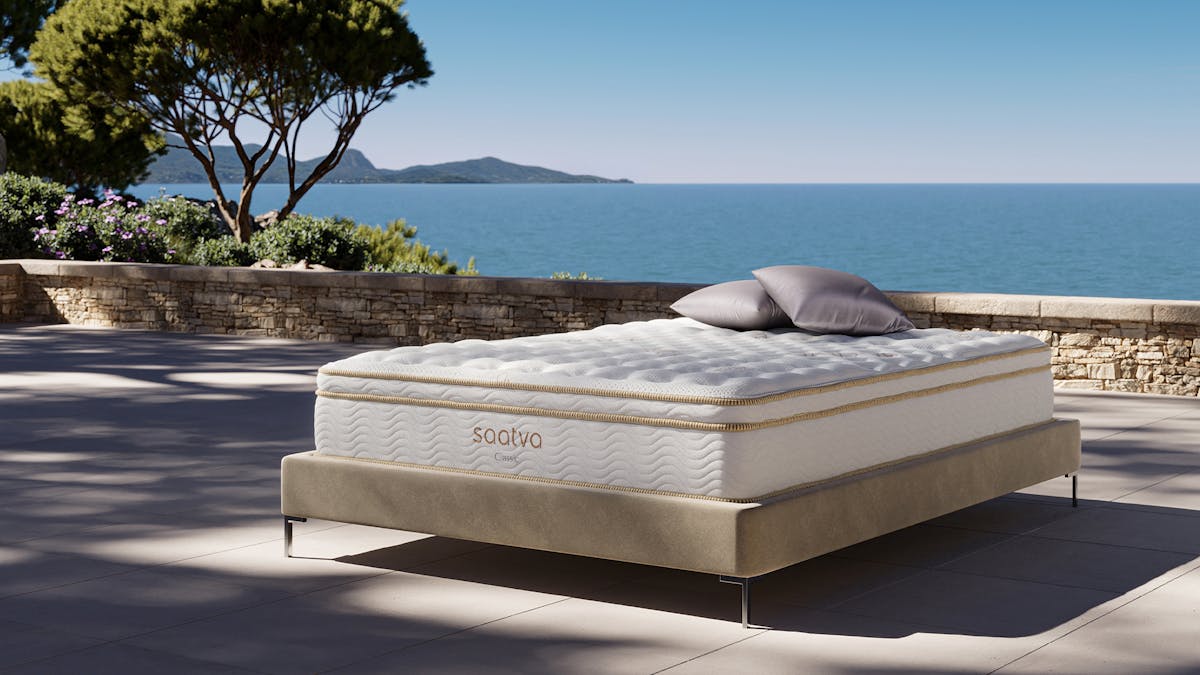
 by
by Our #1 recommendation for this topic
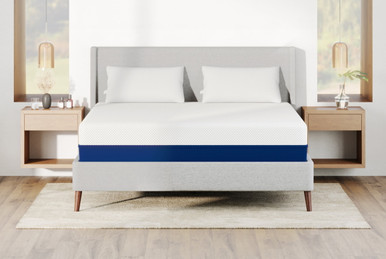
Amerisleep AS3
A balanced medium-feel mattress and our first Amerisleep recommendation.
Our #2 recommendation is the Amerisleep AS3. The AS3 Bio-Pur foam absorbs partner movement so completely that daytime sleep stays uninterrupted. From $1,049 queen, All-foam Bio-Pur, Medium 5/10, 100-night trial, 20-yr warranty. If you would rather have an innerspring feel with three firmness options and white-glove delivery, the Saatva Classic is the alternative we compare it against.
Amerisleep AS3
8.7/10
- Zero motion transfer, Bio-Pur foam absorbs movement completely
- HIVE 5-zone support prevents pressure build-up during fragmented daytime sleep
- Open-cell foam runs cooler than standard memory foam
- CertiPUR-US certified, made in the USA, 20-year warranty
- All-foam sleeps warmer than coil hybrids in rooms above 75F
- Softer edges than a hybrid construction
- 100-night trial is shorter than the Saatva 365-night window
If your bedroom stays below 72F during your sleep window and maximum motion isolation is your priority, the AS3 Bio-Pur foam absorbs partner movement so completely that daytime sleep stays uninterrupted. The trade-off is temperature: all-foam traps more heat than the Saatva hybrid in warm daytime rooms.
The night shift sleep problem
Night shift workers, whether nurses, factory workers, emergency responders, or data center staff, face a fundamentally harder sleep challenge than standard sleepers. They are asking their bodies to sleep when every circadian cue is pointing in the opposite direction: light suppresses melatonin even through closed eyelids, ambient noise from traffic and household activity peaks during daytime hours, and room temperature is typically 4 to 8 degrees Fahrenheit higher than at night.
A mattress cannot fix all of these. Blackout curtains, white noise machines, and consistent sleep scheduling are equally important. But the right mattress directly addresses three problems it can control: temperature, motion isolation, and pressure relief during irregular sleep windows.
What actually matters for shift workers
Temperature
Ambient room temperature during daytime hours is consistently higher than at night. All-foam mattresses, even those marketed as cooling, trap more heat than coil hybrids which allow convective airflow through the coil layer. If you sleep hot or your bedroom exceeds 72F in daytime, a hybrid construction like the Saatva Classic provides meaningful improvement. The coil-on-coil design moves air continuously through the core rather than relying on surface treatments.
Motion isolation
If you share a bed with a partner on a standard schedule, every time they leave for work or adjust position is a potential wake event for you. Daytime sleep is shallower and more fragile for shift workers, making motion transfer a genuine performance factor. Individually wrapped pocketed coil systems reduce motion compared to open-coil innersprings. Memory foam layers provide additional dampening. The Saatva Classic pocketed coil system performs well for a hybrid; all-foam options like the AS3 provide the most complete dampening if heat is not a concern.
Pressure relief and durability
Shift workers often sleep in irregular bursts, multiple shorter windows rather than one consolidated block. This creates higher cumulative pressure on specific body zones. A mattress with active zoned support handles this better than a single-firmness surface. The Saatva Classic reinforced lumbar zone pad maintains spinal alignment even during fragmented sleep. Dual-coil constructions and high-density foam cores outlast cheap polyfoam by years under heavy use.
Night shift mattress comparison
| Mattress | Type | Motion isolation | Temperature | Trial | Queen price |
|---|---|---|---|---|---|
| Saatva Classic | Innerspring hybrid | Very good | Excellent (coil airflow) | 365 nights | From $1,395 |
| Amerisleep AS3 | All-foam Bio-Pur | Excellent | Good (open-cell) | 100 nights | From $1,049 |
| Helix Midnight | Hybrid | Good | Very good | 100 nights | ~$1,374 |
Saatva Classic
9.2/10
- Dual-coil construction moves air through the core, cooler daytime sleep in warm rooms
- Individually wrapped pocketed coils provide strong motion isolation for a hybrid
- Reinforced lumbar zone pad maintains spinal alignment during fragmented sleep
- Free white-glove delivery, setup and old-mattress removal included
- 365-night trial, lifetime warranty, three firmness options
- Ships flat, not compressed in a box
- $99 return fee applies during the trial period
Daytime sleep runs hotter, and coil airflow is the most reliable fix. The Saatva Classic dual-coil system moves heat away from the body where all-foam cannot, while individually wrapped coils still isolate the motion of a partner leaving for work. The 365-night trial is the longest on the mainstream US market, giving shift workers enough time to truly assess the mattress across schedule changes.
Noise and durability
A squeaky mattress that is imperceptible at night becomes conspicuous when the house is active during the day. Hybrid mattresses with individually wrapped coils are quieter than open-coil innersprings, and memory foam is the quietest option. The Saatva Classic pocketed coil system is quiet under normal use. The AS3 produces zero noise.
Look for mattresses with durable foam cores, high-density polyfoam or latex rather than cheap filler foam, and reinforced edge support. The Saatva Classic carries a lifetime warranty. The AS3 carries a 20-year warranty with full replacement in years 1 to 10 and 50% off in years 11 to 20, covering sag over 1.5 inches.
Sleep position recommendations
Firmness choice for shift workers follows standard position-based rules. The difference is temperature: side sleepers who need softer should ensure the comfort layers are breathable, which all-foam constructions handle less well than hybrids when daytime room temperatures are high.
- Side sleepers: Medium to medium-soft keeps pressure off the shoulder and hip. Saatva Classic in Luxury Firm (6/10) or Amerisleep AS3 (5/10) both work; choose by temperature priority.
- Back sleepers: Medium-firm supports natural lumbar lordosis. Saatva Classic Luxury Firm (6/10) or AS3 (5/10) are the practical choices.
- Stomach sleepers: Firmer surfaces prevent lumbar hyperextension. The Saatva Classic in Firm (8/10) is the direct answer.
- Combo sleepers: Saatva Classic Luxury Firm is the most forgiving across positions during fragmented sleep windows, with airflow for daytime warmth.
For night shift workers, prioritize temperature first, motion isolation second. The Saatva Classic wins on temperature regulation and trial length with a 365-night window and coil-driven airflow. The Amerisleep AS3 is the best alternative when motion isolation is the sole priority and the room stays cool.
Frequently asked questions
What type of mattress is best for sleeping during the day?
Temperature regulation is the top priority for daytime sleepers, because rooms are warmer during the day than at night. A coil hybrid like the Saatva Classic moves air through the core where all-foam cannot. Motion isolation is the second priority for those sharing a bed with a partner on a standard schedule. Individually wrapped pocketed coils or foam layers both reduce motion transfer substantially compared to open-coil innersprings.
Does room temperature affect which mattress night shift workers should buy?
Significantly. Daytime temperatures run higher than nighttime in most homes. All-foam mattresses trap more heat than hybrids. If your bedroom exceeds 72 to 74 degrees Fahrenheit during your sleep window, a coil hybrid like the Saatva Classic provides meaningful temperature improvement over all-foam. If your bedroom is consistently cool, an all-foam option is viable.
How important is motion isolation for night shift workers who share a bed?
Motion isolation is critical if your partner is on a standard schedule. Memory foam provides the most complete dampening. Pocketed coil systems also reduce motion transfer substantially compared to open-coil innersprings. The Saatva Classic with individually wrapped coils performs well for a hybrid; the AS3 all-foam construction absorbs movement completely.
Should night shift workers use a firm or soft mattress?
Firmness for shift workers follows standard position-based rules. The difference is temperature: side sleepers who need softer should ensure the comfort layers are breathable, which all-foam constructions handle less well than hybrids when daytime room temperatures are high.
What mattress features specifically help daytime sleep quality?
Temperature regulation, motion isolation, noise (quieter means fewer disturbances from household activity), edge support for partners getting in and out of bed, and durability for irregular sleep patterns that can create uneven foam wear over time.
This guide is part of our Best Mattress by Use Case hub, compare all the top picks and narrow down your choice there.
Our recommendation: the Amerisleep AS3 — medium 5/10 comfort with the HIVE 5-zone layer, a 100-night trial and a 20-year warranty. If you are still deciding, the trial period is what makes it low risk.
Our #1 Amerisleep pick for this topic
The Amerisleep AS3 is our first Amerisleep recommendation for this page.