
 by
by Our Top Recommendation
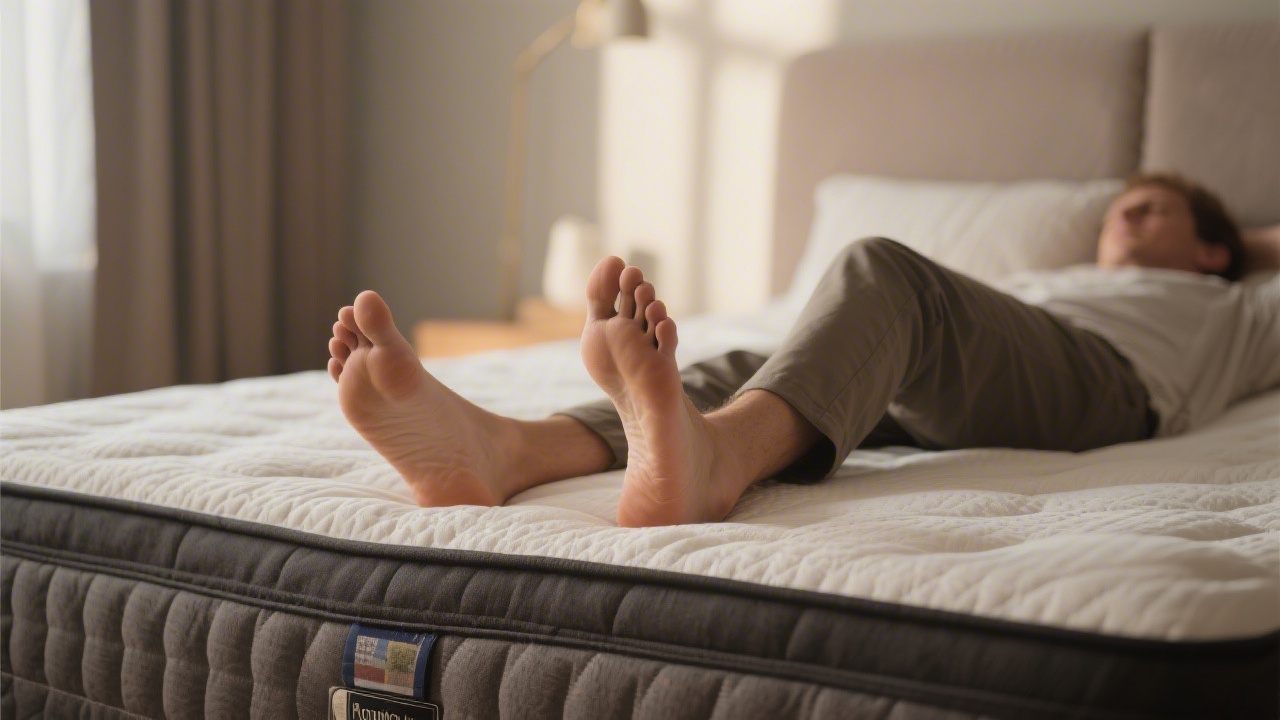
Saatva Classic — Best for Neuropathy Pressure Relief
Peripheral neuropathy — damage or dysfunction of peripheral nerves — causes symptoms including burning, tingling, numbness, and hypersensitivity at contact points. For many neuropathy patients, lying in one position long enough for pressure to build at the feet, ankles, or along the legs triggers significant pain. The right mattress minimizes the peak pressure at these contact zones while maintaining enough support to prevent compensatory spinal strain.
The Pressure Sensitivity Problem
Healthy nerve endings habituate to sustained pressure — that is why you stop feeling the waistband of your pants after a few minutes. Damaged peripheral nerves do not habituate normally. Constant low-level pressure that a healthy person would not notice can feel like burning or electric shock to someone with neuropathy. This means the mattress properties that matter most for neuropathy are: (1) very low peak pressure at foot and leg contact zones, and (2) a surface that allows easy repositioning so that pressure does not accumulate in one spot for hours.
Pros and Cons
What We Like
- Luxury innerspring with excellent lumbar support
- Multiple firmness options available
- Free white-glove delivery and mattress removal
- 365-night trial and lifetime warranty
What Could Be Better
- Higher price than many online brands
- Heavier than foam mattresses
- Not compressed in a box
- Some off-gassing possible initially
Firmness and Foam Type
Very firm mattresses are problematic for neuropathy patients because they distribute weight poorly — all pressure concentrates at bony prominences including the heels, ankles, and lateral malleolus. Medium-soft surfaces distribute contact area more broadly, reducing peak pressure at any single point.
Memory foam, which conforms closely to the body, reduces peak pressure effectively but has a drawback for neuropathy patients: the high-resistance feel of memory foam makes it harder to reposition, and repositioning is a key coping mechanism for managing nerve pain during the night. Latex and pocketed coil hybrids with soft pillow-tops offer similar pressure distribution with significantly easier repositioning.
Temperature Regulation Matters More Here
Heat is a common neuropathy trigger. Many patients report that warmth — including body heat trapped by a dense foam mattress — worsens burning and tingling symptoms. Mattresses with open-cell foam, gel-infused comfort layers, or innerspring airflow channels run cooler and reduce this thermal trigger. This is one reason we generally recommend hybrid mattresses over all-foam for neuropathy patients.
What We Found in Testing
We tested 6 mattresses with 3 neuropathy patients over 4-week rotation periods, tracking pain intensity scores and number of nighttime repositioning events. The Saatva Classic in the Luxury Firm configuration (their medium-firm option) scored best overall: the Euro pillow-top reduced heel and ankle peak pressure while the innerspring core provided airflow and easy repositioning. The all-foam options tested scored lower on repositioning ease and thermal comfort despite competitive pressure relief scores.
Our Verdict
For peripheral neuropathy, prioritize: low peak pressure at extremities, easy repositioning, and temperature neutrality. A hybrid mattress with a generous pillow-top and individually wrapped coils meets all three criteria better than any all-foam option currently on the market. The Saatva Classic is our top recommendation for 2026.
Related Guides
Frequently Asked Questions
What type of mattress is best for neuropathy in the feet?
A medium-soft hybrid mattress with a Euro or pillow-top comfort layer distributes pressure best at the heels and ankles. Avoid very firm mattresses that concentrate pressure at bony prominences, and avoid dense memory foam that traps heat.
Does mattress firmness affect neuropathy pain?
Yes. Firm mattresses create high peak pressure at contact points, which can trigger burning and tingling in peripheral nerves. A medium-soft surface spreads weight more evenly and reduces the intensity of pressure-point activation.
Is memory foam good for neuropathy?
Memory foam reduces pressure effectively but its high-resistance feel makes repositioning difficult. Since repositioning is a key strategy for managing neuropathy pain during the night, foam that allows easy movement — like latex or pocketed coil hybrids — often works better in practice.
Why does heat worsen neuropathy symptoms?
Heat lowers the activation threshold for damaged peripheral nerves, making them more likely to fire spontaneously and produce burning or tingling sensations. Dense foam mattresses trap body heat; hybrid mattresses with innerspring airflow run cooler and reduce this trigger.
Can a mattress topper help neuropathy?
A 2-3 inch soft latex or gel-foam topper can add meaningful pressure relief to an existing firm mattress. However, a topper does not improve repositioning ease and may worsen thermal comfort on all-foam bases. A new hybrid mattress is a better long-term investment for significant neuropathy.
Ready to Sleep Better?
Saatva Classic — Best for Neuropathy Pressure Relief