
 by
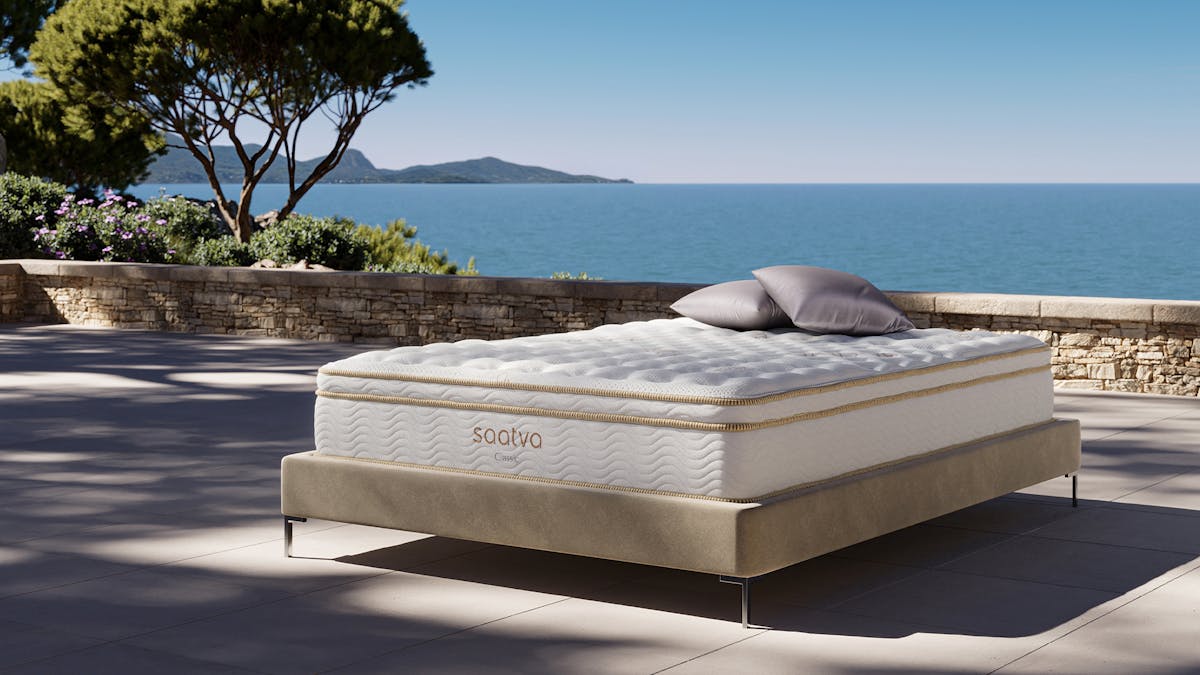
by The best mattress for a teenager is the Saatva Youth: a dual-sided design (firm side for younger teens still growing, softer side for older teens) with a reinforced center third for lumbar support during the years the spine develops most rapidly. For teens who prefer an all-foam feel, the Amerisleep AS3 is the strongest alternative with 5-zone HIVE support and CertiPUR-US certified foam.
Saatva Youth
9.3/10
- Dual-sided construction: firm side recommended for ages 3-7 while the lumbar is still developing, softer side for ages 8 and up, so one mattress adapts as the teen grows
- Reinforced center-third lumbar support specifically engineered for growing spines, not a repurposed adult design
- Open innerspring construction sleeps significantly cooler than all-foam, a real advantage for teenagers who run warm
- Organic cotton cover with Guardin antimicrobial treatment, no harmful fire retardants, free white-glove delivery and old-mattress removal
- 365-night trial and lifetime warranty, among the longest in the industry at any price point
- Ships flat for white-glove delivery, not a compressed bed-in-a-box, needs a scheduled delivery window
- $99 return processing fee applies during the trial period
The Saatva Youth is the only mainstream mattress purpose-built for growing bodies. The dual-sided design means it adapts as the teenager develops rather than becoming obsolete, the lumbar reinforcement targets the zone under most developmental stress, and the 365-night trial gives enough time to verify the fit across a full season of sleep habits.
What a teenager needs from a mattress
Adolescent sleep is not simply smaller adult sleep. Growth hormone is released in the deepest stages of recovery sleep, and the lumbar spine completes much of its structural development between ages 12 and 18. A mattress that lets the pelvis sink too far creates a reverse arch in the lumbar; one that is too firm prevents the shoulders from decompressing during side sleeping. Neither is trivial when it happens every night for years.
There are three performance requirements that matter more for teenagers than for adults:
- Zoned lumbar support: the lower back needs more firmness than the shoulder zone. A flat-foam mattress without zoning delivers the same compression resistance under hips, shoulders, and lower back simultaneously, exactly wrong for a body with active growth plates.
- Durability: teenagers use mattresses harder than adults. Sitting on the edge, active movement, and relatively high body weight per surface area all accelerate foam compression. High-density base foam (1.8 lb/ft3 or higher) or a coil support layer is a durability requirement, not a luxury.
- Off-gassing and certification: adolescents spend 8 to 10 hours with their airway within inches of the mattress surface. CertiPUR-US certification rules out ozone-depleters, PBDEs, heavy metals, and formaldehyde. GREENGUARD Gold extends that standard to VOC emission limits under real-world temperatures, and is specifically designed for extended-occupancy environments like a teenager's bedroom.
Firmness by body weight and sleep position
Medium firmness (5 to 6 out of 10) is the right starting point for most teenagers, but weight and sleep position create real exceptions:
| Teen profile | Recommended firmness | Why |
|---|---|---|
| Under 130 lb, side sleeper | Medium 5/10 | Needs shoulder and hip sinkage for spinal alignment |
| 130 to 170 lb, back or combo | Medium 5/10 to Medium-firm 6/10 | Sweet spot for lumbar support without excess pressure |
| Over 170 lb, back sleeper | Medium-firm 6/10 to Firm 7/10 | Heavier bodies compress softer foam past the support layer |
| Stomach sleeper, any weight | Firm 7/10 | Soft beds hyperextend the lumbar in this position |
Top mattress picks for teenagers
The picks below cover the full range of teen sleeping profiles: from a purpose-built dual-sided design for growing bodies to a foam-first option with certified-clean materials, a latex hybrid for eco-conscious families, and a budget pick for college move-in.
Amerisleep AS3
9.0/10
- HIVE 5-zone support targets the lumbar separately from shoulders and hips, protecting a developing spine
- Partially plant-based Bio-Pur foam is CertiPUR-US certified across all layers
- Medium 5/10 firmness works for back, side, and combo sleepers, the three most common teen positions
- 100-night trial, 20-year warranty, free FedEx delivery
- All-foam edge support is softer than a coil hybrid, teens who sit on the edge frequently may notice compression
- Heavier teenagers over 200 lb may prefer the AS3 Hybrid for stronger coil support
For teens who want the pressure-relief and motion isolation of all-foam, the AS3 delivers the most complete package: 5-zone lumbar zoning, CertiPUR-US clean foam, and a 20-year warranty that will outlast high school and college combined.
PlushBeds Botanical Bliss
8.7/10
- GOLS-certified organic Dunlop latex and GOTS-certified organic cotton cover, best-in-class eco credentials for families concerned about material purity
- Responsive latex feel sleeps notably cooler than memory foam with durable natural materials that hold up to active teen use
- Configurable firmness layers can be adjusted as the teenager's weight and sleep position evolve
- 25-year warranty, the longest in this comparison
- Significantly heavier than foam options, difficult to move between rooms or into a college dorm
- Premium price point well above foam alternatives
For eco-conscious families who want certified-organic materials and plan to keep the mattress for the full span of high school and beyond, the Botanical Bliss is the cleanest and most durable option in the lineup.
Sweetnight CoolNest
8.2/10
- Hybrid construction with pocketed coils provides more durability and airflow than budget all-foam options at a similar price
- Gel-infused memory foam comfort layer keeps surface temperature lower than standard foam
- Attractive price point for families furnishing a first bedroom or a dorm room on a fixed budget
- Build quality and long-term durability lag behind premium options, not the right choice for a mattress expected to last 10 years
- Edge support and motion isolation are basic for a hybrid in this category
If the budget ceiling is firm, the Sweetnight CoolNest is a better bet than a budget all-foam mattress because the coil base resists sagging better over the first three to five years of active teen use.
Mattress types worth considering
Purpose-built dual-sided designs
The Saatva Youth is the standout example: one side firmer for younger children, the other calibrated for older teens, with a reinforced lumbar zone running through the center. This is the only mainstream mattress designed around the reality that a teenager's weight, height, and sleep position change substantially between ages 12 and 18. An adult mattress repurposed for a teen can work, but a purpose-built design starts from the correct engineering constraints.
All-foam with zoned support
All-foam mattresses like the Amerisleep AS3 offer excellent motion isolation and pressure relief. The critical differentiator is zoning: a flat all-foam mattress delivers identical compression resistance from head to toe, which means the lumbar gets the same support as the lighter shoulder region. The AS3's HIVE 5-zone layer addresses this directly. Durability depends entirely on base foam density: anything below 1.5 lb/ft3 will soften within three years under regular teen use.
Innerspring hybrid
A coil-plus-foam hybrid combines the airflow of a pocketed coil system with the comfort of a foam layer above. For teenagers who sleep warm, the Saatva Youth's open innerspring construction measured 89.5 degrees Fahrenheit under load in independent testing, well below the 92-degree threshold where sleep quality begins to degrade. The coil base also provides better edge support and more durable long-term performance than all-foam at equivalent price points.
Organic latex
Natural latex mattresses like the PlushBeds Botanical Bliss carry GOLS and GOTS certifications covering the latex and cotton components respectively. Latex sleeps cooler than memory foam and resists body impressions better over time. The main tradeoffs are weight, price, and a buoyant feel that some teenagers prefer less than the body-hugging quality of memory foam.
Size guide for teenager mattresses
Most teenagers are better served by a full or queen than a twin. A standard twin (38x75 inches) is too narrow for active sleepers and too short for anyone over 5'8". Twin XL (38x80 inches) adds five inches of length and is worth considering for taller teens whose rooms cannot fit a full. A full (54x75 inches) is the most common compromise: enough width for active sleeping, fits most standard bedrooms, and sheets are widely available.
Planning ahead to college is sensible: most US dormitories use twin XL beds. Buying a twin XL now and re-using it in a dorm room avoids a second purchase within two to four years. The Saatva Youth is available in twin through king sizes.
Certifications that matter for teenagers
Two certifications stand above the marketing noise for a teen bedroom:
- CertiPUR-US: applies to foam components. Tests for content (PBDE flame retardants, heavy metals, formaldehyde), emissions (low VOC), and durability. The Amerisleep AS3 is CertiPUR-US certified across all foam layers.
- GREENGUARD Gold: applies to the whole product. Sets strict limits on VOC emissions under real-room temperature conditions and is specifically designed for environments with extended occupancy. The Saatva Classic and Saatva Youth carry GREENGUARD Gold certification. The standard is stricter than CertiPUR-US.
Avoid mattresses with neither certification for a teenage user. The exposure window is 8 to 10 hours per night for years, making material standards more consequential here than in most adult purchasing decisions.
Budget and expected lifespan
A quality mattress for a teenager should last 8 to 10 years with a waterproof protector and quarterly rotation. At the price points of the Saatva Youth and Amerisleep AS3, that works out to roughly $120 to $175 per year, comparable to a decent pair of running shoes worn daily. Budget mattresses in the $300 to $500 range typically last three to five years before developing soft spots that disrupt sleep and spinal alignment.
The lifetime warranty on the Saatva Youth and the 20-year warranty on the Amerisleep AS3 reflect confidence in build quality that budget options cannot match. Both warranties cover manufacturing defects and sagging greater than 1.5 inches, the primary failure mode of inferior foam bases.
For a teenager, the Saatva Youth is the purpose-built choice: dual-sided design that adapts as the teen grows, reinforced lumbar zone, GREENGUARD Gold certification, and a 365-night trial. The Amerisleep AS3 is the best all-foam alternative with 5-zone HIVE lumbar support and CertiPUR-US certified foam. Use the full trial period to confirm fit.
Frequently asked questions
What size mattress is best for a teenager?
Full or queen for most teenagers. A full (54x75 inches) fits the majority of standard bedrooms and provides enough width for active sleepers. Twin XL (38x80 inches) is worth considering for taller teens in smaller rooms, and carries forward to most college dormitories. Standard twin is the most common size mistake: both too narrow and too short for anyone over 5'8".
How firm should a teenager's mattress be?
Medium (5/10) for most teenagers under 170 lb regardless of sleep position. Heavier teens or dedicated back sleepers benefit from medium-firm (6/10). Stomach sleepers of any weight need firm support (7/10) to prevent lumbar hyperextension. The Saatva Youth's teen side (ages 8 and up) and the Amerisleep AS3 at medium 5/10 both cover the widest range of teen profiles.
How long should a teenager's mattress last?
8 to 10 years with a waterproof protector and regular rotation every three months. Signs the mattress needs replacing: visible sagging deeper than 1.5 inches, consistent morning back or neck pain, or the teenager sleeping noticeably better elsewhere. The Saatva Youth and Amerisleep AS3 are both warrantied to this performance expectation.
Is memory foam or a spring mattress better for a teenager?
It depends on heat sensitivity. For temperature-neutral sleepers who want maximum pressure relief and motion isolation, the Amerisleep AS3 all-foam performs well. For teenagers who sleep warm, the Saatva Youth's open innerspring construction runs measurably cooler. Both designs support spinal alignment when the lumbar zoning is correct.
Does a teenager need a special teen mattress?
Not always, but the Saatva Youth is one of the few purpose-built designs that actually addresses the changing needs of a growing body. A good adult mattress with the right firmness and zoning works fine for most teens. What matters is the correct firmness for their weight and sleep position, certified-clean foam or coil construction, and a base dense enough to last 8 to 10 years under active use.
This guide is part of our Best Mattress by Age & Life Stage hub, compare all the top picks and narrow down your choice there.