
 by
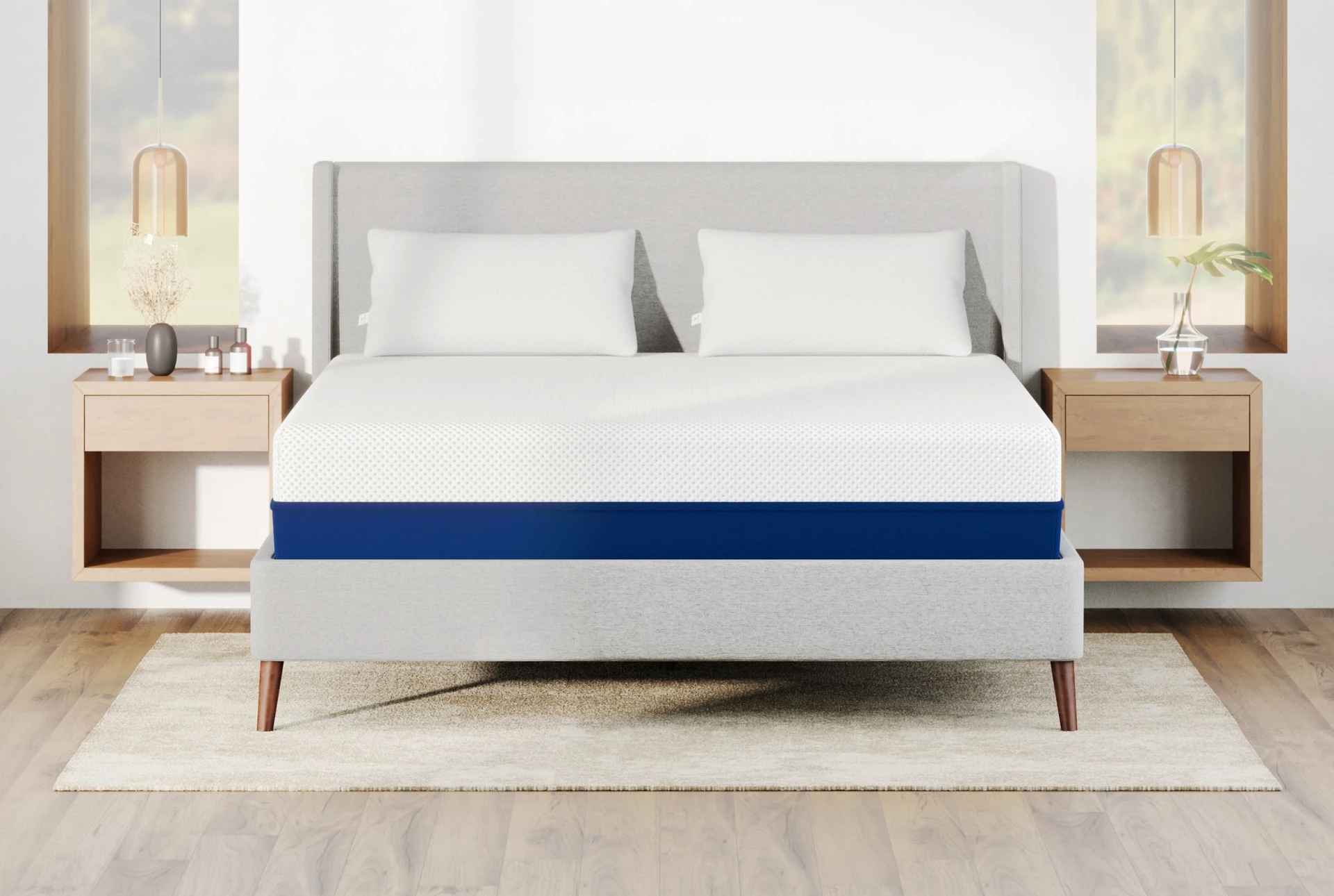
by Amerisleep AS3
- Medium feel for families choosing an adult-size bed for an older child
- 12-inch all-foam AS3 with Bio-Pur foam and HIVE 5-zone support
- Amerisleep lists a 100-night mattress trial and 20-year warranty
- The AS3 is not a crib or toddler-bed mattress; choose a purpose-built crib-size mattress for infants and toddlers
For an older child moving to a standard twin or larger bed who prefers a Medium surface, AS3 is our Amerisleep option. It is not a substitute for a crib-size mattress or a purpose-built young-child model.
Our #1 pick for older children moving to a standard bed is the Amerisleep AS3. The runner-up is the Saatva Youth: dual-sided construction (firm for ages 3-7, medium for ages 8-12), GREENGUARD Gold certified, organic cotton cover, 365-night trial, lifetime warranty. For families who want organic latex, PlushBeds Healthy Child is the top natural alternative. For preteens ready for an adult-grade mattress, the Amerisleep AS3 in twin works well from age 8 onward.
Saatva Youth
9.2/10
- Dual-sided design covers ages 3-12 on one mattress, flip when the child is ready for the softer side
- GREENGUARD Gold certified, the most rigorous emissions standard for children's sleep environments
- Organic cotton cover with natural wool flame barrier, no chemical flame retardants
- 416-coil innerspring core for durable, responsive support that won't sag under a growing child
- White-glove delivery, 365-night trial, lifetime warranty at ~$699 twin
- Twin size only, no full option for larger rooms or older tweens who want more width
- Innerspring feel won't suit kids who prefer the conforming hug of foam
Purpose-built for childhood with specs no generic adult mattress can match: one flip covers nearly a decade of sleep. The GREENGUARD Gold certification makes it the defensible choice for parents who care about what their child breathes at night.
Check Today's Saatva Youth Price
PlushBeds Healthy Child
8.8/10
- GOLS-certified organic Dunlop latex, the most credible certification for organic latex claims
- GOTS-certified organic cotton cover, verified at every stage of the supply chain
- Responsive, buoyant feel, latex naturally resists dust mites and mold
- 25-year warranty, longer than almost any kids-specific mattress
- Higher price point than foam or hybrid options
- Heavier than foam mattresses, harder to rotate or flip
For parents committed to organic, non-toxic materials with third-party credentials behind the claims, the PlushBeds Healthy Child is the most thoroughly certified option in this category.
Puffy Original
8.5/10
- Medium feel works for school-age kids and preteens who prefer the conforming hug of foam
- CertiPUR-US certified, no harmful chemicals
- Lifetime warranty at a mid-range price
- Available in full, accommodates tweens who want more room
- Runs slightly warm compared to coil or latex options
- Not purpose-built for children, better from age 6 onward
For families who want the pressure-relieving hug of foam at a reasonable price with a lifetime warranty, the Puffy is a practical choice for school-age kids and active preteens.
Age-appropriate firmness guide
One of the most common mistakes parents make when choosing a children's mattress is applying the same firmness logic they use for themselves. Children's bodies interact with mattress materials differently than adult bodies for one fundamental reason: weight. A 40-pound 5-year-old and a 160-pound adult compress the same mattress to very different depths. A surface that feels medium to an adult may barely give at all under a child's lighter frame.
Ages 3-5 (early toddler to preschool)
Children transitioning from a crib benefit from a medium-firm surface (6-7 on a 10-point scale). Deeply conforming memory foam can feel unstable to a small child still developing balance and body awareness during sleep. A firmer surface also reduces the rolling-off-the-bed risk during the transition period. Look for mattresses with firm cores and no pillow-top or euro-top surfaces.
Ages 6-9 (school age)
Medium-firm (5.5-6.5/10) is the sweet spot. Children who are stomach sleepers still benefit from a slightly firmer surface; side sleepers need a bit more give at the shoulder and hip. A large-framed 8-year-old at 70+ lbs will compress a mattress more similarly to a petite adult than to a 45-lb 6-year-old, factor in body weight, not just age.
Ages 10-12 (preteen)
Preteens are approaching adult body weight and firmness preferences. Most can use a standard adult-grade mattress in twin or full size. This is the right age to invest in a higher-quality mattress that carries through high school; a quality hybrid or memory foam mattress purchased at age 10-11 should still perform well at age 16-18 with proper maintenance.
Top kids mattresses compared
| Mattress | Type | Ages | Certifications | Trial | Price (twin) |
|---|---|---|---|---|---|
| Saatva Youth | Innerspring hybrid | 3-12 | GREENGUARD Gold | 365 nights | ~$699 |
| PlushBeds Healthy Child | Organic latex | 3-12 | GOLS, GOTS | 100 nights | ~$1,399 |
| Puffy Original | All-foam | 6-12 | CertiPUR-US | 101 nights | ~$1,199 |
| Amerisleep AS3 | All-foam Bio-Pur | 8-12 | CertiPUR-US | 100 nights | $999 Twin on sale |
Twin vs. full: choosing the right size
Twin mattresses (38 x 75 inches) are the default for children ages 3-10. They fit all standard bunk beds, cost less, and take up less floor space in smaller bedrooms. For one child sleeping alone, a twin is rarely too small.
Full mattresses (54 x 75 inches) offer 16 additional inches of width, worth it for children who move around a lot, sleep with a pet, or when a parent regularly reads to the child at bedtime. A full provides room to grow through early adolescence, when shoulders and hips widen. Budget note: full mattresses and bedding cost 15-30% more than twin.
Safety certifications: what to look for
Children spend 10-13 hours per night on their mattress during years when their respiratory and neurological systems are developing most rapidly. The certifications that provide genuine verified protection:
- GREENGUARD Gold: Tests for more than 10,000 chemicals and VOCs using stricter limits appropriate for children's environments. The strongest available certification for parents with respiratory or chemical-sensitivity concerns.
- CertiPUR-US: Verifies foam is manufactured without ozone depleters, PBDE flame retardants, mercury, lead, heavy metals, and formaldehyde. Independently administered. Minimum standard for any foam-containing children's mattress.
- OEKO-TEX Standard 100: Tests finished textiles for harmful substances, meaningful for evaluating cover fabrics and fill materials.
- GOTS and GOLS: For organic material claims, GOTS (Global Organic Textile Standard) for cotton and GOLS (Global Organic Latex Standard) for latex are the credible certifications. "Natural" or "organic" without these certifications is unregulated marketing language.
Waterproof protection: essential pairing
Every children's mattress needs a dedicated waterproof mattress protector from the first night. Without a waterproof layer, moisture penetrates the foam or spring fill within seconds, creating a permanent environment for mold and bacteria that cannot be remediated without replacing the mattress entirely.
What to look for: fitted with deep pockets (18+ inches), TPU or polyurethane laminate backing (free from PVC and phthalates), machine washable and dryer safe. Consider owning two, one washes while the other is on the bed.
Preteen alternative: Amerisleep AS3
For children aged 8-12 who are ready for an adult-grade mattress, the Amerisleep AS3 in twin or full is a strong option. Its Medium Bio-Pur foam may suit preteens ready for an adult mattress, CertiPUR-US certified, and the 20-year warranty will outlast any purpose-built children's mattress, carrying through the teen years and beyond. It's not purpose-built for young children, but from age 8 onward it's a practical long-term investment.
See the Amerisleep AS3 in twin sizes
Quick buying guide by age and priority
Ages 3-5, transitioning from crib: Saatva Youth on the firm side. Purpose-built for this stage with GREENGUARD Gold certification and a firm, flat surface appropriate for lighter body weights.
Ages 6-7, active sleepers: Saatva Youth flipped to the medium side at age 7-8, or the PlushBeds Healthy Child for families prioritizing organic materials.
Ages 8-10, developing real sleep preferences: Saatva Youth (still works) or an adult-grade mattress like the Amerisleep AS3 in twin if they're ready for the next step.
Ages 10-12, approaching adult sleep needs: Amerisleep AS3 in twin or full. Adult-grade quality that will serve 8-10 more years into young adulthood.
For ages 3-12, the Saatva Youth is the #2 pick: dual-sided design covers the full childhood span, GREENGUARD Gold certified, 365-night trial, lifetime warranty. For organic latex, PlushBeds Healthy Child is the best certified alternative. For preteens aged 8+, the Amerisleep AS3 in twin offers a 20-year warranty and adult-grade quality that carries through adolescence.
When to transition from crib to big bed
There is no single correct age. The indicators are practical rather than developmental:
- Height threshold: When a child reaches 35 inches tall, the crib's side rail is no longer at a safe height to prevent climbing out. Most pediatricians use this as the baseline transition indicator.
- The climber problem: If your child attempts to climb out of the crib, regardless of height, it's time to transition. A fall from a crib side rail is a real injury risk.
- Toddler bed as middle step: Uses the same crib mattress, which makes it economical. Many families skip it entirely and go crib-to-twin directly. A twin mattress on the floor for the first few months eliminates fall risk during adjustment.
- Sleep regression is normal: Most children experience some sleep disruption in the weeks after transition. Consistency in bedtime routines is more effective than any mattress change in resolving it.
Frequently asked questions
What firmness is best for a child's mattress?
Ages 3-7: medium-firm (6-7/10). Ages 8-12: medium-firm to medium (5-6.5/10). Children's lighter body weight means they don't compress mattresses as deeply as adults; a surface that feels medium to an adult will feel firm to a 45-pound child. Stomach sleepers benefit from firmer support; side sleepers need slightly more give at the shoulder and hip.
Should I buy a twin or full mattress for my child?
Twin (38 x 75 inches) for ages 3-10 in smaller rooms; it fits all standard bunk beds and costs less. Full (54 x 75 inches) if you want the mattress to serve through the teen years, the child shares the bed with a pet, or the bedroom space allows. Both sizes are 75 inches long.
What safety certifications should I look for?
CertiPUR-US (minimum for any foam mattress), GREENGUARD Gold (most comprehensive for children's environments), and OEKO-TEX Standard 100 (for textile components). GOTS and GOLS for organic material claims. Avoid mattresses with no third-party certifications.
When should a child transition from a crib to a big kid mattress?
When the child reaches 35 inches tall, when they start attempting to climb out of the crib, or when they're consistently asking for a big bed. Most transitions happen between ages 2-3.5. A twin mattress on the floor eliminates fall risk during the adjustment period.
Do kids need a special mattress or can they use an adult mattress?
Children 3-7 benefit from purpose-built children's mattresses with firmer support appropriate for lighter body weights. Children 8-12 can use adult-grade mattresses in twin or full with appropriate firmness. The Amerisleep AS3 serves both older children and adults well.
How long does a kids' mattress last?
8-10 years with proper maintenance (waterproof protector, 180-degree rotation every 3-6 months). Premium hybrid mattresses can last longer. Signs it's time to replace: visible sagging, the child complaining of back or shoulder pain, or consistent sleep disruption in a previously good sleeper.
Should a kids' mattress be waterproof?
Every children's mattress needs a waterproof protector, either built in or added separately. A fitted protector with TPU or polyurethane backing is the most effective protection and makes cleanup simple.
Is memory foam safe for children?
CertiPUR-US certified memory foam is safe for children ages 3 and above. It is not recommended for infants under 2 due to CPSC firmness requirements for cribs. For children 3+, certified memory foam is appropriate and comfortable, especially for side sleepers.
Last updated: June 2026. MattressNut reviews are independently researched. Affiliate partnerships do not influence editorial ratings or recommendations.
Related Sleep Lab Guides
This guide is part of our Best Mattress by Age & Life Stage hub, compare all the top picks and narrow down your choice there.
Also from Amerisleep
If you want a medium all-foam mattress, the Amerisleep AS3 is our pick.