
 by
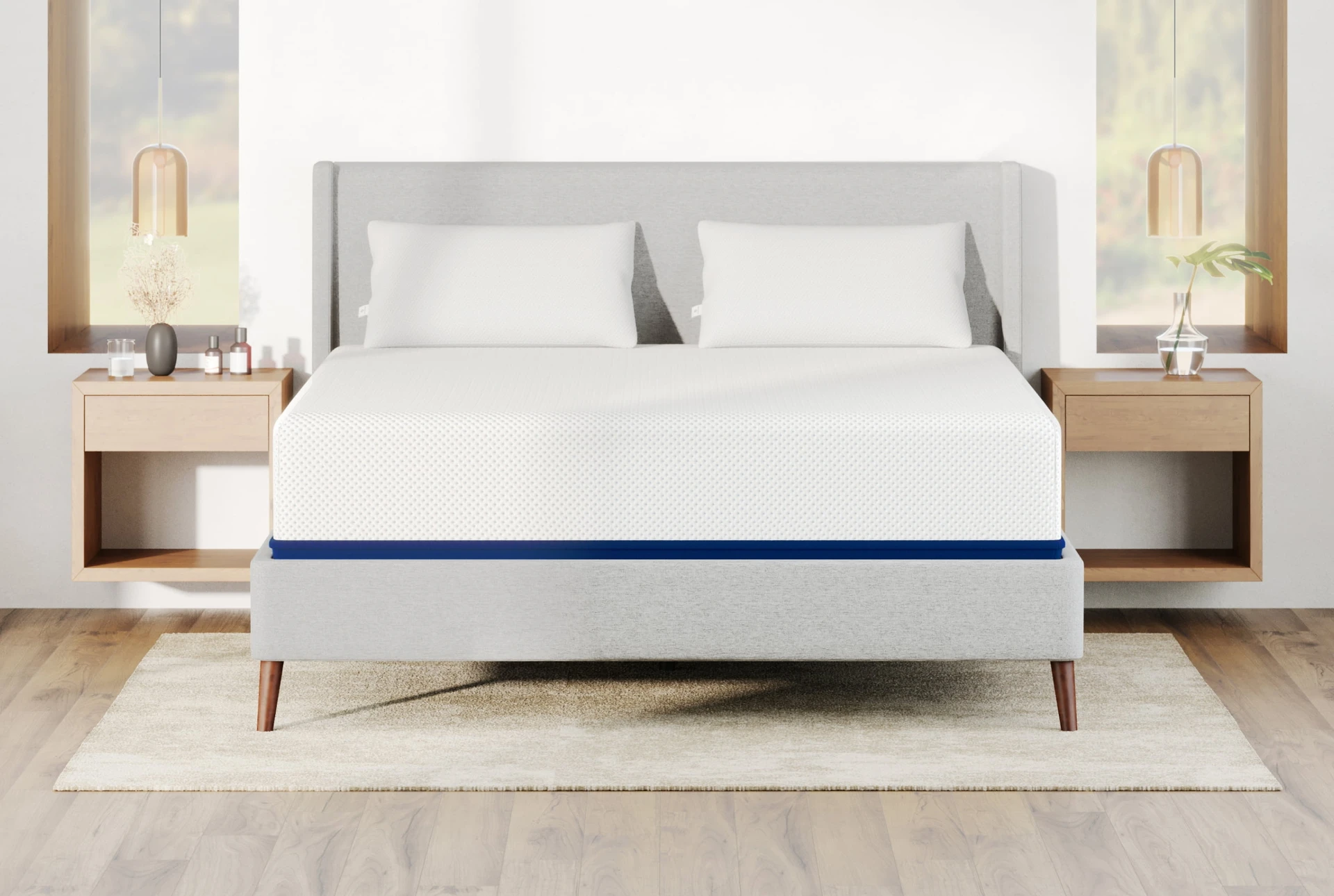
by Our first recommendation for lightweight sleepers is the Amerisleep AS5. Its soft feel and Bio-Pur memory foam are a useful starting point if a firmer mattress feels hard under your shoulders or hips. Body weight is only part of the choice: stomach sleepers and people who dislike deep cushioning may prefer a different feel.
Amerisleep AS5
The AS5 is Amerisleep's soft-feel option, with Bio-Pur memory foam. Consider it when you want more cushioning than a firmer mattress provides. Softness is not suitable for every sleeping position, so check that your hips remain comfortably supported.
Why lightweight sleepers need a different mattress
Most mattress reviews are written for the average sleeper, which industry testing labs define as 150-230 lbs. If you weigh significantly less, you interact with mattresses in a fundamentally different way. A bed rated "medium-firm" for a 185-pound back sleeper can feel like sleeping on a board to someone who weighs 115 lbs, because the surface layers never compress enough to activate the pressure-relief foam underneath.
The core problem is force-to-compression ratio. Foam and coil systems are engineered to deflect proportionally to load. Lightweight sleepers apply less force, which means soft and medium-soft foams contour well, while firmness ratings of 7 or above often deliver essentially zero pressure relief. The result: shoulder and hip discomfort, poor spinal alignment, and fragmented sleep, even on an objectively well-built mattress.
Research on sleep surface mechanics shows that pressure-relieving performance depends on both material properties and applied load. For reference, a 3 PCF memory foam requires roughly 10-15 ILD force to deflect one inch, a force level easily achieved at 180 lbs but marginal at 110 lbs. This is why firmness choice matters more for lightweight sleepers than for any other weight category.
What firmness is right for lightweight sleepers?
For people under 130 lbs, soft to medium (3 to 5 out of 10) works best across most sleep positions. For people between 130 and 150 lbs, medium (5/10) works well, with slight variation by position:
- Side sleepers under 130 lbs: soft to medium-soft (3-4/10). Shoulders and hips need genuine contouring at low load. A firm mattress leaves pressure points unrelieved.
- Back sleepers 100-150 lbs: medium (5/10) is the sweet spot. Enough contouring for the lumbar curve, enough base support to avoid sag.
- Stomach sleepers under 150 lbs: medium to medium-firm (5-6/10). Stomach sleeping requires hip elevation to avoid lumbar hyperextension; a too-soft mattress allows excessive hip sinkage even at light weight.
- Combination sleepers: soft to medium (4-5/10) covers all positions without a severe trade-off in any one.
Top mattresses for lightweight sleepers (compared)
| Mattress | Type | Firmness | Best for lightweight | Trial | Queen from |
|---|---|---|---|---|---|
| Amerisleep AS5 | All-foam | Soft | Very good, HIVE 5-zone, side/back sleepers | 100 nights | Check current price |
| Saatva Classic (Plush Soft) | Innerspring hybrid | Plush Soft 3/10 | Excellent, euro pillow-top, all positions | 365 nights | $1,395 |
| Puffy Lux | All-foam hybrid | Medium-soft 4.5/10 | Good, cloud-like feel at light loads | 101 nights | ~$1,099 |
Saatva Classic
8.9/10
- Plush Soft option (3/10) compresses properly under lighter body loads, unlike high-ILD foam mattresses
- Euro pillow-top provides genuine shoulder and hip contouring at weights under 130 lbs
- Dual-coil construction keeps the sleep surface responsive, so you feel lifted rather than buried
- Lumbar reinforcement zone maintains spinal alignment even at reduced body weight
- 365-night trial, lifetime warranty, free white-glove delivery and old mattress removal
- Motion transfer is higher than all-foam due to coil construction
- $99 return fee applies during the trial period
- Heavier and ships flat, not compressed in a box
The Saatva Classic in Plush Soft is the top pick for lightweight sleepers because its coil-plus-pillow-top construction responds proportionally to lower body loads. Where dense foam mattresses stay inert at 110-130 lbs, the Saatva's soft euro pillow-top activates fully, delivering real pressure relief where lighter bodies need it most: shoulders and hips.
Mattress thickness for lightweight sleepers
Thickness matters differently for lightweight people. A 14-inch mattress with 4 inches of soft comfort foam and 8 inches of support coils is built for heavy-body load distribution. For a 115-lb sleeper, those 4 inches of comfort foam may only compress 1-1.5 inches, leaving the deeper layers inert.
The ideal range for lightweight sleepers is 10 to 12 inches. This provides enough material for full pressure-relief activation without the over-engineering built for heavier loads. Thinner mattresses under 8 inches may not have adequate support-layer depth for spinal alignment during long sleep sessions.
Construction matters more than raw thickness. A 12-inch mattress with a 3-inch low-ILD comfort layer will outperform a 14-inch mattress with a 2-inch high-ILD layer for a lightweight sleeper every time.
All-foam vs hybrid for lightweight sleepers
Both can work well, with some key differences:
All-foam advantages for lightweight sleepers: lower-ILD foams respond to less force, providing full contouring at body weights under 130 lbs. Motion isolation is near-perfect, important if you share a bed. No coil spring-back resistance means the surface reads your actual body shape at low load rather than averaging across multiple zones.
Hybrid advantages for lightweight sleepers: pocketed coils provide a responsive, non-sinking sleep surface that lightweight sleepers often prefer over the dense memory-foam feel. Airflow through the coil core runs cooler than all-foam. The Saatva Classic's dual-coil design includes a lumbar reinforcement zone that supports lightweight back sleepers without a jarring firmness jump. The euro pillow-top activates properly at lower body loads, unlike high-density foams that need more weight to compress.
The bottom line: if you tend to run warm or prefer a bouncy, hotel-like feel, the Saatva Classic in Plush Soft is the strongest answer for lightweight sleepers. If pressure relief, motion isolation, and quieter sleep are priorities, the Amerisleep AS3 is the better all-foam choice.
Sleep position guide for lightweight sleepers
- Side sleeping: the highest-pressure position for hips and shoulders, regardless of weight. Soft to medium is the minimum. The Saatva Plush Soft's euro pillow-top provides targeted shoulder relief at light loads that stiffer mattresses cannot replicate.
- Back sleeping: medium firmness covers most lightweight back sleepers. The lumbar curve needs slight contouring without the lower back falling into the mattress. Both the Saatva Classic (any firmness) and AS3 perform well here.
- Stomach sleeping: lightweight stomach sleepers get away with a true medium more easily than heavier sleepers, but still need enough base resistance to keep the hips level. The Saatva Classic in Luxury Firm or the AS3 both work.
- Combination sleeping: soft to medium (4-5/10) is the universal answer. The Saatva Plush Soft and AS3 both cover combination sleepers well, with the Saatva adding responsive coil bounce for position changes.
Our first recommendation in this guide is the Amerisleep AS5. The AS5 is Amerisleep's soft-feel option, with Bio-Pur memory foam. Consider it when you want more cushioning than a firmer mattress provides. Softness is not suitable for every sleeping position, so check that your hips remain comfortably supported.
Frequently asked questions
What firmness is best for a 120-lb person?
Soft to medium (3-5 out of 10) works best for most 120-lb sleepers, regardless of position. Firmer mattresses feel significantly harder because lighter bodies don't compress the surface layers enough to reach the softer foam underneath. If you're a stomach sleeper at 120 lbs, medium (5/10) gives adequate hip support without going so firm that pressure relief disappears.
Is a spring or foam mattress better for lightweight people?
Both can work if the comfort layers are genuinely soft. The Saatva Classic in Plush Soft is the top hybrid pick because its euro pillow-top compresses at lower body loads, while the Amerisleep AS3's low-ILD foam contours well for all-foam preference. Avoid firm innerspring models built for body weights above 180 lbs: they will feel like a padded board at 115-130 lbs regardless of the comfort layer.
Can a lightweight person sleep on a medium-firm mattress?
It depends on your specific weight and sleep position. At 150 lbs, a medium-firm (6/10) is viable for back and combination sleepers. At 115 lbs, most medium-firm mattresses feel genuinely firm because you don't generate enough force to compress the comfort layers. Lightweight side sleepers at any weight under 150 lbs should avoid medium-firm and lean toward soft or medium.
Do lightweight sleepers need a special mattress?
Not a mattress built exclusively for light sleepers, but they should prioritize soft to medium firmness and lower-ILD comfort foams. Most mainstream "best mattress" lists are calibrated for average body weights and will steer lightweight buyers toward mattresses that feel too firm in practice. The key specs to look for: comfort layer ILD under 20, overall firmness rating of 3-5 out of 10, and a long trial period to verify the feel matches your body.
Amerisleep AS5
The AS5 is Amerisleep's soft-feel option, with Bio-Pur memory foam. Consider it when you want more cushioning than a firmer mattress provides. Softness is not suitable for every sleeping position, so check that your hips remain comfortably supported.