
 by
by Quick answer: The Saatva Classic is my pick, provided its current model page confirms the American-made standard you expect. I’d skip any mattress whose origin wording is vague or outdated.
- Saatva’s product page lists 11.5-inch and 14.5-inch profiles, while saatva-mattress.com states a 365-night trial.
- Sleep Advisor reports that the Amerisleep As2 has a $500 price reference, a 100-night trial, and a 20-year warranty.
- Puffy’s website lists the Puffy Lux at $749.
Updated July 2026 · Reviewed for accuracy
OUR VERDICT
For best mattress made in america, the Saatva Classic is the pick we’d order first — every product below has real strengths, and the full comparison shows exactly why this one comes out on top.
OUR #1 PICK OF 3 COMPARED · UP TO $334 OFF
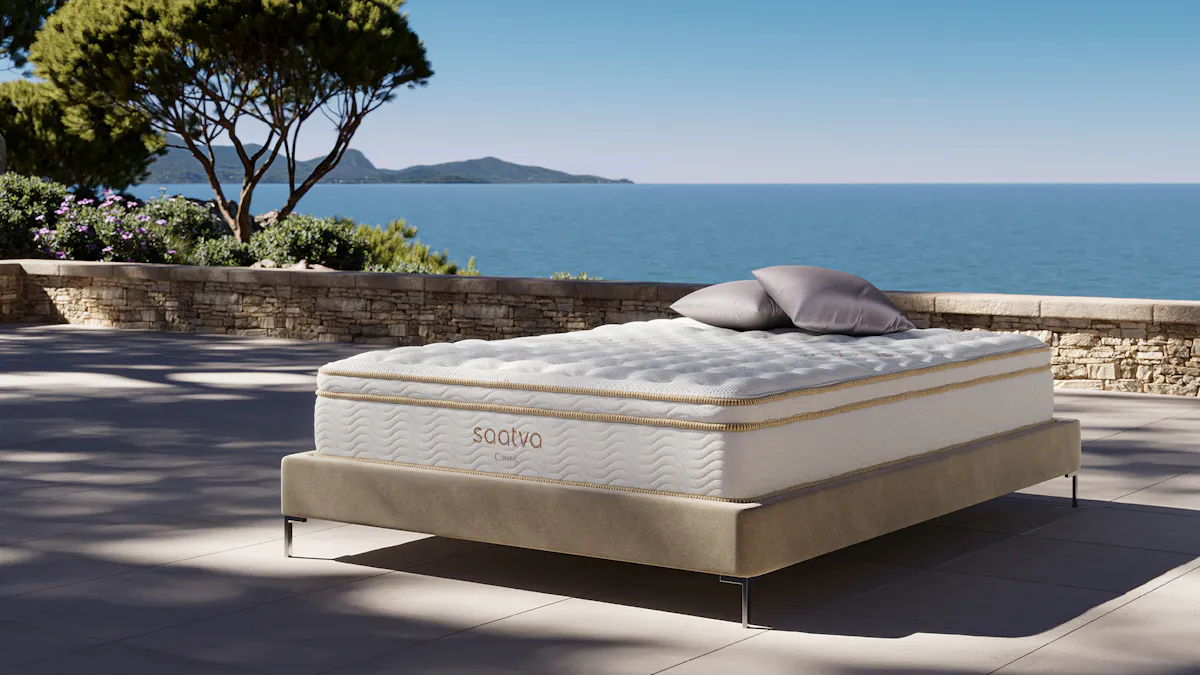
Saatva Classic
- Mattress Best-supported use case Documented facts What remains unverified here Saatva Classic A shopper who wants a profile choice and the longest stated trial found in the cited facts.
- Our #1 pick of the 3 products compared on this page
- Order direct from the brand — current price, trial and warranty terms are on the official product page
Our top 3 picks compared


An American-made label matters, but it doesn’t tell me how a mattress will feel or how well its materials will hold up. Origin, construction, comfort, and purchase policies are separate buying questions.
I’ve compared only product details tied to named manufacturer pages or publications. Where the evidence doesn’t establish a feature, I flag the gap instead of filling it with assumptions.
What “made in America” should prove before you buy
The first proof I want is a current, model-specific manufacturer statement identifying where the mattress is assembled. A general company story isn’t enough because you’re buying a particular model, not a brand biography.
I also separate final assembly from the origin of the foam, latex, fabric, steel, adhesives, and other components. If a manufacturer discusses only assembly, I don’t automatically treat that as evidence that every material is domestically sourced.
All American Made advises shoppers to consider where a mattress comes from, how it’s made, and what it’s made of. That’s the right framework. “Made in America” should be the start of the investigation, not the entire verdict.
Terminology can be slippery, so compare the exact wording against the questions in my broader guide to mattresses made in the USA. If a page uses phrases such as “designed,” “crafted,” or “assembled,” ask the manufacturer what that wording covers.
Origin checklist
- Look for a statement tied to the exact mattress model.
- Distinguish final assembly from component sourcing.
- Ask whether every size and configuration uses the same factory.
- Save the origin and policy wording available when you order.
At-a-glance comparison of the documented facts
Height, trial, warranty, and price coverage differ sharply across these mattresses. The table stays narrow on purpose: it shows what the named sources establish and what you still need to confirm.
| Mattress | Best-supported use case | Documented facts | What remains unverified here |
|---|---|---|---|
| Saatva Classic | A shopper who wants a profile choice and the longest stated trial found in the cited facts. | Saatva’s product page lists 11.5-inch and 14.5-inch profiles and $2,229. Saatva-mattress.com states a 365-night trial. | Model-specific origin language, coil gauge, foam density, and detailed material sourcing. |
| Amerisleep As2 | A policy-focused shopper who wants published trial and warranty durations before investigating construction. | Sleep Advisor reports $500, a 100-night trial, and a 20-year warranty. | Height, layer specifications, current origin wording, and manufacturer-confirmed purchase terms. |
| Puffy Lux | A price-led shopper willing to verify every construction and policy detail directly. | Puffy’s website lists $749. | Trial, warranty, height, construction specifications, and model-specific manufacturing origin. |
Don’t read the prices as an automatic same-size comparison. They come from different named pages, and the records don’t establish an identical size, configuration, or pricing basis. Confirm comparable specifications before deciding that one costs less.
Mattress Clarity says American-made choices span different mattress types, firmness levels, and price ranges. That supports a broader point: country of manufacture narrows the field, but it doesn’t settle whether a bed suits your body or preferences.
My rule: Missing evidence isn’t proof that a mattress is poorly made. It is a reason to ask more questions before paying.
Saatva Classic: height and trial details
According to Saatva’s product page, the Saatva Classic comes in 11.5-inch and 14.5-inch profiles and is listed at $2,229. Saatva-mattress.com states that its trial lasts 365 nights. Those are useful buying facts, but they aren’t comfort or durability scores.
The profile choice gives you a practical decision to make. I’d compare each option with the height of the bed frame, foundation, sheets, and preferred sitting position. I wouldn’t assume the taller version is softer, stronger, or longer-lasting without a layer-by-layer specification supporting that conclusion.
For durability, I want the coil design and gauge, the type and density of each foam, the thickness of the comfort layers, and the materials used around the perimeter. The cited height figures don’t answer those questions. Mattress thickness is a dimension, not a quality grade.
The stated trial provides time to evaluate the purchase, but the headline duration is only part of the policy. Before ordering, read the current rules for returns, exchanges, transportation charges, required foundations, and mattress condition. Those details determine how usable a trial really is.
What I’d confirm
- The exact manufacturing-origin statement for the selected profile.
- The complete comfort-layer and support-core breakdown.
- Current trial conditions and any return-related costs.
- Compatibility with the planned frame or foundation.
Amerisleep As2: trial and warranty context
Sleep Advisor reports the Amerisleep As2 at $500 with a 100-night trial and a 20-year warranty. Because those figures come from a third-party review, I’d confirm the current price and policy language with the manufacturer before treating them as checkout terms.
The trial and warranty answer different questions. A trial concerns the initial evaluation period. A warranty concerns specified defects and remedies under its written terms. Neither figure establishes firmness, pressure relief, temperature control, motion isolation, edge strength, or expected material wear.
I read a warranty as a contract, not a durability certificate. Check what counts as a covered defect, whether coverage changes over time, which exclusions apply, and who handles transportation. A long headline duration can still leave important practical questions unanswered.
The construction gap matters just as much. Without a verified layer breakdown, foam densities, mattress height, or support-core specification, I can’t responsibly match this model to a sleeping position or predict how its feel will change with use.
Best questions for the manufacturer
- Where is this exact model assembled?
- Where do its main components come from?
- What materials and densities are used in each layer?
- What do the current trial and warranty exclude?
Puffy Lux: what one price figure can’t establish
Puffy’s website lists the Puffy Lux at $749. That is the only product-specific figure documented here, so I won’t invent a trial duration, warranty length, mattress height, material specification, or performance result around it.
A manufacturer-listed price is a useful starting point, but it can’t tell you whether the mattress has the right construction for your body. It also doesn’t establish value by itself. Value depends on what sits inside the cover, how the support system is built, and what protections accompany the purchase.
Before treating this as a serious match, request a model-specific origin statement and a full layer breakdown. I’d also verify the current trial, warranty, return process, foundation requirements, and delivery terms directly. If those answers remain vague, the lower-risk move is to keep researching.
The evidence boundary: A price can establish the cited price reference. It can’t establish comfort, construction quality, domestic content, or long-term durability.
How I’d choose without getting fooled by the label
Price tells you the quoted cost. Trial tells you the stated evaluation window. Warranty tells you how long written coverage may run. Height tells you the mattress profile. None of those facts substitutes for an origin statement or construction specification.
I start with provenance. Ask for model-level language explaining assembly and component sourcing. Then move to construction: foam type and density, latex type, coil design and gauge, layer thicknesses, perimeter structure, cover materials, and any material certifications the manufacturer specifically documents.
Next comes personal fit. Dweva’s American-made mattress guide treats cooling, support, pressure relief, motion isolation, and value as separate assessment categories. I’d use those categories as questions, but I wouldn’t assign any of these mattresses a performance result without model-specific evidence.
Firmness labels deserve the same caution. Mattress Clarity notes that American-made options cover different firmness levels, but a label alone doesn’t tell me how deeply a particular sleeper will sink. Body weight, sleeping position, comfort-layer design, and support-core response all influence the practical result.
My buying order
- Verify origin: Get current wording for the exact model and configuration.
- Inspect construction: Look past total height and request the full internal breakdown.
- Assess fit: Consider support, pressure distribution, heat, movement, and edge behavior separately.
- Read policies: Check the complete trial, return, exchange, and warranty terms.
- Compare cost: Use the same size and equivalent configuration for every quote.
If you’re still defining the right feel, my guide to what makes the best mattress for a particular sleeper gives that decision more context. Country of manufacture should filter suitable choices, not override basic comfort and support needs.
Shopping timing comes later. Once the model and construction check out, compare the current offer with the patterns covered in the best time to buy a mattress. Also confirm whether the seller is authorized and which return policy governs the transaction, a distinction explained in my guide to where to buy a mattress.
FAQ
Does “made in America” mean every mattress material is domestic?
I wouldn’t assume that. Look for separate, model-specific statements covering final assembly and the origin of major components, then ask the manufacturer to clarify anything the page leaves open.
Are the listed mattress prices directly comparable?
No. According to Saatva’s product page, the Saatva Classic is listed at $2,229; Sleep Advisor reports the Amerisleep As2 at $500; and Puffy’s site lists the Puffy Lux at $749. The named sources don’t establish an identical size or pricing basis, so verify like-for-like quotes.
Does a longer mattress trial predict better comfort?
No. A trial is a purchase policy, not a performance measurement. Read its conditions carefully, then judge comfort and support using the exact mattress construction and your own fit requirements.
Keep the categories separate: Origin describes provenance, construction describes the mattress, and policies describe the transaction.
Does a long warranty prove that a mattress will last longer?
Not by itself. I need the warranty’s defect definitions and exclusions alongside foam density, coil specifications, layer design, and other construction details before making a durability judgment.
Which construction details should I request?
Ask for a complete layer breakdown, foam types and densities, latex type if applicable, coil design and gauge, comfort-layer thicknesses, perimeter construction, and cover materials. If the manufacturer won’t provide meaningful specifications, don’t treat overall mattress height as a substitute.
FINAL VERDICT
Of the 3 products compared for best mattress made in america, the Saatva Classic ranks first. The cards above show where each alternative fits; confirm current dimensions and terms on its product page.
Saatva Classic