
 by
by Quick answer: A futon couch bed makes sense when space-saving flexibility matters more than deep sofa cushioning. I’d treat it as a two-part sleep system: a stable convertible frame and a replaceable mattress chosen for how often it will be used flat. Nightly sleepers should prioritize supportive fill and easy mattress replacement. Occasional hosts can accept a thinner, easier-folding design.
- The exposed mattress serves as both the seat and sleep surface.
- Frame stability matters as much as mattress comfort.
- The room must accommodate the furniture in both positions.
- A replaceable mattress can make the purchase more useful over time.
Updated July 2026 · Reviewed for accuracy
My verdict is straightforward: a futon couch bed is a practical small-room tool, but it carries a foldability tax. The mattress must bend for sofa mode, so it cannot be judged exactly like a fixed mattress. The frame must also convert without wobbling, pinching the mattress, or becoming a chore to operate.
That tradeoff is reasonable in a studio, dorm, office, or guest room. It is less convincing for someone expecting the deep seat of a conventional sofa and the uninterrupted support of a permanent bed. From a materials standpoint, the strongest setup is usually the one that separates the frame from the mattress. That lets each component be judged, maintained, and eventually replaced on its own.
The Nut’s construction rule: Don’t let upholstery hide the basics. Check how the frame locks, what supports the mattress when flat, what the mattress contains, and whether a replacement mattress can be fitted later.
What a futon couch bed actually is
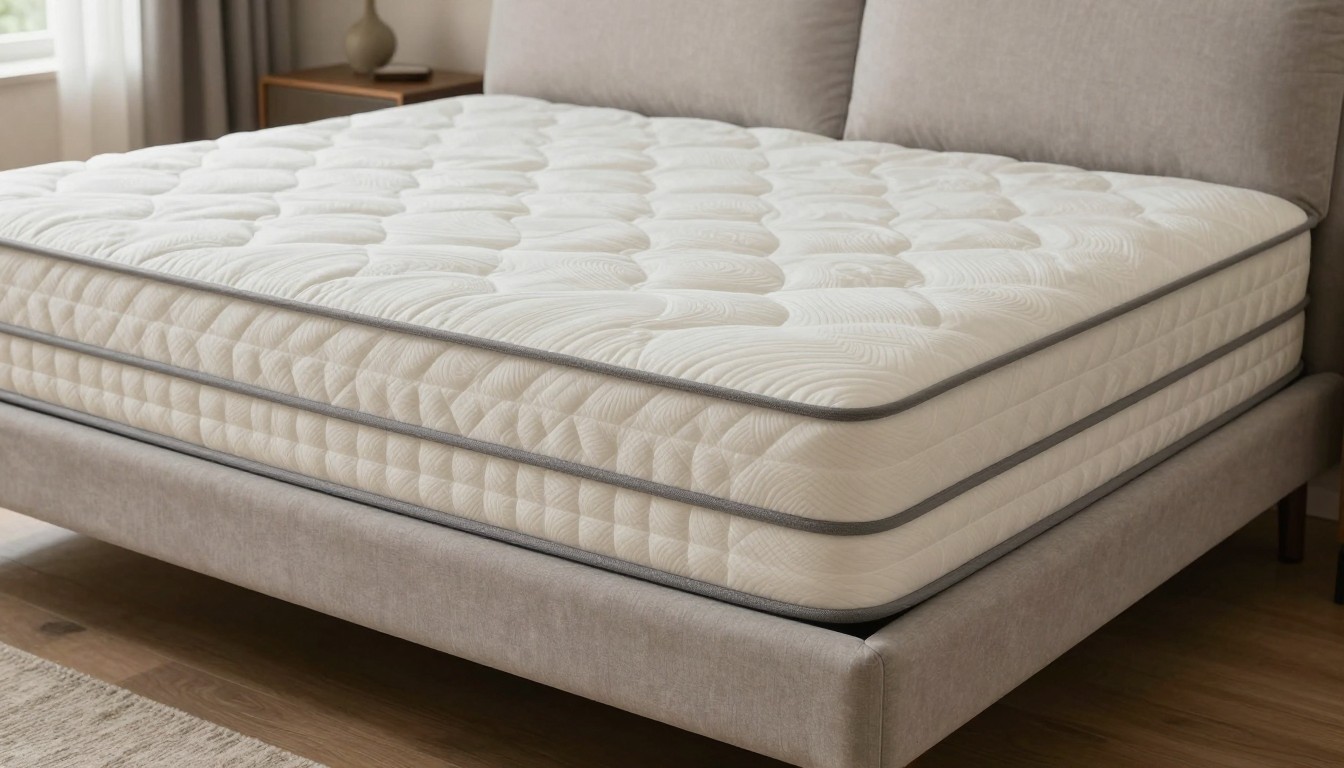
The mattress remains visible on a Western-style futon. That exposed construction is the key difference between this category and a conventional pull-out sofa bed. The Spruce describes the Western futon as a frame that changes between sitting and sleeping positions while the same mattress remains on top.
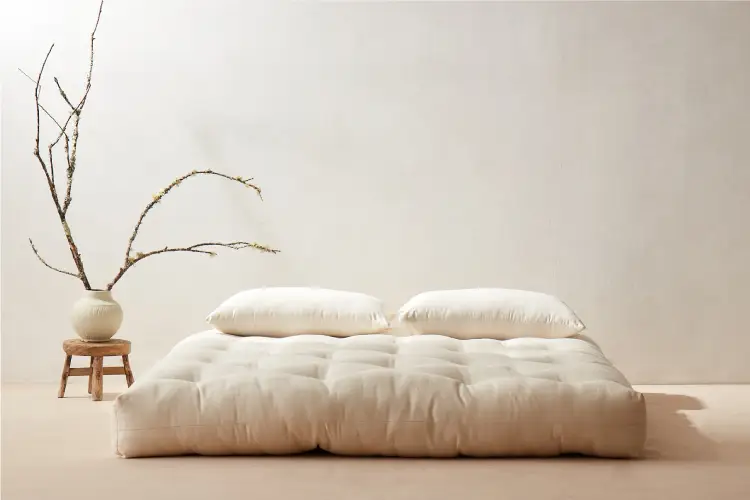
The word futon also refers to a different Japanese bedding format. Wikipedia’s overview describes a traditional Japanese futon as a thin floor-sleeping arrangement intended to be folded, aired, and stored. American furniture listings usually use the term for the thicker Western convertible design instead.
Category distinctions that matter
- A Japanese floor futon is bedding rather than a couch frame, according to Wikipedia.
- A Western futon keeps its mattress exposed during conversion, per The Spruce.
- Bi-fold, tri-fold, and click-clack frames create different bends in the mattress.
- The mattress and frame may be separate components or part of one upholstered unit.
I prefer the separate-component approach for regular sleeping. A removable mattress is easier to inspect, air, cover, and replace. A permanently upholstered unit may look neater, but the whole piece can lose usefulness when its sleep surface wears out.
The exposed design also makes the buying decision more honest. There is no decorative seat cushion covering a hidden bed. The surface that feels thin, lumpy, or overly firm while sitting is the same surface that must support the sleeper after conversion.
Futon couch bed vs. sofa bed construction
A pull-out sofa bed stores its mattress inside the sofa body. A futon places the mattress directly on a folding or reclining frame. The Spruce identifies this simpler conversion and exposed mattress as central differences between the two categories.
| Factor | Futon couch bed | Pull-out sofa bed |
|---|---|---|
| Conversion | The supporting frame folds or reclines with the mattress on it | A separate sleep surface unfolds from inside the sofa |
| Mattress visibility | Usually visible in sofa mode | Usually hidden beneath the seat cushions |
| Serviceability | Some frames accept a separate replacement mattress | Replacement depends on the pull-out mechanism and available clearance |
| Room character | Casual and visibly convertible | Closer to the appearance of a conventional sofa |
| Best fit | Rooms where easy conversion and replaceability lead | Living spaces where sofa styling leads |
The futon has fewer concealed components to evaluate, but simple does not automatically mean durable. Hinges can loosen, slats can flex, and an undersized mattress can shift. The advantage is that these parts are usually easier to see before buying.
A sofa bed may suit a formal living room better because it looks like a regular upholstered couch while closed. A futon is more candid about its second job. For a broader furniture comparison, my futon vs. couch breakdown covers the seating and room-layout tradeoffs.
Decision shortcut: Choose the futon format when visible conversion hardware and casual styling are acceptable. Choose a pull-out sofa format when the closed appearance matters more than access to the mattress and frame.
Frame geometry changes the feel
A bi-fold frame makes one main bend through the mattress. A tri-fold frame creates additional folds, while a click-clack design typically lowers its back section into a flat position. The Spruce includes these among the common Western futon formats.
Those layouts do more than change conversion speed. Each bend asks the mattress to flex, and every transition between frame sections can become noticeable when lying down. I would inspect where the hinges sit relative to the torso and hips rather than judging the frame only in sofa mode.
Wood and metal are both common, according to The Spruce. Material alone does not settle the durability question. A well-braced metal frame may feel steadier than a poorly joined wooden one, while a rigid wooden frame may avoid the light, resonant feel associated with some basic metal designs. Joinery, cross-support, and locking hardware deserve more attention than the material label.
Inspect the frame in both positions
- Look for side-to-side racking when pressure is placed near an arm or corner.
- Confirm the frame reaches its locked position without forcing the mattress.
- Check that the center support remains level with the surrounding sections.
- Notice exposed pinch points around hinges and moving rails.
- Make sure the frame supports the mattress without wide unsupported gaps.
Conversion effort matters if the bed will be opened regularly. A frame that requires awkward lifting may remain permanently flat, defeating the small-space purpose. If possible, operate the mechanism before committing and repeat the movement from the side where it will be accessed in the room.
Wall clearance deserves the same attention. Some frames move forward as the back lowers, while others need room behind them. The product’s setup instructions should show the movement path. That detail is more useful than a styled room photo taken with every nearby object removed.
Mattress construction matters more than the label
Cotton, foam, hybrid fill, and spring-based designs can behave very differently even when all are sold under the futon name. The Futon Shop’s buying guidance distinguishes basic cotton-filled mattresses from thicker foam, hybrid, and innerspring options intended to resist rapid flattening more effectively.
Cotton can create a dense, traditional futon feel, but repeated compression may leave it firmer and less even. Foam can improve pressure distribution, although its feel depends on the formulation and how much room the frame gives it to recover after folding. A mixed fill may balance flexibility with shape retention. None of those material names is enough by itself to establish quality.
Thickness needs context too. The thickest mattress is not automatically the best match if the frame cannot fold it cleanly. A mattress that bunches at the hinge, rises off the deck, or prevents the lock from engaging is too bulky for that frame. Nightly sleepers should look for the most substantial compatible construction, not simply the biggest-looking profile.
The Nut’s materials check: Ask what creates the support, what keeps the fill from shifting, and how the cover handles repeated folding. “Plush” and “premium” do not answer those questions.
A removable cover is useful because this surface works harder than a normal mattress cover. It faces seated friction, food, clothing, and bedding. Check the care instructions before assuming the outer fabric can be removed or washed.
My guide to choosing a thick futon mattress explains why fill structure and frame compatibility belong in the same decision. The useful question is not “How thick can I go?” It is “How much supportive material can this frame bend without distorting the sleep surface?”
The foldability tax on comfort
The same surface has to act like a seat and a bed. In sofa mode, body weight is concentrated over a smaller area and the mattress is held in a bend. In bed mode, the sleeper needs the fill to spread out and the frame sections to align.
That creates an unavoidable compromise. A very soft mattress may slump or migrate while folded. A rigid mattress may resist conversion and feel awkward at the hinge. I would look for controlled flexibility: enough give to follow the frame, but enough internal structure to avoid collapsing into the gaps.
| Intended use | What deserves priority | Main compromise |
|---|---|---|
| Mostly seating | Seat stability, cover durability, easy return to sofa mode | The flat surface may feel firmer or more segmented |
| Occasional guests | Simple conversion and a level sleep deck | Less cushioning than a dedicated guest bed |
| Regular sleeping | Supportive fill, stable center support, replaceable mattress | More substantial mattresses can be harder to fold |
| Frequent room changes | Manageable frame sections and accessible hardware | Lighter construction may feel less planted |
Comfort language in listings is too vague to settle this. “Soft,” “medium,” and “firm” do not reveal where the frame divides, how the fill is secured, or how the mattress behaves after sitting folded. Return terms matter because the category asks one surface to satisfy two distinct positions.
Cooling, motion, and edge behavior
An exposed mattress is not automatically a cool sleep surface. The cover, fill, bedding, room temperature, and support deck all influence how heat and moisture move. Without model-specific evidence, I would not assign the entire category a cooling grade.
Look for practical clues instead. A dense outer fabric may feel durable but less breathable. Thick bedding can change the feel further. If a listing makes a cooling claim, look for a clear material explanation rather than relying on the adjective alone.
Motion behavior depends on both mattress construction and frame stability. Flexible fill may absorb some movement, while a loose hinge or lightly braced frame can turn over in response to shifting weight. Couples should pay attention to frame noise and center alignment as well as the mattress.
Performance questions worth asking
- Does the mattress contain a defined support core or only loose fill?
- Is any perimeter reinforcement described?
- Does the frame include support beneath the center in bed mode?
- Can the cover be removed or cleaned according to its care label?
- Are replacement mattresses available in the frame’s stated size?
Edge support is another area where category-wide promises fall apart. Some futon mattresses have little dedicated perimeter structure, and frame rails may create a firmer sensation near the outside. Sit near the edge in both configurations if you can. The useful result is whether the combined mattress and frame feel controlled, not whether the listing uses an “edge support” badge.
Size and room planning
Twin, full, and queen are common Western futon mattress labels, according to Apartment Therapy. Those names help narrow the search, but they should not replace checking the actual measurements shown by the seller. Frame arms, hinge geometry, and reclining movement can make the furniture footprint larger than the mattress label suggests.
Plan the room in bed mode first. That is the position most likely to collide with a desk, door, radiator, or other furniture. Then confirm that sofa mode still leaves usable seating depth and a comfortable walking path.
Room-planning tip: Mark the flat footprint on the floor before buying, then trace the path needed to open the frame. A futon that technically fits but cannot be converted without rearranging the room is a poor space-saving solution.
A twin format generally targets a solo sleeper or a narrow room. Full is commonly considered for a room that needs broader solo sleeping space, while queen is the more plausible starting point for shared use, per Apartment Therapy’s size overview. The final choice still depends on the listed frame footprint and available clearance.
Moving access matters too. Check doorways, stair turns, and whether the frame can be disassembled according to its instructions. A futon may be simpler than a bulky sleeper sofa, but a rigid frame section can still be awkward in a tight building.
Durability is a frame-and-mattress question
The hinge and the mattress do not age in the same way. The frame experiences joint movement and concentrated loads, while the mattress experiences folding, seated compression, and repeated changes of shape. Judging durability requires looking at both systems separately.
For the frame, I would inspect connection points before decorative details. Bolts that can be checked and tightened are easier to maintain than concealed joints with no access. Slats should sit securely, and the flat configuration should not leave one section higher than another.
For the mattress, fill migration and permanent compression are the bigger concerns. The Futon Shop’s guidance favors thicker, better-filled constructions for regular sleeping and notes that basic cotton fill is more vulnerable to flattening. That supports choosing by internal construction rather than fabric color or tufting pattern.
My durability order of operations
- Confirm that the frame locks securely and remains level.
- Check how the mattress is supported across hinges and center sections.
- Verify that the mattress can be replaced independently.
- Follow the stated care guidance for airing, cleaning, and repositioning.
- Recheck accessible hardware if movement or noise develops.
A serviceable frame may remain useful after its first mattress loses comfort. That is the strongest argument for avoiding a disposable one-piece design when the futon will see regular use. Replaceability does not promise a particular lifespan, but it gives the owner a practical repair path.
Care should follow the manufacturer’s label because covers and fills differ. Avoid assuming that every futon can be folded, flipped, washed, or aired in the same way. If the instructions are vague, ask for clarification before treating the mattress with moisture or removing its cover.
What a futon couch bed costs
Price ranges shift too often to make remembered dollar figures useful. The safer comparison is the live price paired with what is actually included. Some listings combine the mattress and frame, while others price the components separately.
- Entry tier: If the listing shows basic fill and a lightly braced frame, I would treat it as an occasional-use option unless the construction details say otherwise.
- Middle tier: Look for a replaceable mattress, clearer material information, accessible frame hardware, and a stable flat deck.
- Premium tier: The extra cost should buy identifiable improvements in joinery, fill construction, fabric, or serviceability, not just a more polished room photo.
Value is not the lowest checkout figure. It is the cost of getting a frame that works smoothly, a mattress suited to the intended use, and a replacement path if the sleep surface wears before the structure does.
Price check: Compare like with like. Confirm whether the shown price includes the frame, mattress, cover, and required support pieces before deciding that one setup is cheaper.
Return and delivery terms belong in that comparison as well. A low item price can become less appealing if the frame arrives in hard-to-handle sections or the comfort return process is restrictive. Use the retailer’s live policy rather than assuming furniture and mattress terms are identical.
Who should buy one, and who should skip it
A studio resident who needs the same floor area for daytime seating and nighttime sleeping is the clearest fit. The format also works in a home office or guest room where permanent bed space would otherwise sit unused.
It is a weaker fit for someone who wants deep lounge seating, a formal sofa silhouette, or a bed that never needs rearranging. Regular sleepers who dislike feeling frame transitions should be especially cautious with thin or poorly supported designs.
Guest rooms with more floor area may support other layouts. A trundle bed that converts into a couch separates the pull-out sleep surface from the daytime seat, while a sleigh bed couch setup offers a more traditional furniture profile. Those formats solve a different space problem, so compare the room layout before comparing upholstery.
Fit verdict: Buy this format for adaptable floor space and visible, serviceable construction. Skip it if your priority is an uninterrupted permanent mattress or the appearance of a conventional upholstered sofa.
How to shop for the right setup
The bed-mode footprint is the first thing to verify, not the fabric color. Once the room works, move through the frame, mattress, maintenance, and policy details in that order.
- Measure both configurations. Include the frame arms and the space needed for the conversion movement, not only the named mattress size.
- Identify the frame type. Determine where it folds, how it locks, and which sections support the sleeper.
- Check mattress compatibility. Confirm the intended size and the amount of thickness the mechanism can bend properly.
- Read the fill description. Look beyond comfort adjectives for an explanation of the support material and how it is held in place.
- Confirm replaceability. A separate mattress gives you more options if comfort needs or materials change.
- Operate the mechanism if possible. The frame should reach both positions without excessive effort, shifting, or uncertain locking.
- Inspect the flat surface. Look for height changes, unsupported gaps, and hinge locations that could be noticeable through the mattress.
- Review care instructions. Check how the cover and fill should be cleaned, aired, and repositioned.
- Read the live policies. Furniture delivery, assembly, comfort returns, and component returns may be handled differently.
The Spruce’s construction overview, Apartment Therapy’s size guidance, and The Futon Shop’s discussion of mattress fill all point back to the same practical lesson: the category name tells you very little about the finished feel. The frame and mattress specifications deserve separate scrutiny.
Final verdict
The exposed mattress is not a design flaw. It is the feature that makes a futon couch bed simple, adaptable, and easier to evaluate. It also means there is nowhere for weak fill or an unstable frame to hide.
I would buy by intended sleep frequency, frame geometry, and mattress replaceability. For occasional guests, easy conversion may lead. For regular sleep, supportive compatible fill and a level frame should take priority. In either case, measure the flat footprint before treating the piece as a space saver.
ONE OPTION WORTH COMPARING
Shopping as well as reading? Here is one current option worth comparing: the Futon Best Selling. Check today’s price, sizing and return terms on the official product page before you order.
Futon Best Selling
- July 2026 · Reviewed for accuracy My verdict is straightforward: a futon couch bed is a practical small-room tool, but it carries a foldability tax
- What a futon couch bed actually is The mattress remains visible on a Western-style futon
FAQ
Is a futon couch bed comfortable enough for regular sleep?
A futon couch bed can work for regular sleep if the mattress has suitable support, the frame remains level, and the fold does not create a disruptive ridge. The Futon Shop’s guidance favors thicker, better-filled mattresses over thin basic pads for frequent use. Comfort remains individual, so return terms and frame compatibility still matter.
What size futon couch bed should I get?
Apartment Therapy identifies twin, full, and queen as common Western futon sizes. Twin is generally aimed at solo use in a tighter area, full provides a broader solo surface, and queen is the more plausible shared option. Use the seller’s actual frame measurements because arms and conversion clearance extend beyond the mattress label.
Is a futon better than a sofa bed for guests?
A futon is appealing when simple conversion, visible construction, and a replaceable mattress matter most. A pull-out sofa bed may fit better where conventional living-room styling leads. The better guest option is the one with the more stable sleep surface and fewer room-layout compromises.
How long does a futon couch bed last?
There is no responsible category-wide lifespan because fill, joinery, use, and maintenance vary. Basic cotton fill is more prone to flattening than better-supported constructions, according to The Futon Shop’s guidance. A serviceable frame with a replaceable mattress offers a clearer long-term path than a permanently upholstered unit.
Can I replace only the mattress on a futon couch bed?
Many Western frames are designed around a separate mattress, but this should be confirmed for the exact frame before buying. Check the stated size, folding clearance, attachment method, and support layout. A mattress that fits the named bed size can still be a poor match if it is too rigid or bulky for the conversion mechanism.