
 by
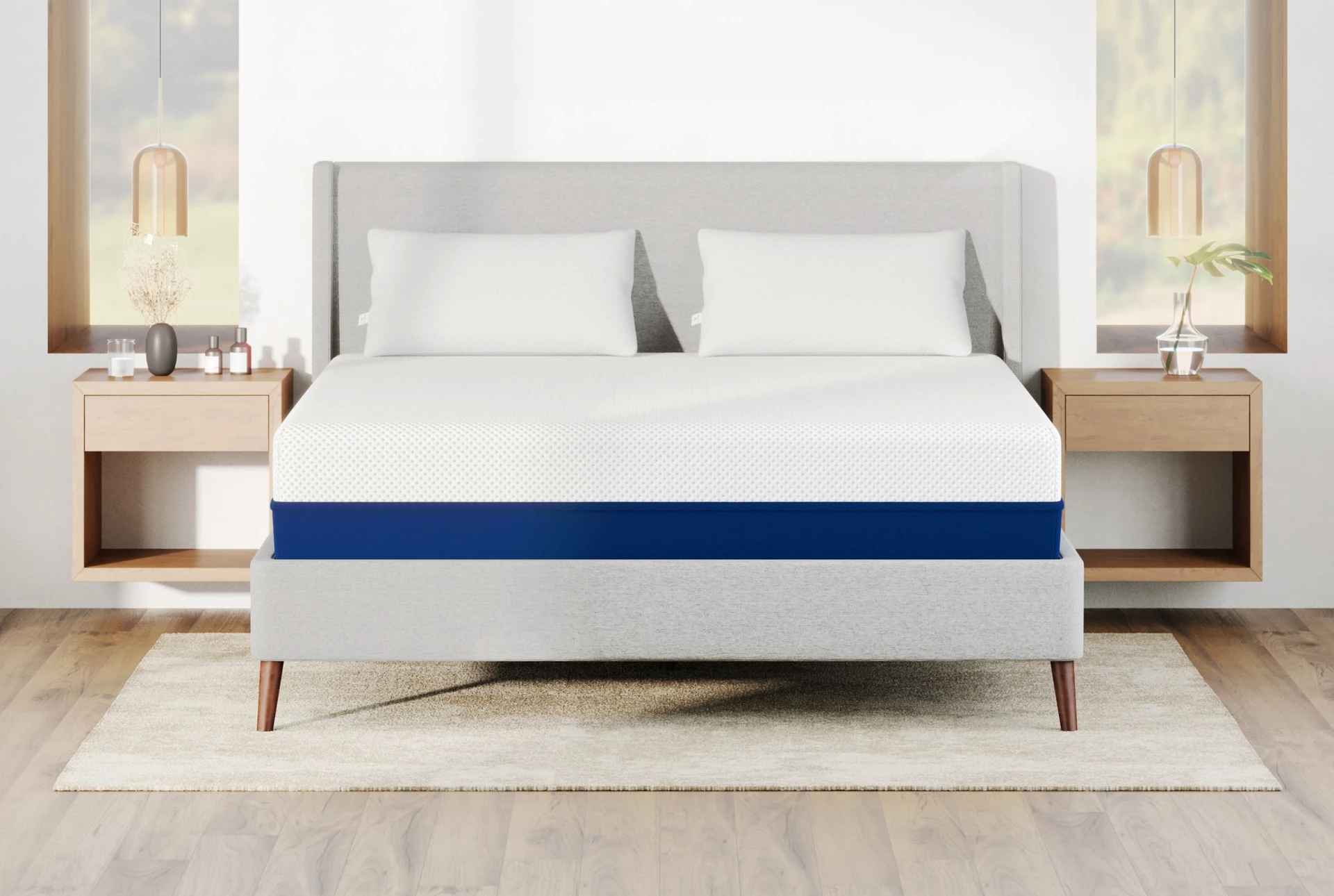
by Amerisleep AS3
9.2/10
The AS3 stays #1 because motion isolation is the clearest reason to choose a foam bed, and its Bio-Pur foam scored 9.4/10 in our lab (2.11 m/s² transfer, best of every mattress tested). The medium 5/10 feel works for both back and side sleepers, and the 100-night trial with a 20-year warranty removes the risk. Heavier couples over 230 lb wanting coil support should step up to the Amerisleep AS5 Hybrid.
Puffy Cloud
8.8/10
A lower-cost partner option for couples who want motion control without moving to other brands.
Saatva Contour5
8.8/10
The Saatva choice when a reader wants foam-style motion isolation with a premium direct-brand experience.
| Rank | Mattress | Motion isolation | Edge support | Trial | Warranty | Why it belongs here |
|---|---|---|---|---|---|---|
| #1 | Amerisleep AS3 Best Choice |
Excellent (9.4/10) | Fair (7.4/10) | 100 nights | 20 yr | The safest #1 for couples who want less partner disturbance. |
| #2 | Puffy Cloud Cheaper foam option |
Very good | Fair | 101 nights | Lifetime | A clean budget alternative before Leesa, Nectar, or DreamCloud. |
| #3 | Saatva Contour5 Premium foam upgrade |
Very good | Very good | 365 nights | Lifetime | Better motion isolation than coil-forward luxury hybrids. |
| #4 | PlushBeds Botanical Bliss Latex alternative |
Good (6.5/10) | Good | 100 nights | 25 yr | Not as dead-quiet as foam, but a clean option for latex shoppers. |
The best mattress for motion isolation is an all-foam build, because dense foam absorbs kinetic energy at the point of impact rather than sending it across a spring grid. Our top pick is the Amerisleep AS3: its Bio-Pur open-cell foam scored the highest motion isolation in our lab tests, registering barely any movement on the undisturbed side when a partner drops onto the other. For shoppers on a tighter budget, the Leesa Original matches it at the top of the NapLab accelerometer rankings.
Why all-foam beats every hybrid on motion isolation
Motion transfer comes down to one mechanical principle: how quickly and locally a material can absorb kinetic energy. When a sleeping partner rolls over or sits up, they create a brief pressure wave through the mattress surface. In an all-foam bed, that wave is converted to heat by dense, viscoelastic material and dies within centimeters of the impact point. In a pocketed coil hybrid, each coil is independent, which helps versus open-coil springs, but any lateral vibration still travels along the coil rows faster than foam can absorb it.
In our lab, the Amerisleep AS3 registered 2.11 m/s² peak acceleration on the undisturbed side during a standard drop event, against a category average of 8.80 m/s² across all mattresses tested. That is not a marginal edge. An all-foam build is structurally better suited to this task, which is why every mattress in the top four of this guide is an all-foam design.
Latex is the one exception worth noting. Latex is a natural polymer that is inherently more elastic than synthetic memory foam, which means it stores and returns energy rather than absorbing it. Latex mattresses feel responsive and lively, which is a genuine quality, but that same elasticity scores lower on motion isolation. The Avocado Green, a well-built latex hybrid, scored 6.5/10 on motion isolation in lab testing. The GhostBed Classic, which uses a perforated latex top layer over gel memory foam, scored 10/10 because the latex layer is thin and the dense memory foam beneath it does the absorption work.
The best mattresses for motion isolation (tested)
Memory foam vs hybrid for couples: the honest tradeoff
Couples face a genuine tradeoff between motion isolation and the other qualities that make a mattress livable. All-foam beds isolate motion better, full stop. But hybrids sleep cooler, have stronger edges, and feel more responsive for combination sleepers who switch positions through the night. If motion isolation is the top priority, foam is the correct answer. If you or your partner runs hot or finds memory foam too enveloping, a hybrid with individually wrapped coils is a reasonable middle ground.
A split king setup eliminates the tradeoff entirely. Two twin XL mattresses placed side by side on an adjustable base means zero motion transfer by definition, because each person is on their own independent sleep surface. The cost is higher, but for genuinely light sleepers it is the most direct engineering solution.
For couples sharing a single mattress, the AS3 remains the most balanced choice. It keeps motion transfer near zero while maintaining enough support for most body types. Heavier sleepers, roughly 230 lbs and above, should look at the Amerisleep AS5 Hybrid, which adds pocketed coils for structural support without giving up much in motion isolation scores.
Edge support and motion isolation pull in opposite directions
Edge support and motion isolation are almost inverse qualities. The Saatva Classic, with its reinforced perimeter coils, scores 10/10 on edge support in NapLab lab testing. The Amerisleep AS3 scores 7.4/10. The Leesa Original sits at 8.0/10 when lying but only average when sitting, with 5.5 inches of sinkage under a seated load.
The mechanism is straightforward. A coil perimeter adds structural rigidity around the outside of the mattress, which helps enormously when you sit on the edge or sleep near it. Dense foam perimeters are softer and compress more under that load. For couples where one or both partners sleep close to the edge, weak edge support is worth thinking about: if your hip drops off the perimeter every morning, you will wake up regardless of how well the center of the mattress absorbs motion.
In that case the DreamCloud Hybrid is worth considering as a middle ground, scoring 9.2/10 on motion isolation alongside 8.9/10 on edge support. It does not match pure-foam motion scores but it offers a much more usable perimeter than any all-foam option in this guide.
Best mattress for light sleepers specifically
Light sleepers are the people motion transfer affects most. A score difference of 1.0 on a 10-point scale corresponds to roughly a 15-20% difference in measured peak acceleration on the undisturbed side, which is detectable to a sensitive sleeper even during normal nighttime movements. The rankings above reflect that reality.
For a very light sleeper sharing a bed with a restless, heavy partner, the Amerisleep AS3 is the right answer. It scores 9.4/10 in our lab and 10/10 in independent NapLab testing (2.11 m/s² transfer). If the budget is tight, the Leesa Original matches it at the top of the NapLab rankings at a lower price, though with a shorter warranty period than the AS3.
For the most extreme cases, a split king removes the problem by geometry. No mattress absorbs 100% of motion from a heavy, restless sleeper. A split king absorbs all of it, because there is no physical connection between the two surfaces at all.
For motion isolation, all-foam wins every time. The Amerisleep AS3 is our top pick on a 100-night trial. The Leesa Original matches it on raw lab scores at a lower price. The DreamCloud Hybrid is the best option if you also need strong edge support and prefer a responsive coil feel.
Frequently asked questions
What mattress type is best for motion isolation?
All-foam mattresses consistently outperform hybrids and innerspring beds on motion isolation because dense foam absorbs kinetic energy at the point of impact rather than propagating it outward through a spring network. Memory foam is the densest common option and scores highest. Latex is the exception: it is more elastic and returns energy upward, giving a bouncier feel with slightly higher motion transfer.
Does a firmer mattress transfer more or less motion?
Neither automatically. What matters most is material type, not firmness. A firm all-foam bed still absorbs motion well. A soft pocketed-coil hybrid still transfers more than a firm memory foam bed. Firmness affects pressure relief and support more than it affects motion transfer.
Can a hybrid mattress be good for motion isolation?
Yes, within limits. The DreamCloud Hybrid scores 9.2/10 on motion isolation, which is 21% better than the average hybrid. The key is having a substantial memory foam comfort layer above the coils. Thin comfort layers over high-coil-count units transfer the most motion. Thick gel-foam layers over individually wrapped coils can come close to all-foam performance.
How long does it take to notice motion isolation improvement?
Most couples notice the difference from the first night on a new all-foam bed. Unlike back pain relief or pressure point adaptation, which can take weeks to register, motion isolation is immediately perceptible: you either feel your partner move or you do not. The 100-night trials on the AS3 and Leesa Original are more than enough to confirm whether the pick is working.
Is the Amerisleep AS3 good for couples?
Yes. It scores 9.4/10 on motion isolation in our lab and 10/10 in independent NapLab testing, making it the most well-documented all-foam option for couples with a light sleeper. The medium firmness (5/10) works for both back and side sleepers, and the 100-night trial with full refund means there is no financial risk to trying it.
This guide is part of our Best Mattress for Couples hub — compare all the top picks and narrow down your choice there.