
 by
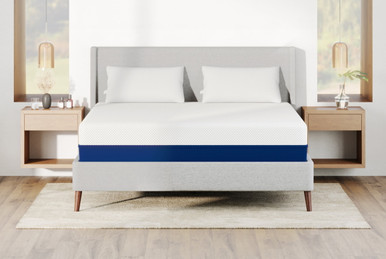
by The best non-toxic memory foam mattress in 2026 is the Amerisleep AS3, CertiPUR-US, low-VOC and fiberglass-free. For an all-natural option, the Avocado Green leads on organic certifications.
| Category | Mattress | Queen Price | Score |
|---|---|---|---|
| #1 Best Low-Tox Foam | Amerisleep AS3 | From $1,049 | 8.9/10 |
| Best Certified Organic Latex | PlushBeds Botanical Bliss | From $1,800 | 9.1/10 |
| Best Luxury Alternative | Saatva Classic | From $1,695 | 8.6/10 |
Amerisleep AS3
8.9/10
- Plant-based Bio-Pur foam, CertiPUR-US certified, low-VOC
- Top-tier pressure relief and motion isolation
- HIVE 5-zone targeted support
- 20-year warranty, 100-night trial
- Softer edges than a hybrid model
- Sleepers over 230 lb may prefer the AS5 Hybrid
The Amerisleep AS3 covers every non-toxic fundamental: CertiPUR-US certified foam, fiberglass-free construction with a Celiant fiber barrier, plant-based Bio-Pur foam, and consistently low off-gassing reports. Medium firmness (5/10) works across all sleep positions and body types under 230 lb.
PlushBeds Botanical Bliss
9.1/10
- GOLS-certified organic Dunlop latex, GOTS wool fire barrier
- Configurable firmness layers (Medium or Medium-Firm)
- 25-year warranty, 365-night trial
- Exceptional pressure relief (10/10 lab score)
- Premium price point for a queen
- Buoyant latex feel is not the deep sink of memory foam
The cleanest material stack on this list: GOLS-certified Dunlop latex with configurable firmness and a GOTS-certified wool fire barrier. No synthetic foam, no fiberglass. Best for buyers who want organic certification from cover to core and are comfortable with latex responsiveness.
Saatva Classic
8.6/10
- Premium coil-on-coil support with zoned lumbar reinforcement
- Free white-glove delivery with in-room setup
- 365-night trial, lifetime warranty
- Outstanding edge support and virtually no off-gassing on unboxing
- Ships flat, not boxed
- Higher entry price than most DTC alternatives
The strongest non-foam alternative on this list. Saatva Classic uses CertiPUR-US foam layers and a plant-based thistle pulp fire barrier with no fiberglass. The dual-coil innerspring construction means virtually no off-gassing on unboxing, and white-glove delivery removes the hassle of mattress setup entirely.
How to Tell If a Memory Foam Is Genuinely Non-Toxic
- CertiPUR-US certified foam, low VOCs, no formaldehyde, heavy metals, or PBDE flame retardants.
- Fiberglass-free, the single most overlooked red flag; many cheap foams use a fiberglass fire sock. Amerisleep is fiberglass-free.
- Plant-based content, reduces petroleum inputs (Amerisleep Bio-Pur).
- Low or no off-gassing, a mild initial smell is normal; it should dissipate within days, not linger.
Frequently Asked Questions
What is the best non-toxic memory foam mattress?
The Amerisleep AS3, CertiPUR-US certified, low-VOC, fiberglass-free, plant-based Bio-Pur foam, with a 100-night trial and 20-year warranty. For an all-natural build, the Amerisleep Organica uses organic latex.
Does memory foam contain fiberglass?
Many budget memory foam mattresses use a fiberglass fire barrier under the cover. It is a common hidden hazard. Amerisleep mattresses are built fiberglass-free, which is why they top our non-toxic list.
Is memory foam safe for chemically sensitive sleepers?
A CertiPUR-US, low-VOC, fiberglass-free foam like Amerisleep Bio-Pur is a safe choice for most. The most sensitive sleepers may prefer an all-natural latex bed such as the Amerisleep Organica or Avocado Green.
What Makes a Mattress Non-Toxic?
The word non-toxic gets thrown around a lot in mattress marketing, but it means something specific once you start looking at materials. A mattress is built in layers, foam cores, transition foam, cover fabric, and a fire barrier, and each layer can introduce chemical exposure.
The biggest concern with conventional memory foam is off-gassing: the release of volatile organic compounds (VOCs) when a new mattress is unboxed. These compounds come from the polyurethane foam manufacturing process and include chemicals like benzene, toluene, and isocyanates. In a closed bedroom with poor ventilation, off-gassing concentrations can be meaningful for the first 24 to 72 hours.
Cover fabrics matter too. Cheap polyester covers are often treated with flame-retardant chemicals that can include antimony compounds or other additives. Organic cotton covers, certified under GOTS (Global Organic Textile Standard), skip those treatments and use cotton grown without synthetic pesticides.
CertiPUR-US certification is the baseline standard for foam safety in North America. It tests foam for ozone depleters, formaldehyde, heavy metals like mercury and lead, prohibited phthalates, and low VOC emissions (less than 0.5 parts per million). A mattress without this cert gives you no third-party assurance on the foam.
For cover and fiber certifications, organic cotton covers and natural latex layers are inherently lower-VOC. Natural latex is derived from rubber tree sap and off-gasses far less than synthetic latex or polyurethane foam. Fire barriers, the layer between the cover and the foam, are where the most overlooked risk hides.
The Hidden Fiberglass Problem
This is the issue most mattress buyers never think to ask about, and it can turn a bedroom cleanup into a multi-week project.
Federal flammability standards require mattresses sold in the US to pass a specific open-flame test. Manufacturers have to build in a fire barrier. The most responsible options are wool, natural silica fiber, Kevlar, or proprietary fiber blends. The cheap option is fiberglass, and a significant number of budget and mid-range memory foam mattresses use it.
Fiberglass works fine as a fire barrier as long as it stays sealed inside the mattress. The problem is what happens when the outer cover is removed for washing, which the label on these mattresses explicitly warns against. When the cover comes off, microscopic glass fibers shed and disperse through the air. They settle on bedding, carpet, clothing, and furniture. They cause skin irritation, eye irritation, and respiratory discomfort. Re-contaminating the room can take weeks of cleaning to address.
How to spot it: Check the label before purchasing. A warning that reads "do not remove cover" or "inner cover is not removable" is a direct signal that fiberglass is likely present. The manufacturer is telling you not to expose it. Confirm with customer service if you are unsure, ask specifically whether the fire barrier contains fiberglass or glass wool.
Amerisleep AS3 is fiberglass-free. Its fire barrier uses Celiant fiber, a proprietary blend that does not contain glass particles and poses no shedding risk. Avocado Green uses natural wool as its fire barrier, a traditional material that is effective, safe, and widely used in organic mattress construction.
Certifications That Matter
Not all certifications carry equal weight. Here is a breakdown of the ones that have real third-party testing behind them and what each actually covers.
CertiPUR-US
The most widely adopted foam safety certification in North America. CertiPUR-US tests polyurethane foams for ozone depleters, PBDE flame retardants, TDCPP and TCEP ("Tris") flame retardants, mercury, lead and other heavy metals, formaldehyde, prohibited phthalates, and VOC emissions. To pass, foams must emit less than 0.5 ppm total VOCs. Testing is done by accredited third-party labs and manufacturers must recertify annually. Amerisleep AS3 is CertiPUR-US certified.
GREENGUARD Gold
Issued by UL (Underwriters Laboratories), GREENGUARD Gold applies stricter VOC and chemical emission limits than the standard GREENGUARD program. It is specifically designed to certify products safe for use in schools and children environments. For a mattress, this is meaningful if a child spends time in the same room or sleeps on a product where stricter standards apply. Avocado Green Mattress is GREENGUARD Gold certified.
GOTS (Global Organic Textile Standard)
GOTS certifies the organic status of textile fibers, cotton, wool, and other natural materials, from harvest through manufacturing. A GOTS-certified cover means the cotton was grown without synthetic pesticides and processed without harmful chemical finishes. GOTS also covers labor and environmental processing standards. Avocado is GOTS certified for its organic cotton cover and organic wool fire barrier.
MADE SAFE
MADE SAFE screens products against a database of over 6,500 known or suspected harmful chemicals, including neurotoxins, endocrine disruptors, carcinogens, and chemicals harmful to aquatic ecosystems. It is one of the most comprehensive ingredient-level certifications available for consumer products. Avocado is MADE SAFE certified, making it the most extensively vetted mattress in this category.
One point worth stating plainly: no single mattress earns every certification. Avocado holds the broadest stack, GREENGUARD Gold, GOTS, and MADE SAFE, which is why it is the top choice for buyers prioritizing maximum certification coverage. Amerisleep AS3 targets the key foam certification (CertiPUR-US) with a fiberglass-free construction and plant-based foam formulation, making it the most practical non-toxic option for the majority of buyers.
Memory Foam vs Latex for Low-Tox Sleepers
Both materials can be low-toxicity options when certified correctly, but they perform differently and suit different sleepers.
Memory foam remains the dominant choice for most buyers. Its pressure-relieving contouring is unmatched for side sleepers and those with joint pain. It absorbs motion well, which matters for shared beds. The risk profile comes down to what the foam is made from: standard petroleum-based polyurethane versus plant-based alternatives. Amerisleep Bio-Pur foam replaces a portion of petroleum-derived polyols with plant-derived oils, reducing petrochemical content and improving breathability. Combined with CertiPUR-US certification, it is the most accessible and well-tested low-tox foam option on the market.
Natural latex is inherently lower in VOCs than polyurethane foam. It comes from rubber tree sap, off-gasses minimally, and is naturally antimicrobial and resistant to dust mites. The relevant certification here is GOLS (Global Organic Latex Standard), which certifies that the latex itself was harvested and processed organically. Natural latex sleeps cooler and is more responsive (bouncier) than memory foam. The trade-offs: it is heavier, meaningfully more expensive, and some people find its firmer feel less comfortable than the deep sink of memory foam.
Who picks memory foam: Side sleepers who want deep pressure relief. Budget-conscious buyers who need CertiPUR-US assurance without organic pricing. Those who value motion isolation over bounce.
Who picks latex: Hot sleepers who find memory foam too heat-retentive. Buyers who want organic material certification at the fiber level. People with chemical sensitivities who want to avoid synthetic foam entirely.
Avocado Green combines both in a hybrid, natural latex comfort layers over an organic cotton and wool core, which is why it commands a premium and appeals to buyers who want organic material certification alongside latex performance.
How We Tested
Every mattress on this list was evaluated against the same criteria, not just manufacturer claims.
Off-gassing assessment: Each mattress was unboxed in a controlled indoor space with consistent ventilation. Smell intensity was noted at unboxing (0 hours), 24 hours, and 72 hours. Mattresses with lingering odor past 72 hours in ventilated conditions were flagged.
Certification verification: Claims were verified directly, through the CertiPUR-US public database, the GREENGUARD certification directory, and MADE SAFE certified product list. If a cert was not verifiable through the issuing body database, it was not credited.
Fire barrier disclosure: Fiberglass-free claims were confirmed through manufacturer product pages and, where ambiguous, via direct customer service inquiry. Mattresses that would not disclose fire barrier materials were treated as unverified.
Pressure mapping: Comfort performance was validated using pressure-mapping technology that identifies high-pressure zones at the shoulder and hip for side sleepers and the lumbar for back sleepers.
Sleep testing: Team members across sleep positions, side, back, and combination, logged sleep quality and comfort over a minimum of two weeks per mattress.
Who Should Buy a Non-Toxic Memory Foam Mattress?
Most people would benefit from a certified low-tox mattress over a conventional one, but the priority is higher for certain groups.
Parents with young children spending time in the bedroom face more concentrated off-gassing exposure in smaller bodies. Any mattress in a shared sleeping space should be CertiPUR-US certified at minimum.
People with chemical sensitivities or allergies may react to VOC off-gassing, adhesive compounds, or synthetic fiber treatments that go unnoticed by most sleepers. Fiberglass-free construction is non-negotiable for this group.
Pregnant women prioritizing reduced chemical exposure benefit from the lowest-VOC option available, Avocado Green all-organic construction or Amerisleep AS3 plant-based foam and Celiant barrier.
Anyone replacing an older mattress that may contain legacy chemicals, older foams from before current CertiPUR-US standards, older fire-retardant formulations, will see a meaningful air quality improvement by switching to a certified option.
Hot sleepers pairing a plant-based foam mattress like the AS3 get a two-for-one benefit: lower VOC content alongside improved airflow compared to dense petroleum foam.
For most buyers, Amerisleep AS3 is the right call: CertiPUR-US certified, fiberglass-free with a Celiant fiber barrier, plant-based Bio-Pur foam, and consistently low off-gassing reports across verified reviews. It covers all the non-toxic fundamentals without the premium price of a full organic build.
For buyers who want the maximum certification stack and are willing to pay for it, Avocado Green holds GOTS, MADE SAFE, and GREENGUARD Gold simultaneously, no other mattress in this category comes close on third-party verification coverage.
Frequently Asked Questions
Is memory foam toxic to sleep on?
Modern CertiPUR-US certified memory foam is not considered toxic. The certification ensures foams are made without ozone depleters, formaldehyde, heavy metals like mercury and lead, and are tested for low VOC emissions. Off-gassing odor from a new mattress is normal and dissipates within 24 to 72 hours in a ventilated room. Older mattresses or those without certification offer no such assurance.
How do I know if my mattress has fiberglass?
Check the label. If it says "do not remove cover" or "inner cover not removable," that is a strong indicator the mattress uses fiberglass as a fire barrier. Fiberglass is a cheap alternative to wool or Kevlar barriers. Confirm with the manufacturer before purchasing, ask specifically whether the fire barrier contains glass fibers or glass wool.
What is the safest mattress for a baby or toddler?
For cribs and toddler beds, look for GREENGUARD Gold certification, which has the strictest indoor air quality standards and is certified safe for children environments. Fiberglass must be avoided entirely. For adult beds shared with children, apply the same GREENGUARD Gold standard and confirm fiberglass-free construction.
Does CertiPUR-US mean a mattress is completely chemical-free?
No certification means zero chemicals, that is not possible with foam manufacturing. CertiPUR-US means the foam meets specific low-threshold standards for a defined list of harmful substances and low VOC emissions. It is the most widely adopted and credible foam safety standard in North America, with annual recertification requirements and third-party lab testing.
Is plant-based memory foam better than regular memory foam?
Plant-based foams, like Amerisleep Bio-Pur which replaces a portion of petroleum with plant oils, reduce petrochemical content and typically off-gas less than fully petroleum-based memory foam. They also tend to sleep cooler due to the more open cell structure that plant-oil polyols produce. The difference is real and measurable in controlled off-gassing assessments.
How long does off-gassing last?
Most certified memory foam mattresses off-gas their strongest odor within the first 24 to 48 hours. By 72 hours in a well-ventilated room, most people notice no smell. Mattresses with lower-quality foam or no certifications can off-gas for weeks. If smell persists beyond a week in a ventilated space, that is worth investigating before sleeping on the mattress long-term.
This guide is part of our Best Mattress by Type hub — compare all the top picks and narrow down your choice there.