
 by
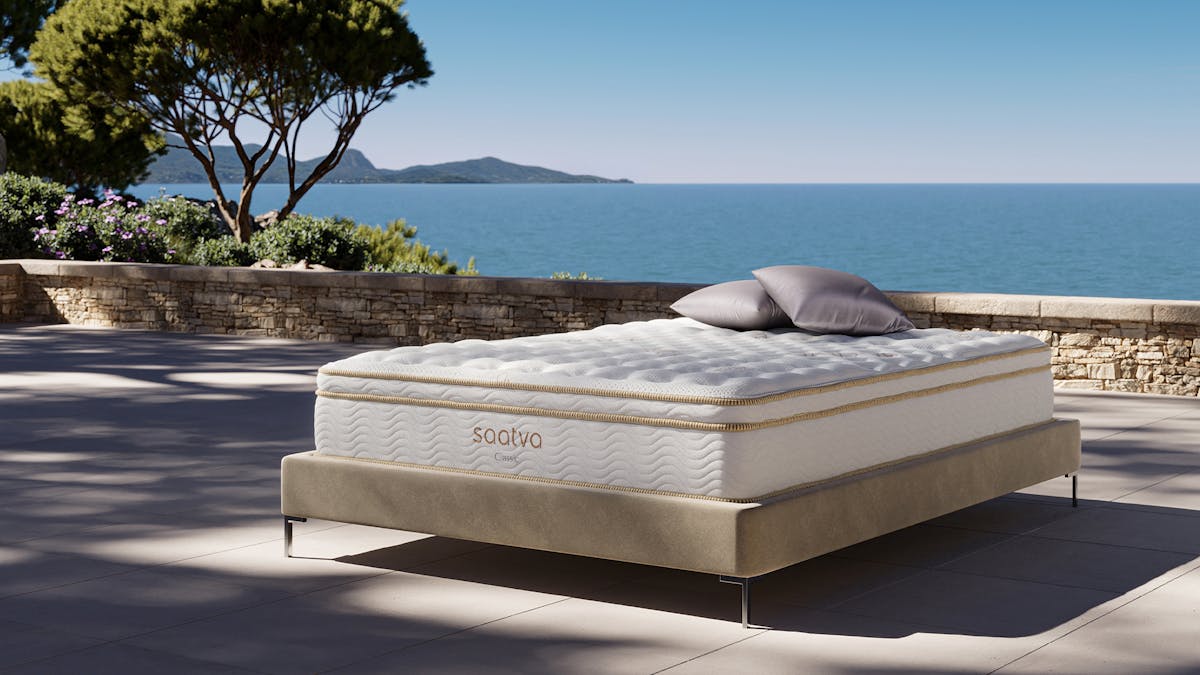
by The best mattress for shoulder pain is one with a medium feel (4-6/10) and zoned pressure relief in the shoulder area. Our top pick is the Saatva Classic in Plush Soft: its Euro pillow top and dual-coil construction cushion the shoulder while the zoned coils keep hips stable, reducing the pressure buildup that causes morning stiffness. The Amerisleep AS3 is the best all-foam alternative, with HIVE 5-zone zoning for side sleepers who prefer a foam feel.
Saatva Classic
9.2/10
- Choose Plush Soft (3/10) for maximum shoulder cushioning, or Luxury Firm (6/10) if you primarily back sleep
- Euro pillow top adds a substantial comfort layer that absorbs shoulder pressure on contact
- Dual coil construction keeps the hips supported while the top layers yield at the shoulder
- Free white-glove delivery, setup and old-mattress removal included
- 365-night trial, lifetime warranty
- $99 return fee applies during the trial period
- Ships flat rather than compressed, so you need to be home for delivery
If you want the responsive feel of coil springs with genuine shoulder cushioning, the Saatva Classic in Plush Soft is the top choice. The thick Euro pillow top takes the edge off shoulder pressure, the underlying dual coils prevent hip sinkage that collapses spinal alignment, and the 365-night trial gives you enough time to confirm whether Plush Soft or Luxury Firm suits your body weight and sleep position better.
Why shoulder pain needs a specific mattress approach
Shoulder pain at night is overwhelmingly a side sleeper's problem. When you sleep on your side, your entire upper body weight concentrates on one shoulder. If your mattress does not cushion that pressure point adequately, the rotator cuff tendons and bursa get compressed against the humeral head for 6-8 hours. You wake up with stiffness, soreness, or a dull ache that eases after you move around.
Conditions like rotator cuff injuries, bursitis, frozen shoulder, and shoulder impingement all worsen on mattresses that are too firm in the upper body zone. The mechanics are straightforward: a firm surface stops the shoulder sinking, so the joint loads in an impinged position all night.
The solution is not a softer mattress across the board. A mattress that is too soft lets the shoulder and hip sink at the same rate, which collapses spinal alignment and shifts the pain from the shoulder to the lower back. What you need is zoned construction: softer under the shoulder, firmer under the hips. That is exactly what the Saatva Classic's Euro pillow top and dual-coil architecture deliver.
What to look for in a mattress for shoulder pain
- Firmness 4-6/10 (medium to medium-firm): the range where the shoulder can sink far enough to decompress, while the hip stays supported to keep the spine aligned.
- Zoned pressure relief: beds that are softer in the shoulder zone specifically (not just uniformly soft) produce the best results for side sleepers with shoulder issues.
- Comfort layer thickness 2-4 inches: enough to cradle the shoulder without bottoming out.
- Responsive materials: memory foam or latex that adapts quickly when you shift positions at night. Dense, slow memory foam can trap the shoulder in an awkward position during repositioning.
- Long trial window: shoulder adaptation to a new mattress takes 4-8 weeks, so a 100-night minimum is important.
Top picks for shoulder pain: comparison
| Mattress | Type | Firmness | Shoulder relief | Trial | Queen price |
|---|---|---|---|---|---|
| Saatva Classic | Dual-coil hybrid | Plush Soft 3/10 or Lux Firm 6/10 | Excellent, Euro pillow top + zoned coils | 365 nights | From $1,395 |
| Amerisleep AS3 | All-foam (Bio-Pur) | Medium 5/10 | Very good, HIVE 5-zone shoulder zone | 100 nights | From $1,049 |
Amerisleep AS3
8.8/10
- HIVE 5-zone support softens under the shoulder (zone 2 of 5), preventing the joint from loading against a hard surface
- Plant-based Bio-Pur foam contours around the shoulder without the excessive sinkage that throws the spine out of alignment
- CertiPUR-US certified, made in the USA, free shipping
- 100-night trial, 20-year warranty (full replacement years 1-10)
- All-foam means softer edges than a coil hybrid
- Sleepers over 230 lb may get better support from the AS3 Hybrid variant
Shoulder pain is almost always a pressure problem. The AS3's medium feel and HIVE zoning let the shoulder sink to neutral without pulling the lumbar into flexion, which is the failure mode on mattresses that are either too firm or uniformly soft. A strong foam option at a lower price point than most hybrid alternatives.
Firmness for shoulder pain: what actually works
The ideal firmness depends on your sleep position and weight:
- Side sleepers under 130 lb: go softer, a 4/10 (medium-soft) is often better than medium. The shoulder needs more cushioning at lighter body weights because there is less gravitational force to press the shoulder into the mattress.
- Side sleepers 130-230 lb: medium 5/10 is the sweet spot. The AS3 is specifically designed for this range; the Saatva Classic Plush Soft also works well.
- Side sleepers over 230 lb: medium-firm 6/10, and a hybrid construction so the coils provide the push-back that keeps the spine aligned despite more sinkage. The Saatva Classic Luxury Firm handles this well.
- Back sleepers with shoulder pain: medium-firm 6/10 works well. The shoulder is not the primary contact point when back sleeping, but a mattress that is too firm can still push on the shoulder blades.
Avoid firm mattresses (7/10 and above) if shoulder pain is your primary concern. A firm surface prevents the shoulder from decompressing at all during the night.
Sleep position adjustments for shoulder pain
Even the right mattress performs better with the right positioning:
- Sleep on the non-painful shoulder: the most effective short-term fix. The sore shoulder faces up and is completely unloaded.
- Hug a pillow: holding a pillow against your chest keeps the top arm elevated slightly, reducing internal rotation at the shoulder on the side you are sleeping on.
- Place a thin pillow under the upper arm: for side sleepers, a folded pillow under the top arm prevents it from pulling the shoulder forward.
- Back sleeping with arm support: sleep on your back and place a thin pillow under the affected shoulder. This keeps the joint in a neutral position instead of the slight protraction it falls into when you back-sleep without support.
A firm mattress combined with any of these positioning strategies still causes problems because the shoulder cannot decompress. The positioning adjustments work best on a medium to medium-soft mattress.
Can a mattress topper fix shoulder pain?
A topper made of memory foam or latex (2-3 inches, medium feel) can add pressure relief to a mattress that is too firm for shoulder pain. It is a workable short-term fix, but it cannot add zoned support. If your current mattress is firm across the entire surface, a topper softens it uniformly, which may relieve shoulder pressure while causing hip sinkage and spinal misalignment.
If your mattress is more than 7-8 years old and causing shoulder pain, replace it rather than stacking a topper. The structural support layers degrade over time regardless of how the surface feels.
Frequently asked questions
What is the best mattress firmness for shoulder pain?
Medium to medium-soft (4-6/10) for side sleepers. The shoulder needs to sink far enough to decompress the joint, which requires a surface that yields at that pressure point. Firm mattresses (7/10 and above) stop the shoulder from sinking and keep it loaded all night.
Can a mattress cause shoulder pain?
Yes. A mattress that is too firm for your sleep position stops the shoulder from reaching a neutral position, compressing the bursa and rotator cuff tendons for hours at a time. If your shoulder pain is worse in the morning and eases after you move around, your mattress is very likely a contributing factor.
What type of mattress is best for hip and shoulder pain?
A zoned design that is softer at the shoulder and firmer under the hip. A coil hybrid with a soft pillow top (Saatva Classic Plush Soft) or all-foam with zoning (AS3) both achieve this. The material matters less than the zoning.
Should I go memory foam or latex for shoulder pain?
Both work. Memory foam (like Bio-Pur in the AS3) contours to the shoulder shape and holds pressure relief well once warm. Latex responds more quickly and is better for combination sleepers who shift positions frequently. Either beats a firm innerspring without a comfort layer.
For shoulder pain, choose medium feel with shoulder-zone pressure relief. The Saatva Classic in Plush Soft is our top pick with a Euro pillow top, dual-coil construction, and a 365-night trial; the Amerisleep AS3 is the best all-foam alternative on a 100-night trial.
Sources & further reading
- Mayo Clinic - Shoulder pain
- Cleveland Clinic - Rotator cuff tendonitis
- AAOS OrthoInfo - Shoulder impingement
More shoulder pain guides
This guide is part of our Best Mattress for Pain Relief hub, compare all top picks and narrow down your choice there.