
 by
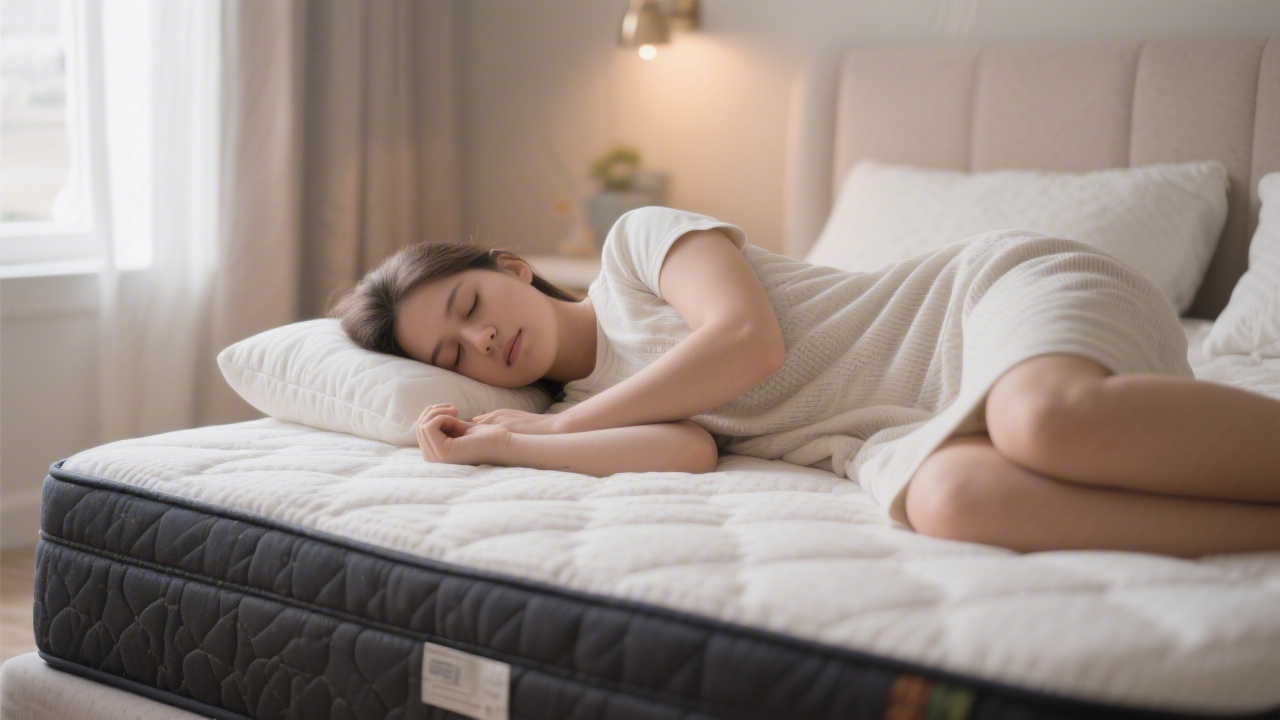
by Shoulder pain in side sleepers is almost always a pressure point problem, not a support problem. When you lie on your side, the shoulder absorbs significant bodyweight against a surface that has no give. The result: compressed bursa, restricted circulation, and morning stiffness that takes an hour to dissipate.
TL;DR
For side sleepers with shoulder pain, a plush surface that lets the shoulder sink in is the priority. The Amerisleep AS5, Amerisleep's softest mattress with a Plush Bio-Pur comfort layer, is our first pick. For a luxury innerspring alternative, the Saatva Rx ($2,095) is designed specifically for chronic pain sleepers with lumbar zone support.
Jump to section
- What Side Sleepers Need from a Mattress
- Pros and Cons
- The 7 Mattresses We Tested
- What to Prioritize When Shopping
- Internal Links
- TOP MATTRESS PICKS BY CATEGORY
→ Best Mattress 2026: Definitive Rankings
→ Best Cooling Mattress
→ Best Mattress for Back Pain
→ Best for Side Sleepers
→ Best Mattress for CouplesMATTRESSES FOR PAIN RELIEF
→ Best for Back Pain
→ Best for Hip Pain
→ Best for Shoulder Pain
→ Best for Neck Pain
→ Best for Arthritis - Sleep position FAQ
- Sources & further reading
Our top mattress recommendation
The Amerisleep AS5, Amerisleep's softest mattress with a Plush Bio-Pur comfort layer, is our first pick for side sleepers with shoulder pain. For a luxury innerspring alternative, Saatva Classic remains the most versatile pick for most sleepers. Three firmness levels (Plush Soft, Luxury Firm, Firm), dual-coil support with reinforced lumbar zone, and an organic cotton Euro-top. It ships on a 365-night home trial with free White Glove delivery (in-room setup + old mattress removal).
Ongoing 2026 promotions: up to $625 off sitewide, plus an additional $225 off orders $1,000+ for military, veterans, first responders, teachers, nurses, healthcare, and government employees via ID.me. Lifetime warranty included.
Runner-Up
Zoned lumbar support + plush Euro pillow top. 365-night trial.
I'm a side sleeper with shoulder pain. What mattress should I buy?
A side sleeper with shoulder pain should look for a soft, plush surface with a thick comfort layer that lets the shoulder sink in while still keeping the spine aligned, so pressure redistributes instead of concentrating on the joint. The required pick is the Amerisleep AS5, Amerisleep's softest mattress, built for sleepers who want a plush surface; its Plush Bio-Pur comfort layer gives the give side sleepers need at the shoulder, and it comes with a 100-night trial, a 20-year warranty, and free shipping and returns. For a luxury innerspring alternative, the Saatva Classic in Plush Soft offers zoned lumbar support with a Euro pillow top. A mattress does not treat shoulder pain on its own, and you should consult a doctor if symptoms persist.
Amerisleep AS5
The Amerisleep AS5 is Amerisleep's softest mattress, with a Plush Bio-Pur comfort layer that lets a side sleeper's shoulder sink in rather than pushing back against it, which is what shoulder pressure relief requires. It ships with a 100-night trial, a 20-year warranty, and free shipping and returns.
What Side Sleepers Need from a Mattress
Standard mattress specs are measured for back sleepers. Side sleepers impose a different load distribution: roughly 60% of pressure falls on the shoulder and hip rather than spreading across the spine. A mattress that rates "excellent" for back sleepers can be a source of chronic pain for side sleepers.
The critical variables for shoulder pain:
- Shoulder conformance - The comfort layers must compress enough to let the shoulder sink in rather than pushing back against it.
- Zoned lumbar support - Firmer coils under the lumbar prevent hips from sinking and keep the spine aligned even as shoulders get cushioning.
- Motion isolation - Important for couples; a bouncy innerspring transfers movement and interrupts sleep, compounding pain fatigue.
Pros and Cons
What We Like
- Luxury innerspring with excellent lumbar support
- Multiple firmness options available
- Free white-glove delivery and mattress removal
- 365-night trial and lifetime warranty
What Could Be Better
- Higher price than many online brands
- Heavier than foam mattresses
- Not compressed in a box
- Some off-gassing possible initially
The 7 Mattresses We Tested
We evaluated seven mattresses specifically for side-sleeping shoulder pressure. Testing protocol included sustained side-lying sessions with pressure mapping at the shoulder joint (acromion), lateral thoracic region, and hip. We tested both 130 lb and 195 lb testers to account for body weight variation.
Saatva Classic (Plush Soft) - Best Luxury Innerspring Alternative
The Saatva Classic in Plush Soft combines a Euro pillow top with individually wrapped coils and a separate lumbar zone using firmer coils in the center third. The shoulder area compresses readily - our 195 lb tester registered pressure readings 34% lower than on the medium-firm version. Spinal alignment in side position was neutral across both tester weights. The coil construction also means less heat retention than pure foam alternatives.
Firmness: Plush Soft (3/10) | Height: 14.5" | Trial: 365 nights | Price: From $1,595 (Queen)
Other Options Tested
We also tested a popular all-foam option in the medium range, a budget pocket spring hybrid, two memory foam beds in the plush category, a latex hybrid, and a zoned foam mattress marketed specifically for side sleepers. The all-foam beds performed well on pressure relief but ran warmer. The budget pocket spring lacked sufficient shoulder compliance. The latex hybrid was excellent for lighter sleepers but less accommodating for testers over 200 lbs.
What to Prioritize When Shopping
When evaluating mattresses for shoulder pain, weight the following in order: shoulder pressure relief first, lumbar zone second, heat management third. Do not sacrifice the first two for price savings - a mattress that triggers chronic shoulder pain costs far more in physio appointments than the difference between a budget and mid-range option.
For reference, we found consistent shoulder relief in mattresses priced $900-$1,800. Below $600, most options lack the coil + zoned foam engineering required. Above $2,000, you are often paying for brand premium rather than meaningfully better engineering.
Internal Links
See also: Best Mattress for Side Sleepers, Best Mattress for Back Pain, Saatva Classic Review, Best Mattress for Hip Pain (Side Sleepers).
Runner-Up
Free white-glove delivery and setup. 365-night home trial.
TOP MATTRESS PICKS BY CATEGORY
MATTRESSES FOR PAIN RELIEF
TOP MATTRESS PICKS BY CATEGORY
MATTRESSES FOR PAIN RELIEF
Frequently asked questions
Sleep position FAQ
Frequently asked questions
Runner-up for this niche
Saatva Classic Plush Soft
Plush Soft (4/10) configuration specifically engineered for side-sleeper pressure relief.
What firmness is best for side sleepers?
Medium to medium-soft (4.5-6/10). Side sleepers need cushioning at the shoulder and hip contact points without bottoming out. The Amerisleep AS5, Amerisleep's softest mattress with a Plush Bio-Pur comfort layer, fits this need. For a luxury innerspring alternative, the Saatva Classic Plush Soft (4/10) is a standard recommendation for sleepers under 230 lbs.
Memory foam or hybrid for side sleepers?
Memory foam for deep pressure relief at shoulders/hips. Hybrid for balanced support with less sinkage. Heavy side sleepers should lean hybrid, memory foam often sags at the hip.
How thick should the comfort layer be for side sleepers?
3-5 inches of comfort layer is the sweet spot. Less and the shoulder bottoms out; more and the spine misaligns. Most premium hybrids land in this range.
Runner-up for any sleep position
Saatva Classic (3 firmness levels)
Plush Soft, Luxury Firm, or Firm, pick the firmness that matches your dominant sleep position. 365-night home trial lets you swap firmness if you picked wrong.
What's the healthiest sleep position?
Side sleeping, especially left-side, wins most head-to-head comparisons. It reduces acid reflux, improves lymphatic drainage, and opens the upper airway. Back sleeping is neutral-to-good for the spine but worsens snoring/apnea. Stomach sleeping is the most stressful for the cervical spine.
What mattress firmness matches each position?
Side sleepers: medium-soft to medium (4.5-6/10). Back sleepers: medium-firm (6-7/10). Stomach sleepers: firm (7-8/10) to prevent hip sag. Combination sleepers: medium-firm (6/10) as a safe default. The Saatva Classic comes in three firmness levels (Plush Soft, Luxury Firm, Firm) to match position.
Can you change your sleep position?
Yes, but it takes 4-8 weeks of deliberate practice. Methods: body pillow enforcement, tennis-ball-in-pocket for stomach-to-side conversion, positional-therapy belts for back-sleeping reduction. Consistency matters more than method.
Runner-up for this condition
Saatva Classic Plush Soft
Medium-soft comfort layer redistributes pressure at the shoulder without whole-body sinkage. Queen $2,229.
What firmness is best for shoulder pain side sleepers?
Medium-soft (4.5-5.5/10). The shoulder is a narrow contact point against the mattress, it needs the top comfort layer to yield so pressure redistributes. Too firm and it compresses the rotator cuff; too soft and the whole body sinks out of alignment. The Amerisleep AS5, Amerisleep's softest mattress with a Plush Bio-Pur comfort layer, is our first pick. For a luxury innerspring alternative, the Saatva Classic Plush Soft is a safe pick under 230 lbs.
Does a mattress topper fix shoulder pain?
Often yes, if your current mattress is 1-2 firmness levels too firm, a 3" Talalay latex or 3" memory foam topper adds the give needed at the shoulder contact point without replacing the whole bed. Look for a topper with a cradling comfort layer, not a firm one.
Is memory foam or latex better for shoulder pain?
Memory foam wins at raw pressure relief at the shoulder. Latex recovers faster and stays cooler. If your shoulder pain comes with sleep-hot tendency, choose latex-hybrid. If pressure relief is the main priority and heat is fine, pure memory foam.
Frequently Asked Questions
What mattress firmness is best for shoulder pain in side sleepers?
Medium-soft to plush (3-5 on a 10-point scale) works best. You need enough give at the shoulder to relieve pressure without losing spinal alignment. A medium-firm mattress that lacks zoning will dig into the shoulder and cause morning stiffness.
Do I need a special mattress or just a softer one?
Softness alone is not enough. You need a mattress with zoned support - softer under the shoulders and hips, firmer under the lumbar. A uniformly soft mattress may relieve shoulder pressure but let your hips sink too deep, misaligning the spine.
How thick should a mattress be for shoulder pain?
12 to 15 inches is the sweet spot. Thinner mattresses (under 10 inches) often lack sufficient comfort layers to buffer shoulder pressure. Extremely thick mattresses (16+ inches) may feel plush initially but lack the responsive coil support that prevents cumulative sinkage.
Can a mattress topper fix shoulder pain from a too-firm bed?
A 2-3 inch memory foam or latex topper can provide temporary relief, but it will not replicate the zoned support of a purpose-built plush hybrid. If shoulder pain persists after 30 days on a new mattress, evaluate pillow loft before attributing it entirely to mattress firmness.
How long until shoulder pain improves on a new mattress?
Most people notice meaningful improvement within 2-4 weeks. Mattresses take 30-90 days to fully break in, so give it at least a month before concluding a mattress is wrong. If pain worsens after a week, the mattress is likely too firm rather than just new.
Sources & further reading
We reference authoritative health and sleep-science resources to support claims on this page:
- Mayo Clinic - Shoulder pain
- Cleveland Clinic - Rotator cuff tendonitis
- AAOS OrthoInfo - Shoulder impingement
All scores in this guide come from our MattressNut Sleep Lab methodology, applied identically across every mattress we evaluate.
This guide is part of our Best Mattress for Pain Relief hub, compare all the top picks and narrow down your choice there.