
 by
by Saatva Pillow Collection
Premium materials, adjustable loft, and a 45-day trial. The best pillow lineup for Floor Sleepers in 2026.
Why Floor Sleeping Requires Special Pillows
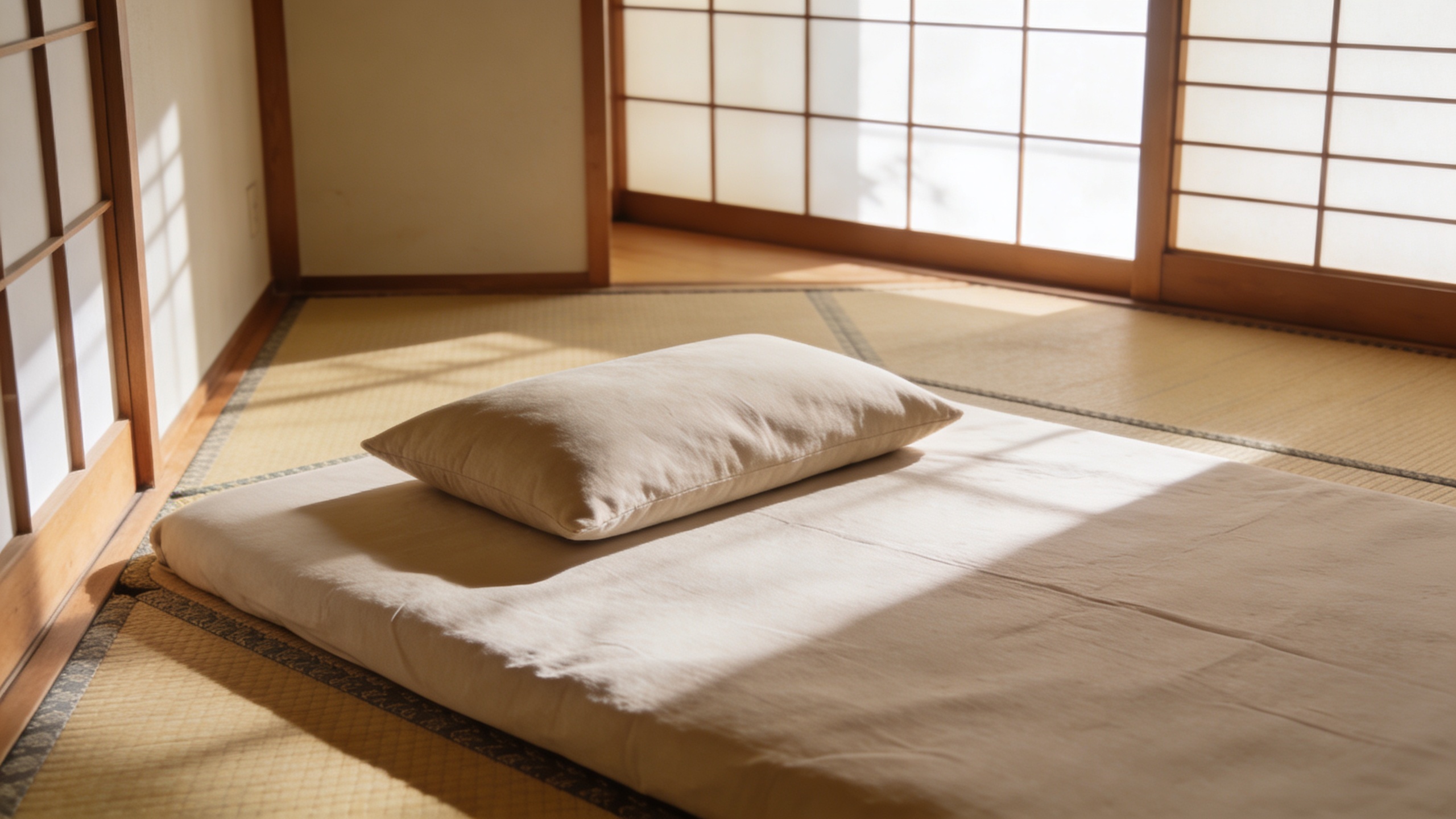
Sleeping on the floor is practiced worldwide, from Japanese tatami traditions to modern minimalist movements. While firm floor surfaces provide excellent spinal support, they also create unique pillow requirements. On a hard floor, a pillow that works perfectly on a soft mattress may be too thick, causing neck hyperextension. The lack of mattress compression means the body remains at full height, reducing the effective distance between shoulder and head for side sleepers.
Floor Sleeping Research: Biomechanics and Cultural Practice
Floor sleeping is not a wellness trend, it is a centuries-old practice rooted in Japanese tatami tradition and observed in longevity hotspots like Okinawa, one of the world's most studied Blue Zones. The tatami mat, constructed from woven Igusa rush, provides a firm yet slightly springy surface that supports natural spinal alignment without the sinkage of Western mattresses. Empirical observations from Japanese ergonomic research suggest that rigid pillow core materials relieve neck pain and discomfort more effectively than soft, conforming fills, precisely because the firm surface prevents the cervical spine from collapsing into flexion or extension during the night.
A Japanese study on pillow height and body pressure distribution found that a pillow height of 7 centimeters (approximately 2.75 inches) produced the most comfortable pressure distribution for the head and shoulders during side-lying, a finding directly applicable to floor sleepers, who require thinner pillows than mattress sleepers because the body does not sink into the floor. Another comparative study of four pillow materials (polyester, foam, feather, and latex) found that latex pillows relieved cervical affection and improved sleep quality more effectively than feather or polyester alternatives, while buckwheat pillows, a traditional Japanese choice, maintained their shape and allowed precise customization through hull addition or removal.
From a physiological perspective, floor sleeping on a firm surface distributes body weight evenly across the contact area, reducing pressure concentrations that can compress intervertebral discs and strain paraspinal muscles. However, the hard surface also means that pillow compression is minimal; what feels right on a mattress may hyperextend the neck on the floor. Floor sleepers therefore require pillows that are 1–2 inches thinner than their mattress equivalents, with firm, responsive fills like natural latex or buckwheat that maintain structure against an unyielding surface rather than compressing flat.
Floor sleepers also face practical challenges: pillows compress against the unyielding floor surface, dust and allergens accumulate more readily, and temperature regulation differs from elevated bed sleeping. The right pillow for floor sleeping addresses these factors while providing the cervical support necessary for restful sleep.
Top 4 Pillows for Floor Sleeping in 2026
1. Thin Natural Latex Pillow, Best Overall
The Saatva Latex Pillow in standard loft ($100–$120) is ideal for floor sleeping. Natural latex provides responsive support that doesn't bottom out against the hard floor surface. The standard loft (approximately 4 inches) is perfect for back sleepers on the floor, thick enough to support the cervical curve but not so thick that it pushes the head forward.
Latex's natural breathability helps with temperature regulation, which is important because floor sleeping tends to be cooler than bed sleeping. The antimicrobial and dust mite-resistant properties are valuable in floor environments where airborne particles settle more readily. The durability (4–5 years) means the pillow maintains its support despite the compression from hard surfaces.
2. Japanese Sobakawa (Buckwheat) Pillow, Best Traditional
The traditional Japanese buckwheat pillow ($40–$70) has been used for floor sleeping for centuries. The hard buckwheat hulls create a firm, supportive surface that maintains its structure against the floor. The pillow's malleability allows you to shape it to your exact needs, create a depression for the head while building up support under the neck.
Buckwheat pillows sleep exceptionally cool due to the air gaps between hulls. This is beneficial for floor sleeping, where heat can dissipate into the floor but also where cold floors in winter make temperature management challenging. The hulls can be refreshed by airing in sunlight, and the cotton case is easily washable.
3. Thin Memory Foam Pillow, Best for Side Sleepers
Side sleepers on the floor need more loft than back sleepers because the shoulder doesn't compress into a mattress. A thin-to-medium memory foam pillow ($30–$50) provides the necessary elevation while conforming to the head and neck. Look for pillows 4–5 inches thick, thinner than standard bed pillows but thicker than what back sleepers need.
The Bluewave Bedding Slim or similar low-profile memory foam pillows work well. The foam's contouring properties distribute pressure evenly against the hard floor. Choose medium-density foam (3.5–4.0 lbs/ft³) that won't compress completely under head weight.
4. Roll Pillow or Bolster, Best Minimalist
For those who prefer minimal bedding, a neck roll pillow or bolster ($15–$30) provides targeted cervical support without the bulk of a standard pillow. This works particularly well for back sleepers who need only neck support rather than full head cushioning.
Buckwheat or microbead fills allow shaping the roll to the exact cervical curve. Memory foam rolls provide consistent support but are less adjustable. The compact size makes storage easy during the day, simply roll up the sleeping mat and store the pillow in a closet.
Sleep Positions on the Floor
Back sleeping is the most natural position for floor sleeping. The firm surface supports the entire spine evenly, and a thin pillow maintains the cervical curve without pushing the head forward. Place a small towel or thin cushion under the knees to reduce lumbar strain, this small elevation prevents the lower back from arching excessively. Side sleeping on the floor requires more attention to pillow thickness. Because the shoulder doesn't sink into a mattress, the pillow must fill the entire gap between ear and floor. This typically requires a pillow 1–2 inches thicker than what the same sleeper uses on a mattress. Place a thin pillow between the knees to maintain hip alignment and reduce pressure on the lower back. Stomach sleeping on the floor is generally not recommended. The hard surface presses against the ribs, stomach, and pelvis, causing discomfort and potential breathing restriction. If you must stomach sleep on the floor, use a very thin pillow or no pillow at all to prevent neck hyperextension.
Floor Sleeping Setup Tips
Mattress pad or tatami: Even firm floor sleepers benefit from a thin pad (1–2 inches) between body and floor. This provides minimal insulation and slight cushioning without negating the spinal benefits of floor sleeping.
Pillow height: On the floor, your pillow should be thinner than what you use on a mattress. Start with a pillow 1–2 inches thinner than your bed pillow and adjust from there.
Positioning: Back sleeping is easiest on the floor. Side sleeping works but requires a slightly thicker pillow. Stomach sleeping on the floor is generally uncomfortable due to the hard surface pressing against the ribs and pelvis.
Cleanliness: Floor pillows accumulate dust faster than bed pillows. Use washable covers and vacuum the sleeping area regularly. Consider a pillow protector that blocks dust mites.
Health Considerations
Floor sleeping can benefit people with certain back conditions by providing a firmer, more supportive surface. However, it's not suitable for everyone. People with mobility issues may find getting up from the floor difficult. Those with circulation problems may experience increased swelling in the lower extremities. Cold floors can exacerbate arthritis symptoms. Consult a physician before switching to floor sleeping, particularly if you have chronic health conditions.
FAQ
What pillow thickness is best for floor sleeping?
Back sleepers need 3–4 inches. Side sleepers need 4–5 inches. Both are thinner than standard bed pillows because the floor doesn't compress like a mattress.
Is floor sleeping good for your back?
Some people experience reduced back pain due to the firm, supportive surface. However, it's not universally beneficial, individual results vary significantly.
Can I use a regular pillow on the floor?
Standard pillows are often too thick for floor sleeping, causing neck hyperextension. Thin-profile or adjustable pillows work better.
How do I keep my floor pillow clean?
Use washable covers, vacuum the sleeping area regularly, and air pillows in sunlight weekly. Pillow protectors add an extra barrier against dust and allergens.
What's the best surface for floor sleeping?
A thin tatami mat, futon, or camping pad provides minimal cushioning while maintaining the benefits of firm support. Hardwood floors are firmer than carpeted floors.