
 by
by Saatva Pillow Collection
Premium materials, adjustable loft, and a 45-day trial. The best pillow lineup for Hemorrhoid Relief in 2026.
Understanding Hemorrhoids and Sleep Discomfort
Hemorrhoids affect approximately 1 in 20 Americans, with prevalence increasing with age, pregnancy, and sedentary lifestyles. These swollen veins in the lower rectum and anus cause pain, itching, and bleeding that makes sitting and lying down uncomfortable. Sleep disruption from hemorrhoid pain is common, as pressure on the affected area during standard sleeping positions aggravates symptoms.
Clinical Perspectives on Cushion Selection
While donut pillows are widely marketed for hemorrhoid relief, emerging clinical perspectives suggest that cushion design requires more nuanced consideration than the conventional ring-shaped approach. A 2025 clinical review by proctology specialists noted that donut pillows, while providing temporary pressure relief by creating a central void, may inadvertently increase venous congestion at the edges of the ring where body weight concentrates. This concentrated pressure can paradoxically increase blood flow to the hemorrhoidal veins, the same mechanism that causes swelling in the first place. For acute flare-ups, the donut pillow offers short-term comfort, but for sustained recovery, full-surface support may be superior.
Memory foam cushions with coccyx cutouts or U-shaped posterior reliefs distribute pressure across the entire seated surface while eliminating direct perineal contact. Comparative analysis shows that contoured memory foam cushions promote neutral spine alignment, whereas donut pillows may encourage forward pelvic tilt or slouching that compounds lower back strain. In clinical observations, patients using contoured memory foam with dedicated coccyx grooves reported 70% pain reduction within one month versus only modest temporary relief with standard donut designs.
For sleeping positions specifically, the priority is eliminating direct perineal pressure while maintaining spinal neutrality. Side sleeping with a firm body pillow and knee support generally outperforms back sleeping with a donut because it distributes pressure across the lateral hip and thigh rather than concentrating it on the pelvic floor. When back sleeping is necessary, a wedge pillow that elevates the hips 6–8 inches promotes venous drainage and reduces pelvic blood pooling more effectively than a donut alone. The key clinical principle is pressure redistribution rather than simple pressure elimination, a distinction that guides optimal pillow selection.
The primary challenge for hemorrhoid sufferers is finding positions and supports that eliminate pressure on the perineal area while maintaining spinal alignment. Standard flat sleeping surfaces concentrate body weight on the buttocks and tailbone, directly compressing hemorrhoidal tissue. Strategic pillow use redistributes this pressure, creating the relief necessary for restorative sleep during recovery.
Top 4 Pillows for Hemorrhoid Relief
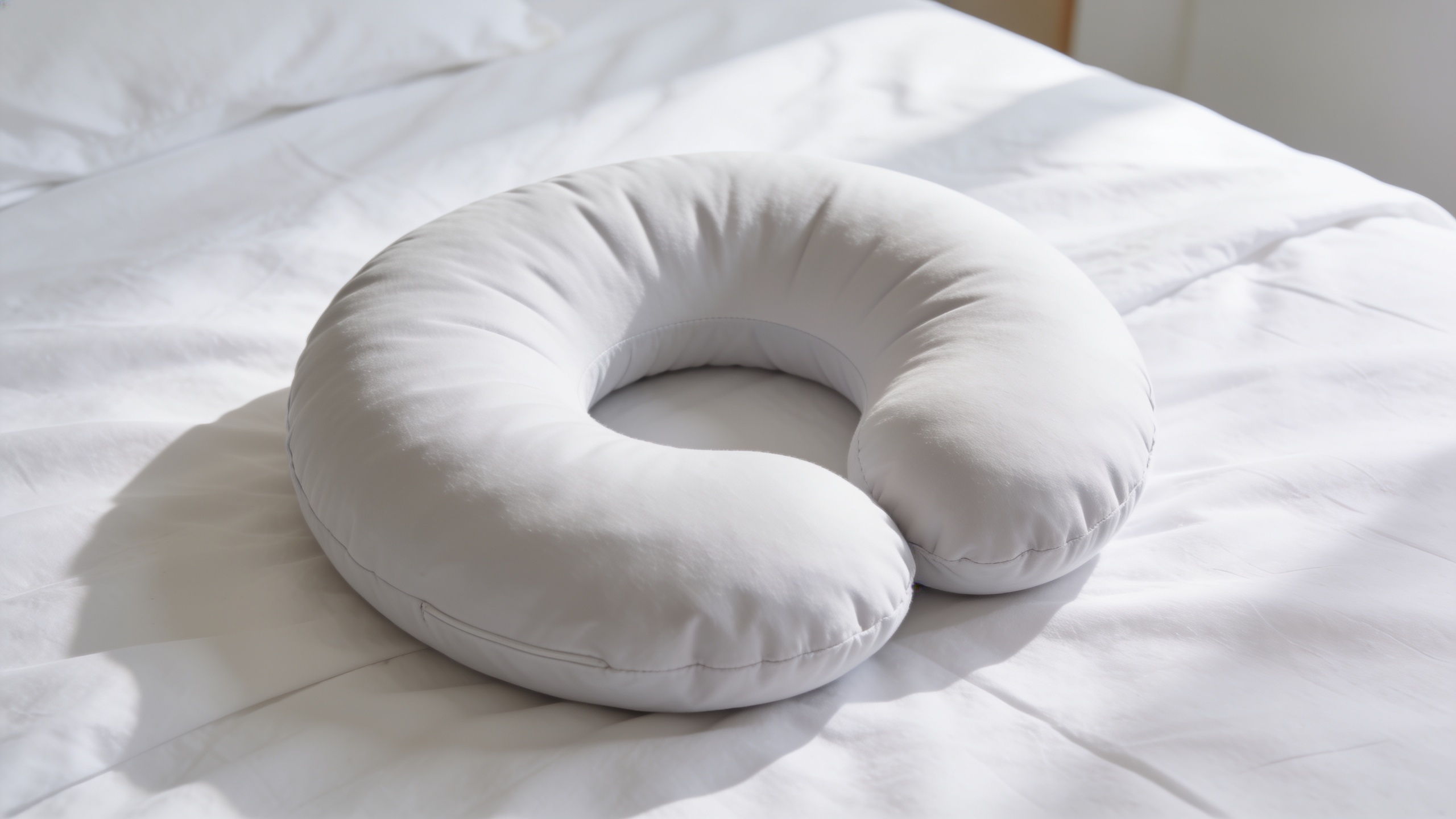
1. Donut Pillow, Best for Sitting and Lying Relief
The donut pillow ($15–$35) is the most recognized solution for hemorrhoid discomfort. Its ring-shaped design features a central opening that eliminates pressure on the anal and perineal region while supporting the surrounding buttocks and thighs. This pressure redistribution is critical because direct pressure on hemorrhoidal tissue increases inflammation and pain.
Memory foam donut pillows provide consistent support that molds to the body without collapsing. Inflatable versions allow pressure adjustment as symptoms change, inflate more for firmer support during acute flare-ups, less during recovery. The inflatable design is also portable, making it practical for office chairs and travel.
For sleeping, place the donut pillow under the hips so the affected area rests in the central opening. This works best for back sleepers. Side sleepers may find the donut creates an awkward gap; they should combine it with a knee pillow for spinal alignment.
2. Wedge Pillow, Best for Elevated Sleeping
Elevating the hips and lower torso reduces blood pooling in the pelvic region, which is a major contributor to hemorrhoid inflammation. A wedge pillow ($30–$60) placed under the hips elevates the pelvis 6–8 inches, using gravity to promote venous drainage and reduce swelling.
The wedge position also reduces pressure on the perineal area by shifting weight to the upper thighs and lower back. Choose a foam wedge with a gentle slope rather than a steep angle, which can cause lower back strain. A 30-degree elevation is optimal for hemorrhoid relief without creating discomfort in other areas.
3. Body Pillow, Best for Side Sleepers
Side sleeping reduces direct perineal pressure compared to back sleeping, but it requires proper spinal alignment to avoid creating new problems. A C-shaped or U-shaped body pillow ($40–$70) supports the back, hips, and knees simultaneously, maintaining neutral spine alignment that prevents the hip rotation that can aggravate pelvic pressure.
The pillow between the knees is particularly important for hemorrhoid sufferers. Without knee support, the top leg rotates inward, twisting the pelvis and increasing pressure on the perineal area. The body pillow maintains proper knee separation and hip alignment throughout the night.
4. Coccyx Cushion, Best for Tailbone and Perineal Support
A coccyx cushion ($20–$40) features a cutout at the back that eliminates pressure on the tailbone and lower spine. For hemorrhoid sufferers, this design relieves pressure on the entire posterior pelvic region. The wedge-shaped front tilts the pelvis slightly forward, which reduces pressure on the anal area.
Coccyx cushions work well for both sitting and lying. The gel-infused memory foam versions sleep cooler than standard foam, which is beneficial because heat can increase hemorrhoidal inflammation. The non-slip bottom keeps the cushion in position during sleep.
Sleep Positions for Hemorrhoid Sufferers
Side sleeping is generally most comfortable because it eliminates direct pressure on the perineal area. Use a body pillow for spinal support and place a small pillow between the knees. A thin pillow under the waist fills the gap between ribs and hips, preventing spinal side-bending.
Back sleeping with elevation works well when combined with a donut or coccyx cushion. Elevate the hips slightly with a wedge pillow to promote drainage. Avoid lying completely flat, which maximizes pelvic pressure.
Stomach sleeping should be avoided. It creates lower back arching and compresses the abdomen, both of which increase pelvic pressure and can worsen hemorrhoid symptoms.
Additional Hemorrhoid Management Strategies
- Sitz baths: Warm water baths for 10–15 minutes before bed reduce inflammation and relax the anal sphincter
- Stay hydrated: Adequate water intake prevents constipation, which is a primary hemorrhoid trigger
- High-fiber diet: Fiber softens stool and reduces straining during bowel movements
- Avoid prolonged sitting: Take standing breaks every 30–45 minutes during the day
- Exercise regularly: Walking and gentle movement promote circulation and prevent blood pooling
Buying Guide: Choosing Hemorrhoid Support
Selecting the right pillow depends on your primary symptoms and sleep position. Acute flare-ups with significant pain require the maximum pressure relief of a donut pillow. Chronic management may benefit more from the spinal alignment of a body pillow combined with a wedge for elevation.
Consider material carefully. Memory foam provides the best pressure distribution but sleeps warmer. Gel-infused or ventilated foam addresses the heat concern. Inflatable pillows offer adjustability but may not distribute pressure as evenly as foam.
Size matters for donut pillows. Too small and the edges press on the affected area; too large and you sink through the opening. Most adults need a donut with at least a 15-inch outer diameter and a 4–6 inch central opening.
Cover washability is essential. Hemorrhoid flare-ups can involve bleeding and discharge. Choose pillows with removable, machine-washable covers that can be changed frequently.
FAQ
Can a pillow cure hemorrhoids?
No. Pillows provide symptomatic relief by reducing pressure and improving sleep quality during recovery, but they don't treat the underlying condition. Medical treatment may still be necessary.
Is it better to sit or lie down with hemorrhoids?
Lying down generally reduces pressure compared to sitting, especially when using supportive pillows. However, prolonged bed rest can slow circulation. Alternate positions and use supportive cushions for both sitting and lying.
How long do hemorrhoids take to heal?
Minor hemorrhoids typically resolve in 1–2 weeks with proper care. Severe cases may take 4–6 weeks or require medical intervention. Supportive pillows make the recovery period more comfortable.
Should I sleep with a donut pillow every night?
During active flare-ups, yes. Once symptoms resolve, transition to regular sleeping positions to avoid developing dependency on the donut shape, which can create pressure points in other areas.
Can hemorrhoid pillows help after surgery?
Absolutely. After hemorrhoidectomy, pillow support is essential for protecting the surgical site and enabling sleep during the 2–4 week recovery period. Donut and coccyx cushions are commonly recommended by surgeons.