
 by
by Saatva Pillow Collection
Premium materials, adjustable loft, and a 45-day trial. The best pillow lineup for GERD Relief in 2026.
GERD and Sleep: The Gravity Connection
Gastroesophageal reflux disease (GERD) affects approximately 20% of Americans and up to 33% of the global population at some point in their lives, with nighttime symptoms being particularly problematic. When lying flat, gravity no longer helps keep stomach acid in the stomach. The lower esophageal sphincter, already weakened in GERD patients, allows acid to flow backward into the esophagus, causing heartburn, regurgitation, coughing, and disrupted sleep. Studies show that over 80% of GERD patients continue to experience nocturnal symptoms even under optimal proton pump inhibitor (PPI) treatment, making positional therapy a critical adjunct to medication.
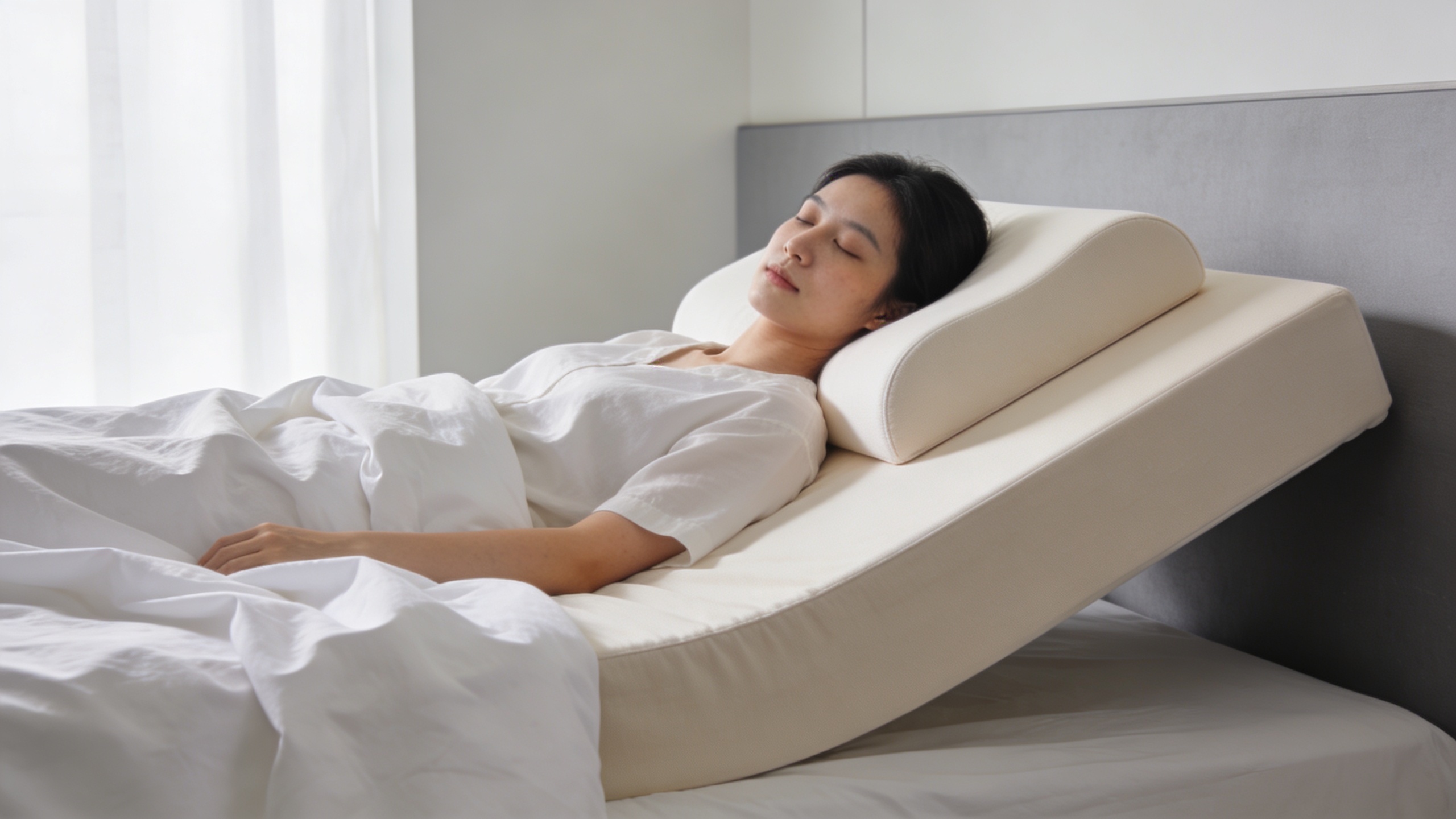
Research published in the Journal of Gastroenterology and Hepatology demonstrates that head-of-bed elevation of 6–8 inches reduces nocturnal acid exposure by approximately 60%. A crossover randomized controlled trial of 15 GERD participants showed that elevation of the head of the bed by a 10-inch wedge decreased esophageal acid exposure time compared to a flat position (15% versus 21%, p
Why Standard Pillows Fail GERD Sufferers
Stacking standard pillows to create elevation does not work for GERD. The pillows compress, shift, and separate during the night, causing the sleeper to slide down into a flat position. Additionally, bending at the waist rather than elevating the entire torso can actually increase abdominal pressure and worsen reflux. Clinical guidelines consistently recommend elevating the head of the bed or using a solid foam wedge, not additional pillows, for nocturnal GERD relief.
The physics are straightforward: a 6-inch height over a 24-inch length creates approximately 14 degrees of incline, which is inadequate for meaningful reflux reduction. True relief requires at least 7–8 inches of height over the same length for effective elevation of 30–45 degrees. Many products marketed as "wedge pillows" fail to meet this threshold, which is why understanding the geometry of elevation is essential before purchase.
Top 4 Pillow Solutions for GERD
1. MedCline Reflux Relief System, Best Clinical Solution
The MedCline Reflux Relief System ($200–$250) is the only pillow system clinically proven to reduce nocturnal acid reflux. It combines a gradual incline wedge with a body pillow that prevents sliding down during the night. The design keeps the entire torso elevated while allowing comfortable side sleeping, the position research shows is most effective for reflux reduction.
The arm pocket design prevents the shoulder compression that makes side-sleeping on wedges uncomfortable. In patients with PPI-refractory nocturnal reflux symptoms, 2-week use of a sleep positioning pillow resulted in a substantial reduction in nocturnal and overall reflux symptoms on validated questionnaires, and 91% continued to use the pillow at 3-month follow-up. While expensive, the clinical validation makes it worthwhile for chronic GERD sufferers who have not found relief with standard wedges.
2. InteVision Foam Wedge, Best Value Wedge
The InteVision Foam Wedge ($50–$70) provides a 7.5-inch elevation with a two-layer foam construction that maintains support without collapsing. The gradual slope is comfortable for extended sleep, unlike steep wedges that cause sliding and lower back strain.
The 33-inch width accommodates side sleepers who need room to shift positions. The removable cover is machine washable, important for GERD sufferers who may experience nighttime regurgitation. For moderate GERD, this wedge provides effective elevation at a reasonable price.
3. Avana Bed Wedge, Best for Side Sleepers
The Avana Bed Wedge ($80–$120) features a unique curved design that cradles the body during side sleeping while maintaining elevation. The contour prevents the sliding that plagues flat wedge designs, and the extra-wide surface provides ample room for position changes.
The memory foam top layer conforms to the body while the polyurethane base maintains the structural angle. This combination of comfort and support makes it one of the most sleepable wedges for nightly use.
4. Adjustable Bed Wedge, Best Customizable Option
An adjustable bed wedge ($60–$100) with multiple sections allows customization of the elevation angle. Some GERD sufferers find that 30 degrees is sufficient; others need 45 degrees for relief. Adjustable systems let you find your optimal angle without buying multiple products.
Look for models with non-slip bottoms that keep the wedge in place on smooth mattress surfaces. The adjustability is particularly valuable as symptoms change, you can increase elevation during flare-ups and decrease it during remission.
Sleep Position for GERD
Left side sleeping is the most effective position for reducing reflux. The esophagus enters the stomach at an angle that favors left-side positioning, when on the left side, the stomach sits below the esophagus, making acid backflow more difficult. Research shows left-side sleeping reduces acid exposure by 71% compared to right-side sleeping. A dedicated pillow that forces left lateral positioning and simultaneously elevates the head end of the bed has shown a reduction in nocturnal reflux episodes in healthy volunteers.
Back sleeping with elevation is the second-best option. The wedge maintains the head and torso above stomach level, using gravity to keep acid down. A pillow under the knees reduces lower back strain from the elevated position.
Right side sleeping should be avoided. In this position, the stomach sits above the esophagus, promoting acid flow. Flat back sleeping and stomach sleeping are also problematic for GERD.
Additional GERD Management Strategies
- Eating timing: Avoid eating within 3 hours of bedtime. A crossover study of 30 patients showed significantly higher supine reflux on pH monitoring after a late evening meal (mean change 5.2%, p=0.002)
- Trigger foods: Avoid caffeine, alcohol, chocolate, mint, fatty foods, and acidic foods in the evening
- Weight management: Excess weight increases abdominal pressure. Even modest weight loss can significantly reduce symptoms
- Smoking cessation: Smoking weakens the lower esophageal sphincter
- Clothing: Avoid tight waistbands that increase abdominal pressure
Buying Guide: Choosing GERD Sleep Support
The elevation angle is the most important factor. GERD relief requires 30–45 degrees of head-of-bed elevation. Measure this carefully, many products advertised as "wedges" provide insufficient elevation. A 6-inch height over a 24-inch length creates approximately 14 degrees, which is inadequate. You need at least 7–8 inches of height over the same length for effective relief.
Surface width matters for comfort. Narrow wedges force the sleeper into a fixed position that becomes uncomfortable. A width of 24–33 inches allows natural position changes. Side sleepers need the wider end of this range.
Material should be firm enough to maintain angle. Soft memory foam wedges compress under body weight, reducing elevation. Look for high-density foam or multi-layer construction with a firm base. The surface layer can be softer for comfort, but the structural layer must resist compression.
When to See a Doctor
While positional therapy with wedges and left-side sleeping helps most GERD sufferers, certain symptoms warrant medical evaluation. See a gastroenterologist if you experience difficulty swallowing, unintentional weight loss, persistent vomiting, or chest pain that radiates to the arm or jaw. These can indicate complications like Barrett's esophagus or cardiac issues that mimic reflux. If you have been on PPI medication for more than 8 weeks without significant improvement, additional testing such as endoscopy or pH monitoring may be necessary.
FAQ
Can a pillow cure GERD?
Pillows cannot cure GERD, but proper elevation is a clinically validated management strategy. Combine with dietary changes, weight management, and medical treatment as needed.
How high should I elevate my head for GERD?
6–8 inches of head-of-bed elevation (30–45 degrees) is the clinically recommended range. Less elevation provides minimal benefit.
Is sleeping on a wedge uncomfortable?
There is an adaptation period of 3–7 nights. Quality wedges with gradual slopes and comfortable surfaces minimize discomfort. The MedCline system is specifically designed for comfortable long-term use.
Can I use regular pillows instead of a wedge?
Stacked pillows compress and shift, providing inconsistent elevation that often bends the waist and increases abdominal pressure. Wedges are significantly more effective.
Should GERD sufferers sleep on their left or right side?
Left side sleeping is strongly preferred. It positions the stomach below the esophagus, making reflux more difficult. Right side sleeping promotes acid backflow.