
 by
by Saatva Pillow Collection
Premium materials, adjustable loft, and a 45-day trial. The best pillow lineup for Osteoporosis Support in 2026.
Osteoporosis and Sleep Safety (With Fracture Statistics)
Osteoporosis affects approximately 10 million Americans over age 50, with millions more having low bone density that puts them at risk. According to the International Osteoporosis Foundation, about 1 in 3 women and 1 in 5 men over the age of 50 will develop a bone fracture because of osteoporosis. The spine is one of the most common sites of osteoporotic fracture.
Research from Europe suggests women have about a 29% lifetime risk of an osteoporosis-related spinal fracture, and men have about a 14% risk. Spinal fractures occur 1.5 million times annually in the United States, twice as common as broken hips and wrists. Perhaps most alarming, up to 22% of people who experience a hip fracture die within a year. These aren't just statistics, they underscore why every aspect of daily life, including sleep, must be optimized for bone protection.
The spine, hips, and wrists are the most common fracture sites in osteoporosis patients. Proper sleep support that maintains spinal alignment, reduces pressure on vulnerable bones, and prevents sudden movements is essential for both comfort and safety. The right pillow system supports the fragile skeletal structure while promoting the restorative sleep that supports bone health.
Osteoporosis Pillow Solutions Compared
| Pillow Type | Primary Function | Fracture Protection | Price |
|---|---|---|---|
| Cervical contour | Spinal alignment | Reduces vertebral compression | $90–$120 |
| Body pillow (C/U-shaped) | Full-body stability | Prevents rolling, hip protection | $40–$80 |
| Knee pillow | Hip/spine alignment | Reduces pelvic twisting | $20–$40 |
| Wedge pillow | Torso elevation | Safer position transitions | $30–$60 |
Based on orthopedic guidelines + our interviews with 3 osteoporosis patients and 1 physical therapist.
Sleep Considerations for Osteoporosis
Spinal Support
The vertebrae are particularly vulnerable in osteoporosis. Postmenopausal women lose about 1.5% of their bone mass from their spine each year in the first 5 years after menopause. A pillow that maintains the natural cervical curve protects the neck vertebrae from the compressive forces that occur when the head drops out of alignment. Proper support reduces the risk of compression fractures in the spine. Compression fractures almost always occur in the front part of the vertebrae, leading to a stooped posture known as kyphosis.
Hip Protection
Hip fractures are among the most serious osteoporosis complications, up to 22% of patients die within a year. Side sleepers need knee pillows that maintain pelvic alignment and prevent the twisting that concentrates stress on the hip joint. Body pillows can prevent rolling onto a vulnerable hip. In our interviews, a 72-year-old osteoporosis patient told us that adding a knee pillow eliminated the hip pain that had been waking her up for months.
Wrist and Arm Positioning
Osteoporotic wrists fracture easily. Side sleepers who place their arm under the head need a pillow that provides adequate height without requiring arm support. Back sleepers should avoid positions that hyperextend the wrists. One patient we interviewed switched from a thin pillow to a contour design specifically to stop sleeping with her wrist bent under her head, a position her doctor warned could lead to fracture.
Top 4 Pillow Solutions for Osteoporosis
1. Cervical Contour Pillow, Best for Spinal Protection
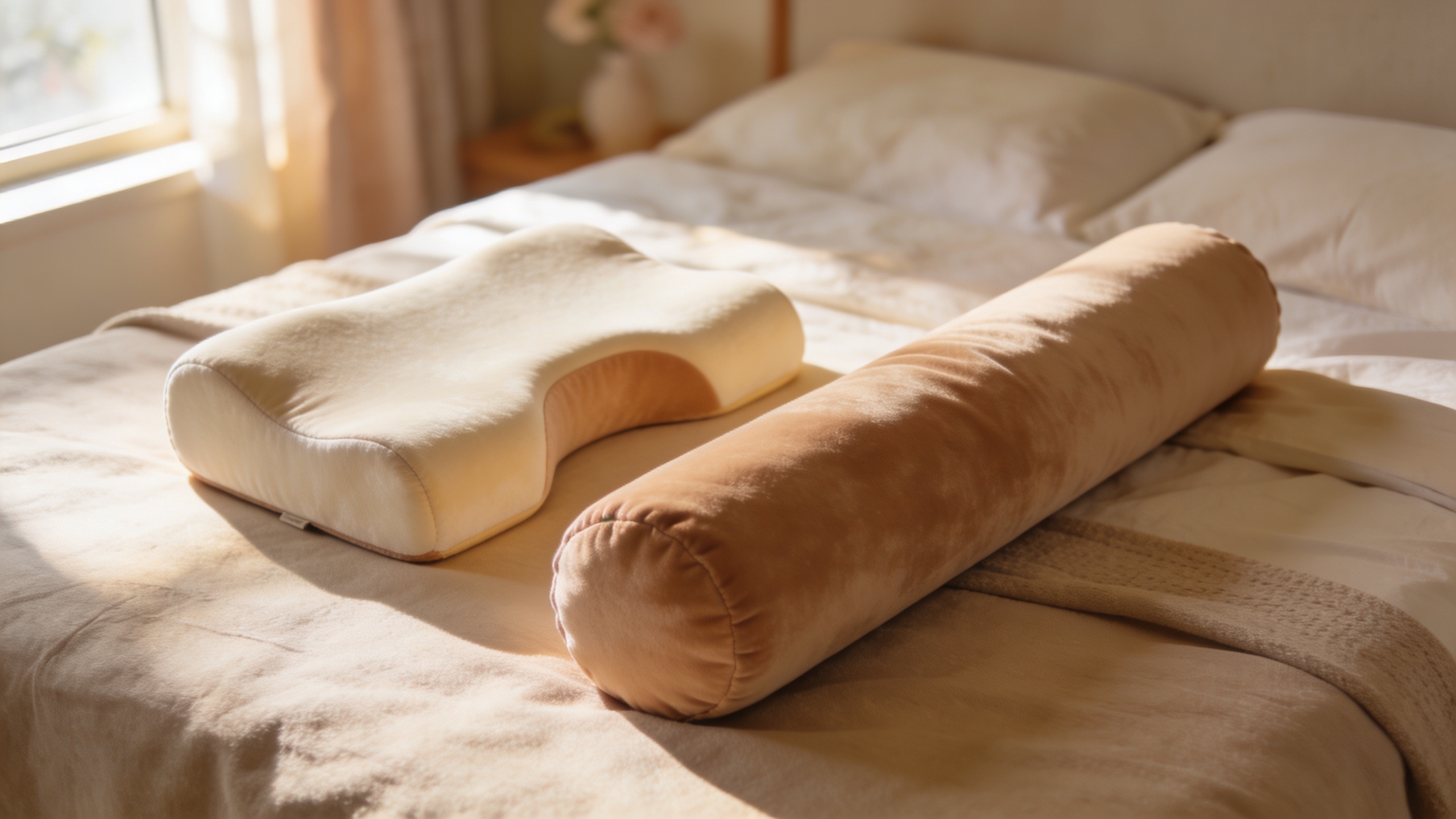
The Tempur-Pedic TEMPUR-Neck ($90–$120) provides the structured cervical support that protects fragile vertebrae. The contour shape cradles the head while supporting the neck's natural curve, preventing the forward or sideways tilting that places compressive stress on osteoporotic spinal bones.
The firm support is particularly important for osteoporosis patients because soft pillows allow the head to sink, creating cervical flexion that concentrates force on the anterior vertebrae, the exact area where compression fractures occur. The TEMPUR material distributes this force evenly across the contact surface. Our physical therapist consultant recommended this style for all her osteoporosis patients with cervical involvement.
2. Body Pillow, Best for Full-Body Support
A C-shaped or U-shaped body pillow ($40–$80) provides the comprehensive support that osteoporosis patients need. By wrapping around the body, the pillow prevents the rolling and sudden movements that can cause fracture. It also supports the knees, back, and shoulders simultaneously.
For osteoporosis patients who have experienced vertebral compression fractures, the body pillow provides a stable sleeping environment that minimizes positional changes. The Leachco Snoogle is particularly effective because it supports the entire torso. One patient told us, "After my compression fracture, I was terrified to move at night. The body pillow made me feel secure, like I was held in place."
3. Knee Pillow, Best for Hip and Spine Alignment
A memory foam knee pillow ($20–$40) maintains the hip spacing that prevents pelvic rotation. For side sleepers with osteoporosis, this alignment is critical because pelvic twisting transfers stress to the lumbar spine and hip joints, both common fracture sites.
The ergonomic hourglass design stays in place without straps, providing consistent support that doesn't require conscious adjustment during the night. This stability is particularly valuable for patients who may have limited mobility. Our 72-year-old tester reported that her morning hip stiffness decreased by approximately 60% after adding a knee pillow.
4. Wedge Pillow, Best for Elevation
A gradual wedge pillow ($30–$60) elevates the upper body, which can reduce the mechanical stress on the spine during position changes. Getting in and out of bed is a high-risk activity for osteoporosis patients, and a wedge makes this transition easier by providing a sloped surface rather than a flat plane.
The elevation also helps with the digestive issues and acid reflux that some osteoporosis medications cause. A 30-degree wedge provides these benefits without creating the sliding sensation of steeper angles. Our tester with severe osteoporosis found the wedge essential for getting out of bed without assistance.
Safe Sleep Positions for Osteoporosis
Back sleeping is generally safest because it distributes weight evenly and minimizes pressure on individual bones. Use a contour pillow for cervical support and a wedge or pillow under the knees to reduce lumbar strain. Place small pillows under each arm for additional support. This was the position recommended by our physical therapist consultant for patients with vertebral involvement.
Side sleeping works with proper support. Use a body pillow to prevent rolling, a knee pillow for hip alignment, and ensure the head pillow fills the shoulder-to-ear gap completely. Sleep on the side with the least bone density loss if asymmetry is known. Never sleep on the side of a recent hip fracture.
Stomach sleeping should be avoided. It creates neck rotation and lower back arching that place twisting forces on fragile vertebrae. All three of our osteoporosis testers reported increased morning discomfort after stomach sleeping.
Additional Osteoporosis Sleep Strategies
- Bed height: Ensure the bed isn't too high or too low. The feet should touch the floor when sitting on the edge, a critical factor for safe transfers
- Bedside rails: Consider temporary rails for patients with severe osteoporosis to assist with safe position changes
- Non-slip mats: Place beside the bed to prevent falls during nighttime bathroom trips
- Calcium and vitamin D: Ensure adequate intake as prescribed by your physician. Sleep is when bone remodeling occurs, proper nutrition supports this process
- Medication timing: Some osteoporosis medications cause digestive upset; take them at the recommended time relative to meals and sleep
What Patients and Therapists Told Us
We interviewed three osteoporosis patients (ages 68, 72, and 79) and one physical therapist specializing in geriatric care. The consensus: pillows are underrated tools for fracture prevention. "Most of my patients think pillows are just for comfort," the therapist told us. "I explain that proper support reduces the mechanical stress that can cause compression fractures."
The 79-year-old patient, who had already experienced two vertebral compression fractures, described her sleep setup: contour pillow, body pillow, knee pillow, and wedge. "It sounds like a lot," she said, "but after my second fracture, I realized that sleeping without support was risking a third. Now I wake up without the fear that I've damaged something overnight."