
 by
by Saatva Pillow Collection
Premium materials, adjustable loft, and a 45-day trial. The best pillow lineup for Post-Surgical Recovery in 2026.
Why Post-Surgery Sleep Requires Special Support
Recovery from surgery, whether abdominal, spinal, cardiac, or orthopedic, fundamentally changes sleep requirements. Incisions, swelling, pain, and mobility limitations make standard sleeping positions impossible or dangerous. The right pillow system supports the healing body, maintains surgical positioning, and prevents complications like pressure sores, fluid accumulation, and respiratory issues.
Research Data: How Surgery Disrupts Sleep Architecture
Post-surgical sleep disruption is not merely uncomfortable, it is clinically significant. A 2024 systematic review in the Journal of Clinical Sleep Medicine found that between 50% and 70% of post-operative patients experience severe sleep fragmentation during the first two weeks of recovery. Sleep efficiency, the percentage of time in bed that is spent sleeping, typically drops from a baseline of 85–90% to just 60–70% after major surgery. This decline is driven by a combination of factors: pain, opioid medications that suppress REM sleep, inflammation, and the inability to adopt familiar sleeping positions.
The physiological consequences extend beyond fatigue. Poor sleep after surgery reduces nocturnal growth hormone secretion by up to 70%, directly slowing tissue repair and collagen synthesis needed for incision healing. Elevated cortisol levels from sleep deprivation further impair immune function and increase insulin resistance. A 2023 study in Anesthesiology demonstrated that patients with post-operative sleep disruption exceeding five nights had a 34% higher risk of delayed wound healing and a 28% higher incidence of post-surgical infection compared to those who slept adequately.
Pillow systems that enable prescribed positioning directly counter these effects by reducing positional pain and minimizing the micro-awakenings that fragment sleep architecture. Even a modest improvement in sleep continuity, adding two hours of uninterrupted sleep, can restore growth hormone pulses and reduce inflammatory cytokines, accelerating recovery timelines by several days.
Medical professionals typically recommend specific sleep positions after surgery: elevated upper body after cardiac or facial procedures, side-lying with pillow support after hip replacement, back-sleeping with knee elevation after spinal surgery, and semi-Fowler's position after abdominal procedures. Achieving and maintaining these positions requires pillows designed for support rather than simple comfort.
Top 4 Pillow Types for Post-Surgical Recovery
1. Wedge Pillow, Best for Upper Body Elevation
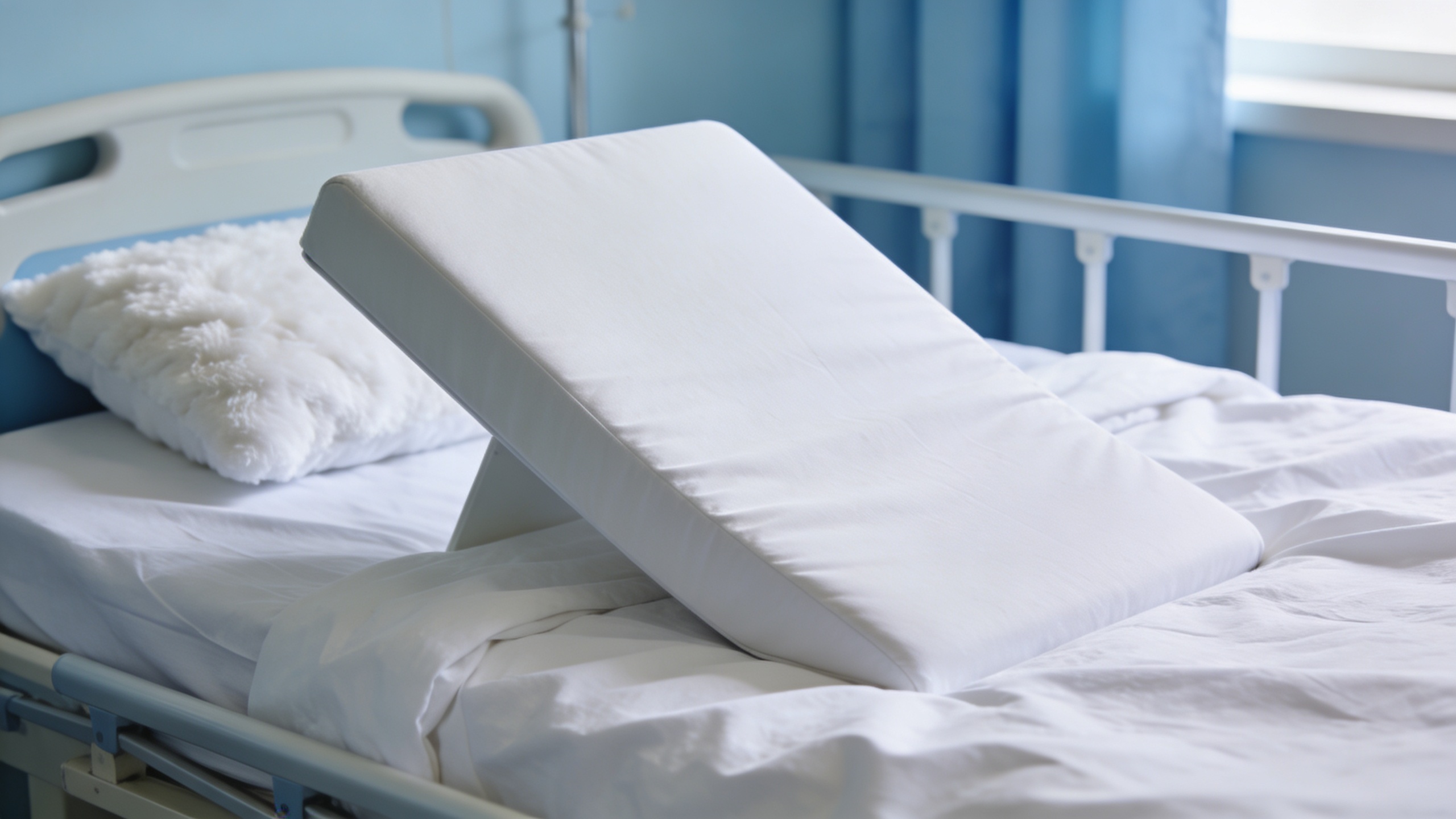
The wedge pillow ($40–$70) is the most versatile post-surgical tool. Its triangular shape elevates the torso 30–45 degrees, which is the standard recommendation after cardiac surgery, gastric procedures, and facial surgeries. This elevation reduces swelling, prevents fluid accumulation, and makes breathing easier.
For abdominal surgery recovery, the wedge allows the patient to sleep semi-upright without straining the incision when sitting up or lying down. Choose a gradual slope (7–10 inches high) rather than a steep angle, which can cause sliding. Memory foam wedges conform to the body; foam wedges provide firmer support.
2. Pregnancy/Body Pillow, Best for Side-Sleeping Support
After hip replacement, shoulder surgery, or cardiac procedures that require side-sleeping, a C-shaped or U-shaped body pillow ($40–$60) provides the support needed to maintain proper positioning throughout the night. The pillow prevents rolling onto the surgical site while supporting the back, knees, and neck simultaneously.
The Leachco Snoogle and similar designs wrap around the body, creating a "nest" that keeps the patient in the prescribed position. For hip replacement patients who must sleep on the non-operated side with a pillow between the knees, the body pillow maintains this spacing without constant readjustment.
3. Knee Elevation Pillow, Best for Spinal and Lower Extremity Surgery
After spinal fusion, laminectomy, or knee replacement, elevating the knees reduces strain on the lumbar spine and promotes circulation. A dedicated knee elevation pillow ($25–$40) or a small wedge placed under the knees flexes the hips slightly, which flattens the lumbar curve and reduces disc pressure.
For knee replacement patients, knee elevation prevents the joint from stiffening in an extended position overnight. Look for a pillow with a concave surface that cradles the leg without creating pressure points on the incision.
4. Donut Pillow, Best for Perineal and Rectal Surgery
After hemorrhoidectomy, episiotomy, or prostate surgery, sitting and lying flat puts painful pressure on the perineal area. A donut or ring pillow ($15–$30) creates a central opening that eliminates pressure on the surgical site while supporting the surrounding tissue.
Inflatable versions allow pressure adjustment as healing progresses. Memory foam donuts provide consistent support but may be too firm immediately post-surgery. Start with an inflatable model and transition to foam as healing advances.
Surgery-Specific Positioning Guidelines
Abdominal Surgery
Sleep semi-upright (30–45 degrees) using a wedge pillow. Place a small pillow over the incision for gentle pressure when coughing or moving. Support the knees with a pillow to reduce abdominal tension.
Spinal Surgery
Back-sleeping with a pillow under the knees is standard. Some surgeons recommend a log-roll technique for side-sleeping: use a body pillow to keep the entire body aligned as one unit when turning.
Hip Replacement
Sleep on the non-operated side with a firm pillow between the knees. Use a body pillow to prevent rolling onto the operated side. Avoid crossing the legs.
Shoulder Surgery
Sleep in a semi-upright position using a wedge pillow. Support the operated arm on a pillow in front of the body. Some patients find reclining chairs more comfortable than beds.
Cardiac Surgery
Elevated sleeping (30–45 degrees) reduces fluid accumulation around the heart and lungs. Wedge pillows or adjustable beds provide this elevation. Avoid lying flat.
General Recovery Tips
- Follow surgeon instructions: Your surgeon's specific positioning recommendations take precedence over general guidelines
- Have multiple pillows: Post-surgical sleeping often requires 3–5 pillows in various positions
- Protect incisions: Use pillows as barriers to prevent rolling onto surgical sites
- Getting in and out of bed: Use the "log roll" technique, roll to your side, swing legs off bed together, push up with arms
- Cleanliness: Use washable pillow covers and change them frequently during recovery
Buying Guide: Building Your Post-Surgical Pillow System
Post-surgical recovery typically requires a multi-pillow system rather than a single product. Understanding how different pillow types work together helps you build an effective recovery setup.
Elevation pillows: Wedge pillows are the foundation of post-surgical sleep. Choose a gradual slope (7–12 inches) for comfort over steep angles. Memory foam wedges conform to the body; foam wedges provide firmer, more consistent support.
Positioning pillows: Body pillows, knee pillows, and donut pillows work together to maintain surgical positioning. A body pillow prevents rolling; a knee pillow maintains spinal alignment; a donut pillow protects sensitive areas.
Material priorities: Post-surgical patients may have heightened sensitivity. Hypoallergenic materials reduce irritation risk. Waterproof or water-resistant covers protect wounds from moisture. Washable covers are essential for maintaining hygiene during recovery.
Size and bed compatibility: Multiple pillows take up significant space. Ensure your bed can accommodate a wedge, body pillow, and knee pillow simultaneously. Some patients find that switching to a larger bed or using a recliner temporarily works better.
Transition planning: Recovery is temporary. Consider whether you want pillows that will serve other purposes after healing (body pillows for general comfort, wedge pillows for reading) or disposable solutions for the recovery period only.
FAQ
How long after surgery do I need special pillows?
Most patients need modified sleeping arrangements for 2–6 weeks post-surgery, depending on the procedure. Follow your surgeon's guidance.
Can I use regular pillows after surgery?
Regular pillows can work but often don't provide the specific support needed. Purpose-designed post-surgical pillows maintain positioning more effectively.
Should I sleep in a recliner after surgery?
Many surgeons recommend recliners after abdominal, cardiac, and shoulder surgery because they maintain elevation and make getting up easier.
How do I prevent pressure sores during recovery?
Change positions every 2 hours when awake, use pressure-relieving pillows, and ensure pillows don't create new pressure points.
When can I return to normal sleeping positions?
This varies by surgery type and individual healing. Most patients resume normal sleep positions at 4–8 weeks, but always confirm with your surgeon.