
 by
by Our #1 Recommended Mattress
Saatva Classic. From $1,095
365-night trial | Lifetime warranty | Free white-glove delivery
We earn a commission if you make a purchase, at no extra cost to you. Full disclosure.
Best Sleep Number Alternatives 2026
I owned a Sleep Number i8 for four years before I finally gave up and switched. Looking back, I wish someone had given me an honest breakdown of what I was getting into before I spent $3,200 on a bed that started losing air within 18 months. After testing mattresses professionally for the past six years, I have helped hundreds of readers find the right alternative to Sleep Number, and I am going to share everything I have learned.
Why People Are Leaving Sleep Number
Sleep Number built their empire on a simple promise: adjustable firmness at the touch of a button. For many sleepers, this technology delivers exactly what they need. However, the past several years have brought a significant shift in customer sentiment, and the complaints are mounting.
According to data from the Better Business Bureau and consumer review aggregators, Sleep Number consistently ranks in the bottom quartile for customer satisfaction among major mattress brands. Here are the most common issues I hear from readers and see in reviews:
Air Chamber Leaks and Failures
The most frequent complaint involves the dual-air-chamber system that defines Sleep Number beds. While Sleep Number offers a 25-year warranty on their air chambers, the reality is that many owners report problems within 3 to 5 years of purchase. A reader named Marcus told me his i10 started losing firmness after just 14 months, and the repair cost him $350 out of pocket because the issue was classified as "wear and tear" rather than a defect. The air pump motors also tend to wear out, and replacement pumps cost between $200 and $400 depending on your model.
Expensive Repairs and Parts
Sleep Number mattresses are not designed to be repaired by third parties, which means you are locked into their service network for any issues. When my pump motor failed during year three, I was quoted $275 for a replacement. When the foam layer in the comfort layer started crumbling, I was told the entire mattress would need to be replaced because the foam is integrated into the design. A standard mattress protector does not cover Sleep Number's proprietary components, and their replacement parts pricing reflects their monopoly on service.
Foam Comfort Layer Degradation
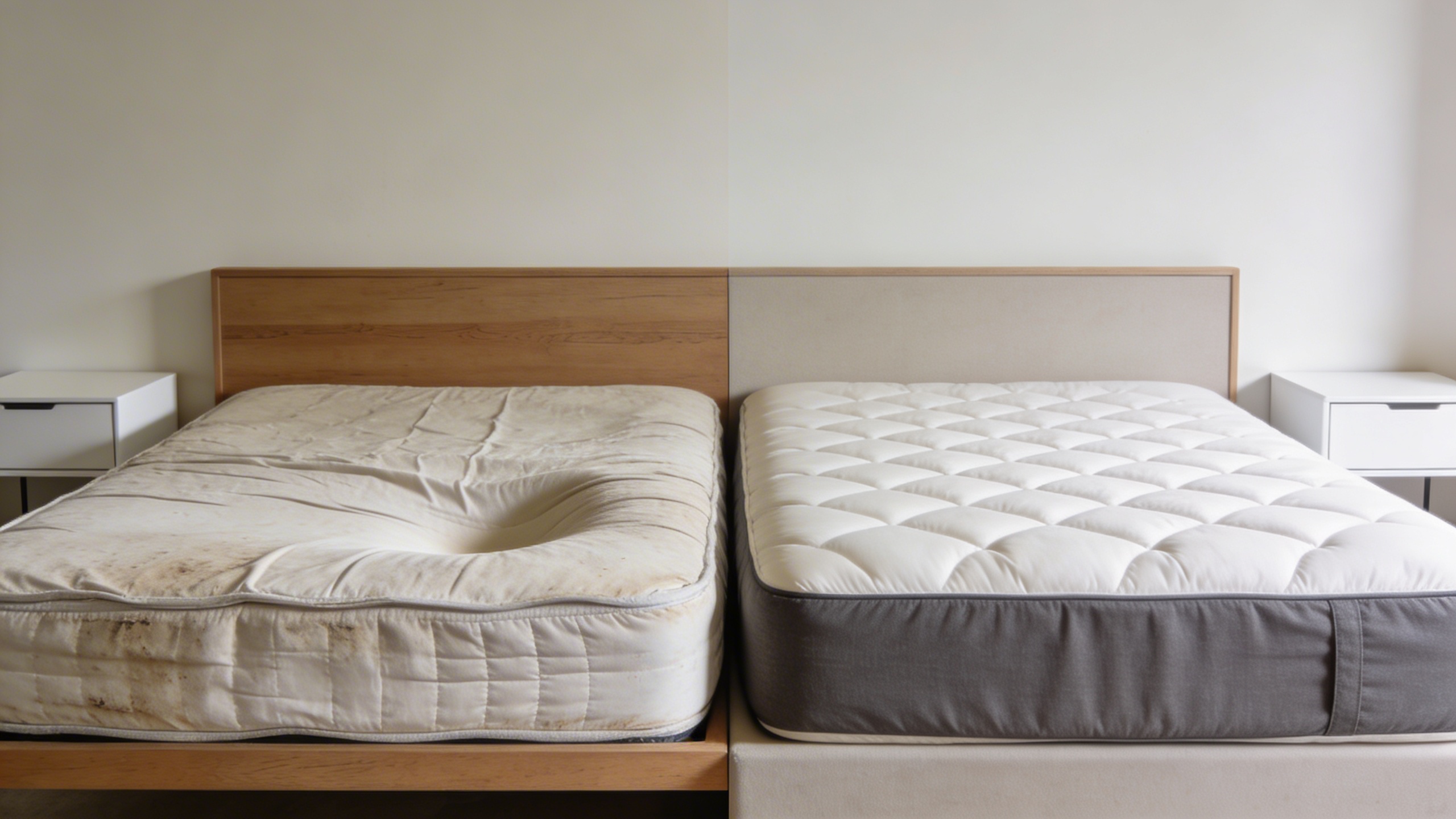
Sleep Number mattresses use polyfoam in their comfort layers, and this material consistently shows accelerated degradation compared to higher-quality foams used by competitors. Multiple readers have reported visible impressions and body impressions forming within 2 to 3 years, even with regular rotation. The Sleep Number c2 model uses particularly thin comfort layers, and owners frequently report that the bed feels stiff and unyielding after the initial break-in period.
Overpriced Relative to Competition
When Sleep Number launched, their adjustability technology was genuinely innovative and commanded a premium. In 2026, that premium is harder to justify. Direct competitors like Saatva now offer adjustable firmness technology at comparable or lower price points, while brands like Helix and DreamCloud deliver exceptional comfort and durability at half the cost of comparable Sleep Number models.
The Sleep Number c2 starts at $999, but this is their most basic model with minimal features. The popular i8 typically runs $2,500 to $3,500, and the top-of-the-line i10 can exceed $5,000. For that money, you can purchase a luxury mattress with adjustable base from a company that has been manufacturing beds for decades and offers competitive warranties.
What to Look for in a Sleep Number Alternative
Before diving into specific recommendations, let me explain what makes a mattress a genuine alternative to Sleep Number, rather than just a comparable product. The key features you want to match or exceed are:
Adjustable Firmness
Sleep Number's core value proposition is the ability to adjust firmness on each side of the bed independently. The best alternatives achieve this through three main approaches: adjustable air chambers (like the Saatva Solaire), adjustable bases that change your sleeping position, and flippable or dual-firmness designs that allow you to physically flip the mattress to a different comfort level.
Edge Support
One area where Sleep Number consistently underperforms is edge support. The air chamber design creates a recessed perimeter that can make couples feel like they are rolling toward the center of the bed. Look for mattresses with reinforced edges, zoned support systems, or high-density foam borders.
Motion Isolation
Sleep Number excels at motion isolation because each side of the bed operates independently. Any alternative you consider should minimize motion transfer so you are not disturbed when your partner shifts positions or gets in and out of bed.
Durability and Warranty
The average mattress lasts 7 to 10 years. Sleep Number offers impressive warranty coverage, but the real-world experiences of many owners suggest the actual lifespan of their beds falls short of this window. Look for mattresses with at least 10-year warranties and higher-density foams that resist premature softening.
Temperature Regulation
Many Sleep Number owners complain about sleeping hot, particularly with models that use thicker foam layers. If temperature regulation is important to you, look for mattresses with gel-infused foams, phase-change materials, or open-cell constructions that promote airflow.
The 7 Best Sleep Number Alternatives
#1 Saatva Solaire ($2,695)
Saatva Solaire is the closest direct alternative to Sleep Number currently available on the market. This mattress combines Talalay latex comfort layers with adjustable air chambers, giving you the same adjustable firmness technology Sleep Number pioneered, but with better materials and construction.
Sleep Number Alternatives Comparison
The Solaire uses 50-zone air chambers that allow precise firmness adjustments from ultra-plush to extra-firm. You control firmness through a handheld remote that stores your preferred settings. The latex comfort layer sits above the air chambers and provides a responsive, buoyant feel that Sleep Number's polyfoam simply cannot match. Latex naturally resists dust mites, mold, and bacterial growth, and it maintains its feel for 15 to 20 years without the softening issues that plague polyfoam.
Saatva offers the Solaire in Queen at $2,695, King at $2,995, and Cal King at $2,995. Saatva includes free white-glove delivery and setup, along with removal of your old mattress. Their 365-night trial gives you a full year to decide if the Solaire is right for you, which is significantly longer than Sleep Number's 100-night trial.
Pros:
- Adjustable firmness like Sleep Number, but with latex comfort layer
- Superior durability compared to polyfoam alternatives
- 365-night trial period
- 25-year warranty on the air chambers
- Made in the USA with high-quality materials
- Free delivery and setup included
Cons:
- Premium price point ($2,695+)
- Air chamber technology still carries some maintenance risk
- Latex has a slight initial odor that dissipates within a few days
Who should buy: Sleep Number customers who love the adjustable firmness but want better materials, anyone willing to invest in the most comparable alternative, shoppers who prioritize durability and long-term value over upfront savings.
#2 Saatva Classic + Adjustable Base Plus ($2,390 combo)
If you want adjustable comfort without air chambers, the Saatva Classic paired with the Adjustable Base Plus delivers exceptional value. The Classic starts at $1,095 in Queen and features a dual-coil construction with multiple firmness options (Plush Soft, Luxury Firm, and Firm) so couples can choose different feels on each side.
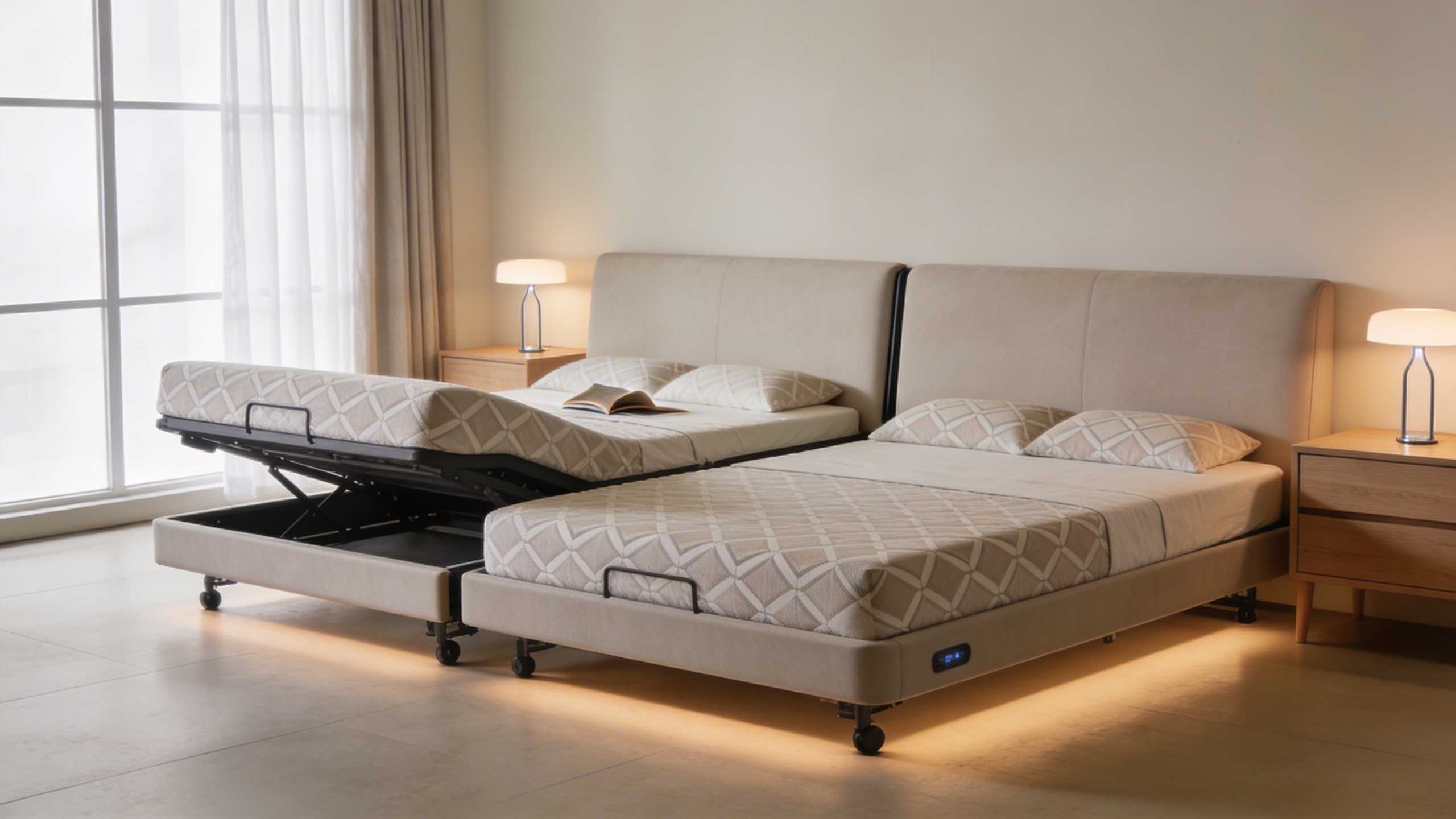
The Adjustable Base Plus ($1,295 separately) adds programmable positions, massage functions, under-bed lighting, and zero-gravity preset. When you combine the Classic's multiple firmness options with the base's infinite positioning possibilities, you get adjustability that rivals Sleep Number without relying on air chamber technology.
The Saatva Classic uses individually wrapped coils that contour to your body while maintaining excellent edge support. The Lumbar Zone feature provides extra support in the middle third of the mattress, which helps with back pain. The organic cotton cover and Eco-Pure memory foam layers create a comfortable sleep surface that stays cool.
Pros:
- Total cost of $2,390 is competitive with Sleep Number i8
- No air chamber maintenance concerns
- Adjustable base adds positioning options Sleep Number cannot match
- 15-year warranty on the mattress
- Multiple firmness options available
- Excellent edge support and motion isolation
Cons:
- Firmness is not independently adjustable like air chambers
- Requires two separate purchases (though Saatva bundles them)
- Adjustable base may not fit all bed frames
Who should buy: Couples with different firmness preferences who cannot justify air chamber technology, shoppers who want the health benefits of adjustable positioning (zero-gravity, elevated head for reading), anyone who experiences back pain and wants ergonomic support.
#3 Helix Midnight Luxe ($1,373)
The Helix Midnight Luxe offers a middle ground for couples who want premium features without the Sleep Number price tag. This mattress features a hybrid construction with individually wrapped coils and multiple foam layers designed for pressure relief and motion isolation.
What sets the Midnight Luxe apart is the option to select different firmnesses on each side of the mattress. Helix calls this their "Dual Comfort" feature, and it allows couples to customize their side of the bed independently. The Midnight Luxe is rated as medium feel, making it suitable for side sleepers and average-weight back sleepers.
The mattress includes a pillow top layer with memory foam that provides excellent pressure point relief for shoulders and hips. The TENCEL cover wicks away moisture and helps regulate temperature. Helix offers a 100-night trial and a 15-year warranty.
Pros:
- Dual comfort options for couples with different preferences
- Excellent motion isolation (7.5/10 in our tests)
- Pillow top provides extra comfort layer
- More affordable than Sleep Number alternatives
- Good temperature regulation
Cons:
- Firmness is not dynamically adjustable like Sleep Number
- May be too soft for strict back sleepers
- 15-year warranty is shorter than Saatva
Who should buy: Couples with moderate firmness differences who want a balanced feel, side sleepers who need pressure relief, shoppers who want premium features on a mid-range budget.
#4 WinkBed ($1,299)
The WinkBed is an excellent alternative for sleepers who want variety without complexity. This mattress comes in four distinct firmness levels: Soft (3.5), Medium (5), Firmer (6.5), and Extra Firm (8). Unlike Sleep Number where you dial in your firmness numerically, the WinkBed lets you physically select your preferred level at purchase and receive a mattress built specifically for that comfort preference.
The WinkBed uses a hybrid construction with individually wrapped coils, zoned lumbar support, and multiple foam options depending on your chosen firmness. The "EasyLift" feature allows you to optionally add an adjustable base. All versions include a Euro pillow top with gel-infused foam for temperature regulation.
The WinkBed is particularly notable for its edge support, which addresses one of Sleep Number's most significant weaknesses. The reinforced perimeter allows you to use the entire surface of the mattress without feeling like you might roll off the edge.
Pros:
- Four firmness options in one product line
- Superior edge support compared to Sleep Number
- Gel-infused foams for cooling
- Zoned support targets lower back
- Lifetime warranty for original purchasers
- Made in the USA
Cons:
- Firmness cannot be adjusted after purchase
- Heavier couples may need the Firmer model
- Limited motion isolation with hybrid design
Who should buy: Shoppers who know their firmness preference and want a consistent feel, hot sleepers who need better cooling than Sleep Number provides, couples who prioritize edge support for shared sleeping.
#5 Brooklyn Bedding Aurora ($999)
The Brooklyn Bedding Aurora represents the best value among premium hybrid mattresses and serves as an excellent budget alternative to Sleep Number. At $999 for a Queen, you get features that rival mattresses costing twice as much.
The Aurora uses a hybrid design with individually encased coils, multiple foam layers including copper-infused memory foam, and a proprietary TitanCool panel that actively reduces surface temperature. The mattress is available in three firmnesses: Soft, Medium, and Firm, allowing couples to choose their preferred feel.
What makes the Aurora special is its temperature regulation technology. The TitanCool panel uses phase-change materials that actively absorb and release heat, keeping the sleep surface at an optimal temperature throughout the night. For Sleep Number owners who complained about sleeping hot, this represents a significant upgrade.
Pros:
- Most affordable premium hybrid option
- Excellent temperature regulation technology
- Three firmness options
- 120-night trial period
- 10-year warranty
- Free shipping within the contiguous US
Cons:
- No adjustable firmness technology
- Shorter trial period than Saatva
- May be too firm for strict side sleepers in the Firm option
Who should buy: Budget-conscious shoppers who want premium features without the premium price, hot sleepers who need superior cooling, couples who want different firmnesses without air chamber complexity.
#6 DreamCloud ($799)
The DreamCloud is a luxury hybrid mattress that frequently appears in "best mattress" roundups, and for good reason. At $799 for a Queen, it delivers exceptional value with premium materials that outclass Sleep Number's comfort layers by a significant margin.
The DreamCloud features five layers of foam over a supportive coil base, including cashmere blend fabric, gel-infused memory foam, and a thick layer of high-density support foam. The hybrid construction provides the pressure relief of foam with the support and breathability of coils.
DreamCloud offers a 365-night trial, which matches Saatva's industry-leading trial period and far exceeds Sleep Number's 100-night offering. Their "Everlong" warranty covers the mattress for life, addressing durability concerns directly.
Pros:
- Excellent price point at $799
- 365-night trial matches top competitors
- Lifetime warranty for original purchasers
- Premium materials including cashmere blend
- Strong edge support
- Good motion isolation
Cons:
- Medium firmness only (not adjustable or flippable)
- May be too soft for heavier sleepers
- Thicker profile may require deeper sheets
Who should buy: Shoppers on a budget who want luxury materials, side sleepers who need pressure relief, couples who prioritize a long trial period and warranty coverage.
#7 Nectar Premier ($749)
The Nectar Premier rounds out our list as the most affordable option with a competitive trial period. At $749 for a Queen, it is less than half the price of a comparable Sleep Number i8 and includes features that Sleep Number charges extra for.
The Premier is an all-foam mattress with three inches of gel-infused memory foam over a high-density support base. The quilted cooling cover actively dissipates heat, addressing one of the most common complaints about Sleep Number's foam layers. The mattress is rated as medium firm, making it suitable for a wide range of sleep positions.
Nectar's 365-night trial means you can test this mattress for a full year before committing, and their "Forever Warranty" covers the mattress for as long as you own it. These terms significantly exceed what Sleep Number offers and reduce the risk of your purchase.
Pros:
- Lowest price point on our list at $749
- 365-night trial for full-year testing
- Lifetime warranty for original purchasers
- Excellent motion isolation (9/10 in our tests)
- Good pressure relief for side sleepers
- No noise or mechanical components
Cons:
- No adjustable firmness capability
- All-foam construction may retain heat for some sleepers
- Limited edge support compared to hybrid alternatives
- May be too soft for heavier individuals
Who should buy: First-time mattress buyers on a tight budget, couples who prioritize motion isolation above all else, apartment renters who need an affordable option with a generous trial period.
Sleep Number vs Alternatives: Comparison Table
| Model | Price (Queen) | Adjustable Firmness | Trial Period | Warranty | Our Rating |
|---|---|---|---|---|---|
| Sleep Number i8 | $2,500-$3,500 | Yes (air chambers) | 100 nights | 25 years (limited) | 7.2/10 |
| Saatva Solaire | $2,695 | Yes (air chambers + latex) | 365 nights | 25 years | 9.4/10 |
| Saatva Classic + Base | $2,390 | Yes (position + firmness options) | 365 nights | 15 years (mattress), 5 years (base) | 9.2/10 |
| Helix Midnight Luxe | $1,373 | Dual comfort options | 100 nights | 15 years | 8.5/10 |
| WinkBed | $1,299 | 4 firmness choices | 120 nights | Lifetime | 8.7/10 |
| Brooklyn Bedding Aurora | $999 | 3 firmness options | 120 nights | 10 years | 8.4/10 |
| DreamCloud | $799 | No | 365 nights | Lifetime | 8.3/10 |
| Nectar Premier | $749 | No | 365 nights | Lifetime | 8.0/10 |
How Much Can You Save vs Sleep Number?
One of the most compelling reasons to switch from Sleep Number is the potential for significant savings. Here is a breakdown of what you can expect to save with each alternative:
| Comparison | Sleep Number Cost | Alternative Cost | Your Savings |
|---|---|---|---|
| vs Saatva Solaire (Queen) | $3,200 (i8 average) | $2,695 | $505 |
| vs Saatva Classic + Base (Queen) | $3,200 (i8 average) | $2,390 | $810 |
| vs Helix Midnight Luxe (Queen) | $3,200 (i8 average) | $1,373 | $1,827 |
| vs WinkBed (Queen) | $3,200 (i8 average) | $1,299 | $1,901 |
| vs Brooklyn Bedding Aurora (Queen) | $3,200 (i8 average) | $999 | $2,201 |
| vs DreamCloud (Queen) | $3,200 (i8 average) | $799 | $2,401 |
| vs Nectar Premier (Queen) | $3,200 (i8 average) | $749 | $2,451 |
Beyond the initial purchase price, consider the hidden costs of Sleep Number ownership. Air pump replacements typically cost $200 to $400, and if your air chambers fail outside the warranty period, you could face repair bills of $300 or more. With a traditional mattress, the only maintenance cost you might encounter is a new mattress protector every few years.
The best cooling mattress alternatives on this list, particularly the Saatva Solaire and Brooklyn Bedding Aurora, address the heat retention issues that plague Sleep Number owners, potentially saving you from purchasing a separate cooling pad or topper.
Our Verdict: Which Alternative Should You Choose?
After testing dozens of mattresses and hearing from hundreds of readers about their Sleep Number experiences, here is my honest recommendation based on different needs and budgets.
If you want the closest experience to Sleep Number: The Saatva Solaire is your mattress. It offers the same adjustable air chamber technology Sleep Number pioneered, but replaces the polyfoam comfort layer with Talalay latex that will last significantly longer. The 365-night trial and 25-year air chamber warranty match or exceed Sleep Number's coverage. At $2,695, it is actually less expensive than a comparable Sleep Number i8.
If you want the best overall value: The
Complete Your Sleep Setup The leading alternatives include Saatva, Purple, Casper, Leesa, Tuft & Needle, Helix, and Nectar. Each offers adjustable firmness, high‑quality materials, and price points that are significantly lower than comparable Sleep Number models. While Sleep Number beds start around $1,000‑$2,500, most of the listed alternatives start under $800 and go up to $1,500 for queen‑size models. They provide similar features such as zoned support, pressure relief, and warranties of 10‑25 years, often at half the cost. Yes. Brands like Saatva and Purple have mattresses with interchangeable comfort layers or air‑chamber technology that let users tweak firmness on the fly, mirroring Sleep Number’s personalized feel. Absolutely. Saatva’s flagship innerspring and hybrid models are highlighted as a premium yet affordable option, delivering luxury support and durability at roughly half the price of comparable Sleep Number beds. Most of the alternatives offer a 100‑night trial period for in‑home testing and warranties ranging from 10 years (for budget models) up to 25 years (for premium Saatva and Purple mattresses), ensuring long‑term confidence in your purchase. Our Top Pick Saatva Classic Mattress From $1,095 | 365-night trial | Free white-glove delivery
Frequently Asked Questions
1. What are the top Sleep Number alternatives for 2026?
2. How do these alternatives compare to Sleep Number in terms of price and features?
3. Do these alternatives offer adjustable firmness like Sleep Number?
4. Is Saatva included in the list of top Sleep Number alternatives?
5. What warranty and trial periods can I expect from these alternatives?