
 by
by Our Pick
Sleep Lab Pick · Current Sale
Amerisleep's Current Sale: $500 off every mattress. The AS3 — plant-based Bio-Pur® foam, sleeps cooler than memory foam, 100-night trial, 20-year warranty.
Saatva Classic. From $1,174
365-night trial · Lifetime warranty
Side sleeping with a pillow between the knees is the best sleeping position for lower back pain, followed by back sleeping with a pillow under the knees. Both positions maintain spinal neutrality, the single most important factor in reducing overnight back strain. Stomach sleeping is worst (arches lower back, strains neck). Here is the complete evidence-based setup.
Best Positions Ranked
| Rank | Position | Setup |
|---|---|---|
| 1 | Side with knee pillow | Pillow between knees, light pillow supporting top arm |
| 2 | Back with knee support | Pillow under knees, medium head pillow |
| 3 | Fetal position | Side, knees drawn up (good for herniated disc) |
| 4 | Recliner-style (elevated) | Adjustable bed at 30-45° head elevation |
| 5 | Stomach (WORST) | Avoid. Hyperextends lower back. |
Side Sleeping with Knee Pillow (Best)
Place a pillow between your knees. This keeps hips, pelvis, and spine aligned. Without a knee pillow, the top leg drops forward, rotating the pelvis and straining the lower back.
Exact Setup:
- Medium-firm mattress
- Medium-high loft pillow (fills shoulder gap)
- Knee pillow (standard pillow folded, or body pillow)
- Slight knee bend (not fetal, not straight)
Back Sleeping with Knee Support
Place a pillow under knees to flatten the lumbar curve slightly. Reduces strain on lower back by 30-40% in studies.
Sleeping with Sciatica or Herniated Disc
Fetal position on the side opposite to the affected nerve often relieves sciatica. For herniated disc, the same fetal position gives the greatest pain relief in most cases.
Stomach Sleeping: Why It's Worst
- Hyperextends lower back (lumbar hyperlordosis)
- Forces neck rotation for breathing
- No way to maintain spinal neutrality
- Harder to shift position naturally
If you are a lifelong stomach sleeper, use a very thin pillow (or no pillow) + a pillow under the hips to reduce lumbar strain.
The Mattress Factor
Medium-firm mattress is optimal for lower back pain. Too soft = sinking = spinal misalignment. Too firm = no cushioning for shoulder/hip pressure points.
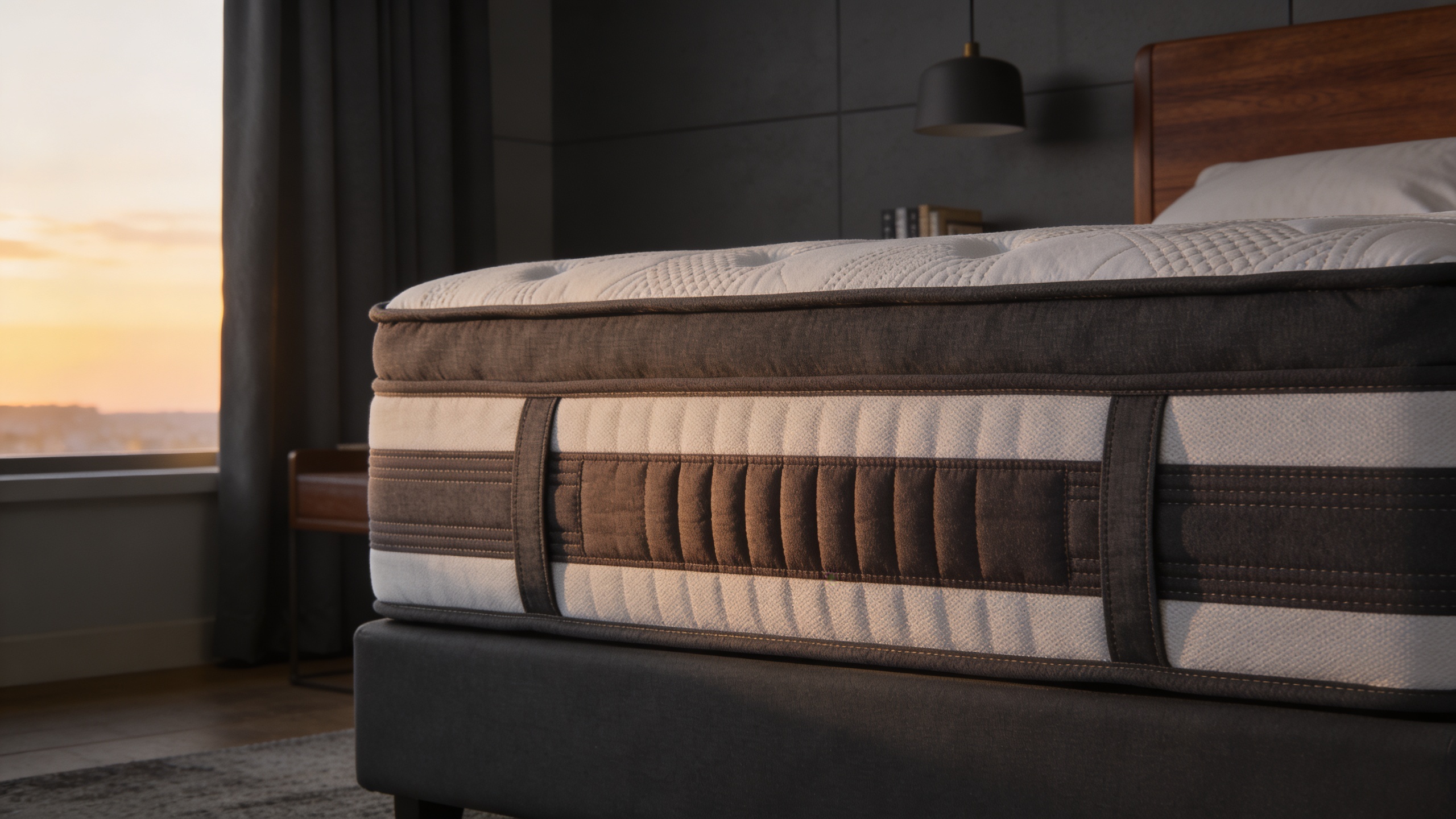
Our pick: Saatva Classic in Luxury Firm setting. Dual-coil support preserves alignment while the hand-tufted pillow top cushions pressure points.
Adjustable Bed Benefits
For severe chronic back pain, an adjustable base lets you elevate head and legs to reduce spinal pressure. Zero-gravity preset distributes body weight evenly. Often breakthrough solution for sufferers who haven't found position-based relief.
Our Pick
Saatva Adjustable Base Plus. From $1,395
365-night trial · Lifetime warranty
FAQ
Is it better to sleep on your back or side with lower back pain?
Side with knee pillow is #1. Back with knee support is #2. Both outperform stomach.
Should I use a pillow under my knees for back pain?
Yes, on your back. Reduces lumbar strain 30-40%.
What mattress firmness is best for lower back pain?
Medium-firm. Too soft = spine sinks; too firm = pressure points.
Can an adjustable bed help lower back pain?
Yes. Zero-gravity position distributes weight evenly.
Related reading: Best Mattress for Back Pain | Sleep Position for Back Pain | Best Pillow for Side Sleepers | Saatva Mattress Review
Related buying tips
Before making a purchase in this category, consider these essentials we recommend checking:
- Trial period — 100 nights minimum, 365 nights ideal for a major mattress or bedding purchase.
- Warranty — 10 years or longer for mattresses; 1-3 years for most bedding accessories.
- Return policy — ensure free returns are included, not store credit only.
- Certifications — CertiPUR-US for foam (no harmful chemicals), GOLS/GOTS for organic latex and cotton, OEKO-TEX Standard 100 for fabrics.
- Shipping — check if white-glove setup and old-mattress removal are included or cost extra.
For our complete shopping framework, see our 2026 best mattress buying guide.