
 by
by 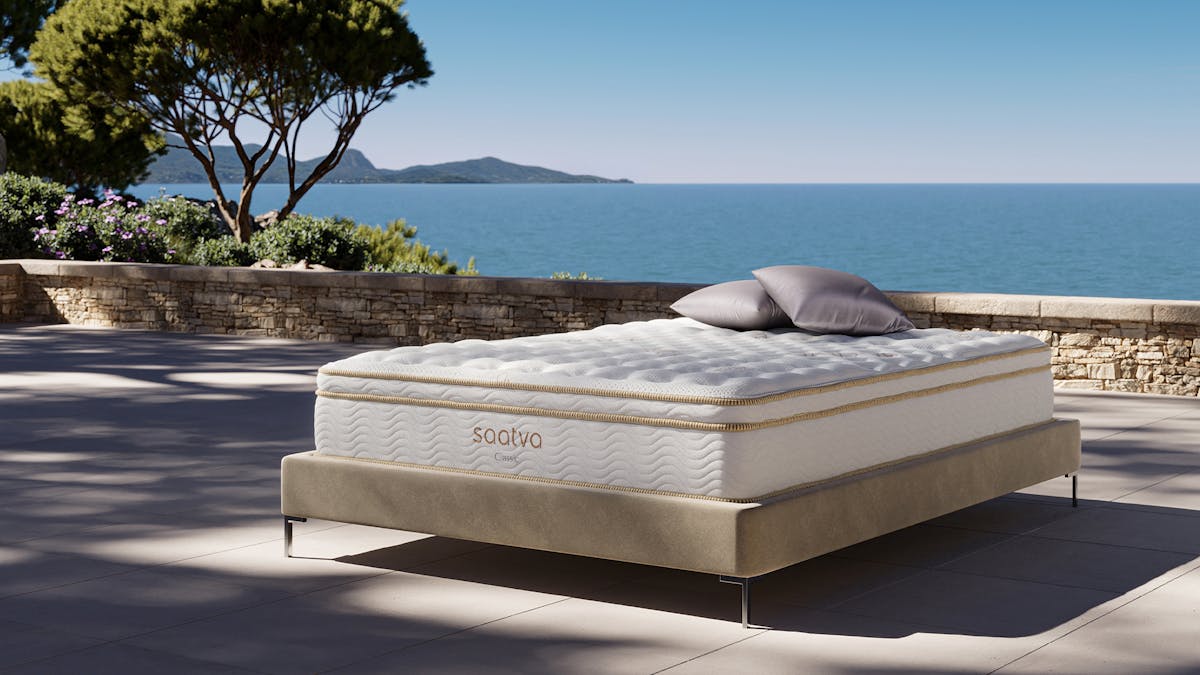
Verdict: The best upholstered bed is a sturdy platform first and a soft furnishing second. My top pick is the Saatva Santorini Platform Bed because Saatva publishes the structural details I want to see, including solid-wood slats, close slat spacing, center support, and a stated weight capacity. The upholstery gives it a finished look, but the support system is why it leads this guide.
Affiliate disclosure: MattressNut may earn a commission when you buy through a sponsored link. That does not change my construction-based verdicts.
Quick answer: Before buying an upholstered bed, check the internal frame material, stated weight capacity, slat spacing, center support, foundation requirement, assembly method, and fabric care instructions. I prefer solid wood or steel for the load-bearing structure. Performance fabric is usually the practical upholstery choice for homes with children or pets, while linen, velvet, leather, faux leather, and bouclé have different cleaning and wear considerations.
Mattress pairing: A strong frame still needs a mattress approved for its support system. Under Saatva’s published policies, the Saatva Classic includes a 365-night trial, lifetime warranty, and free white-glove delivery. Based on its coil-and-foam construction and the support options offered by the brand, it remains the mattress I recommend first for shoppers considering a broader Saatva setup.
Jump to the useful parts
- Upholstered Bed Frame Styles
- Top Upholstered Bed Frames
- What to Look for When Buying
- Frequently asked questions about bed frames
- Bed frame buying checklist
Upholstered beds remain a prominent bedroom style in 2026 because they soften both the appearance and feel of a large piece of furniture. A padded headboard can be comfortable behind pillows while reading, and fabric-wrapped rails hide the colder-looking hardware found on many basic frames.
The upholstery is only the surface. My main concern is what sits underneath it. Thin engineered panels, widely spaced slats, weak corner joints, and inadequate center support can shorten the useful life of an attractive bed. Fabric cannot compensate for a frame that racks, squeaks, or allows the mattress to bow between supports.
I also separate the bed’s appearance from its mattress support. Some upholstered beds are true platforms with built-in slats. Others are decorative rail frames that require a separate foundation. That distinction affects mattress compatibility, finished height, airflow, and how much of the headboard remains visible.
Upholstered Bed Frame Styles
The right upholstery depends on how the room is used. I would not choose a delicate, debris-catching texture for a busy family bedroom simply because it photographs well. These are the main options and the practical trade-offs I expect from each.
- Linen: Casual and airy, with a visible weave that works well in bright rooms. Cleaning requirements depend on the fiber blend and treatment, so the manufacturer’s care code should determine which products are safe.
- Velvet: Soft, rich, and well suited to darker or jewel-tone rooms. Its nap can show pressure marks and collect lint, which calls for regular, directionally consistent brushing.
- Performance fabric: A practical option for family bedrooms. Manufacturers market these textiles for improved resistance to stains and spills, although the treatment, backing, and approved cleaning method vary by brand.
- Leather or faux leather: Smooth and relatively easy to wipe down. These coverings suit contemporary rooms, but buyers should check the exact material specification and its resistance to abrasion, heat, and direct sunlight.
- Bouclé: Warm, nubby, and visually soft. Its looped texture can retain dust, crumbs, and pet hair, making it less forgiving than a smooth, tightly woven fabric.
Linen is my general-purpose aesthetic choice, while performance fabric is my practical choice. Velvet and bouclé can look excellent, but I would buy either only after accepting the added upkeep. With leather or faux leather, I pay close attention to the covering specification because the word “leather” can refer to substantially different constructions.
Color matters less to durability than weave density, backing, seam quality, and the way the covering is attached. A pale performance textile may be easier to maintain than a dark untreated linen. The upholstery category alone does not tell you how the bed will respond to abrasion or cleaning.
Top Upholstered Bed Frames
These beds cover premium, modern, family-friendly, and traditional styles. My order puts structural support and mattress compatibility ahead of fabric color. Product specifications and policies can change, so confirm the current dimensions, foundation requirements, upholstery care instructions, and delivery terms with the manufacturer before ordering.
Saatva Santorini Platform Bed, my top upholstered bed
The Saatva Santorini is my strongest all-around premium pick. According to Saatva’s published specifications, the platform uses wooden slats with 2-inch spacing and carries a stated capacity of 1,000 pounds. Saatva also lists a 365-night trial and free white-glove delivery and assembly for this bed.
The close slat spacing is the feature that matters most to me. Flexible foam and hybrid mattresses need a consistent support surface, and narrow gaps leave less open space for the lower mattress layers to settle into. A published capacity also gives shoppers a clear figure to compare against the combined load of the mattress and sleepers.
White-glove assembly is useful with an upholstered frame because large padded components are awkward to move without rubbing corners, walls, or stair rails. It does not replace the need to measure the delivery route, though. Confirm the packaged dimensions and room access before ordering.
Saatva Amalfi Bed Frame, the design-led alternative
The Saatva Amalfi is my design-focused alternative for shoppers who want a finished brand ecosystem. According to Saatva’s product description, it is handcrafted in the US with solid-wood construction and premium fabric upholstery. The listed upholstery choices include natural linen, sage velvet, and slate grey.
Saatva states that the frame is offered to match its mattress sizes and can accommodate an adjustable foundation base. That compatibility matters because a decorative upholstered shell does not automatically leave enough room for an adjustable base. Measure the base and confirm the manufacturer-approved configuration instead of relying on the nominal mattress size.
The Amalfi sits at the premium end of this group. Its appeal is the combination of substantial internal material, coordinated upholstery, and compatibility within the Saatva system. Shoppers considering the matching mattress can read my Saatva mattress analysis.
Amerisleep Platform Bed, the low-profile option
The Amerisleep Platform Bed is the clean-lined option here. According to the manufacturer, it is available in charcoal or ivory and uses solid-wood slats with 2.75-inch spacing. That published spacing falls below the commonly cited 3-inch maximum used by many foam-mattress brands, although the mattress manufacturer’s own support policy remains controlling.
Amerisleep lists a low-profile design with a 10-inch total height and availability from queen through California king. The restrained shape works in modern rooms, but the more important detail is the slatted platform. Closely spaced slats distribute the load and reduce the opportunity for flexible foam layers to dip into open gaps.
A low-profile frame also changes the finished sleeping height. Add the mattress depth before deciding that the bed will sit too low or too high, and check how much of the upholstered headboard the mattress and pillows will cover.
Albany Park Kova Bed, the family-friendly option
The Albany Park Kova is the family-oriented choice. The manufacturer describes its performance upholstery as resistant to stains, spills, and pet hair and lists 18 available colors. Albany Park also advertises tool-free assembly.
Those features make it more practical for households with children or pets than a delicate velvet frame. I would still check the current cleaning code before using soap or a stain treatment. “Performance” is useful shorthand, but the approved care process belongs to the specific textile rather than the category name.
Assembly convenience is welcome, though it should not distract from joint design. After assembly, check that every corner is square, all supports are seated, and each center leg makes firm contact with the floor. Recheck the connections after the frame has been used and follow the manufacturer’s tightening instructions.
Pottery Barn Toulouse Bed, the traditional option
The Pottery Barn Toulouse is the traditional choice, built around a classic button-tufted appearance. According to Pottery Barn’s published product information, it is offered in multiple sizes and fabrics, including performance-linen options, and uses an FSC-certified wood frame.
The broad upholstery selection is useful for matching an established room, but this is another premium-positioned frame. I would compare the selected fabric’s care code and delivery configuration before committing because the covering can affect day-to-day maintenance more than the tufted silhouette suggests.
Tufting introduces seams, recesses, and buttons that can collect dust and are slower to vacuum than a flat headboard. Check that the buttons sit firmly and that the fabric is evenly tensioned, especially around the headboard edges.
What to Look for When Buying
Start with the hidden frame
An upholstered bed should have a load-bearing structure made from solid wood, steel, or a clearly specified combination of the two. Engineered wood can work in noncritical decorative panels, but I am cautious when particleboard carries the main load or anchors frequently stressed joints.
Ask where the side rails connect, how the center beam is supported, and whether replacement hardware is available. Upholstery makes these details harder to inspect after delivery, so the manufacturer’s construction description matters more than it does on an exposed metal frame.
Look for more than a general phrase such as “wood construction.” A product page is more useful when it distinguishes solid wood, plywood, fiberboard, and particleboard. Those materials can all appear in one bed while serving very different structural roles.
Check slat spacing and center support
For a foam mattress, keep the slats 3 inches or less apart unless the mattress manufacturer specifies a different requirement. The more conservative target carried through this guide is 2 inches. Wide gaps can let flexible layers settle between supports, leading to an uneven sleep surface and potentially creating a warranty dispute.
Queen and king frames need meaningful center support. That normally means a central rail with legs transferring load to the floor, not merely a thin crosspiece suspended between the side rails. On rugs, make sure the center legs reach the same floor plane as the outer legs.
Spacing is only part of the support equation. Slats must also be thick enough to resist excessive flex and securely attached so they cannot slide or roll. A closely spaced set of flimsy slats can still feel unstable.
Confirm the foundation requirement
A platform bed has its own slats or solid deck. A regular rail frame generally needs a box spring or rigid foundation above the rails. Both arrangements can support a mattress, but they produce different finished heights and should not be treated as interchangeable without checking the mattress policy.
Measure the combined height of the frame, foundation if required, and mattress. A low upholstered platform can become unexpectedly tall when paired with a deep foundation and mattress. Extra height can also hide a substantial portion of a decorative headboard.
If an adjustable base is part of the plan, confirm the internal width, length, rail height, and cross-support layout. Compatibility requires more than matching labels such as queen or king.
Look past the upholstery label
Fabric durability depends on the actual textile, backing, seams, and cleaning instructions. For a durability benchmark, check whether the brand publishes a Martindale rub count. The buying threshold used on this page is 25,000 or higher for a durable household fabric.
Inspect piping, corners, button tufts, and the lower edge of the side rails. These areas take more rubbing and vacuum contact than the broad center of a headboard. Removable or replaceable covers are uncommon, so damaged upholstery can become the limiting factor even when the internal frame remains sound.
Care codes deserve attention before the bed arrives. A cleaner that works on one performance fabric may damage another textile’s finish, backing, or color. Keep the manufacturer’s care information with the assembly and warranty paperwork.
- Slat spacing: Keep it under 3 inches for broad foam-mattress compatibility, subject to the mattress manufacturer’s written policy.
- Center support: Treat it as necessary for queen and king sizes.
- Frame material: Prefer solid wood or metal for the load-bearing base, and be cautious with particleboard in stressed areas.
- Headboard height: The sizing guide used here allows 48 to 60 inches for reading support and 36 to 48 inches for a mainly decorative headboard.
- Fabric durability: Look for a published Martindale rub count of 25,000 or higher where the manufacturer provides one.
Frequently asked questions about bed frames
What is The Nut’s top upholstered frame pick?
Saatva Santorini Platform Bed. According to Saatva, this upholstered platform uses wooden slats at 2-inch spacing, is rated to 1,000 pounds, and includes a 365-night trial with free white-glove delivery and assembly. These are manufacturer claims and policies, so verify the current specifications and terms at checkout.
The close slat spacing is the specification that interests me most because it gives a foam or hybrid mattress a more continuous support surface. The published capacity also provides a clear figure for comparing the combined load of the mattress and sleepers.
The Santorini stays ahead of the Amalfi in this guide because its published support details make the construction case easier to assess. The Amalfi remains the more design-led alternative for shoppers prioritizing its particular silhouette and upholstery choices.
Do you need a box spring with a modern mattress?
Usually no. Most mainstream foam, hybrid, and latex mattresses are designed for a solid platform, a suitably spaced slatted platform, or a rigid foundation. Any of these may replace a traditional box spring when it meets the mattress manufacturer’s support policy.
Old-style innerspring mattresses designed around a flexible base may still call for a box spring. A modern Saatva Foundation is the manufacturer’s rigid replacement within that brand’s system. Always follow the support terms attached to the specific mattress.
What slat spacing works with a foam mattress?
Use slats no more than 3 inches apart unless the mattress manufacturer expressly allows wider spacing. A 2-inch gap is the more conservative target used by the top frame here. The mattress brand’s written warranty remains the controlling source because requirements differ among models.
Spacing is not the only concern. Thin slats can flex even when placed close together, while bowed or poorly seated slats can create an uneven support surface. Check their thickness, attachment method, and center support as part of the same inspection.
Do I need a platform bed, or can I use a regular frame?
Both can work. A platform bed is a self-contained frame with slats or a solid deck built in. A regular frame is usually a set of rails that supports a separate box spring or foundation.
A platform normally produces a simpler setup and a shorter overall bed. A rail frame plus foundation creates a more traditional height and makes it easier to replace the support unit separately. Match either arrangement to the mattress manufacturer’s instructions.
How much weight can a bed frame hold?
The capacity guide used on this page places typical queen frames around 500 to 700 pounds and king frames around 700 to 1,000 pounds. Heavy-duty frames with published ratings of 1,500 pounds or more also exist. These are broad shopping ranges, not promises for every product.
A stated capacity should include the mattress and sleepers unless the manufacturer says otherwise. Movement and uneven floors stress joints differently from a stationary load. The Saatva Santorini carries a manufacturer-published rating of 1,000 pounds.
Do adjustable bases work with every mattress?
No. Most foam, hybrid, and latex mattresses are flexible enough for adjustable use when their manufacturers approve it. Traditional innerspring mattresses with interconnected coils may not flex correctly and can lose support when bent.
If you are buying an adjustable base, confirm that both the mattress and upholstered bed surround are approved for it. “Adjustable-base compatible” should appear in the manufacturer’s specifications for the exact models involved.
Upholstered bed care and ownership FAQ
How do you clean an upholstered bed frame?
Follow the fabric maker’s care code first. For most upholstery, vacuum gently with an upholstery attachment and address stains promptly using an approved mild cleaner. Use a damp cloth rather than soaking the material because excess moisture can reach the padding, backing, wood, or adhesive.
Brush velvet in one direction to keep the nap orderly. Some performance fabrics may tolerate mild soap and water, but the correct method remains material-specific. Test any approved cleaner on an inconspicuous area before treating a visible section.
Vacuum seams, tufting, and the narrow space between the mattress and side rails. Those recessed areas tend to hold more debris than the broad face of the headboard.
Are upholstered bed frames worth it?
Yes, for shoppers who value a softer bedroom appearance and a padded surface behind their pillows. Upholstery can also reduce the hard contact points found on exposed wood or metal frames.
The trade-off is maintenance. Fabric holds dust and is harder to restore after a major stain. From a durability standpoint, I would buy an upholstered bed only when the hidden structure appears strong enough to outlast the covering.
An upholstered bed also makes the most sense when you are comfortable keeping it in one place. Padded headboards and rails can be bulky during a move, and dragging them risks damaging both the fabric and the frame connections.
What fabric is best for an upholstered bed frame with kids or pets?
A tightly woven performance fabric is generally the practical answer. Manufacturers design and market products such as Crypton, Sunbrella, and performance linen for improved resistance to everyday stains or spills, but buyers should compare the specific textile warranty and cleaning directions.
I would avoid velvet and bouclé in a high-traffic household if easy debris removal is the priority. Their surfaces can retain lint, crumbs, or pet hair more readily than a smooth, tight weave.
Also inspect the seams and lower rails. Pets and vacuum heads tend to make contact there, so strong stitching and a firmly attached covering matter as much as the face fabric.
Will an upholstered bed make allergies worse?
Upholstery can retain more dust than a wipe-clean wood or metal surface. Regular vacuuming can reduce buildup, but shoppers who are particularly sensitive to dust may find a minimally upholstered or non-upholstered frame easier to maintain. For personal medical guidance about allergies, consult a qualified clinician.
How do I stop an upholstered bed from squeaking?
Start at the structure, not the fabric. Recheck the fasteners, confirm the frame is square, make sure every slat is seated, and verify that the center legs touch the floor. Loose rail connections and uneven support are common mechanical sources of noise.
Also check for contact between the headboard and wall. Felt protection at a contact point may stop rubbing, but it will not repair a loose joint. If the noise persists, follow the manufacturer’s troubleshooting and warranty process before altering the frame.
If the frame uses removable slats, identify whether the sound comes from the slats, rail joints, center beam, or floor contact before making an adjustment. Randomly tightening one side can pull the structure out of square.
Bed frame buying checklist
- Confirm mattress dimensions: The frame interior must match the mattress. Queen is 60 by 80 inches, while king is 76 by 80 inches.
- Check slat spacing: Use a maximum gap of 3 inches for the memory-foam warranty guidance covered on this page, unless the mattress manufacturer states another limit.
- Verify the center support leg: Check queens and larger especially carefully when combined sleeper weight exceeds 400 pounds.
- Measure the delivery route: Check doorway, stair, and hallway clearance before ordering. Boxed frame components can be 80 inches long.
- Plan walking room: The layout guide used here allows 24 inches of clearance on each side for bedside movement and nightstands.
- Plan storage space: If you use storage bins, the guide calls for 12 to 18 inches of under-bed clearance.
- Read the fabric care code: Know which cleaning products are approved before a spill happens.
- Confirm adjustable-base clearance: Check both the internal dimensions and the manufacturer’s compatibility statement.
- Review assembly requirements: Determine whether the headboard, rails, and center support can be carried through the room separately.
- Recheck the frame after assembly: Tighten hardware evenly and verify that all legs carry weight without rocking.
Do not rely on the outside dimensions alone. Thick upholstered rails can make the bed’s footprint noticeably larger than its mattress, affecting nightstand placement and walking clearance. Internal measurements matter for the mattress or adjustable base, while external measurements matter for the room.
Bed frame materials compared
- Solid wood: Usually the strongest and heaviest option in this comparison. The durability guide used on this page estimates 15 to 30 years, with oak, maple, and walnut as preferred species. Actual service life depends on joinery, load, moves, and care.
- Metal, including steel: Strong and comparatively slim, though loose metal connections can squeak. The guide estimates a 10-to-20-year lifespan and notes that powder-coated finishes resist chipping.
- Upholstered: This describes the finished surface rather than the hidden structural material. The guide estimates 5 to 10 years and identifies cleaning difficulty as the main drawback. Upholstered frames make sense when the bed is intended to be a visual focus.
- Engineered wood or particleboard: Common in budget furniture. The guide estimates 3 to 7 years before joints may loosen. I am most cautious when this material carries the rails or receives repeatedly tightened fasteners.
These lifespan ranges are general estimates from the existing MattressNut buying guide, not manufacturer guarantees. A well-braced upholstered frame with replaceable hardware can outlast a poorly joined solid-wood frame, so material names should never replace a close look at the actual construction.
Joinery can matter as much as species or material category. Thick side rails are less reassuring if their brackets loosen easily, while a mixed-material frame can perform well when steel carries the central load and wood forms the outer structure.
My final take on upholstered beds
An upholstered bed is worth buying when its internal support system is as convincing as its exterior. I would choose the frame by reading the slat, center-rail, weight-capacity, and foundation specifications first. Only then would I decide among linen, velvet, performance fabric, leather, faux leather, or bouclé.
The Saatva Santorini is my strongest all-around premium recommendation because Saatva publishes close slat spacing, a clear capacity rating, and an assembled-delivery policy. The Saatva Amalfi is the more design-led alternative, Amerisleep suits a clean low-profile room, Albany Park is the practical family option, and Pottery Barn fits a traditional tufted look.
Whichever style you prefer, measure the room and delivery path, confirm mattress compatibility in writing, and retain the fabric care instructions. Those details have more influence on long-term satisfaction than another decorative button or fashionable texture.
Related Editorial Review Guides
- Box Springs for Sale 2026: Buying Guide
- Single vs Twin Bed: Sizing Guide
- Pillow Sham vs Pillowcase: Difference
Use these guides to verify the support layer, mattress dimensions, and bedding details around the upholstered bed before placing the order.