
 by
A big dog bed should give your gentle giant room to stretch, turn, and flop without sliding into the coffee table. I learned that after buying one that looked generous online but folded under a Great Dane-sized sprawl. Your dog needs a real sleep zone, not a padded mat pretending to be furniture. These twelve ideas make the bed fit your home, too.
- Float a large dog bed inside a low wood frame
- Layer the Big Dog Bed Canopy for a softer corner
- The Two-Texture Landing Zone Gives Your Dog a Choice
- How Can a Built-In Bench Anchor the Bed?
- Build the Human-Scale Dog Bed with a washable surround
- Color Block or Blank Wall? Frame the Bed with Paint
- Layer a large dog bed over a washable rug
- IKEA KALLAX and the Storage Wall
- Mix Two Beds into the Three-Height Resting Stack
- Paint a warm corner instead of buying a bulky enclosure
- Let Art Finish the Wall Above the Giant Dog Bed
- Giant Dog Bed or Decorative Pet Basket?
1Float a large dog bed inside a low wood frame
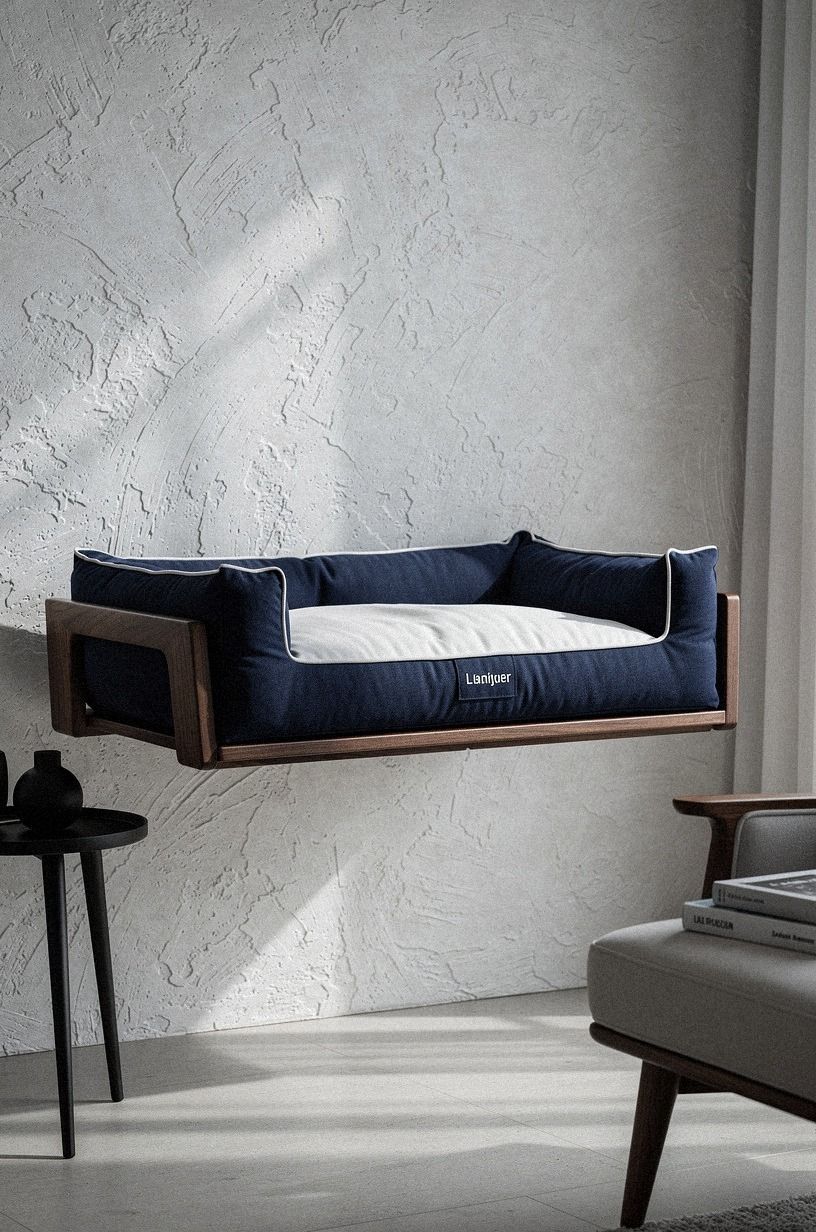
A low wood frame gives your big dog bed a finished edge without trapping your dog inside a box. Choose a platform with an open front, rounded corners, and enough clearance for your dog’s paws to land comfortably. Walnut works especially well against hand-applied Venetian plaster because its warm grain keeps the bed feeling grounded without making it bulky.
You’ll want the cushion to sit slightly inside the frame, not flush against every side. That small reveal creates a clean shadow line and makes the bed feel intentional. I’d skip a tall-sided frame for an older dog because climbing over the edge can be awkward, especially after a long walk.
Your dog deserves easy access, and you’ll appreciate the calmer silhouette. If you’re working with a narrow living room, measure the walking path before buying anything. A bed that steals the route from the sofa to the kitchen won’t feel peaceful for either of you.
For compact layouts, these small dog bed ideas for tiny pups with big personalities include useful spacing ideas you can scale up. I’d borrow the generous clearances, then increase the cushion width until your dog can turn without bumping the frame.
2Layer the Big Dog Bed Canopy for a softer corner
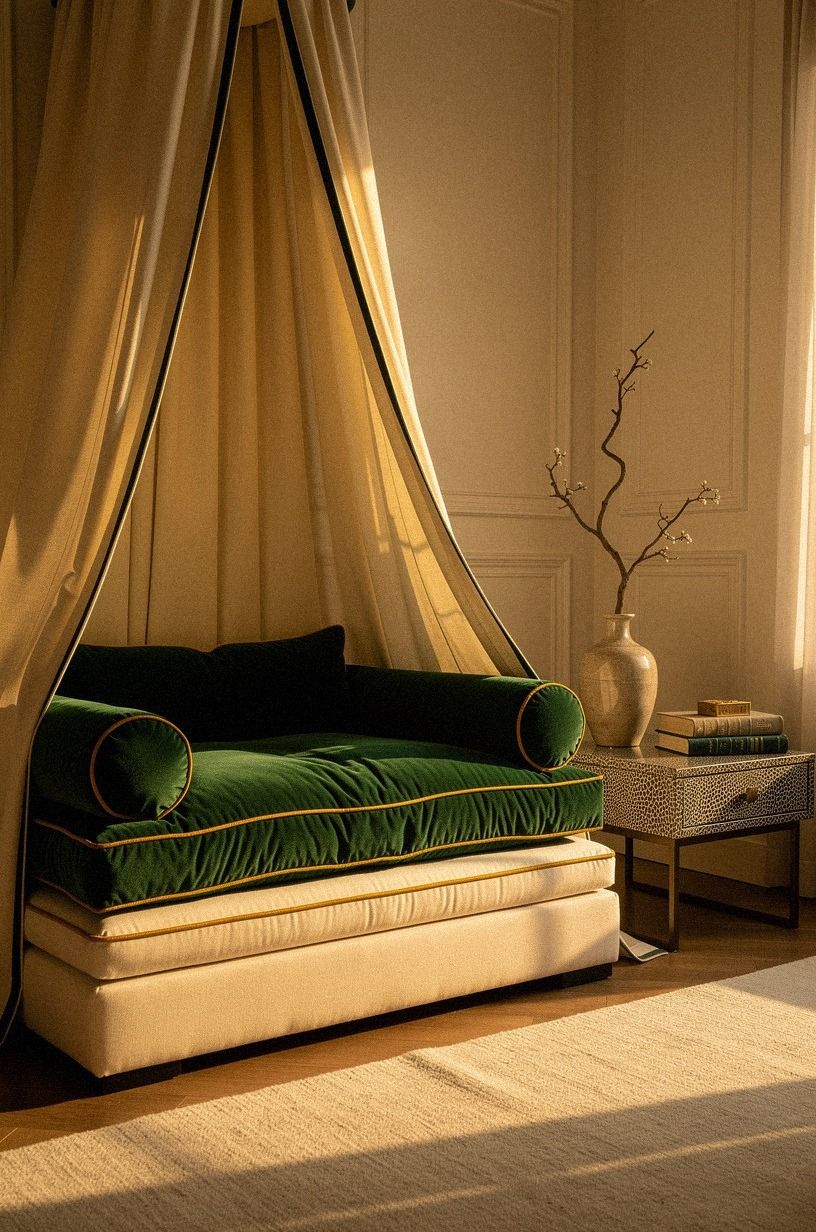
A canopy turns a giant dog bed into a little retreat, which can help your dog settle when the room feels busy. Use a simple wood arch, a tension rod, or a wall-mounted frame with washable cream fabric draped loosely over the top. Small shagreen accents can bring in the texture without making the sleeping area feel heavy.
You don’t need to close the canopy on every side. Your dog should see you, and you’ll want to reach the cushion quickly when it needs washing. I’d avoid bulky fabric here because it holds fur and can make the nook feel stuffy.
A cream fabric with an emerald trim or a small gold accent will keep the corner warm without turning it gloomy. If you’re choosing fabric for a dog who scratches, read why dogs scratch bed sheets before committing to anything delicate. The same abrasion and snagging concerns apply to a canopy.
Don’t confuse a private nook with a dark cave. Place the bed where your dog can watch the room without being in the center of foot traffic.
Your canopy can feel gentle, elegant, and inviting while still surviving real claws. For a more furniture-like direction, this dog bed you won’t want to hide from guests has a useful sense of scale.
3The Two-Texture Landing Zone Gives Your Dog a Choice
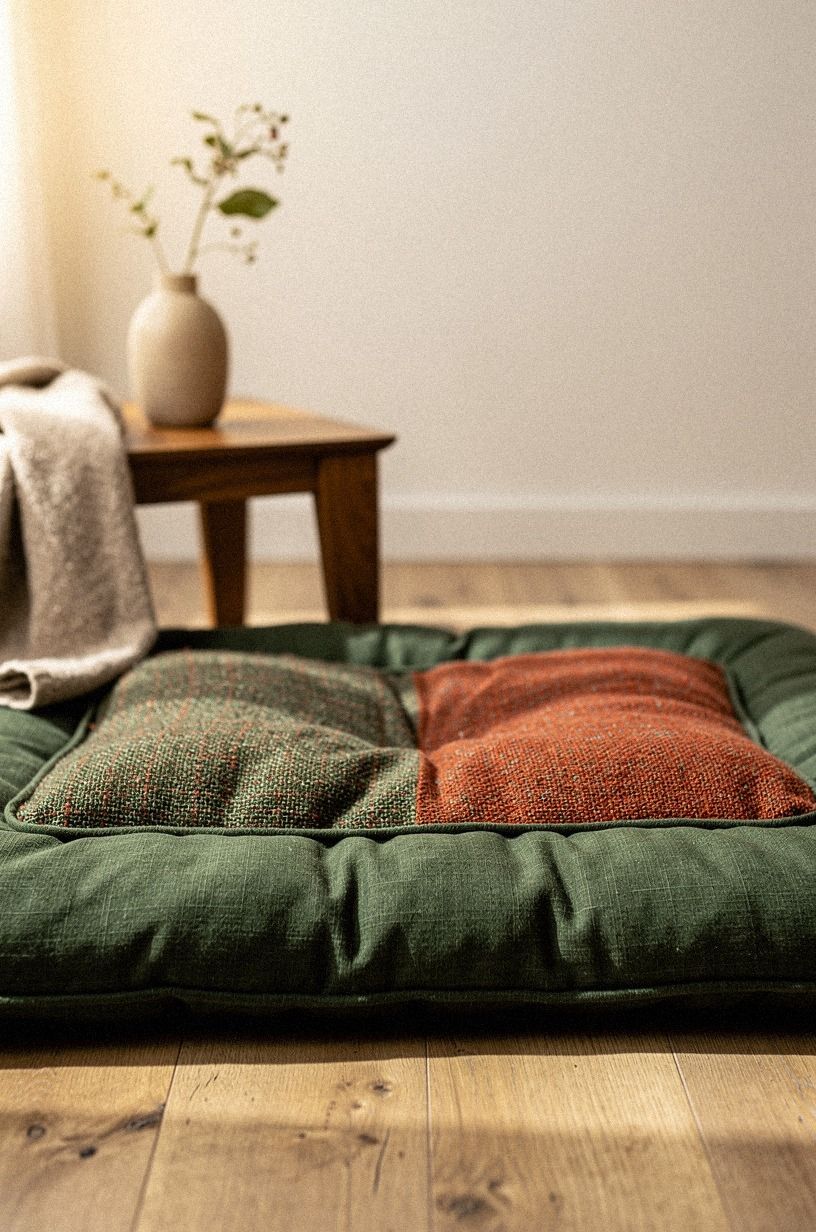
The Two-Texture Landing Zone pairs a supportive base with a softer top layer. Start with a dense rectangular cushion, then add a washed Belgian linen blanket across only the middle third so your dog can choose between firm support and plush comfort. A forest-green base with a rust-colored layer and natural oak nearby gives the arrangement warmth without making it feel busy.
Your dog may prefer the cooler edge in summer and the blanket in winter, so give both options room. I’d skip a single thick pillow that stays warm all year. It can look luxurious, but your dog can’t regulate comfort by moving to a different surface.
You’ll also find that a removable cover makes laundry less dramatic. A giant dog bed doesn’t need to be soft everywhere. Your dog needs support through the hips and shoulders, especially if they’re long-bodied or older.
If you’re comparing grounding surfaces with regular padding, this guide to grounding mats versus regular dog beds can help you decide what belongs underneath. The best setup gives your dog choice without making your room feel crowded. If you want the most expansive version, this human-sized dog bed guide is useful for thinking through generous proportions.
4How Can a Built-In Bench Anchor the Bed?
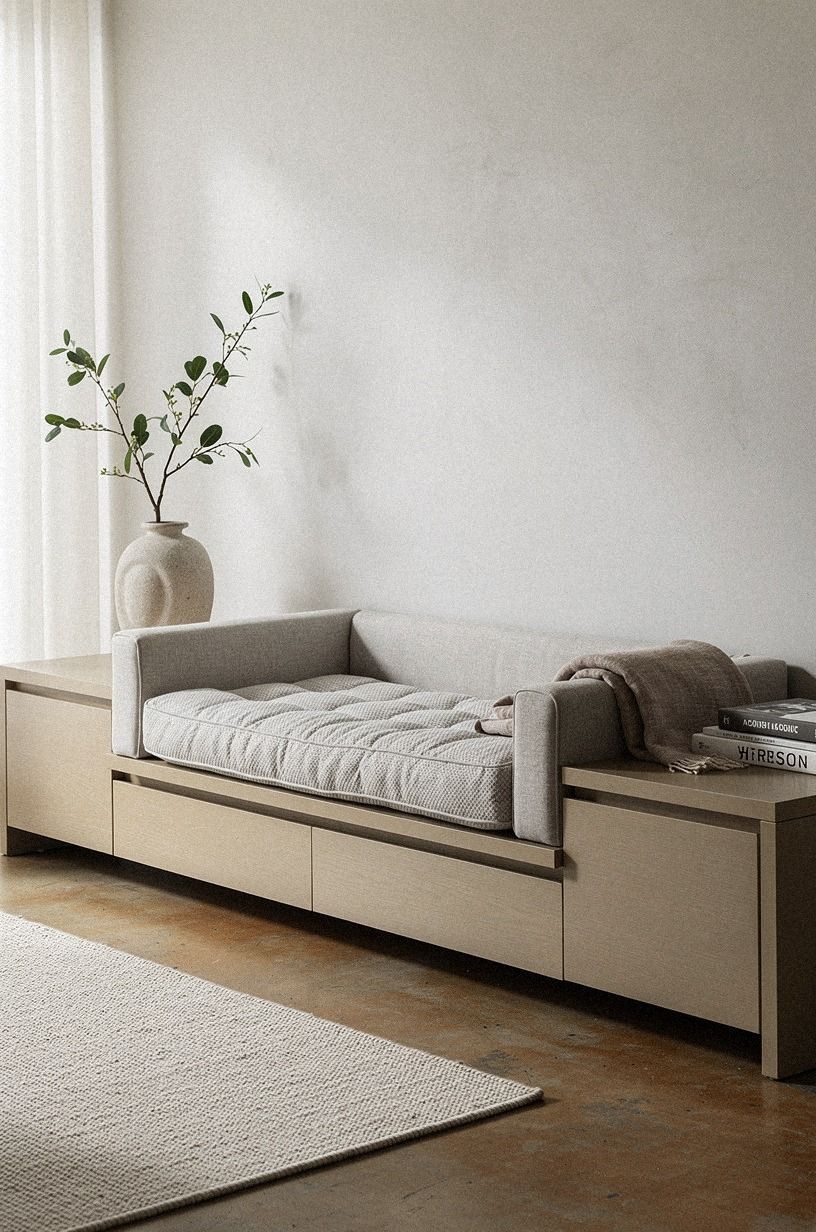
A built-in bench can hide the back edge of a giant dog bed while giving you useful seating above it.
5Build the Human-Scale Dog Bed with a washable surround
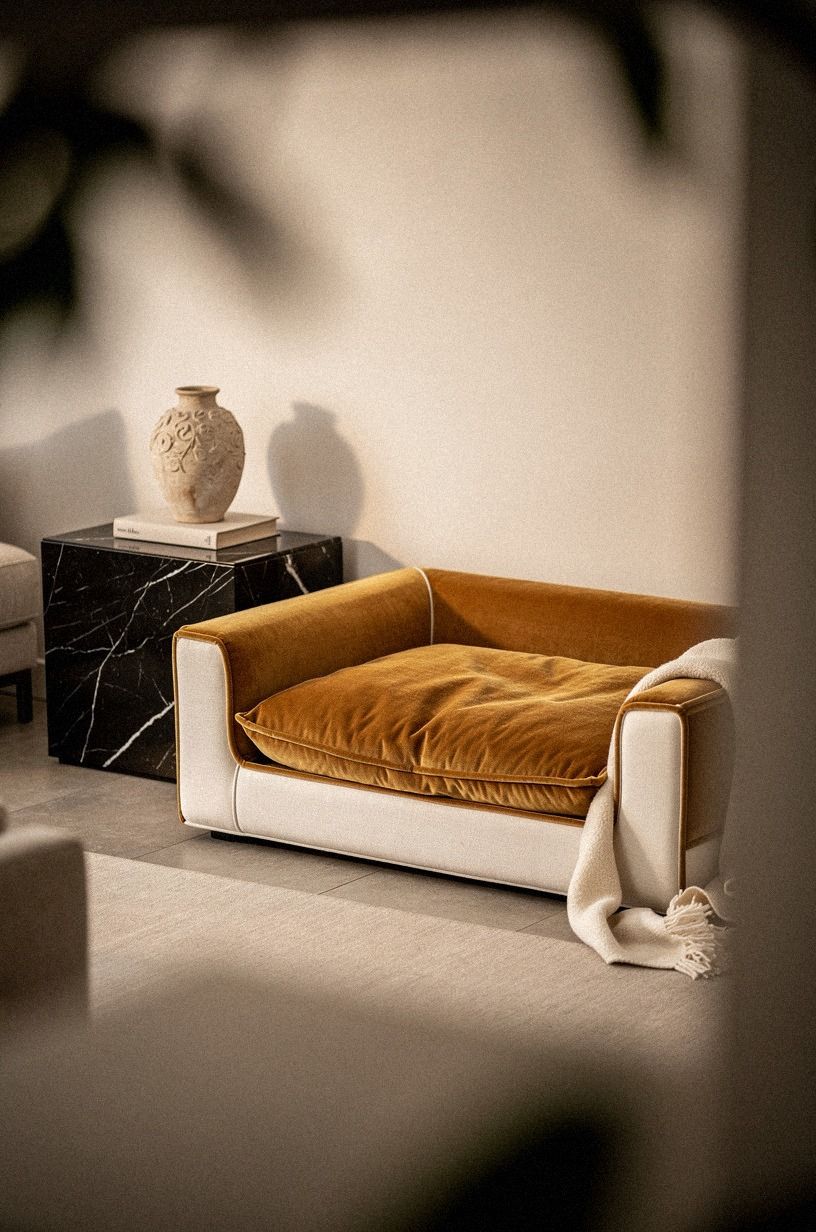
The Human-Scale Dog Bed treats your dog’s sleep zone like a small daybed. Use a wide cushion, a low bolster, and a washable surround that feels more like upholstery than pet equipment. A warm white cover with camel accents keeps the arrangement soft, while a small Nero Marquina black marble surface can add a darker note nearby.
You’ll want the bolster on two sides, not four, so your dog can stretch out without climbing over a wall. I made that mistake once. The bed looked tidy, but the dog kept dragging the blanket onto the floor because the enclosed shape felt restrictive.
Your dog’s sleeping style matters more than the catalog. A sprawler needs a generous rectangle, while a dog who curls tightly may appreciate one cushioned edge. I’d measure your dog while fully relaxed, then add several inches on every side.
For the base, choose a tightly woven rug or a rubber-backed mat that won’t creep across hardwood. I’d skip a slippery faux-fur pad because large dogs can push it into a heap within minutes. If you want a room-sized version, see the human-sized dog bed guide for ways to make the arrangement comfortable for both of you.
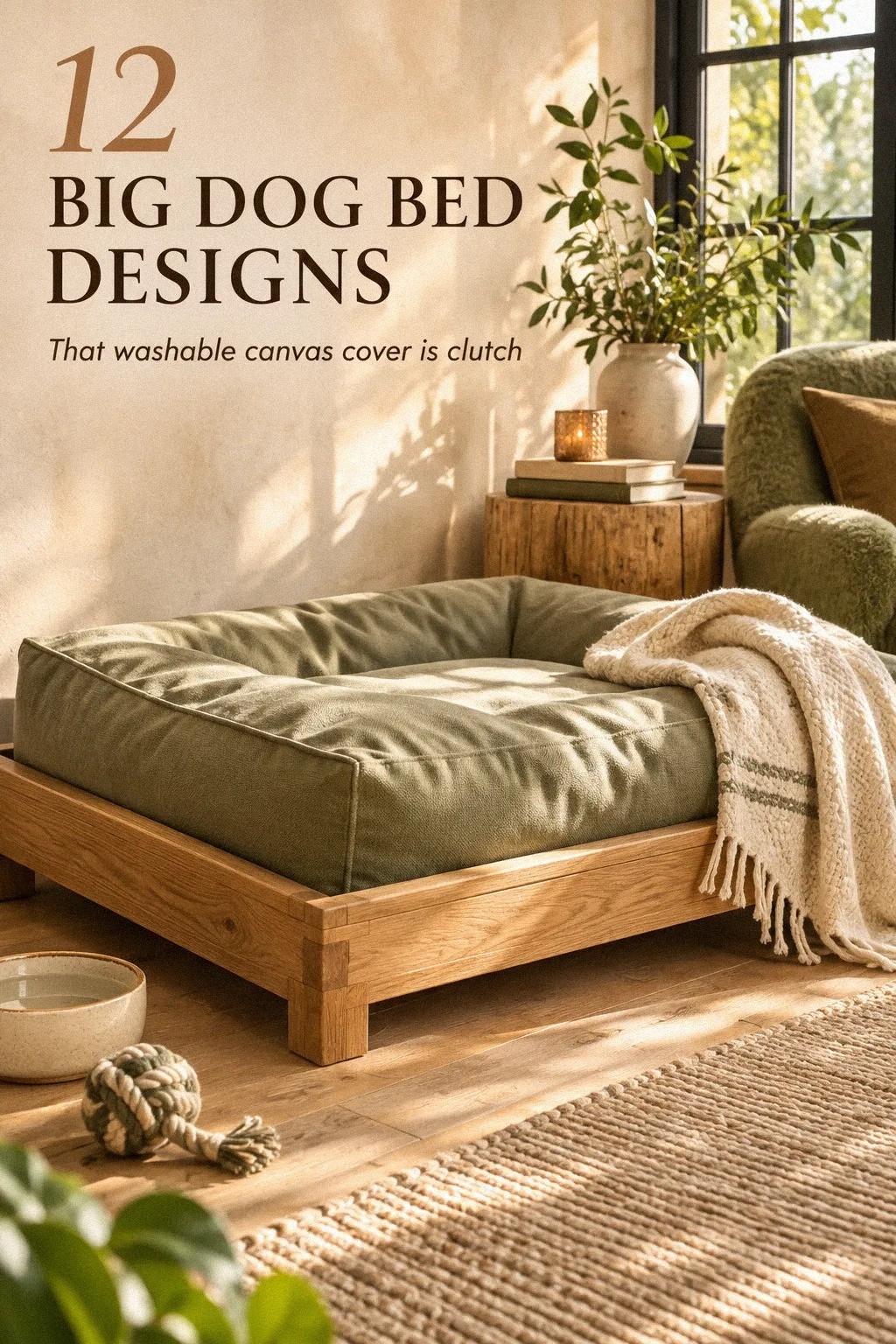
6Color Block or Blank Wall? Frame the Bed with Paint
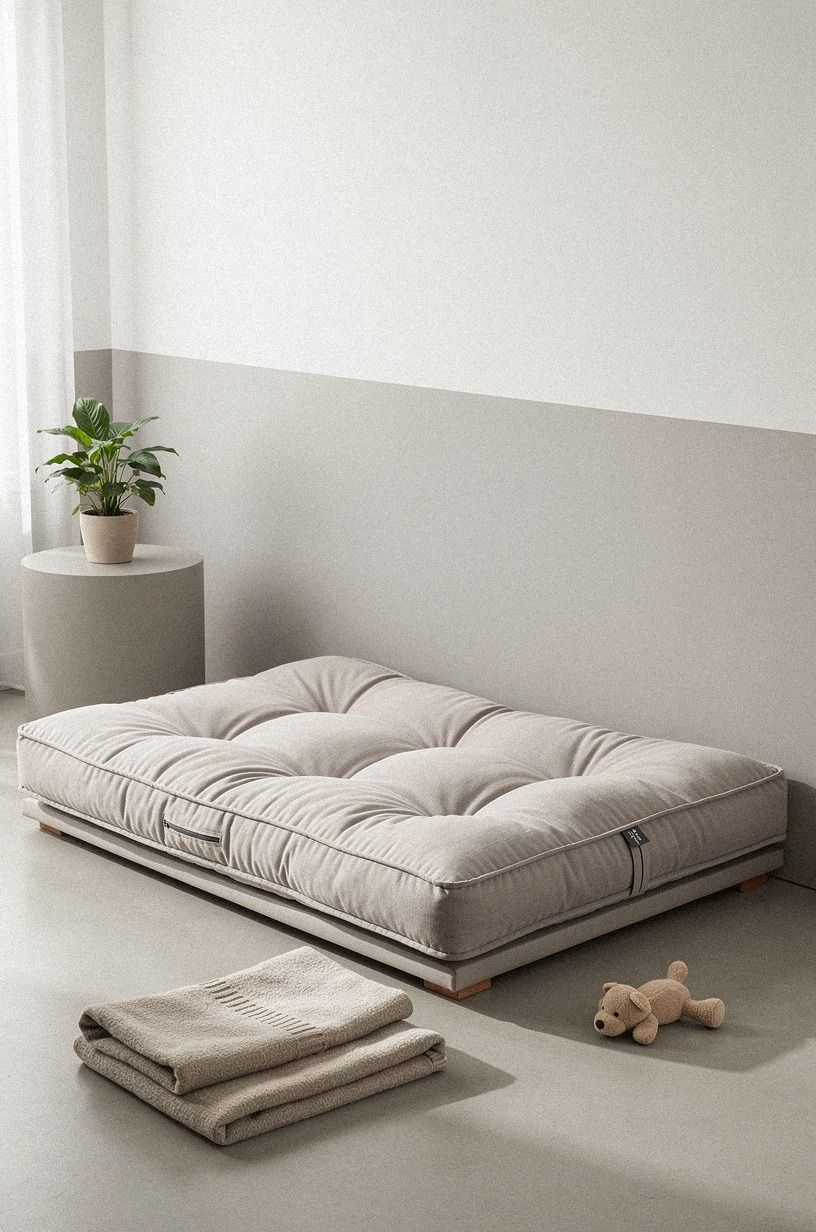
A painted color block gives the bed a visual boundary without adding furniture.
7Layer a large dog bed over a washable rug
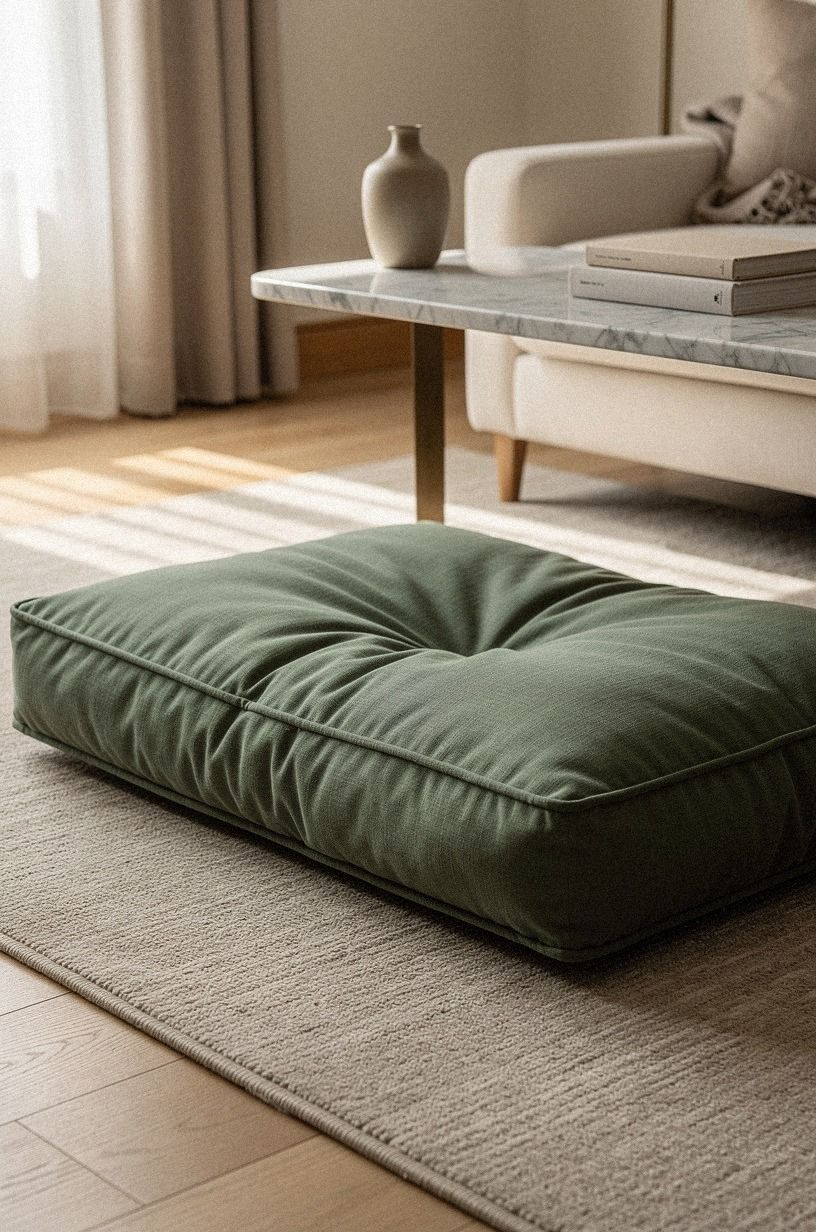
A rug makes a big dog bed feel connected to the rest of the room, especially when the cushion is larger than a standard pet mat. Let the rug extend beyond at least two sides of the bed so the arrangement doesn’t look like a loose object dropped on the floor. A sage-green and warm-cream low-pile weave gives you texture and easier vacuuming than a deep shag.
Your dog will probably push, circle, and rearrange the top layer, so choose a rug with enough weight to stay put. I’d skip fringe because it invites chewing and catches claws. A quiet natural-oak accent or faded pattern can hide daily evidence without making the room feel busy.
The same rule applies to your furniture: let the sofa or chair overlap the rug whenever possible. That connection makes the dog zone feel part of the room rather than an island. You’ll also reduce sliding if the rug sits beneath both the bed and one nearby furniture leg.
For a smaller version of this approach, browse these small dog bed ideas and enlarge the spacing around each example. A generous rug edge can make even a practical cushion feel considered, welcoming, and surprisingly polished. A nearby Carrara marble surface with subtle gray veining can add a quiet, durable accent without overwhelming the bed.
8IKEA KALLAX and the Storage Wall
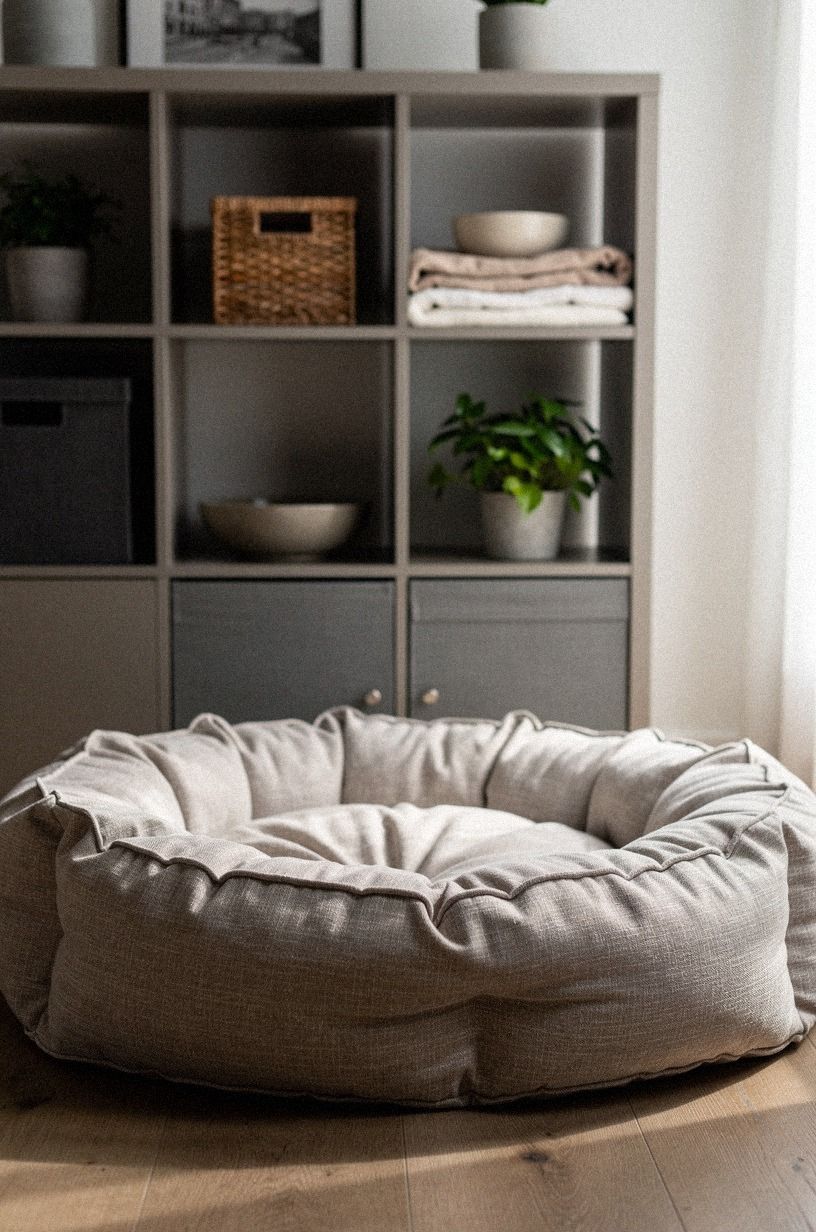
A storage wall can give your giant dog bed a home without making the room look like a kennel. Place the cushion beside low cabinets, then use the upper shelves for leashes, blankets, and toys. IKEA KALLAX shelving can work as a starting point if you leave the bed open and bring in reclaimed weathered teak through a surrounding cabinet, shelf, or bench.
You’ll want baskets with firm sides and washable liners. Soft bins collapse when your dog leans against them, and you’ll soon find toys scattered under the sofa. I’d skip glossy cabinetry near the bed because every nose print will show in the evening light.
A stone-toned finish with touches of terracotta or olive feels calmer and is easier to touch up. Keep the lowest storage within your reach, but don’t put anything fragile beside the cushion. Your dog needs room to shift position without knocking a ceramic bowl across the floor.
Storage should never crowd the sleeping area. Your dog needs a clear approach from at least one direction, and you need enough room to pull the cushion cover off. If the wall must do several jobs, ideas about whether a Murphy bed can fit in a closet offer helpful thinking about clearance, doors, and moving parts.
9Mix Two Beds into the Three-Height Resting Stack
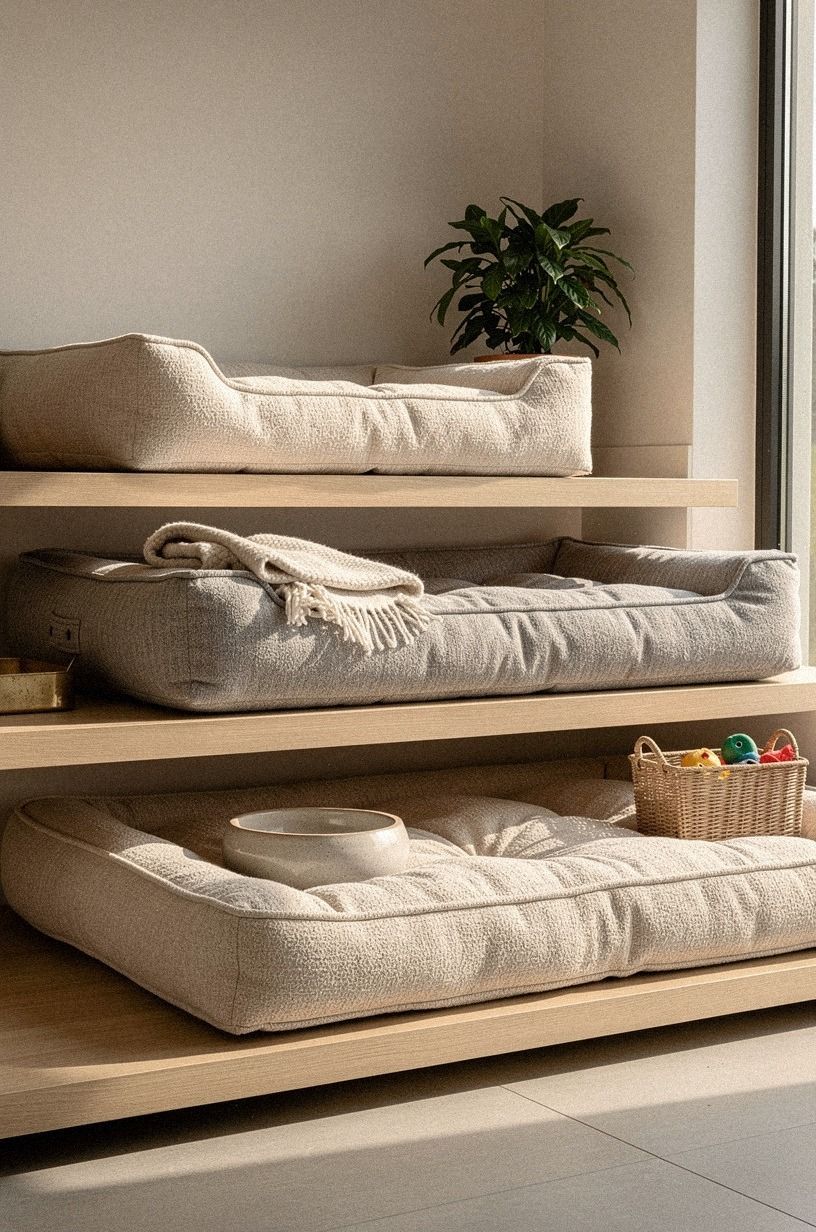
The Three-Height Resting Stack gives your dog three choices: a floor-level cushion, a slightly raised platform, and a blanket tucked beneath a nearby chair.
10Paint a warm corner instead of buying a bulky enclosure
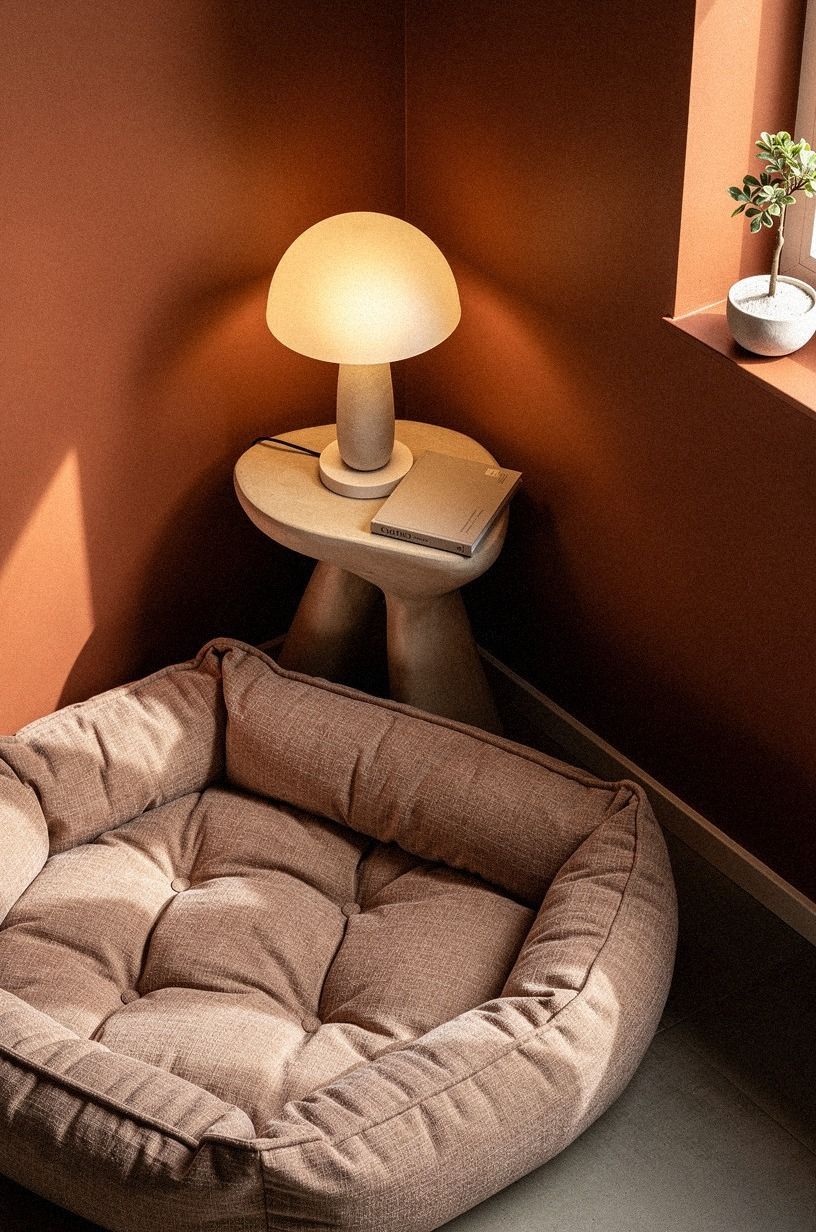
A painted corner can create a dog retreat with almost no furniture. Choose one wall, one adjacent return, and a low cushion that follows the corner. Muted plum works beautifully when you want the nook to feel distinct, while soft gray keeps the arrangement quieter.
A small rose-gold accent and cerused white oak can warm the surrounding pieces without adding visual weight.
You’ll want the bedding to contrast slightly with the wall. A warm cream cushion against pale gray can disappear, while a deeper plum or charcoal layer makes the sleep zone easier to read. I’d skip bright white beside an entry door because it will show every wet shoulder and muddy whisker.
The best part is that your dog can still see the whole room. A large bed feels less like an object when the wall quietly frames it. You’ll also have fewer corners to dust than you would with a cabinet-style enclosure.
For another furniture-friendly option, see the dog bed you won’t want to hide from guests. It’s a useful reminder that pet furniture can look thoughtful without becoming precious. You can also scale the clearances from these small dog bed ideas upward for a more expansive arrangement.
Add a narrow side table only if it leaves the approach clear.
11Let Art Finish the Wall Above the Giant Dog Bed
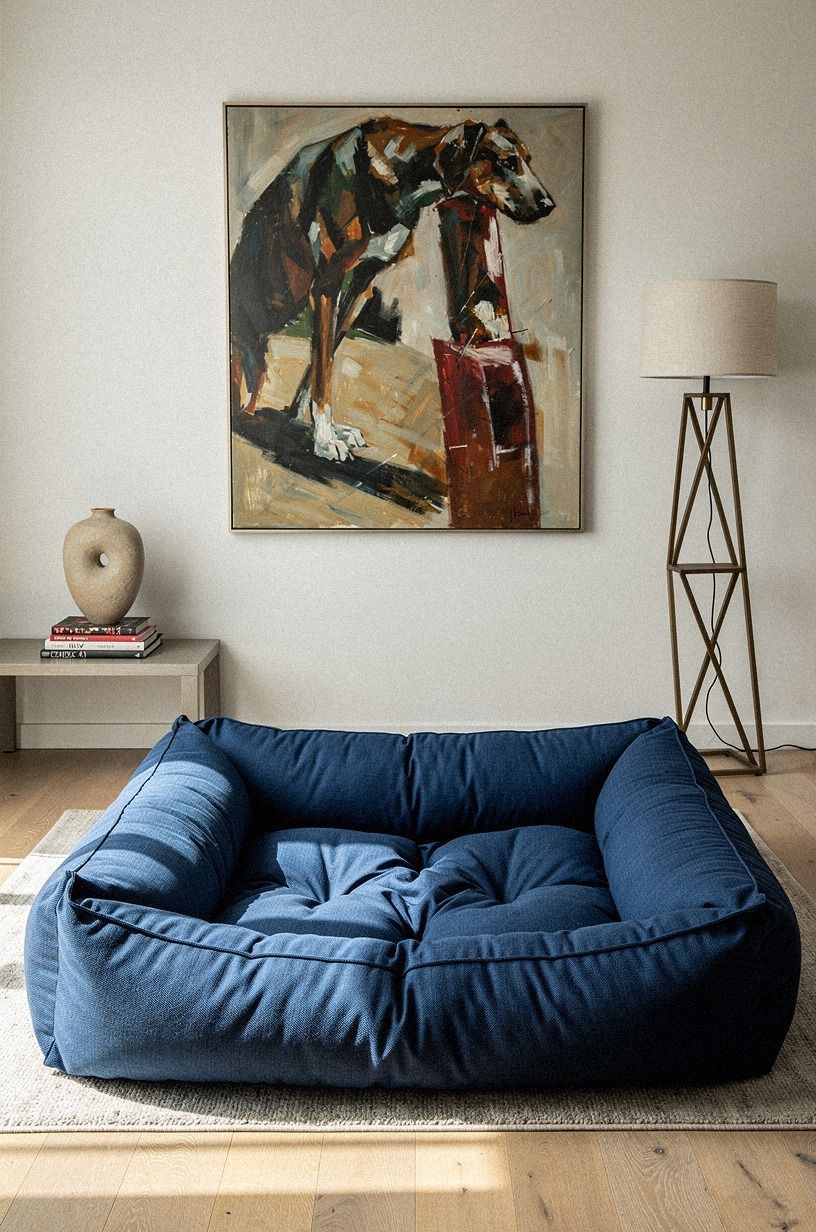
Art gives a large dog bed a visual destination and keeps the wall from feeling unfinished.
12Giant Dog Bed or Decorative Pet Basket?
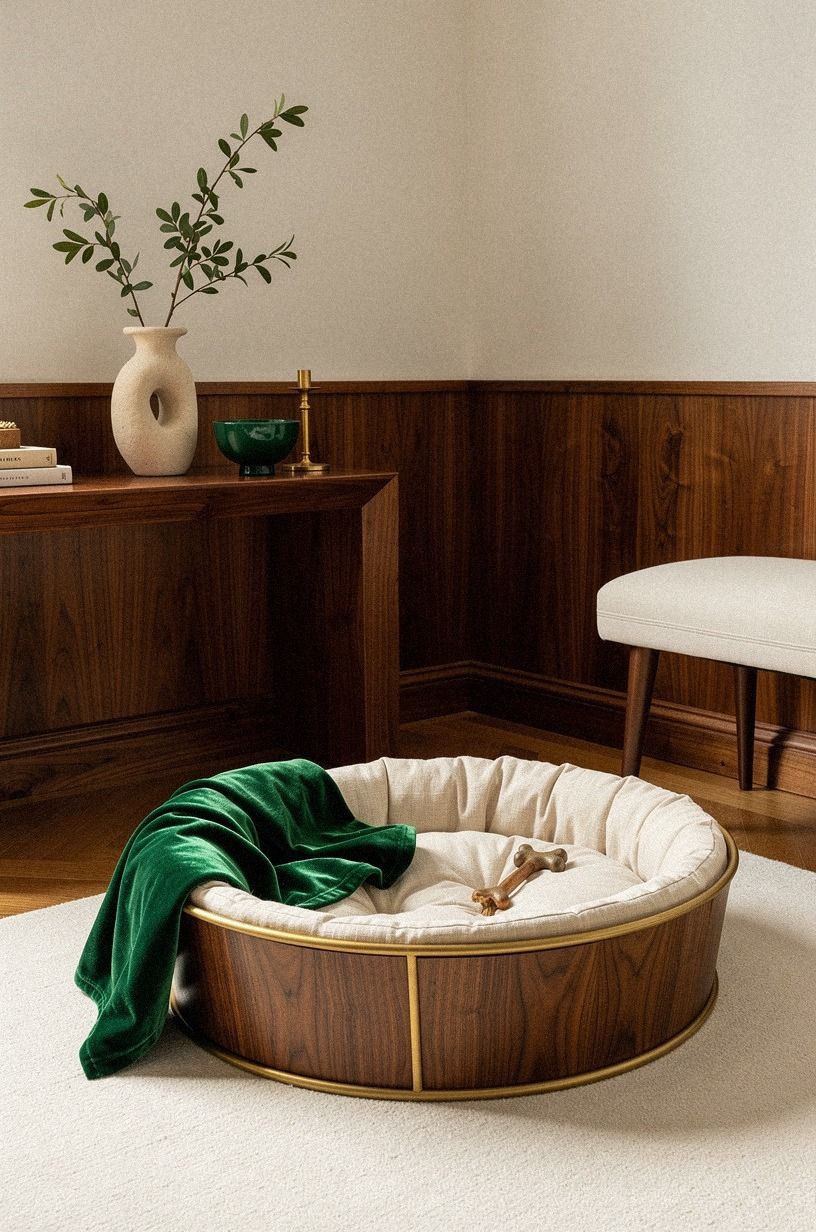
A giant dog bed often works better than a decorative basket because your dog can stretch fully without pressing against stiff sides. Look for a broad cushion with a removable cream cover, a stable underside, and accents in emerald or gold. Book-matched walnut can add a rich furniture note through a nearby console or low table without making the sleeping surface difficult to clean.
You’ll want the bed to support your dog’s full length, including the dramatic rear-leg sprawl that appears five minutes after you make the room tidy. I’d skip any option that forces your dog to curl up just to fit. A broad cushion may take more floor space, but it’s the honest choice when your dog sleeps long and loose.
A basket can still work beside the bed for blankets or toys. Choose one with a wide opening and a sturdy rim, then keep it outside the sleeping path. That gives you the decorative shape without asking your dog to squeeze into it.
Place the bed where your dog already chooses to rest, then build the room around that fact. Your home will feel calmer when the bed supports real behavior instead of fighting it.
If you’re comparing unusually large options, this human-sized dog bed resource can help you think through scale, cover care, and how much room your dog truly uses. For another practical layout reference, see these dog-in-bed sleeping ideas.
What the budget looks like for a dog-friendly room
A thoughtful dog-bed corner doesn’t require a full renovation. The figures below are typical US ranges for a broader room refresh, so use them as planning markers rather than a quote for one cushion. Your free options include rearranging furniture, repurposing a blanket, and painting a wall you already own supplies for.
For a smaller project, start with the bed location and the floor beneath it. A washable rug can matter more than a decorative side table because it controls sliding, fur, and visual scale. 600gsm Turkish cotton is a useful textile specification when you’re choosing blankets or washable layers, since heavier fabric tends to drape with more substance.
You’ll also want three light sources if the bed shares a living area: overhead lighting, task lighting, and ambient lighting. That makes the corner feel gentle at night instead of washed out by one ceiling fixture.
I’d spend on the washable cover before decorative accessories. Your dog will test every decision, and the practical layer usually wins.
If the budget is tight, begin with a stable cushion and one washable cover. Add the frame, art, or storage later. A dog bed you won’t want to hide from guests can still begin as a simple floor-level arrangement with a thoughtful rug beneath it.
The editorial choice I’d make for a gentle giant
I’ve changed my mind about large dog beds more than once. At first, I wanted the bed to disappear. I bought a narrow cushion in a color that matched the floor, pushed it into a forgotten corner, and wondered why the dog kept sleeping in the middle of the rug.
The bed wasn’t inviting, and it didn’t give my dog a clear place to settle.
Your dog isn’t trying to ruin the room. They’re looking for comfort, visibility, and enough space to turn around. A generous canvas mattress in the right place can feel more successful than a polished basket that looks beautiful in a showroom but fails at bedtime.
The better approach is to treat the bed like a real piece of furniture. That doesn’t mean buying an expensive custom frame or matching every textile. It means choosing the location before the finish, then selecting a cushion that supports the way your dog sleeps.
The most useful design decision is visibility. Your dog should be able to see you without lying in the path of every person walking through the room. A corner beside the sofa, the end of a built-in bench, or a spot near a window usually works better than the isolated area behind a chair.
I also think texture matters more than color. A washed cotton canvas cover, a wool rug, and one soft blanket create a warm landing without adding visual noise.
If your dog scratches before settling, keep a spare cover ready and don’t make the bed too precious. The room should survive real life.
That’s the whole point of a dog bed that belongs in your home.
The Questions Worth Answering First
What is the best big dog bed idea for a small room?
I’d choose a wide rectangular cushion with an open front because your dog can stretch without a tall frame taking more visual space. IKEA KALLAX nearby can hold blankets and toys. Keep one walking route clear, and use the spacing principles in these small dog bed ideas.
Where can I find big dog bed pieces on a budget?
I’d look at IKEA, Wayfair, and Target for basic furniture, textiles, and storage, then check Facebook Marketplace or a local thrift shop for sturdy frames. You don’t need a matching collection. Start with the cushion, then use these small dog bed ideas for affordable layout inspiration.
How much does a big dog bed room makeover cost?
I’d plan for $200-$800 at the budget tier, depending on paint, textiles, art, and organization. Your free choices include moving furniture, washing existing blankets, and reusing baskets. The cost rises when you add accent furniture, lighting, rugs, or custom millwork.
Can I create a big dog bed setup without spending much?
Yes, and I’d start without buying anything. Move the bed beside your sofa, place a washable blanket over the existing cushion, and use a basket you already own for toys.
If you do spend, prioritize a removable cover and a stable rug before decorative pieces. A bed-sheet care guide can also help when you’re choosing durable washable textiles.
Is a big dog bed worth it in a small space?
Yes, because a properly scaled bed can reduce clutter instead of adding it. Your dog gets one obvious place to rest, and you’ll stop finding blankets across several chairs. I’d use a low-pile rug beneath it and keep the entrance open so your dog won’t squeeze through furniture.
Is a big dog bed a good idea for a rental?
Yes. I’d use removable wall color only if your lease allows it, or create the boundary with a rug, tension rod, and washable fabric. Peel-and-stick hooks can hold lightweight art, while a freestanding bench gives you storage without permanent work.
You can make the corner feel settled without drilling into every wall. The clearance principles in this Murphy bed closet guide are useful when doors and moving parts matter.
Where I’d Start First
If I had to pick one, I’d start with the low wood frame and a washable canvas cushion. It gives your dog room to stretch while hiding the messy edges that make oversized beds look temporary. Pin the large dog bed idea for later, then measure your walking path before you buy anything.