
 by
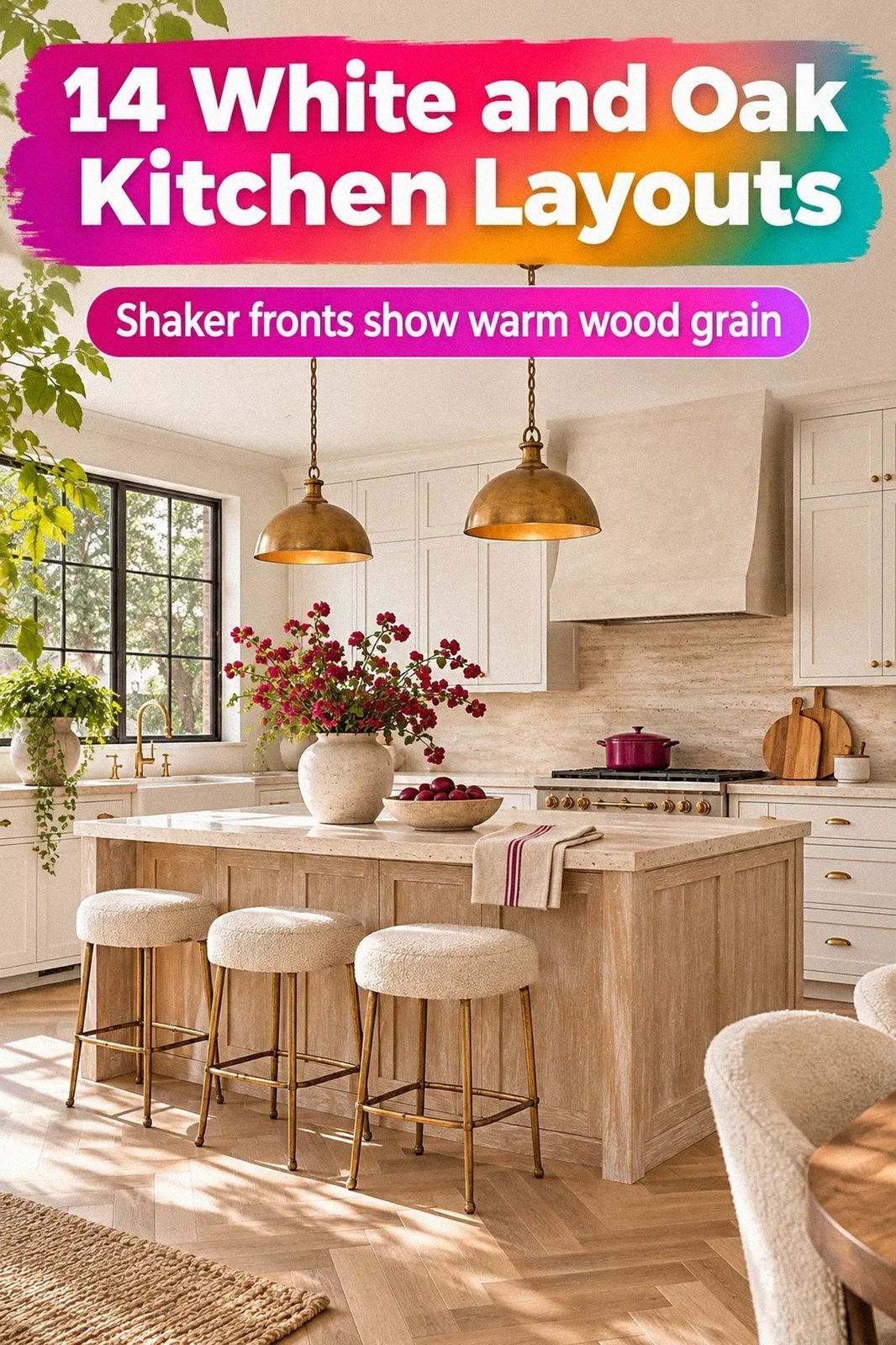
White & Oak Kitchen Ideas for the Perfect Bright-Meets-Warm Combo work when white carries the light and oak brings the warmth, so your room won’t feel flat or chilly. I learned that after pairing too much pale cabinetry with cold bulbs. The fix wasn’t more decor. It was better contrast, texture, and scale.
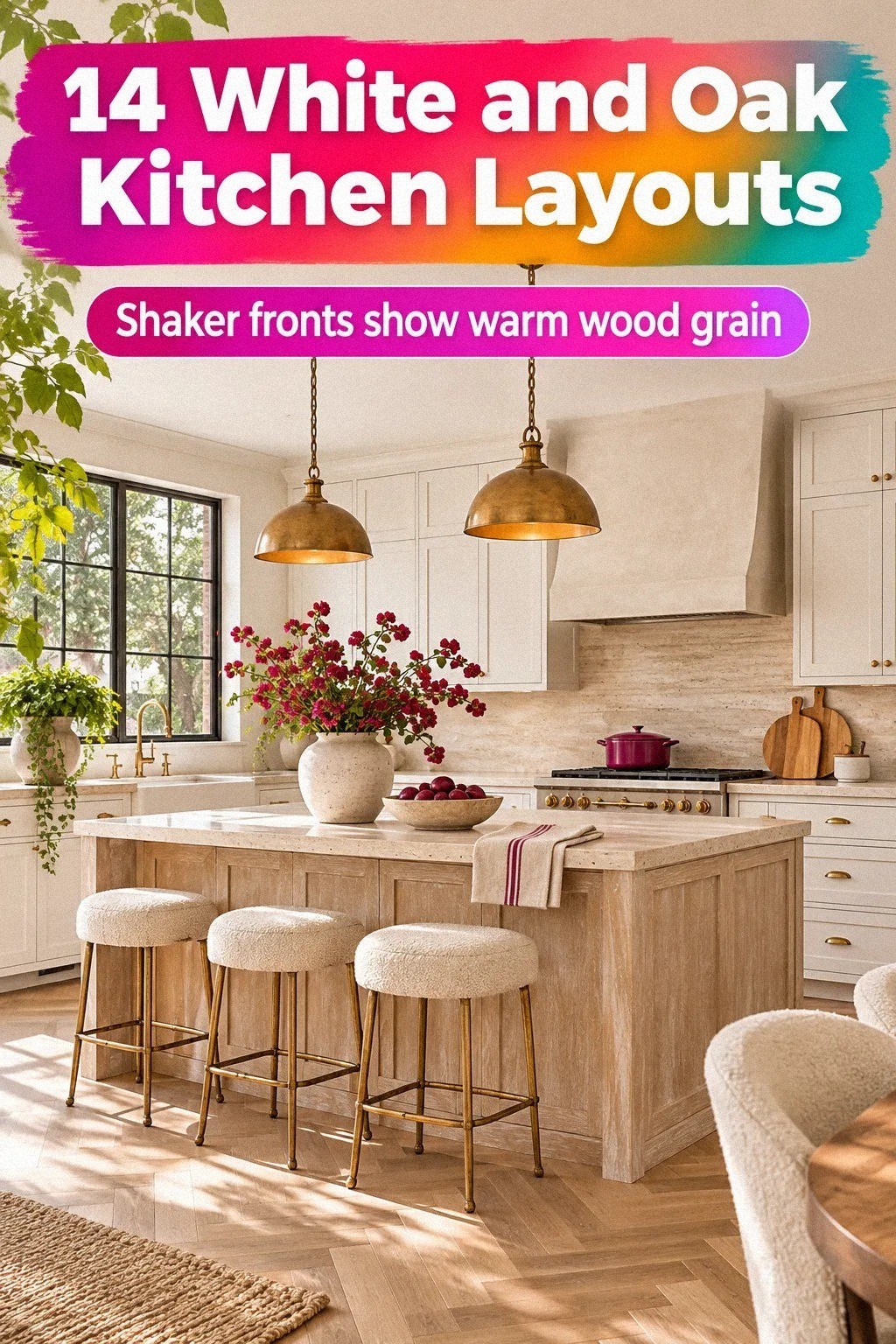
- Layer a White Wood Kitchen Design With a Cerused Oak Island
- Repeat Kitchen White and Wood at Three Eye Levels
- Paint the Uppers Warm White and Leave the Oak Exposed
- Frame the Range With an Oak Hood
- Use the Two-Wood Rule Before You Choose Flooring
- Choose a Wood Cabinet White Countertop With Gentle Veining
- Build the Three-Height Light Stack
- Swap a Cold Backsplash for Hand-Glazed Texture
- Float a Chunky Oak Shelf Over White Cabinets
- Paint One Pantry Wall Evergreen Fog
- Frame the Windows With Linen Instead of More Cabinets
- Mix Matte Black Hardware With Warm Oak
- Can a Small Kitchen Still Feel Bright and Warm?
- Follow a Bright-Meets-Warm Budget Roadmap
1Layer a White Wood Kitchen Design With a Cerused Oak Island
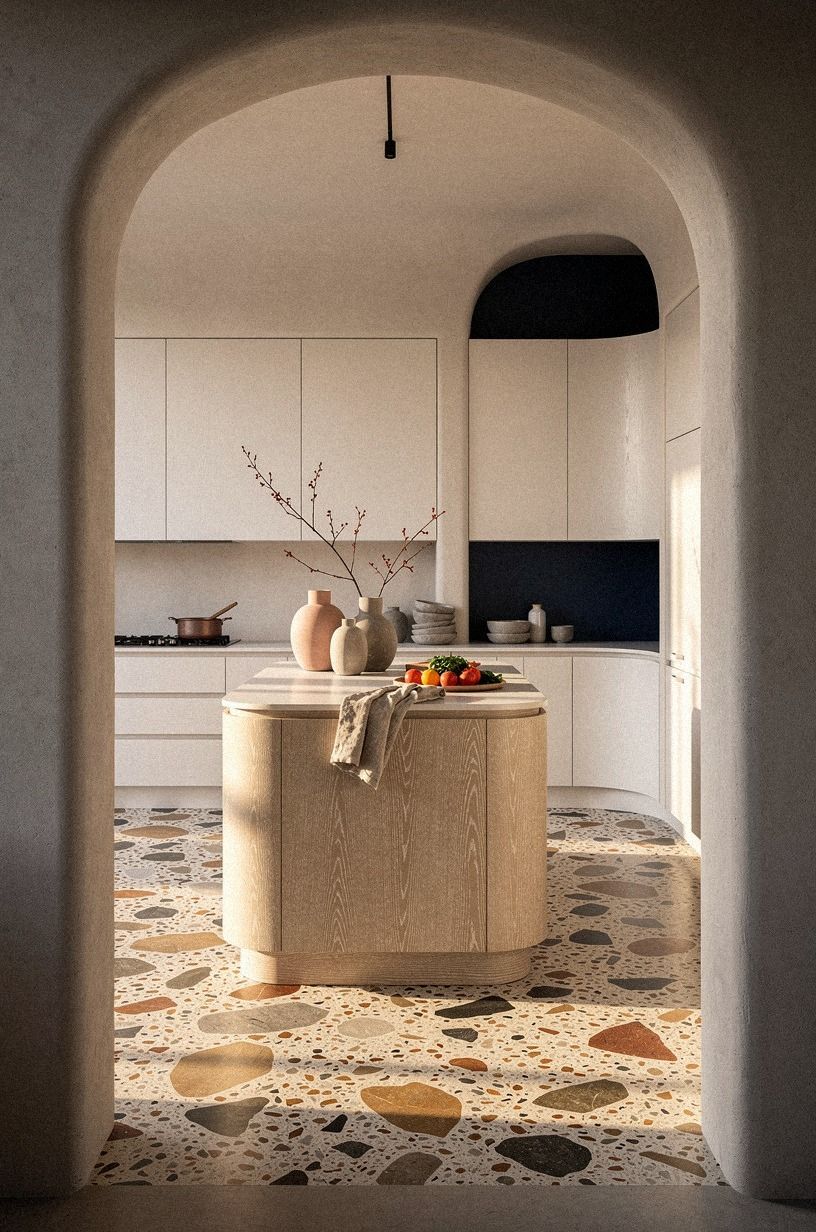
Start with midnight blue fronts around the walls, then let a cerused white oak island carry the visual weight. You’ll get a deep perimeter without losing the grain and soft character that make the kitchen feel lived-in. I’d choose a simple island shape here, because ornate legs can make the room feel busy fast.
Keep the oak finish matte. A matte finish reflects less glare and keeps the wood from looking orange at night.
Your island should feel like furniture, with enough presence to anchor the room without becoming theatrical. If you’re comparing layouts, these white oak kitchen island ideas show how different proportions change the whole room.
Use ivory cabinetry on the surrounding walls if you want a gentle contrast with the midnight blue. It won’t fight the oak.
Add a woven runner, a quiet pendant, and one bowl of pears. That’s enough!
You don’t need five decorative objects competing with the grain.
For the island top, oversized-chip terrazzo gives you a practical surface with lively texture. If you cook often, I’d choose a terrazzo with ivory chips and restrained copper notes rather than a stark blue-white slab. Your eye will read the counter, oak, and cabinet colors as one connected palette.
Typical cost by tier (US averages):
If your room is narrow, make the island shorter and deeper rather than stretching it across the whole floor. You’ll preserve circulation and still create the warm center your kitchen needs.
2Repeat Kitchen White and Wood at Three Eye Levels
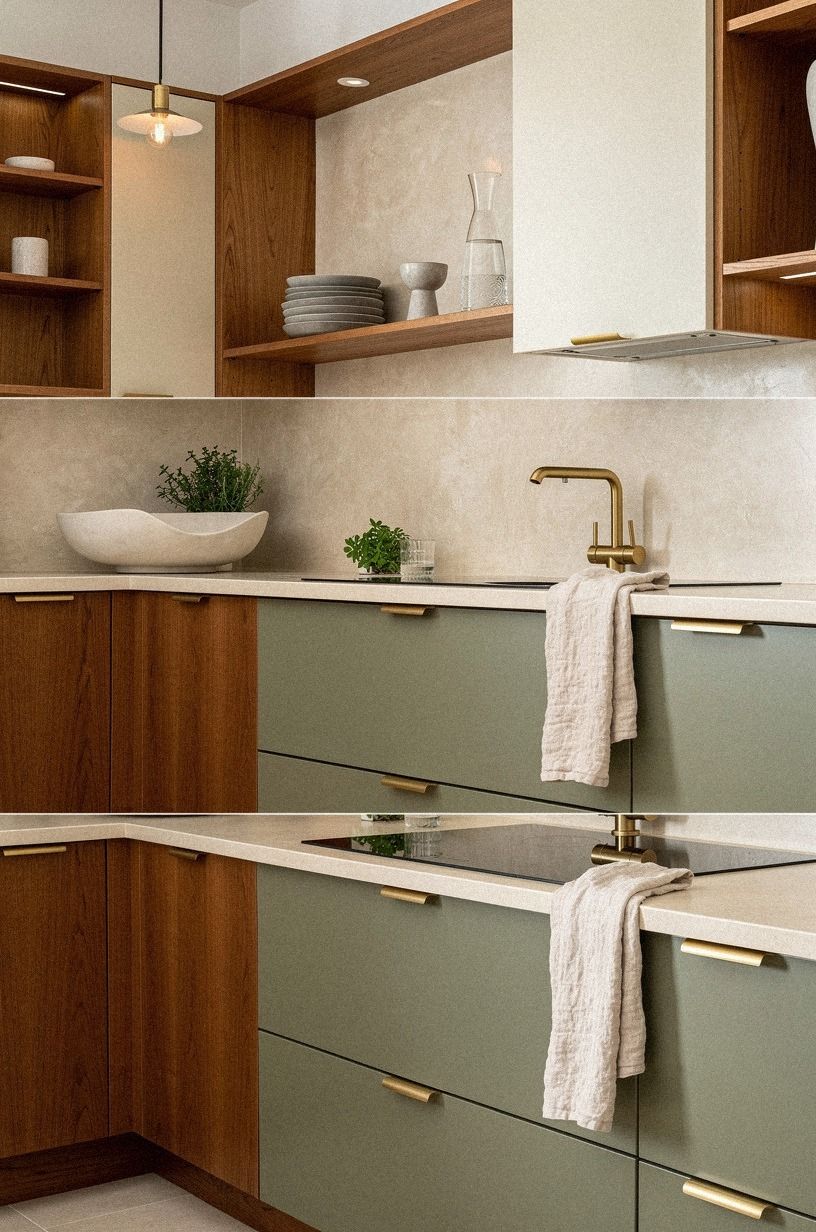
A white kitchen wood scheme looks more intentional when sage green, warm cream, and natural wood appear at the floor, counter, and eye level. Try a natural wood floor, a warm cream counter, and a small framed cutting board above the counter. Your eye will travel through the room instead of stopping at one heavy island.
I’d skip matching wood everywhere. When every surface uses the same finish, the kitchen can feel like a showroom.
Choose natural-wood floating shelves with a slightly different grain from the floor, then let the variation make the room feel collected. If you’re working with a narrow wall, two shelves are enough.
Keep the shelf styling calm: a stoneware bowl, three cookbooks with muted spines, and a section of hand-applied Venetian plaster in warm cream. You’ll want at least 18 inches between the counter and upper cabinets, so the display doesn’t squeeze your workspace. For more cabinet combinations, browse these white oak kitchen cabinet ideas.
Use the same principle with lighting. A natural wood floor can carry the room in daylight, while a sage green shelf wall brings color closer to eye level. Your kitchen will feel layered without requiring a collection of matching accessories.
3Paint the Uppers Warm White and Leave the Oak Exposed
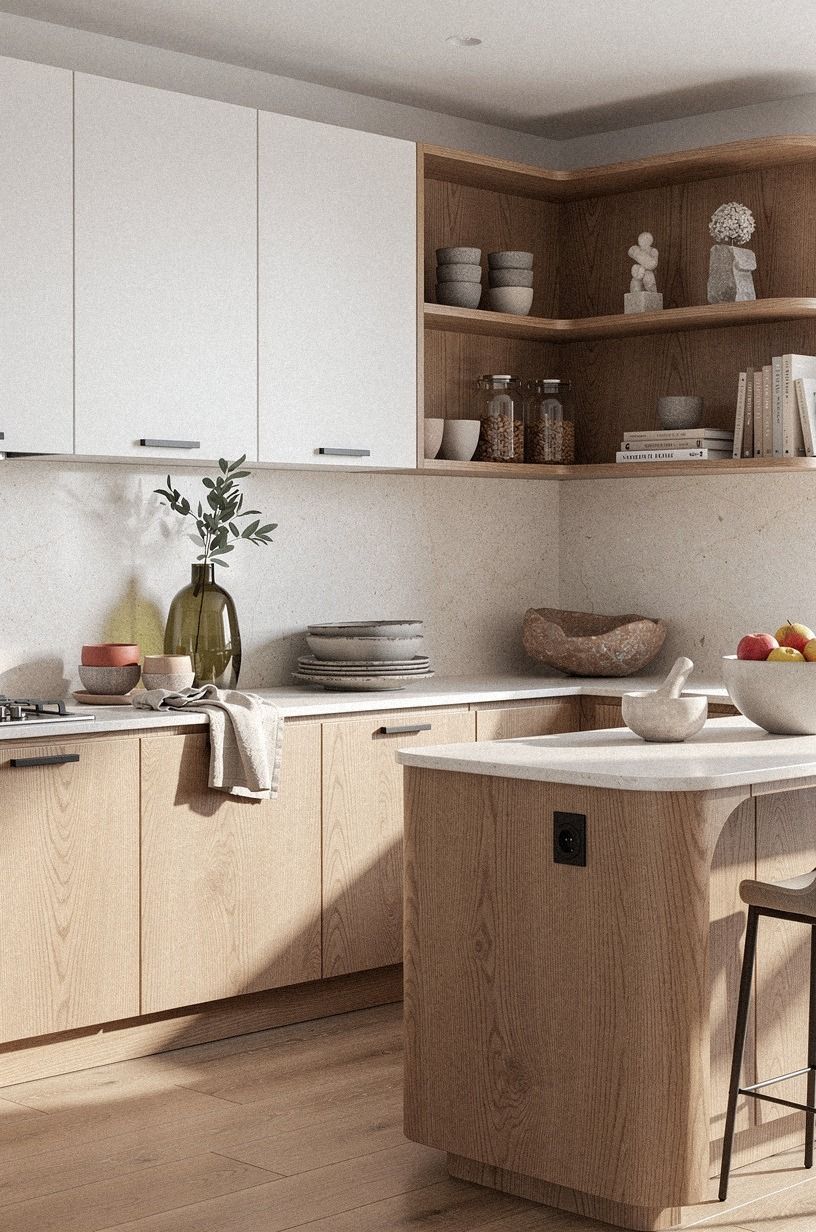
Pairing terracotta, stone, and olive around exposed wood gives your kitchen a softer horizon, while shagreen accents add a quiet layer of texture.
4Frame the Range With an Oak Hood
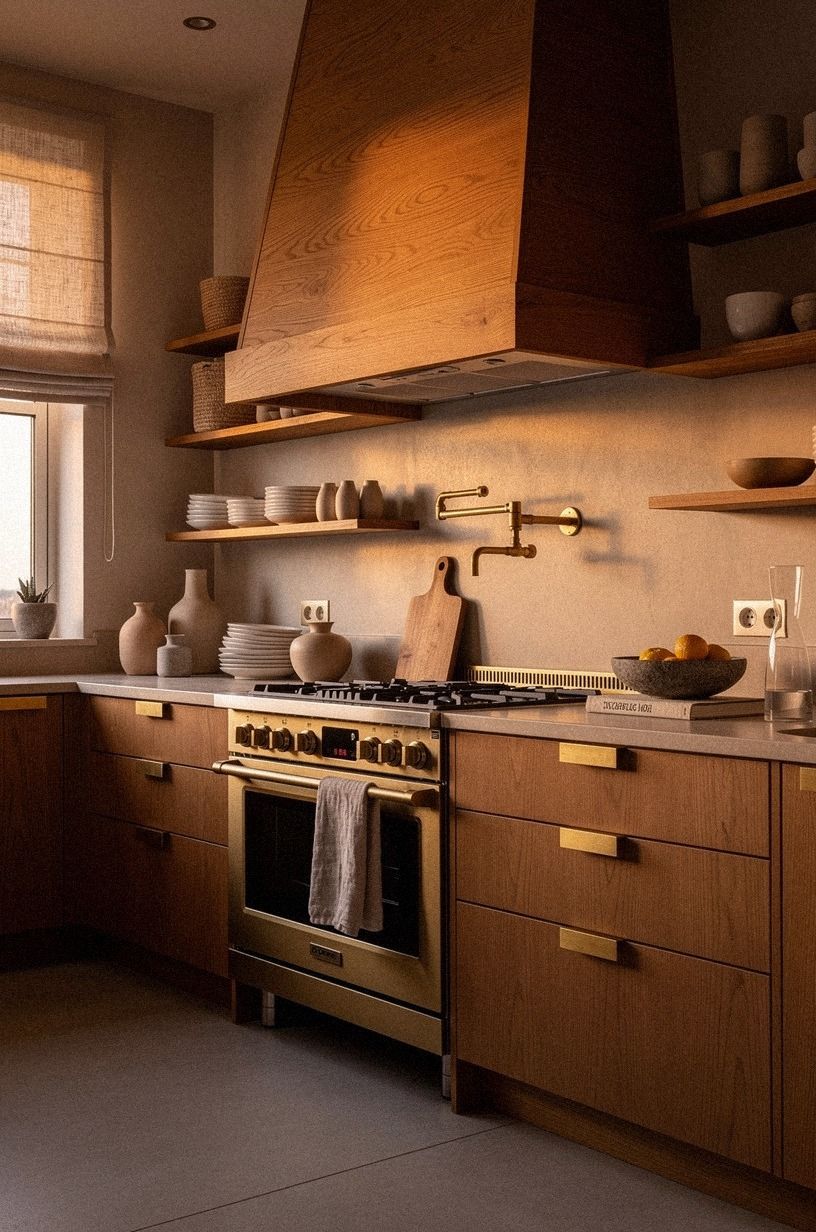
A warm clay hood creates a focal point without requiring a full wall of wood cabinetry. Keep the surrounding range wall light, then bring in a small oak detail so the shape feels connected to the rest of the kitchen. Your cooking zone will feel warmer, but the room won’t lose its bright character.
The hood should have enough visual mass to balance the island. A skinny shelf-style hood can look accidental above a wide range. I’d also avoid overly ornate trim, because it makes the kitchen feel dated faster than a plain box with beautiful grain.
Pair the hood with washed Belgian linen at a nearby window or breakfast seat. The relaxed weave softens the clay, while aged brass adds a warmer glint near the range. If you’re weighing a darker direction, these white oak and black kitchen ideas show how contrast can work without making the room moody.
Your hood finish can be slightly deeper than the island, but keep the undertone related. A copper-toned clay hood beside a gray-washed island may feel accidental. Ask for large samples and place them beside the counter, backsplash, and cabinet paint.
I’d use aged brass instead of matte black sconces if the room lacks other dark details. Brass gives you definition with less visual sharpness. One strong hood, a calm backsplash, and warm task lighting can carry the whole cooking wall!
5Use the Two-Wood Rule Before You Choose Flooring
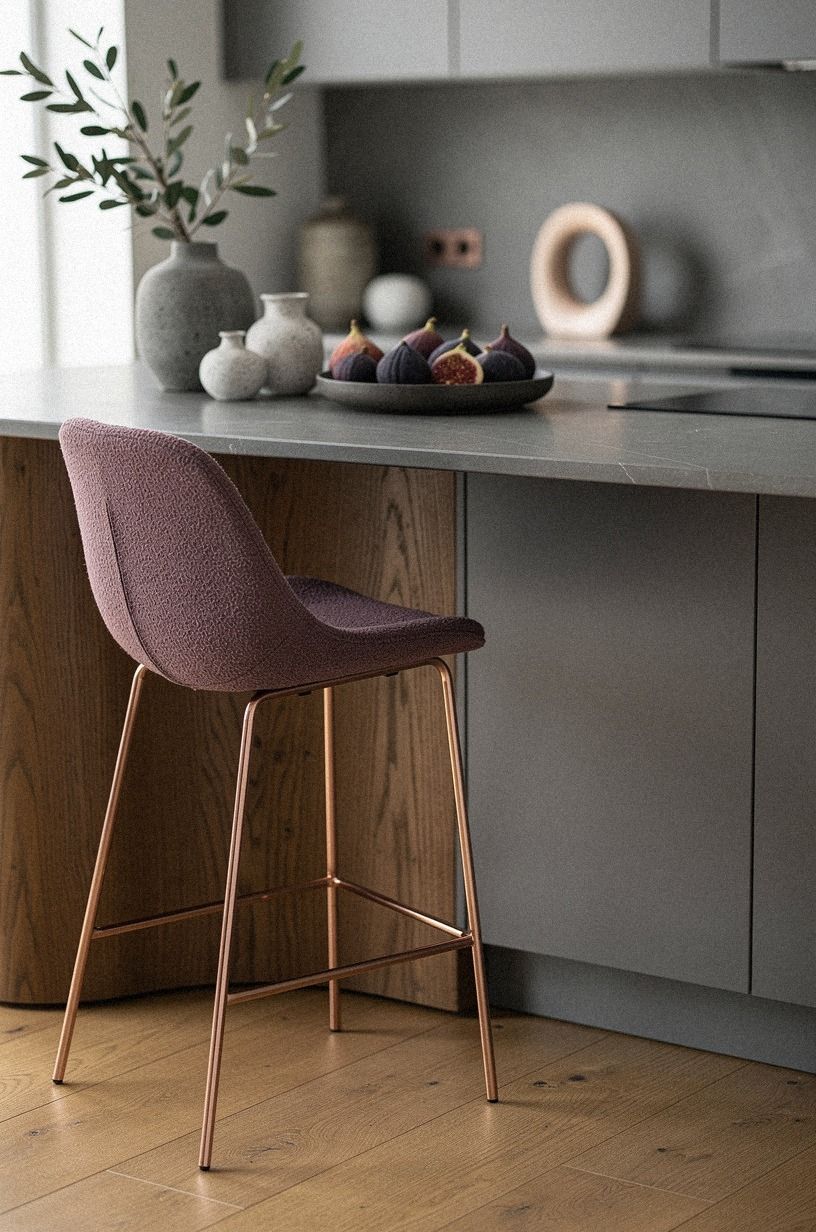
The Two-Wood Rule keeps a white and oak kitchen from becoming visually noisy: choose one main wood and one supporting wood, then stop. A plum, grey, and rose-gold palette can make that restraint feel deliberate, while an organic bouclé seat adds softness without another competing finish.
6Choose a Wood Cabinet White Countertop With Gentle Veining
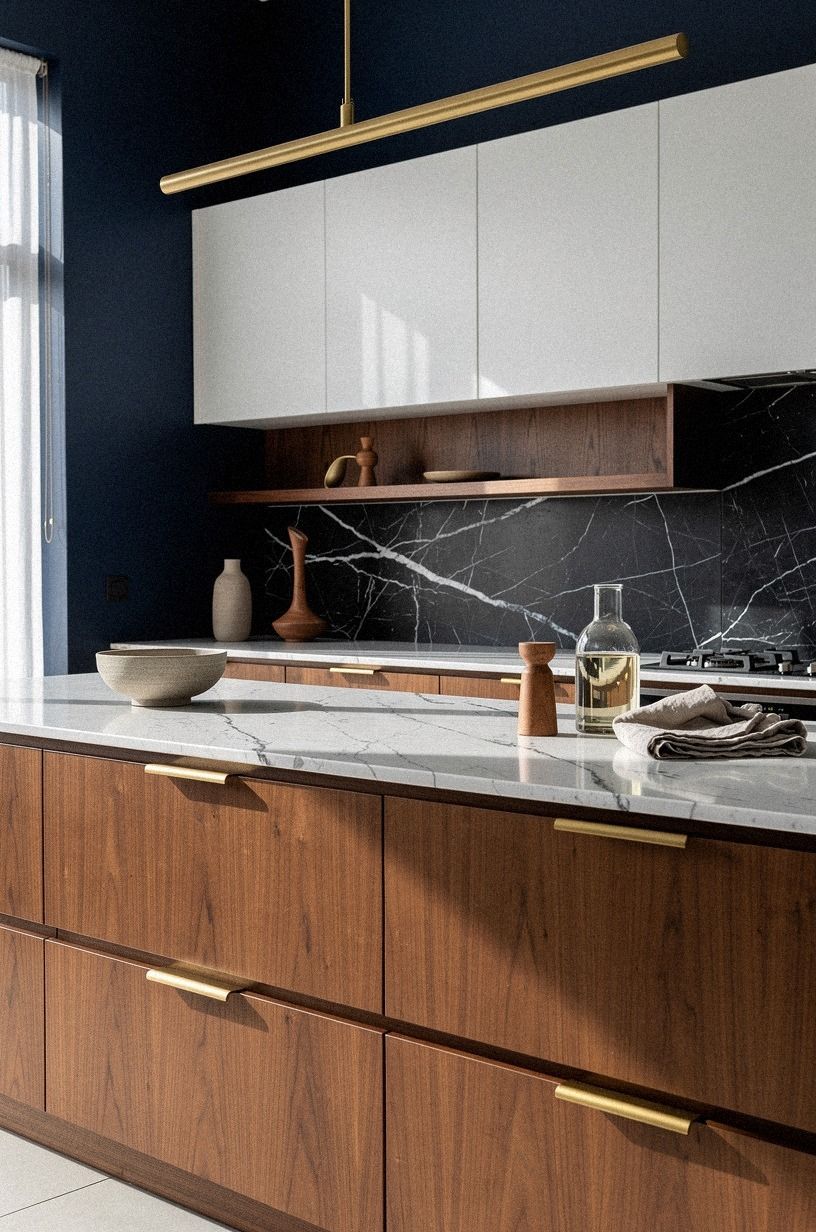
A wood cabinet white countertop pairing works best when the counter has movement but not a loud pattern. Nero Marquina black marble with white veins gives navy, white, and walnut a grounded contrast, while a quieter pale surface creates a more peaceful look. Your choice should follow the grain intensity of the cabinets.
If your walnut is highly figured, I’d avoid adding another dramatic pattern nearby. Let the black marble carry the contrast, then keep the backsplash quiet so the room feels inviting rather than theatrical.
Keep the counter edge simple. A square edge looks crisp with 3 cm stone, while a softened edge suits a more traditional cabinet profile.
You’ll want the backsplash and counter to relate, but they don’t need to match exactly. A warm white tile can bridge them beautifully.
For a smaller budget, look at marble-look porcelain or a low-movement laminate with a realistic edge. You can spend more on the island and choose a simpler perimeter surface. That decision makes sense when the island is the first thing you see from the living room.
If you’re uncertain, bring home a counter sample and put a wooden spoon, a white plate, and your cabinet sample beside it. You’ll understand the relationship faster than you will from a showroom display. These white oak and black kitchen ideas also show how a pale counter can keep a high-contrast palette balanced.
7Build the Three-Height Light Stack
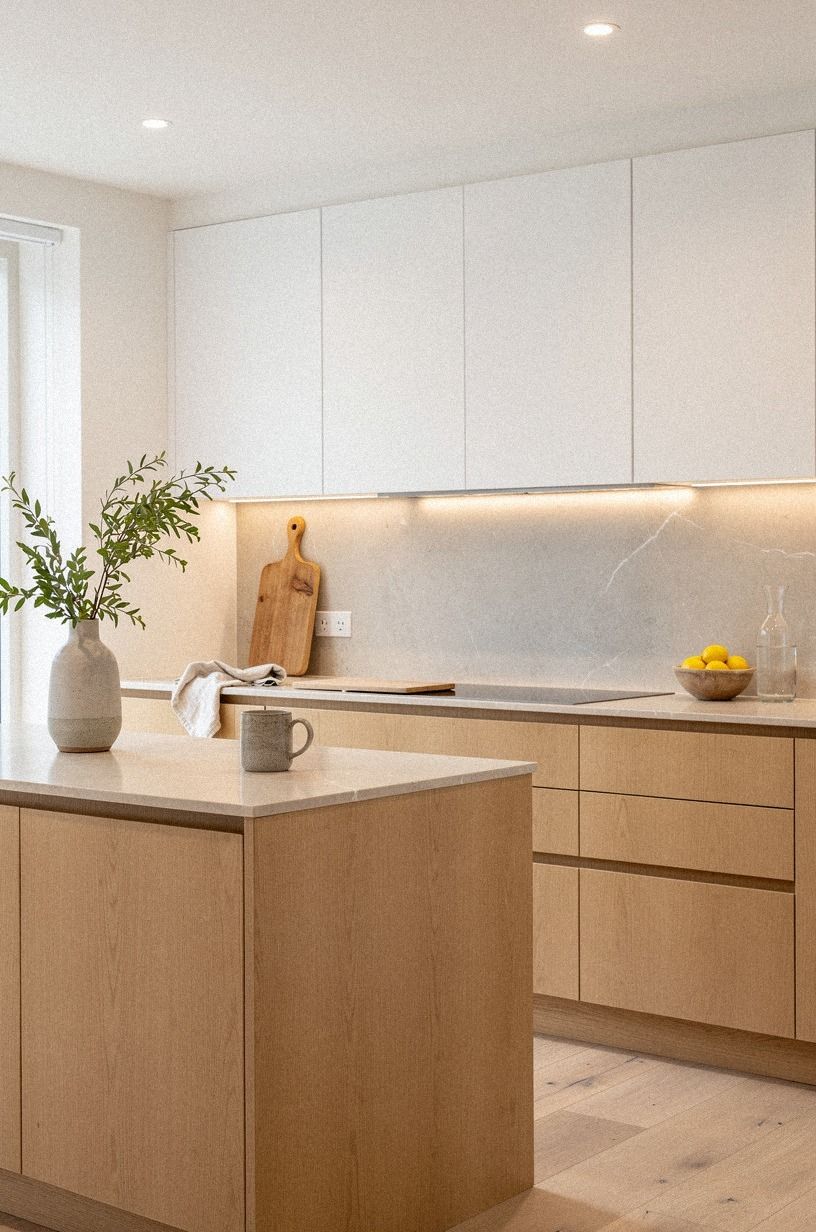
The Three-Height Light Stack uses emerald, gold, and cream so your kitchen doesn’t flatten after dark. Add one deep-pile mohair velvet detail on a nearby stool or bench, and the layered lighting will feel warmer and more tactile.
8Swap a Cold Backsplash for Hand-Glazed Texture
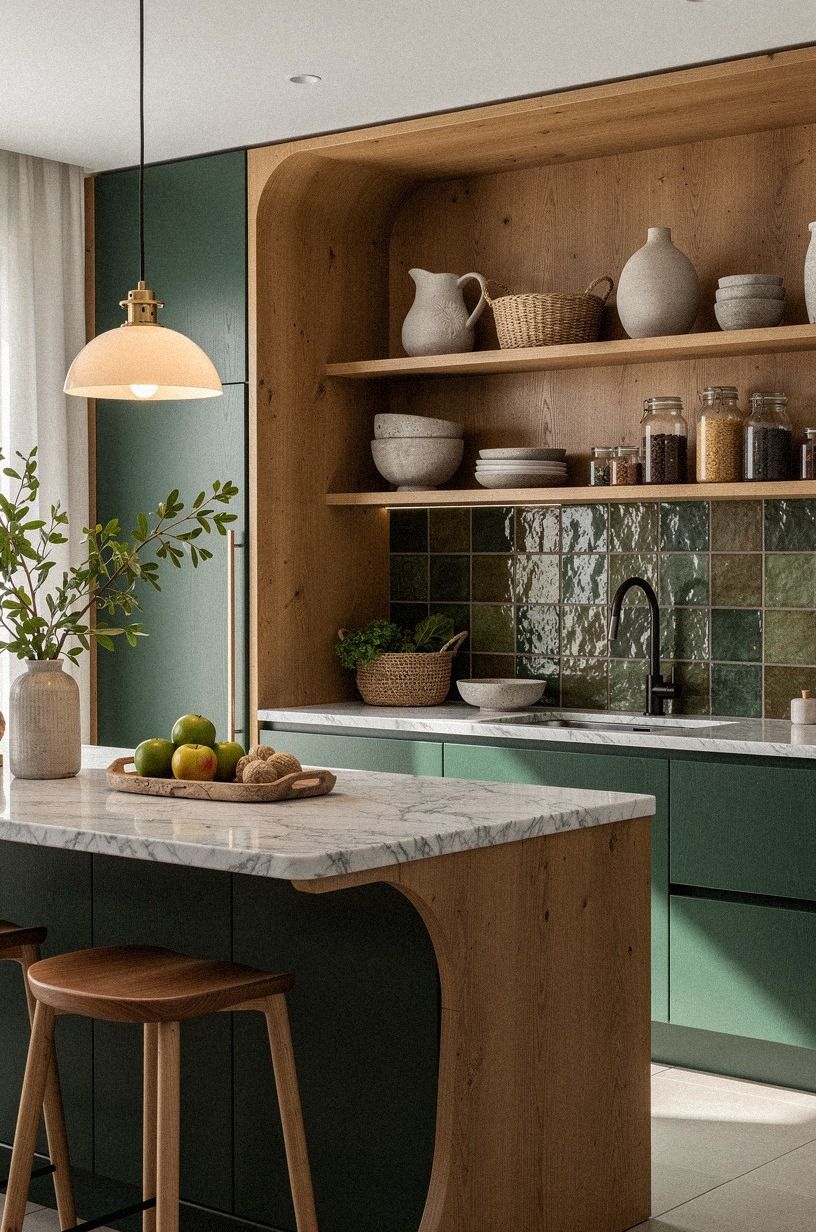
A backsplash doesn’t have to be flat white tile. Try forest green tile with subtle Carrara marble veining so the wall gains depth without losing character. Add natural oak nearby and a small rust accent, and the kitchen will feel richer without becoming heavy.
Plan around the standard 18-inch backsplash gap between the counter and upper cabinets. Your tile can run higher behind the range if the wall needs more presence, but don’t force a full-height installation into every corner. I’d rather see one thoughtfully finished wall than a rushed tile decision everywhere.
Use a narrow grout line where the tile allows it, then let the uneven edges remain visible. The surface should feel tactile. And if you’re renting, removable backsplash panels can give your kitchen the same visual lift without permanent work.
Your grout color matters. A soft gray grout will preserve the marble’s subtle movement, while bright white can make every irregular edge look busy. Ask for a sample board with your countertop, because the grout may read darker once it is surrounded by oak.
For a more restrained look, choose elongated green tile with a subtle handmade edge. These white cottage kitchen ideas offer useful examples of how texture can add character while the palette stays light.
9Float a Chunky Oak Shelf Over White Cabinets
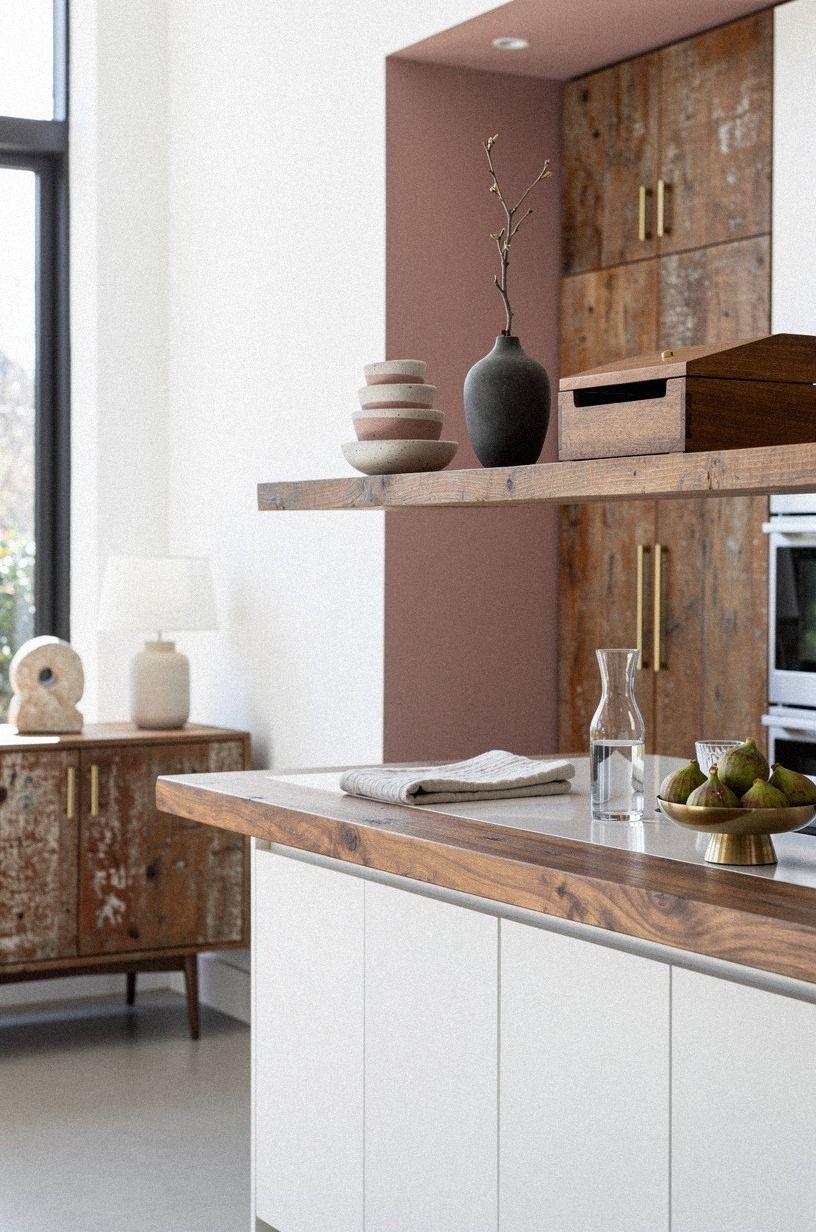
A floating shelf can warm a wall of white cabinets, but only if you give it breathing room. Choose reclaimed weathered teak with a matte finish and mount it where your most-used objects remain reachable. Your shelf should support daily life, not become a delicate display you’re afraid to touch.
Keep the arrangement short and useful: a ceramic pitcher, a salt crock, and two plates. You’ll want the shelf to look gathered, not crowded. I’d skip stacking ten matching bowls, because repetition can make the kitchen feel staged and oddly quiet.
The best version includes one soft detail, such as a dusty rose cushion on a nearby seat, with charcoal and brass accents close by. That small texture keeps the wood and white surfaces from feeling hard. For more small-room inspiration, see these small oak kitchen ideas.
Think about what you reach for every day. Your shelf can hold mugs, a pepper mill, or a small stack of breakfast plates. If it only holds objects you never use, dust will quickly become part of the design.
Leave the wall around it open. A shelf needs negative space to look intentional, especially when the cabinets below already have doors, pulls, and appliances. I’d rather see one long shelf with three useful objects than several narrow shelves filled with similar ceramics.
10Paint One Pantry Wall Evergreen Fog
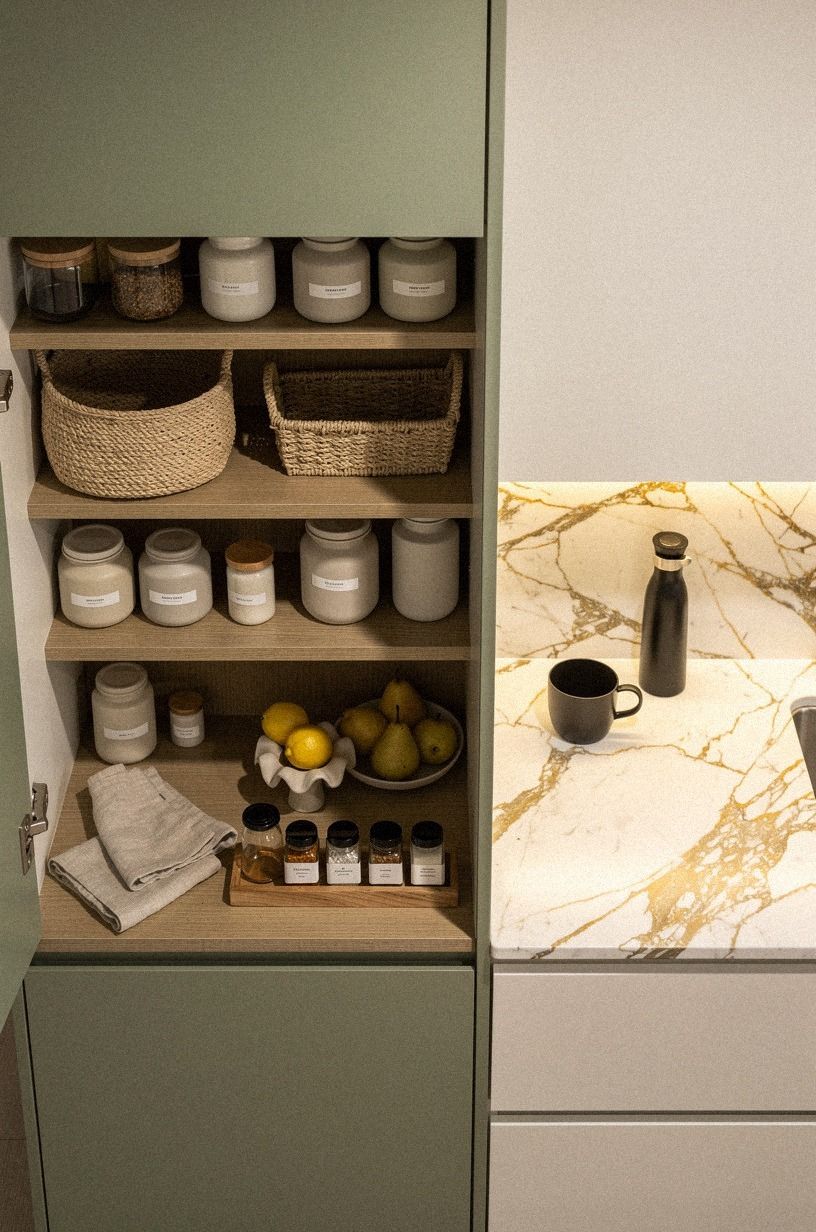
A single warm white pantry wall gives your kitchen a calm foundation, while camel and black accents add definition. Finish the nearby counter with Calacatta marble and gold veining if you want the white and oak palette to feel more layered without darkening the entire room.
11Frame the Windows With Linen Instead of More Cabinets
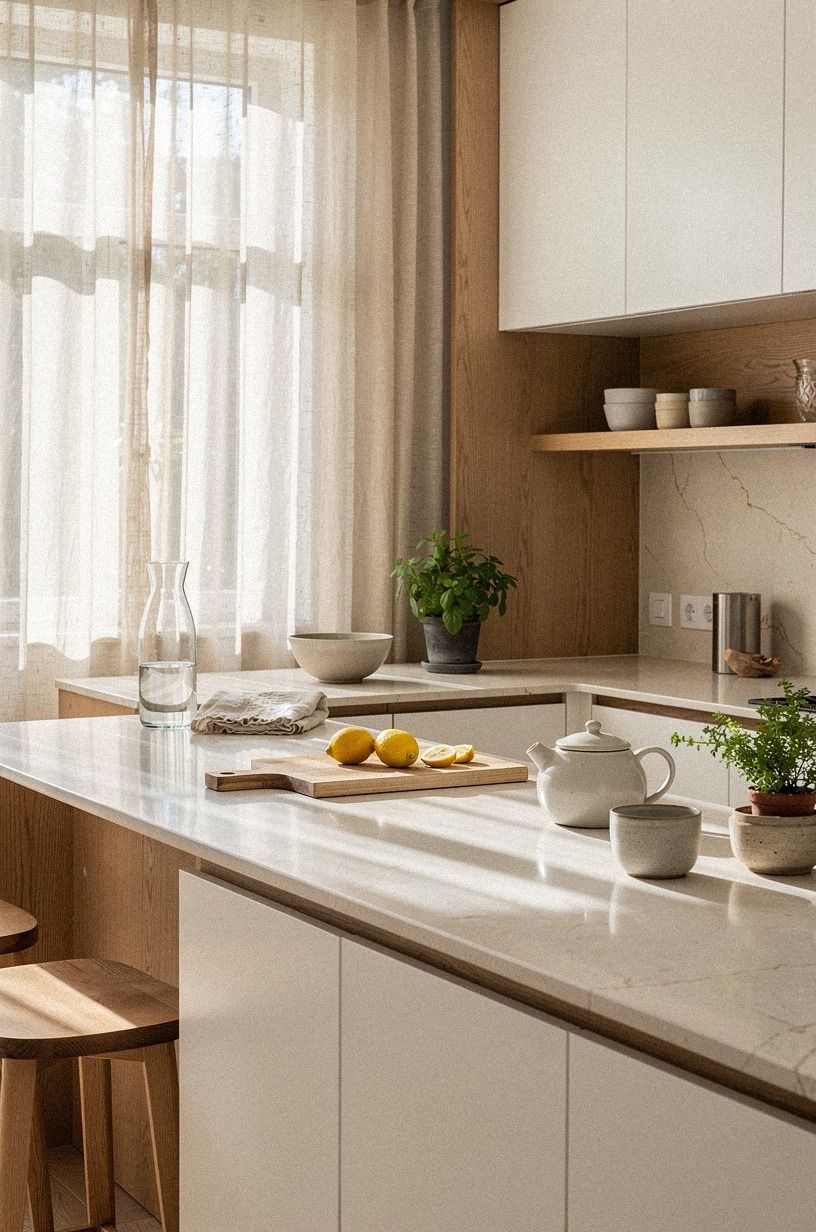
If your kitchen has a sunny window, let it remain part of the design. Frame it with Belgian flax linen café curtains or a relaxed Roman shade, then keep the nearby cabinetry ivory. Midnight blue, copper, and cerused white oak will give the room more depth without making it feel dominated by hard surfaces.
Choose a natural flax tone rather than stark white. It will connect the window to the cerused oak without trying to imitate it.
I’d skip busy patterns here, especially if your countertop or backsplash already has movement. A quiet fabric gives your eye somewhere to rest.
Keep the curtain hardware simple with copper rods or aged brass rings. The goal is a gentle vertical line, not a dramatic window treatment. If you’re deciding between a lighter cottage direction and a modern one, these white cottage kitchen ideas offer useful proportion cues.
Your fabric should stop above the counter if the sink sits below the window. That keeps the material practical and lets daylight reach the work surface. For a larger window, a woven Roman shade can soften glare while preserving the clean architecture.
I’d choose washable linen blend if you cook often. White and oak already create a calm foundation, so the window treatment can add softness without needing a bold pattern. A small café curtain may be all the room needs.
12Mix Matte Black Hardware With Warm Oak
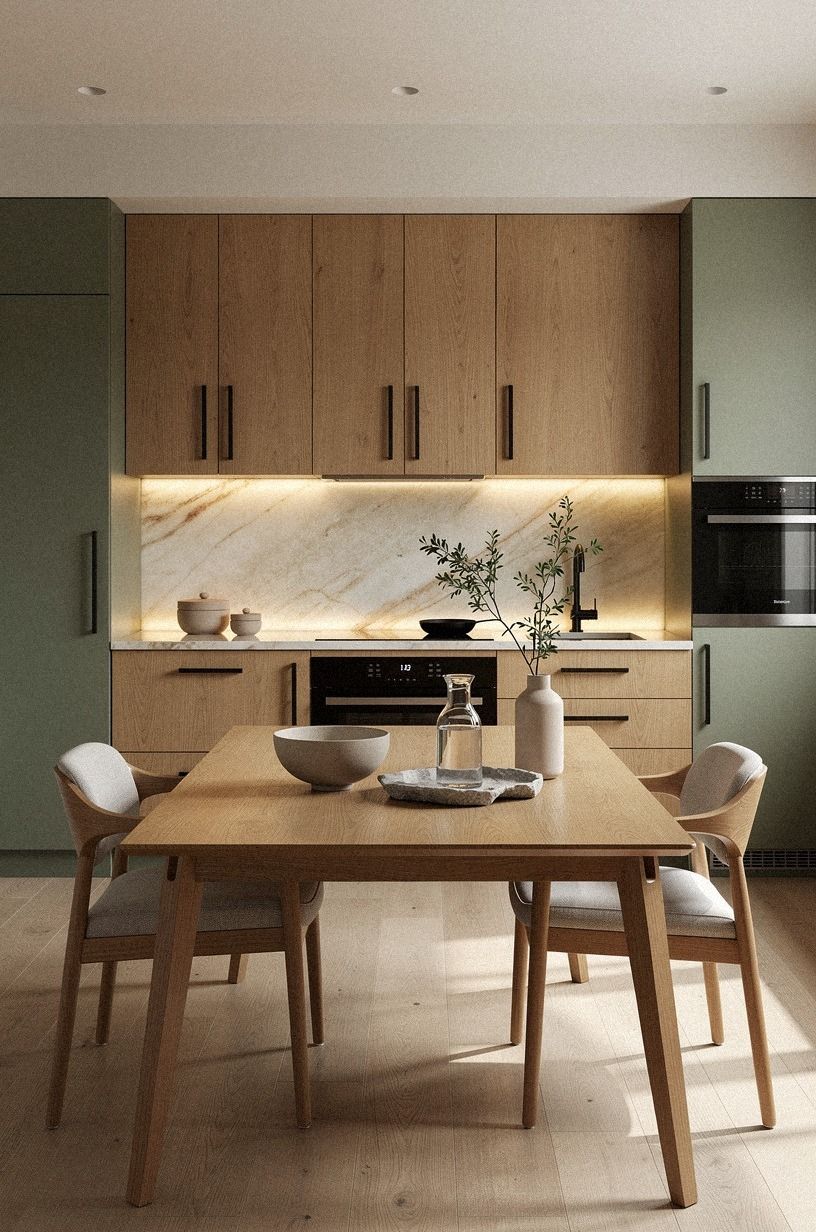
Sage green, warm cream, and natural wood give the cabinetry a gentle contrast, while backlit translucent onyx adds a warm glow behind a backsplash or serving area.
13Can a Small Kitchen Still Feel Bright and Warm?
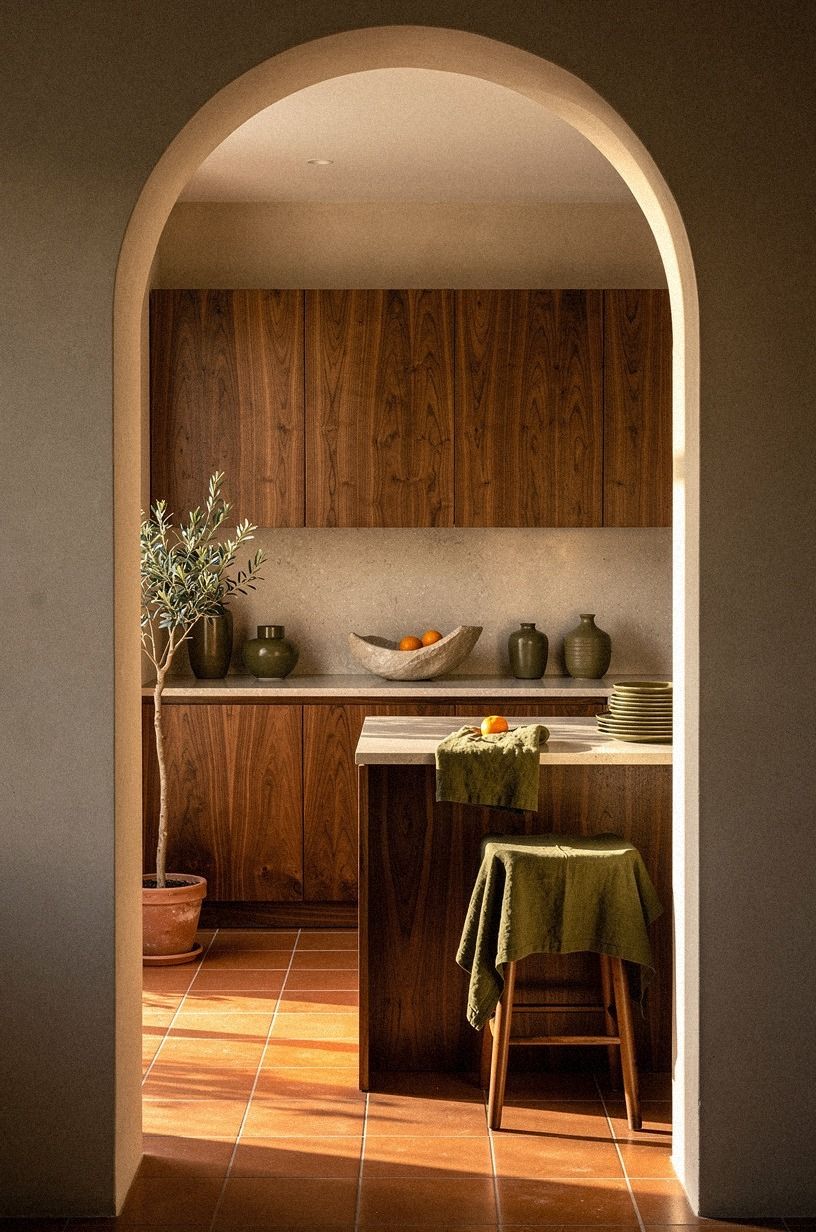
Yes, a small kitchen can use terracotta, stone, and walnut without feeling crowded. Keep the tall cabinets light, place book-matched walnut on one lower run or a compact peninsula, and protect a clear walking path. Your room will feel larger when the warm material has one strong location instead of appearing on every surface.
Island clearance matters. Aim for 42 to 48 inches around an island when your layout allows it, so you can open doors and move comfortably.
If you don’t have that space, I’d skip the island and use a slim walnut butcher-block cart instead. More furniture isn’t always more function.
Choose a book-matched walnut panel for a flexible breakfast corner or open pantry zone, then soften it with baskets and linen. You can also review these oak kitchen cabinet ideas for a warm modern look before deciding how much wood your small room can carry. And yes, the smaller footprint can make every choice feel more intentional!
Use vertical space carefully. A tall cabinet can hold more than several open shelves, while a shallow stone ledge may give you display space without stealing worktop depth. Your backsplash can also remain simple because a small kitchen already has plenty of visual information.
I’d choose one wood tone, one light stone, and one terracotta or olive accent. Repeating those three choices will make the room feel considered.
If you’re working with a rental, a freestanding cart, linen shade, and removable tile can change the atmosphere without permanent construction. These small oak kitchen ideas can help you compare compact layouts.
14Follow a Bright-Meets-Warm Budget Roadmap
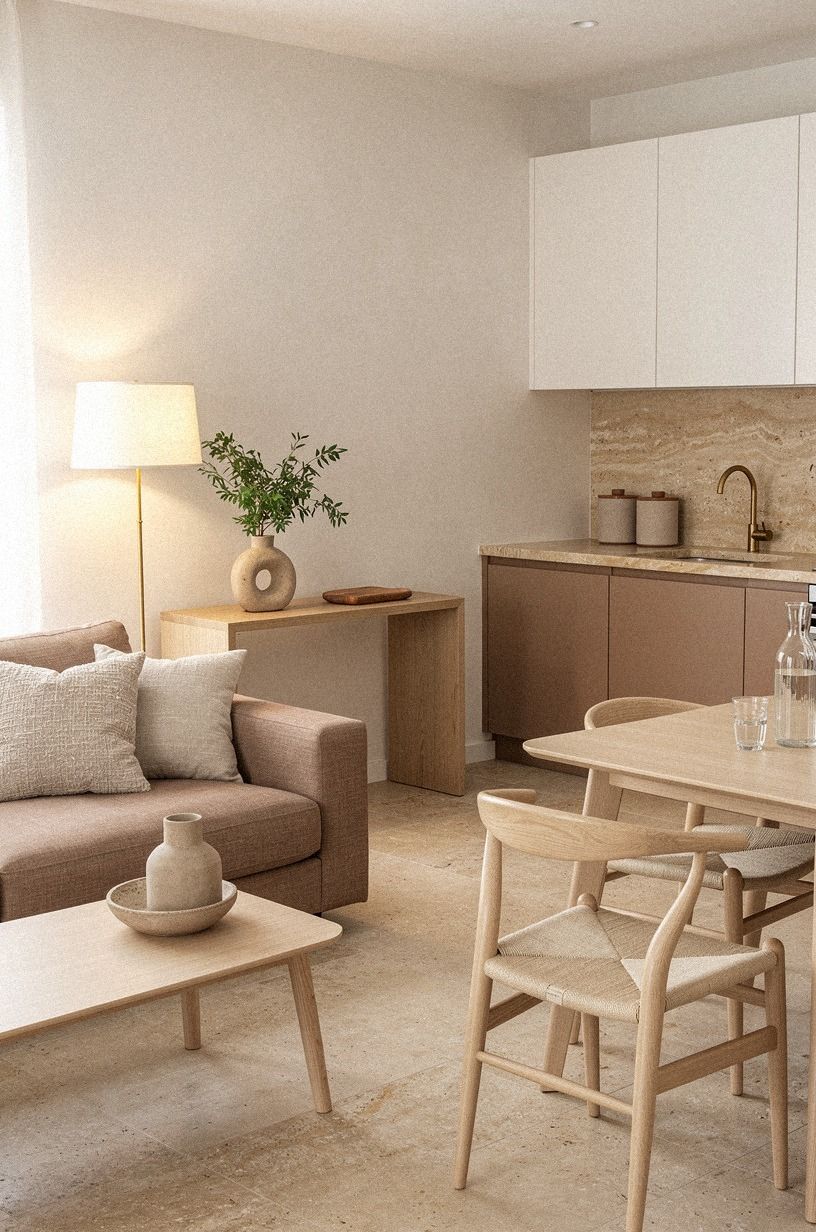
A cosmetic refresh can bring in clay, linen, and aged brass without replacing every cabinet. Add warm travertine where the budget allows, then let the existing white and oak do the quiet work.
What I’d Keep and What I’d Skip in This Combination
I’ve gone back and forth on whether white and oak kitchens are becoming too familiar. They are familiar, yes, but that isn’t the same as tired.
The pairing works because it solves two real problems at once: white reflects light, while oak stops the room from feeling thin. That balance is practical, not just photogenic.
I’d keep the oak on one major architectural element, such as the island, hood, or lower cabinets. Then I’d let the white do the quiet work around it.
What I’d skip is the rush to add oak accessories everywhere. A wooden tray, wooden stools, wooden shelves, and wooden signs can turn warmth into visual clutter before you notice what happened.
The most useful test is simple. Stand in your kitchen in the morning, afternoon, and evening, then look at the same sample board each time.
Farrow & Ball Studio Green No.93 can become wonderfully deep in a dim corner, but it may be too strong if your room already lacks daylight. Benjamin Moore White Dove may look creamy at one hour and almost neutral at another.
Your best choice will probably be the one that leaves some restraint in the room. I’d rather see a plain oak island with one excellent pendant than a kitchen packed with fashionable details. If you’re planning a larger update, these white oak kitchen cabinet ideas that last can help you compare grain, layout, and finish before you spend.
A Few Things Worth Answering
What is the best White & Oak Kitchen Ideas for the Perfect Bright-Meets-Warm Combo for a small kitchen?
The best choice is light upper cabinetry with one walnut or oak focal point, such as a compact walnut peninsula or a freestanding wood unit. A single warm anchor keeps your floor area open and stops the room from feeling visually crowded.
Use a pale counter and keep the hardware light. You’ll get more impact from clear sightlines than from extra storage furniture. These small oak kitchen ideas can help you compare the amount of wood each layout can carry.
Where can I buy White & Oak Kitchen Ideas for the Perfect Bright-Meets-Warm Combo pieces on a budget?
Look at IKEA, Wayfair, and Target for affordable white cabinetry accents, stools, and lighting. Facebook Marketplace and local thrift shops can also turn up solid wood pieces. Second-hand oak often has better grain than new low-cost veneer.
You can also shop your own home first. A linen curtain, wooden stool, or ceramic bowl may already give you the texture the kitchen needs. Browse these modern oak kitchen ideas before you buy, especially if you’re unsure whether your room needs a rustic or cleaner finish.
How much does a White & Oak Kitchen Ideas for the Perfect Bright-Meets-Warm Combo makeover cost?
A small cosmetic update can cost about $100 to $300 if you already own paint tools and reuse your furniture. A broader refresh may reach the budget tier shown above. Paint, rearranging, and editing accessories can be free.
Start with the surface you notice most, then add hardware or lighting only if the room still feels unfinished. If the cabinets are sound, repainting them may give you more value than replacing them.
Can I create a White & Oak Kitchen Ideas for the Perfect Bright-Meets-Warm Combo on a budget?
Yes, and you can begin with three low-cost moves: paint the walls warm white, move your existing wood pieces into one zone, and replace cool bulbs with warmer ones. Small changes can clarify the palette before you buy anything larger.
For renters, try removable backsplash panels, a tension rod with linen fabric, and freestanding storage. You’ll keep the room flexible. These white cottage kitchen ideas include useful ideas for adding softness without a complete renovation.
Is a White & Oak Kitchen Ideas for the Perfect Bright-Meets-Warm Combo worth it in a small space?
Yes, because the light surfaces reflect brightness while oak gives the room depth. Keep at least 42 inches of clearance where possible, or choose a narrow cart instead of a fixed island. The right proportions matter more than the square footage.
You’ll want one main wood feature and fewer open shelves. That combination keeps the kitchen bright, calm, and usable. If you need a layout reference, these oak kitchen cabinet ideas can help you decide where the warmer material should go.
Is a White & Oak Kitchen Ideas for the Perfect Bright-Meets-Warm Combo a good idea for a rental?
Yes. Use removable backsplash tile, a tension rod, and freestanding oak-look storage rather than permanent cabinet changes. No-damage swaps can still create warmth without risking your deposit.
Add linen curtains, a portable lamp, and peel-and-stick hardware accents if permitted. And if you’re choosing a darker companion color, these white oak and black kitchen ideas can guide the contrast.
Where I’d Start First
If I had to pick one, I’d start with the oak island. It gives your kitchen warmth at the center, where you’ll see it from every angle, and it won’t darken the whole room. Pin the oak island idea for later and build the rest around its grain.