
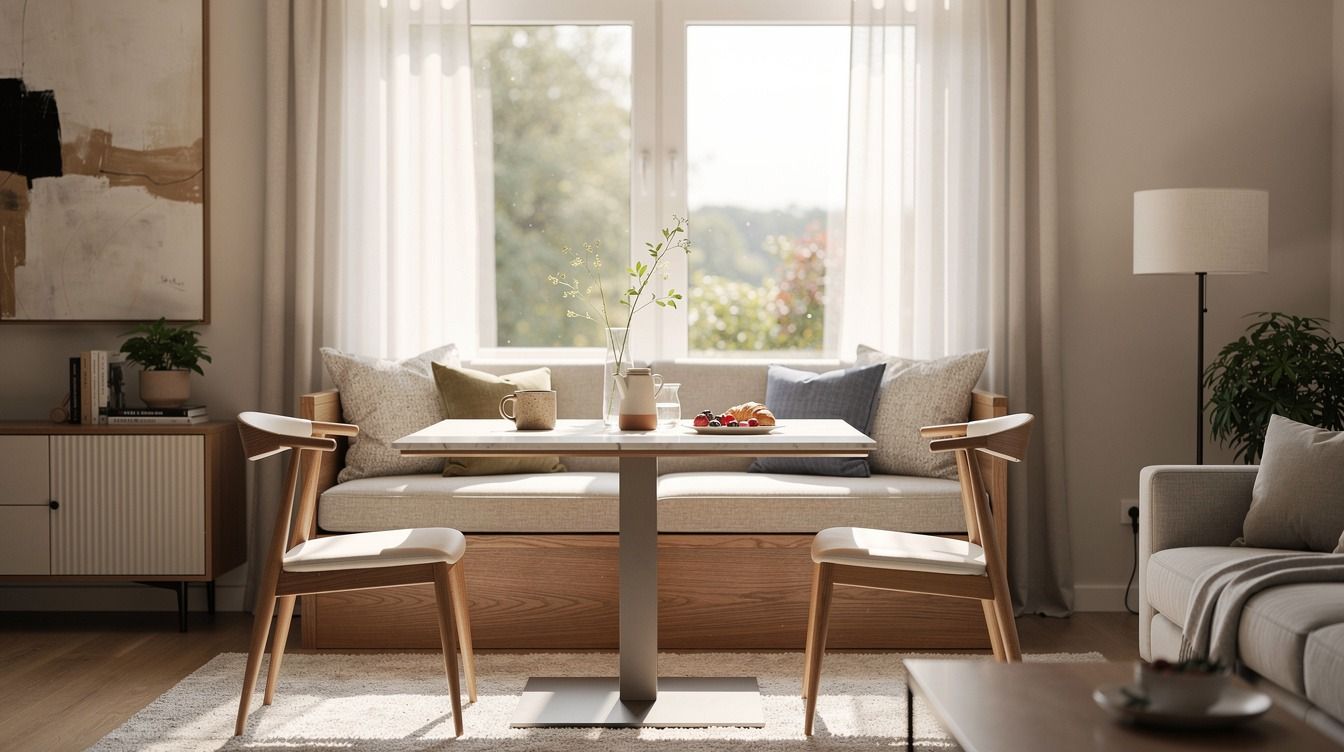
 by
by Breakfast nook bench vs chairs comes down to this: a bench wins when you need more seats in less space, while chairs win when you need quicker movement around the table. I learned that after forcing four loose seats into a tiny corner and bumping my shin on one every single day. Now I look at traffic flow first, not just style. If your mornings feel cramped, this is the choice that fixes it.
- Anchor a wall bench under the window
- Pull round chairs around a pedestal table
- When does a curved banquette earn its keep?
- Pair one bench with two sculptural chairs
- Choose slipcovered chairs for a softer nook
- Build storage drawers beneath the bench seat
- Tuck armless chairs around a tiny bistro table
- Wrap the bench in performance linen cushions
- Use mismatched chairs for a collected breakfast nook
- Center a round rug beneath the nook
- Frame the bench with tall cafe curtains
- Add chair cushions in one shared fabric
- Float a backless bench beside the sofa
- Layer pillows to soften a straight bench
- Angle corner chairs toward the morning light
- Match bench legs to the coffee table
1Anchor a wall bench under the window
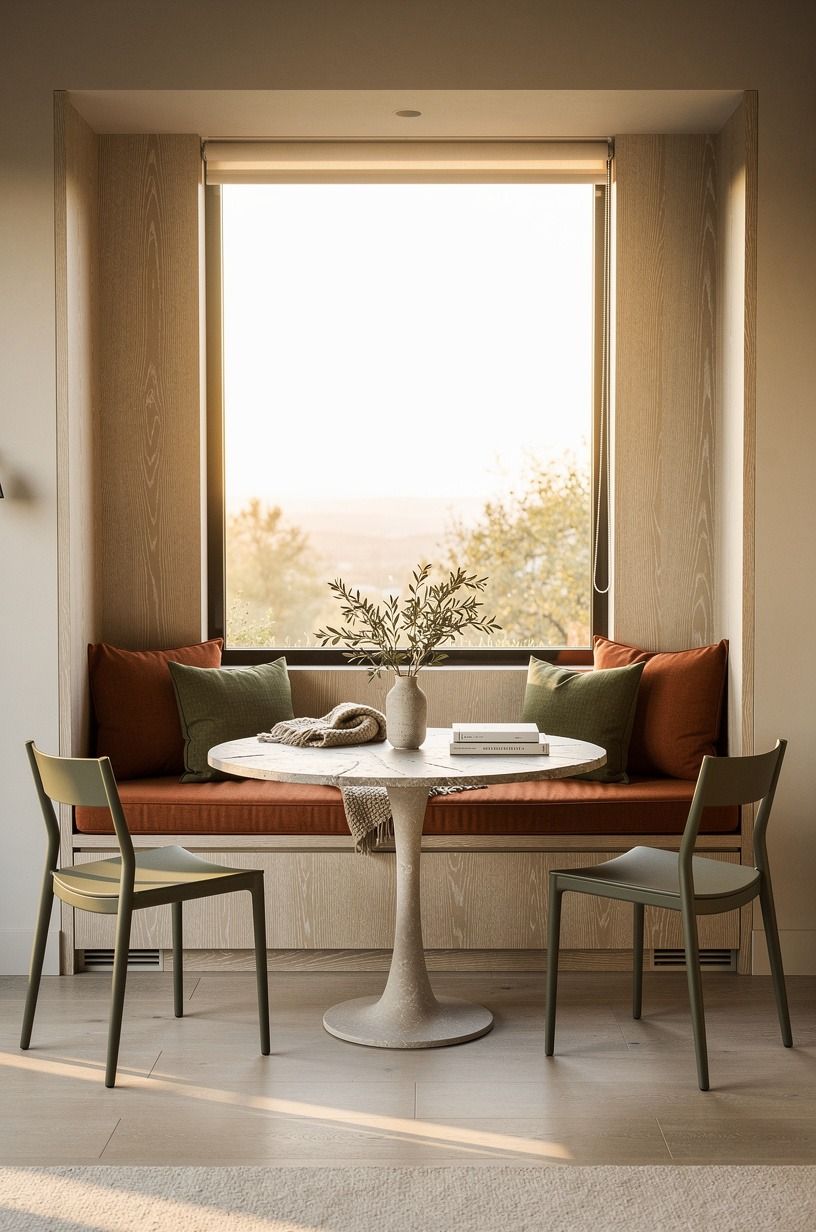
Start with the wall, because that's where a bench earns its keep. If you anchor a bench seat breakfast nook under the window, you free the open side of the table so your body can move without doing that little side shuffle before coffee. I like a built-in look here, even when the bench is just a simple framed piece.
Go with cerused white oak if your living room already has pale wood nearby. The grain keeps the bench from reading heavy, and you get that soft, balanced symmetry the photo is showing in a gentle, welcoming way.
If your table is 36 inches across, leave enough knee room so you don't feel pinned in. Add a washed Belgian linen cushion in oatmeal and the seat reads warm instead of formal.
You want ease, not a booth that traps you.
Then let the two slim chairs stay visually lighter than the bench. Benjamin Moore Revere Pewter HC-172 on the surrounding walls helps the whole zone feel calm instead of chopped up. If you are comparing shapes, this is where my guide to round vs rectangular breakfast nook tables helps.
I'd skip bulky armchairs here, because they steal the exact breathing room the bench just created.
2Pull round chairs around a pedestal table
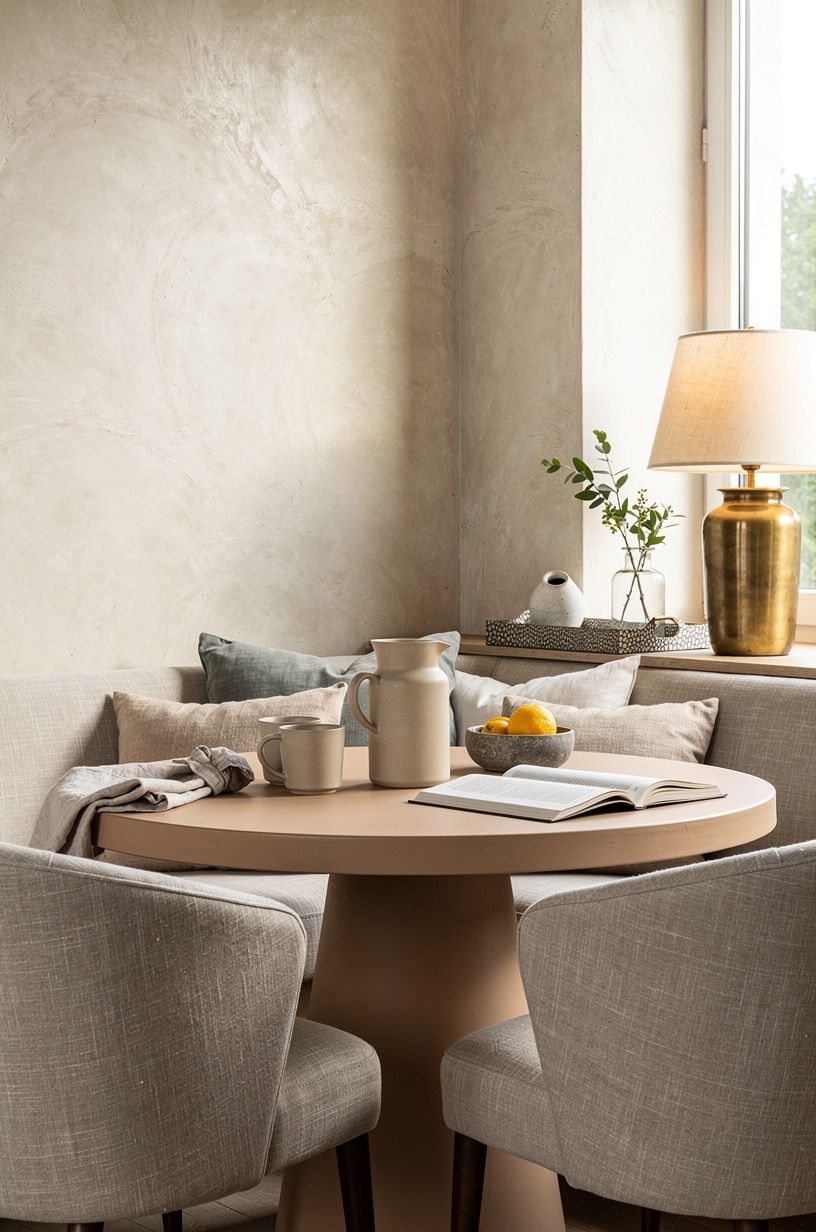
Chairs win when you want the table to feel easy from every angle. Around a clay-toned pedestal, rounded chairs let you slide in from the side, pull back fast, and keep the kitchen nook with chairs feeling less formal than a boxed-in banquette. That matters on school mornings when nobody is sitting still for long.
A clay-washed pedestal table is especially good with curved chair backs because the shapes rhyme without looking matched on purpose. I've tried this in a cramped corner, and it felt better the second I removed the square legs from the old table.
Less visual stop. More sweep.
You will feel it right away.
Keep the built-in bench in the background if you have one, but let the chairs do the talking. Target Threshold Windsor chairs in a warm black finish can ground the table without making the corner feel dark or moody in a heavy way.
A pair of Article Svelti accent chairs in soft camel can lift the same table into something airier. If your room is tiny, the ideas in small breakfast nooks that fit almost anywhere pair well with this move.
Why force a square table when the room wants a circle?
3When does a curved banquette earn its keep?
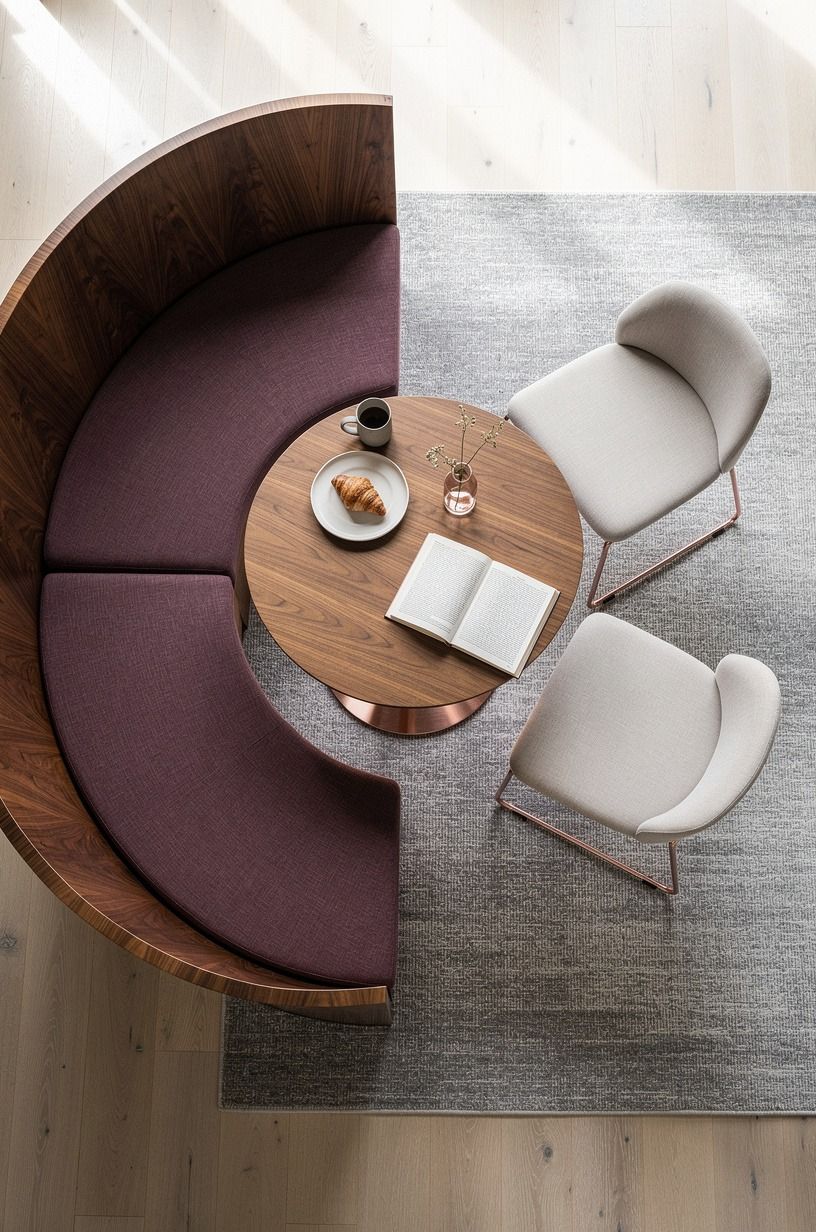
A curved banquette is what you choose when the corner itself is awkward, because the curve softens what would otherwise be a hard inside angle that fights your furniture.
4Pair one bench with two sculptural chairs
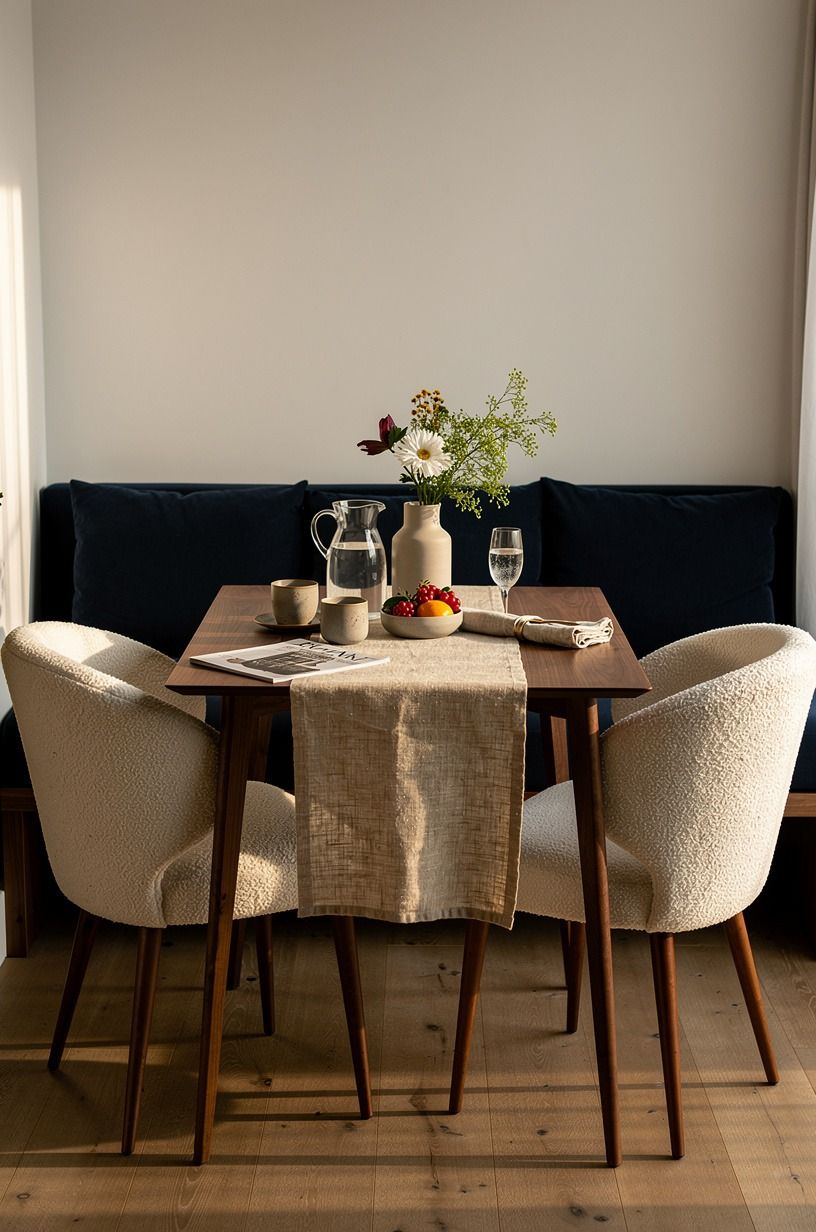
This is the split decision I come back to most. One bench gives you capacity, two chairs give you flexibility, and the mix matched chairs dining tables look works best when one side stays calm. If you want the room to feel designed but not precious, this is the formula.
Choose boucle barrel chairs with a rounded, organic profile so they soften the straight line of the bench. At a walnut table, that contrast feels collected instead of stiff. I've gone back and forth on matching sets, and I almost always land here because a full set can make a breakfast nook feel like a waiting room.
Keep the bench simpler than the chairs. Article Svelti dining chairs or a similar sculptural shape can do the heavy visual work while a plain cerused oak bench grounds the scene.
If you want more examples of hidden seating plus easy circulation, these storage breakfast nook ideas show the same logic in different forms. A pair of bouclé barrel chairs in cream reads soft and welcoming next to a firmer bench. Bench plus two chairs is the sweet spot when you can't fully commit either way.
5Choose slipcovered chairs for a softer nook
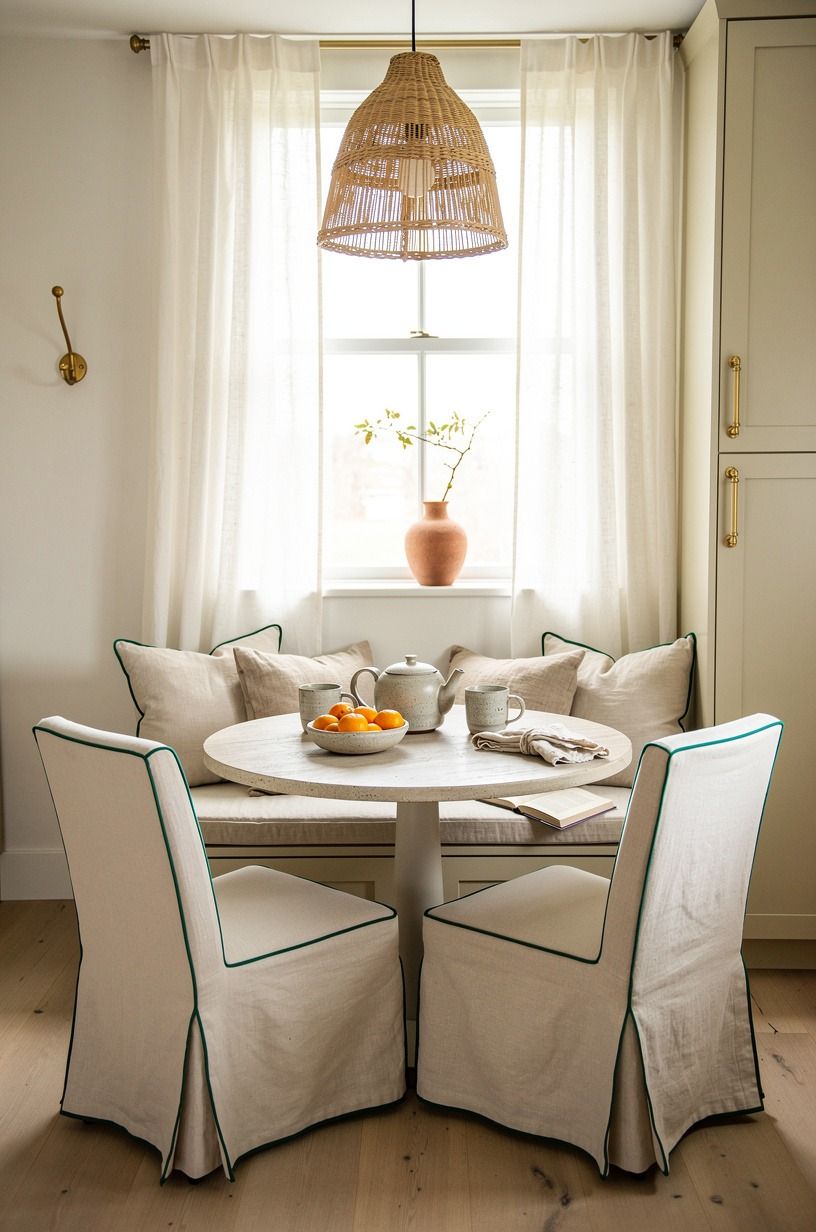
If your corner gets hard morning light, slipcovered chairs can make the whole breakfast area feel calmer. They bring movement and softness that a wood chair simply doesn't, and next to a compact bench they stop the nook from reading too rigid.
You sit down and the room feels gentler. Simple as that.
I like cotton duck slipcovers in cream or oatmeal because they wrinkle a little, which makes the nook feel lived in instead of staged. Beside a bench under a quiet window, they also absorb some of the visual sharpness from trim, table edges, and hard flooring. If you have kids, pick washable covers and don't overthink perfection.
Bring in wall color that keeps the softness from turning flat. Farrow & Ball Hague Blue No.30 on a nearby cabinet or accent wall can add depth without stealing from the pale seating. A quieter alternative is Benjamin Moore Pale Oak OC-20 on a single wall, which reads warm and gentle in morning light.
If you are balancing daylight with a bright corner, sunroom breakfast nook ideas for light-filled mornings show the same airy feeling done well. I'd skip stark white slipcovers, because they can feel cold before breakfast even starts.
6Build storage drawers beneath the bench seat
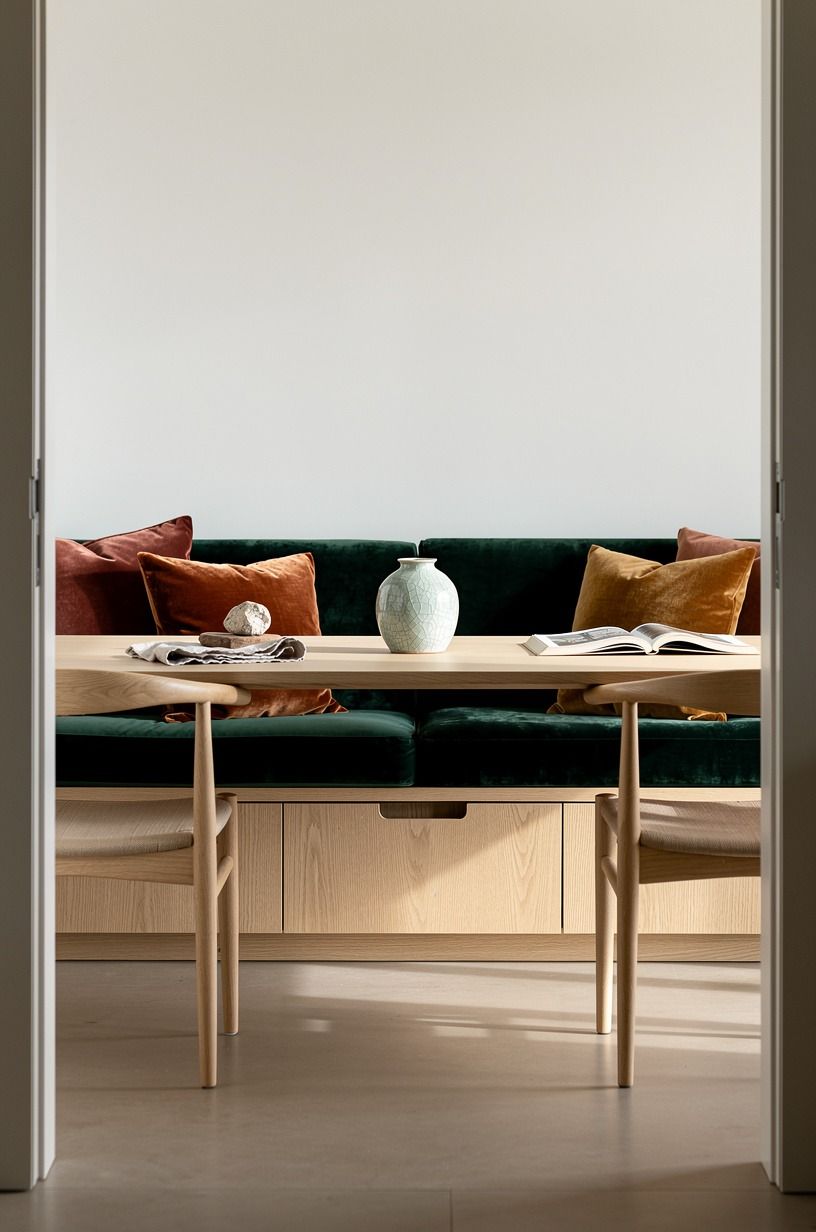
Storage is the argument that usually puts a bench over the top. If you build drawers below the seat, the nook starts doing the job of a sideboard, a toy bin, and an entry cabinet all at once.
In a small living room, that's not a bonus. That is the whole point.
Use paint-grade maple drawers with soft-close full-extension runners so you can reach the back without crawling on the floor. I prefer drawer fronts over lift-up lids because you don't have to clear the seat before opening them.
A simple brushed brass cup pull keeps the look refined instead of fussy. And yes, that matters when one cushion, one school bag, and one blanket somehow become six things before 8 a.m.
The cost is usually lower than people expect if you are working inside an existing nook. Here is the typical range I use when helping someone decide how far to go:
And for more hidden-seat examples, these bench storage ideas are worth a look. I wouldn't waste this wall on a plain bench if storage is what your home is missing.

7Tuck armless chairs around a tiny bistro table
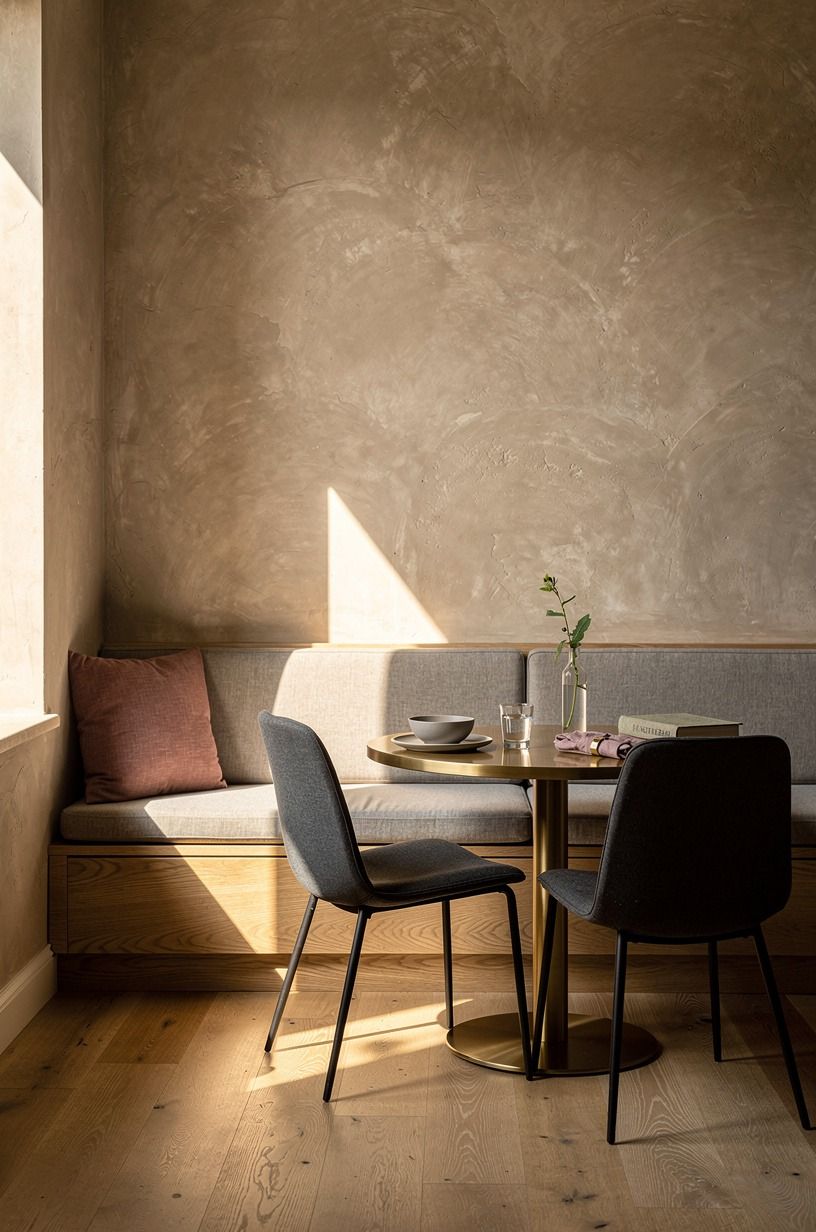
When your nook is barely a nook, chairs can beat a bench. Armless chairs slide in tighter, pull out faster, and keep a tiny bistro table from feeling swallowed. If you live in an apartment or a narrow living room corner, this is usually the cleaner answer.
Choose charcoal linen side chairs with a slim seat and a low visual profile. Around an antique brass bistro table, that darker tone can make the setup feel sharper without adding bulk.
A pair of IKEA TERJE chairs in black gets you most of the way there for under a hundred each. I made the mistake of using padded host chairs in a space like this once, and the room felt full before we even sat down.
But keep the table small and the seating nimble. A pedestal top around 30 to 32 inches is plenty for two, and you'll still have enough space to stand, pivot, and move on.
If you need more compact layouts, these small breakfast nook ideas are useful. In a truly tiny corner, the bench isn't always the hero. The chair is.
8Wrap the bench in performance linen cushions
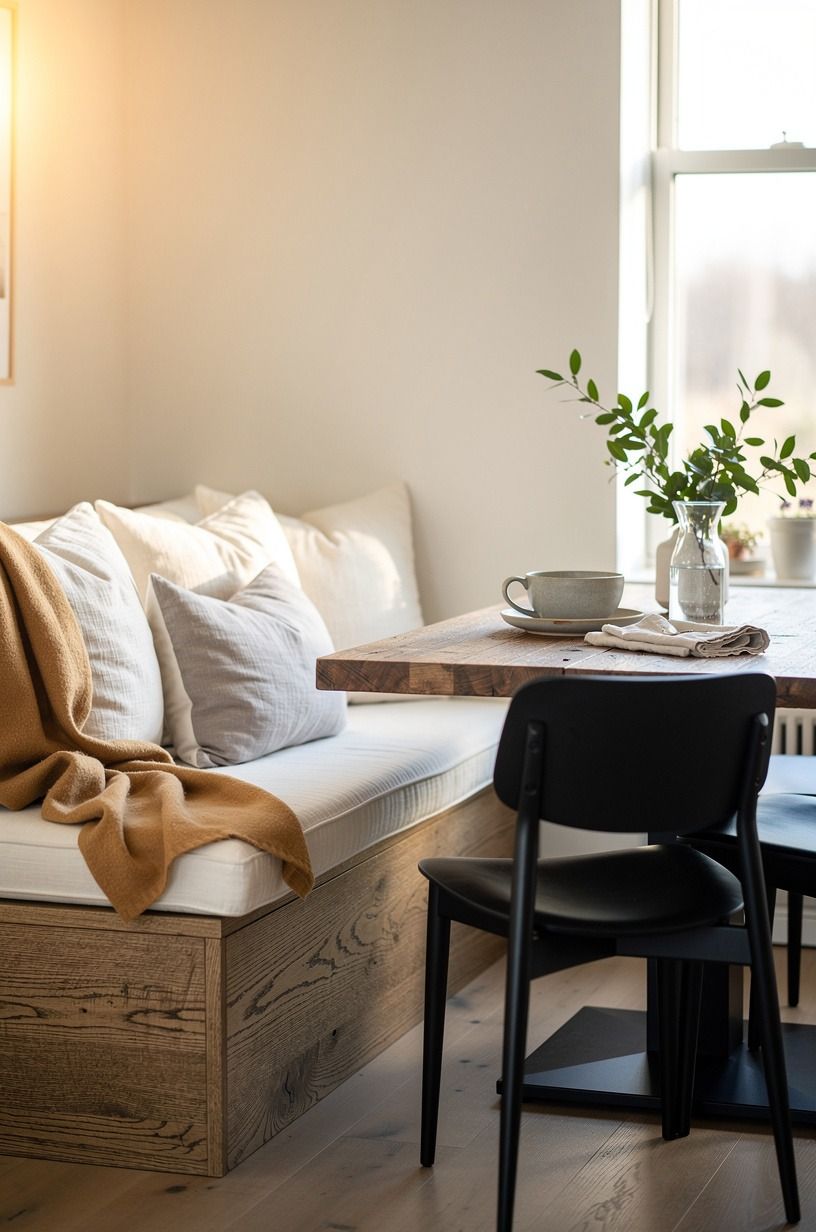
A bench feels better the second you stop treating it like raw millwork. Cushions add warmth, yes, but they also fix the biggest bench complaint, which is that the seat can feel flat and a little punishing after ten quiet minutes with coffee. You should not have to perch through breakfast.
Use performance linen in warm white so the bench still reads tailored, not overstuffed. I like boxed cushions with a clean edge because they hold their shape longer and look sharper next to black-accent chairs.
If you have pets or kids, the performance fabric is worth it. Spills happen.
Mornings don't wait.
Layer the cushion against darker pieces so it doesn't disappear. CB2 Primitivo black wood chairs or any matte black accent chair make the pale linen feel richer by contrast, and the whole pairing reads warm against a quiet wall.
If you want a full guide to building the seat first, this DIY breakfast nook bench walkthrough pairs nicely with the cushion idea. I'd never leave a straight bench bare if comfort is part of the brief.
9Use mismatched chairs for a collected breakfast nook
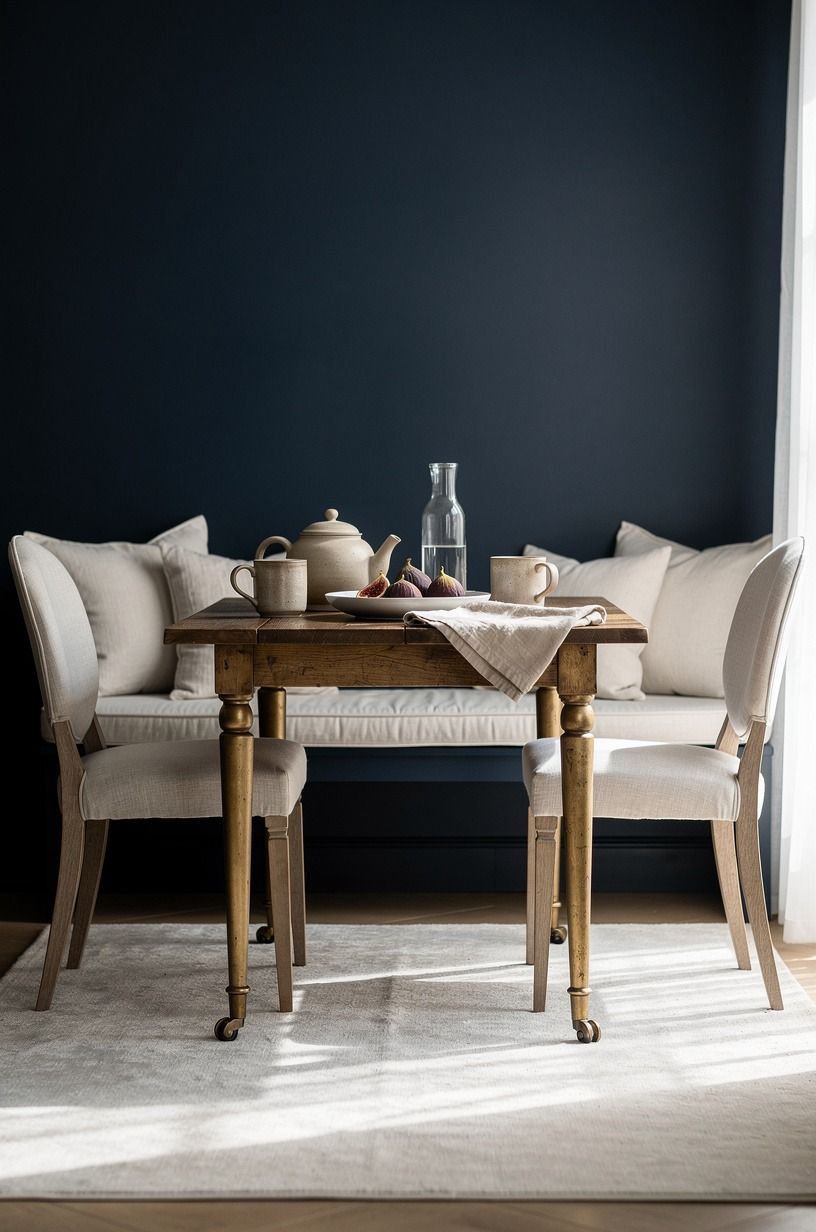
This is one of my favorite ways to make a bench feel less expected. A slim bench on one side can be very orderly, almost too orderly, so mismatched chairs on the other side bring the looseness back in. Suddenly the nook feels collected over time instead of bought in one click.
The mismatch should still share one thing. oak, rush, or painted wood chairs all work, but they need one common note such as color temperature, seat height, or finish. I'd not mix three bold silhouettes at once, because the table becomes the referee instead of the anchor.
Two personalities are enough.
Keep the living room in mind when you choose the odd pair. Sherwin-Williams Evergreen Fog SW 9130 nearby plays well with mixed woods and soft clay fabrics, especially when the bench itself stays simple.
An oak spindle-back chair and a painted rush-seat chair in cream make a calm mismatched pair. If you like a more relaxed, intimate morning corner, outdoor breakfast nook ideas for al fresco coffee oddly help with the mood.
They remind you that not everything has to match to feel right.
10Center a round rug beneath the nook
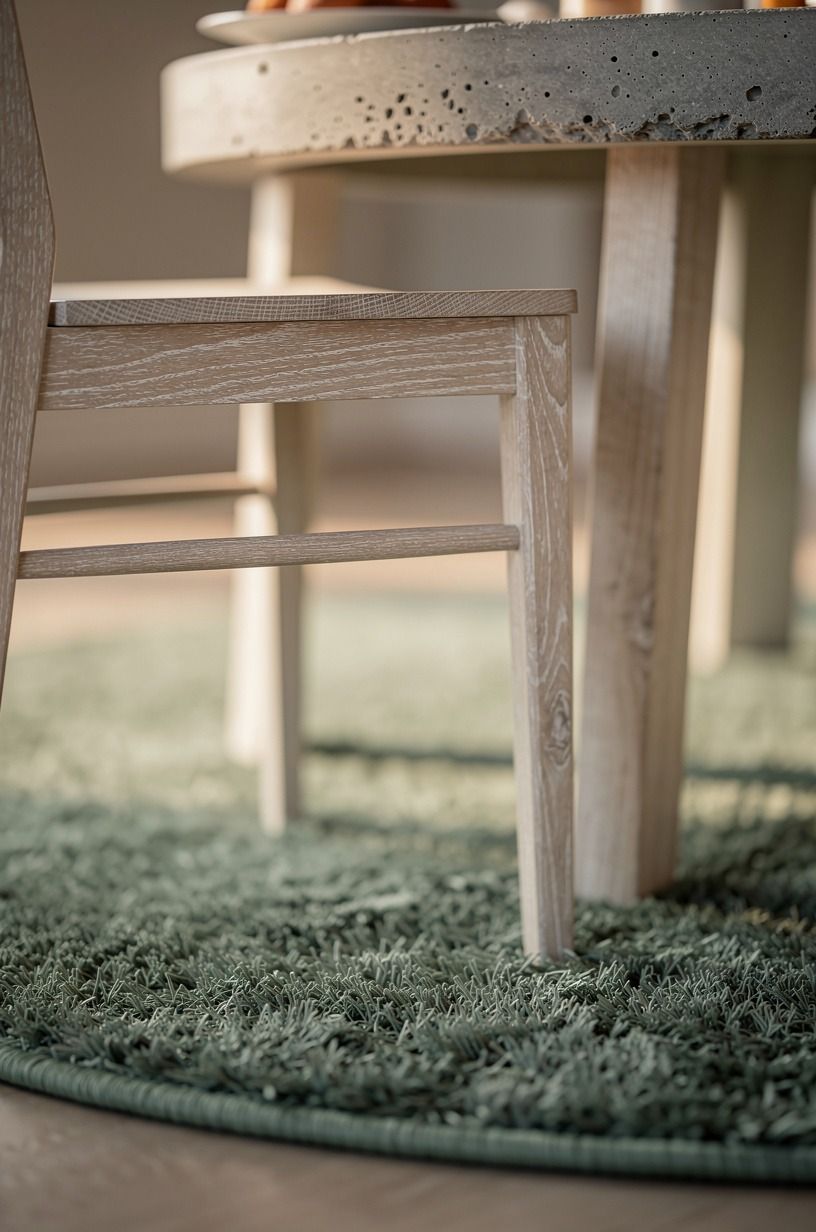
The rug is what tells the bench and chairs they belong to the same conversation. Without it, a breakfast nook beside the living room can feel like a table that drifted into the wrong zone. Put a round rug under the setup and the whole thing clicks into place.
Go bigger than your instincts. sage wool rug edges should extend far enough that front chair legs and the bench legs still sit comfortably on top, which usually means thinking in 8x10 or 9x12 logic even if the visible circle is smaller. Tiny rugs are a false economy.
They make furniture look accidental.
A rug also helps marry the nook to the rest of the room. natural white oak legs on the bench feel softer against sage than against bare flooring, and the round shape takes the edge off all that straight trim.
A hand-knotted wool rug in a quiet tonal stripe reads sophisticated and warm without shouting. If you are deciding shapes, round versus rectangular nook tables digs into why circles move better.
This is one of those changes you notice every single day!
11Frame the bench with tall cafe curtains
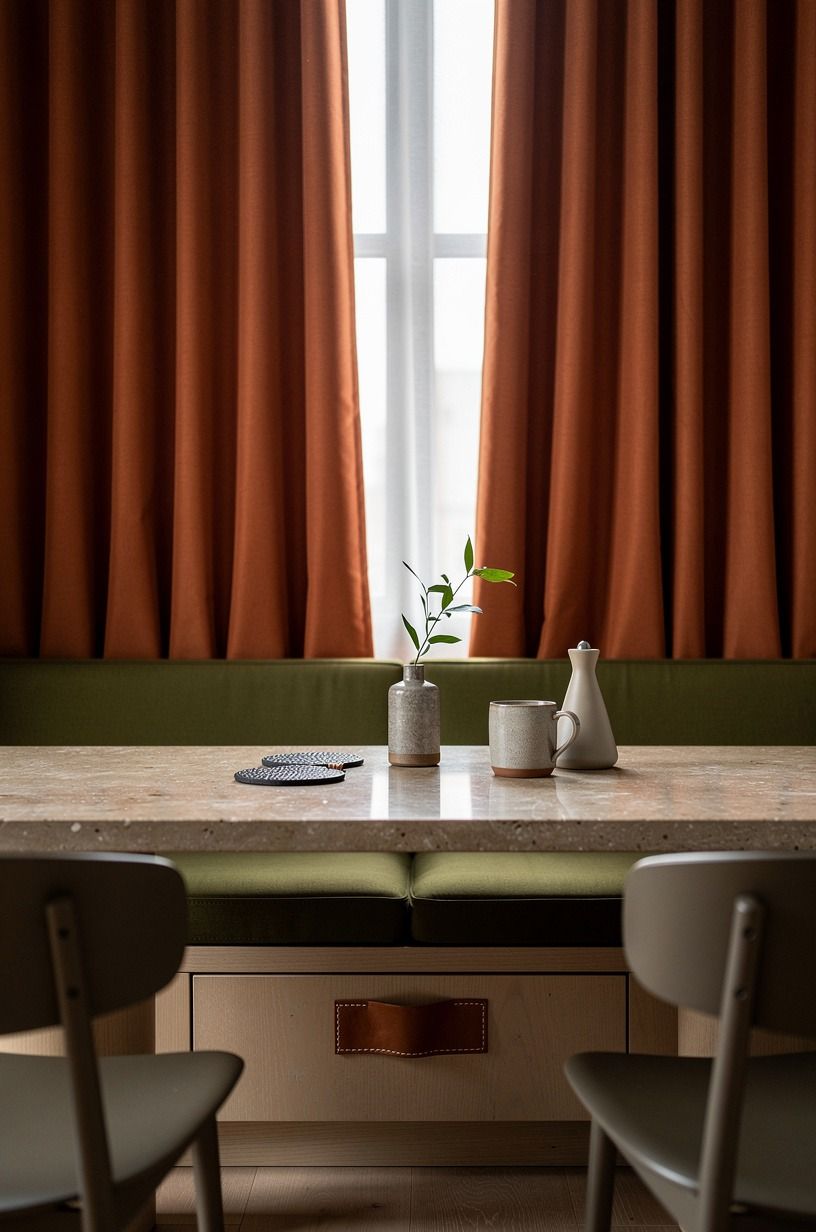
Curtains can make a bench feel built in even when it's not, and they're the easiest way to make a freestanding bench look intentional.
12Add chair cushions in one shared fabric
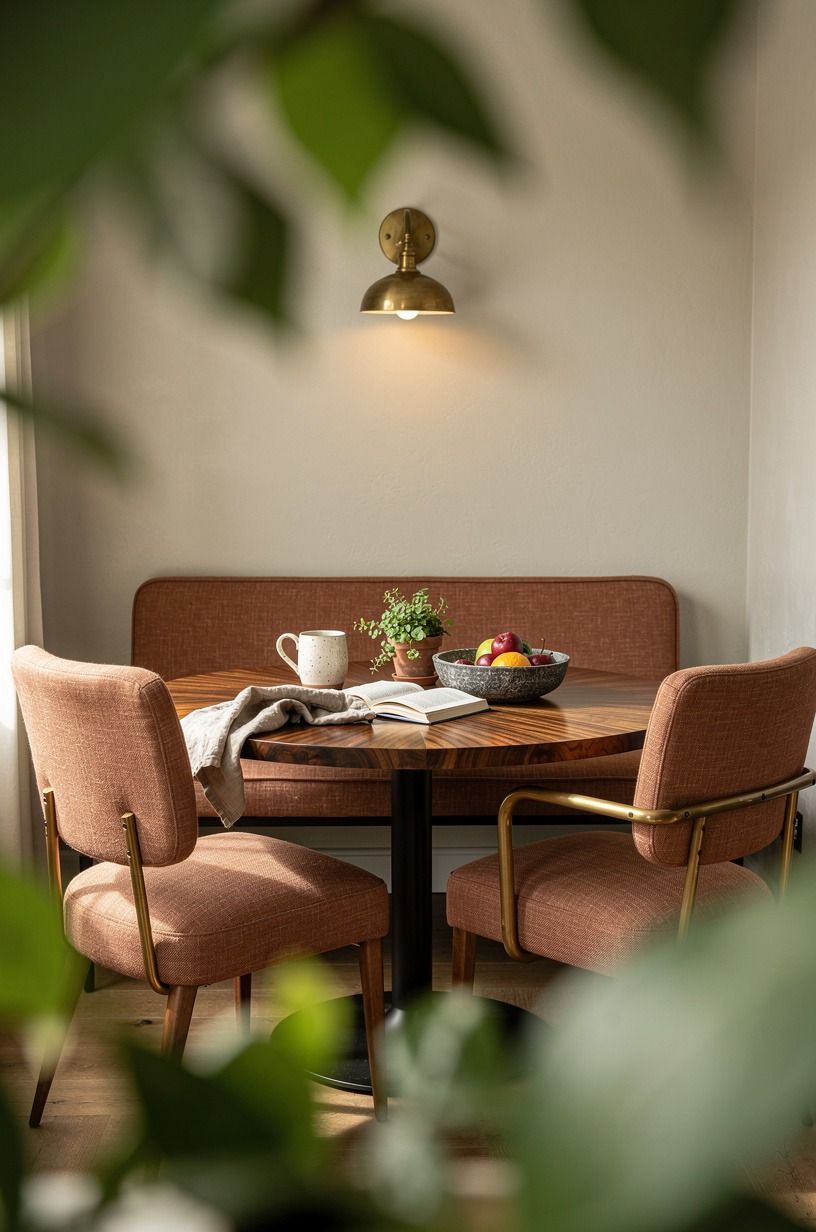
If your bench and chairs feel like they came from different homes, shared fabric is the fastest fix. Matching the chair cushions to the bench upholstery pulls the whole nook together without forcing matching frames, and you still get the movement and flexibility chairs are good at.
Try clay linen seat pads on the chairs when the bench already carries that same warm fabric. It is a small move, but it makes the off-center layout in the photo feel connected. I've done this with old marketplace chairs, and the result looked far more considered than the price tag suggested.
Keep the pattern quiet and the texture visible. IKEA JUSTINA chair pads are cheap, easy to recover, and a good starter if you are testing color before committing.
A washed cotton duck in soft clay reads warm against walnut, and a brushed cotton ticking in cream stays quietly elegant. If you want to push the nook warmer, painted vs stained kitchen cabinets is a helpful read for wood-tone decisions nearby.
Shared fabric beats matched chairs when the room needs softness more than symmetry.
13Float a backless bench beside the sofa
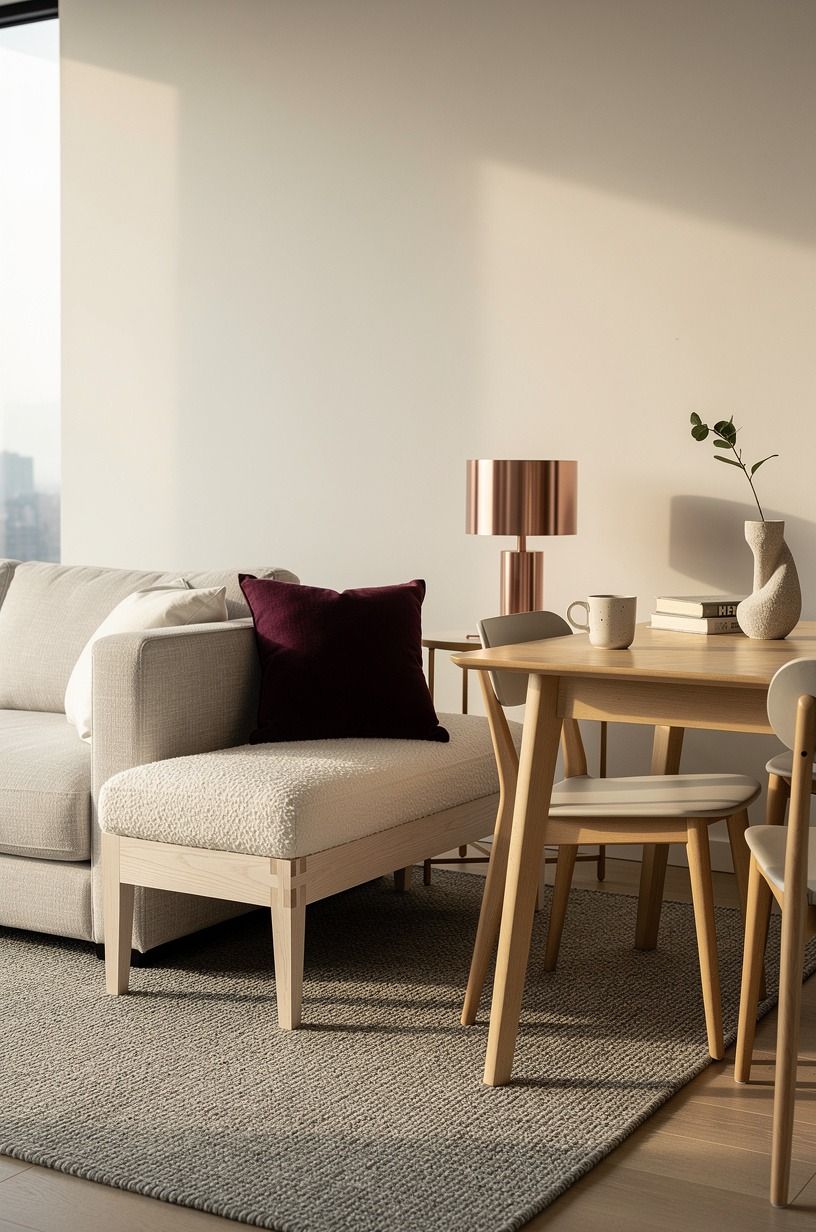
A backless bench is what I use when the breakfast nook is borrowing space from the living room instead of owning a wall.
14Layer pillows to soften a straight bench
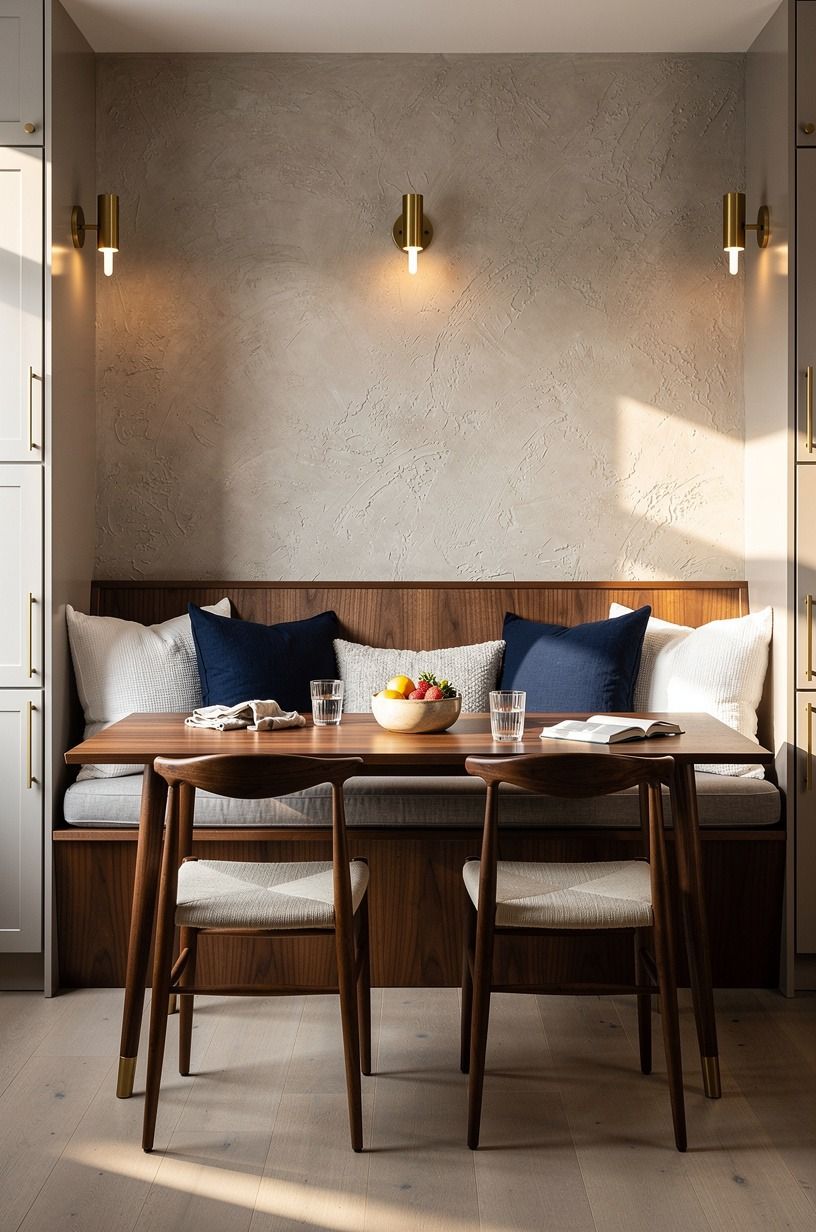
Some benches need less construction and more comfort. If the shape is simple and the wood is beautiful, pillows are often enough to make the seat inviting without hiding what made you choose it.
You sit down, lean back, and the whole nook stops feeling stiff. That is the win.
Use navy ticking pillows with a couple of warm white solids so the bench feels layered but not crowded. I prefer three pillows to five on a straight walnut seat, because you still want room for a body. Too many cushions turn a breakfast bench into storage for textiles you keep moving out of the way.
Pull one color from elsewhere in the living room so the nook feels linked. West Elm cotton stripe pillows can bridge navy, walnut, and pale walls without looking theme-y.
A single linen-blend solid pillow in a warm cream keeps the arrangement calm and welcoming. If your table shape is still undecided, this guide to round versus rectangular breakfast nook tables helps. A straight bench doesn't need built-ins to feel finished.
It needs restraint.
15Angle corner chairs toward the morning light
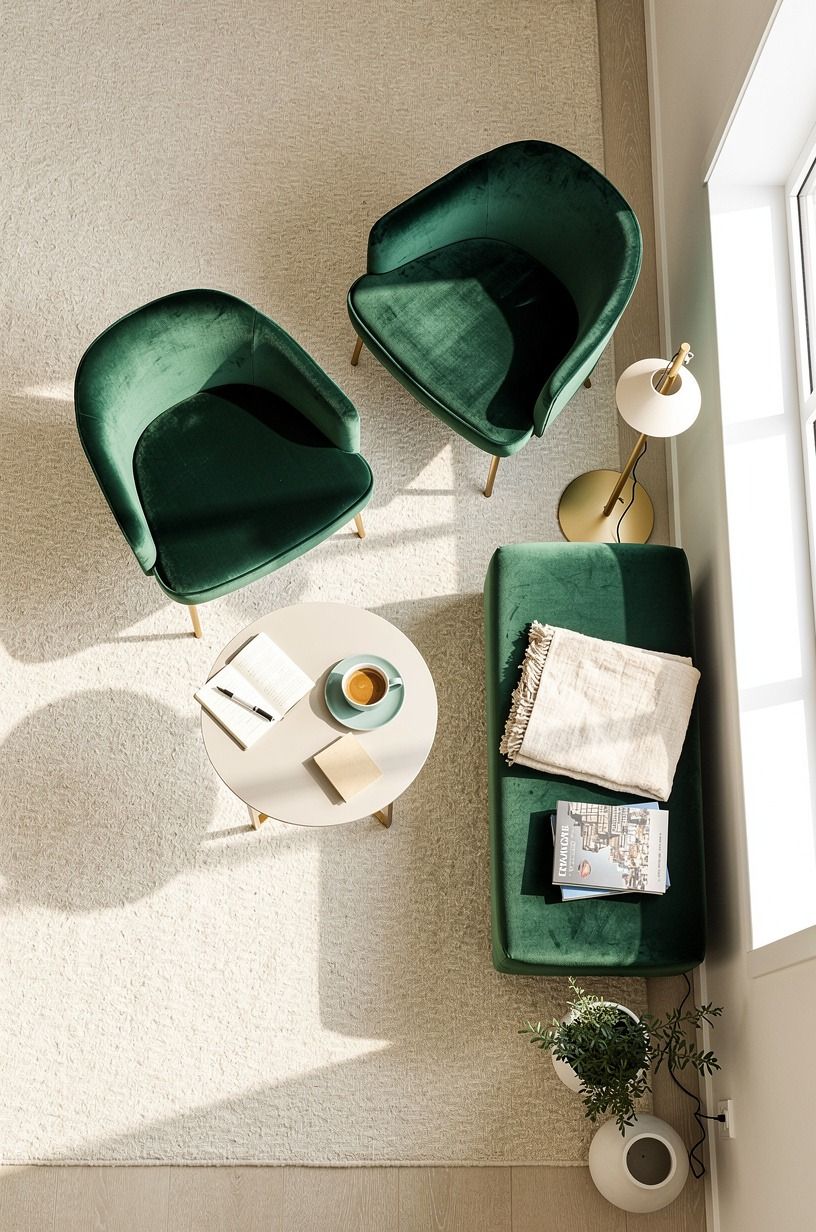
Chairs have one huge advantage over a fixed bench: they can chase the light.
16Match bench legs to the coffee table
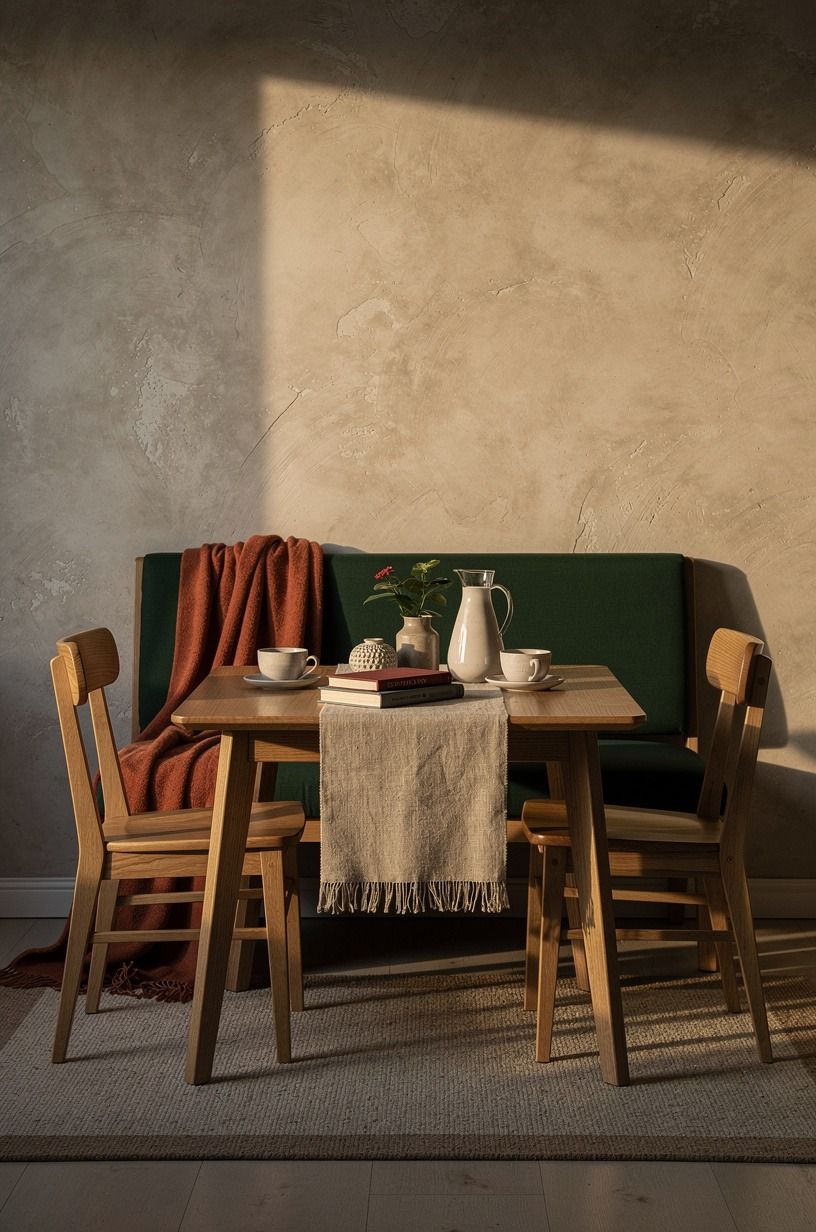
This is the detail that makes a breakfast nook beside the living room look meant to be there. If the bench legs echo the coffee table, your eye reads one language across both zones, and the seating choice stops feeling separate from the rest of the room.
Small move. Big payoff!
Use natural oak legs on the bench if your coffee table already carries that same matte, warm finish. A leg thickness in the 1.75-inch range usually reads as a refined cousin to most coffee tables.
I like a leg thickness that feels close too, because mismatched scale is where these pairings go wrong. You don't need perfect duplication, but you do need cousins, not strangers.
The match should feel organic and gentle, not forced.
That match matters even more if your sofa is 35 to 40 inches deep and the coffee table sits around 16 to 18 inches high, because the living room proportions are already speaking clearly. Small breakfast nook ideas that fit almost anywhere can help if you are merging zones. I'd rather match legs than force the same chair finish everywhere.
It looks smarter.
Why Does This Choice Change the Whole Room?
People talk about benches and chairs like it's a tiny breakfast decision, but I don't think that's all it is. I think it's a traffic-flow decision, a comfort decision, and quietly, a mood decision too.
I learned that the hard way after treating a nook like a catalog page instead of a place I had to move through while half awake. The pretty option was four matching chairs.
The useful option was a bench on the wall and two chairs I could pull out without scraping through the whole room.
What changed my mind was not one dramatic makeover. It was repetition.
I kept noticing which setup made the morning easier, which one let someone drop into the corner with a laptop, which one made the living room feel connected instead of split in two. A bench isn't always better. If the nook is very small, loose armless chairs around a pedestal can be the cleaner answer.
But when the breakfast spot sits inside a living room, a bench often solves two problems at once: it saves floor space and it creates a visual edge that the room can build on.
I also think people spend in the wrong order here. They obsess over the chair shape first, then wonder why the corner still feels off.
I'd put the money into what touches the room structure. The rug.
The bench cushion. The window treatment.
The wood finish that talks to the coffee table. Those are the parts that make the nook feel like architecture instead of extra furniture.
A 9x12 wool rug and a pair of washed linen curtains will do more than any sculptural chair you can name. Then, if the budget allows, you can add the prettier chairs.
If not, fine. A simple pair from IKEA can still work if the layout is doing the heavy lifting.
And this is the part I wouldn't ignore: the breakfast nook has to support the life happening around it. Maybe that's homework, maybe it's coffee before work, maybe it's a second place to sit when the sofa is full.
If the room needs flexibility, choose chairs. If the room needs calm and hidden function, choose the bench.
I've tried to force one answer on every space before, and it never holds. The right pick is the one that makes your morning feel less negotiated.
What People Always Want to Know
What is the best Breakfast Nook Bench vs. Chairs: Which Should You Choose? for a small living room?
A wall bench plus two slim chairs is usually the best setup for a small living room. You get more seats with less floor clutter. Look at a simple IKEA KALLAX bench with compact chairs from Article or Target Threshold, then keep the table round so you can move around it easily.
Where can I buy Breakfast Nook Bench vs. Chairs: Which Should You Choose? pieces on a budget?
I'd start with IKEA, Target, and Wayfair because you can mix a basic bench with better-looking chairs without blowing the budget. For the best savings, check Facebook Marketplace too. A secondhand bench plus fresh cushions often looks better than a cheap matching set.
See small breakfast nook ideas for layout help.
How much does a Breakfast Nook Bench vs. Chairs: Which Should You Choose? makeover cost?
Most breakfast nook updates land around $300 to $1,200 if you are swapping pillows, paint, art, or a rug, and more like $2,500 to $8,000 if new furniture and lighting are involved. Free wins count too. Moving the table, editing chairs, and rehanging curtains can change a lot.
Can I create a Breakfast Nook Bench vs. Chairs: Which Should You Choose? on a budget?
Yes, and you don't need custom millwork to get there. The best budget-friendly moves are simple: repaint the corner, recover cushions in one fabric, and pull in a marketplace chair pair. If you want a bench without paying custom prices, this DIY breakfast nook bench guide helps.
Is a Breakfast Nook Bench vs. Chairs: Which Should You Choose? worth it in a small space?
Yes, it's worth it because a small space benefits from seating that works harder. A bench gives you more function per square foot, while chairs give you faster movement. If the nook touches the living room, keep the table centered on the rug so the whole area feels deliberate.
Is Breakfast Nook Bench vs. Chairs: Which Should You Choose? a good idea for a rental?
Yes, rentals can handle this setup beautifully if you keep the changes removable. Think tension-rod cafe curtains, loose cushions, peel-and-stick color moments, and a freestanding bench you can take with you later.
It works! For a lighter version of the same mood, sunroom breakfast nook ideas can spark easy no-damage swaps.
The Wall Bench First Rule
If I had to pick one, I'd start with the wall bench under the window. It solves seating and traffic at the same time, which loose chairs rarely do in a tight room. Pin that layout for later and read small breakfast nook ideas that fit almost anywhere next.