
 by
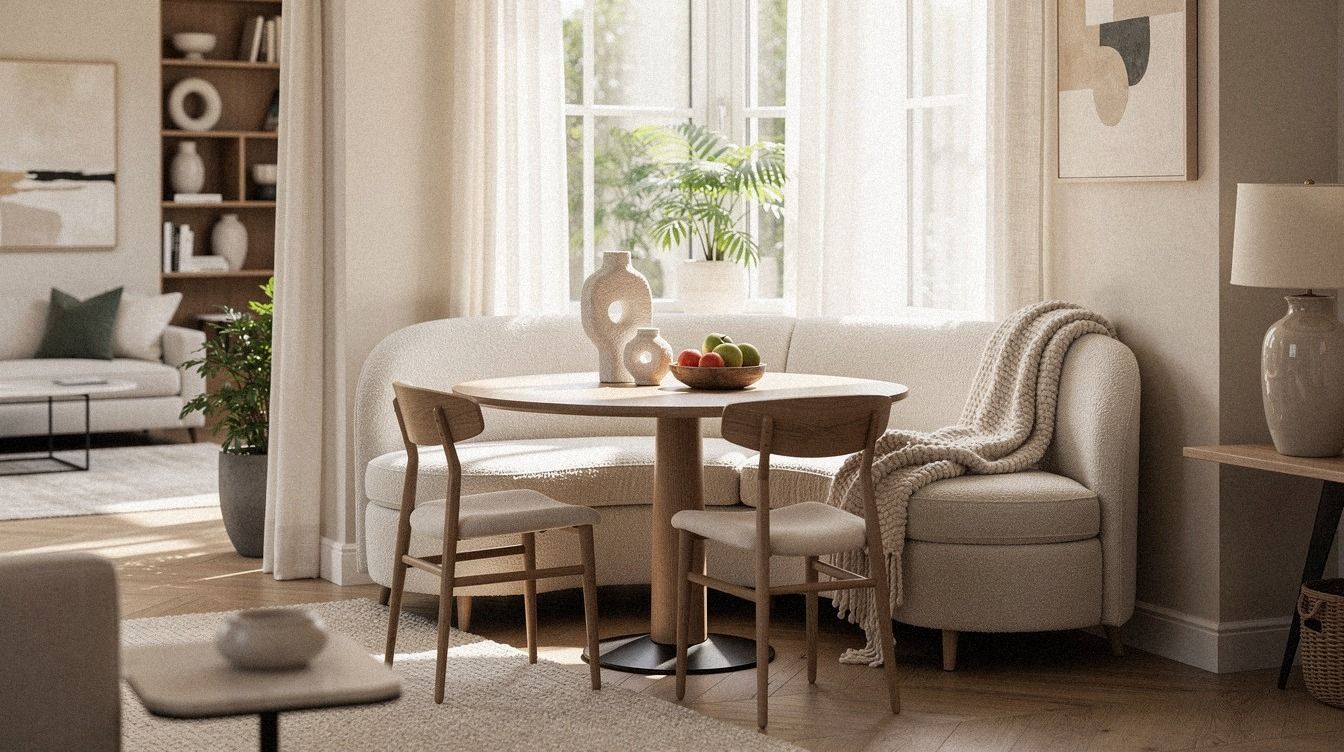
by Small breakfast nook ideas that fit almost anywhere do work, even when your living room corner barely clears a sofa depth of 35 to 40 inches. I know because mine started as the spot where bags landed, mail spread out, and nobody wanted to sit. Then I stopped trying to force a full dining room into a small apartment and built one tight, useful zone instead. It took restraint, not square footage.
I did this after weeks of eating off the coffee table and promising myself I'd solve it later. Later never came.
So I measured the window wall, pulled the furniture two inches at a time, and made a nook that finally felt like it belonged there. It felt absurdly good!
Here's what it looked like before
Before this makeover, the corner felt borrowed from three different rooms. The linen sofa sat too close to the window, a random side chair floated nearby, and the little table I kept trying there was always the wrong shape. You know that annoying setup where you can sit in it, but you can't move around it?
That was mine.
There wasn't one dramatic problem. That was the problem.
The bench was too deep, the art was too high, and every piece wanted more floor than the room could spare. I kept thinking I needed a bigger living room when what I really needed was a smaller plan.
If you're dealing with the same tension, my notes on small bedroom ideas helped me think in zones instead of whole rooms.
- Claim the window corner with a curved banquette
- Pull a bistro table close to the sofa
- Add a round pedestal table for flow
- Tuck storage benches under the wall art
- Frame the nook with washable cafe curtains
- Choose armless dining chairs that slide fully in
- Layer a tiny rug beneath the breakfast table
- Mount a picture light above the corner
- Use a wall shelf for mugs and bowls
- Slip cushions onto the narrow window bench
- Place a slim cabinet beside the nook
- Hang one oversized mirror behind the table
- Style a tray for everyday coffee things
- Add a plug-in sconce over the banquette
- Finish with one vase on the table
1Claim the window corner with a curved banquette
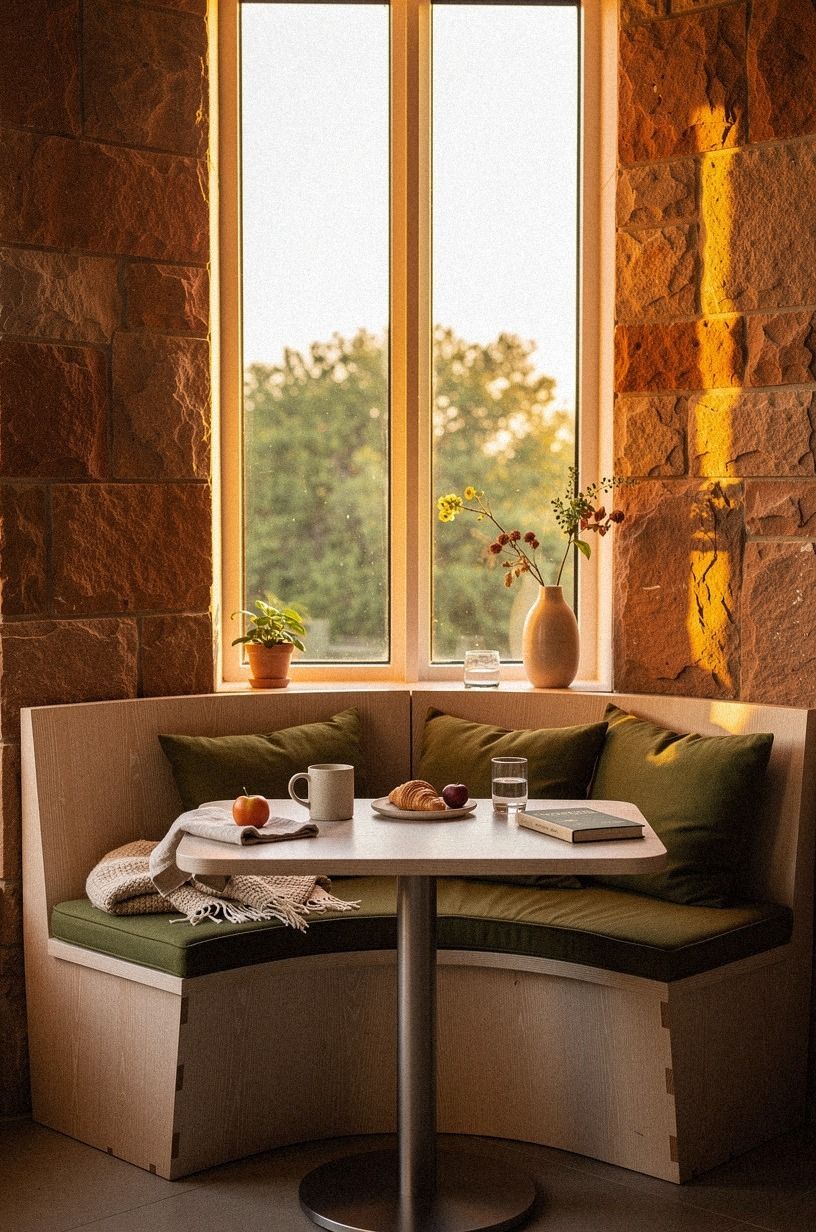
I started with the window corner because it already had the best light, and a small kitchen corner nook works faster when the architecture does half the job for you. A curved cerused white oak banquette softened the hard angle under the tall panes, which mattered more than I expected. The curve gave my knees room, let the compact table sit closer to center, and stopped the nook from feeling like a leftover booth jammed into a living room.
You can see the olive cushions doing real work here too. I kept them slim so the seat didn't lose depth, and I skipped overstuffed backs because they'd steal inches you need for breakfast, laptops, and real elbows.
But the finish is what sold it. That pale white oak grain catches morning light and keeps the corner airy instead of heavy.
If you're planning around another tight zone, your small bedroom finally feels like a couple lives there 14 ideas inside has the same lesson: curves calm a cramped plan.
2Pull a bistro table close to the sofa
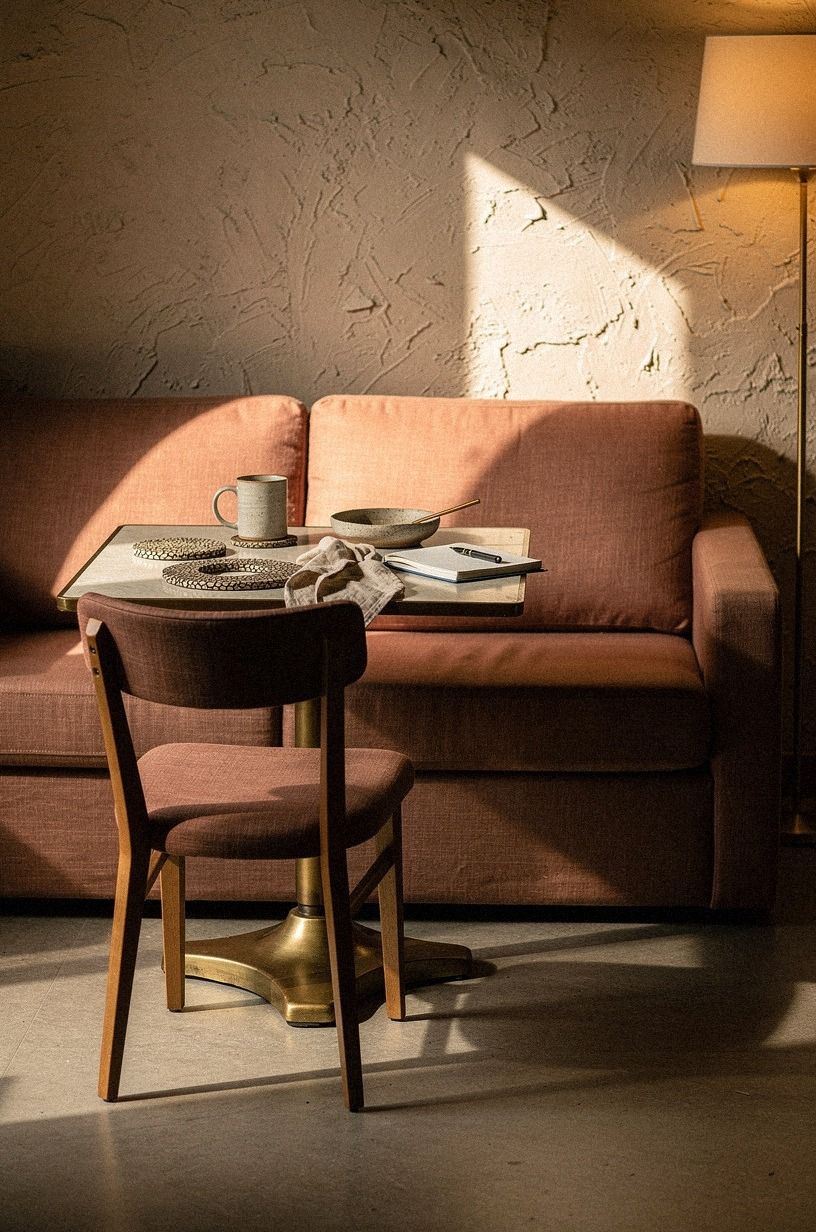
This was the first move that made the nook feel intentional instead of temporary. I pulled a small bistro table closer to the sofa than I thought I should, and suddenly the whole area behaved like one room.
You don't need a polite gap just because dining tables usually get one. In a dining table for small area setup, proximity is the point.
I learned that the hard way. I kept leaving six or seven unnecessary inches between the table and the linen seating, which only created dead floor and made the chair look stranded.
Once I nudged the table in, one chair could tuck neatly while the sofa acted like the third wall of the nook. And honestly, this is where small spaces get better than big ones. You can borrow structure from the furniture you already own.
If you're trying to make a compact plan work for more than one person, your small bedroom actually works for two you just need these setups 15 ideas explains that same close-fit logic.
3Add a round pedestal table for flow
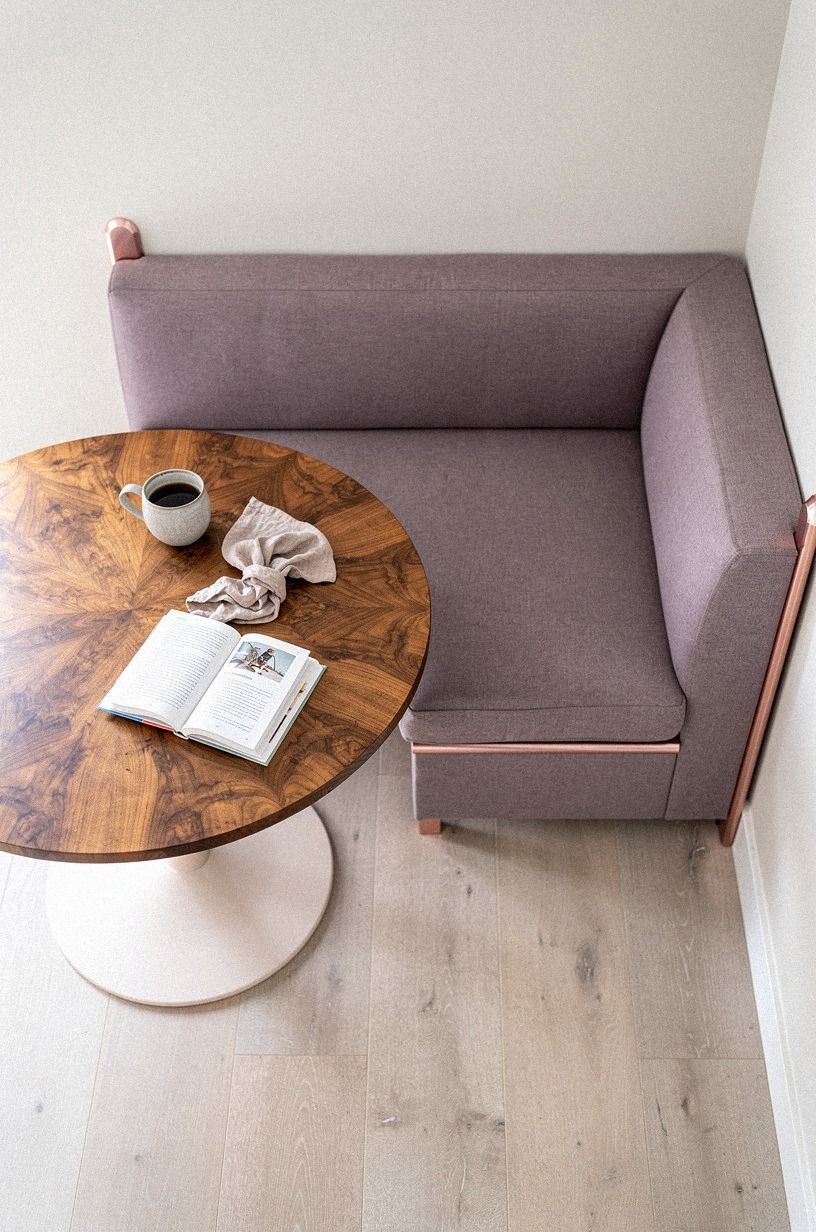
A round pedestal table changed the traffic pattern right away. No corners to dodge, no chair leg catching on the rug, no weird shoulder turn when you pass through with coffee. In small space dining ideas, flow matters more than surface area, and a single centered base gives you more of it than four busy legs ever will.
I pushed mine slightly to one edge beside the compact banquette so the walkway stayed open, and that one decision made the nook feel twice as easy to live with. You can also cheat the room visually here.
A round top reads lighter, especially when the finish is warm and the base isn't chunky. But I'd skip a bulky farmhouse pedestal in a nook this size.
The airy oak top works because you still see floor around it, which is what keeps the corner from closing in.
4Tuck storage benches under the wall art
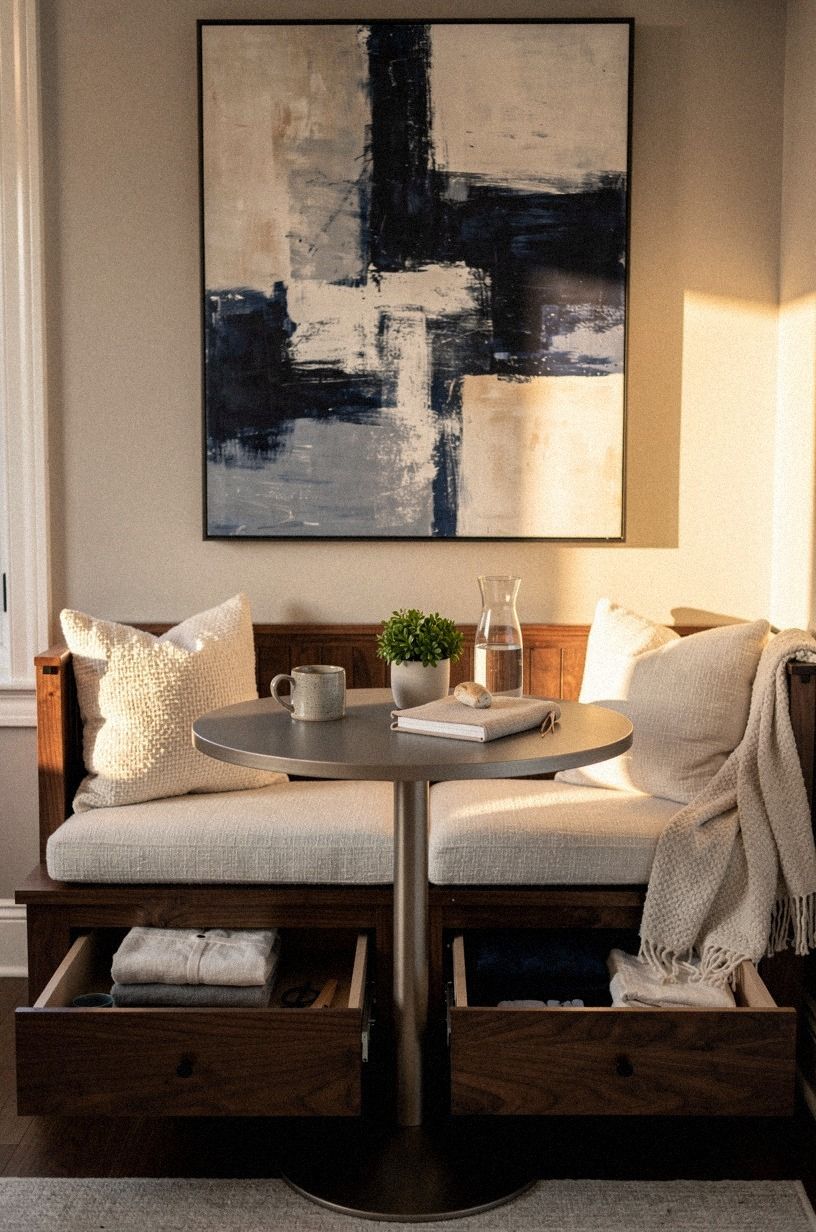
Storage had to disappear or it would take over the room. I slid walnut bench drawers under the wall art so the practical part sat low and the visual weight stayed anchored.
That sounds obvious now, but I wasted time looking at open shelving first, and it only made the nook feel busier. Drawers win when you want clutter gone in ten seconds.
The wall art above mattered too. With the benches tucked underneath, the framed piece gave the whole zone a clean vertical line, while the table and the two boucle cushions kept the middle soft.
You want hidden storage here, not heroic storage. A nook this small doesn't need a statement cabinet pretending to be furniture. It needs somewhere to put placemats, chargers, and the ugly packet of sweetener you don't want to see.
For another tiny-space storage lesson, small kitchen cabinet ideas that maximize storage helped me stop wasting wall space.
5Frame the nook with washable cafe curtains
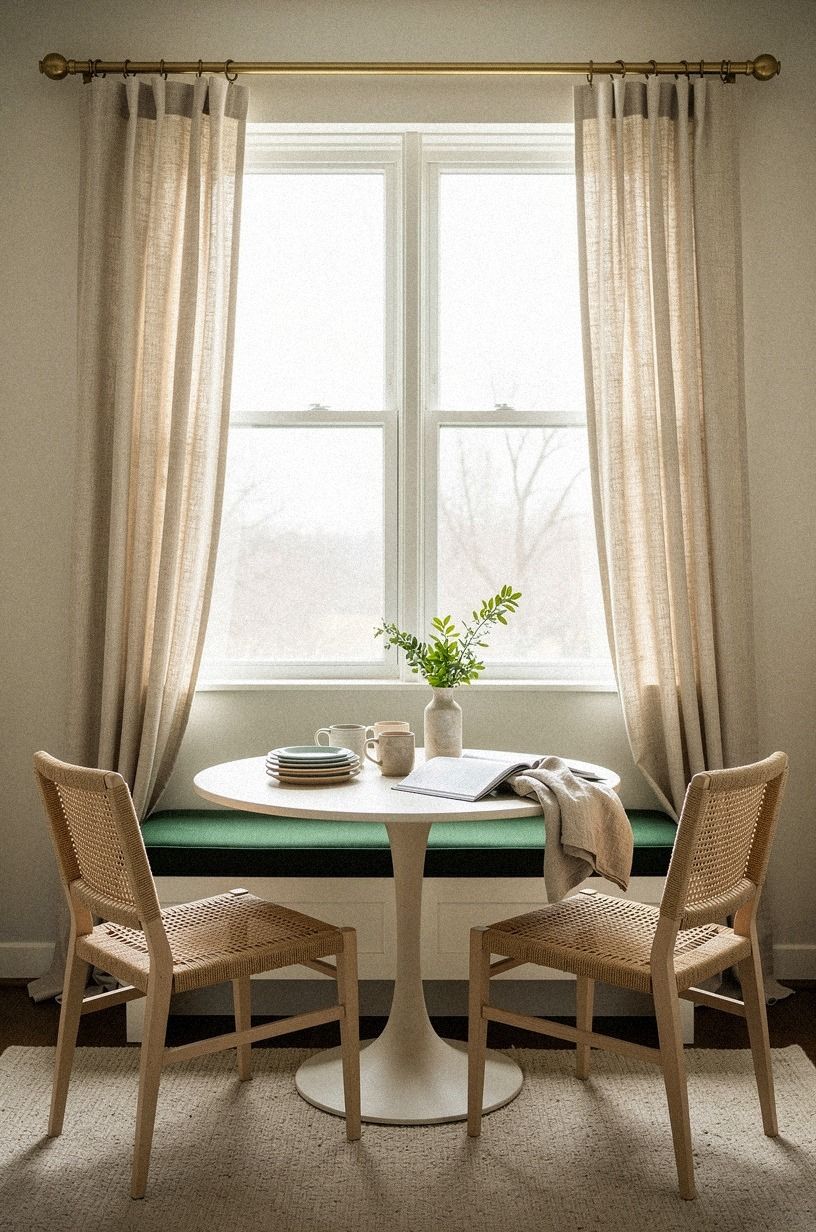
Cafe curtains made the window corner feel finished without blocking light, and that balance is the whole game in corner breakfast nook ideas small spaces. I used washable linen cafe curtains because the nook sits in my living room, not behind closed kitchen doors.
Steam, fingerprints, spilled coffee, pollen. Life happens there.
But the airy panel height is why this works. Full drapes would've swallowed the petite table and slim bench, but half-height fabric frames the zone while keeping the top half bright.
And yes, washable matters more than romantic fabric names. I love a moody textile, but if you can't toss it in the machine after a syrup splash, you'll resent it.
I kept the palette close to Benjamin Moore Revere Pewter HC-172 on the walls, which let the olive and wood tones carry the warmth instead of the curtains shouting for attention. If you want another example of soft materials doing space work, your small bedroom finally feels like a couple lives there 14 ideas inside handles fabric the same restrained way.
6Choose armless dining chairs that slide fully in
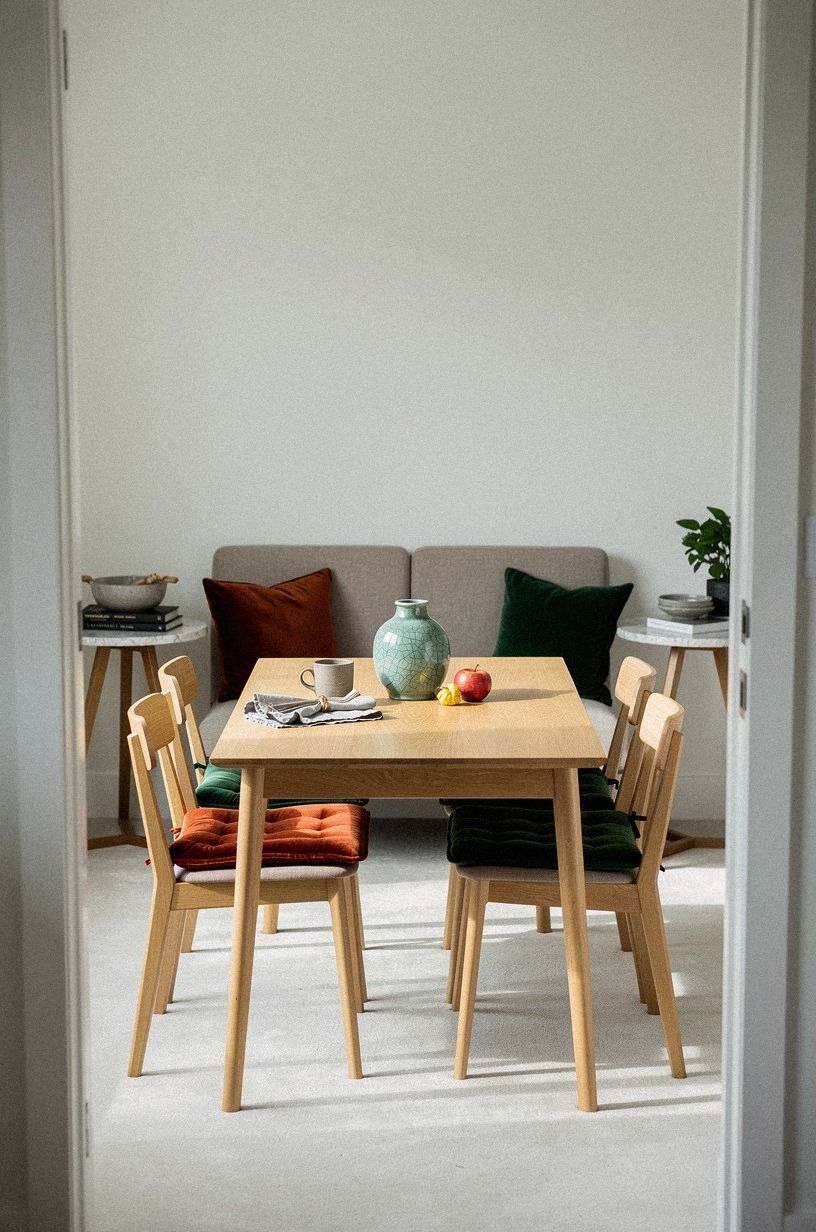
Armless chairs are one of those boring choices that end up saving the entire room. Mine slide fully under the table, which means the nook looks centered through the doorway even when nobody's sitting there. In a small breakfast nook, that visual quiet counts.
You need furniture that knows when to disappear.
I tried a chair with a little flare at the elbow first, and it was a mistake. Pretty from the front, annoying every single day!
It caught the table edge, blocked the path, and made the whole corner feel tight. Once I switched to armless dining chairs with a slim profile, the compact seating zone finally looked edited.
But do not go so skinny that the chair feels mean. A seat with a little cushion and a warm oak frame still gives you comfort without claiming more floor than it earns.
If you are comparing seating footprints, your small bedroom actually works for two you just need these setups 15 ideas helped me think about what can tuck fully out of the way.
7Layer a tiny rug beneath the breakfast table
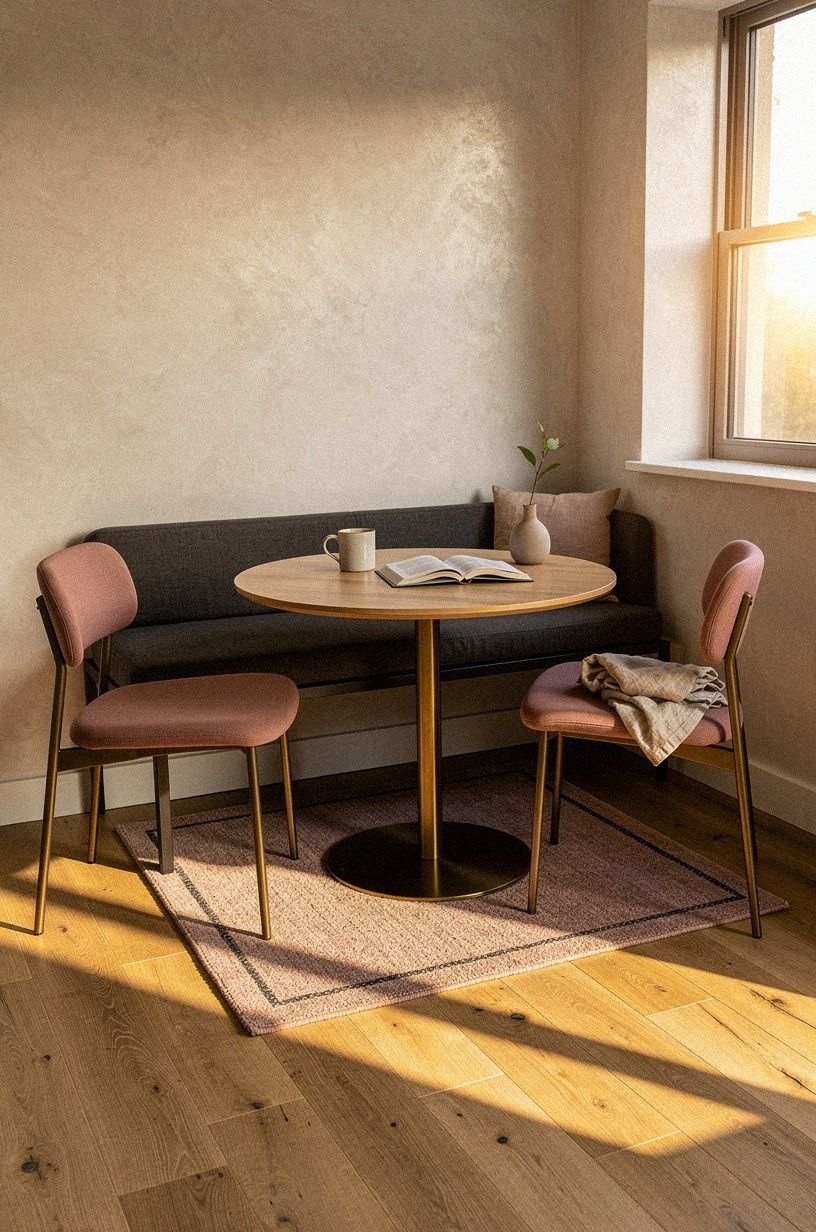
A tiny rug sounds risky, but it anchored the nook better than a larger one because it stayed loyal to the table instead of drifting into the rest of the living room.

8Mount a picture light above the corner
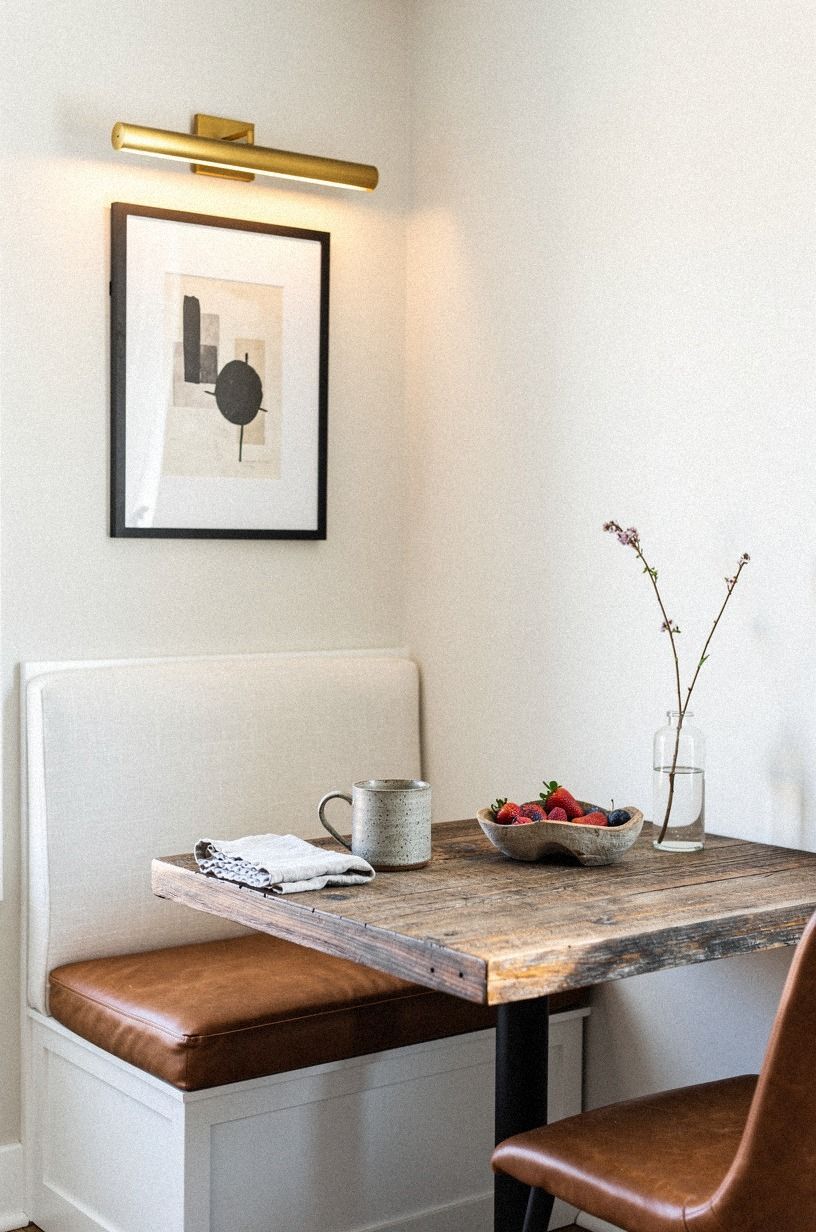
This is where the nook stopped feeling improvised. A warm picture light over the framed art gave the corner its own evening mood, and you don't need a giant fixture to get that effect. You just need one source that says this spot matters after sunset too.
I kept the three-quarter composition in mind while styling it. Compact banquette below, small table in front, framed art above, then that soft beam washing everything together.
That's my little Three-Height Light Stack, and it works because your eye gets a top, middle, and base in one glance. But I'd skip cold bulbs here.
The whole point is warmth, not brightness. A nook like this should feel like 7 p.m. even at 4.
And if layered light is what your living room lacks in general, small bedroom mattress ideas oddly helped me think about vertical balance more than most living room guides did.
9Use a wall shelf for mugs and bowls
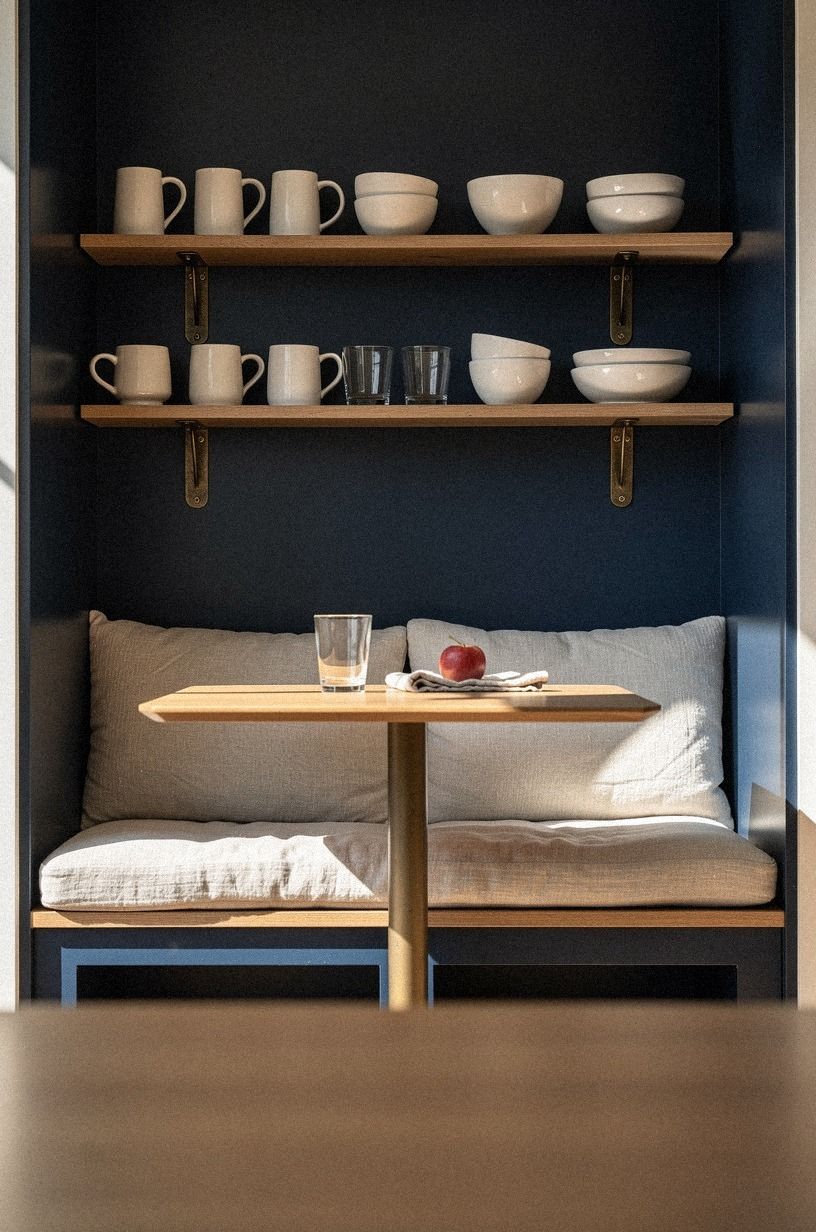
I needed the nook to hold real breakfast things, not just look nice in photos, so a wall shelf went up fast. One oak wall shelf above the bench gave me room for mugs, bowls, and the few pieces I reach for every morning. You can see how the symmetry helps here too.
The compact table and centered bench stay calm because the shelf isn't trying to be a whole cabinet.
But this is also where I stopped pretending closed storage had to do everything. Open storage is fine when it's selective. Three stacks, maybe four.
A couple of stoneware mugs, a bowl stack, and one small canister. That's it. But do not overstyle a nook shelf like a living room bookcase.
You need grab-and-go function more than personality here. Who wants to move a ceramic bird every time they pour cereal?
Not me. If you want more tiny-space storage logic, small kitchen cabinet ideas that maximize storage is worth a look.
10Slip cushions onto the narrow window bench
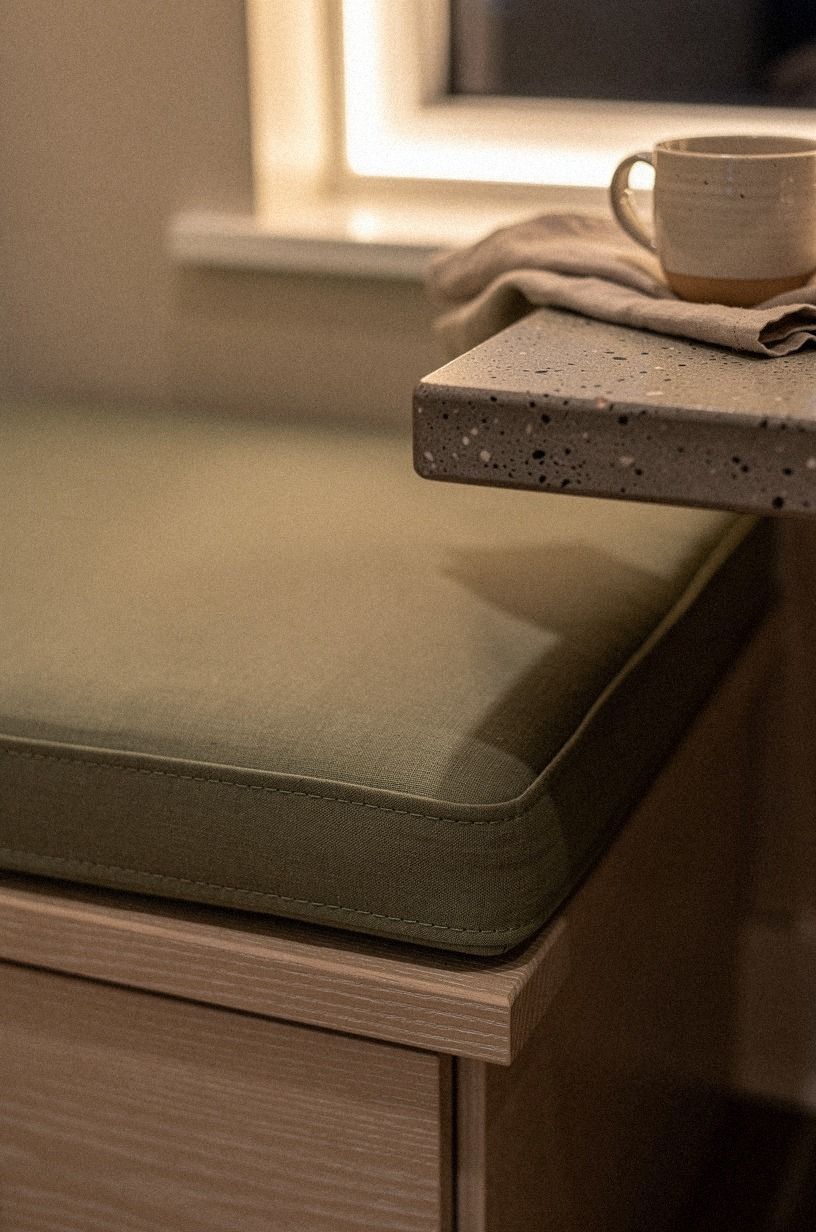
The bench looked better the second I treated the cushion like tailoring instead of fluff.
11Place a slim cabinet beside the nook
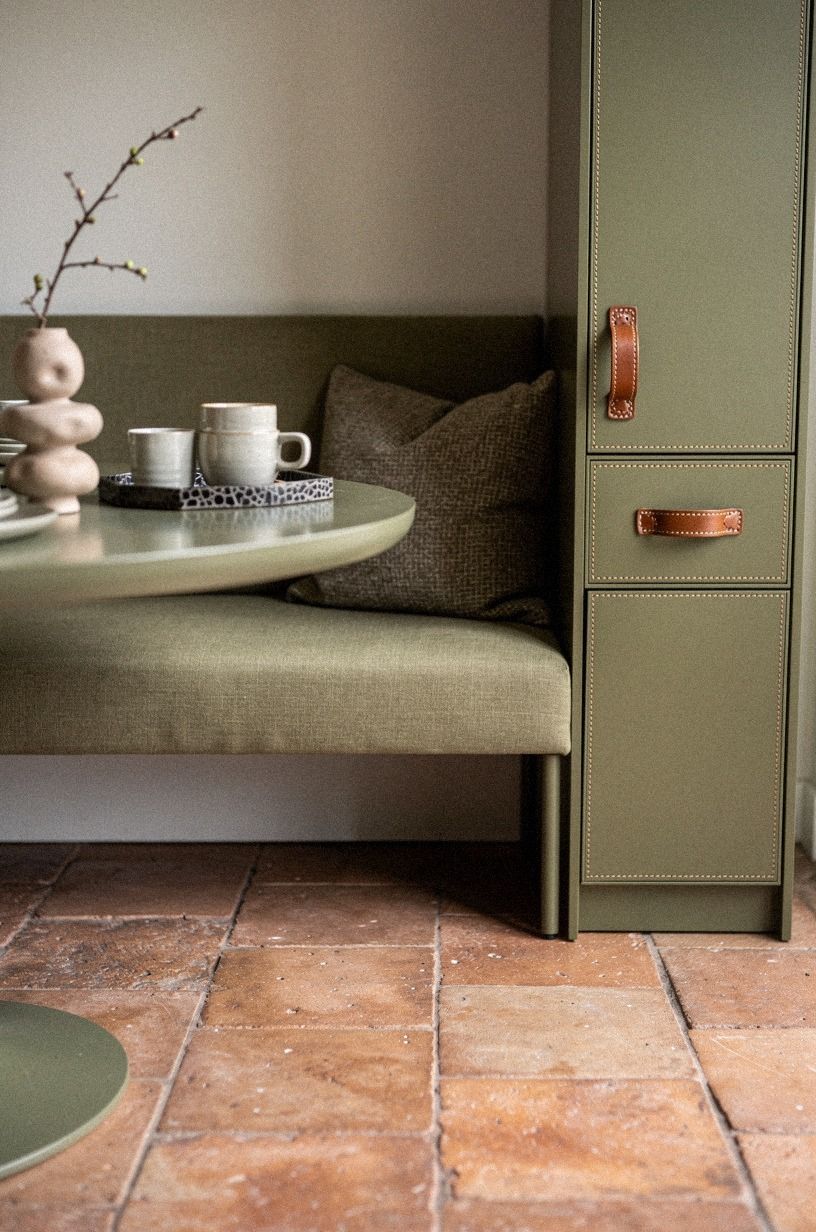
I didn't want the nook to become the drop zone for chargers, tea bags, and random paper, so a slim cabinet went beside it. The scale matters. A narrow storage cabinet can stand next to the bench without bullying the table, especially when the cabinet depth stays visually lighter than a standard sofa arm.
I kept the top almost clear on purpose. One tray, one small stack of napkins, and done.
That is my One-Surface Mercy Rule because the minute a side cabinet becomes a styling stage, your breakfast nook starts looking like it works for Instagram instead of your morning. But this piece absolutely earns its keep.
Hidden storage beside the seating lets the table stay open, which is what makes the centered bench and the low view across the surface feel calm. If you need more hidden-storage examples, small kitchen cabinet ideas that maximize storage makes the same case in a tighter room.
12Hang one oversized mirror behind the table
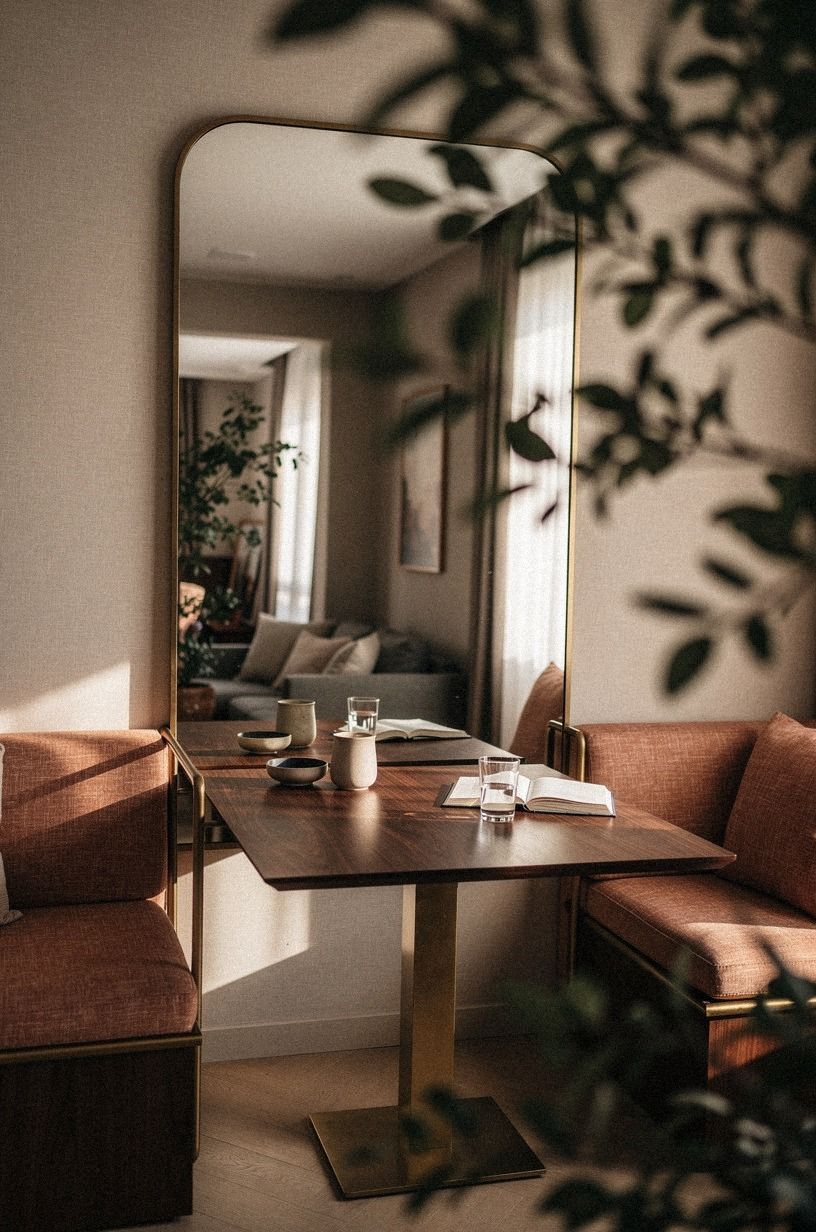
An oversized mirror behind the table gave me more visual space without needing more square footage, and I know that sounds like decorating advice from 2009.
13Style a tray for everyday coffee things
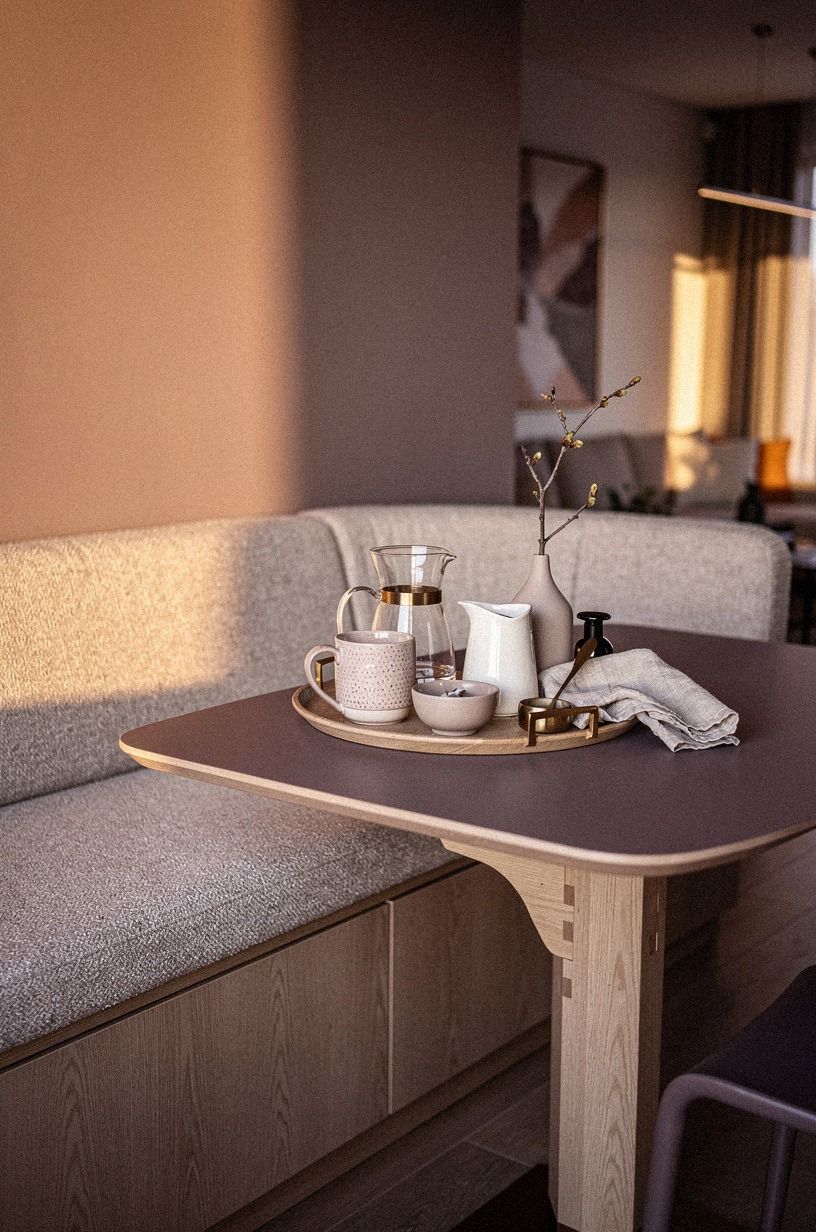
A tray was my answer to the stuff that always wanders onto a breakfast table and never leaves. I set a low wood tray on the compact table with the coffee things I touch every day, and the diagonal wide-angle view proves why it works. The tray corrals the clutter, but it also gives the curved seating a center of gravity.
You do not need much. Mugs. Sugar. A small jar of spoons.
Maybe a little creamer if that's your routine. In a small space dining ideas setup, repetition feels heavier than variety, so I'd rather use one good ceramic canister than five tiny accessories. But the real win is speed.
When you need the table clear for lunch, you lift one tray instead of clearing twelve objects one by one. That is the kind of convenience that keeps a nook usable.
If your mornings need the same corralled feeling elsewhere, small bedroom ideas translates that habit nicely.
14Add a plug-in sconce over the banquette
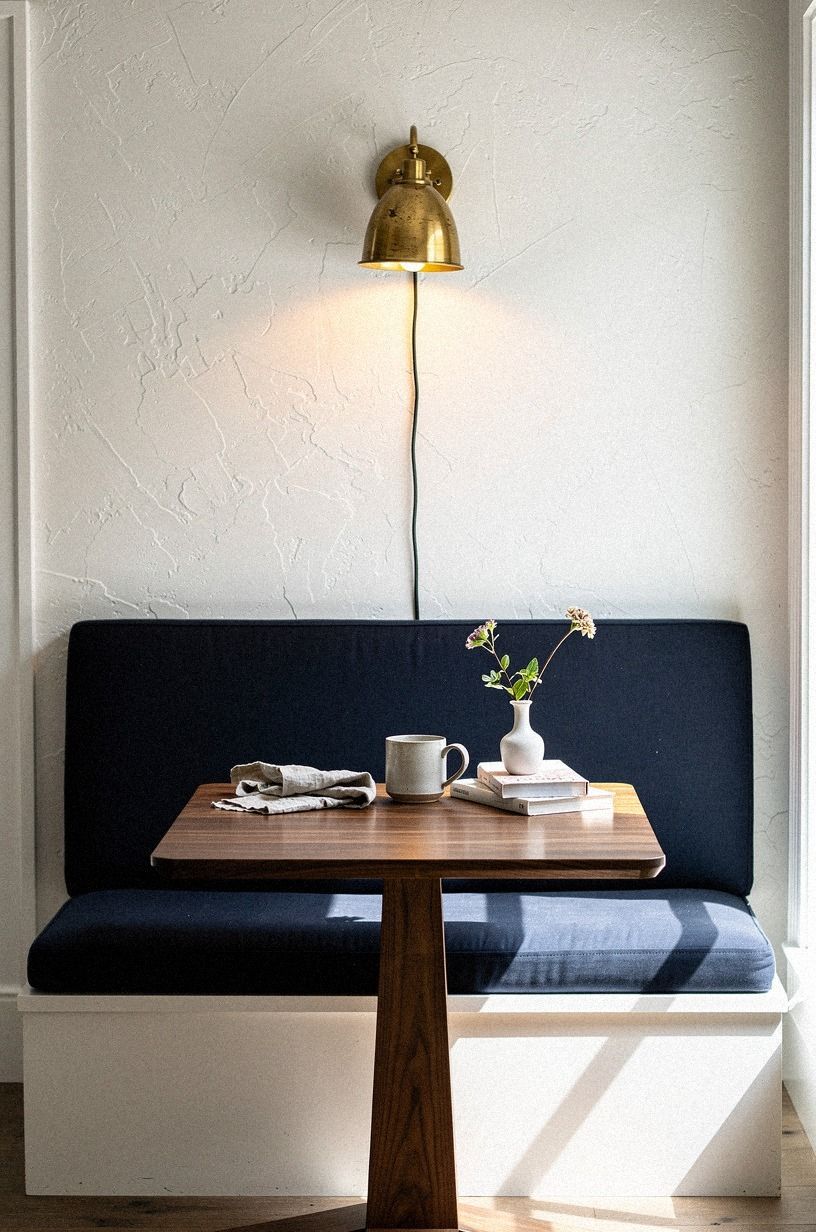
I love a hardwired light, but a plug-in sconce is the renter-friendly move I should've used sooner.
15Finish with one vase on the table
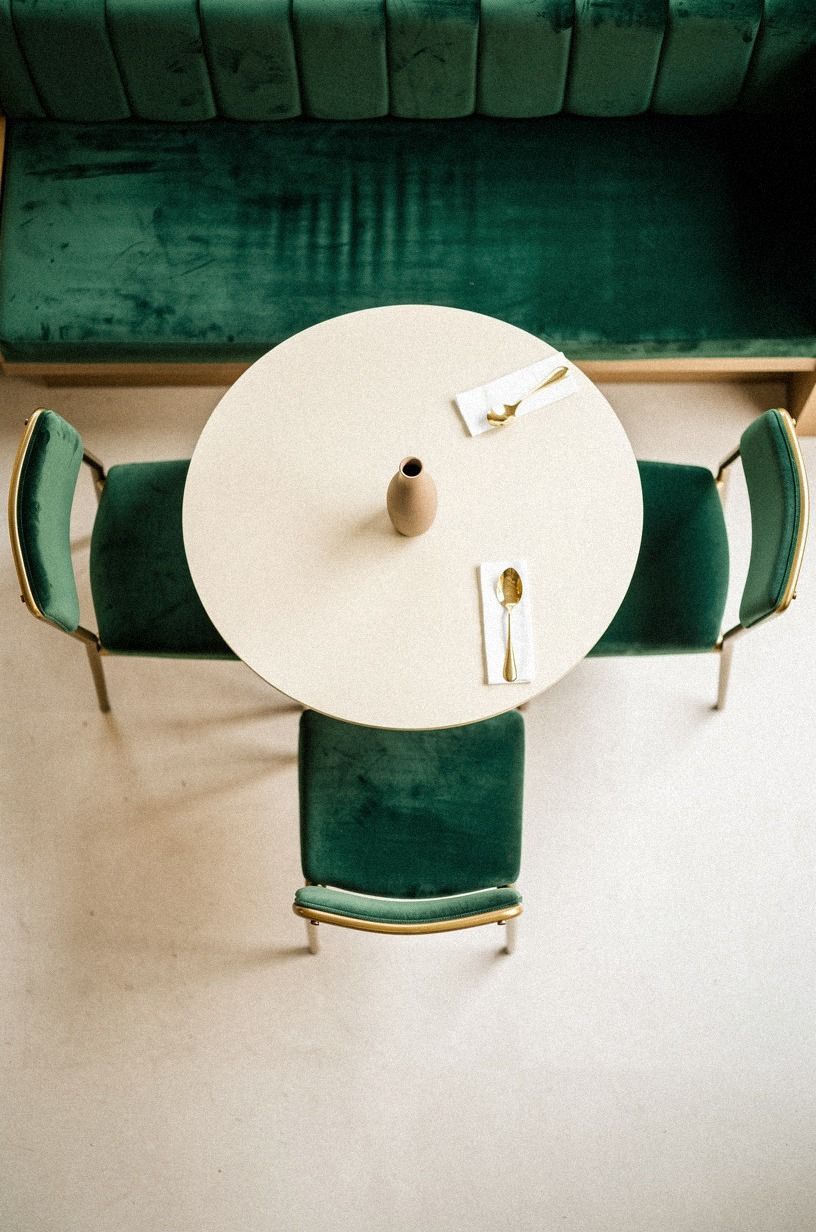
I wanted the table to look lived in, not staged, so I finished with one vase and stopped there. The overhead view made that obvious.
Round table, slim chairs tucked in, banquette edge visible, open floor around it. One ceramic vase was enough to give the nook a pulse without stealing useful space from breakfast itself.
This is the edit most people skip. They keep adding because the table still looks small.
But a small table isn't begging for more objects. It's begging for restraint.
I used a single branchy stem in a low stoneware vase, and that was plenty. The floor stayed open, the seating still read compact, and the whole nook felt calmer.
But here is the bigger point: when the structure is right, you do not need much styling at all.
The Rule I Wish I'd Known Before I Started
What finally changed this project wasn't one product. It was the moment I stopped treating the nook like a miniature dining room and started treating it like a working layer inside the living room.
I call it the Borrowed-Room Rule now, mostly because I had to learn it the annoying way. A small nook doesn't need to prove it's a full dining setup.
It needs to borrow support from the architecture, the sofa, the window, and the path people already take through the room.
I went back and forth on this for longer than I would like to admit. Part of me wanted the dramatic version, the bigger table, the puffier cushion, the extra art, the statement chairs.
That is the version that looks persuasive in a product grid. But once I measured the real clearances and sat in the corner with a coffee mug, the answer got embarrassingly simple.
I needed fewer edges, lower bulk, and one place for everyday objects to land.
And this is where I think a lot of small-space makeovers go wrong. People chase visual charm first and circulation second, even though circulation is what decides whether you keep using the nook after the first week.
If a chair won't slide in, if the cushion steals depth, if the cabinet top becomes a dumping ground, your sweet little breakfast corner turns into one more area you work around. You feel that friction every day.
So my rule now is blunt: protect the floor, then soften the zone. Get the curved bench or the round table working first. Make the chair disappear when it is not in use. Add the warm light.
Add the tray. Add the single vase. But do not start with styling if the footprint is still fighting you.
You cannot accessorize your way out of a bad path. Once the structure is right, though, the nook becomes one of those spots everyone drifts toward without thinking.
Worth it. And that is when the corner starts paying you back!
How much it cost
I did not price this like a full living room renovation because it is not one. I priced it like one compact zone that had to earn its square footage. Typical US ranges helped me stay sane, especially when I was tempted to overspend on custom pieces I didn't need.
Mine landed emotionally in the budget-to-mid mindset because the structure did more than the shopping did. A performance-fabric sofa typically runs $1,200 to $4,000, a wool rug 9x12 usually falls between $600 and $2,500, and linen drapes often land around $120 to $400 a pair.
But if you're only building the nook, not replacing the whole room, you can stay much lower by keeping your existing seating and buying only the pieces that change function. And if you want the same save-first mindset in another compact zone, small outdoor kitchen ideas that maximize every inch is a smart comparison.
The Questions I Get Asked Most
What is the best 15 Small Breakfast Nook Ideas That Fit Almost Anywhere for a small living room?
A curved banquette plus a round table is still my favorite because it protects your path and softens the corner. The best payoff comes from a bench that hugs the window and a compact table that doesn't fight your sofa line. I like the restraint of IKEA pieces mixed with warmer wood.
Where can I buy 15 Small Breakfast Nook Ideas That Fit Almost Anywhere pieces on a budget?
I start with Target Threshold, IKEA, and Wayfair because you can mix affordable basics with one nicer finish. The smart savings move is secondhand first. Facebook Marketplace for chairs, thrift stores for trays, then new cushions or curtains where hygiene matters more.
How much does a 15 Small Breakfast Nook Ideas That Fit Almost Anywhere makeover cost?
Most small breakfast nook makeovers cost about $300 to $1,200 if you're changing the soft layer and keeping your main furniture. The biggest saver is reusing the sofa and table base if you can. Paint, cushions, art, and one light fixture go a long way.
Can I create a 15 Small Breakfast Nook Ideas That Fit Almost Anywhere on a budget?
Yes, and you don't need custom millwork to get the feeling. The cheap wins are a plug-in sconce, washable cafe curtains, and a tray that corrals your daily coffee things. You can also repaint nearby trim in Farrow & Ball Hague Blue No.30 or shift art lower.
Is a 15 Small Breakfast Nook Ideas That Fit Almost Anywhere worth it in a small space?
Yes, especially in a small room, because a nook gives one awkward corner a job and keeps your coffee table free. The value is daily use. Pull the table closer than you think, keep chairs armless, and let the bench do the heavy lifting.
Is 15 Small Breakfast Nook Ideas That Fit Almost Anywhere a good idea for a rental?
Yes, it's one of the easier rental upgrades because the best changes do not need demolition. The renter-safe version uses a plug-in sconce, removable hooks, tension-rod cafe curtains, and a freestanding bench. If you have decorated around temporary limits before, small bedroom ideas has the same no-drama approach.
The One-Foot Calm Rule
If I had to pick one, I would start with the round pedestal table. Corners waste more room than small tops do, and the open path is what makes the nook feel easy instead of squeezed. Pin this idea for later, then measure your walkway before you buy anything.