
 by
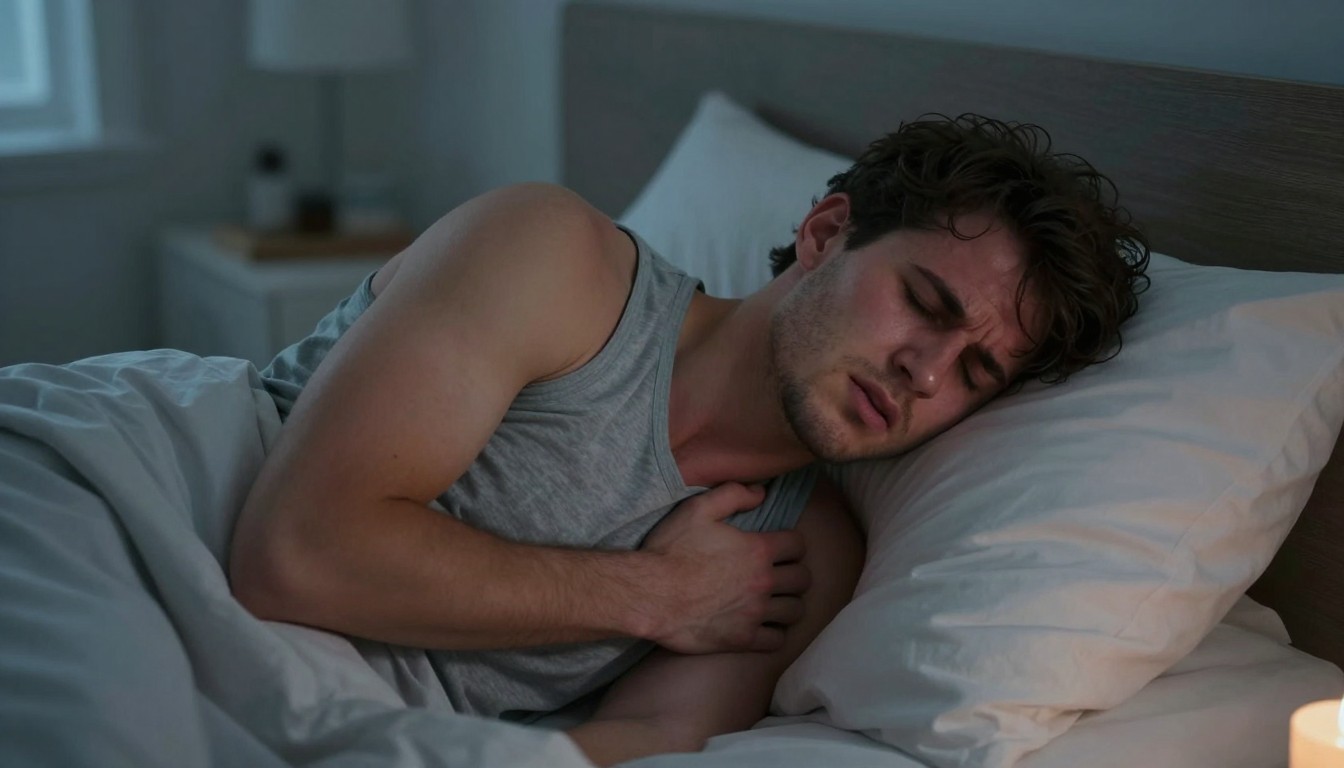
by Quick answer: Yes. Sleep Doctor says lack of sleep can contribute to chest pain, but poor sleep isn't a safe explanation to assume. Ongoing chest pain needs medical evaluation.
- Sleep Doctor identifies increased stress, inflammation, and cardiovascular strain as possible links.
- It says sleep deprivation may raise blood pressure and heart rate, which can trigger discomfort.
- Sleep Doctor advises evaluating ongoing chest pain to rule out serious heart-related conditions.
Updated July 2026 · Reviewed for accuracy
If chest pain follows a bad night, the timing is worth noting, but it isn't a diagnosis. My view is simple: take the chest symptom seriously first, then work on the sleep problem once immediate safety has been addressed. A better night can't tell you what caused the pain.
Can lack of sleep cause chest pain directly?
The key word is contribute. Sleep Doctor says lack of sleep can contribute to chest pain through increased stress, inflammation, and cardiovascular strain. That doesn't mean insufficient sleep is the only possible cause of pain in a particular person.
If discomfort begins after a restless night, the sequence is real: poor sleep happened, then chest pain appeared. The sequence alone doesn't establish why the pain occurred. I would describe sleep loss as a possible contributor, not use it as a diagnosis.
That distinction matters because Sleep Doctor advises that ongoing chest pain be evaluated to rule out serious heart-related conditions. Catching up on sleep doesn't perform that evaluation, even if the timing makes sleep seem like the obvious explanation.
The useful distinction
- Plausible link: Sleep Doctor says insufficient sleep can contribute to chest discomfort.
- Unproven conclusion: Poor sleep was the sole cause of an individual episode.
- Safe response: Ongoing chest pain should be medically evaluated, according to Sleep Doctor.
The cautious answer isn't meant to make every tired person expect chest pain. Sleep Doctor uses qualified language: sleep deprivation may raise certain forms of strain and can contribute to discomfort. Possibility isn't certainty.
It also isn't a reason to dismiss pain as “just tiredness.” If the discomfort continues, treating sleep as the complete explanation skips the safety step that Sleep Doctor explicitly recommends.
How sleep loss may be connected to chest discomfort
Blood pressure and heart rate are the two concrete measures Sleep Doctor names. Its guidance says sleep deprivation may raise both, potentially triggering discomfort. Those are possible links, not a home test for the cause of chest pain.
Sleep Doctor also identifies increased stress, inflammation, and cardiovascular strain as pathways through which lack of sleep may contribute. Each point supports a connection between sleep loss and physical strain, but none identifies what is happening inside one reader's body.
What the published guidance actually supports
- Stress: Sleep Doctor includes increased stress among the possible links between insufficient sleep and chest pain.
- Inflammation: Sleep Doctor also lists inflammation as a possible pathway.
- Cardiovascular strain: The same source identifies this as another potential connection.
- Blood pressure and heart rate: Sleep Doctor says sleep deprivation may raise both and trigger discomfort.
The phrasing matters. “May raise” doesn't mean that every short night produces the same bodily response. “Can contribute” doesn't mean that sleep loss explains every episode of pain.
There also isn't a personal cutoff in Sleep Doctor's overview that lets someone calculate when chest discomfort should appear or become harmless. The source doesn't support turning a certain amount of missed sleep into a diagnostic threshold.
I would therefore avoid reasoning backward from fatigue. Feeling exhausted confirms that sleep was poor. It doesn't confirm that the same sleep loss caused chest pain, and it doesn't rule out another explanation.
Why the timing alone doesn't prove the cause
“I slept badly, then my chest hurt” contains two observations and no confirmed diagnosis. That may sound overly precise, but precise wording helps stop a possible connection from becoming an assumed cause.
| What you observe | What it establishes | What it doesn't establish |
|---|---|---|
| Chest pain began after poor sleep | The order in which the events occurred | That sleep loss caused the pain |
| Sleep disruption and discomfort occurred during the same period | A pattern worth describing accurately | That another cause has been ruled out |
| The chest pain remains present | The pain is ongoing | That catching up on sleep is an adequate response |
A short written timeline can help you explain what happened without trying to interpret it yourself. Record when the sleep disruption occurred, when the discomfort began, whether it stopped, and what you were doing at the time. Keep the description factual.
The wording I prefer is: “I slept poorly and later experienced chest pain.” It is more accurate than saying, “Lack of sleep caused my chest pain,” because the second version states a conclusion that hasn't been established.
A symptom record isn't a safety test. It doesn't prove that discomfort is minor, and it shouldn't become a reason to delay evaluation when the pain is ongoing.
My rule: Track the pattern, but don't diagnose the pattern. Sleep Doctor's guidance supports a possible connection while still calling for ongoing chest pain to be evaluated.
Keep separate pain questions separate, too. If you're also trying to get comfortable with shoulder or back discomfort, our guides to the sleep position for shoulder pain and the sleep position for back pain address those specific concerns. Neither should be used to explain unexplained chest pain.
When chest pain needs medical attention
Ongoing chest pain is the clearest safety threshold in the material here. Sleep Doctor says it should always be evaluated to rule out serious heart-related conditions. Poor sleep doesn't cancel that advice.
Safety first: If you believe current chest pain may be a medical emergency, contact your local emergency services now. Don't wait to see whether another night's sleep changes it. For ongoing pain, Sleep Doctor specifically advises medical evaluation.
This article can't determine which cause applies to you. Sleep Doctor's answer says lack of sleep can contribute, not that poor sleep is a reliable explanation or a way to rule out a serious condition.
A change in the discomfort also doesn't identify its cause. If the pain is no longer present but you're still concerned about the episode, ask a qualified healthcare professional for individual guidance rather than relying on the sleep connection alone.
Medical evaluation doesn't automatically mean that a serious problem is present. Sleep Doctor gives a clear reason for the recommendation: ongoing chest pain should be checked so serious heart-related conditions can be ruled out.
I wouldn't try to settle the question by repeatedly changing sleep duration, sleeping position, pillows, or mattresses while chest pain continues. Those changes might alter comfort, but they can't establish why the pain is happening.
Don't let the timeline become a dismissal
“It happened after a bad night” is useful context to give a clinician. It isn't a reason to assume that the pain is harmless or to skip the evaluation Sleep Doctor recommends for ongoing symptoms.
What to do about poor sleep after safety comes first
The NHS Every Mind Matters page says sleep hygiene can help people who are struggling with sleep. That supports addressing an ongoing sleep problem, but it doesn't turn sleep hygiene into a treatment for unexplained chest pain.
Use the NHS guidance for the sleep concern itself. For broader education, Medical News Today's Science of Sleep hub covers sleep deprivation, sleep cycles, and sleep stages. Educational material can help you understand sleep, but it can't provide an individual diagnosis.
A sensible order of action
- Address the chest symptom. If it is ongoing, follow Sleep Doctor's advice and seek medical evaluation. Contact emergency services if you believe you may be experiencing an emergency.
- Describe the sequence accurately. Record what happened without declaring that sleep caused it.
- Work on the sleep difficulty separately. The NHS Every Mind Matters resource says sleep hygiene can help people struggling with sleep.
- Use educational sources for education. Medical News Today's sleep hub can explain general sleep topics, but it cannot assess an individual episode of chest pain.
- Keep bedding purchases in their lane. A mattress isn't a diagnostic tool or a substitute for medical evaluation.
If sleep has become difficult, focus on describing that problem clearly as well. Note whether the trouble involves getting to sleep, staying asleep, or simply feeling that the sleep wasn't restorative. Those observations can be discussed without treating them as an explanation for chest pain.
I would also resist making a major bedding change solely because discomfort followed a poor night. A sleep surface can be considered for ordinary comfort and support, but unexplained chest pain belongs in a medical conversation.
The bottom line is firm. Sleep Doctor supports a plausible connection between lack of sleep and chest discomfort through stress, inflammation, cardiovascular strain, blood pressure, and heart rate. It also says ongoing chest pain needs evaluation, which is the part of the answer I wouldn't compromise on.
FAQ
Can one bad night of sleep cause chest pain the next day?
Sleep Doctor says lack of sleep can contribute to chest pain, but its guidance doesn't establish that one bad night will cause pain the next day. If chest pain is ongoing, the same source advises medical evaluation rather than assuming sleep was the cause.
Does lack of sleep raise blood pressure and heart rate?
Sleep Doctor says sleep deprivation may raise blood pressure and heart rate, potentially triggering discomfort. The word “may” matters because the statement doesn't predict what will happen to every individual.
Can stress from poor sleep explain chest pain?
Sleep Doctor includes increased stress among the possible ways insufficient sleep may contribute to chest pain. That doesn't prove stress caused a particular episode or make ongoing discomfort safe to ignore.
Should I try to sleep off chest pain?
Don't use sleep as a substitute for evaluation when chest pain is ongoing; Sleep Doctor advises having ongoing pain assessed to rule out serious heart-related conditions. If you believe you may be experiencing an emergency, contact local emergency services immediately.
Will a different mattress fix chest pain caused by poor sleep?
A mattress shouldn't be treated as a remedy for unexplained chest pain, and the information here doesn't support that conclusion. Address chest pain through appropriate medical care, then assess your mattress separately for ordinary sleep comfort.