
 by
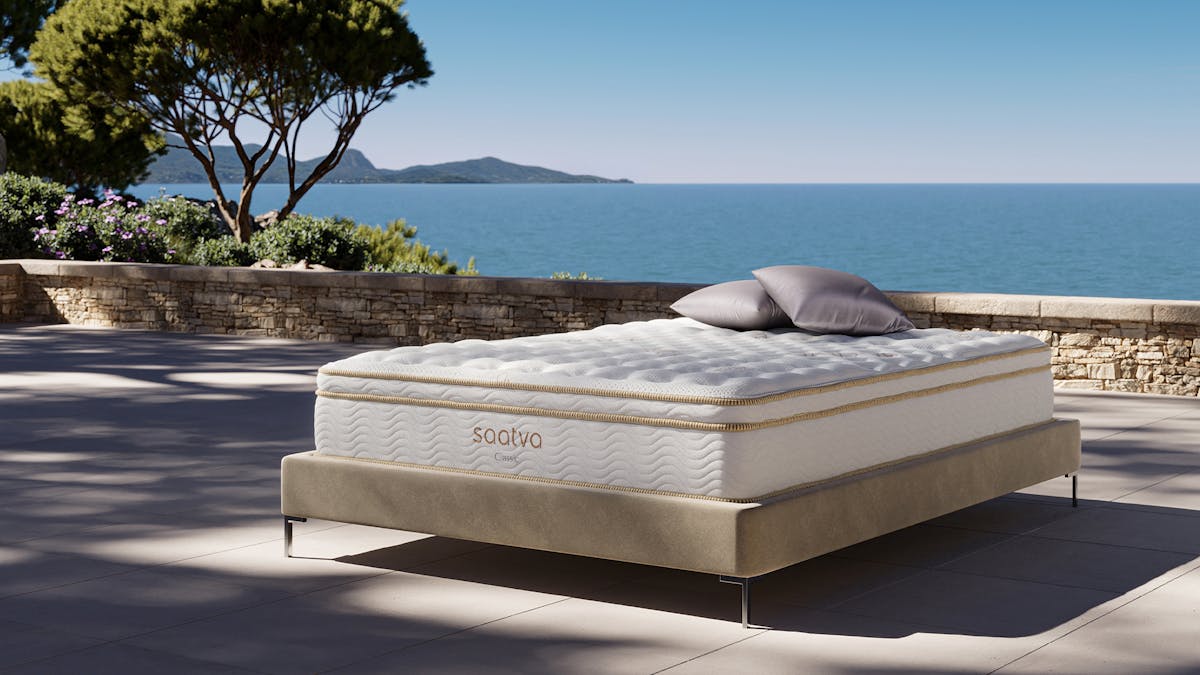
by Chita makes budget foam mattresses sold through Amazon and Walmart, priced $139 to $329 queen. They are fine for guest rooms or short-term use. For nightly sleep, we recommend the Saatva Classic as the most comparable premium alternative: zoned lumbar coils, 365-night trial, and a lifetime warranty at a cost-per-night that beats repeatedly replacing budget foam beds.
Saatva Classic
9.2/10
- Dual-coil construction with reinforced lumbar zone pad for targeted back support
- GREENGUARD Gold certified, organic cotton Euro pillow top
- Free white-glove delivery, in-room setup, and old-mattress removal included
- 365-night home trial and lifetime warranty, unmatched at this price tier
- Heavier than foam beds, does not ship compressed in a box
- $99 return fee if returned during the trial window
If you are shopping because Chita's durability does not hold up to nightly use, the Saatva Classic is the most direct upgrade: premium coil support, a trial ten times longer than Chita's, and a warranty that actually covers you for life rather than just the first decade.
Chita mattress review: who is it for?
Chita is a budget mattress brand that sells primarily through Amazon and Walmart.com. Their lineup sits firmly in the ultra-budget tier, with queen prices ranging from around $139 to $329 depending on the model and thickness. That positions Chita alongside other marketplace-only foam brands rather than established direct-to-consumer names.
The honest framing: Chita mattresses exist to solve a specific, short-term problem. A spare bedroom, a college dorm, a temporary rental, a child's first big bed. For that use case, the price-to-value ratio can work. For everyday nightly use by adults who need reliable spinal support over years, the math shifts quickly once you factor in replacement cycles and lost sleep.
Construction and materials
Chita's most widely reviewed mattress is an all-foam design, typically 10 to 12 inches thick. The general layer stack follows this pattern:
- Top cover: "Ice cooling fabric" with cooling particles marketed to improve surface breathability compared to standard polyester.
- Comfort layer: gel-infused memory foam, usually around 3 inches, intended to contour to the body and dissipate heat.
- Transition layers: softer transition foams, sometimes including an egg-crate or air-channel foam, to prevent the sudden firmness jump between the comfort and support layers.
- Support core: dense base foam, approximately 6 inches, providing the primary structural support and motion isolation.
- Fire barrier: fiberglass-free inner sock (Chita markets this explicitly, which matters for buyers concerned about fiberglass shedding).
All foam layers carry CertiPUR-US certification, meaning they have been tested for off-gassing compounds and heavy metals. That is a legitimate baseline safety standard.
Chita also makes hybrid models under the "Eva Hybrid" name, featuring a pocketed-coil support core instead of all-foam. The hybrid adds bounce and edge support, which the all-foam version lacks, but at a higher price point that starts pushing into territory where better-established brands become competitive.
Firmness and feel
Chita's all-foam line targets medium firmness, roughly 5 to 6 out of 10 on the standard scale. In practice that means:
- Back sleepers under 200 lb: the medium foam contours adequately, keeping the lumbar in reasonable alignment.
- Side sleepers under 180 lb: the comfort layer relieves pressure at the shoulder and hip without excessive sinkage.
- Heavier sleepers (230 lb+): the support core is not dense enough to prevent premature compression. Sagging complaints in reviews tend to cluster here.
- Stomach sleepers: medium foam generally produces too much hip sinkage for neutral spinal alignment in the prone position.
The all-foam construction gives strong motion isolation, which is one area where budget foam beds genuinely compete with more expensive options. A partner who moves at night is less likely to disturb you on an all-foam surface than on a coil hybrid.
Cooling performance
Chita's cooling story rests on two elements: gel-infused memory foam and the "ice cooling" surface fabric. Both reduce surface temperature compared to plain polyester and standard foam, but all-foam mattresses retain more heat than coil hybrids because there is no airflow through a spring layer. Sleepers who consistently run hot at night tend to outgrow the cooling performance of all-foam beds regardless of gel content.
If cooling is a priority, a coil hybrid with a breathable surface layer (like the Saatva Classic, which uses an organic cotton Euro top over a ventilated dual-coil system) will outperform any all-foam bed in this price tier over time.
Edge support
This is a consistent weakness in Chita's all-foam models. Without a reinforced foam perimeter or a coil perimeter encasement, the edges compress noticeably under seated or sleeping loads. Couples who use the full mattress width report feeling like they might roll off. Sitting on the edge of the bed, for example, when putting on shoes, creates visible compression that does not fully recover over time.
Durability and sagging
This is the category where Chita gets its most consistent negative feedback. Sagging, visible body impressions, and loss of support appear in reviews within months of regular use, not years. At the $139 to $329 price point, the foam density used in the support core is lower than what established brands use in their base layers. Lower density foam compresses permanently under repeated load over a shorter period.
Chita offers a 10-year warranty, but the relevant question is whether the mattress will hold its rated support for the duration of that warranty. Customer experience suggests it often does not under nightly adult use.
Trial, warranty, and shipping
- Trial: 100 nights on the premium cool gel foam models.
- Warranty: 10 years.
- Shipping: in-stock orders ship in one business day, delivery typically 5 to 7 days. The mattress ships compressed in a box.
- Price: Twin around $199, Full around $249, Queen around $279 to $329 depending on the model.
Pros and cons
What works
- Genuinely fiberglass-free construction, with CertiPUR-US certified foam layers
- Strong motion isolation from all-foam build, practical for light sleepers sharing a bed
- 100-night trial gives time to assess fit
- Compressed-in-a-box delivery, easy to maneuver into any room
- Price is accessible for spare rooms, short-term housing, or children's beds
What falls short
- Durability complaints are widespread under regular nightly use, sagging within months for heavier sleepers
- Edge support is weak without a coil perimeter, limits usable sleep surface
- All-foam traps more heat than coil hybrids, cooling claims notwithstanding
- Customer service is limited because purchases route through third-party marketplaces (Amazon, Walmart), not a direct brand channel
- No white-glove delivery, no old-mattress removal
Who should buy Chita
Chita makes sense for:
- Guest bedrooms used a few nights per month
- College or university housing with a defined end date
- Temporary furnished rentals where the mattress will be replaced within two years
- Children's rooms where the occupant will need a larger size upgrade in a few years anyway
Who should look elsewhere
If you sleep on it every night, the per-night cost of a Chita over its functional lifespan is not as low as the sticker price suggests. Once you factor in replacement every two to three years versus a mattress that holds up for a decade or more, the economics change.
Heavier sleepers, side sleepers with hip or shoulder pain, hot sleepers, couples who use the full mattress width, and anyone with chronic back issues will hit Chita's limitations quickly.
Saatva Classic
9.2/10
- Dual-coil support with lumbar reinforcement zone, strong edge support
- Free white-glove delivery and old-mattress removal included in the price
- 365-night home trial, the longest standard trial in the industry
- Lifetime warranty, GREENGUARD Gold certified, made in the USA
- Does not compress in a box, heavier to maneuver
- Higher upfront cost than budget foam options
The Saatva Classic is where most everyday sleepers land when they outgrow or wear out a budget foam mattress. The three firmness options (Plush Soft, Luxury Firm, Firm) cover most sleeping positions and body weights, and the dual-coil system produces better airflow and edge support than any all-foam bed at this or a higher price.
Frequently asked questions
Is Chita a good mattress brand?
Chita is a legitimate budget brand with CertiPUR-US certified, fiberglass-free foam. For guest rooms and temporary use, it delivers acceptable value. For nightly adult sleep, durability falls short of what most people need from a mattress they use every night for years.
How long does a Chita mattress last?
Most buyers report acceptable performance for one to two years of regular use. After that, sagging and body impressions become common. This compares unfavorably to established brands where a mattress should maintain its rated support for seven to ten years or more.
Does Chita use fiberglass?
No. Chita explicitly uses a fiberglass-free inner fire sock as its flame barrier. This is a genuine differentiator at the ultra-budget price tier, where some competitors still use fiberglass as the cheapest flame retardant option.
Is the Chita mattress good for back pain?
For lighter sleepers under 180 lb, the medium-firm foam provides adequate lumbar support in the short term. For heavier sleepers or anyone with existing back issues, the foam density is likely to compress too quickly, removing the support before the mattress is replaced. A mattress with a reinforced lumbar zone, like the Saatva Classic, handles back pain more reliably over the long term.
What sizes does Chita make?
Chita typically offers Twin, Full, and Queen. Availability varies by model and marketplace listing. Larger sizes (King, Cal King) may be available on some models.
Where can I buy a Chita mattress?
Chita sells through Amazon and Walmart.com. There is no direct brand website or physical retail presence, which means returns and warranty claims route through the marketplace's own process rather than a dedicated mattress brand support team.