
 by
by A full mattress measures 54" x 75" and works well for single adults in smaller rooms. A queen mattress measures 60" x 80" and is the right choice for couples and taller sleepers. Queen is 6 inches wider and 5 inches longer, giving each partner meaningfully more space if you share the bed.
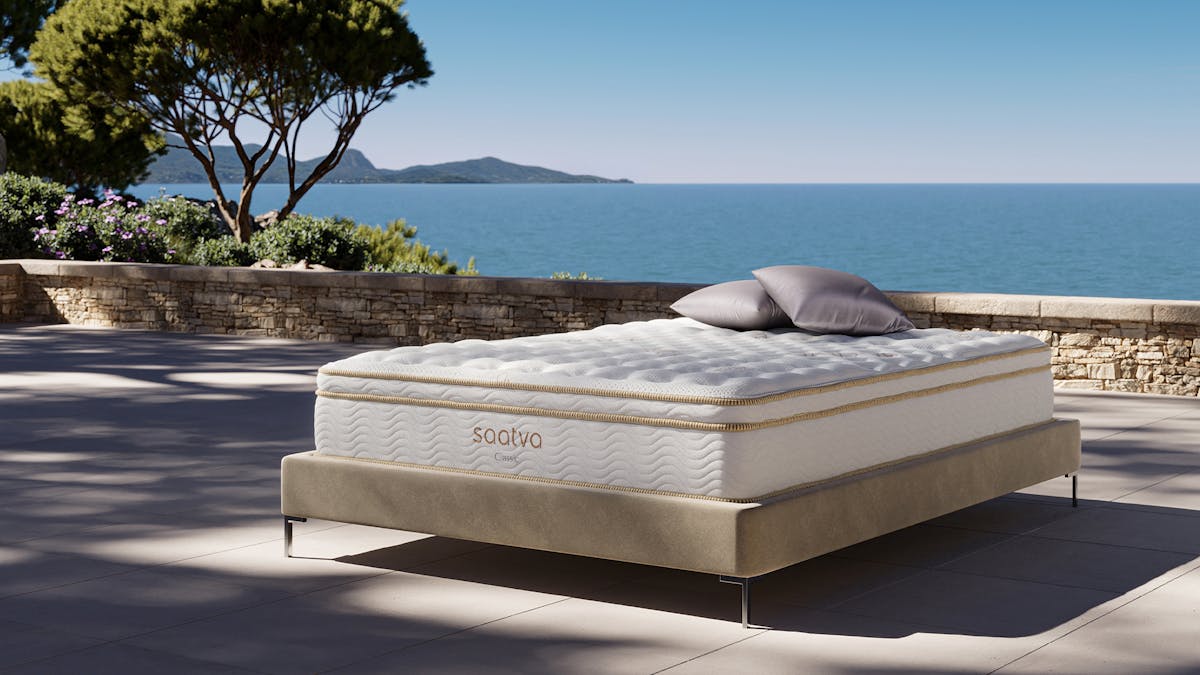
Saatva Classic
9.2/10
- Available in full and queen, with three firmness levels to match any sleeper
- Dual-coil innerspring construction delivers genuine support without pressure build-up
- White-glove delivery, setup, and old-mattress removal included at no extra cost
- 365-night trial and a lifetime warranty, the longest coverage in the category
- Ships flat, not compressed in a box, so delivery requires some coordination
- $99 return fee applies within the trial period
Whichever size you choose, full or queen, the Saatva Classic is the most complete mattress in this range. Three firmness options let you dial in the right feel, and the 365-night trial gives you enough time to know whether the size upgrade to queen was worth it.
The full and the queen are the two most common mattress sizes for single adults and couples in smaller spaces. The decision seems simple on paper, but the 6-inch width difference has real consequences for couples, tall sleepers, and anyone planning to keep their mattress for a decade. Getting this wrong means either wasting money on a mattress you outgrow quickly or overpaying for space you genuinely do not need.
Full vs queen: exact dimensions
| Measurement | Full (Double) | Queen |
|---|---|---|
| Width | 54 inches (4 ft 6 in) | 60 inches (5 ft) |
| Length | 75 inches (6 ft 3 in) | 80 inches (6 ft 8 in) |
| Surface area | 4,050 sq in | 4,800 sq in |
| Width per sleeper (couple) | 27 inches each | 30 inches each |
| Minimum room size | 9 x 11 ft | 10 x 12 ft |
| Typical price range | $400 to $1,600 | $500 to $2,000 |
| Bedding availability | Good | Excellent |
Who should choose a full mattress?
A full mattress is the right size for single adults sleeping alone in smaller bedrooms. At 54 inches wide, there is ample room for one person to sleep comfortably without feeling restricted. The full is significantly more space-efficient than a queen, making it practical for rooms under 150 square feet where a queen would leave almost no floor space.
Guest rooms that primarily host one person at a time benefit from a full. The mattress is large enough for a comfortable overnight visit without demanding the same room footprint as a queen. Full mattresses are also a solid choice for growing teenagers who want more room than a twin but will be in the room alone.
Where a full falls short: sleepers over 6 feet tall will notice the shorter 75-inch length, and anyone who even occasionally shares the bed with a partner or a child will find the 27 inches per person uncomfortably narrow.
Who should choose a queen mattress?
The queen is the most popular mattress size in the United States. At 60 x 80 inches, it accommodates two adults with reasonable personal space (30 inches each), fits comfortably in most standard bedrooms, and is available in the widest selection of mattresses, bed frames, and bedding at every price point.
Couples sleeping together consistently should choose a queen over a full. The 6 extra inches of width represent a 22 percent increase in width per person. That difference is felt immediately and becomes more significant over months of sharing the bed. Most couples who try sleeping on a full for a week report feeling the constraints very quickly.
Tall single sleepers who are 6 feet or taller also benefit from the queen's extra 5 inches of length (80 vs. 75 inches), providing comfortable clearance without needing to upgrade to a king. If you're comparing further up, see our queen vs king guide.
Price difference: full vs queen
Queens typically cost $100 to $300 more than the same mattress model in full size. This reflects the additional materials for the larger dimensions. At the budget end of the market, the gap can be as small as $50. At the premium end, the difference is usually $150 to $200.
Over the lifetime of the mattress (7 to 10 years), the price difference works out to roughly $10 to $30 per year, a modest cost for meaningfully better sleep for two people. For single sleepers on a tight budget and in a small room, the full is a genuinely reasonable choice.
Sheets and bedding compatibility
Full and queen sheets are not interchangeable. Full fitted sheets are designed for 54 x 75-inch mattresses; queen fitted sheets are designed for 60 x 80-inch mattresses. The wrong sheet will not stay in place properly.
Queen bedding is by far the more widely available of the two sizes. Nearly every major linen brand carries a deep selection in queen, while full/double options are noticeably thinner. If you regularly shop for new bedding, a queen gives you significantly more choice at more price points.
Bed frame compatibility
Full and queen bed frames are not interchangeable. A queen mattress will not fit in a full bed frame, and a full mattress will be noticeably undersized in a queen frame. Both sizes have strong availability in furniture stores, though queen frames dominate the selection in most retailers.
Platform beds, adjustable bases, and bed-in-a-box frames are all widely available in both sizes, though queen options are generally more numerous. If you plan to use an adjustable base, confirm the queen dimensions before purchasing. Our adjustable bed frame guide covers the best options in both sizes.
For couples or taller sleepers, the queen is the better investment. The extra width and length pay off over years of use. For single adults in smaller rooms on a tighter budget, a full does the job well and leaves more floor space.
Frequently asked questions
How much bigger is a queen than a full?
A queen is 6 inches wider (60 vs. 54 inches) and 5 inches longer (80 vs. 75 inches) than a full. That is roughly 660 more square inches, or about 23 percent more sleeping surface.
Is a full big enough for two people?
It can work short-term, but it is tight. Each person gets only 27 inches of width. Most couples find this uncomfortably narrow for regular use. A queen is strongly recommended for anyone sharing the bed regularly.
Can I use full sheets on a queen mattress?
No. Full and queen fitted sheets are different sizes and are not interchangeable. Using the wrong size will result in poor fit and sheets that slip off during the night.
What is a full mattress also called?
A full mattress is also called a double mattress. The terms are interchangeable and refer to the same 54 x 75-inch size.
What is the minimum room size for a queen mattress?
Plan for at least 10 x 12 feet. A 10 x 10-foot room can technically hold a queen, but the space will feel cramped. For comfortable movement, aim for 11 x 12 feet or larger.
What are the exact dimensions of a queen mattress?
A standard queen measures 60" x 80". It is the most common adult mattress size in the US, fitting two adults with roughly 30 inches of space per person. For couples who want more personal space without committing to a king, the "Olympic queen" (66" x 80") is an in-between option.
Queen vs king: which do couples actually need?
Queen gives each partner 30 inches of space, about the width of a baby crib. King gives each partner 38 inches, closer to a twin XL. Couples with kids or pets who bed-share, light sleepers woken by partner movement, or taller sleepers (6'0" or above) typically prefer a king. Most other couples find a queen sufficient. See our full queen vs king comparison for the complete breakdown.