
 by
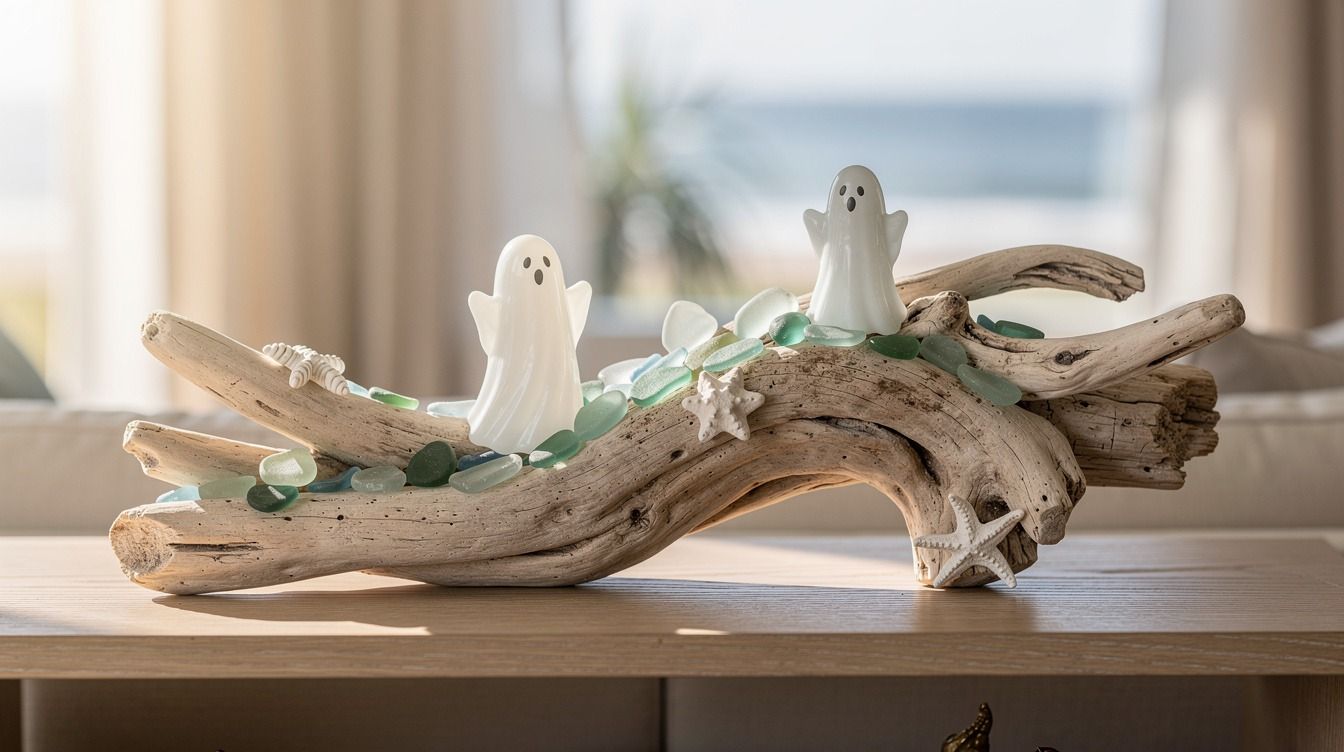
by The short answer: a coastal Halloween setup runs about $200 to $800 if you're buying, and close to nothing if you walk the beach first. I've decorated three rentals within a mile of salt water. The orange plastic never once looked right against gray shingles and a pale sky. This does.
Before You Start: What You'll Need
Gather your materials before October hits, because the good driftwood disappears after the first storm crowd shows up. You want five to seven pieces of weathered wood in varying lengths, a jar of sea glass (green and white, skip the cobalt unless you've got a lot), a few yards of washed Belgian linen, cotton rope, and battery tea lights with a warm amber bulb, not blue.
Budget about two afternoons. One for collecting and washing, one for placing.
And soak everything you pull off the sand in a bucket of water with a splash of vinegar for twenty minutes, then dry it in the sun for a full day. Salt and sand will scratch your Nero Marquina black marble console otherwise.
I learned that the expensive way.
- Start With the Palette Before You Buy a Single Ghost
- Anchor the Entry With One Big Piece of Driftwood
- Should Your Ghosts Be White, Bone, or Sea Glass Green?
- Layer Sea Glass in Threes: The Low-Light Rule
- Swap Orange Pumpkins for White, Bone and Pale Gray
- Hang the Ghosts High Using the 57-Inch Line
- Build the Mantel Around Driftwood Instead of a Garland
- Paint One Small Surface Foggy Gray Over Going All-In on Black
- Float Candles in Salvaged Glass: The Three-Height Light Stack
- Mix Rope, Net and Linen for the Texture Layer
- Dress the Porch for Wind, Not for Photos
- Frame a Window With Oyster Shell Strings
- What Does This Actually Cost, Start to Finish?
- Pack It Down So Next October Takes One Afternoon
1Start With the Palette Before You Buy a Single Ghost
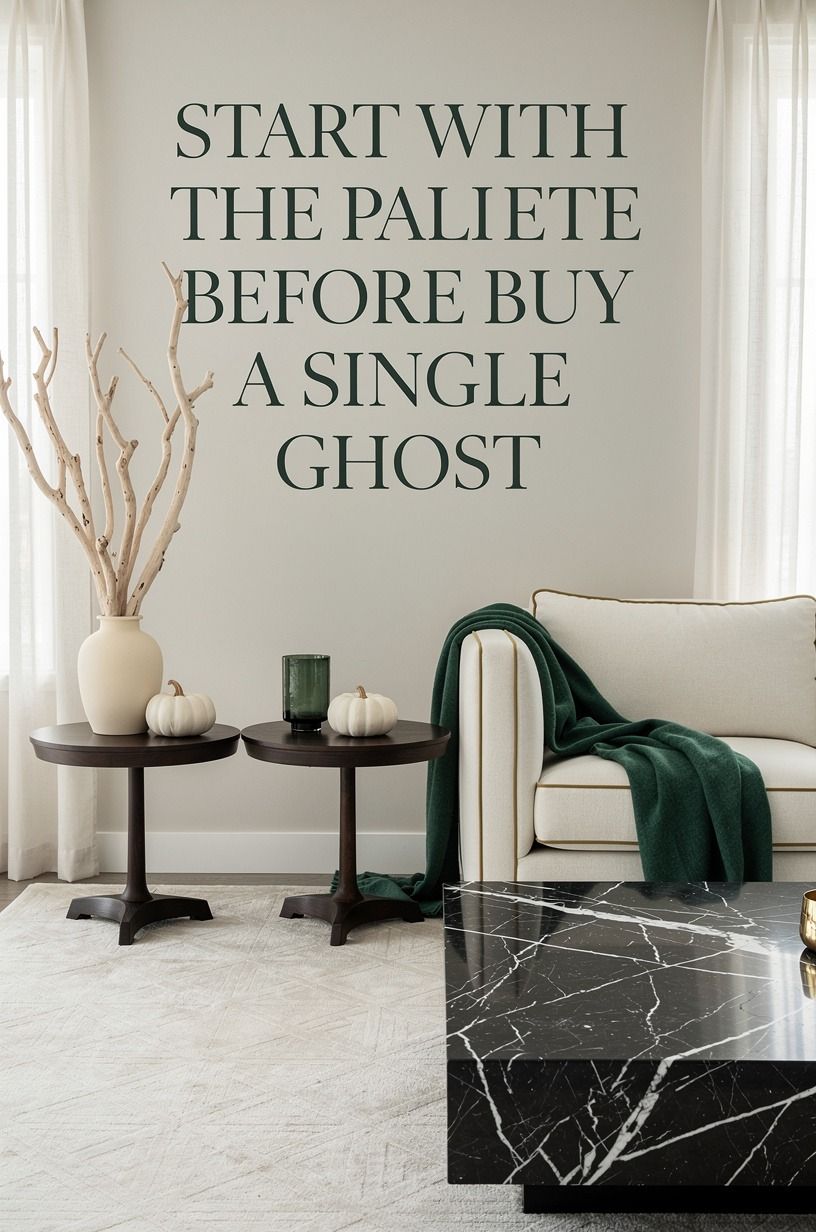
Pick your three colors first and the whole thing gets easy. Emerald, gold, and cream.
That's it. Every piece you bring in has to land in that family, which means you'll say no to ninety percent of what's in the seasonal aisle, and that's the point.
Paint is where this either works or falls apart. Farrow & Ball Studio Green on a small surface (a console, the inside of a bookcase, one door) gives the emerald note some depth, and it makes cream ghosts glow instead of disappearing.
If you want warmer, Benjamin Moore White Dove OC-17 is the calmer call for a room that already gets a lot of afternoon light. Skip flat true black entirely. It looks dramatic in a city apartment and like a mistake against water light.
Use Nero Marquina black marble with white veins sparingly instead; it anchors the emerald and gold without swallowing the cream. If neutral is your whole thing anyway, the beige and boho Halloween approach covers the same ground for inland rooms.
2Anchor the Entry With One Big Piece of Driftwood
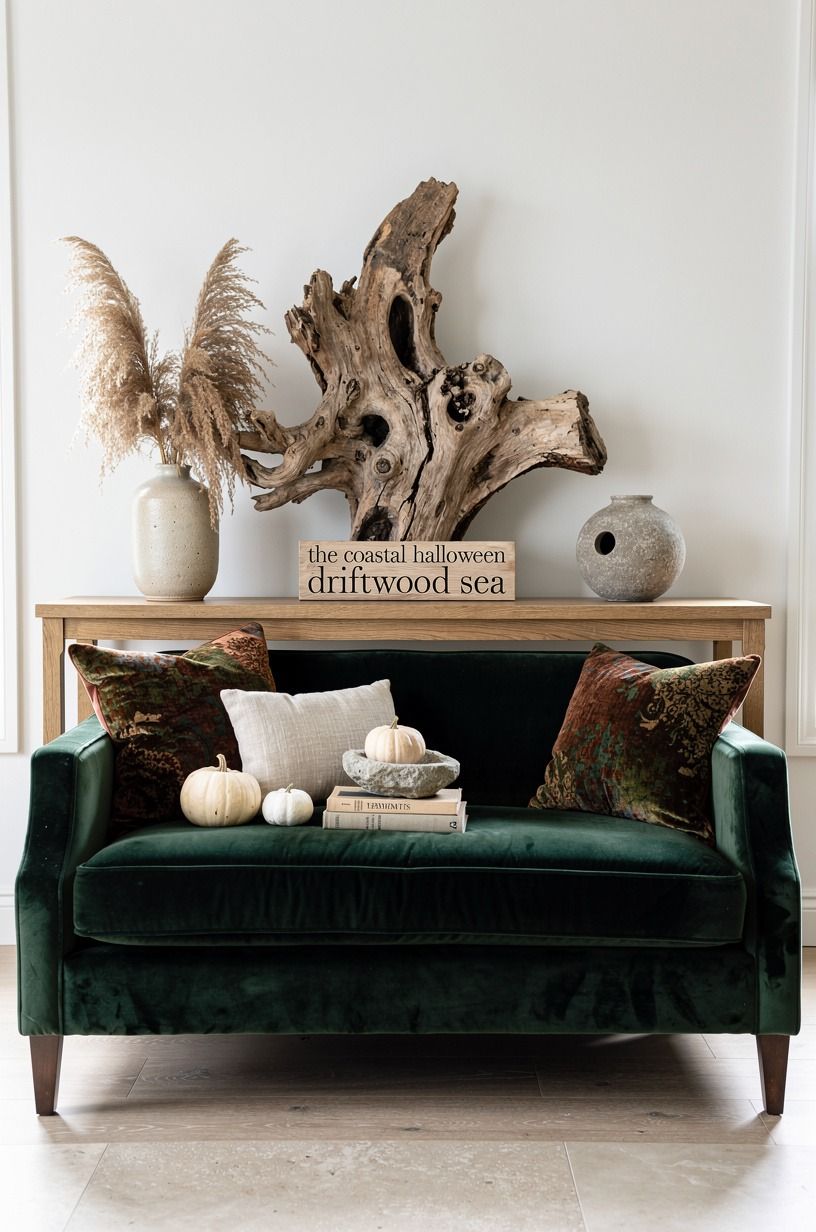
Your entry gets one gesture, not seven. A single piece of driftwood, four feet or longer, leaned against the wall beside the door or laid across a natural-oak console, does more than a whole porch of pumpkins. Against forest green, rust, and natural oak, with deep-pile mohair velvet nearby, it's the coastal halloween decor equivalent of a firm handshake.
Here's the thing about scale: people go small because small is what they found. But a two-foot stick reads as clutter and a five-foot limb reads as intentional.
If you can't find one, check Facebook Marketplace in November when the beach houses clear out, or ask a marina. Lean it, don't mount it.
Then set one hurricane candle at its base and stop. The tiny-home and camper Halloween guide has the small-entry version if your front door opens straight into the living room.
3Should Your Ghosts Be White, Bone, or Sea Glass Green?
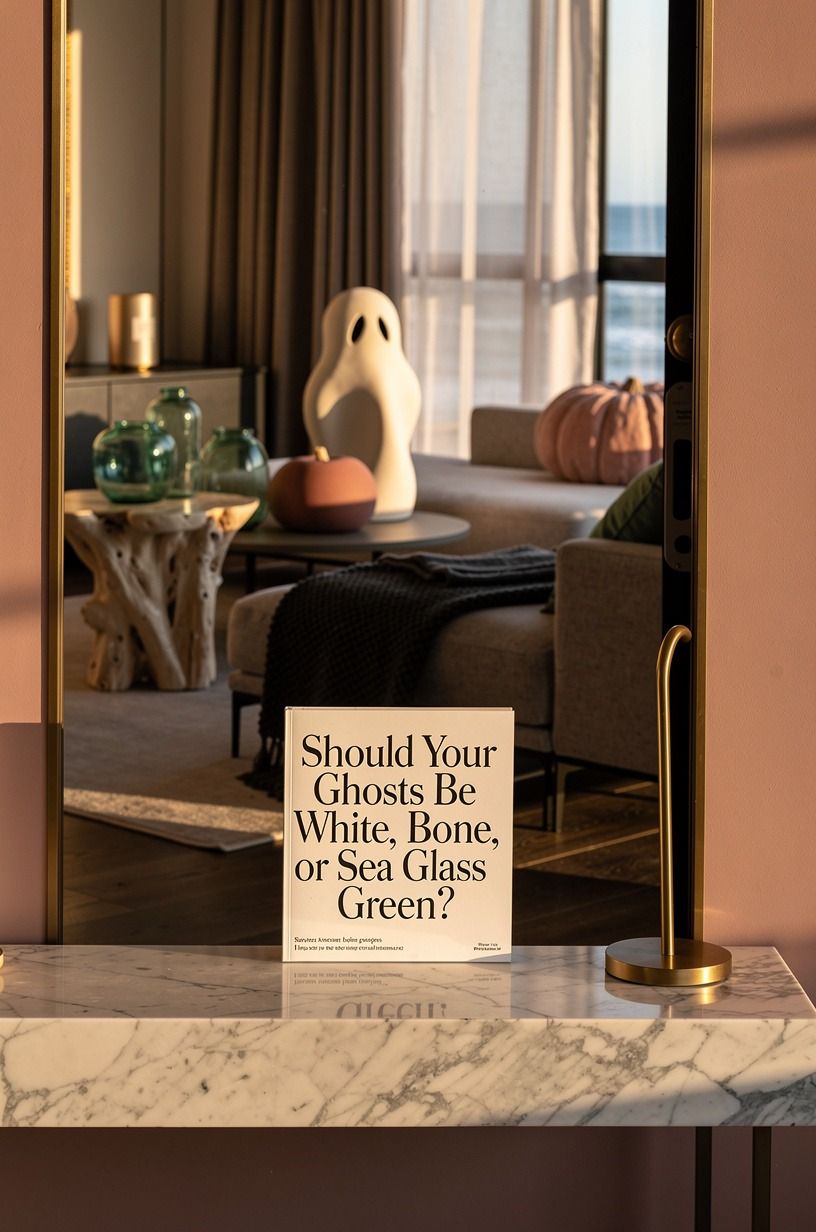
Bone. Every time.
Pure white ghosts feel too stark in person, especially beside Carrara marble with subtle grey veining. Bone and oyster have enough warmth to sit with dusty rose, charcoal, and brass without fighting them.
Make them from cheesecloth, not bedsheets. Grade 50 cheesecloth, about $12 for ten yards, drapes with a weight that reads ghostly instead of laundry-day.
Dip them in cold tea for eight minutes if they're too bright out of the package, then hang them damp so they dry into folds. Dusty rose is your accent, not your ghost. Save it for the glassware, and use brass for the candle holders. And honestly?
Two ghosts in a room is plenty. Three is a theme park. If you want the moodier, heavier version of this, the Victorian seance living room look goes the opposite direction on purpose.
4Layer Sea Glass in Threes: The Low-Light Rule
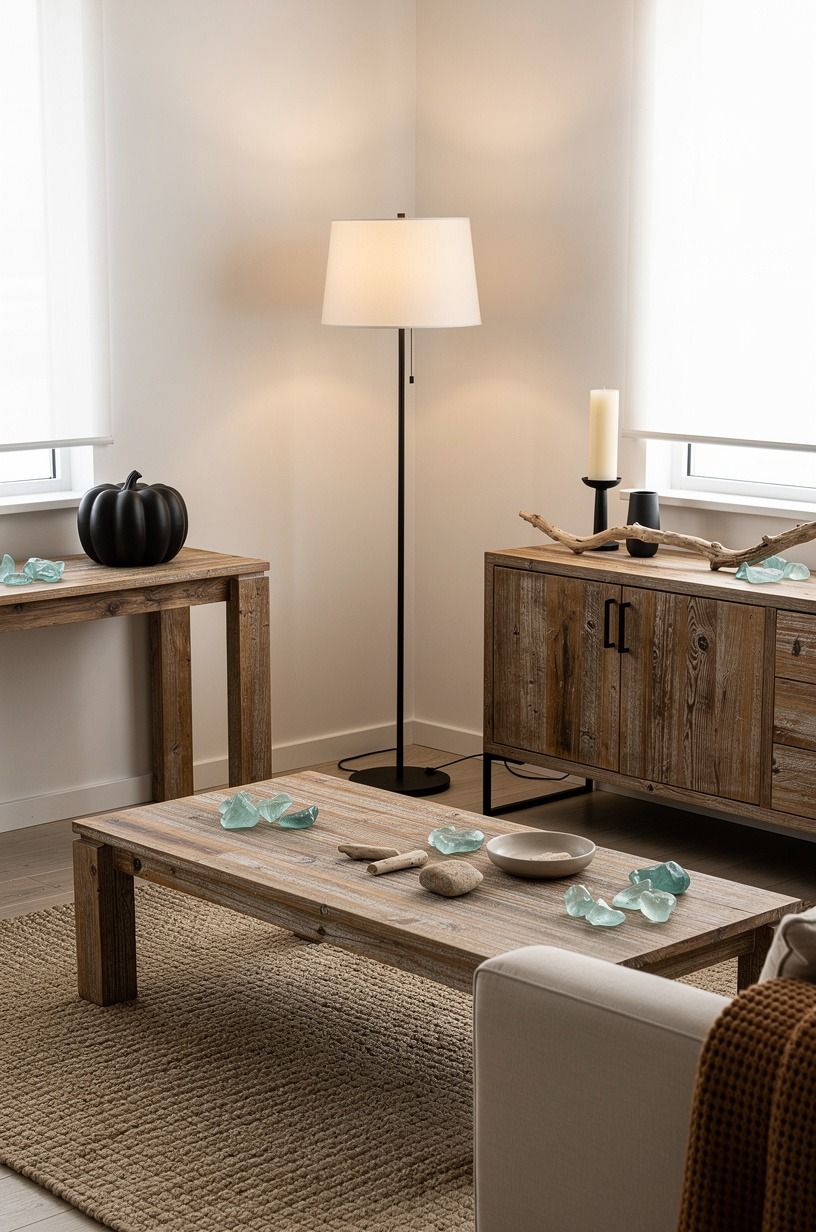
Sea glass does nothing in a bright room. It needs light passing through it, which means it belongs on a windowsill, in front of a candle, or nowhere. That's the low-light rule, and it's the part nobody respects.
Group your pieces in odd numbers, three or five, in a shallow bowl or a footed glass compote on reclaimed weathered teak. Fill the bowl with warm white sand first so the glass sits proud instead of sinking.
On a south-facing sill it'll catch the low light against camel and black accents around four in the afternoon, and that's the single most serene thing in this entire article. Cost: free if you collect, about $15 a pound if you buy tumbled glass at a craft shop.
Don't buy the fake stuff with the glossy finish. It catches light like plastic because it is plastic.
5Swap Orange Pumpkins for White, Bone and Pale Gray
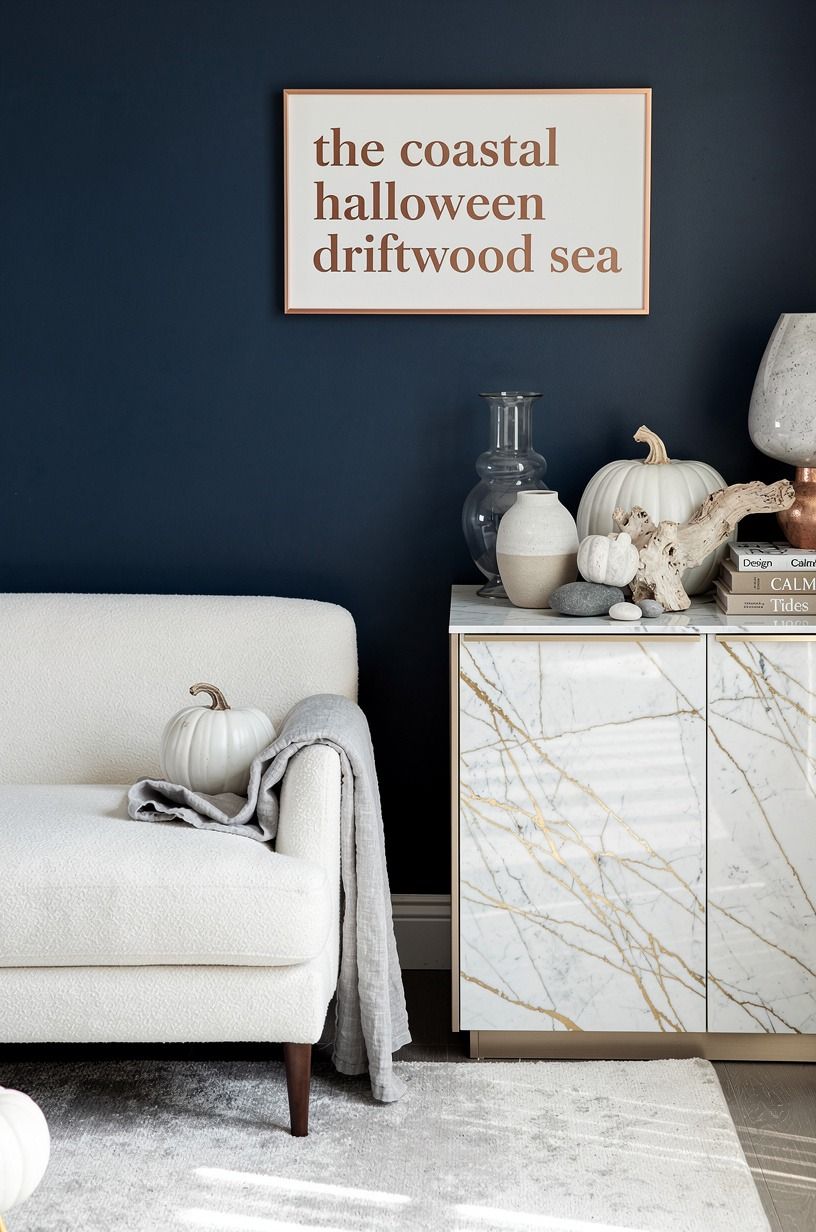
Orange is the one color that can't coexist with a midnight-blue, copper, and ivory coastal palette. It's not snobbery, it's just contrast: orange reads as hot against midnight blue and it pulls every eye in the room.
Go with Casper, Polar Bear, or Jarrahdale varieties instead. Your farm stand has them and they're usually the same price, around $6 to $14 depending on size.
Cluster them in threes at the base of something vertical (the driftwood from step two, a lamp, the newel post), or on a Calacatta marble console with gold veining. And leave a few unstyled on the porch steps where weather can get at them.
A pumpkin that's gone a little soft and gray by November 1 looks better in a beach house than a fresh one, which is the opposite of how this works inland. For a version that costs almost nothing, the $12 Dollar Tree wreath build uses six supplies and about thirty minutes.
6Hang the Ghosts High Using the 57-Inch Line
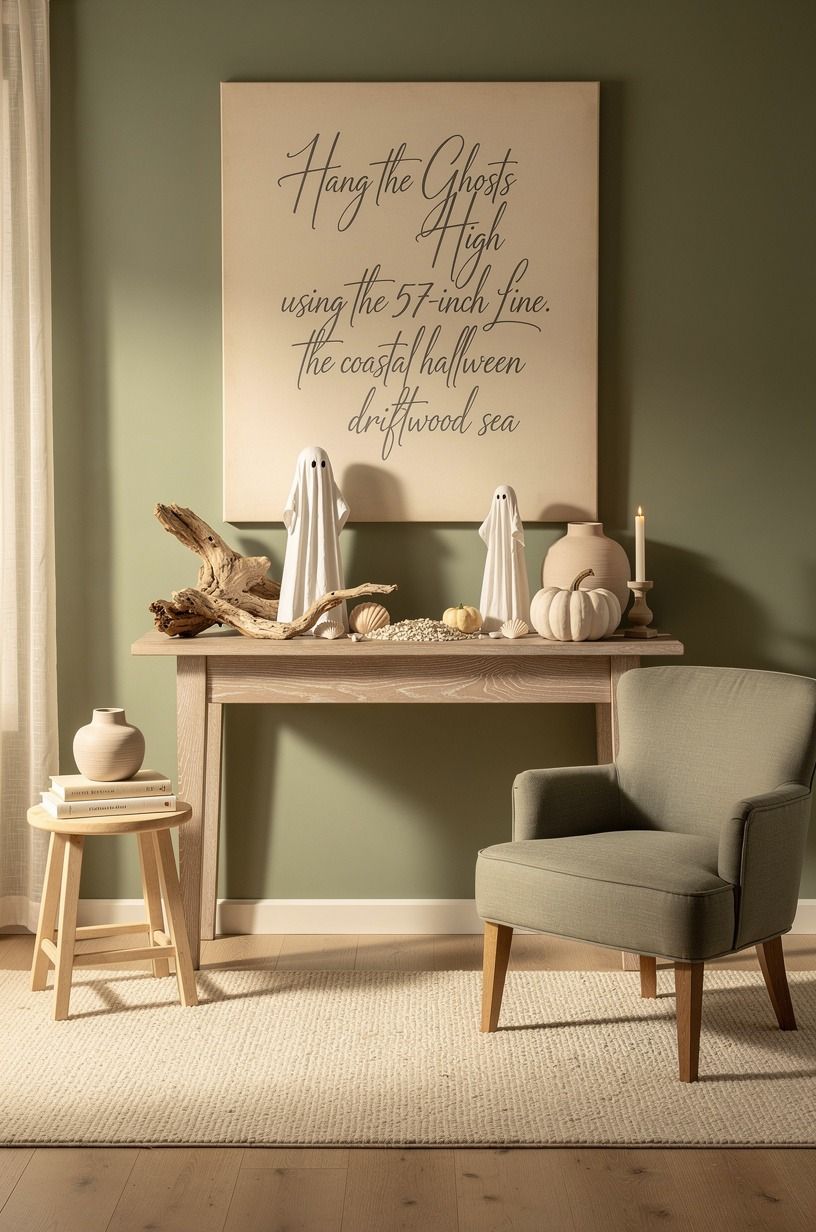
Art rules apply to seasonal decor, and almost nobody applies them. Center any framed or hung piece about 57 to 60 inches (145 to 152 cm) from the floor, and hang your ghosts so the lowest fold clears that same line. Below it, they look like something fell.
Above it, they float.
Use 3M Command hooks rated for one pound and clear fishing line, which disappears at a distance of about six feet. In a stairwell, stagger three at different drops so they catch the draft when someone opens the door.
That movement is the entire effect, and it only happens if they're hanging free rather than taped flat. I taped one to a wall my first year.
It looked like a napkin. Never again!

7Build the Mantel Around Driftwood Instead of a Garland
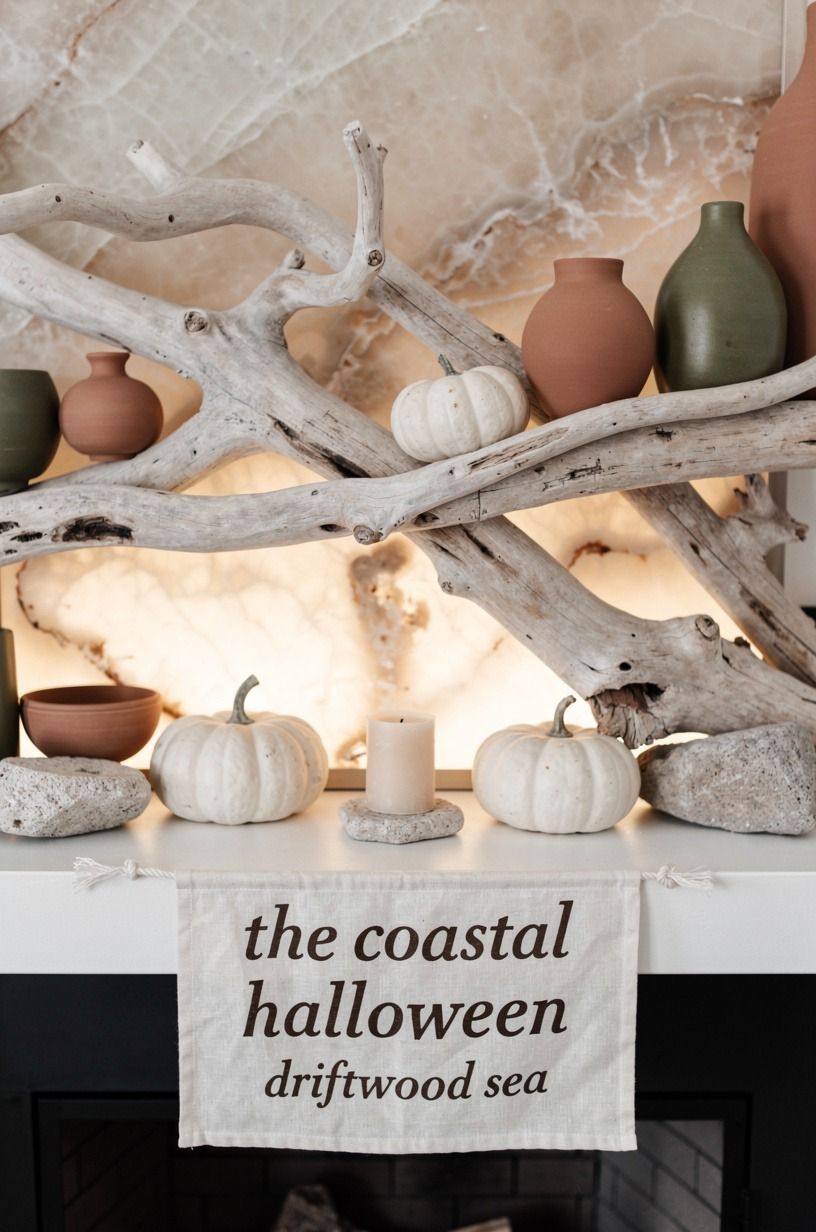
So what do you do with a mantel that's already crowded? Clear it completely, then rebuild with one horizontal line of driftwood laid end to end, overlapping slightly, running about two-thirds of the mantel's width.
Leave the last third empty. That negative space is what makes it look designed rather than decorated.
Add height at one end only: a tall hurricane, a translucent onyx candleholder with light behind it, or a piece of wood standing on end. Then three small things in terracotta, stone, and olive at varying heights along the line.
Nothing in the middle. Garland is the lazy version and it flattens everything under a single fuzzy rope, which is why your mantel always feels busier than the room itself.
If you're styling a bedroom mantel instead, the coastal granddaughter bedroom guide has the softer take.
8Paint One Small Surface Foggy Gray Over Going All-In on Black
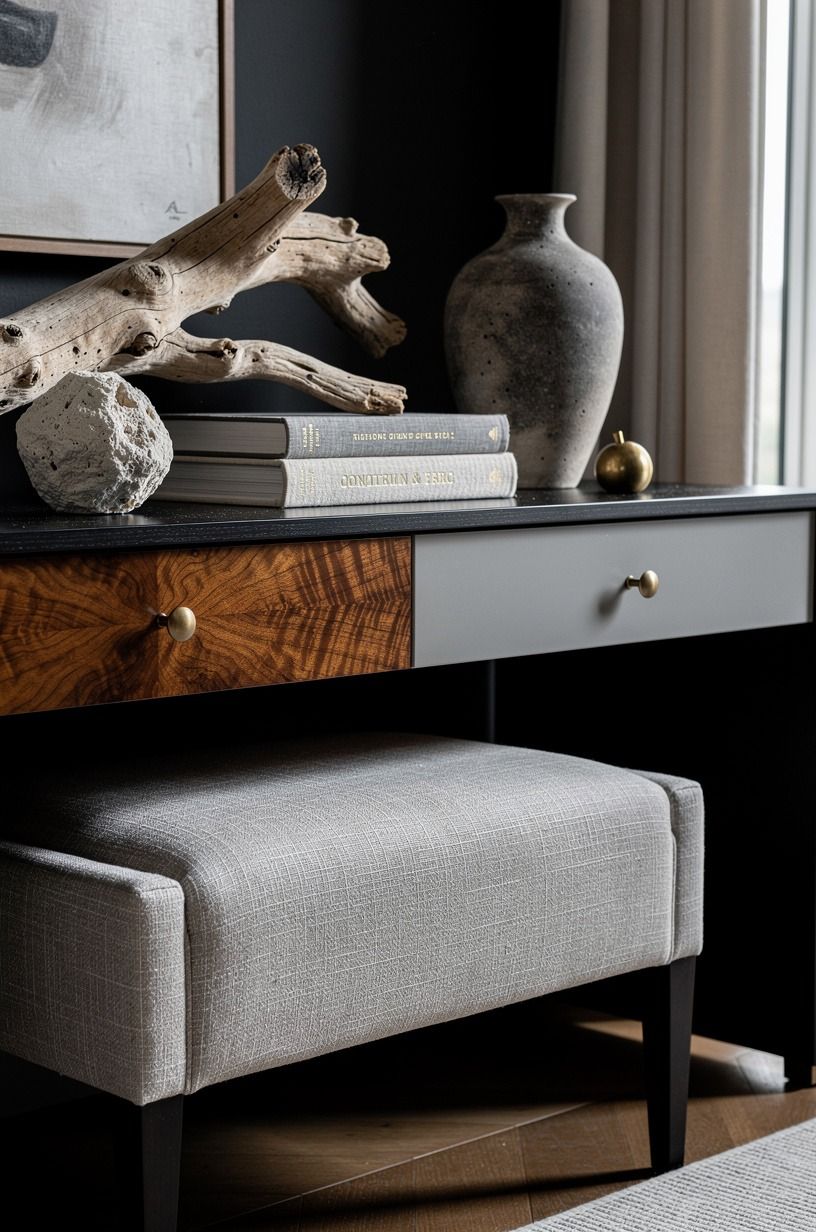
You don't need to repaint a room for one month of the year, and you shouldn't.
9Float Candles in Salvaged Glass: The Three-Height Light Stack
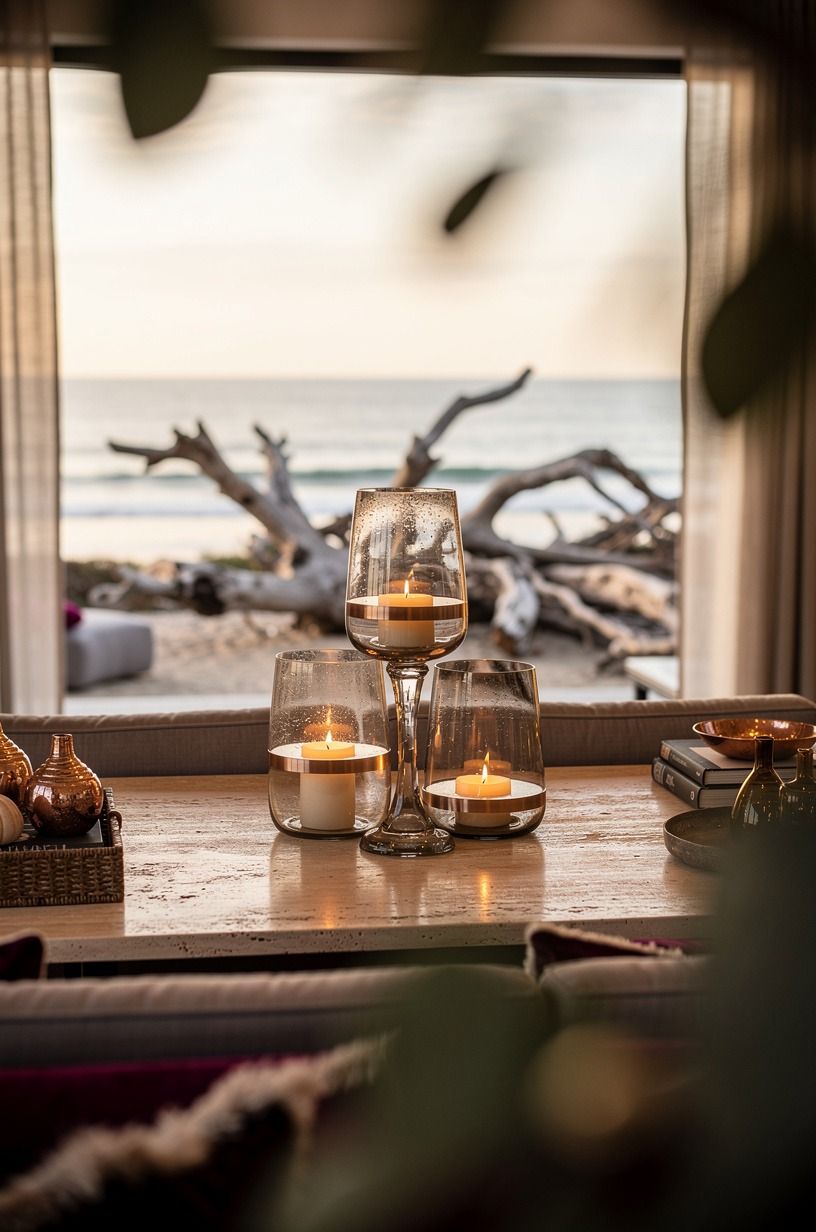
Three sources per room, always: ceiling, task, ambient. For a coastal halloween, that's a dimmed ceiling light, one lamp with a linen shade, and a low scatter of candlelight on warm travertine at table height. Miss any of the three and the room either looks like a dentist's office or you can't see the driftwood at all.
For the low layer, float tea lights in salvaged jars with an inch of water and a few pieces of sea glass at the bottom. Oyster shells work as holders too if you level the bottom with a dab of museum putty.
Battery candles with the flickering amber filament are the ones I'd buy, because real flame plus cheesecloth ghosts plus a coastal breeze is a genuinely bad combination. A Target Threshold four-pack runs about $15. Less than dinner out!
10Mix Rope, Net and Linen for the Texture Layer
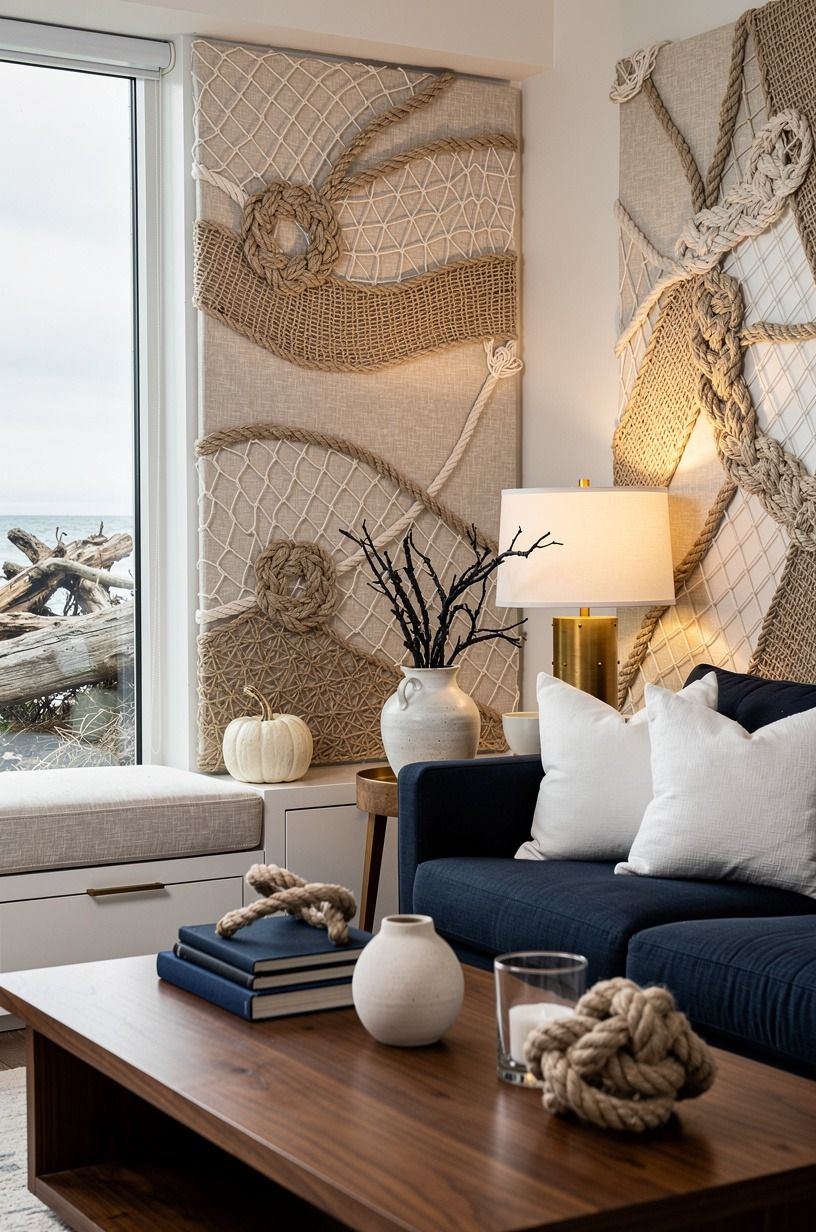
Texture is what makes a navy, white, and walnut room feel gathered instead of unfinished. You need three weights of it.
Rough, medium, and soft. Manila rope coiled on a walnut shelf.
A section of cotton fishing net draped over a curtain rod. And 18 oz cotton canvas or washed linen underneath everything as a runner, with an unlacquered brass accent developing patina.
Cut the net small, about three feet square, and drape it so it hangs off one corner rather than sitting square. Symmetry kills this look faster than anything.
Rope: one coil, one length knotted around a jar neck, done. The mistake I see constantly is everything at the same coarseness, which turns the whole room rustic and muddy instead of tranquil.
Your soft layer is what saves it, so don't skip the linen even though it's the least interesting thing on the list.
11Dress the Porch for Wind, Not for Photos
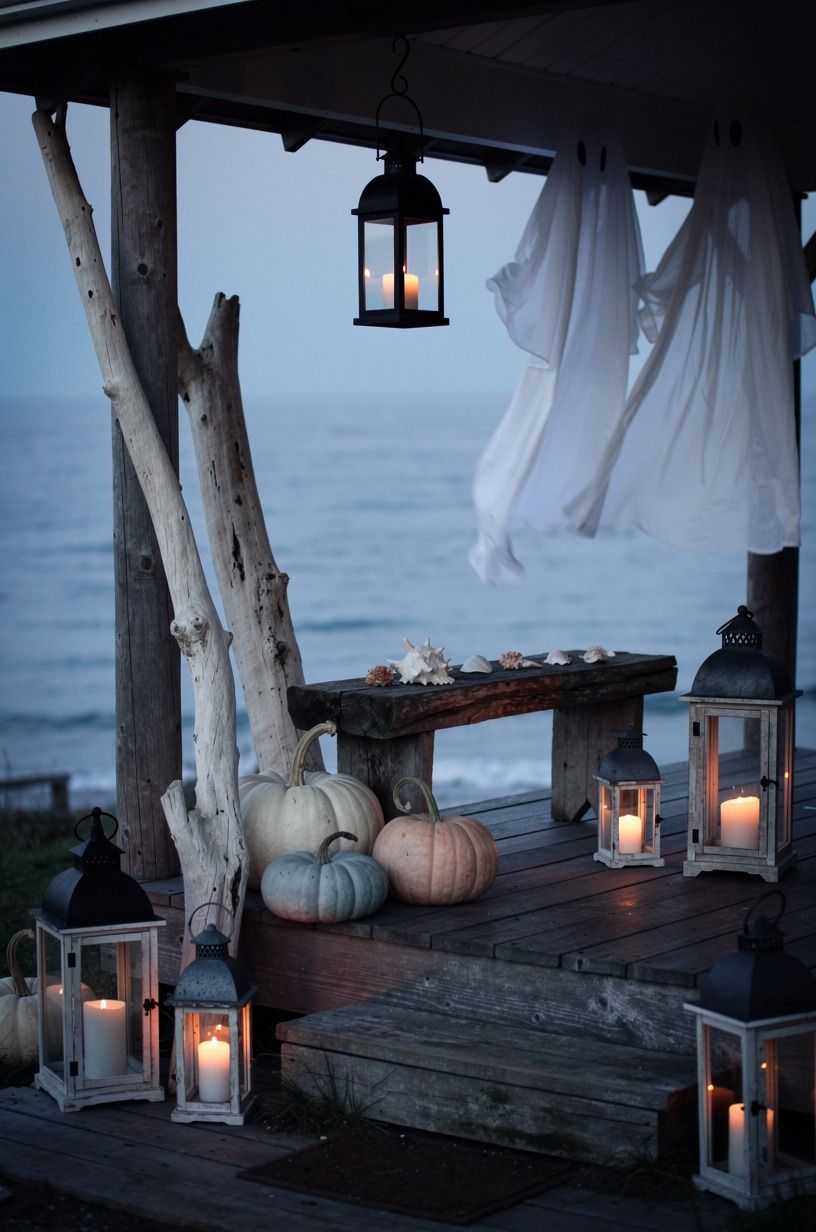
Coastal wind is a design constraint, not a footnote. Anything under two pounds is leaving. I've watched a foam tombstone clear the neighbor's fence, and it wasn't even a bad storm.
Weight everything. Sand in the bottom of lanterns, gravel in the pumpkin cluster's base, rope lashing for the driftwood rather than hot glue.
Use ground stakes for anything upright. And choose materials that look better wet, which is a short list: real wood, oversized-chip terrazzo, real glass, cotton rope.
Cheesecloth ghosts outdoors need to be treated as disposable, because two days of salt spray and they're gray rags. Budget $20 to $40 for a porch that survives October, mostly in stakes and sand.
It's the least glamorous step here and it's the one that determines whether your setup is still standing on the 31st.
12Frame a Window With Oyster Shell Strings
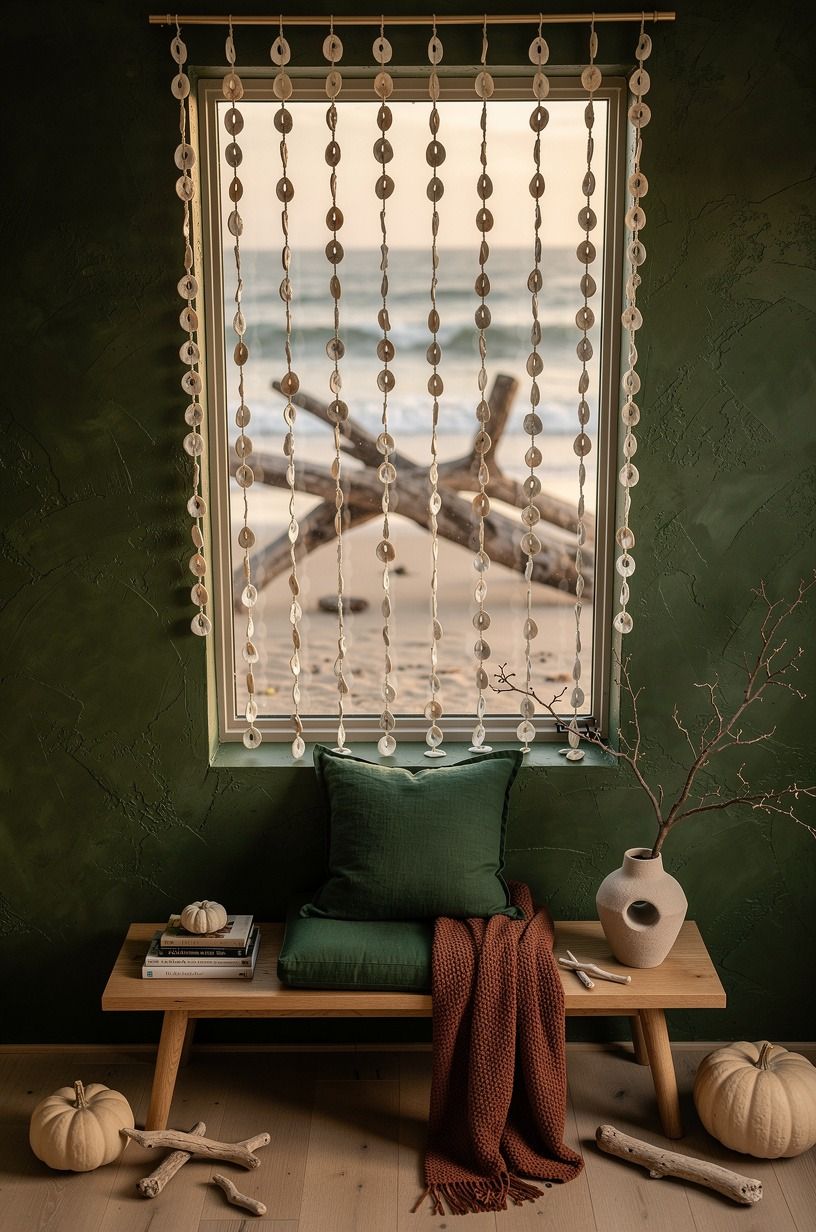
Windows are the most underused surface in a beach house in October.
13What Does This Actually Cost, Start to Finish?
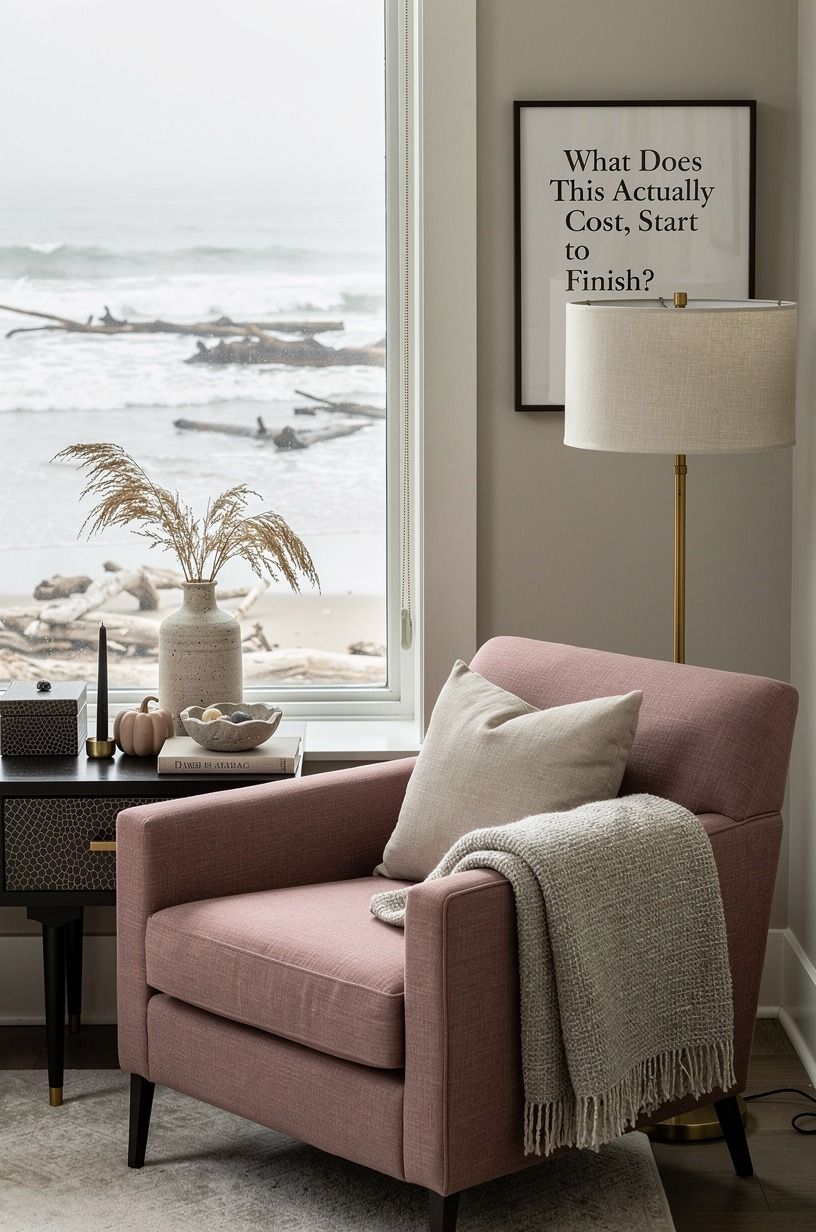
Depends entirely on how much you collect versus buy. Here are typical US ranges for a seasonal refresh, which is the same math whether you're doing Halloween or anything else:
Most coastal Halloween setups live entirely in that first row, and a good share of it lands under $150 because driftwood, shells, and sea glass cost nothing but a morning. Where I'd spend real money: lighting. A statement fixture runs $150 to $800 and it works all twelve months, unlike a bin of seasonal props.
A wool rug at $400 to $1,500 is the other purchase that earns its keep year-round. Everything else here is textiles and sand.
14Pack It Down So Next October Takes One Afternoon
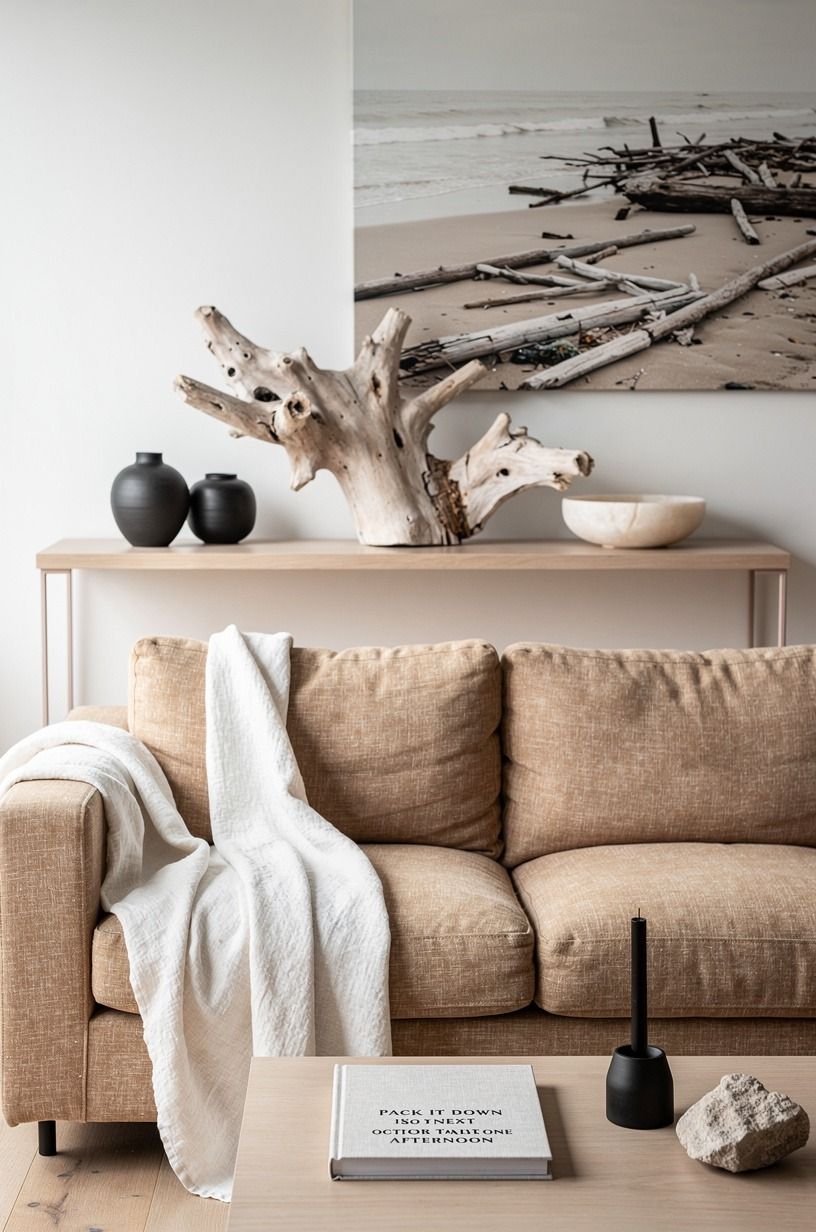
The step everyone skips, and the reason year two is always worse than year one. Sort into three labeled bins as you take things down: wood and shells, textiles, lighting.
Not by room. By material, because that's how you'll rebuild.
Wash the Belgian linen ghosts in cold water and fold them damp so the creases set. Rinse shells in fresh water or they'll powder with salt crystals by spring. Wrap sea glass in a dish towel, because it chips against itself in a jar (found that out).
And write one index card listing what you did and where, then tape it inside the bin lid. Next October you'll open one box and be finished by dinner.
That's the whole payoff, and it costs you twenty extra minutes in November.
What Nobody Tells You About Decorating Near Salt Water
I'll be honest about why I stopped doing normal Halloween at the shore. It wasn't taste. It was light.
Water light is diffused, cool, and constantly moving, and it does something specific to color that inland rooms never deal with. Saturated colors go chalky.
Orange turns rust. Black loses its depth by mid-afternoon and reads as a hole in the wall.
I spent my first October fighting this, buying deeper and darker things, wondering why the room looked worse the more I added. The room wasn't the problem.
I was choosing palettes built for incandescent light in a room that gets six hours of soft, reflected sky.
Once I stopped fighting it, everything got easier and cheaper. The materials that look right here are the ones that were already here: bleached wood, glass worn soft, shells, rope, linen.
They evolved in this light. They're pale and slightly irregular and they hold shadow in their texture rather than their color, which is exactly what a diffused room needs.
There's a second thing, quieter. Halloween near water isn't about gore or jump scares, and the houses that lean that way always feel like they're trying too hard. What's genuinely unsettling out here is absence.
Fog. An empty beach in October.
A house with the windows lit and nobody in it. That's what a cheesecloth ghost drifting in a stairwell draft is doing, and it's why the restrained version lands harder than the loud one.
I'd also push back on the idea that this is a niche look. Every year I see more people going this direction, partly because it's cheap and partly because you can leave half of it up through Thanksgiving. Driftwood and bone-colored textiles don't read as Halloween once the ghosts come down.
They just read as November. That's not a small thing when you're paying for storage bins and weekends.
One warning I'd give anyone starting: don't buy your way in. The best pieces in my house cost nothing and took three years of walking to find, and the thing I regret spending on is a set of matching resin shells that look wrong next to the real ones every single time.
The Questions Worth Answering First
What's the best starting piece for a small coastal Halloween setup?
One large piece of driftwood and three cheesecloth ghosts. That's the whole kit for a small room. An IKEA GLASKLAR glass vase around $5 holds your sea glass on the sill. Skip the big props entirely, they eat floor space you don't have.
Where can I buy coastal Halloween pieces on a budget?
Target Threshold and Wayfair both carry bone and oyster pumpkins under $20, and IKEA has the plain glass and linen. For real driftwood and shells, Facebook Marketplace after a storm and beach-town thrift shops in November beat any retailer. The Dollar Tree wreath project covers the door for $12.
How much does a coastal Halloween makeover cost?
Roughly $100 to $300 if you're starting from nothing, and close to free if you collect your own wood and shells. Cheesecloth runs about $12, candles $15, stakes and sand $20. Paint is the only line item that pushes you toward $200 to $600.
Can I do this on a budget?
Yes, and it's actually cheaper than conventional Halloween. Three free moves: walk the beach for wood and shells, dye old sheets in cold tea for ghosts, and rearrange your existing glassware onto one sill. The camper and tiny-home ideas lean hard on free swaps too.
Is this worth it in a small space?
Very much worth it, because a restrained palette makes small rooms read as airy instead of crowded. One rule: keep everything below eye level except the hanging ghosts, so the ceiling stays visually free. See the neutral Halloween guide for the pared-back version.
Is this a good idea for a rental?
Yes, and it's one of the most damage-free seasonal looks going. Command hooks for the ghosts, a tension rod for the net, peel-and-stick nothing because you're not painting walls.
Guest room doing double duty? The water pillow guide and a look at Serta stores near you or Tempur-Pedic locations matter more than decor when family visits.
The Step I'd Do Tonight
If I had to pick one step, I'd start with the palette. Pick emerald, gold, and cream before you buy anything, because every orange thing you bring home will fight the gray light instead of working with it.
Decide the three colors. The rest follows.