
 by
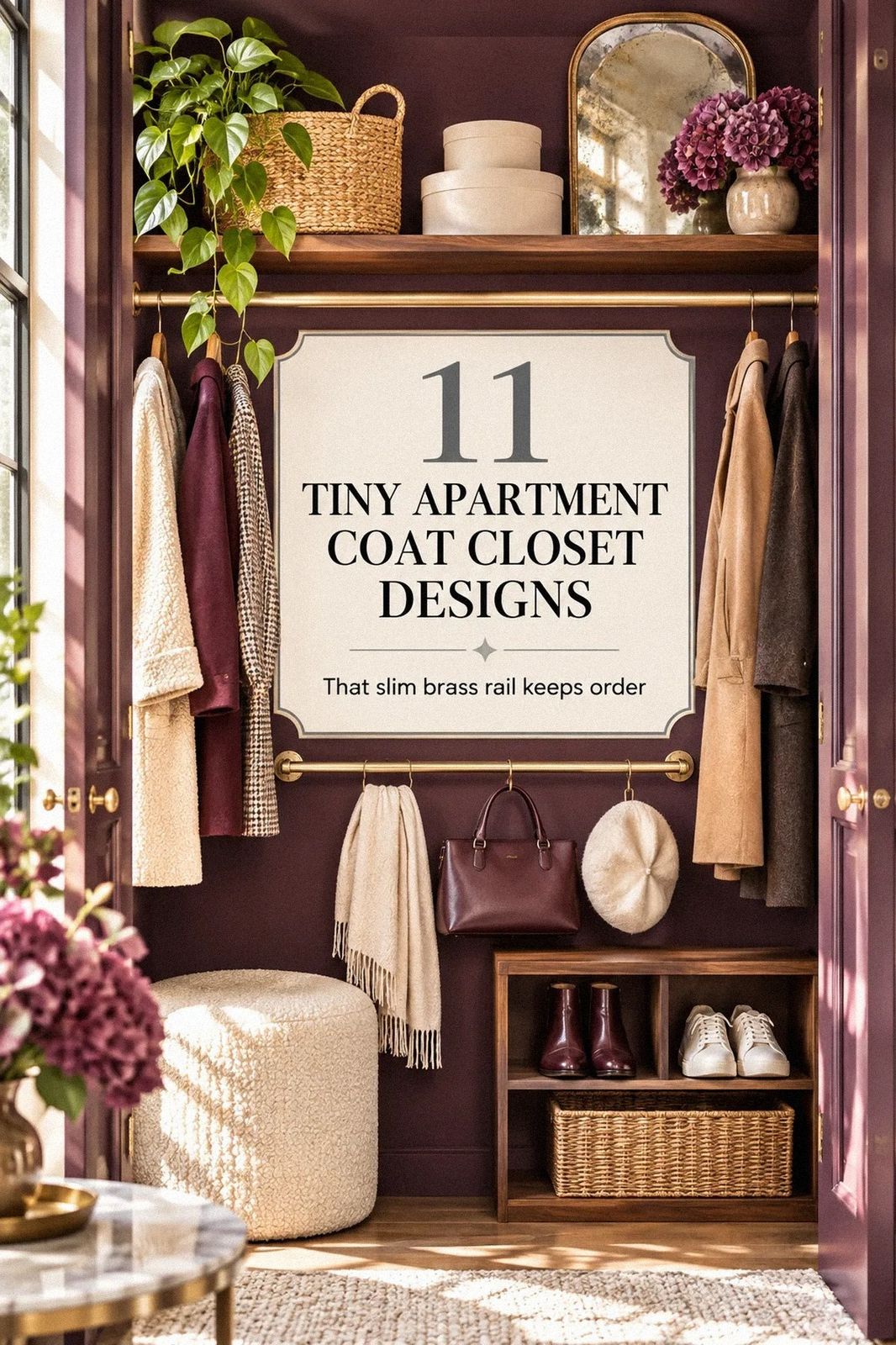
A tiny coat closet can hold more with $150-$800, depending on whether you reuse shelves or install a modular system. I learned that after cramming every jacket onto one rod and losing a boot underneath. The fix wasn't more furniture. It was better height, clearer zones, and materials that can take daily abuse.
- The short version: Build upward, keep daily items within reach, and leave one empty hook.
- A small closet feels generous when it supports the first 20 seconds of your arrival.
- Layer the Double-Hang Rod Strategy
- What Should the Three Heights Do?
- Swap Deep Shelves for the 14-Inch Rule
- Frame the Door With a No-Drill Drop Zone
- Anchor Shoes With a Floating Floor Shelf
- Hang Bags on a Vertical Rail
- Paint the Back Wall, Not Every Surface
- Open Bins or Closed Drawers?
- Use the Honest Closet Cost Tiers
- White Oak Meets Walnut
- Sort by the Exit You Actually Take
1Layer the Double-Hang Rod Strategy
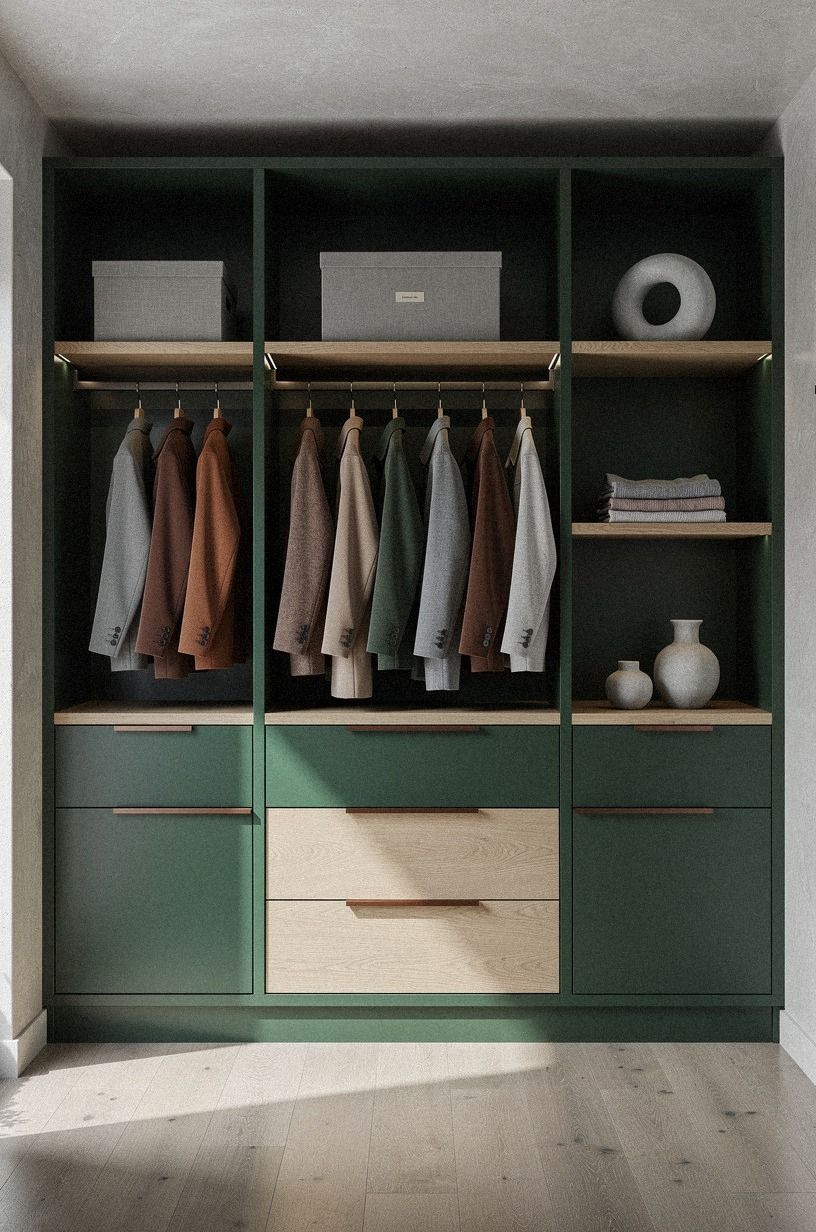
A double-hang setup gives your closet two useful levels instead of one crowded rail. Keep the upper rod at 84 inches when your ceiling allows it, then place the lower rod around 42 inches for shorter jackets, shirts, and folded scarves.
You don't need a full custom build. A tension rod can create the second tier in a rental, and you'll gain breathing room immediately.
I prefer matte-black tension rods because they look intentional against a forest-green Venetian-plaster interior and won't compete with natural-oak accents. Keep the lower level for everyday pieces and reserve the upper level for seasonal outerwear.
If your closet is narrow, don't force bulky hangers into it. Slim velvet hangers take less visual space, and this tiny closet organization guide has more renter-friendly layouts.
Leave a little air between categories. Your wool coat needs room to hang, or it'll wrinkle before you wear it. I also like one empty section at the end of each rod.
It makes the closet feel calmer and gives you somewhere to put tomorrow's outfit.
2What Should the Three Heights Do?
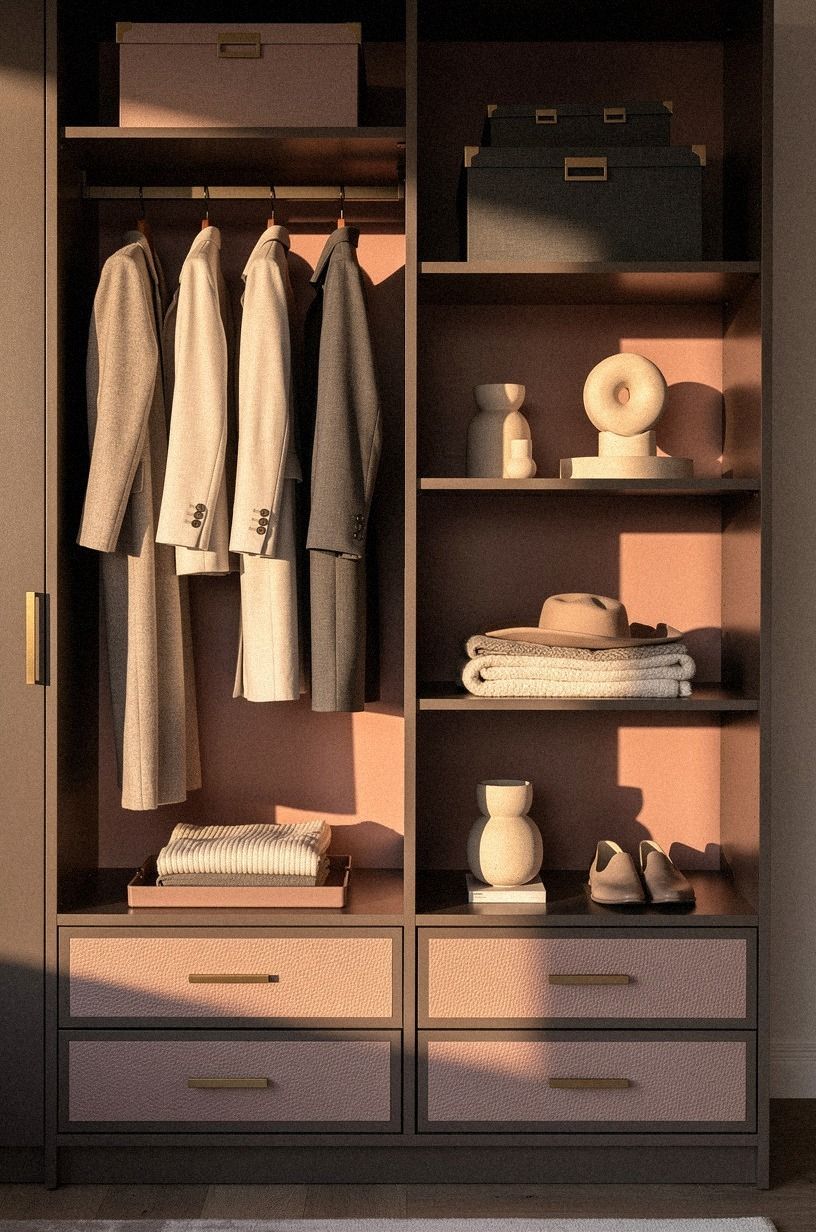
Most tiny closets fail at the floor, middle, and ceiling because everything gets treated as one flat storage zone. Build three heights instead: a top shelf for rare-use pieces, a rod for daily coats, and the floor for shoes or a narrow basket. Your eye will read the closet as calmer, and you'll find what you need faster.
A small LED rod light can make the middle zone visible without wiring. Typical LED rod lighting costs $30-$150, so you can choose a battery option for a rental or a wired version for a permanent home.
I wouldn't install a bright blue bulb. A warm glow works with dusty rose, charcoal, and brass accents, while harsh light makes every pile look messier.
The top zone should hold luggage, spare bedding, or winter accessories you won't touch every morning. The middle zone is for your hands. The floor zone needs to stay open enough that shoes can leave and return without a wrestling match.
Before you buy containers, compare this layout with these small rental closet ideas. You may find that a simple shelf height change solves the problem.
3Swap Deep Shelves for the 14-Inch Rule
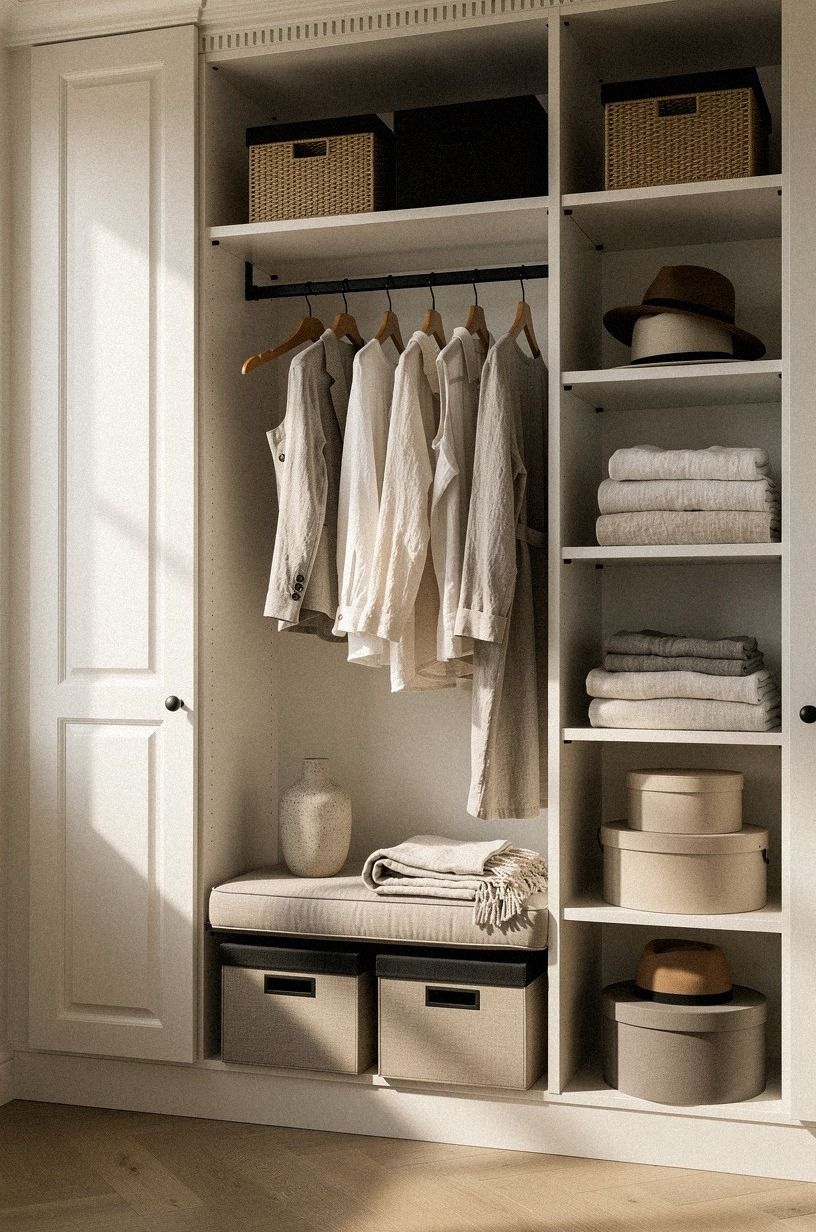
Deep shelves sound useful until your closet turns into a dark cave. A shelf depth of 14 inches, or about 36 centimeters, is enough for folded hats, bags, and compact bins without burying the items behind them.
Your hand should reach the back easily. If it can't, the shelf is working against you.
I like washed Belgian linen bins because their soft texture warms a basic closet without making it look overfilled. Paint the wall behind them with Farrow & Ball White Tie No. 2002 if you want a warm-white backdrop, then add camel and black accents sparingly. A glossy shelf with plastic bins can still feel cold and temporary.
Use the front half for what you touch weekly. The back edge can hold spare umbrellas or travel bags. If you keep losing things behind the front row, the shelf is too deep for your habits, regardless of what the product label says.
For more ideas, save this guide to bedroom closet organization for better sleep, especially if your closet shares a wall with your bed.
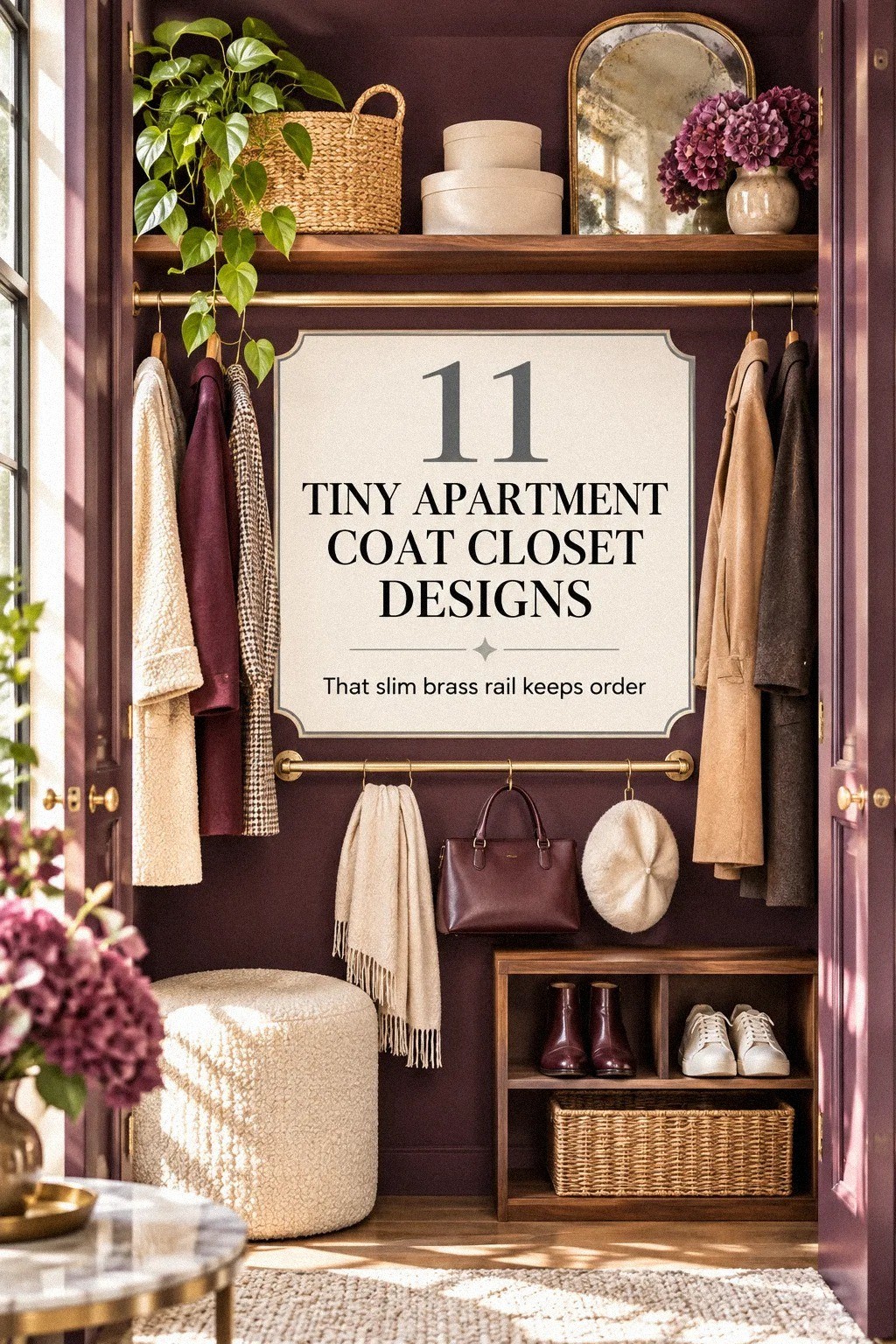
4Frame the Door With a No-Drill Drop Zone
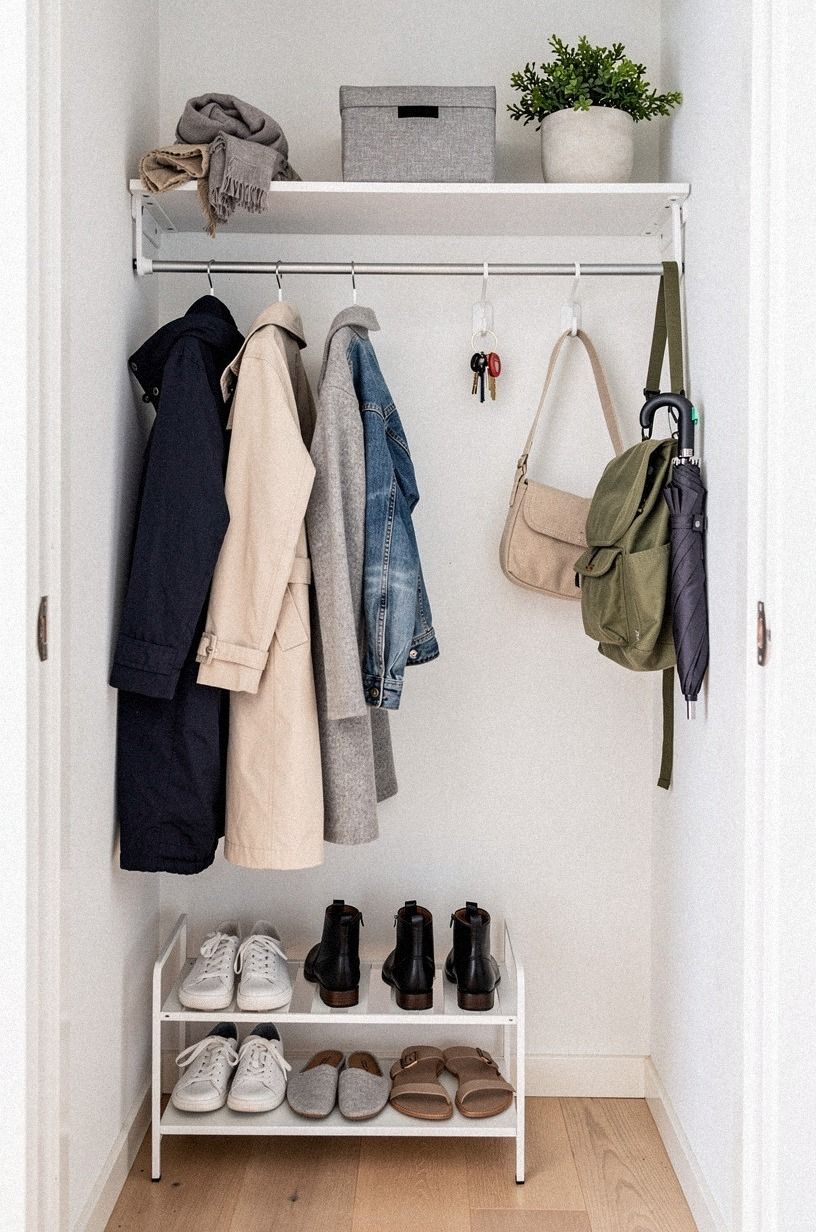
The closet door is valuable storage, but only if you protect the swing.
5Anchor Shoes With a Floating Floor Shelf
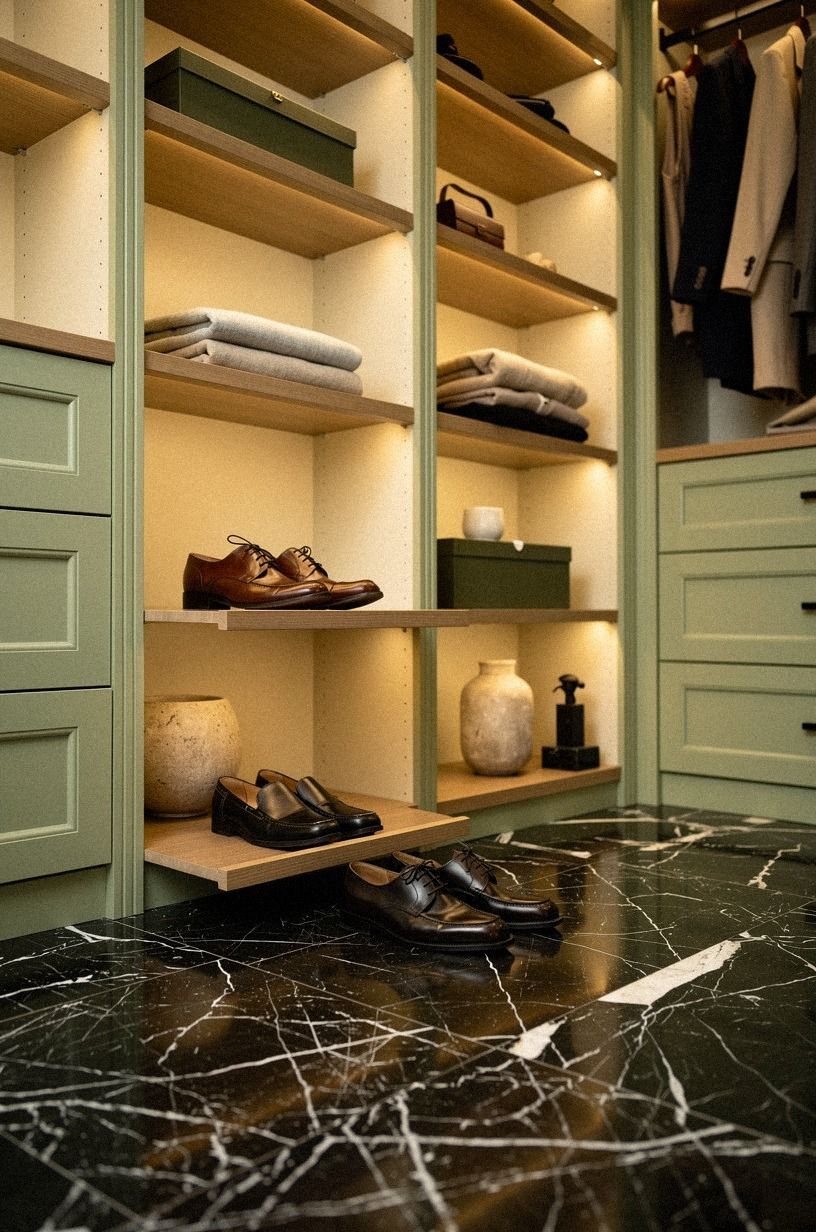
Shoes create the fastest mess in a tiny coat closet because they arrive wet, dusty, and in pairs that refuse to stay together. A floating floor shelf keeps them off the floor while leaving enough clearance beneath for boots. Your daily shoes should sit where you can see them, not behind a basket labeled “miscellaneous.”
Use Nero Marquina black marble with white veins only if you need a wipeable surface, and choose a natural-oak shelf if you want a softer apartment feel. I prefer one shelf around the base rather than a tall shoe tower. Tall towers steal the sightline and make a small closet feel blocked.
Keep one pair per section, with the toes facing out. If you're storing wet footwear, add a shallow tray beneath the shelf and let the shoes dry before you close the door. That small gap protects the wood and keeps the closet from developing a stale smell.
A rental-friendly layout doesn't need a permanent shoe cabinet. This small-space storage article shows how to keep the floor useful without making it look busy.
6Hang Bags on a Vertical Rail
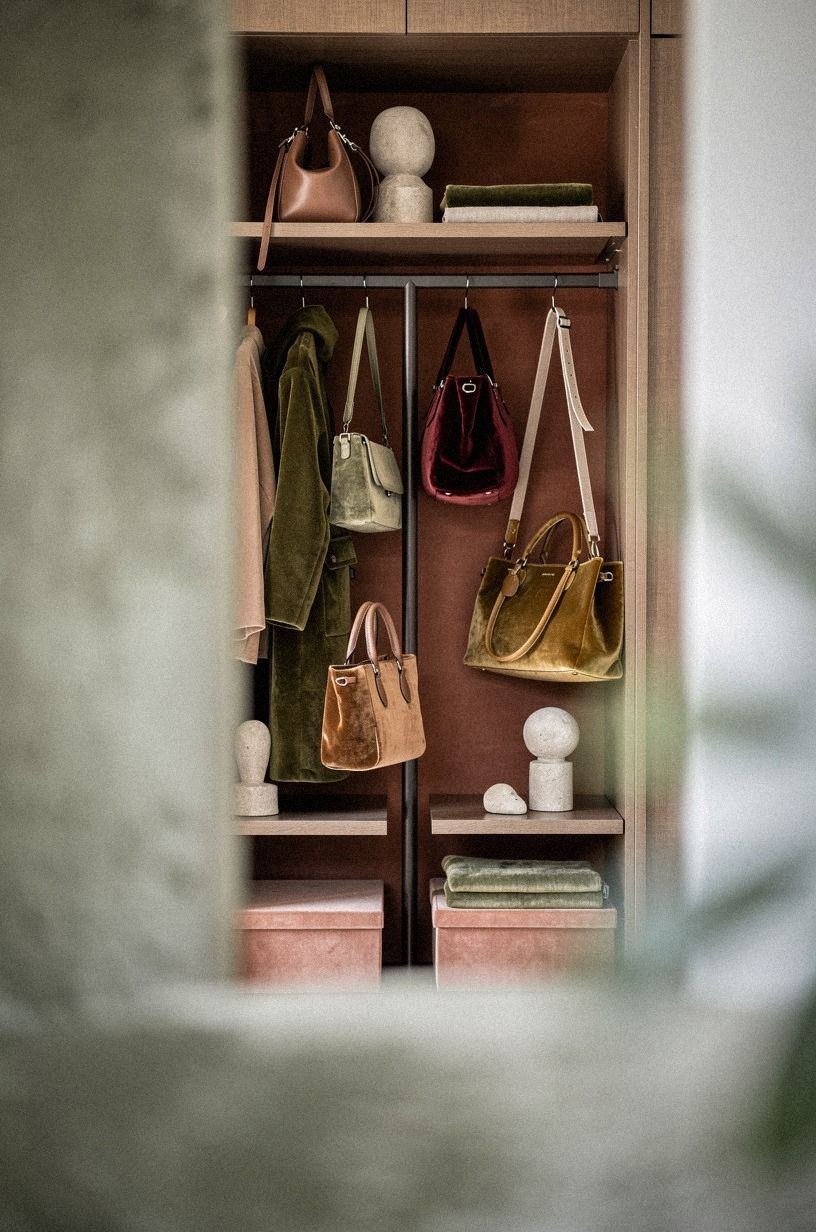
Bags are awkward because they don't fold neatly and they steal the best part of your rod.
7Paint the Back Wall, Not Every Surface
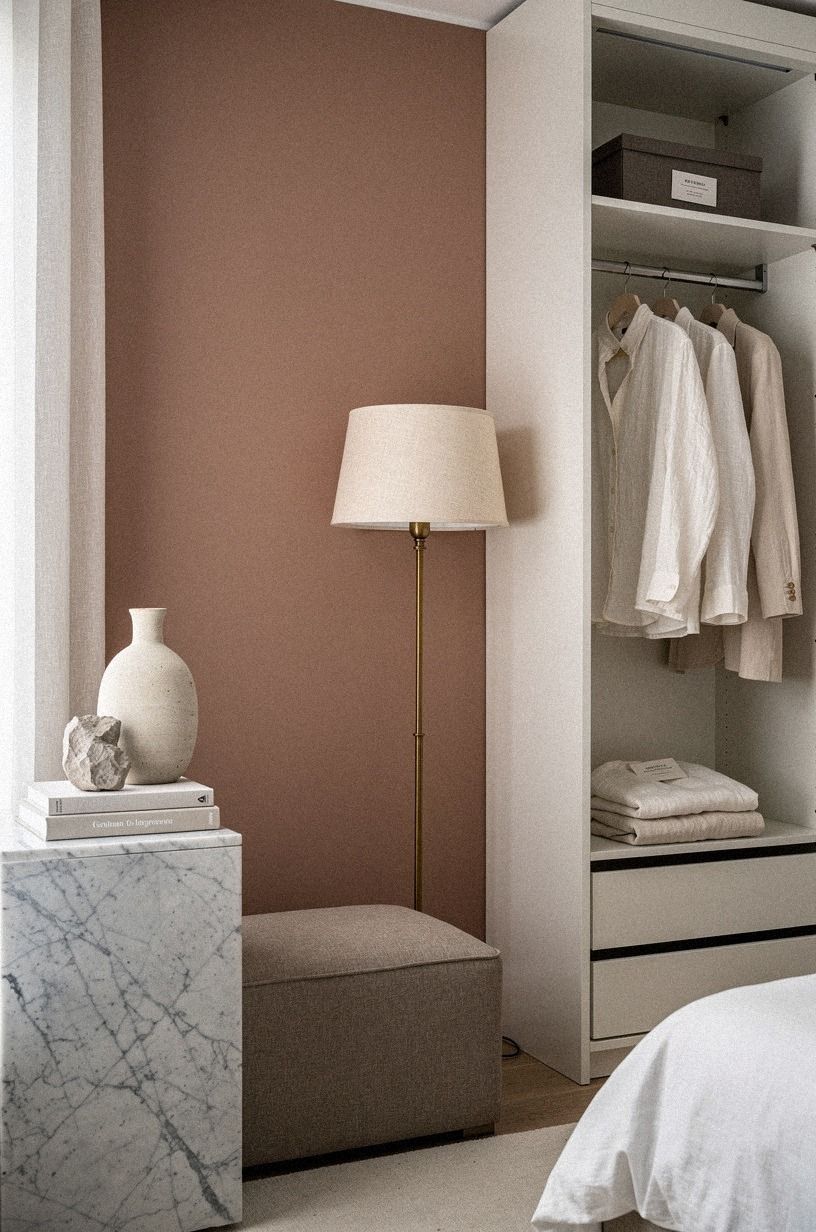
A coat closet doesn't need a full renovation to feel finished. Paint the back wall in a calm, deeper color and leave the trim light. Your coats will stand out, and the closet will gain a little visual depth without becoming gloomy.
Farrow & Ball Red Earth No. 64 works when you want a clay-toned neutral that doesn't fight colorful outerwear. For a softer look, pair linen-colored trim with aged-brass hooks so the closet stays calm without becoming flat.
I'd skip a very dark paint in a closet with no light source. It can look dramatic in a sample and muddy by evening.
If you want more texture, add a small Carrara marble shelf or tray with subtle gray veining beneath the aged-brass hooks. The clay wall, linen trim, and marble keep the small space grounded without turning the entire entry heavy.
Use a small roller, protect the floor, and let the paint dry fully before returning your coats. That matters more than a complicated color story. Connect the tone with your small front porch fall decor ideas if the closet opens directly onto an exposed entry.
8Open Bins or Closed Drawers?
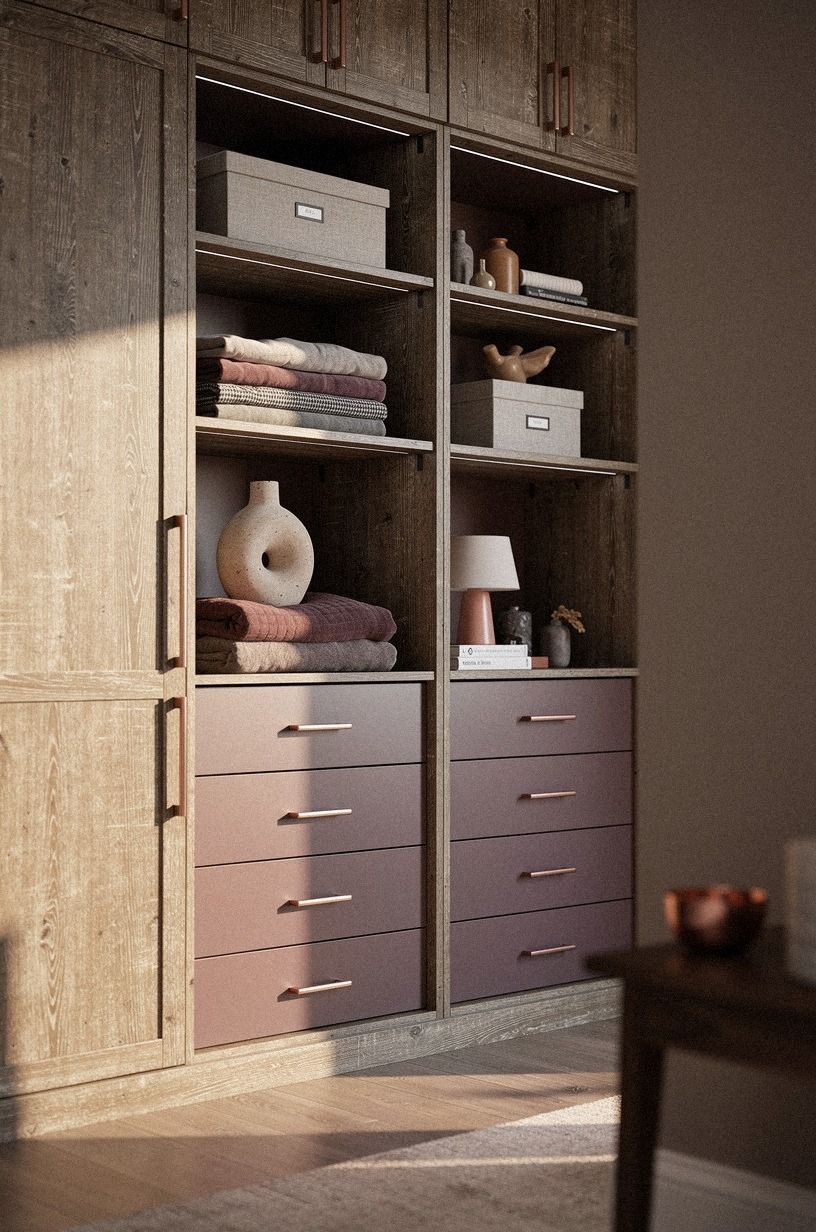
Open bins make daily items easy to grab, while closed drawers hide the things that rarely look tidy.
9Use the Honest Closet Cost Tiers
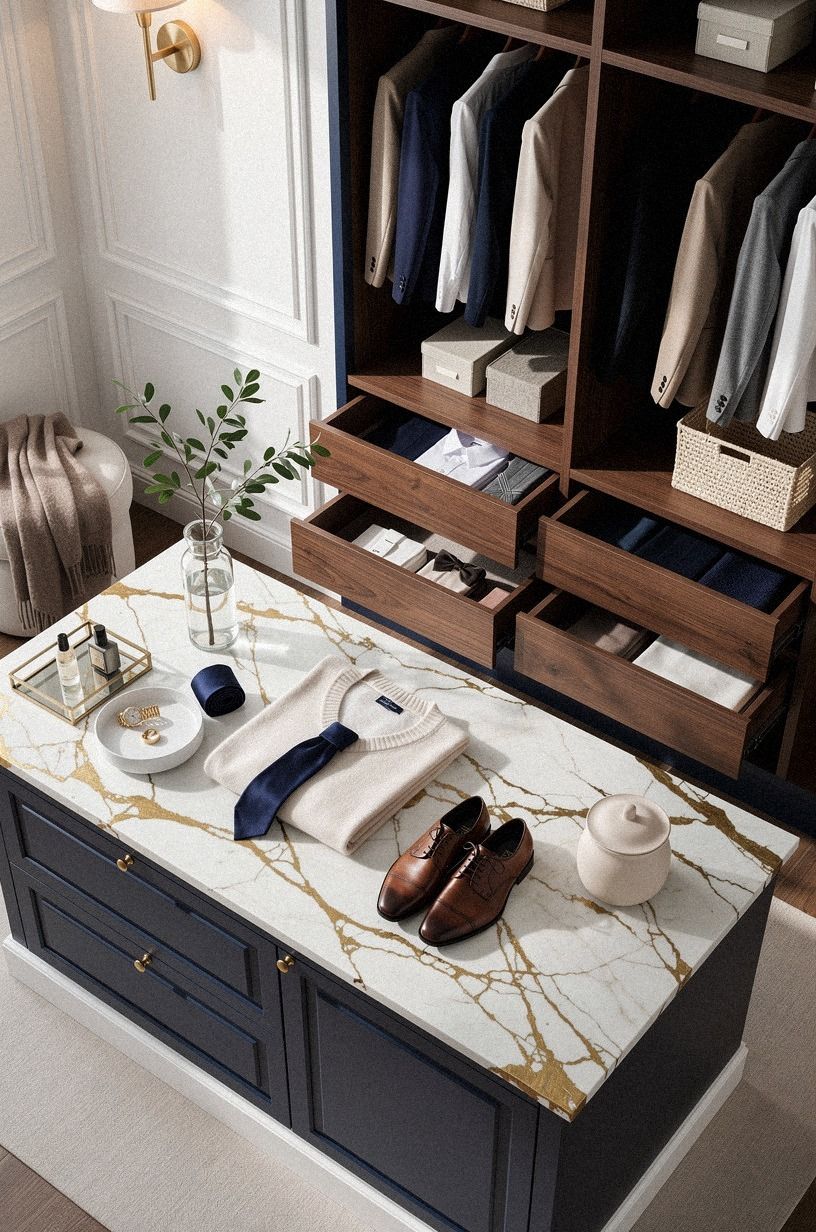
The right budget depends on whether you're changing the storage itself or simply improving the arrangement. Your first pass might need only rods, shelves, bins, and lighting. A more involved project can include drawers or a modular system, but a tiny apartment usually doesn't need an island or custom millwork.
I wouldn't spend the high tier on a coat closet unless the space is unusually large or part of a major renovation. Your money works harder on a sturdy shelf, useful lighting, and durable hangers. Typical velvet hangers cost $20-$60 per set, while LED rod lighting runs $30-$150.
The most satisfying budget refresh is usually a combination of one structural change and one sensory change. Add a second rod, then improve the light.
Or install a narrow shelf, then paint the back wall. You don't need to replace everything at once!
If you're comparing a closet upgrade with broader storage changes, browse these tiny apartment storage layouts before committing. You may find that moving one piece solves more than buying five.
10White Oak Meets Walnut
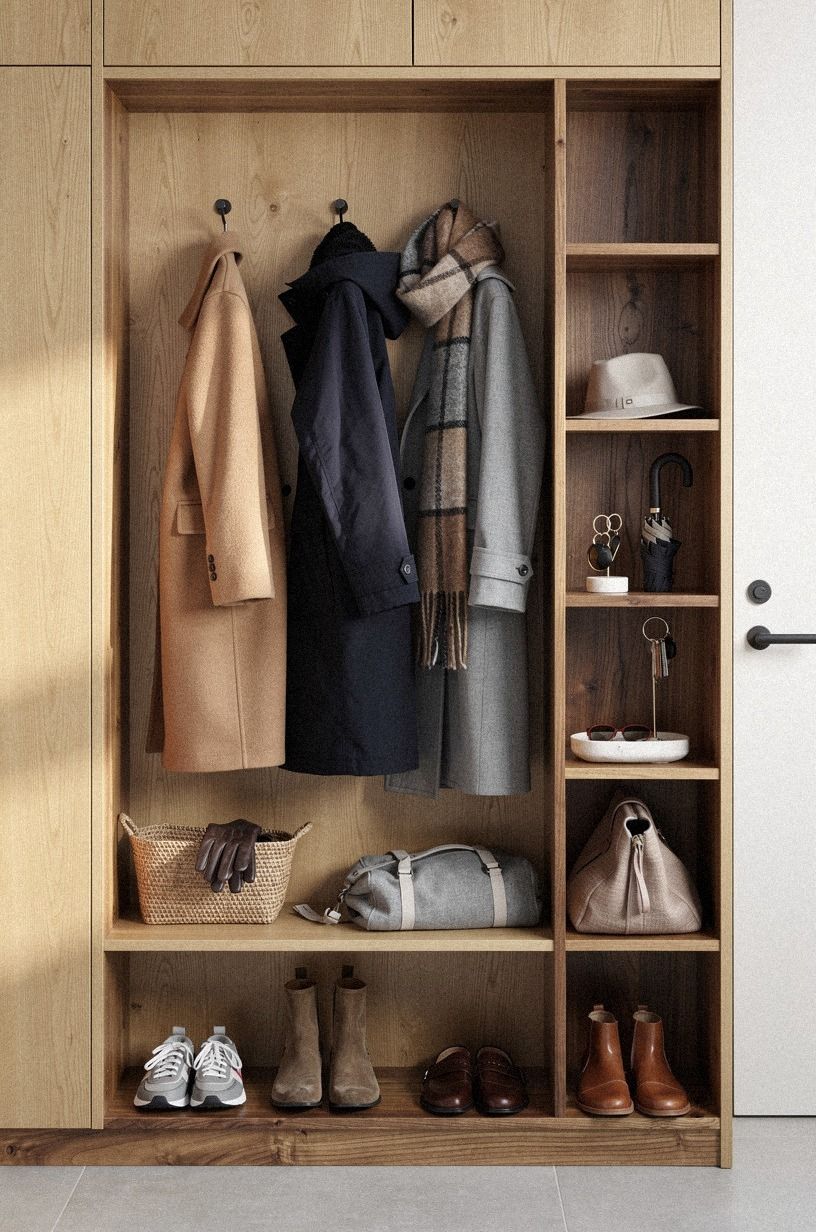
A tiny closet can look considered without matching every material. Use cerused white oak for shelves and an emerald textile or gold-toned hook detail for contrast. Your eye gets variation, but the closet won't look like a showroom display.
My favorite pairing is cerused white oak with an emerald textile and a small gold-toned accessory. The grain gives the space an earthy note, while the lighter shelf keeps it airy. I'd skip three different wood finishes.
They compete in a small visual field and make your storage look accidental.
Keep the rest simple. Soft cream fabric, gold metal, and one rich color are enough.
You can use a cream linen pouch for delicate accessories, but you don't need a decorative object in every corner. Your closet should help you leave the apartment, not ask you to style it every morning.
A restrained material palette also makes future changes easier. If you later replace the bins, the shelf and rail will still work together. That's a small but valuable form of flexibility.
11Sort by the Exit You Actually Take
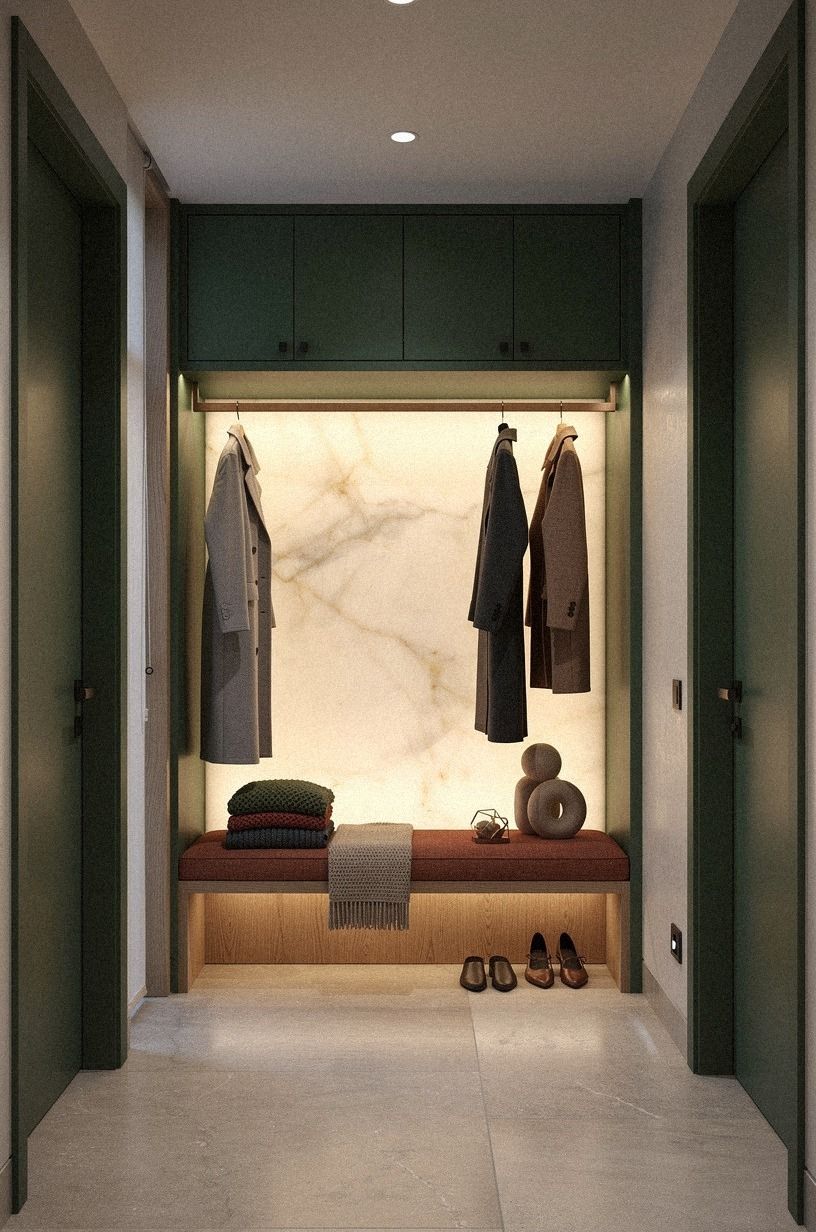
The best coat closet organization follows your routine, not a diagram. If you leave through the front door, place your everyday jacket, keys, bag, and shoes along that path.
Your less-used pieces can move higher or farther back. This small change often matters more than a new shelving system.
Use rust-colored woven bins for seasonal hats and gloves, or choose a natural-oak solution if you want a sturdier visual anchor. If you have room for a premium detail, a slim backlit translucent onyx shelf can hold keys without taking much space.
Keep one bin for each real category. “Winter stuff” is usually too broad, while hats, gloves, and scarves are easy to maintain.
Put the pieces you reach for first between waist and shoulder height. If you bend for your coat, search for your keys, and then move three shoes to reach your boots, the layout is working against you.
And give yourself one empty hook. It will hold the coat you wore today, a guest's jacket, or the tote you need tomorrow.
You don't need every surface occupied to prove the closet is organized. If your entry still feels crowded, look at these tiny garden storage ideas for lessons in using narrow zones without blocking movement.
The 20-Second Entry Test
Stand outside the closet and act out your normal arrival. Where does your hand go first? If the answer is three different places, the closet needs clearer priorities.
Your coat should land on the nearest open hanger. Your bag should have a visible hook. Your keys should not disappear into a deep basket.
Your shoes should have enough floor space that you can remove them without moving another pair.
I call this the 20-second arrival test because it reveals problems faster than a measuring tape. If the routine feels smooth, the system is useful. If you hesitate, reach, or create a pile beside the door, move one category before purchasing anything.
A Renter's Reversible Toolkit
Renters can make a dramatic improvement with removable pieces. Start with tension rods, over-door pockets, freestanding shelves, adhesive hooks, and lightweight baskets. These changes let you test the arrangement before committing to holes or custom carpentry.
Check every weight limit carefully. Adhesive hooks are useful for keys and light bags, but they aren't a reliable home for a full backpack. A freestanding shelf should sit flat and leave enough room for the door to open without rubbing.
I like testing one change at a time. Add the lower rod, live with it for several days, then decide whether the remaining space needs a shelf or a bin. That process is slower, but it prevents expensive and frustrating overcorrection.
For another renter-friendly reference, revisit this small rental closet guide. The most flexible systems are the ones you can rearrange without starting over.
Where the Closet Gets Crowded
The mess usually begins at the boundaries. A coat closet becomes difficult when it stores sports gear, cleaning supplies, luggage, pet equipment, and every jacket you have owned since college.
Make three decisions: what belongs here daily, what belongs here seasonally, and what belongs somewhere else. A beautiful bin cannot solve an ownership problem. If an item has no real connection to leaving the apartment, question its place.
I keep travel bags high, daily shoes low, and weather-specific accessories together. Bulky items that are used once a year can move to another closet or under-bed storage. This bedroom storage ideas guide can help when the entry closet is carrying more than it should.
Before You Buy Another Bin
Measure the closet width, depth, ceiling height, door swing, and usable floor clearance. Then measure the objects that will actually live there. A bin that fits the shelf may still be too wide for your hand or too tall to pull out comfortably.
I prefer low-profile felt bins for shelves because they slide forward without scraping the wall. For the floor, choose a tray with a raised edge.
For the upper shelf, use a lid only if the contents are genuinely seasonal. Lids add friction, and friction makes storage invisible.
Leave roughly 10 percent of the closet unassigned. It may seem wasteful, but that small reserve keeps the system from collapsing after one busy week.
What I Learned After Organizing Small Closets
I used to think a tiny coat closet needed more storage products. That was my first mistake.
I bought matching bins, filled them too quickly, and then had nowhere to put the coat, bag, or pair of shoes I used every day. The closet looked calm for about three days. After that, it became a closed door hiding a badly planned system.
The better question is what your hands need at the moment you enter. Your everyday coat should be reachable without moving a basket.
Your shoes should have a defined landing place. Your winter accessories should be together, but not buried behind luggage. Once those decisions are clear, the materials become easier.
A 14-inch shelf, a lower rod at 42 inches, and a warm LED light can do more than a beautiful custom cabinet that ignores your habits.
I also learned that color matters, but not in the way I expected. Farrow & Ball White Tie No. 2002 reflects light well, yet a closet can still feel flat if every surface is white plastic.
A little aged brass, cerused white oak, or woven cotton gives your eye somewhere to rest. The space feels warm because the textures absorb the hard edges, not because you added another label.
For renters, removable changes are usually the smartest starting point. Tension rods, over-door pockets, peel-and-stick hooks, and freestanding shelves let you test the layout before making a permanent decision.
If you're renovating, you can spend more, but you should still live with the arrangement first. A custom system won't fix a daily path that makes you reach, bend, and search.
The most useful rule is simple: organize the first 20 seconds of your arrival. Your coat, bag, shoes, and keys should each have a clear home. Everything else can be seasonal, decorative, or secondary.
That order makes a tiny closet feel generous, even when the square footage hasn't changed.
The Questions Worth Answering First
What is the best coat closet organization for a small closet?
A double-hang rod, one 14-inch shelf, and a narrow shoe zone usually give me the most usable storage. IKEA KALLAX birch-effect cubes can add flexible compartments, while slim velvet hangers reduce crowding. I keep everyday pieces at hand and move seasonal items higher, where I won't fight them each morning.
Where can I buy coat closet organization pieces on a budget?
I usually check IKEA, Wayfair, or Target for rods, bins, hooks, and modular pieces. I also look for solid shelves and baskets through Facebook Marketplace or a local thrift shop. Secondhand wood shelving often costs less and brings more character than a matching plastic set.
How much does a coat closet makeover cost?
I’d budget about $150-$800 for a small refresh, depending on the rods, shelves, bins, and lighting. Reusing your existing shelf can keep the cost down. A modular system with drawers may move into the $2,000-$6,000 range, while custom millwork costs much more.
Can I create coat closet organization on a budget?
Yes, and I’d start with free changes. Group coats by use, move seasonal pieces higher, and reserve one hook for your daily bag. A tension rod can add a second level, while a $20-$60 set of velvet hangers reduces visual bulk without requiring a permanent installation.
Is coat closet organization worth it in a small space?
Yes, because I’ve found that a small closet rewards clear zones quickly. A defined landing place for shoes, bags, and coats keeps those items from spreading into the bedroom or hallway. I’d start with the path you use most, then adjust the shelves after living with the arrangement for a week.
Is coat closet organization a good idea for a rental?
Yes. I’d use tension rods, over-door pockets, freestanding shelves, and removable hooks before drilling.
Peel-and-stick hooks work well for light bags and keys, while a freestanding IKEA HEMNES-style cabinet can move with you. I’d always check the weight limit before hanging anything heavy.
Where I'd Start First
If I had to pick one, I'd start with the double-hang rod. It gives your closet a second working level without stealing floor space, and you can test it before spending more. Pin the double-hang layout for later and adjust the shelves after one week of real use.
Then add light, a defined shoe landing place, and one empty hook. Those changes are modest, but they make the closet feel clear, warm, and genuinely easier to live with!