
 by
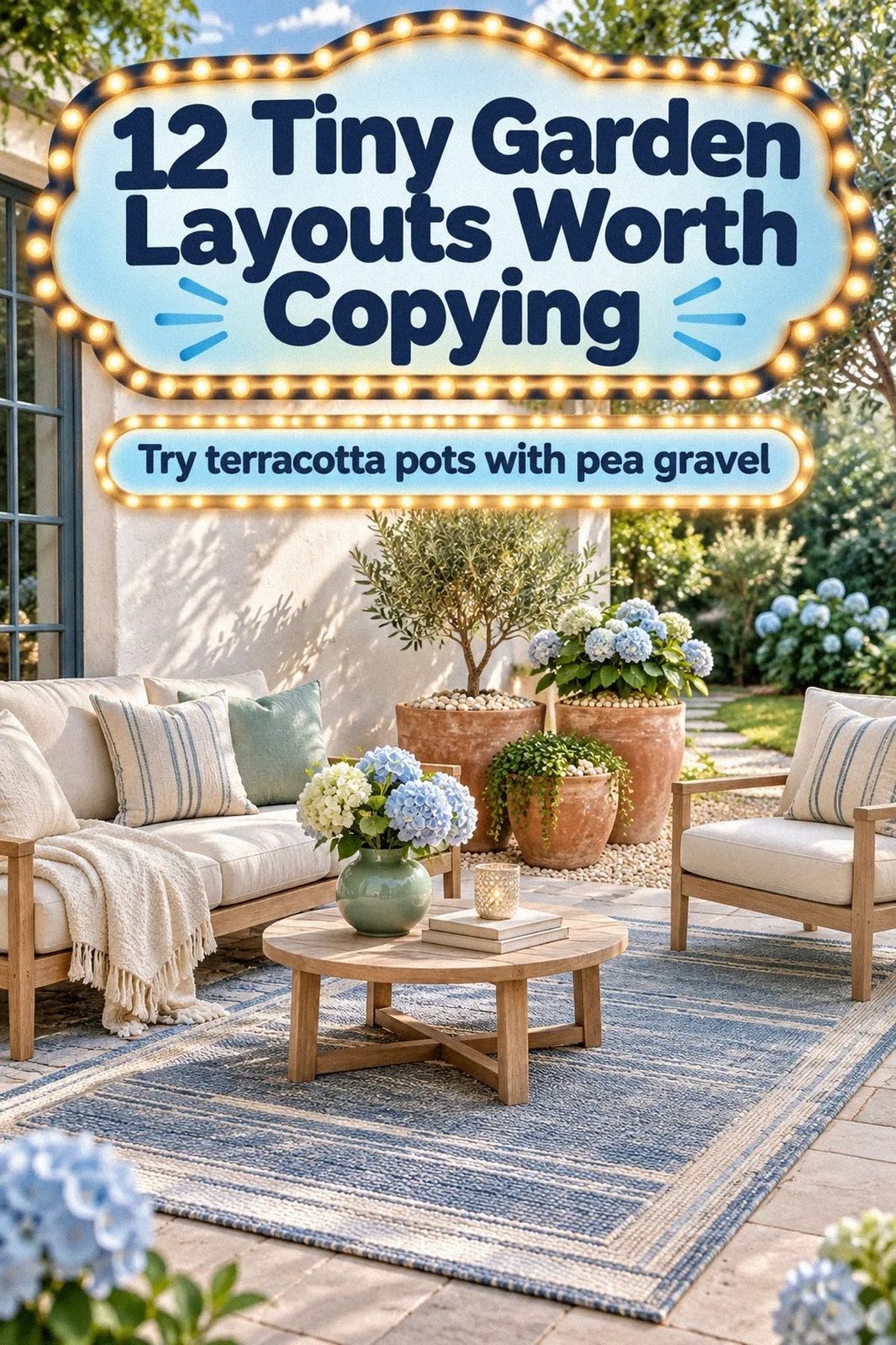
The best tiny garden ideas for a yard the size of a rug use height, clear sightlines, and fewer, better materials. I learned that after cramming six pots into one corner and leaving no room for a chair. Your space doesn't need more stuff. It needs a sharper layout.
- Layer the Three-Height Welcome
- Build The Two-Wood Rule
- Float a Narrow Greenhouse Shelf
- Swap Lawn for a Pocket Path
- Frame the View with a Borrowed Border
- Hang Plants, Then Ask Why?
- Paint the Backdrop in Evergreen Fog
- Choose Pots Over Planters?
- Mix Small Yard Ideas on a Budget with One Splurge
- Anchor a Rug-Sized Dining Nook
- Price the Patio Before You Build
- Warm the Edges with Firelight Over Floodlights
1Layer the Three-Height Welcome
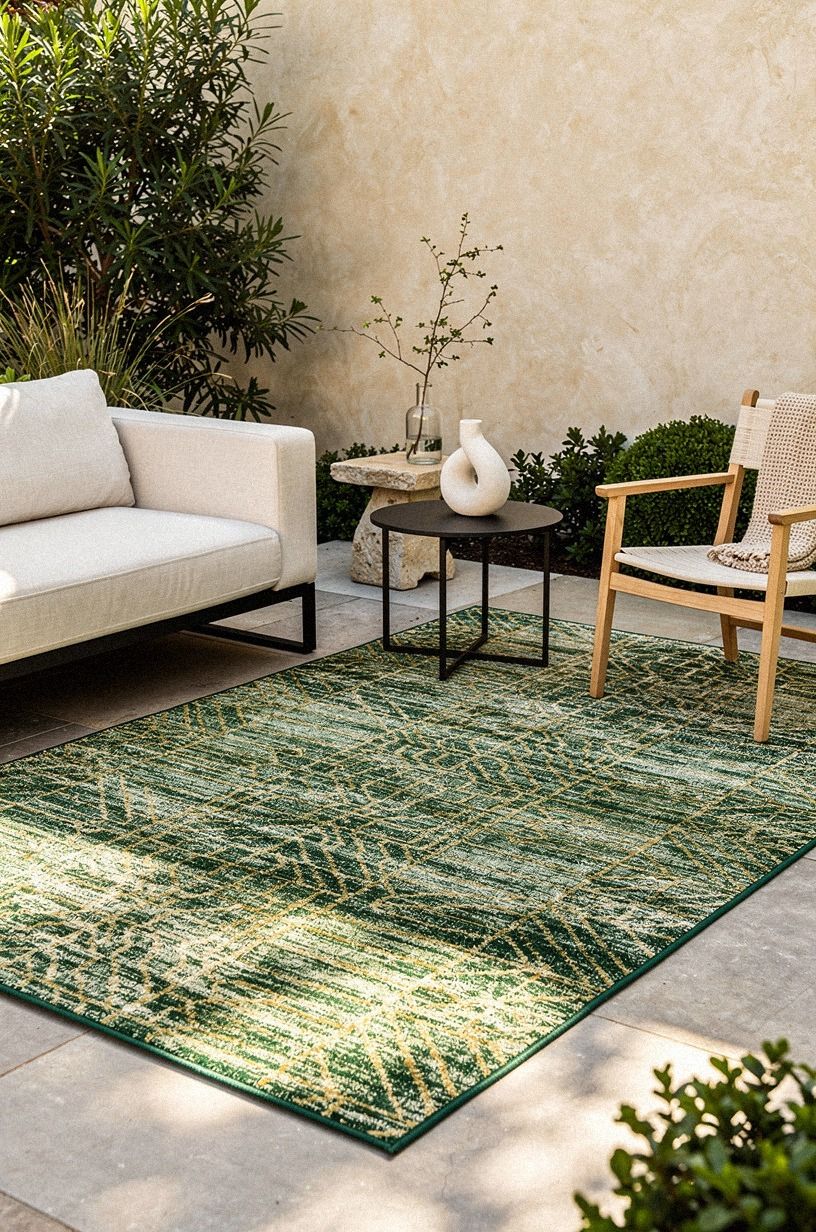
Start with three levels: something low at the edge, something waist-high near the middle, and one taller shape behind it. This three-height planting plan makes your tiny garden feel deeper because your eye has somewhere to travel. You’ll want the tallest piece near a wall or fence, not blocking the first step into your yard.
I’d use a low cream ceramic bowl, a 24-inch gold-toned plant stand, and a slim olive tree in an emerald glazed pot. Against a warm cream wall finished with hand-applied Venetian plaster, the mix feels polished without turning your yard into a crowded nursery. If you’re working with a rental, keep every piece movable so you can sweep, host, or move house without a fight.
The low layer should be broad but quiet. A shallow bowl, creeping thyme, mondo grass, or a cluster of smooth pebbles can define the front edge without creating visual clutter. The middle layer gives the eye a pause, while the tall layer creates the illusion of another room beyond the yard.
- Low: hand-thrown cream ceramic bowl with trailing thyme. - Middle: gold-toned plant stand in bamboo. - Tall: olive tree in an emerald glazed planter.
And if your eye keeps stopping at the back wall, borrow the spacing logic from these tiny bedroom layout ideas. The same rule works outside: open floor in front, height in back, and enough breathing room for your feet.
You can also test the arrangement with empty boxes before buying anything. Stand at the doorway and look again from the chair.
If the tall plant blocks the most attractive view, move it sideways rather than buying a shorter plant. That small adjustment can make the whole garden feel more generous!
2Build The Two-Wood Rule
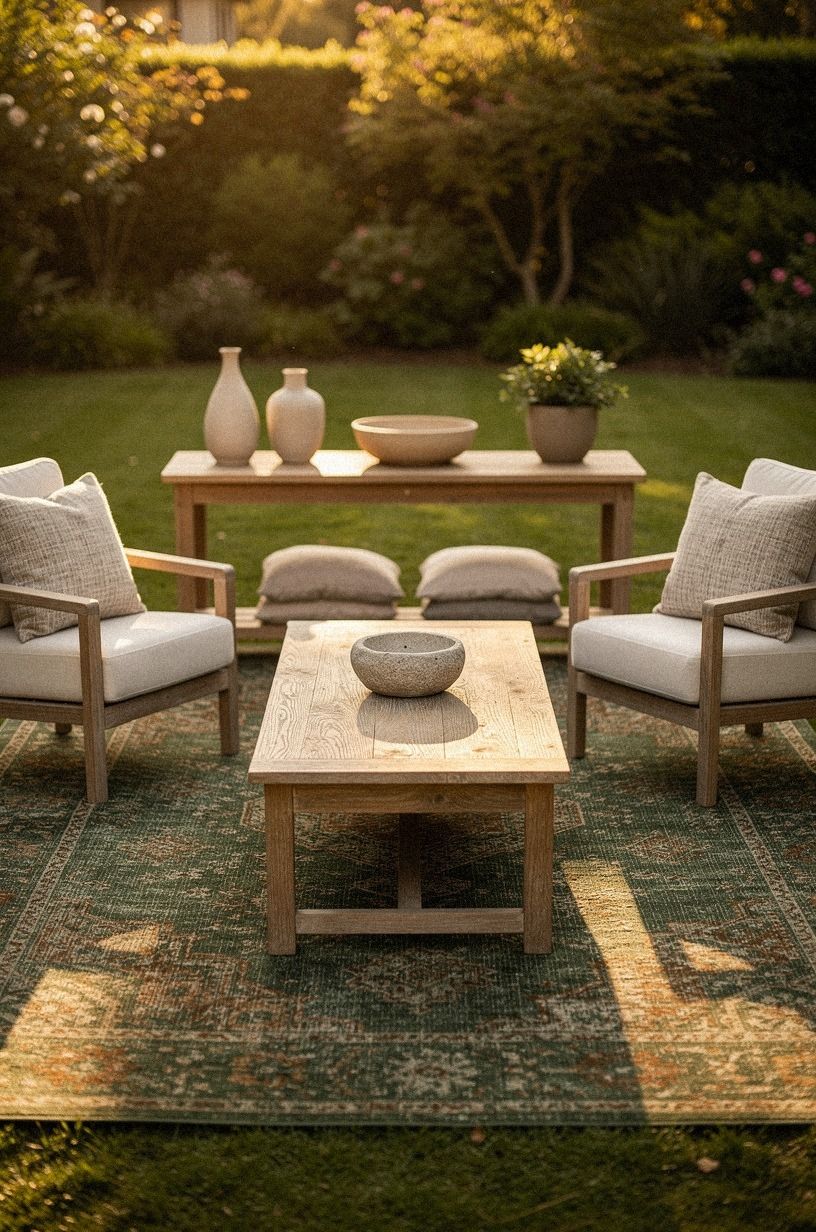
The Two-Wood Rule keeps a small yard from looking like a collection of unrelated purchases.
3Float a Narrow Greenhouse Shelf
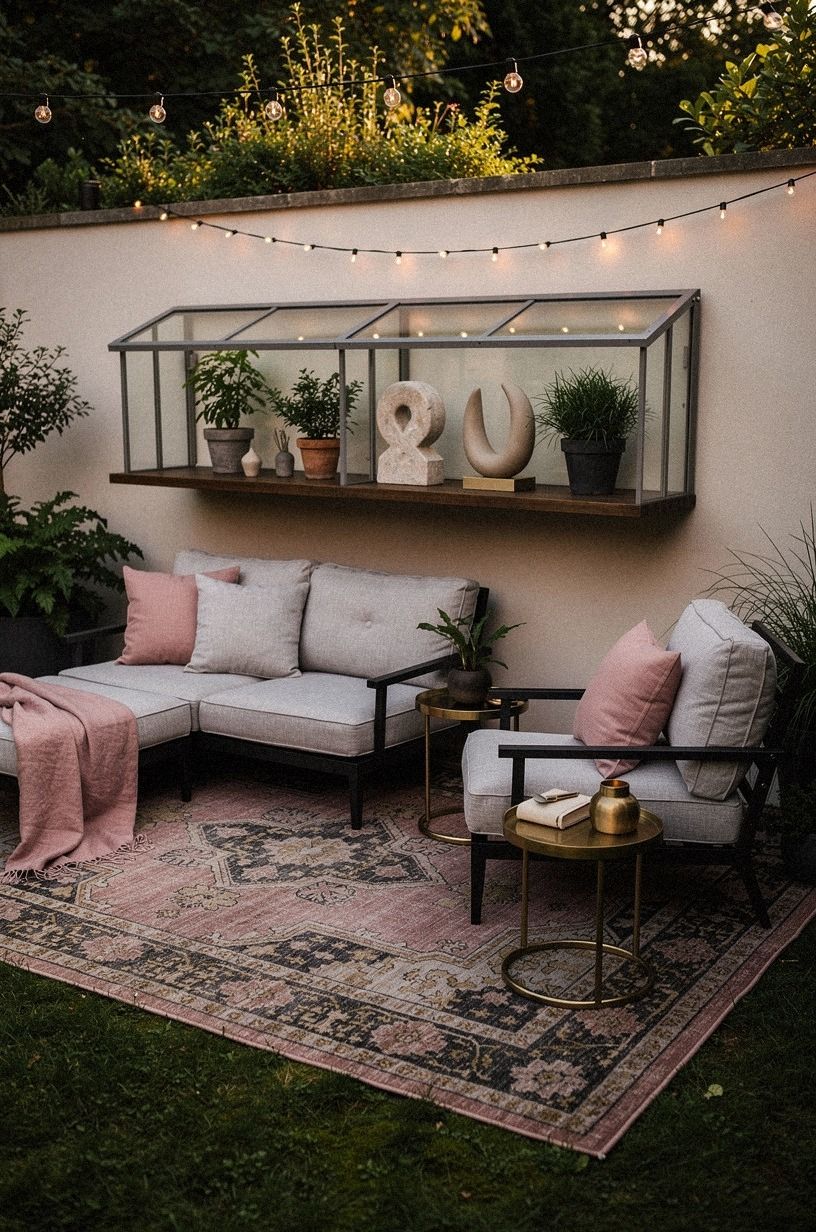
A wall-mounted shelf creates planting space without taking away your only walking lane. This floating greenhouse shelf works best at shoulder height, where small pots catch light and the floor stays open. You’ll want a shelf depth of about 8 to 10 inches, so it feels useful without becoming a bump hazard.
Use a charcoal-painted shelf with brass brackets for a crisp modern yard, or choose reclaimed wood softened by a washed Belgian linen panel if your space leans rustic. I’d avoid deep box shelves because rainwater, leaves, and forgotten tools collect in them. A slim ledge is easier to wipe and makes your tiny garden feel airy rather than packed.
Keep the display edited:
- 6-inch dusty-rose ceramic pot with basil. - Brass cloche for seedlings. - 18-inch brass-finish tray for drainage.
The shelf shouldn’t run across the entire wall unless the wall is completely blank. Leave a deliberate gap at one end so the arrangement doesn’t become a heavy horizontal stripe. A 30- to 40-inch shelf is often enough for herbs, small ferns, and one seasonal accent.
Check the wall’s exposure before choosing plants. A south-facing wall may suit thyme, rosemary, and drought-tolerant succulents, while a shaded north-facing corner could be better for ferns, mint, or ivy. Your plants should look healthy and relaxed, not merely fit the container.
If you’re renting, tension-mounted brackets or removable hooks can help, though you’ll still need to check the wall surface first. Your plants should look intentional, not like they’re waiting for a permanent home. The best part is that you can lift the entire shelf down before a storm.
For a more layered arrangement, place the shelf beside rather than directly above your chair. That keeps falling leaves and water away from the seating zone. It also gives you a charming green view at eye level, which can make the yard feel like a tiny conservatory.
4Swap Lawn for a Pocket Path
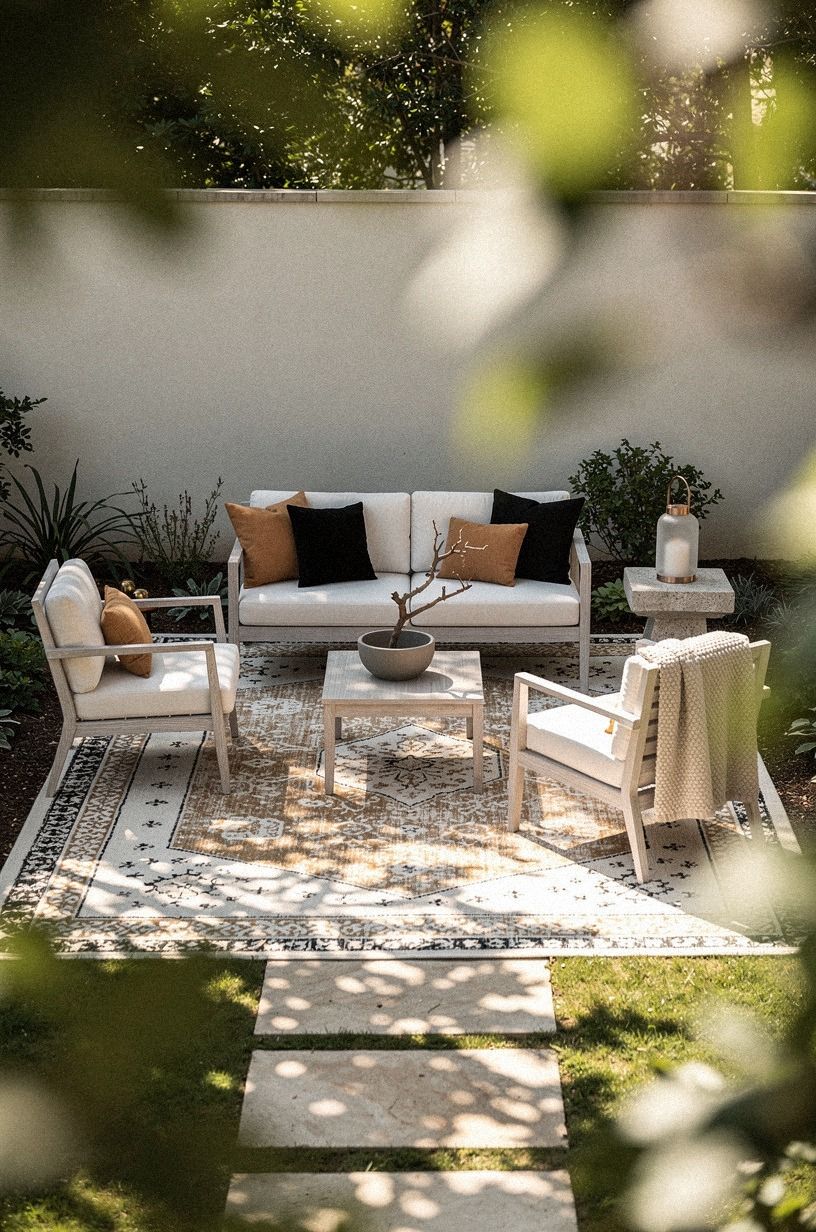
A tiny strip of lawn often makes a small yard feel smaller because it gives you nothing to do with the center.
5Frame the View with a Borrowed Border
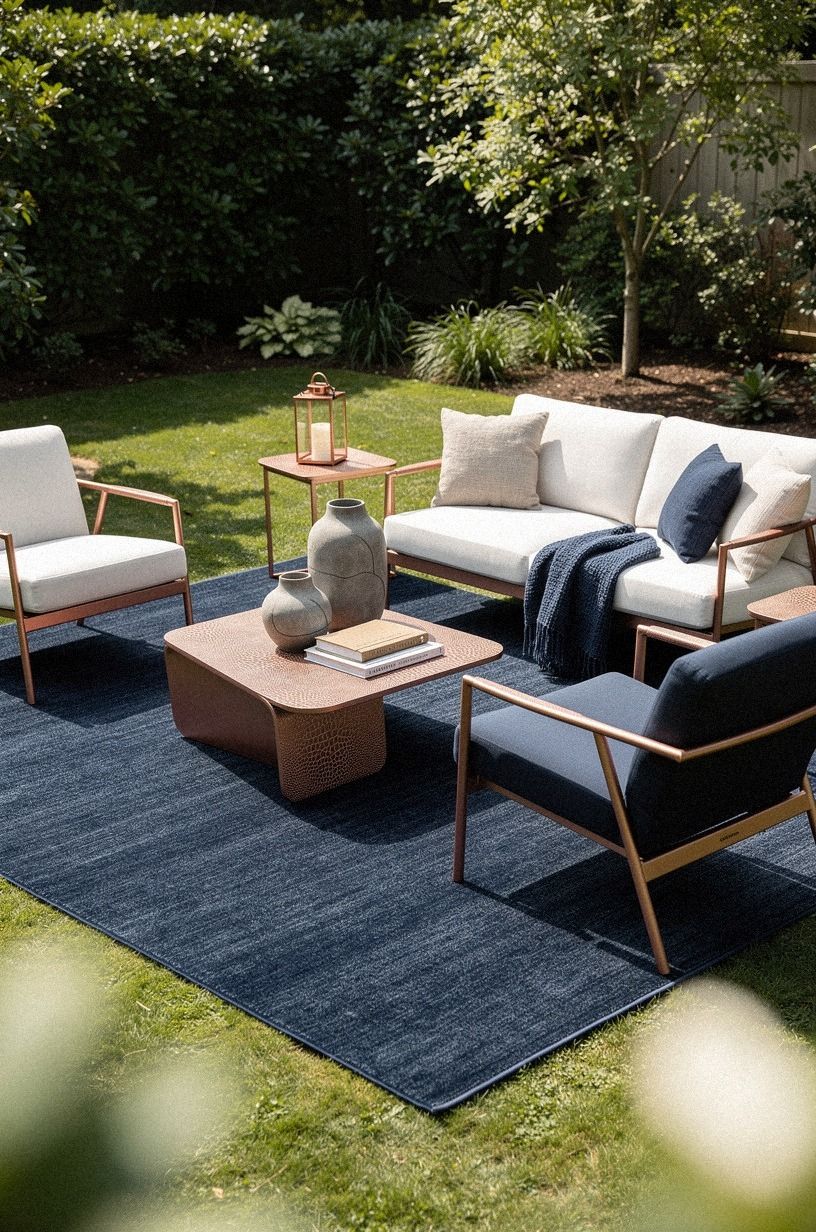
Instead of filling every edge with plants, frame one view and let the rest stay quiet. The borrowed-border method uses a neighboring tree, brick wall, or distant hedge as part of your garden. You’ll make the yard feel wider because the boundary doesn’t stop at your property line.
Paint the fence behind your planting in Farrow & Ball Hague Blue No.30 if you want a midnight-blue, intimate backdrop. Green leaves look richer against it, and small ivory flowers become brighter.
I’d skip a busy patterned fence panel here. It competes with the borrowed view and makes the space feel boxed in.
Your border could include:
- ivory jasmine climbing one narrow support. - copper edging around a single bed. - limestone gravel fading into the neighboring green.
Add one small weather-resistant shagreen-textured planter if you want a richer accent without filling every edge. The move is not adding more.
It’s deciding what your eye should notice first. If you’re styling a narrow side yard, give yourself one charming focal point and leave the far corner visually open.
A borrowed view works best when the transition looks natural. Repeat one color from outside your boundary inside the garden, perhaps through foliage, gravel, or a painted pot. This creates a quiet visual bridge and makes the neighboring greenery feel like an extension of your own space.
If privacy is the concern, don’t automatically build a solid screen. A slatted cedar panel, airy trellis, or single narrow tree can soften the view without creating a tall wall. You’ll get privacy where you need it while preserving light and depth.
The strongest small gardens often have one edge that feels finished and another that feels open. That imbalance is useful. It gives the space a sense of movement and keeps the garden from becoming a sealed little box.
6Hang Plants, Then Ask Why?
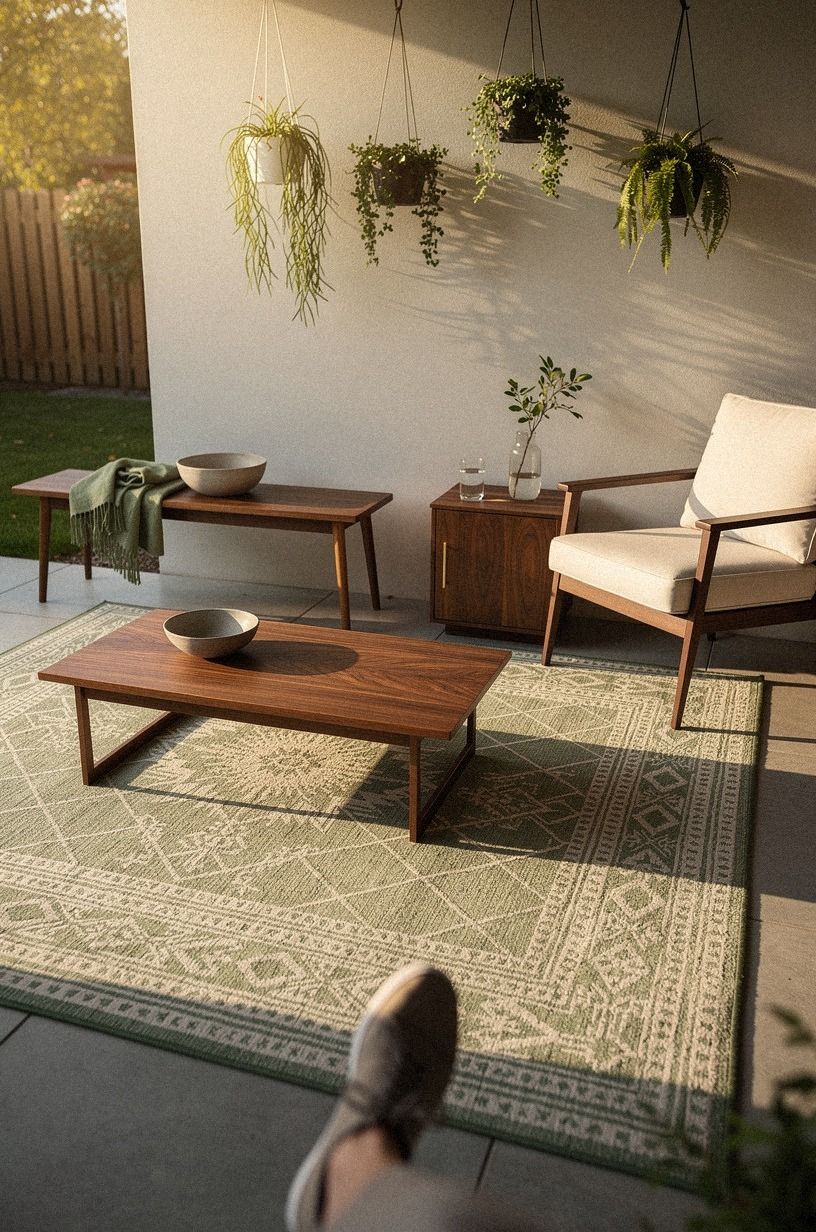
Hanging baskets can save floor space, but only if they’re placed with purpose.
7Paint the Backdrop in Evergreen Fog
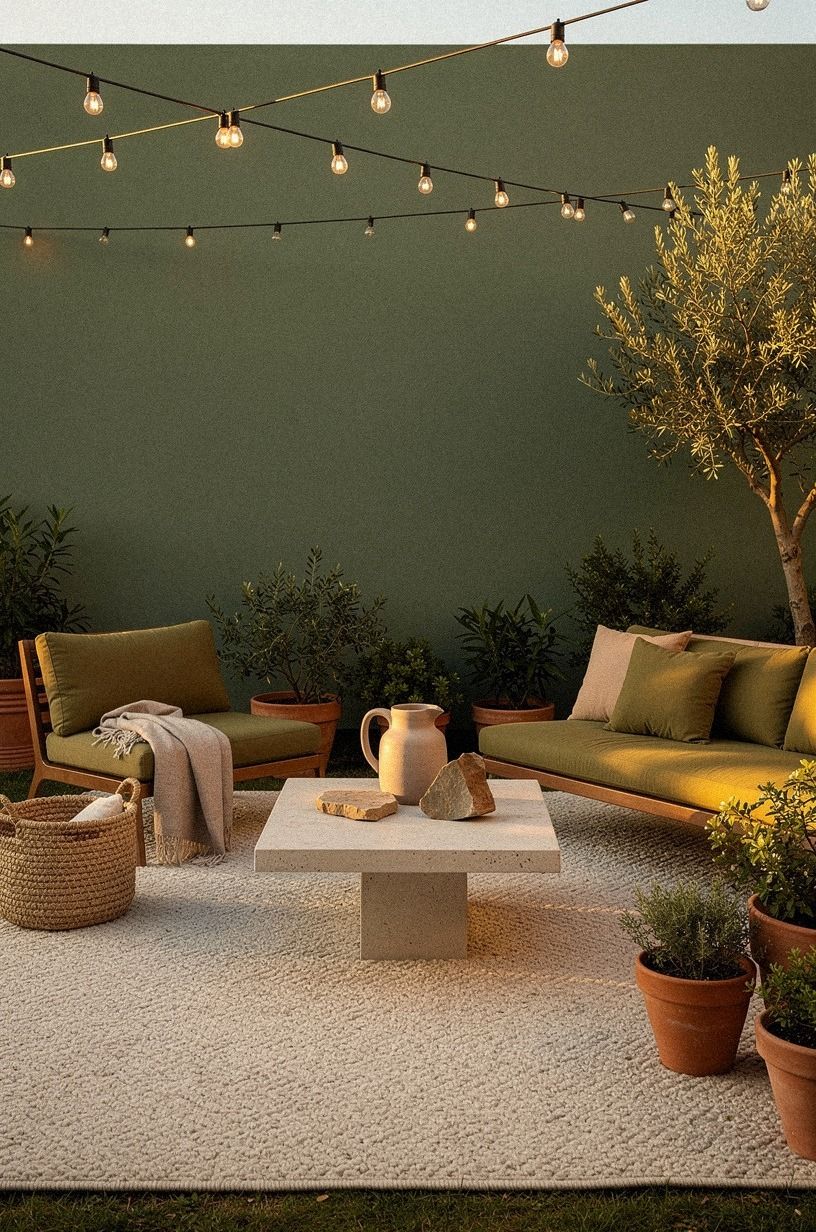
A small yard can handle a strong wall color because the surface area is limited. Sherwin-Williams Evergreen Fog SW 9130 gives you an olive-leaning, earthy background that works with terracotta, pale wood, and silver-green foliage. You’ll want to test it in morning and evening light before committing.
I’d choose this over bright white if your yard faces a neighboring wall. White can bounce every hard reflection back at you, while a muted green feels calmer and more grounded.
For a warmer version, bring in terracotta through a pot or seat cushion, then let stone-colored details keep the palette quiet. If you want a cooler, more dramatic mood, Benjamin Moore Revere Pewter HC-172 gives the fence a quiet stone quality.
Use paint where it changes the view:
- Evergreen Fog fence panel behind a dining chair. - Revere Pewter gate beside warm cedar. - mineral-based exterior paint on a narrow planter box.
You don’t need to repaint every surface. One backdrop is enough to make your plants look intentional, and it won’t swallow the small amount of visual space you have. A calm wall can do more than twelve decorative objects.
Sample the paint beside your actual plants and furniture. A green that looks gentle on a card can turn blue in deep shade or yellow in strong afternoon light. I’d live with two large sample boards for at least one full day before choosing.
You can also use color to correct the shape of the yard. A darker back wall can visually recede, while a pale side wall can bounce light into a narrow passage.
Paint isn’t only decoration here. It’s a practical tool for adjusting mood, brightness, and perceived depth.
If you’re renting, try a freestanding screen, outdoor fabric panel, or removable trellis instead. The same color principle can work without a permanent change. Add an organic bouclé cushion to the chair if it stays under cover, but keep the screen narrow enough that it doesn’t steal the path.
8Choose Pots Over Planters?
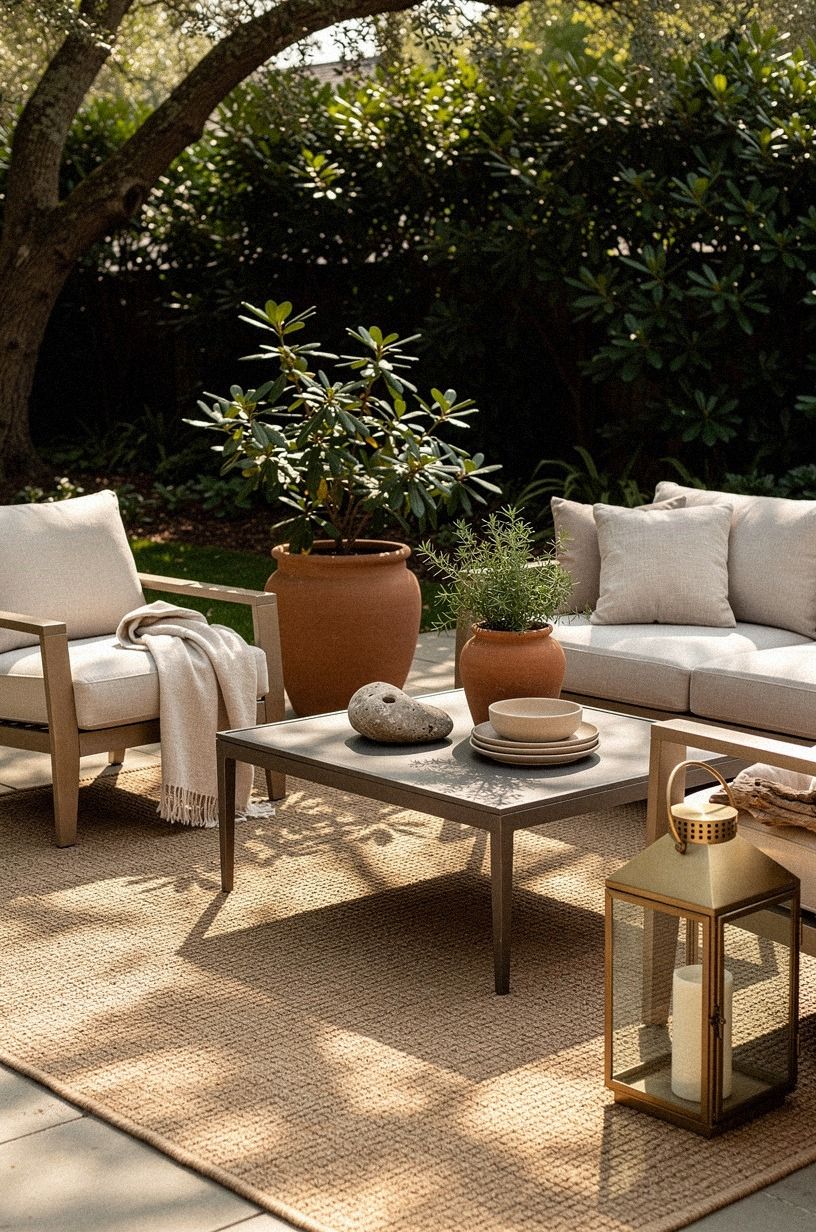
For most rug-sized yards, pots beat fixed planters because you can change the layout when the season changes. That flexibility matters if you’re still learning how sunlight moves across your space. A modular pot layout lets you shift color, height, and seating without rebuilding the garden.
I’d buy three large pots instead of eight tiny ones. Tiny containers dry out quickly, scatter the eye, and make watering feel endless.
Choose hand-glazed clay planters in clay and linen tones, then keep the plants varied. Add an unlacquered brass plant stand or marker so the metal can develop a gentle patina.
You’ll get a bold look without a messy rainbow of finishes.
A useful grouping might be:
- 24-inch clay-finish fiberstone pot for a shrub. - 14-inch terracotta pot for herbs. - 8-inch linen-colored glazed ceramic pot for a small flower.
But don’t place every pot directly against the wall. Pull the biggest one forward by 6 to 12 inches so shadows and leaf shapes can show. Your garden will feel layered, and you won’t have to buy another thing to create depth.
Think about weight as well as appearance. A heavy fiberstone pot may be reassuring in a windy yard, while a lightweight resin container is easier to move but may need a discreet stone inside its base. Your most attractive arrangement will fail if every pot tips after the first storm.
Group containers in odd numbers, but don’t treat that as a rigid rule. Two substantial pots can look elegant beside a bench, especially when their heights differ. What matters is that each group has a clear center and enough floor around it to remain legible.
When you repot, leave space between the rim and nearby furniture. Leaves spread, watering cans need access, and you’ll occasionally need to rotate the container toward the light. A layout that looks perfect on day one should still be usable in midsummer.
9Mix Small Yard Ideas on a Budget with One Splurge
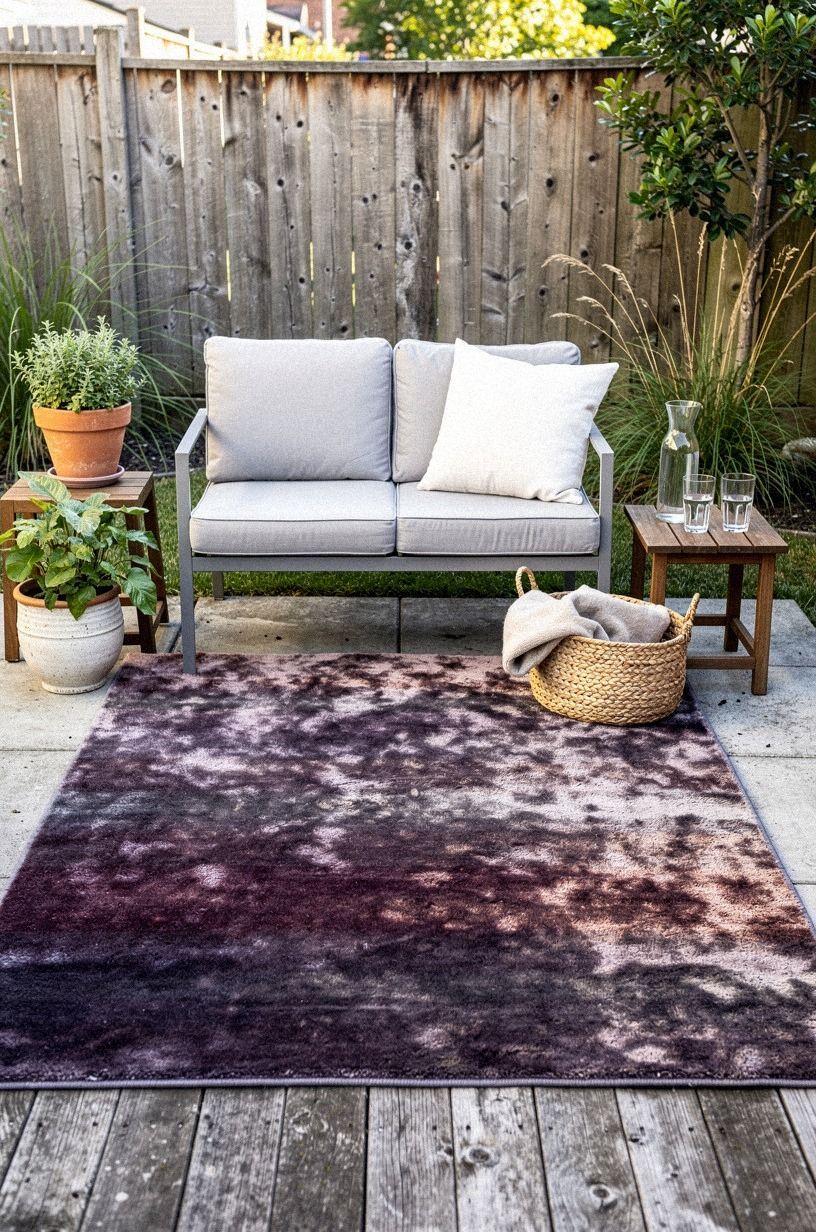
The most convincing small yard ideas on a budget usually have one item that carries the visual weight. Spend on a solid bench and one plum-toned, deep-pile mohair-velvet cushion for a covered corner, then keep the pots, gravel, and plants modest. You’ll avoid the strange look of a yard where every piece is inexpensive but nothing feels anchored.
I’d spend less on decorative lanterns and more on the seat you’ll use every week. A comfortable bench gives your tiny garden a reason to exist beyond the view. If you’re choosing between a $40 stool and a well-made bench, I’d take the bench and skip two seasonal accessories.
Your three budget levels can stay simple:
- Zero cost: rearrange existing pots by height. - Budget-friendly: thrifted galvanized watering can as a planter. - Worth the investment: sturdy bench with a plum cushion and rose-gold accent light.
The right splurge should solve a daily problem. You’ll know it’s worth it if it gives you a place to sit, hides an ugly utility box, or makes the yard usable after sunset. Don’t spend on an object that only looks good in a catalog.
For a truly tight budget, begin with a one-week reset. Remove everything that isn’t necessary, sweep the floor, and return only the pieces you use. That empty interval will show you whether you need another pot, a better light, or simply a more generous path.
Marketplace finds can be excellent for benches, terracotta, and metal shelving. Check for rot, unstable legs, drainage holes, and flaking finishes before bringing anything home. A charming bargain should not become a constant repair project.
I’d also save on plants by buying smaller specimens and giving them room to grow. A modest rosemary or jasmine can become the star of the garden with time. Spend on soil, drainage, and a container with a good silhouette, then let the plant provide the drama.
10Anchor a Rug-Sized Dining Nook
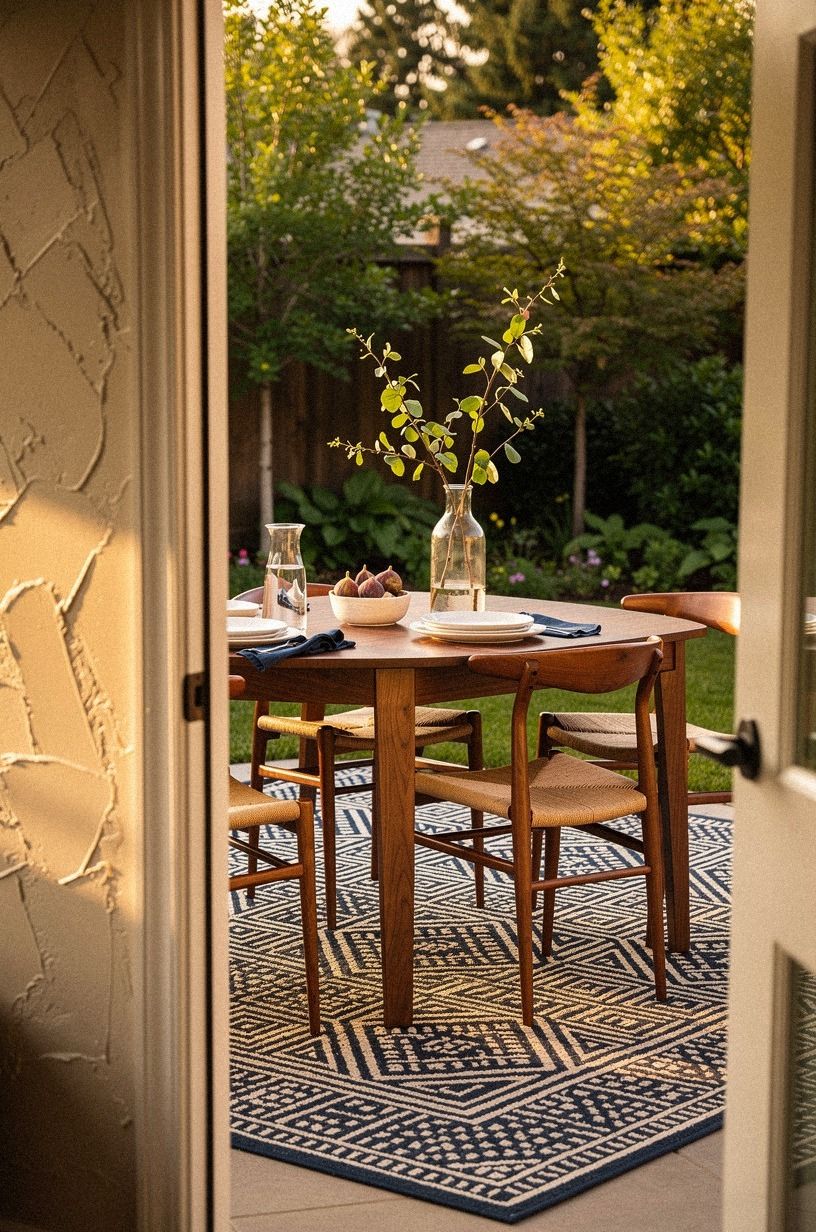
A tiny outdoor dining area needs a clear anchor, or it starts to look like furniture left outside by accident. Use a small navy table, two white chairs, and one overhead or wall-mounted light. This micro-dining anchor works because it creates a scene your eye understands immediately.
Choose a round navy folding bistro table if your yard is narrow, or a slim walnut table if one wall runs longer than the other. Leave enough space to pull a chair back without hitting a planter. You’ll want to measure the open area before shopping, especially if your path is already doing double duty.
Use these proportions as a practical starting point:
- 16 to 18 inches for the table height is not right for dining, so check the product dimensions carefully. - A normal dining table should sit around standard counter or dining height, not coffee-table height. - Leave a clear turning zone beside your chair.
I’d skip oversized outdoor rugs here. They trap leaves and visually chop up the floor. A small white woven mat under the table can soften the seating zone without making your yard feel smaller.
A hand-applied Venetian plaster wall can bring softness behind the table, while walnut adds enough warmth to keep the navy and white palette from feeling stark. The chairs matter more than people expect.
Choose open-backed or slender designs that allow light to pass through, and avoid deep lounge chairs unless the yard has no competing furniture. Folding chairs are especially useful when dinner is over and you want the center clear again.
Keep the table close enough to the door that serving feels effortless, but not so close that the entrance becomes cramped. A dining nook should invite you outside, not create a bottleneck between the kitchen and the garden.
For another practical scale check, compare the table footprint with these queen-size bed proportions. The comparison is surprisingly useful because a bulky table can occupy a small yard just as quickly as an oversized bed occupies a bedroom.
11Price the Patio Before You Build
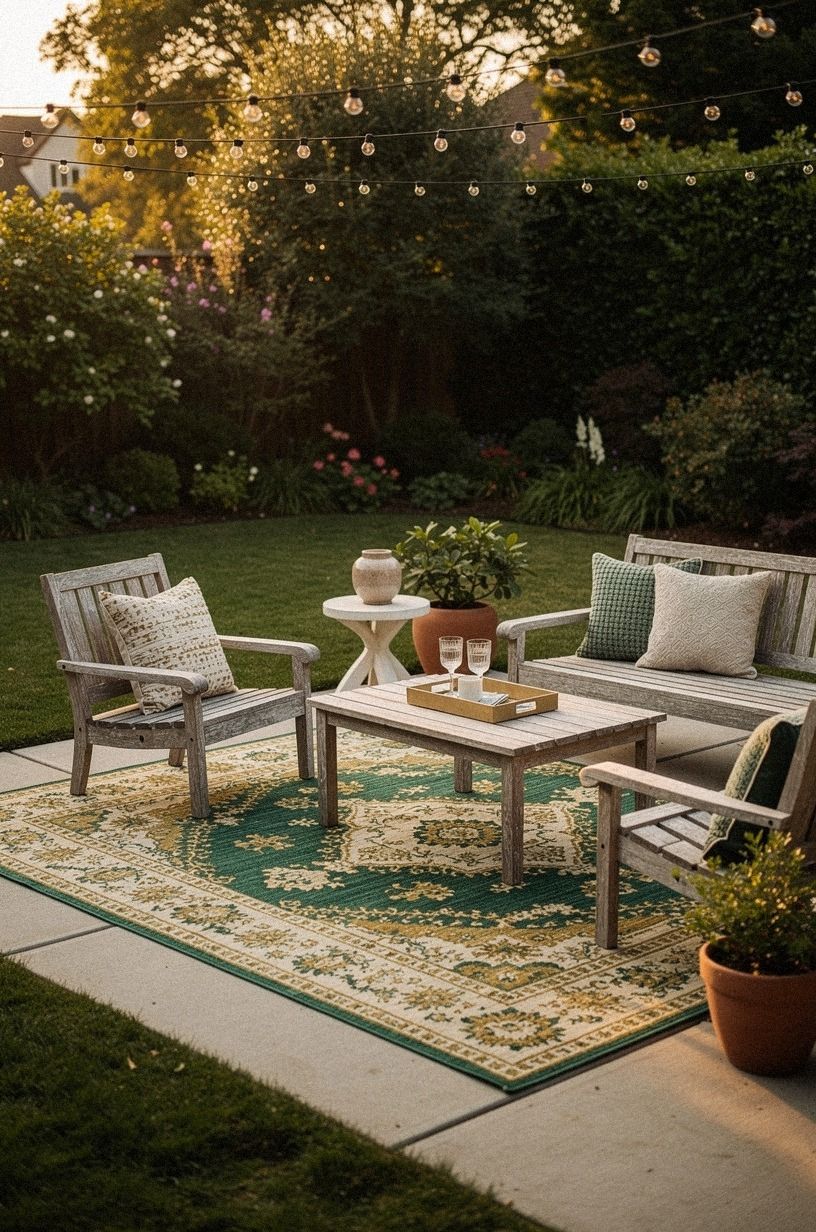
Before you add built-in seating, lighting, or a masonry edge, write down what you’re willing to spend. Your tiny garden can be inexpensive, but a patio extension can move into a different budget very quickly. These typical US figures are useful if your yard connects directly to a living room or larger renovation.
The table isn’t a shopping list for plants. It’s a warning against letting a small outdoor project quietly become a full indoor-outdoor remodel.
You’ll want to decide whether you’re buying a few movable pieces or paying for permanent work. I’d keep the garden flexible until you’ve lived with the sun, drainage, and foot traffic.
Break the budget into three categories: things that improve circulation, things that improve comfort, and things that improve atmosphere. Circulation comes first. A clear path and reliable drainage will make the garden more enjoyable than an expensive decorative object.
For scale, a seating rug often comes in 8x10 or 9x12, but that doesn’t mean you need one outside. Your space may only need a small mat and a clear landing zone. If the garden is beside a bedroom, compare the proportions with this guide to twin bed room size before you order bulky furniture.
Leave a contingency for unglamorous costs. Soil, wall anchors, delivery, replacement hardware, and outdoor-rated extension solutions can add up quickly. A realistic budget feels less exciting at first, but it prevents a beautiful plan from stalling halfway through.
If you’re doing permanent work, solve drainage before appearance. Water collecting beside a door, wall, or foundation will cost more to correct later. A small yard rewards careful preparation because every mistake sits close to the house.
12Warm the Edges with Firelight Over Floodlights
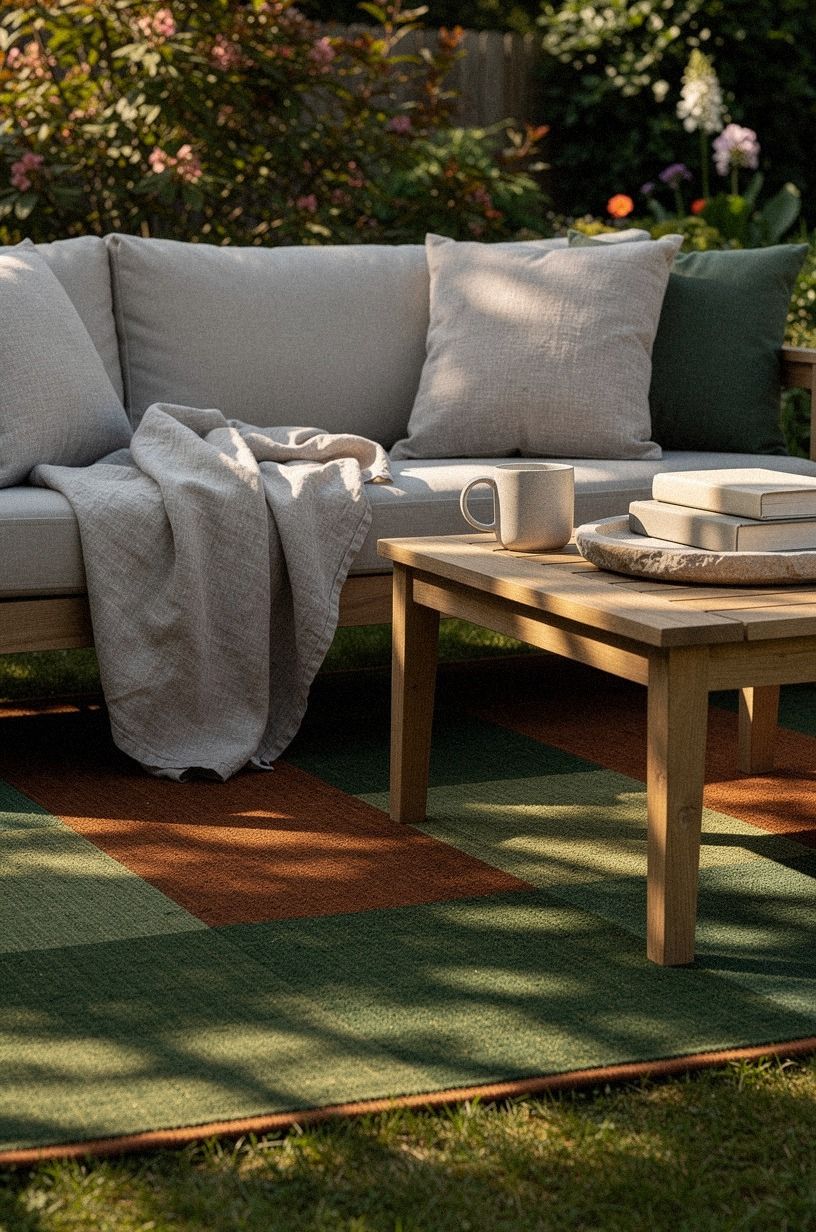
Soft light makes a tiny yard feel more inviting, while a bright overhead fixture exposes every boundary at once. Choose low lighting at the edges, not a white beam from the center. This firelight perimeter gives your garden depth after dark and keeps the middle open.
I’d choose two warm forest-green LED lanterns and one rust-toned wall sconce over a row of solar lights. Solar fixtures can be useful, but cheap ones often flicker, fade, or turn blue. A steady amber glow near the seat feels more tranquil and makes the plants read as silhouettes.
Layer your evening light like this:
- low amber lantern beside the chair. - rust-toned dimmable wall sconce near the door. - candle-safe hurricane on a natural-oak side table with a washed Belgian linen accent.
And don’t put the brightest light where you want people to look. Put it behind a leaf, beside a step, or under a bench so your eye catches the glow before the fixture.
For more outdoor-season ideas, see these windproof Halloween yard decorations. Your garden should still feel gentle after sunset.
Warm bulbs around 2200K to 2700K usually create the most comfortable atmosphere. Shield the light source when possible so you see the glow rather than a harsh exposed bulb. The effect is subtle, but it makes a tiny yard feel intimate instead of brightly displayed.
Safety still comes first. Keep candles in stable, protected holders, place lanterns away from dry foliage, and use outdoor-rated electrical equipment. If you’re adding hardwired lighting, ask a qualified electrician to review the installation.
The prettiest evening arrangement is rarely the brightest one. Let the doorway be slightly clearer than the rest, then allow the corners to fade into shadow. That contrast creates depth and gives the garden a secretive, luxurious feeling!
The Design Choice I’d Defend
I’ve styled small outdoor corners that looked expensive from the doorway and felt ridiculous once you stepped inside. The difference was always circulation.
A tiny yard doesn’t forgive furniture that blocks the only path, a pot that needs constant rescuing, or a plant chosen only because it looked good in a catalog. You’ll notice those mistakes every single day.
My own worst choice was a deep bench pushed against the back fence. It looked generous, but nobody could pull their knees forward without bumping the table. I replaced it with a narrow teak seat, moved the largest pot to the corner, and suddenly the yard had room for a second person.
That change cost less than the original bench, which was irritating and useful.
I also went too pale with the first wall color. The afternoon sun bounced off it, and the garden lost all its softness by 3 p.m.
A muted green backdrop fixed the problem because it gave the leaves something deeper to sit against. You don’t need a dramatic shade everywhere, but you do need contrast somewhere.
If you’re choosing between more plants and better spacing, choose spacing. If you’re choosing between a decorative object and a chair you’ll use, choose the chair. And if you’re tempted to fill an empty corner, wait a week.
Empty space is often the part that makes the rest of your garden feel calm, warm, and intentional.
I’d also defend buying slowly. A tiny garden changes quickly once the light, weather, and plants begin revealing what the space actually needs. The glamorous idea in your head may not be the comfortable one in practice, and that’s useful information rather than failure.
Start with one seat, one tall plant, one clear path, and one source of evening light. Live with those choices before adding anything else. The restraint may feel almost severe at first, but it creates the polished, peaceful result that makes a small yard feel twice as large!
A Few Things Worth Answering
What is the best 12 Tiny Garden Ideas for a Yard the Size of a Rug for a small backyard?
The best choice is a three-height arrangement with one comfortable seat, a tall plant, and a clear path. IKEA SATSUMAS pieces can help you test the layout inexpensively, while a narrow teak bench gives your yard a warmer, more permanent feel. I’d keep the center open so the arrangement feels generous.
Where can I buy 12 Tiny Garden Ideas for a Yard the Size of a Rug pieces on a budget?
Look at IKEA, Wayfair, and Target first, then check Facebook Marketplace or a local thrift shop for pots and benches. You won’t need affiliate links to plan the space, and second-hand terracotta planters often have better texture than new ones. I’d inspect every used piece for cracks and instability.
How much does a 12 Tiny Garden Ideas for a Yard the Size of a Rug makeover cost?
A small refresh can run about $100 to $300 if you reuse pots, move plants, and add paint or gravel. Free rearranging should come first, because layout usually changes the mood more than another decorative purchase. I’d reserve extra money for drainage, hardware, and outdoor-rated lighting.
Can I create a 12 Tiny Garden Ideas for a Yard the Size of a Rug on a budget?
Yes, and you can start without buying anything. Group existing pots by height, use a chair as your anchor, and paint one backdrop if you have leftover exterior mineral paint. Add one thrifted planter only after you’ve lived with the arrangement for several days.
Is a 12 Tiny Garden Ideas for a Yard the Size of a Rug worth it in a small space?
Yes, because a small yard gives you fewer decisions to make and less maintenance to manage. Keep the center open, place the tallest plant at the back, and choose one folding bistro table instead of several small surfaces. I’d prioritize comfort and circulation over decorative details.
Is a 12 Tiny Garden Ideas for a Yard the Size of a Rug a good idea for a rental?
Yes. Use movable pots, tension-mounted shelves, removable hooks, and a freestanding cedar trellis instead of drilling into walls.
Your best rental layout should pack flat or roll away when you move, especially if the landlord limits permanent changes. I’d also avoid heavy built-ins until you know the rules.
Where I’d Start First
If I had to pick one, I’d start with the three-height planting plan. It gives your yard depth without stealing walking space, and every pot you already own can join the arrangement. Pin the layout for later and compare it with this guide to queen-size bed proportions before buying anything wide.
Then I’d clear the center, measure the path, and live with the arrangement for a week. Notice where you naturally stand, where the afternoon light lands, and which pot constantly gets in the way. Those observations will lead you toward a more elegant layout than buying everything at once.
The final goal isn’t to make the yard look full. It’s to make every inch feel considered, useful, and unexpectedly lovely.