
 by
by Quick answer: Start with the delivered total, then check what the mattress is made from and what it could cost to return. The better buy is the model whose construction, comfort role, and seller terms justify its price. I’d skip listings that hide the support core, fire barrier, seller identity, or return conditions.
- Match the exact size, firmness, height, and seller before comparing.
- Judge foam, innerspring, hybrid, and latex mattresses within the right construction category.
- Include delivery, setup, removal, return, foundation, and warranty terms in the value calculation.
- Use the active checkout page and policy documents, not the discount banner, as your final reference.
Updated August 2026 · Reviewed for accuracy
A mattress price is only useful when it is attached to a clearly described build. A low headline figure can represent sensible simplicity, weak material disclosure, limited service, or some combination of those things. Until I can tell which one applies, I don’t call it a bargain.
My approach is to build a small purchasing ledger. I record the exact configuration, delivered cost, construction, return path, and warranty conditions. That keeps a flashy promotion from being compared with a genuinely different mattress.
Start With the Total That Reaches Your Bedroom
Delivery, setup, old-mattress removal, accessories, and possible return deductions can all sit outside the displayed mattress price. The retailer’s active checkout page and posted service terms determine which of those costs apply to a particular address and order.
Open the brand listing and any retailer listing side by side. Match the model name, size, firmness, height, cover, and included foundation or accessories. Similar naming is not enough. Retailer exclusives and updated versions can look alike while using a different internal build.
Seller identity matters on a marketplace, too. The storefront hosting a listing may not be the company fulfilling the order or administering a return. I’d confirm the named seller, return destination, warranty eligibility, and delivery method in the marketplace terms before giving a lower listing much weight.
The Nut’s landed-price rule: A fair comparison uses the amount due for the same configuration and the same level of service. If setup is included with one option but added separately with another, record that difference rather than pretending the headline prices are equivalent.
Promotions make timing harder to read. Instead of assuming a crossed-out price represents unusual savings, note the amount shown for the configuration you need and check it again before purchasing. A familiar sale label can return even when the underlying offer changes.
A showroom quote needs the same treatment. Ask the salesperson to write down the mattress configuration, delivery service, removal terms, return conditions, and included accessories. My guide to negotiating mattress price explains how to keep that discussion focused on delivered value rather than the percentage printed on a tag.
Construction Explains Most Meaningful Price Differences
A foam support core, a pocketed coil unit, and a latex core perform the structural job in different ways. That is why I first identify the material system and only then decide whether a price difference looks reasonable.
With an all-foam mattress, look beyond the phrase “memory foam.” Memory foam may describe only part of the comfort system, while ordinary polyurethane foam does most of the supporting work underneath. The manufacturer’s specification page should identify the layer materials and, ideally, publish useful density information.
Density and firmness are not interchangeable. Density describes how much foam material occupies a given volume, while firmness describes how resistant the foam feels under load. A dense foam can still be made to feel relatively soft, so a single firmness label tells me little about the amount or quality of material inside.
Thickness also needs context. A thick mattress can contain a substantial comfort system, a tall but basic support core, or decorative quilting that adds little structural value. I want a layer breakdown before treating overall height as evidence of a better build.
- Comfort layers: Identify the actual foam or latex type and any density information published by the manufacturer.
- Transition layer: Check what prevents the sleeper from pressing directly into the support core.
- Support system: Determine whether the mattress relies on foam, connected springs, pocketed coils, or latex.
- Perimeter: Look for a described edge system rather than relying on a broad “strong edges” claim.
- Fire barrier: Verify the named material in the manufacturer’s disclosure if fiberglass avoidance is important.
For an innerspring or hybrid, coil count is not a complete quality score. Wire gauge, coil shape, working height, layout, and perimeter treatment all affect what the unit is designed to do. Wire gauge also works inversely, meaning lower gauge denotes thicker wire. Without the full context, the largest advertised coil count does not automatically identify the stronger mattress.
Pocketed coils generally allow more independent movement than a traditional connected unit, but the comfort layers still influence motion and pressure relief. A seller that advertises coils without explaining what sits above them has left out much of the feel and durability story.
Latex belongs in its own comparison lane. The manufacturer should disclose whether the latex is natural, synthetic, or blended and explain the processing method used. Latex can carry a premium over a simpler foam build, but the word itself is not enough. The amount, placement, and type of latex remain important.
My spec-sheet filter: Pay more for an identifiable construction advantage, not a luxury adjective. A clearly described support unit, more substantial comfort material, purposeful edge design, or more transparent fire barrier gives you something concrete to evaluate.
Fire-barrier language deserves particular care. Manufacturer material disclosures may identify wool, silica-based systems, fiberglass, or other barrier materials. Don’t treat “clean,” “non-toxic,” or “safe” as a precise material description. Ask the manufacturer to name the barrier if its listing does not.
Keep Each Mattress in the Right Comparison Lane
A basic guest-room foam bed and a premium latex mattress may fit the same frame, but they are not trying to solve the same ownership problem. I compare products within a construction and use-case lane before comparing the winners across lanes.
| Mattress category | Main price drivers | Details that need verification | Best comparison context |
|---|---|---|---|
| Basic foam | Foam quality, cover, layer depth, and support-core simplicity. | Layer materials, published density details, fire barrier, and return terms. | Guest rooms, temporary use, and tightly controlled budgets. |
| Memory foam | Comfort-layer composition, transition design, support foam, and cover. | How much memory foam is used, what supports it, and how the brand describes heat management. | Shoppers prioritizing contouring and less spring-driven surface response. |
| Innerspring or hybrid | Coil design, upholstery layers, perimeter construction, and finishing. | Coil type, wire details, edge system, and the materials placed above the springs. | Shoppers who value easier movement, coil support, or airflow through the core. |
| Latex | Latex type, processing, amount of material, support design, and cover. | Latex composition, layer placement, material disclosures, and warranty conditions. | Buyers deliberately seeking a responsive latex-based construction. |
Use case keeps a cheaper mattress from winning the wrong contest. A simple bed can be a sound choice for occasional use even if its material story is modest. The same simplicity deserves more scrutiny if the mattress is intended to handle nightly use for an extended period.
Sleeping position and body weight affect how deeply someone loads the comfort layers and support core, but a product page cannot predict an individual fit. Instead of chasing a universal “best” firmness, compare how each manufacturer describes contouring, responsiveness, support, and permitted returns.
Couples should consider more than motion marketing. The coil or foam system, firmness, edge design, and size all affect usable sleeping space. Owner reviews can help reveal recurring themes, but I give more weight to patterns across verified reviews than to one unusually enthusiastic or angry comment.
Support-focused labels need similar skepticism. “Orthopedic” does not identify a specific material, coil unit, or firmness. My guide to orthopedic mattress price shows why products carrying similar support language can still have very different constructions and policies.
Size, Firmness, and Seller Can Distort the Search Result
A search-result price may be attached to the smallest available size rather than the configuration in your bedroom. The brand’s active size selector is the proper place to check the difference for the exact model, and larger configurations commonly show a higher price because they require more material.
Switch every candidate to the intended size before recording anything. Then confirm the selected firmness and height. A product family can include variations that share a name while differing in upholstery, profile, or price.
Make sure a lower listing is not an opened return, clearance unit, floor model, or discontinued configuration unless that is what you intend to buy. The seller’s condition description and return policy should state how the item is classified and what protections accompany it.
- Copy the full model and version name.
- Select the same size, feel, and height.
- Record the seller and item condition.
- Capture the delivered total and included services.
- Summarize the support core and comfort materials.
- Save the applicable return and warranty terms.
Foundations can also upset an apparently clean comparison. Some mattresses are sold alone, while another listing may bundle a base or show it in product photography without including it. Check the cart contents rather than inferring the package from an image.
Returns and Warranty Terms Are Part of the Cost
An opened-mattress return can follow a different process from canceling an unshipped order. According to each seller’s posted return policy, pickup availability, required procedures, possible deductions, and eligibility conditions can vary. Read those terms before paying, not after deciding the feel is wrong.
A trial and a warranty solve different problems. A trial addresses whether the mattress suits the buyer under the seller’s rules. A warranty addresses covered defects under the manufacturer’s written conditions. Treating one as a substitute for the other can make a generous-looking policy seem more protective than it is.
Warranty length is also a poor shortcut for build quality. According to manufacturer warranty terms, coverage may depend on the foundation, mattress support, proof of purchase, care, and the type or depth of the reported problem. The exclusions and remedy matter at least as much as the headline duration.
| Policy question | Where to verify it | Why it changes value |
|---|---|---|
| Who handles an opened return? | The named seller’s return policy. | The process may involve pickup requirements or deductions. |
| What delivery service is included? | The checkout page and delivery terms. | Doorstep delivery and in-room setup are different services. |
| Who provides warranty coverage? | The manufacturer’s warranty and authorized-seller terms. | Marketplace or resale purchases may follow different eligibility rules. |
| What support base is required? | The warranty and setup instructions. | An unsuitable base may affect comfort, support, or coverage. |
Delivery has practical value beyond convenience. In-room setup may matter if the mattress is difficult for the household to move, while basic delivery may be sufficient for another buyer. The retailer’s delivery policy should identify the service level and any location restrictions before checkout.
Old-mattress removal should be recorded separately unless the seller explicitly includes it. The same applies to foundations, adjustable bases, pillows, and protectors. An accessory bundle has value only if you need the included items and understand their separate return rules.
Using a Premium Mattress as a Reference Point
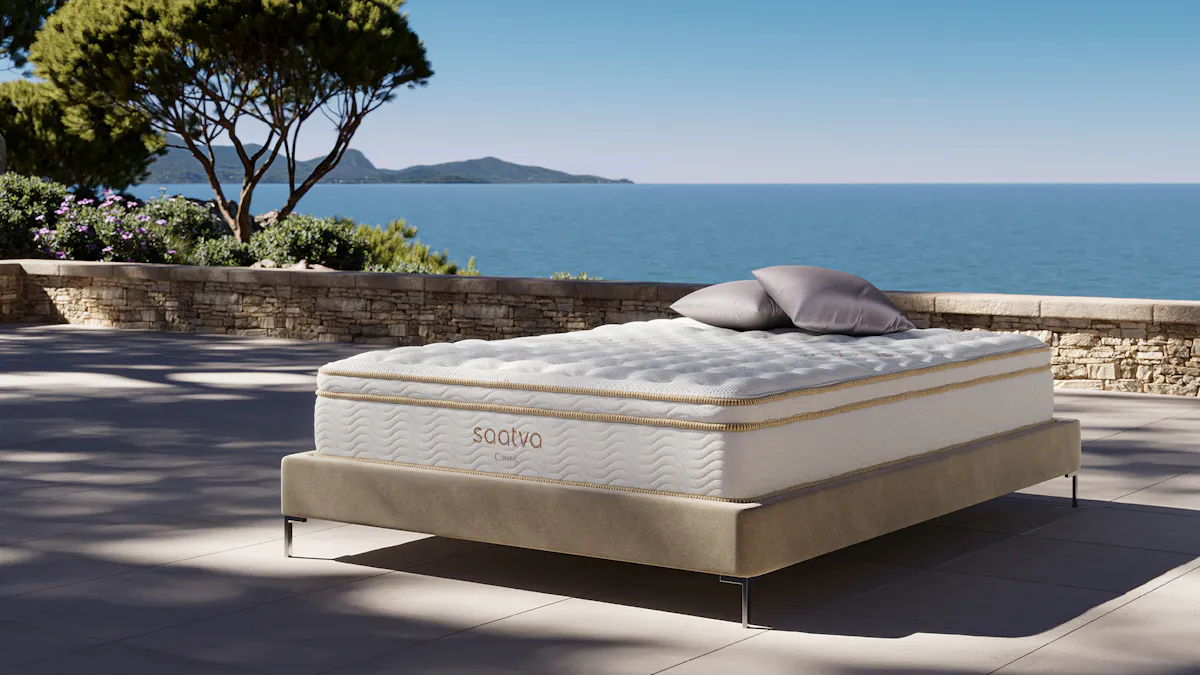
A premium reference is useful only when it belongs in the same shopping lane. If the Saatva Classic is on your shortlist, check its current official price and published terms, then compare those details with mattresses aimed at a similar level of purchase. I would not use it to make a stripped-down foam bed appear cheap or expensive, because the construction and service package may be addressing a different buyer.
The useful question is not simply whether the premium option costs more. Ask what the additional outlay buys in identifiable materials, support design, delivery service, return protection, or warranty coverage. If the official listing does not establish a benefit you value, the higher tier has not made its case for your bedroom.
Prices and promotions can change, so written records beat memory. A mattress price tracker helps separate an actual movement in the listed price from a recurring promotional presentation.
My premium-price test: Name the construction or service advantage in plain English. If all that remains is prestige language, keep shopping. If the advantage directly answers a durability, comfort, delivery, or return concern, it deserves consideration.
How to Read a Mattress Promotion Without Rushing
A discount banner shows a marketing comparison, not the full value calculation. Your own record of the exact model, configuration, seller, delivered total, and policy terms is a more useful benchmark.
Choose the mattress category before opening a field of promotional tabs. Once every foam bed, hybrid, latex mattress, and showroom model competes in the same list, the cheapest item tends to win attention even when it does not meet the same need.
Next, define a construction floor. Decide which support system is appropriate, which material disclosures you require, and how important an easy return process is. This narrows the comparison without pretending that every premium feature is necessary.
- Pick the intended mattress type and configuration.
- Verify the layer description and support core.
- Check the delivered total through the actual seller.
- Read the return, delivery, and warranty documents.
- Record the offer and revisit it before purchasing.
If a marketplace offer is lower, confirm that the listing is new, the seller is authorized where required, and the stated protections apply to that purchase path. Those answers should come from the marketplace listing, seller terms, and manufacturer policy, not an assumption based on the product name.
A showroom can still compete on useful service, especially if its written quote includes setup or removal that matters to you. An online purchase can be equally sensible when its construction disclosure and policies are clearer. The channel itself does not decide value, the complete offer does.
For a broader category benchmark, my guide to mattress prices explains the major cost drivers. Use that background to choose a realistic construction lane, then rely on the live listing and seller documents for the purchase decision.
My Final Price-Comparison Verdict
The strongest value is a mattress whose price matches an understandable build and an acceptable exit path. Foam type, density disclosure, coil design, latex composition, edge construction, and fire-barrier transparency tell me more than a dramatic markdown.
I’d pay a fair premium for a feature I can identify and expect to use. I would skip a lower-priced listing when the seller, materials, return process, or warranty eligibility remains vague. Match configurations carefully, calculate the delivered total, and keep the written terms beside the price.
ONE OPTION WORTH COMPARING
Shopping as well as reading? Here is one current option worth comparing: the Saatva Classic. Check today’s price, sizing and return terms on the official product page before you order.
Saatva Classic
- 365-night home trial and lifetime warranty, per saatva.com
- Handcrafted in the USA, free white-glove delivery
- Flexible financing available
FAQ
Is it cheaper to buy a mattress online or in a store?
Either channel can produce the better complete offer. Online sellers may use a simpler delivery model, while stores may package local setup, removal, floor-model pricing, or negotiated extras. Compare the same configuration and use each seller’s checkout, delivery, and return terms to calculate the delivered value.
What should I compare besides the mattress price?
Compare the comfort layers, support core, edge design, fire barrier, exact configuration, seller, delivery service, return procedure, and warranty conditions. These details reveal whether similar-looking listings actually represent the same product and level of protection.
Does a higher-priced mattress always last longer?
No. Price alone does not establish durability. Look for a transparent layer description, meaningful foam information, a well-explained coil or support system, suitable foundation requirements, and clear warranty terms. Verified owner-review patterns can add context, but they do not replace the construction details.
Are mattress promotions worth waiting for?
A promotion can improve the purchase price, but its label does not establish value by itself. Track the exact configuration you want and compare the delivered total under the applicable seller terms. That shows whether the offer improved without relying on a crossed-out reference price.
How can I avoid buying a mattress with fiberglass?
Read the manufacturer’s fire-barrier disclosure and ask the company to identify the exact material if the description is vague. Don’t remove or open a mattress cover to investigate unless the manufacturer’s care instructions explicitly permit it. A clear written answer before purchase is the safer basis for comparison.