 by
by Quick answer: Cooling blankets work by moving heat and moisture away from your skin using breathable fibers, cool-to-touch yarns, or phase-change materials. For most hot sleepers, a breathable weighted option like the Sleep Number True Temp™ Weighted blanket is the sweet spot.
- Passive fabrics (bamboo, Tencel, linen) cool through airflow and moisture wicking, per consumer bedding guides.
- Phase-change materials absorb and release heat to hold a steadier surface temperature, according to textile technology explainers.
- Active electric systems deliver the strongest cooling but add noise, setup, and energy use, per electric cooling blanket guides.
Updated July 2026 · Reviewed for accuracy
Cooling blankets are not magic, and I say that as someone who has spent years pulling apart bedding construction to see what actually does the work. The science is real, but it's narrower than the marketing suggests. A cooling blanket manages heat at the surface of your skin. That's it. Understand the mechanism and you'll buy the right one the first time.
What cooling blanket science actually means
Every cooling blanket on the market uses one of three mechanisms: conduction, convection, or evaporation. Conduction is heat moving from your warm skin into a cooler surface, which is why some fabrics feel cold the instant you touch them. Convection is airflow carrying heat away, which is what breathable weaves do all night. Evaporation is moisture wicking, where sweat gets pulled into the fabric and dries fast instead of sitting on you.
Here's the part most brands gloss over. No passive blanket lowers your core body temperature. What it does is slow the rate at which heat builds up under the covers. Your body sheds heat all night, and a normal blanket traps it. A cooling blanket gives that heat somewhere to go. According to consumer bedding guides, these products perform best for mild to moderate heat and night sweats, and they're less effective in extreme heat unless you pair them with an active cooling system or at least a cool room.
That distinction matters when you're shopping. If your bedroom hits high temperatures with no air conditioning, a passive blanket will disappoint you. If you run warm at night in a reasonably cool room, the right fabric will feel like a genuine fix.
The Nut's rule: a cooling blanket manages the microclimate under your covers. It does not refrigerate you. Match the mechanism to how hot you actually sleep, not to the boldest claim on the box.
The four technologies, ranked by how hard they work
Breathable passive fabrics. Bamboo-derived viscose, Tencel lyocell, and linen blends sit at the entry point of cooling blanket science. Their fibers wick moisture and their open weaves let air move. Per comprehensive cooling blanket guides, these are the cheapest and lowest-maintenance options, and they deliver mild but real cooling. They're the right call for most people who just sleep a bit warm.
Cool-to-touch fibers. These use yarns engineered for high thermal conductivity, the Arc-Chill type fibers you'll see marketed heavily. The cool sensation is genuine but front-loaded: the fabric feels cold on contact, then equalizes with your skin over time. They shine as a summer layer or for people who hate that first stuffy minute under a blanket.
Phase-change materials. This is the most interesting branch of the science. PCMs are substances, often paraffin-based microcapsules embedded in or coated onto the fabric, that absorb heat as they melt and release it as they solidify. Outlast, originally developed around NASA-adjacent thermal research, is the best-known name in this space. Per textile technology explainers, a PCM blanket holds a steadier surface temperature for longer than any passive weave. The tradeoffs: they cost more, sit in the premium tier, and some PCM-infused shells need special care or air drying, so check the washing instructions before you buy.
Active electric systems. Forced-air and water-circulation setups move the cooling off the fabric entirely and into a powered unit. Electric cooling blanket guides consistently rate these as the strongest cooling you can get without touching your sheets, and they note the costs: setup complexity, energy use, potential fan or pump noise, and a price that lives firmly in the premium bracket. If you want dual-zone control for you and a partner, this is where the technology delivers, and where you'll pay for it.
| Technology | Cooling strength | Noise | Maintenance | Price tier |
|---|---|---|---|---|
| Breathable fabrics (bamboo, Tencel, linen) | Mild, steady | None | Usually machine washable | Budget to mid |
| Cool-to-touch yarns | Strong on contact, fades | None | Easy | Budget |
| Phase-change materials | Moderate, long-lasting | None | Sometimes special care | Mid to premium |
| Weighted cooling | Mild to moderate | None | Varies by shell and fill | Mid |
| Active electric (air or water) | Strongest available | Fan or pump hum | Unit upkeep | Premium |
Comparing options? The True Temp™ Weighted blanket is the pick we keep coming back to — see the final verdict ↓
Where weighted cooling blankets fit in the science
Weighted blankets sound like the opposite of cooling, since more blanket usually means more heat. The category works because it separates the two jobs. The weight comes from a dense fill, often glass beads, and the cooling comes from the shell, typically a breathable or moisture-wicking fabric wrapped around that fill. Per consumer guides, these are useful for sensory comfort and a cozy feel, but they are not a high-velocity cooling solution. Think of them as weighted blankets that don't cook you, rather than cooling blankets that happen to be heavy.
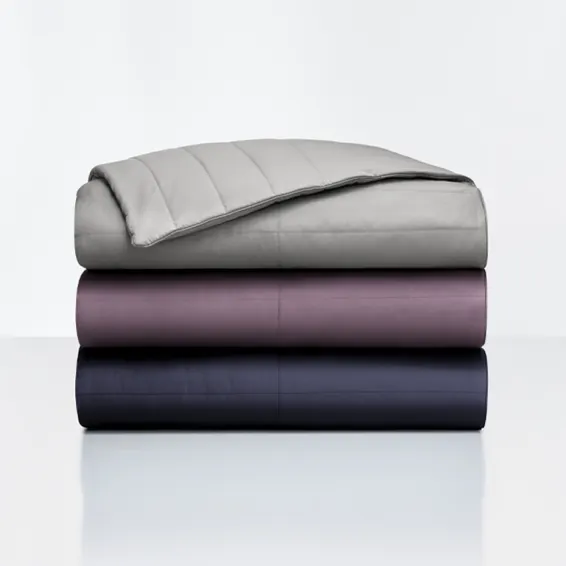
If that's the combination you want, the Sleep Number True Temp™ Weighted blanket is built around exactly this idea: temperature-balancing fabric technology paired with the calming pressure of a weighted fill. It's priced in the premium tier, so check the current price on the official site, and confirm the care instructions since temperature-regulating shells sometimes ask for gentler washing.
I've also covered how this category compares in my Gravity cooling weighted blanket review, and there's a broader rundown in the guide to cooling weighted blankets for summer. If you want the deeper mechanism breakdown, my piece on how cooling blankets work goes layer by layer.
Why your bedroom ruins (or saves) the science
Real-world results vary, and the research consensus is blunt about why: cooling blankets perform best when paired with breathable bedding and a cool room, not as a standalone fix in extreme heat. A PCM blanket in a hot, humid room with a polyester duvet on top will lose. The phase-change material saturates, the sweat can't evaporate, and you're back to square one.
Stack the conditions in your favor instead. Run breathable sheets, cotton or linen or Tencel, under the cooling blanket. Keep the room at a sleeping-friendly temperature with a fan or air conditioning if you have it. Skip the heavy duvet on top. Done right, even a mid-range passive blanket punches well above its price tier. Done wrong, the most expensive active system fights a losing battle against the room itself.
Quick checklist before you blame the blanket:
- Sheets breathable, not polyester or microfiber
- Room temperature managed with fan or AC
- Nothing heavy layered on top of the cooling blanket
- Blanket washed per instructions, since clogged fibers wick worse
How to match the technology to your sleep
Start with the honest question: how hot do you actually sleep? Mild warmth and occasional sweaty nights point to a breathable passive blanket, the budget-friendly fix. Persistent night sweats or a partner who steals the cool side point to PCM, where the temperature stays steadier through the night. Clinical-level heat, menopause-related sweats, or a hot climate with no AC is where active systems earn their premium price and their setup hassle.
Then run the secondary checks. Cleaning matters more than people think, because a blanket you can't wash becomes a blanket you stop using. Noise matters if you're a light sleeper considering an electric unit, since fans and pumps hum. And durability matters in the PCM space specifically: coated fabrics can lose effectiveness if the care instructions get ignored, per textile care guidance. Buy for the mechanism you need, then for the version of it you'll actually maintain.
FAQ
Do cooling blankets actually work?
Yes, within limits. Per consumer bedding guides, they reduce heat retention through breathable weaves, moisture wicking, and phase-change materials, and they're most effective for mild to moderate heat and night sweats. They won't rescue you from an extremely hot room on their own.
What's the difference between a cooling blanket and a regular blanket?
Construction. Regular blankets prioritize insulation, trapping your body heat. Cooling blankets use conductive yarns, open weaves, wicking fibers, or phase-change materials to move heat and moisture away from your skin instead of holding it in.
Are phase-change cooling blankets worth the extra cost?
For steady all-night temperature control, yes. PCMs absorb and release heat to hold a more stable surface than passive fabrics, according to textile technology explainers. The tradeoffs are a premium price and sometimes fussier care instructions.
Can a weighted blanket also be cooling?
Yes, but with managed expectations. Cooling weighted blankets put the weight in a dense fill like glass beads and the cooling in a breathable shell. Per consumer guides, they add sensory comfort with mild to moderate cooling rather than strong active cooling.
How do I care for a cooling blanket?
Follow the label, because it varies by material. Many bamboo and Tencel blankets machine wash fine, while some PCM-infused shells require special care or air drying. Skipping the instructions can degrade the cooling performance over time.
The bottom line
Cooling blanket science boils down to heat management, not cold generation. Breathable fabrics move air and sweat. Cool-to-touch yarns win the first minute. Phase-change materials hold the steadiest temperature. Active systems do the most work and ask the most from your wallet and your nightstand. Pick the mechanism that matches how hot you sleep, pair it with breathable sheets and a managed room, and the science will actually deliver what the label promises.
FINAL VERDICT
Bottom line for the science-minded cooling blanket reader: if you want cooling tech that matches how heat transfer actually works, the True Temp™ Weighted blanket is the safer buy — you get real temperature control from a brand you can still find next year, not a marketplace listing that vanishes.
OUR CATEGORY-MATCHED PICK
True Temp™ Weighted blanket
- Temperature-balancing fabric paired with the calming pressure of a weighted fill
- A weighted blanket engineered not to cook you, rather than a cooling blanket that happens to be heavy
- Confirm care instructions: temperature-regulating shells can need gentler washing