
 by
by Quick answer: Or & Zon defines coverlet bedding as a lightweight, breathable, no-fill top layer for light warmth. I’d choose it for summer use, styling, or folding over a duvet.
- Per Or & Zon, it covers the mattress top and sides, not the floor.
- The same guide describes it as lightweight and without fill.
- The guide lists summer coverage, styling, and extra warmth over a duvet as practical uses.
Updated July 2026 · Reviewed for accuracy
Coverlet bedding is easier to understand once you stop treating it as another word for every decorative bed covering. It has a specific job: adding light coverage without a filled interior.
I’d start with construction and coverage, then think about color or pattern. That order prevents a polished product photo from hiding the fact that the piece may not provide the warmth, drop, or materials you expected.
What coverlet bedding actually is
No fill is the defining construction clue. Or & Zon describes a coverlet as a lightweight, breathable top layer with no internal fill. The source compares its role to that of a light jacket, which is a useful way to think about the modest warmth it provides.
I read “coverlet” as a role as much as a product name. The lack of fill points toward a flatter, less bulky layer rather than a lofty piece built around internal padding. That tells you what the item is meant to do, but it doesn’t reveal the exact texture, fiber content, care method, or feel of a particular coverlet.
Placement matters just as much. According to Or & Zon, a coverlet should extend across the mattress top and down the sides without reaching the floor. If your goal is a sweeping, floor-length treatment, the coverlet definition doesn’t match that job.
What the category name tells you
- The layer should be lightweight and free of fill under Or & Zon’s definition.
- It is intended to provide light warmth rather than substantial loft.
- Its normal coverage area is the mattress top and sides.
What the name does not settle
- The exact fabric composition or surface feel.
- The care instructions for a particular item.
- Whether the stated size creates the side coverage you want on your mattress.
- What is included if the listing calls the item a set.
The same distinction is covered in my guide to what a coverlet is. The short version is simple: trust the construction description and intended placement, not the decorative label alone.
Coverlet vs quilt, duvet, and floor-length bedding
Top-and-sides coverage is the clearest boundary. Or & Zon explicitly says a coverlet is not meant to run to the floor, while its no-fill construction separates its intended role from bedding chosen for substantial loft.
| Bedding term | What you can safely infer | What to verify |
|---|---|---|
| Coverlet | Or & Zon defines it as lightweight, breathable, without fill, and sized to cover the mattress top and sides. | Fiber content, care, exact measurements, included pieces, and the resulting drop on your bed. |
| Quilt | The word alone does not confirm the no-fill construction used in the coverlet definition. | Whether the listed construction, weight, and intended use match the light layer you want. |
| Duvet | Or & Zon says a coverlet can be folded over a duvet as an extra layer. | The duvet’s own construction and whether the combined bedding feels appropriate for you. |
| Floor-length covering | A floor-reaching goal falls outside Or & Zon’s stated coverlet placement. | The finished drop rather than assuming “coverlet” means full floor coverage. |
I wouldn’t treat coverlet and quilt as interchangeable without reading the construction details. If the listing describes internal fill or a noticeably lofted design, compare that description with the no-fill coverlet definition before deciding whether the name is accurate enough for your needs.
A duvet presents a different decision because the verified relationship here is layering. The coverlet can sit folded over it for optional extra warmth, according to Or & Zon. My separate explanation of what a coverlet for a bed does focuses more closely on that role.
What a coverlet does on the bed
Summer coverage is one of its clearest use cases. Or & Zon identifies a coverlet as a possible summer cover because its design is lightweight, breathable, and intended to provide light warmth. I wouldn’t turn that category description into a guarantee about every fabric or sleeper, though. The exact listing still matters.
Use it according to the job you need done:
- As a warm-weather top layer: use the coverlet as the primary light covering.
- As a styling layer: spread it across the mattress top and sides for a finished surface without floor-length fabric.
- As optional extra warmth: fold it over a duvet, which Or & Zon specifically names as a use.
The styling role is practical, not merely decorative. A coverlet can give the bed a continuous outer surface while keeping the profile closer to the mattress than a filled layer would. That follows from the no-fill construction, but the amount of visual texture depends on the individual item.
Folding the coverlet over a duvet changes how accessible the layer is without changing what it is. You can unfold it when you want the extra light layer and leave it folded when you do not. I’d view that as flexibility in arrangement, not proof that the combination will suit every season or room.
The floor remains a useful checkpoint. If the covering stops around the mattress sides as intended, it is doing the coverlet job described by Or & Zon. If you want fabric to conceal everything below that point, begin with a different coverage goal rather than trying to force a coverlet into it.
Comparing options? The Channel-Stitched Coverlet Set is one category-matched product to investigate, not a documented winner — see the product note ↓
How to choose cotton, king, or daybed coverlet bedding
For king coverlet bedding, the size name is only the starting point. Match the official listed measurements to your mattress and decide how far down the sides you want the fabric to fall. The relevant target is mattress-top and side coverage, not contact with the floor.
Mattress depth affects that visual result even when the general size label sounds right. I’d compare the coverlet’s stated width and length with the surface it must cover, then account for the desired drop on each visible side. Don’t assume that every item carrying the same size name will land in the same place.
Daybed coverlet bedding needs the same kind of planning. Decide which edges remain visible in the room and where you want the coverlet to stop. The daybed label doesn’t replace that fit check, particularly if the bed’s position makes one side more prominent than another.
| Decision | What to check on the official listing | Why it matters |
|---|---|---|
| Fit | The stated measurements and intended bed size. | A category label cannot show where the bottom edge will land on your mattress. |
| Fiber | The exact material composition of the coverlet and any included pieces. | A phrase such as cotton coverlet bedding should be confirmed by the itemized composition. |
| Construction | Whether the piece is genuinely free of fill. | No fill is central to Or & Zon’s definition of a coverlet. |
| Care | The manufacturer’s cleaning and drying instructions. | The word “coverlet” does not establish a universal care method. |
| Package contents | Every component named in the set. | “Bedding set” does not tell you which matching pieces are included. |
With cotton coverlet bedding, I’d verify that “cotton” refers to the part you care about rather than assuming every included component has identical composition. I’d also read the care instructions before choosing by appearance. Neither the fiber word nor the coverlet label settles maintenance by itself.
If your decision is shifting from bedding type to fiber, my wool bedding guide covers that separate category. If you decide that you actually want a filled layer, the down-alternative bedding guide explains an option that serves a different construction brief from the no-fill coverlet described here.
How to layer a coverlet without expecting too much
Folded over a duvet is the specific layered arrangement identified by Or & Zon. It lets the coverlet remain visible and available as an extra source of light warmth. That is a sound use of the category because it relies on the coverlet’s actual role rather than asking it to imitate a heavily filled piece.
For a warmer-weather arrangement, Or & Zon says the coverlet can serve as the summer cover itself. Spread it over the mattress top and sides, then judge the particular fabric and construction on their own description. “Breathable” is part of the source’s category definition, but I’d still avoid treating the word as a measurable cooling promise for every item.
My layering rule
Choose the coverlet for light coverage first. Use it alone when that is enough, spread it for the intended styling effect, or fold it over a duvet for an optional extra layer. If you expect substantial loft or floor-length coverage, change the bedding category rather than stretching the definition.
A fully spread coverlet puts its pattern and texture across the visible sleep surface. A folded arrangement makes it an accent and keeps the duvet more prominent. Both placements fit the uses Or & Zon describes, so the choice is about your coverage and styling goal rather than a supposed correct layout.
I’d also resist assigning a universal season to a product from the word “coverlet” alone. The source supports summer use and light warmth, but it does not establish the exact thermal performance of every fabric or construction. The official material description remains the better guide for a specific item.
Who should choose a coverlet, and who should skip it
Light warmth without internal fill is the reason to choose this category. If that construction matches your goal, a coverlet can work as a summer top layer, a styling piece, or an extra layer folded over a duvet, all uses identified by Or & Zon.
| A coverlet makes sense if you want | Pause if you expect |
|---|---|
| A lightweight, no-fill top layer. | Substantial loft from internal fill. |
| Coverage across the mattress top and sides. | Fabric that extends all the way to the floor. |
| A summer cover or a layer that can sit over a duvet. | A category name that guarantees exact warmth for every product. |
| A flatter decorative surface for the bed. | A specific fiber, fit, care method, or set contents without checking the listing. |
My verdict is straightforward. Coverlet bedding is useful when you want light, tidy coverage and understand its limits. Confirm the actual composition, measurements, care, and package contents before buying, because the category name cannot answer those product-level questions.
ONE OPTION WORTH COMPARING
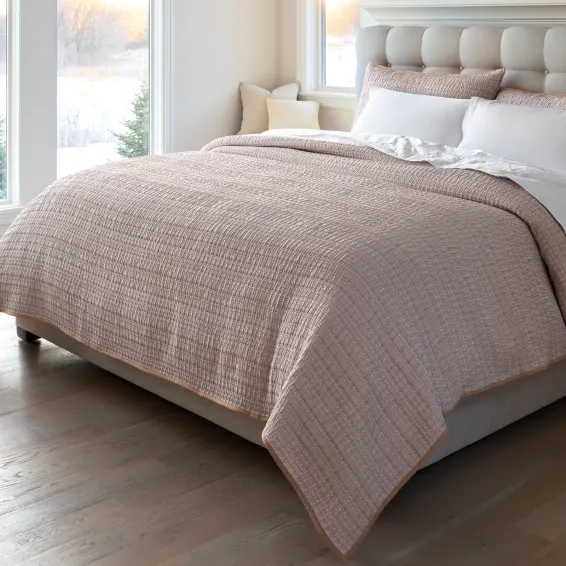
Shopping as well as reading? Here is one current option worth comparing: the Channel-Stitched Coverlet Set. Check today’s price, sizing and return terms on the official product page before you order.
Channel-Stitched Coverlet Set
- See the product page for full specs and current pricing
FAQ
No fill and mattress-side coverage answer most coverlet questions. The remaining decision is whether that light layer fits the way you want to use and dress the bed.
What is coverlet bedding?
Or & Zon defines coverlet bedding as a lightweight, breathable top layer without fill. It covers the mattress top and sides, provides light warmth, and is not intended to extend to the floor.
What is a coverlet for bedding used for?
According to Or & Zon, it can serve as a summer cover, a styling layer, or extra warmth folded over a duvet. I’d choose it only if that light, no-fill role matches the job you have in mind.
Is a coverlet the same as a quilt?
I wouldn’t assume the terms are interchangeable. Or & Zon’s coverlet definition specifically calls for no fill, so check a quilt’s stated construction rather than expecting its category name to confirm the same design.
Should a coverlet reach the floor?
No, not under Or & Zon’s definition. A coverlet should cover the mattress top and sides, so shoppers seeking floor-length fabric should begin with a different coverage requirement.
How do I choose cotton, king, or daybed coverlet bedding?
Verify the material composition and official measurements instead of relying on “cotton,” “king,” or “daybed” alone. Match the listed size to the mattress and desired side drop, then confirm the care instructions and exact set contents on the official listing.