 by
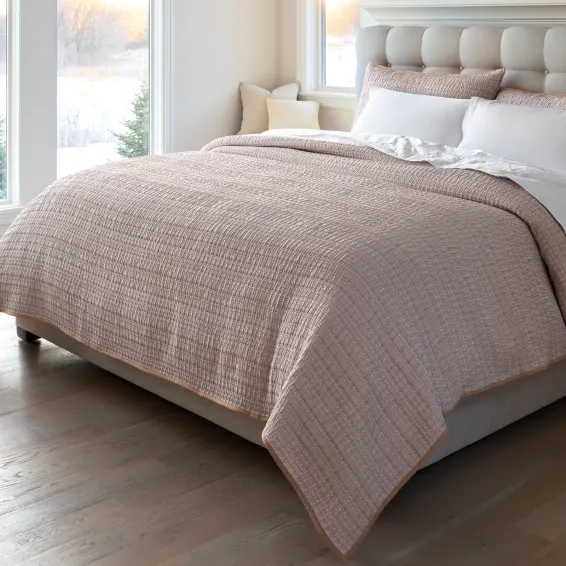
by Quick answer: Pick a coverlet for a lighter, tailored bed. Pick a bedspread for full, floor-length coverage. The Channel-Stitched Coverlet Set suits shoppers who want the cleaner coverlet look.
- Coverlets usually stop above the floor and sit over sheets or a bed skirt.
- Bedspreads are made to cover more of the bed, often including the box spring and sides.
- A coverlet is the more flexible layer if you like adding blankets or a duvet as seasons change.
Updated July 2026 · Reviewed for accuracy
My verdict is simple: a coverlet makes a bed look neater, while a bedspread makes it look more fully dressed. Neither is inherently better. The right choice depends on whether you want to show the bed frame and build warmth in layers, or hide the whole base beneath one continuous layer.
The names get blurred in product listings, but the construction and drop tell the real story. A coverlet is a shorter top layer. A bedspread is a fuller layer designed to reach much farther down the sides of the bed.
Coverage is the deciding difference
A coverlet’s shorter drop is its defining feature. It covers the mattress surface and drapes over the sides, but it generally stops well before the floor. That leaves the bed skirt, frame, legs, or platform visible. As explained in MattressNut’s guide to what a coverlet is, it is primarily a finishing layer rather than an all-encompassing bed cover.
A bedspread takes the opposite approach. It is cut to cover the mattress and the base beneath it, with enough fabric to create a floor-length drape on many setups. Some styles also extend over the pillows. This creates one uninterrupted surface from the head of the bed to the floor.
That difference matters more than fabric pattern or color. Put a short coverlet on a tall bed with exposed legs, and you will see the architecture of the bed. Put a full bedspread on the same frame, and the base becomes part of the textile presentation instead.
The Nut’s take: Start by looking at the lower edge of your bed, not the top. If you like seeing the frame or need a skirt to do some visual work, buy a coverlet. If you want the foundation hidden, a bedspread is the direct answer.
Size labels alone will not settle this. Both styles are sold for standard mattress sizes, but their intended drop differs. Read the product images and description closely, especially if you use a thick mattress, a box spring, a tall frame, or an adjustable base. Those details change how much fabric reaches the sides.
Coverlets create a lighter, more layered bed
A coverlet is usually the better fit for sleepers who do not want their top layer to carry all the warmth. It is often made from cotton, microfiber, or quilted fabric, materials that provide some texture and coverage without turning the bed into a heavy single-piece setup.
I prefer this arrangement for a bedroom that changes with the season. You can make the coverlet the visible layer, then add a blanket or duvet for more insulation when you need it. Remove the extra layer later, and the bed still looks finished instead of stripped down.
That flexibility also helps if two people share a bed but prefer different amounts of warmth. The coverlet stays in place as the visual base, while an additional blanket can be used only where it is wanted. It is a practical way to avoid letting the decorative layer dictate the sleep setup.
For a closer look at how this layer is commonly used, see MattressNut’s explanation of what a coverlet is for on a bed. The useful distinction is that a coverlet can stand alone in mild conditions, but it does not have to do every job by itself.
A coverlet makes sense if you want:
- A visible platform bed, frame, or bed skirt.
- A lighter top layer that can work with separate bedding.
- A streamlined look with less fabric pooling around the bed.
- More control over how much warmth you add at night.
Comparing options? The Channel-Stitched Coverlet Set is the pick we keep coming back to — see the final verdict ↓
Bedspreads deliver the full-drape look in one layer
A bedspread is built around coverage. Its fuller cut creates a long drop that can conceal the mattress base and reach toward the floor. That is why it reads as more traditional, though it can also suit a polished hotel-inspired room.
The material choices tend to support that visual role. Bedspreads may use cotton-rich weaves, chenille, jacquard, or quilted constructions. Texture is often more prominent because the piece covers such a large area. A raised weave or quilted pattern becomes part of the room’s visual weight.
This fuller construction can also make a bedspread feel like a more self-contained solution. If you do not enjoy arranging several layers every morning, one broad top layer can simplify the appearance of the bed. The tradeoff is less flexibility: a heavy-looking bedspread stays visually substantial even when the room or season calls for a lighter feel.
I would choose a bedspread when the goal is coverage first. It is especially sensible if the bed base is plain, visually cluttered, or simply not something you want on display. A coverlet cannot replace that effect unless you pair it with a bed skirt or another lower layer.
| Detail | Coverlet | Bedspread |
|---|---|---|
| Side coverage | Shorter drop, usually above the floor | Fuller drop, often designed to reach the floor |
| Visual effect | Tailored and streamlined | Continuous and fully dressed |
| Layering | Easy to pair with a blanket or duvet | Often used as the main visible layer |
| Best for | Visible frames, modern rooms, flexible warmth | Floor-length styling and concealed bed bases |
Warmth depends on layering, not the name alone
A lighter coverlet does not automatically mean a cold bed. It means the warmth can be distributed across separate pieces. A coverlet over sheets, plus a blanket or duvet when needed, lets you adjust the setup without replacing the visible top layer.
A bedspread may feel more substantial because of its fuller coverage and potentially heavier weave, but the label itself does not tell you how warm it will sleep. Cotton-rich fabric, chenille, jacquard, quilting, and fill can all change the feel. Check the fabric content and construction before assuming a floor-length style is the warmer one.
For temperate conditions, I like the coverlet approach because it gives you more options. For a cooler room, a coverlet can still work, but it should be paired with a warm blanket or thicker quilt. If you dislike managing extra layers, a more substantial bedspread may feel easier to live with.
Buy on construction, not marketing language. “Lightweight,” “quilted,” and “luxury” can describe very different products. Fabric type, weave, quilting, and intended drop explain far more about how the piece will look and function on your bed.
Style is really about what you want to reveal
A visible bed frame gives a coverlet a natural advantage. The shorter edge creates breathing room around the lower half of the bed, which is why this format often feels more modern and deliberate. A matching or complementary bed skirt can add polish without hiding the entire structure.
A bedspread is more theatrical in the useful sense of the word. The fabric creates a single broad plane, and the long sides soften the hard lines of a frame and foundation. That makes it a strong choice for traditional bedrooms, guest rooms, and spaces where you want the bed to look completely made even without decorative layering.
The texture also changes the visual message. A simple quilted coverlet can make a busy room feel calmer. A textured bedspread, particularly in chenille or jacquard-style fabric, can become a focal point. There is no universal winner here. Choose the piece that supports the room rather than asking it to carry every decorative decision.
If you are torn between a coverlet and another quilted top layer, MattressNut’s coverlet versus quilt comparison helps separate those roles. A quilt is often chosen for warmth and stitching detail, while a coverlet’s shorter, cleaner drape is usually the styling priority.
Care starts with fabric and ends with the label
Many coverlets and bedspreads are machine washable, but that does not make their care interchangeable. Cotton, microfiber, chenille, textured jacquard, and quilted constructions can react differently to washing, drying, friction, and heat. The manufacturer’s care label is the authority for the exact piece in your cart.
The biggest practical concern is bulk. A bedspread uses more fabric and may be harder to wash in a compact home machine, especially once it is wet. A coverlet can be easier to manage because it is generally smaller in overall drop, though thick quilting can still add substantial volume.
Protect the finish by following the listed wash instructions, using the recommended temperature, and avoiding assumptions about drying. Fading, shrinkage, and distorted quilting are not style issues you can steam away after the fact. They begin with buying a material you can realistically care for.
Before checkout: Measure the mattress height and the frame height, then compare them with the product’s stated coverage. Images can suggest a floor-length drape that your own bed setup will not produce.
Which option I’d choose for different bedrooms
For a platform bed with good-looking legs, I would choose a coverlet. The whole point of that furniture is its silhouette, and a long bedspread covers it. A coverlet lets the frame remain part of the room while still giving the mattress a finished surface.
For a bed with an exposed foundation that you want hidden, I would choose a bedspread. It is the more direct solution, with no need to coordinate a separate skirt just to achieve full coverage. The longer drape does the visual work in one piece.
For a guest room, either can work, but I would decide based on maintenance and presentation. A bedspread gives an immediately formal, complete look. A washable coverlet paired with simple layers gives the next guest more control over warmth and may be easier to reset between stays.
For a bedroom where you change bedding with the weather, I lean toward a coverlet. The Channel-Stitched Coverlet Set is worth considering if the coverlet route matches your room, but check the current details on the official site and confirm that its materials and care guidance fit your routine.
My final take on coverlet vs bedspread
A coverlet wins for flexibility, visible bed furniture, and a tidy layered look. A bedspread wins for full coverage, a more traditional drape, and a bed that looks finished from every angle with less layering.
I would not overthink the terminology. Look at where the fabric ends. If you want it to stop above the floor, choose a coverlet. If you want it to hide the base and fall toward the floor, choose a bedspread. That one decision will get you much closer to the look you actually want.
FAQ
Can I use a coverlet instead of a bedspread?
Yes, if you prefer a shorter, lighter top layer and do not need the mattress base hidden. Add a bed skirt if you want more lower-bed coverage without switching to a floor-length bedspread.
Does a coverlet go over a duvet?
A coverlet can go over a duvet for a layered, hotel-style finish, though many people use it beneath a folded duvet or as the main layer in milder weather. The best arrangement is the one that gives you the warmth and visual weight you prefer.
Will a bedspread cover a box spring?
A bedspread is commonly designed to cover the mattress and box spring area, often with fabric that falls close to the floor. Check the listed drop and product images because bed height changes the final result.
Is a coverlet warmer than a quilt?
Not necessarily. Warmth depends on the fabric, quilting, fill, and the layers beneath or above it. Coverlets are generally used as lighter decorative layers, while quilts are often selected for more standalone warmth.
Should I choose a coverlet for an adjustable bed?
A coverlet can be a practical choice because its shorter design is less likely to pool around the base. Confirm the exact size and care guidance from the manufacturer, especially if you plan to move the bed’s head or foot frequently.
FINAL VERDICT
Before you settle: if coverlet vs bedspread is what brought you here, the Channel-Stitched Coverlet Set is the value pick on this page — more home-trial and warranty coverage than the alternatives covered here. Confirm current price, dimensions and terms on the official product page before ordering.
OUR CATEGORY-MATCHED PICK
Channel-Stitched Coverlet Set
- The Channel-Stitched Coverlet Set suits shoppers who want the cleaner coverlet look