
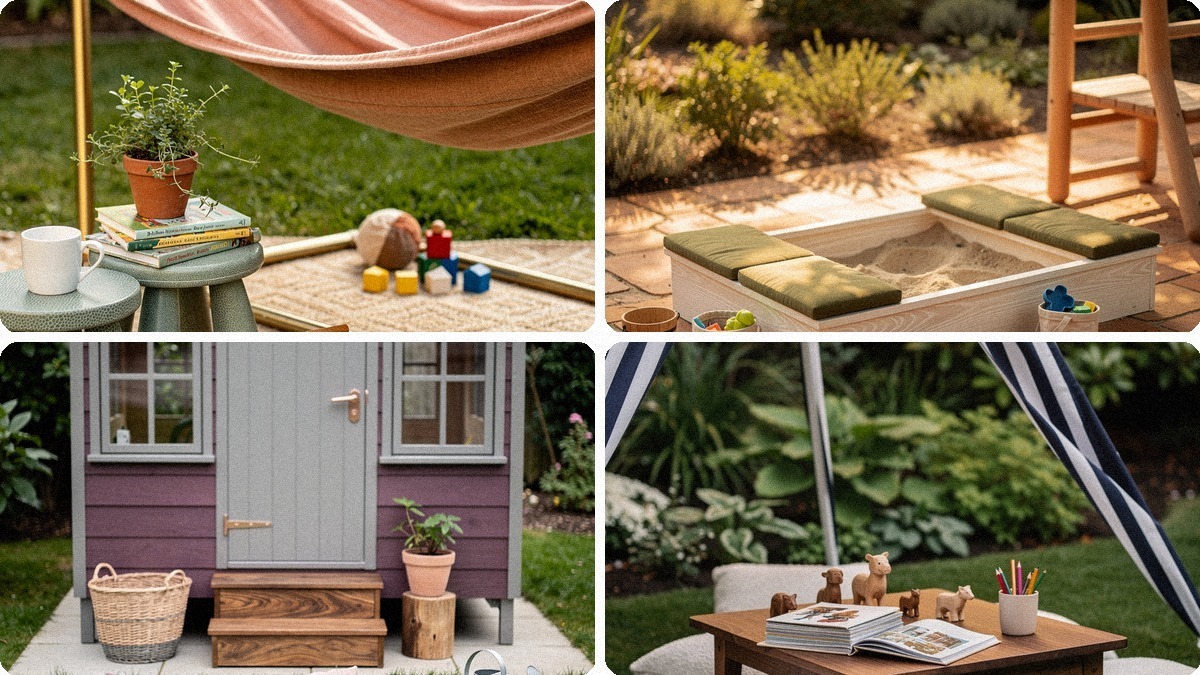
 by
by I've built three backyard play areas over the last decade, and the ones that lasted weren't the biggest. They were the ones where I stopped thinking about what kids "should" want and started watching what they actually used. A cozy backyard play area that works for kids and adults both isn't a checklist of equipment. It's a sequence of choices that layer comfort on top of function, so the space feels like part of the house instead of a fenced-off zone you tolerate. Here's how I'd do it if I were starting fresh tomorrow.
Editor's Note: What Actually Gets Used
After two years of watching what my kids gravitate toward, I've noticed a pattern. The sandbox gets daily use.
The hammock gets evening use. The plastic climber got three months and then sat there like a monument to my optimism. If you're short on time, here's the short version: start with a soft surface, add one shaded zone for kids and one relaxed corner for adults, then build outward.
The rest of this guide breaks down 18 specific moves, but those three are the ones that matter. Our 23 cozy small backyard ideas has more spatial moves if your yard is tight.
- Start with a Soft Ground Plane
- Anchor a Low Sandbox in White Oak
- Layer Shade with a Striped Canopy
- Hang a Hammock Between Aged Brass Posts
- Build a Plum Playhouse with Walnut Steps
- Float a Rope Swing from a Natural Oak Branch
- Mix a Dusty Rose Structure with Chalkboard and Brass
- Frame a Canvas Teepee in a Corner
- Paint a Midnight Blue Reading Nook
- Lay a Sage Balance Beam on Cream Gravel
- Build a Terracotta Climbing Dome
- Assemble a Clay Plaster Mud Kitchen
- Float a Bouclé Sofa Near the Sandbox
- Hang a Navy Treehouse with Walnut Ladder
- Build an Emerald Outdoor Dining Area
- Add a Forest Green Play Kitchen
- Pour a Dusty Rose Sandbox with Shade Sail
- Light a Warm White Lounge with Fire Pit
1Start with a Soft Ground Plane
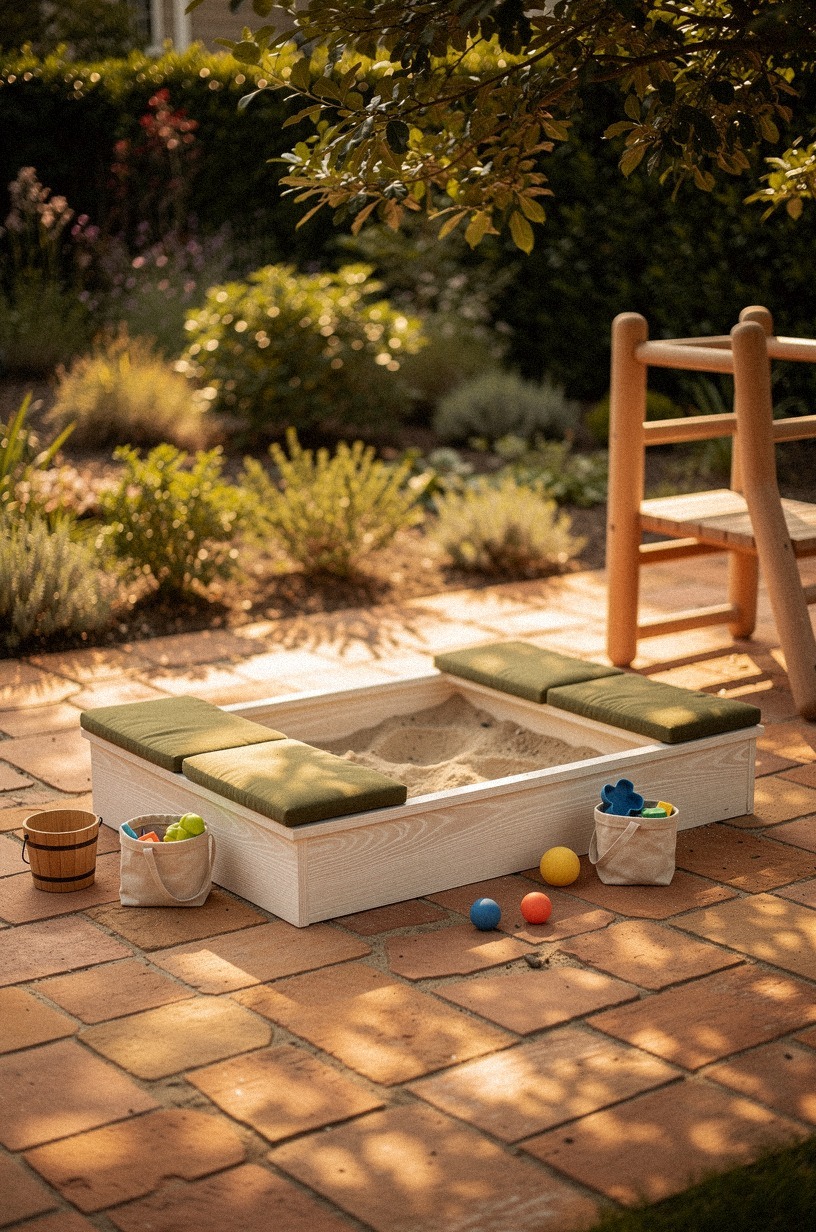
Terracotta stone pavers set on sand give you a surface that drains fast and stays cool under bare feet. I learned that the hard way after a summer on dark concrete that hit 120 degrees by noon.
The pavers don't need to cover the whole yard. Aim for a 12x16 foot zone where the main action happens.
That's big enough for a sandbox, a small table, and a couple of adults on camp chairs without anyone touching elbows.
If you're on a tighter budget, decomposed granite works at about $3 to $5 per square foot installed, versus $8 to $14 for stone pavers. It compacts firm enough for trikes and washes clean with a hose.
Either way, skip the rubber mulch. It smells like a tire fire in August and it migrates into every corner of your lawn.
2Anchor a Low Sandbox in White Oak
A sandbox at 18 inches tall is the right height for a two-year-old to climb in and a six-year-old to kneel beside. Build the frame from 3/4-inch solid white oak with a bottom slatted for drainage. The oak weathers to a soft grey in about two seasons if you don't stain it, and it looks intentional against green grass in a way that plastic never will.
IKEA FLISAT has a small wooden sand tray at $40 if you want something ready-made, but a custom 4x4 foot box in white oak runs about $180 in lumber and lasts ten years.
Line the bottom with landscape fabric and fill with washed play sand at about $50 per ton. You'll need roughly half a ton for a 4x4 box at 12 inches deep.
Add a hinged cerused white oak lid and the box doubles as a bench when the kids aren't digging. I've seen lids left open during rain turn into frog ponds, which is either a feature or a bug depending on your parenting style.
3Layer Shade with a Striped Canopy
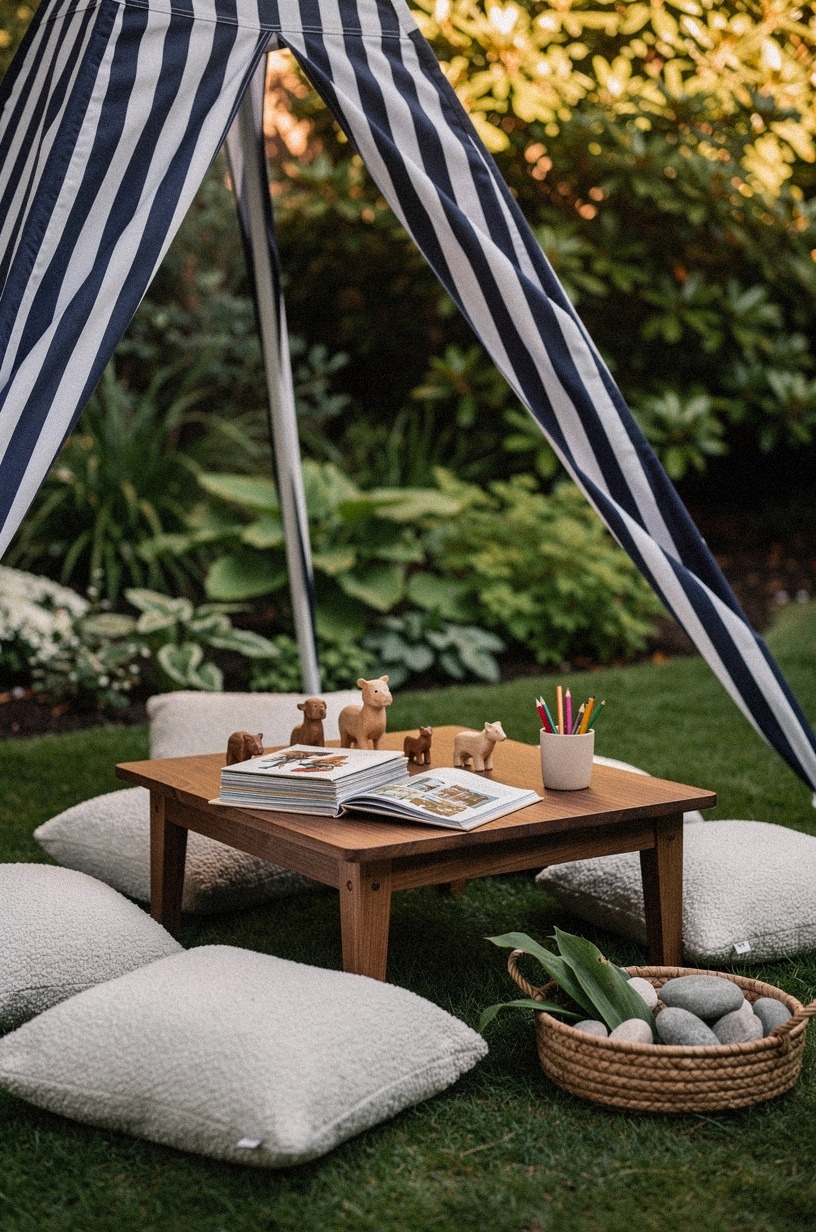
Direct sun kills the mood by ten in the morning. A navy and white striped canopy over a walnut outdoor play table gives you a defined room-within-a-yard.
The table at 30 inches high works for kids standing and adults on low stools. CB2 carries a walnut-veneer outdoor table in that height range, or you can build one from 3/4-inch solid white oak for about $80 in lumber.
The canopy itself: a 10x10 foot sail from Target Threshold runs about $45. Install it with eye bolts rated for 200 pounds into fence posts or tree trunks.
Angle it so one corner is lower than the others. Rain runs off instead of pooling, and the asymmetry looks more designed than a flat tarp.
4Hang a Hammock Between Aged Brass Posts
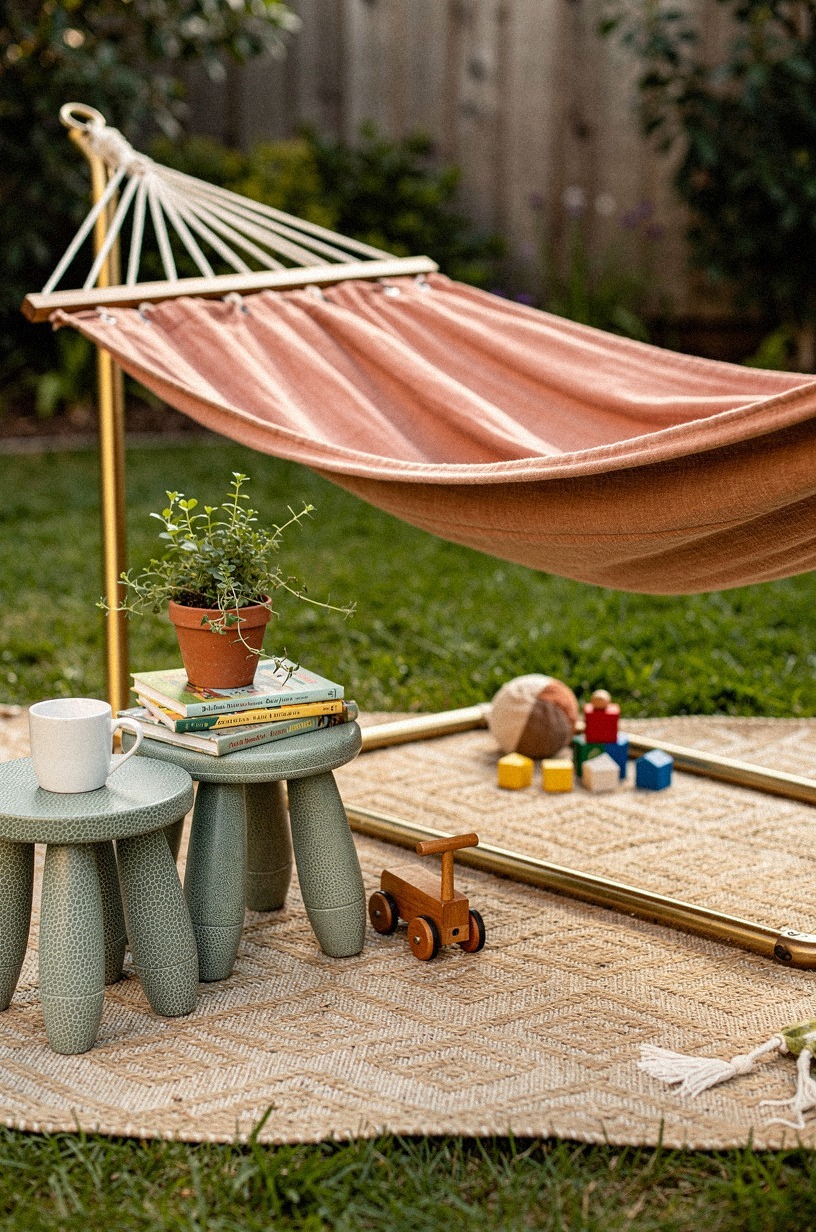
This is where the adults get their corner. Two aged brass posts set in concrete at 8 feet apart give you a permanent anchor for a clay-toned linen hammock.
The brass develops a soft patina in about six months of weather, and it reads as intentional rather than industrial. Article carries a linen hammock in that tone for around $220, or Wayfair has a decent Belgian flax version closer to $140.
Hang it at 18 inches off the ground when loaded. That's low enough to feel safe with kids, high enough that you don't scrape the dirt. Add two shagreen accent stools nearby at 16 inches for drinks, books, or a kid who wants to be near you without being in the hammock.
5Build a Plum Playhouse with Walnut Steps
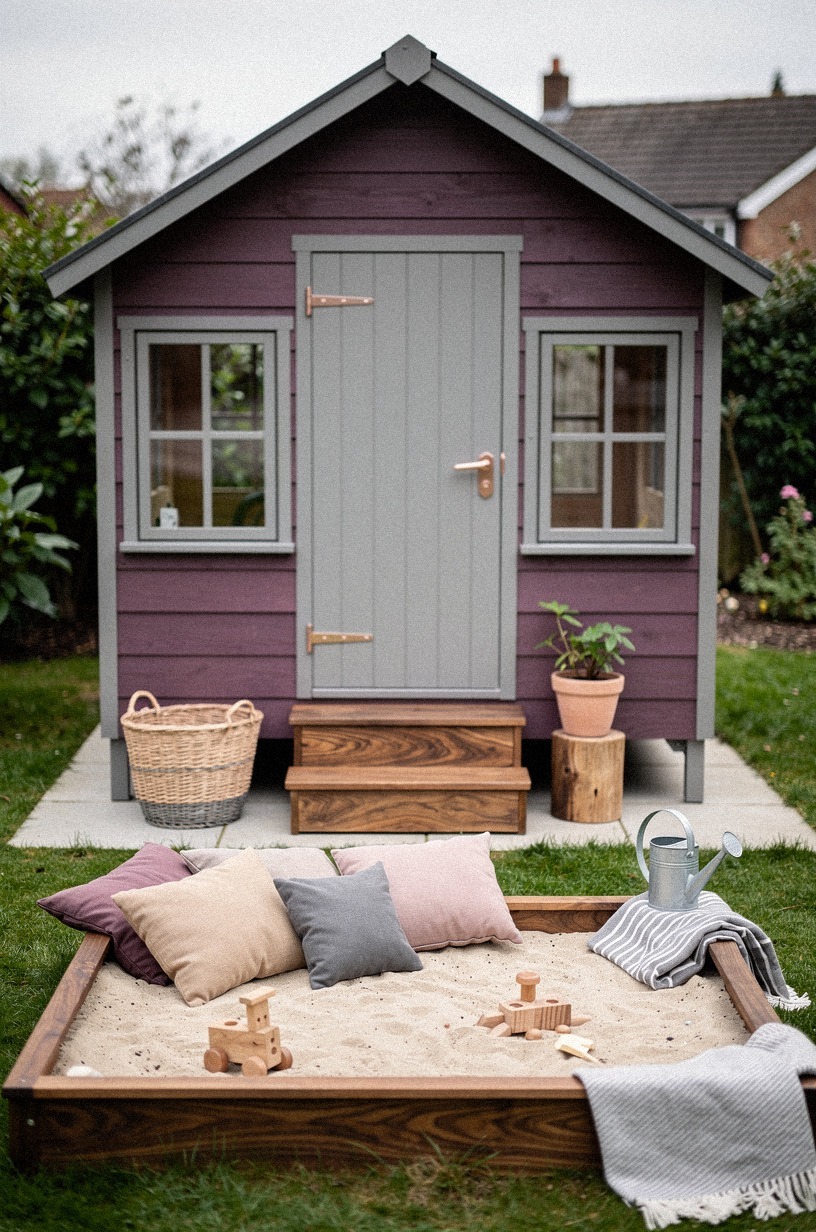
A playhouse is a splurge, but it's the piece that gets used from age two to age eight if you build it right. Frame it in plum-painted cedar with walnut steps and a small covered porch.
The plum reads as warm in afternoon light, not cartoonish like primary red or blue. Farrow & Ball Brinjal is the right depth for exterior wood, or Benjamin Moore Black Raspberry for something slightly softer.
The steps should be 12 inches deep and 8 inches tall per riser, which is comfortable for a toddler but not so small that a five-year-old skips them three at a time. A slate roof or metal standing seam overhead keeps the interior dry without the maintenance of shingles.
Budget $800 to $2,500 depending on whether you build from plans or buy a kit. I've seen a well-built cedar playhouse become a reading nook, a puppet theater, and a "store" in the same afternoon.
The plastic ones never get that kind of imaginative reuse.
6Float a Rope Swing from a Natural Oak Branch
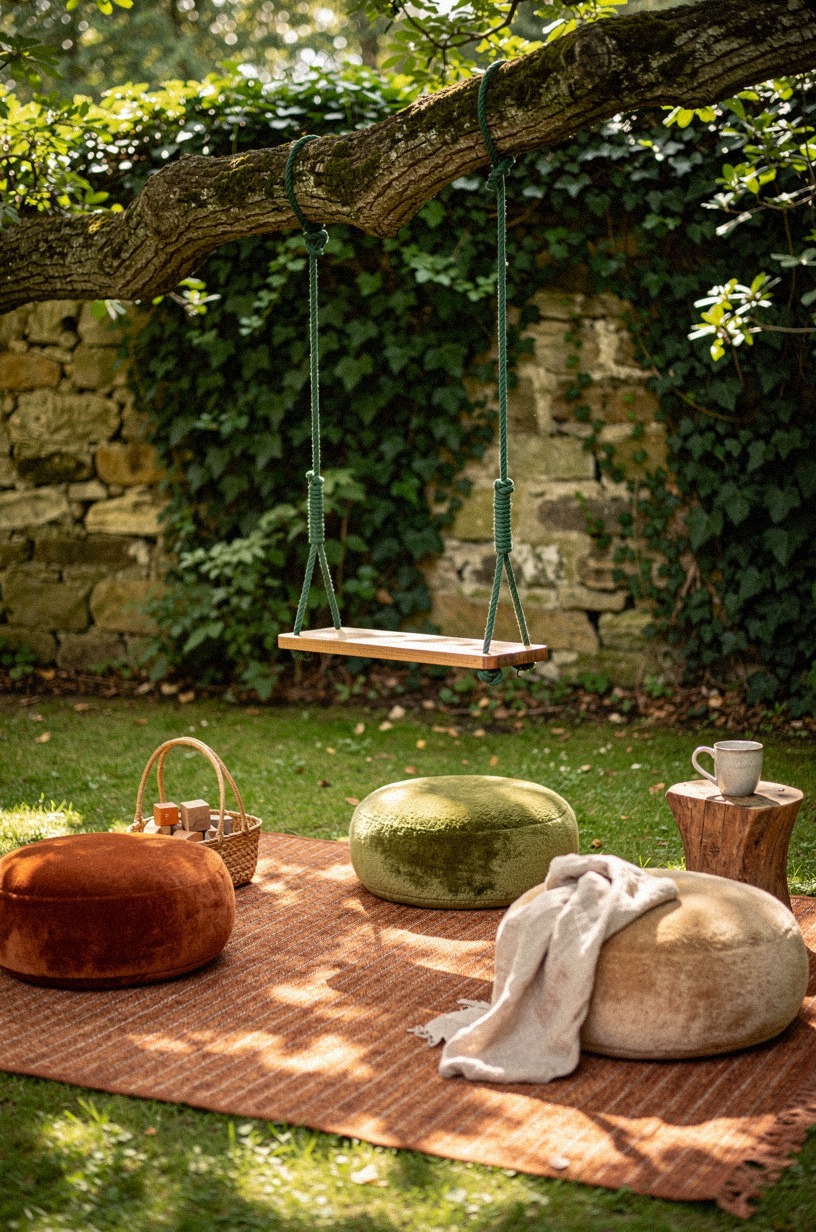
A forest green rope swing over a rust-colored outdoor rug is the simplest addition that gets the most use. The rope should be 1-inch diameter manila or polypropylene, rated for 500 pounds.
The branch needs to be at least 8 inches in diameter at the attachment point, live wood, and from a hardwood species (oak, maple, ash). Softwoods like pine split under load.
The rug underneath matters. A deep-pile mohair velvet pouf arrangement below the swing gives kids a soft landing zone and adults a place to sit while they push. West Elm carries outdoor poufs in mohair velvet around $180 each, or IKEA has a bouclé version at $49 that holds up surprisingly well if you store it under cover.
7Mix a Dusty Rose Structure with Chalkboard and Brass
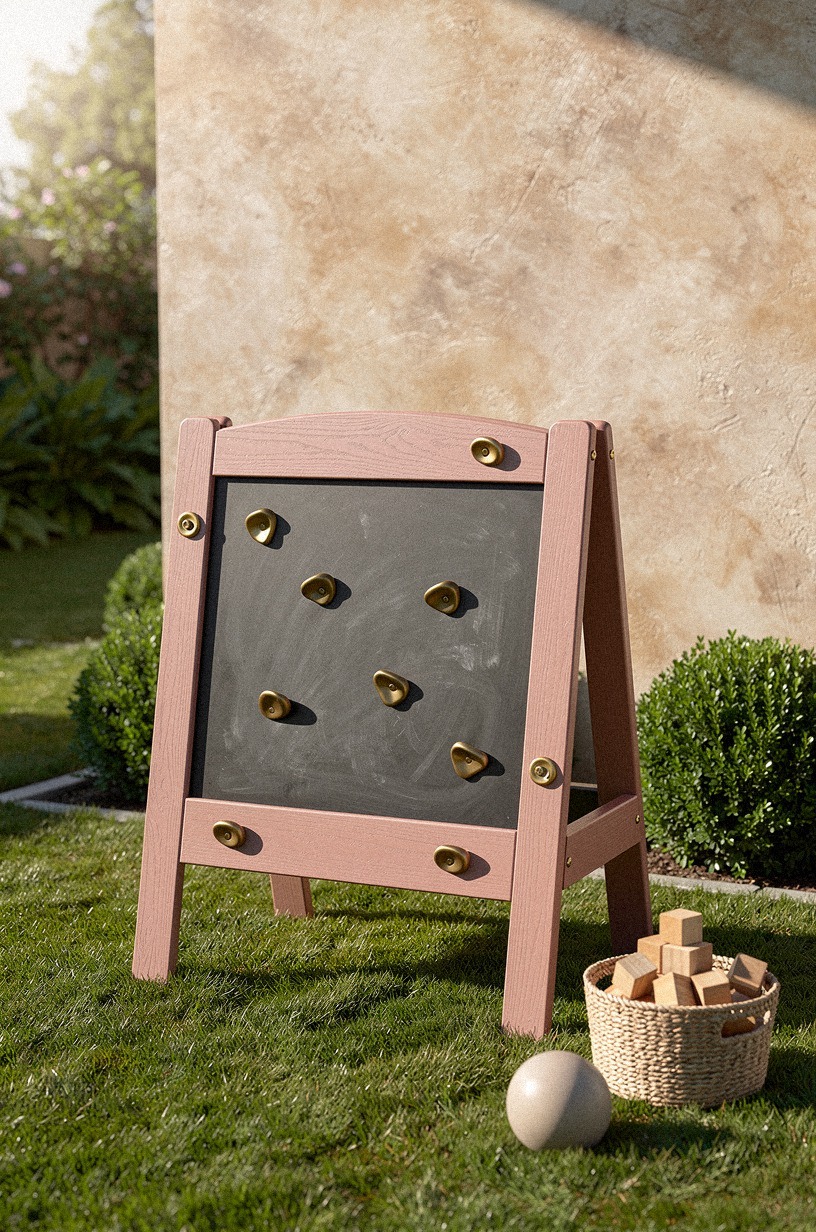
A dusty rose painted wooden play structure with a charcoal chalkboard panel and brass climbing holds bridges the gap between active play and quiet creativity. The chalkboard panel should be 24x36 inches, framed in the same wood as the structure, and mounted at 36 inches off the ground for a standing toddler or a seated adult.
The brass climbing holds (try Atomik Climbing Holds for brass-coated resin sets at about $60 for a six-pack) screw into a 3/4-inch plywood backing behind the panel. The hand-applied Venetian plaster base wall behind the whole structure, if you've got a fence or garage wall to work with, gives you a backdrop that catches late-afternoon light and makes the dusty rose pop.
8Frame a Canvas Teepee in a Corner
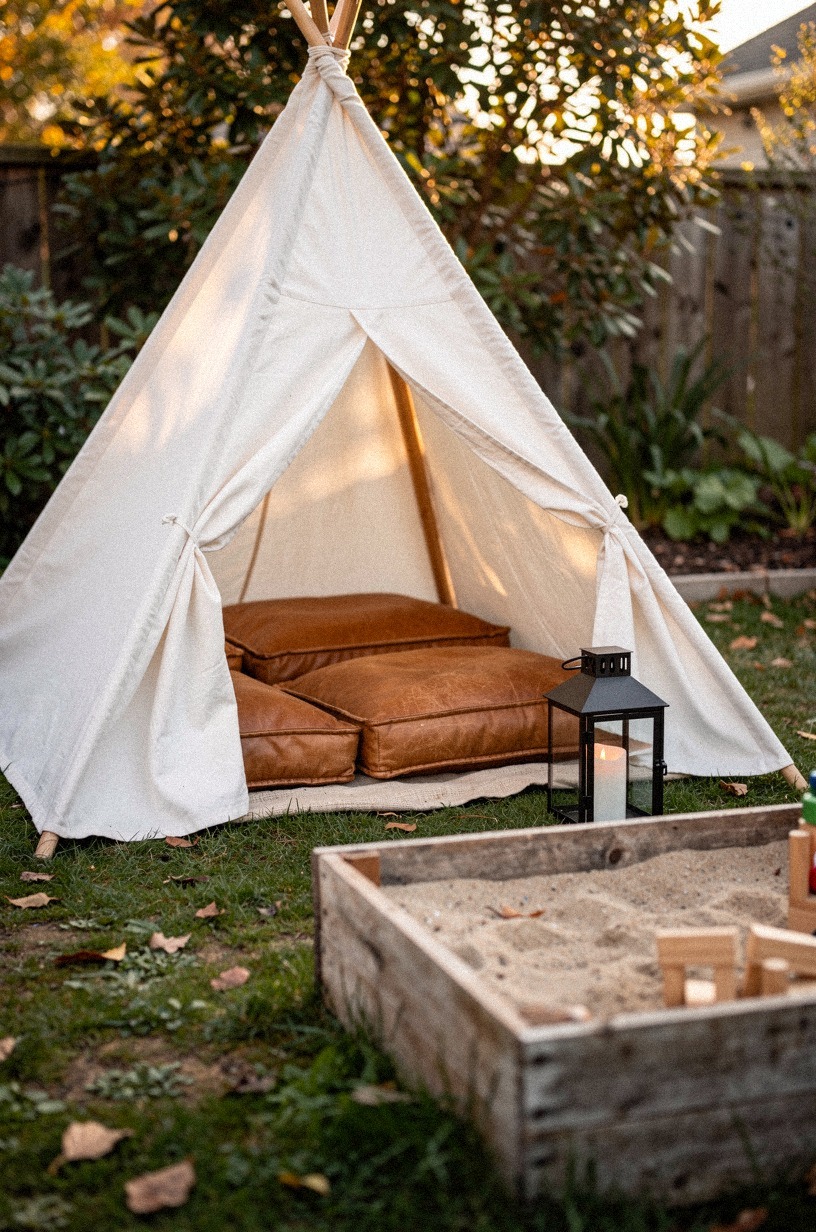
A warm white canvas teepee with camel leather floor cushions and a black accent lantern creates a retreat that works for reading, napping, or hiding. The teepee should be 6 feet tall at the center with a 4-foot base so an adult can crawl in. Target Threshold carries a canvas version at $89, or West Elm has a Belgian linen model at $240 that holds its shape better.
The camel leather cushions (try CB2 or Article for full-grain leather at $120 to $180 each) should be 24 inches square and 4 inches thick. A reclaimed weathered teak sandbox nearby gives you storage that doubles as seating. The weathered teak silvers to a grey that matches the teepee canvas in about a year.
9Paint a Midnight Blue Reading Nook
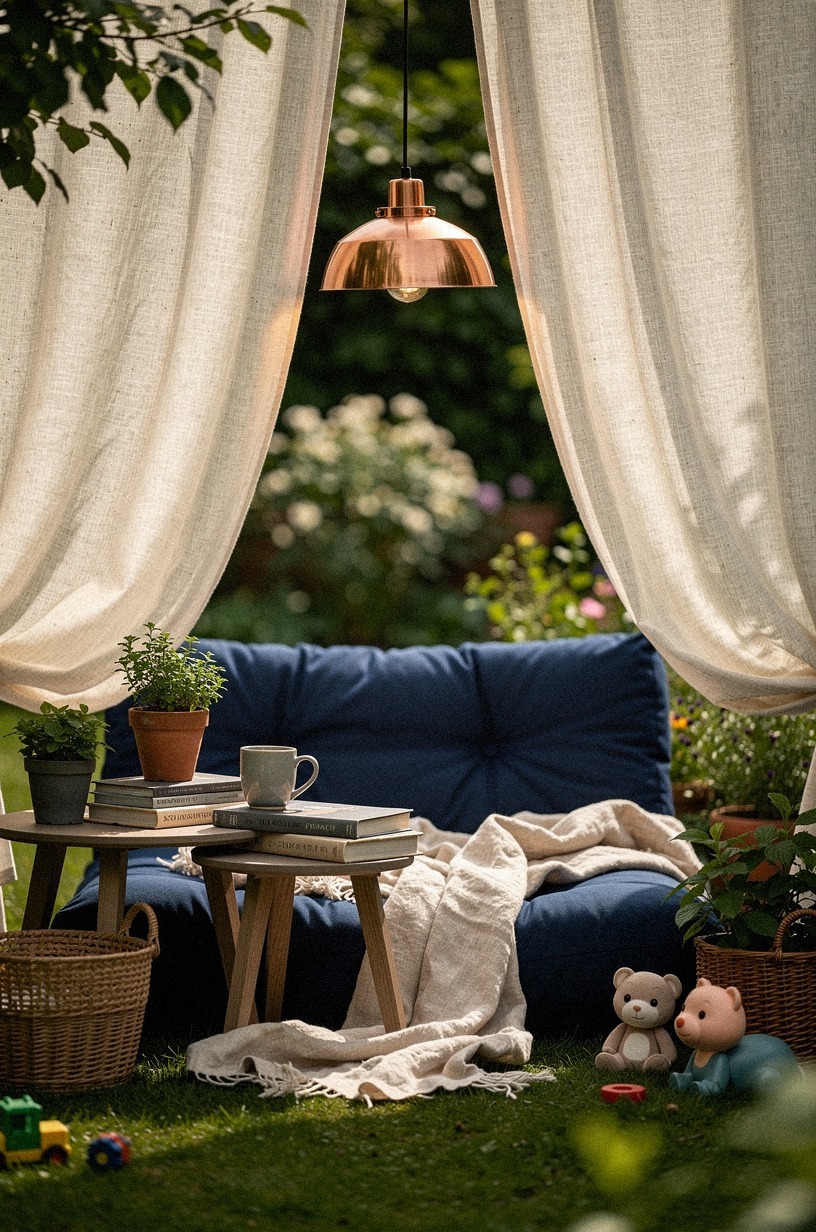
A midnight blue outdoor reading nook with a copper pendant light and ivory washed Belgian linen drapes is the adult space that kids borrow. Build it against a fence or garage wall with a built-in bench in cerused white oak at 18 inches tall, deep enough for a cushion and a backrest. The midnight blue should be Farrow & Ball Hague Blue or Benjamin Moore Midnight Oil for depth that stays rich in shade.
The copper pendant should be a simple bowl shape, about 12 inches wide, hung at 7 feet so adults don't duck. Wire it to an outdoor-rated junction box or use a solar pendant if you're not comfortable with electrical work.
The Belgian linen drapes on a brass rod give you the option to close off the nook for privacy or leave them open as a soft frame. Add a small walnut side table at 20 inches for coffee, books, and the rocks your kid just handed you.
This nook gets used for morning coffee, afternoon reading, and evening wine with equal frequency. Our 15 cozy private backyard ideas has more enclosure moves if you want to block sightlines.
10Lay a Sage Balance Beam on Cream Gravel
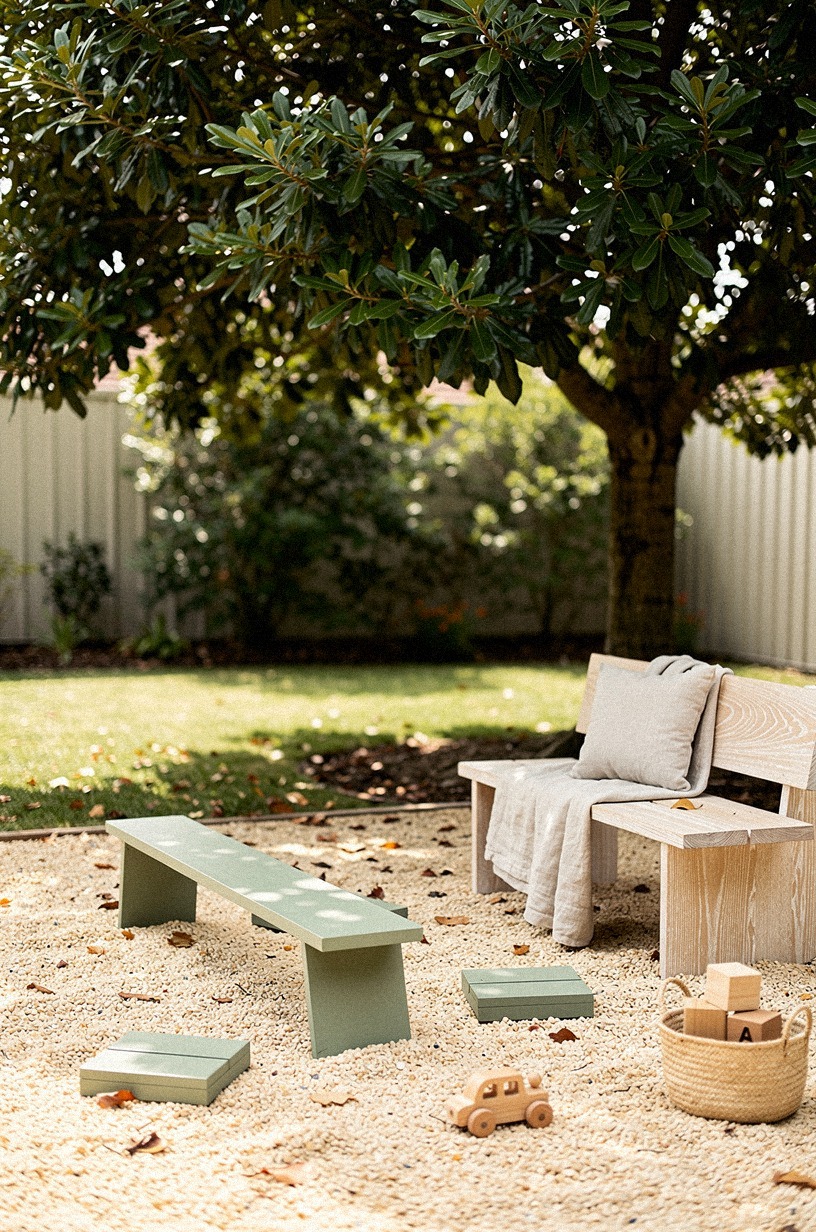
A sage green wooden balance beam and stepping stones on warm cream gravel give you active play without a full jungle gym. The beam should be 4 inches wide, 3 inches tall, and 8 feet long, painted in Sherwin-Williams Open Air (SW 6491). The cream gravel (crushed limestone, $45 per ton) should be 3 inches deep over landscape fabric so weeds don't push through.
A natural wood cerused white oak bench nearby at 18 inches tall gives adults a spot to watch without hovering. The bench should be 48 inches long to seat two. If you're building it, white oak at 1.25 inches thick will last ten years outside with an annual coat of penetrating oil.
11Build a Terracotta Climbing Dome
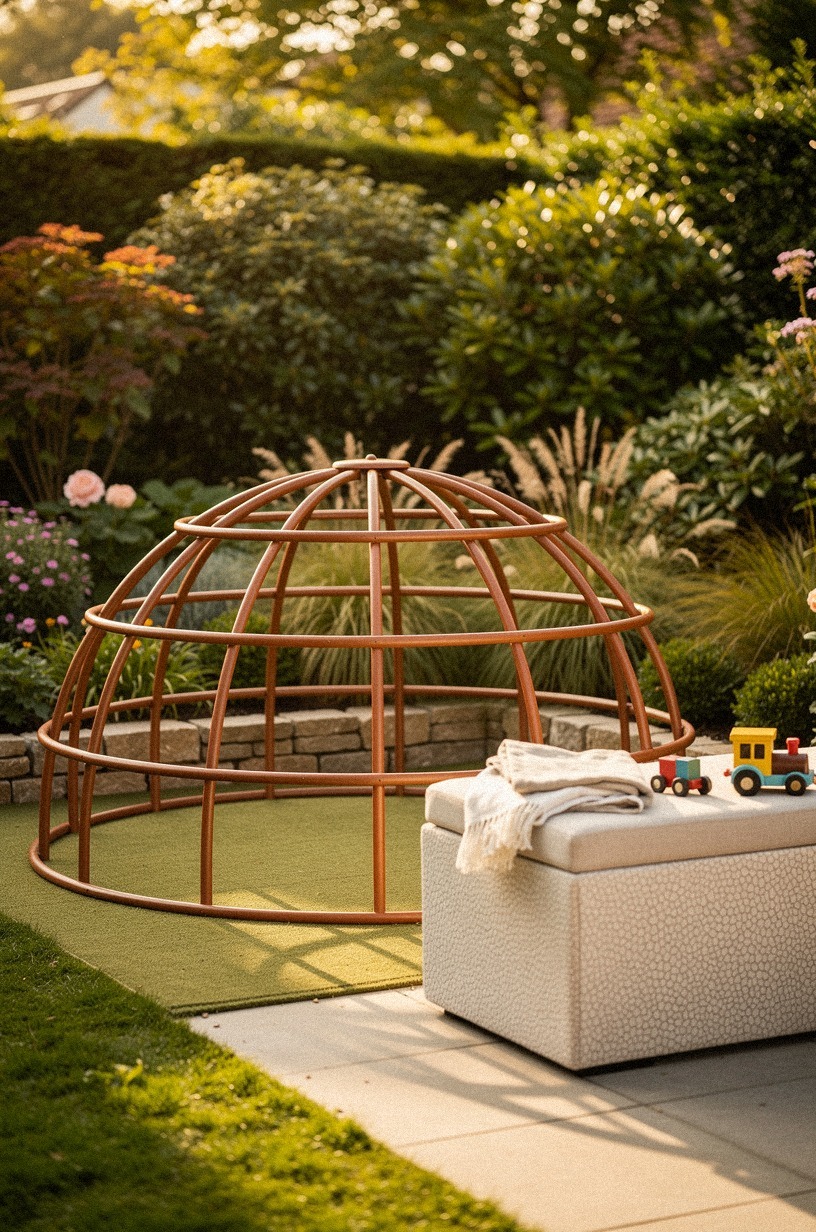
A terracotta climbing dome with a stone base and olive green safety mat is the piece that gets kids from four to ten. The dome should be a geodesic structure in powder-coated steel painted terracotta, anchored into a limestone gravel base at least 6 inches deep. The stone base keeps it from shifting and gives you a clean edge that reads as landscape design, not playground equipment dropped onto grass.
The olive green safety mat underneath should be 2-inch thick rubber in interlocking tiles, not the thin stuff that bunches up. Wayfair carries outdoor play mats in earth tones at about $80 for a 6x6 area.
The terracotta against green grass and grey stone is one of those color combinations that photographs well and feels warm in person. I'd skip the bright primary-colored climbing structures. They look like daycare equipment and they age badly.
A muted terracotta dome blends into a designed yard in a way that primary red never will.
12Assemble a Clay Plaster Mud Kitchen
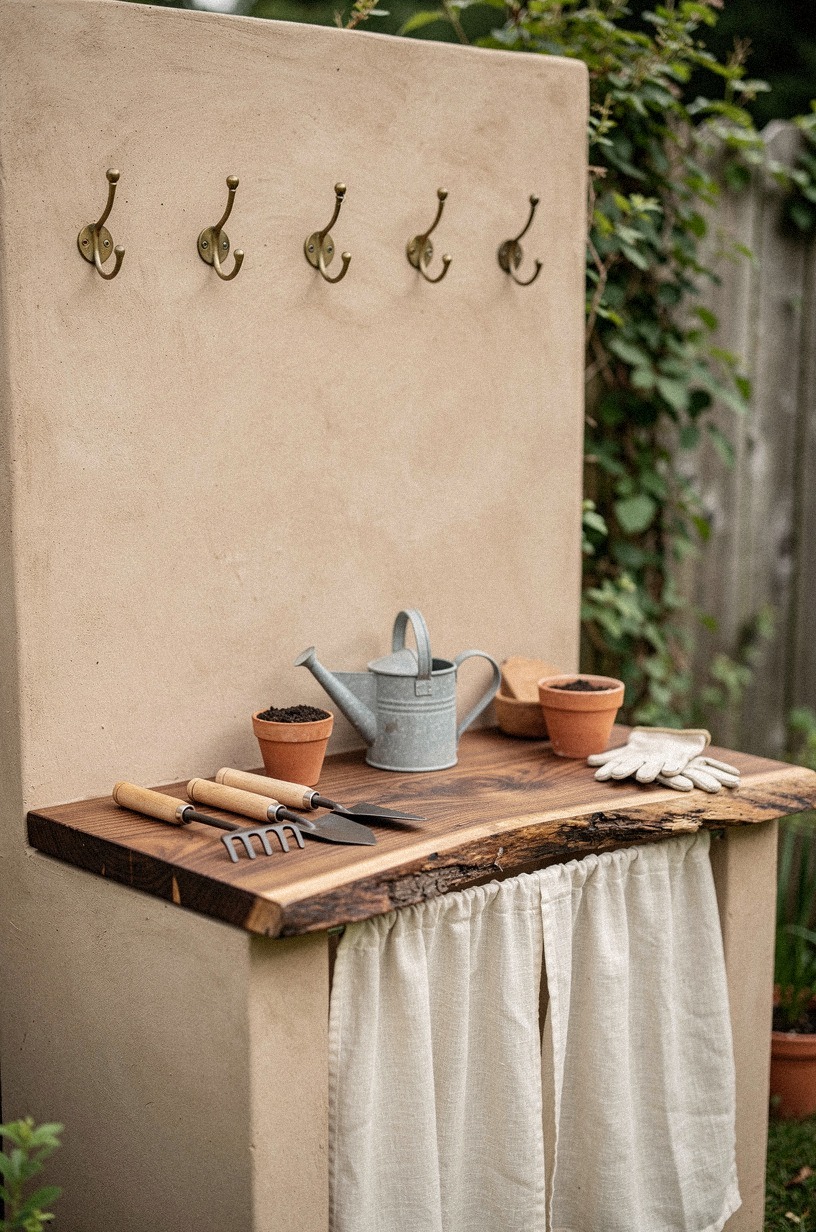
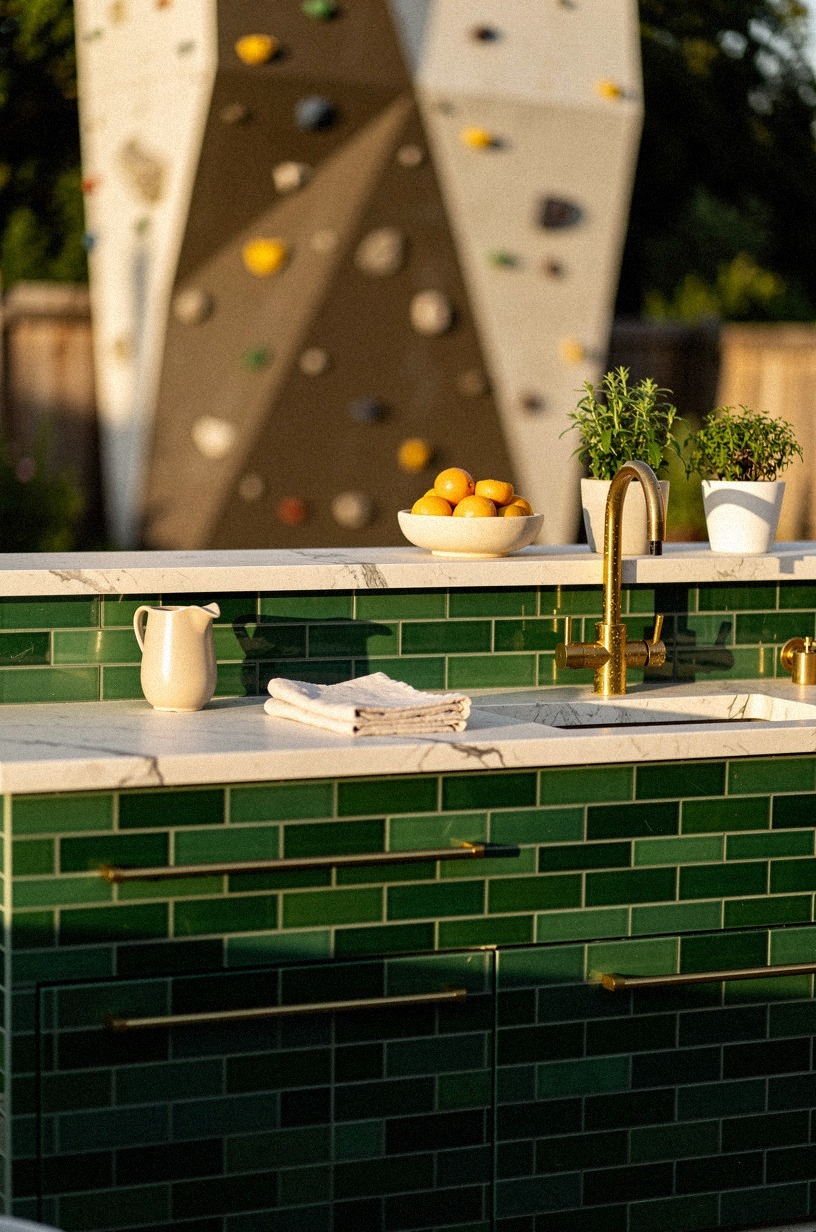
A clay plaster outdoor mud kitchen with linen curtains and aged brass hooks is the most-used station in our yard, hands down. Build the frame from 2x4s and skin it with clay plaster (mix from $40 per bag at any masonry supplier) over lath. The book-matched walnut counter surface at 36 inches high is the right height for a standing four-year-old and a kneeling adult.
Linen curtains on a brass rod (try IKEA for the rod at $19, Target Threshold for linen panels at $25) give you a front that hides the mess when guests come over. Aged brass hooks at 6-inch spacing hold aprons, buckets, and the colanders they use as helmets. Children's gardening tools arranged on the counter make it feel like a real workspace, not a toy.
13Float a Bouclé Sofa Near the Sandbox
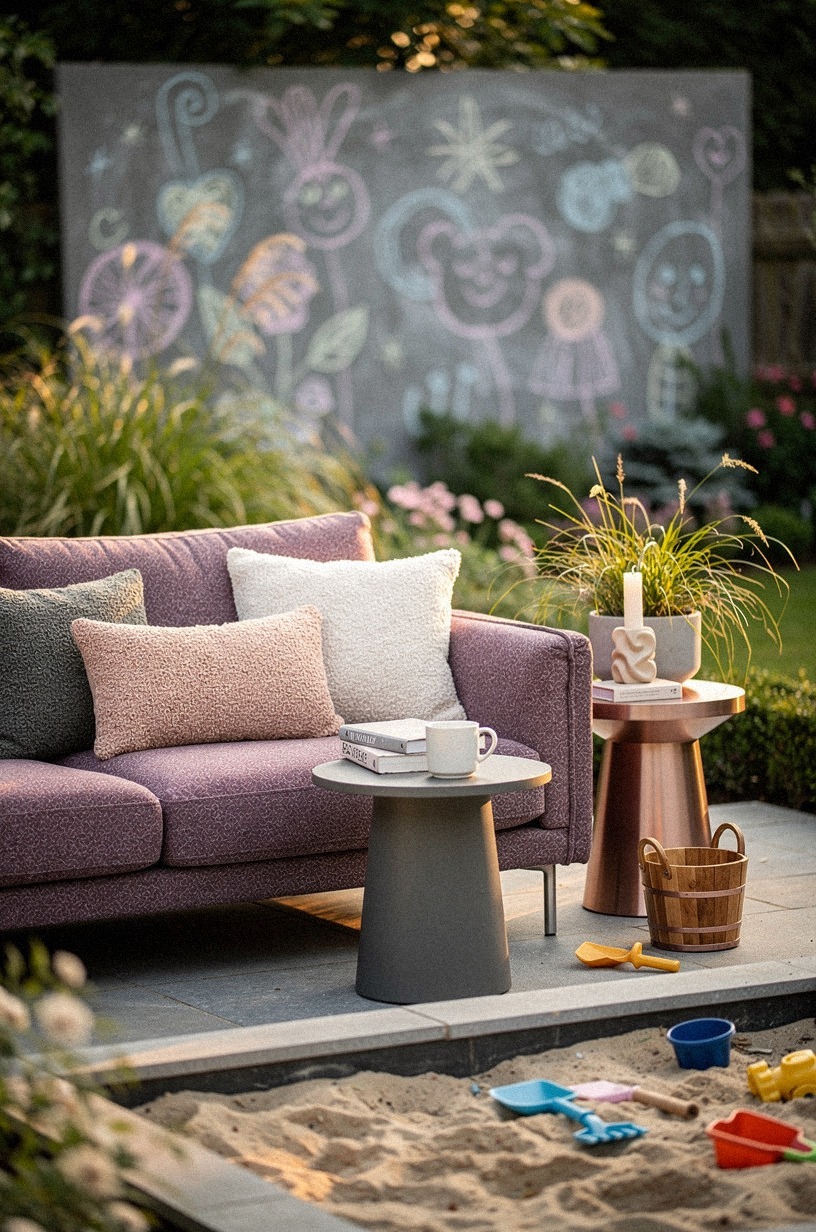
A plum bouclé outdoor sofa with grey and rose gold accent tables is the piece that makes the backyard feel like a room. The sofa should be 72 inches long to seat three, in an outdoor bouclé (try Article or CB2 at $800 to $1,400). The organic bouclé throw pillows in a contrasting texture (smooth linen or chunky knit) keep it from looking like a single blob.
The rose gold accent tables at 20 inches tall hold drinks, books, and the rocks your kid just handed you. Place the whole arrangement 8 to 10 feet from the sandbox so you're close enough to intervene but far enough to feel like separate zones. The plum reads as warm in afternoon light and dramatic at dusk.
14Hang a Navy Treehouse with Walnut Ladder
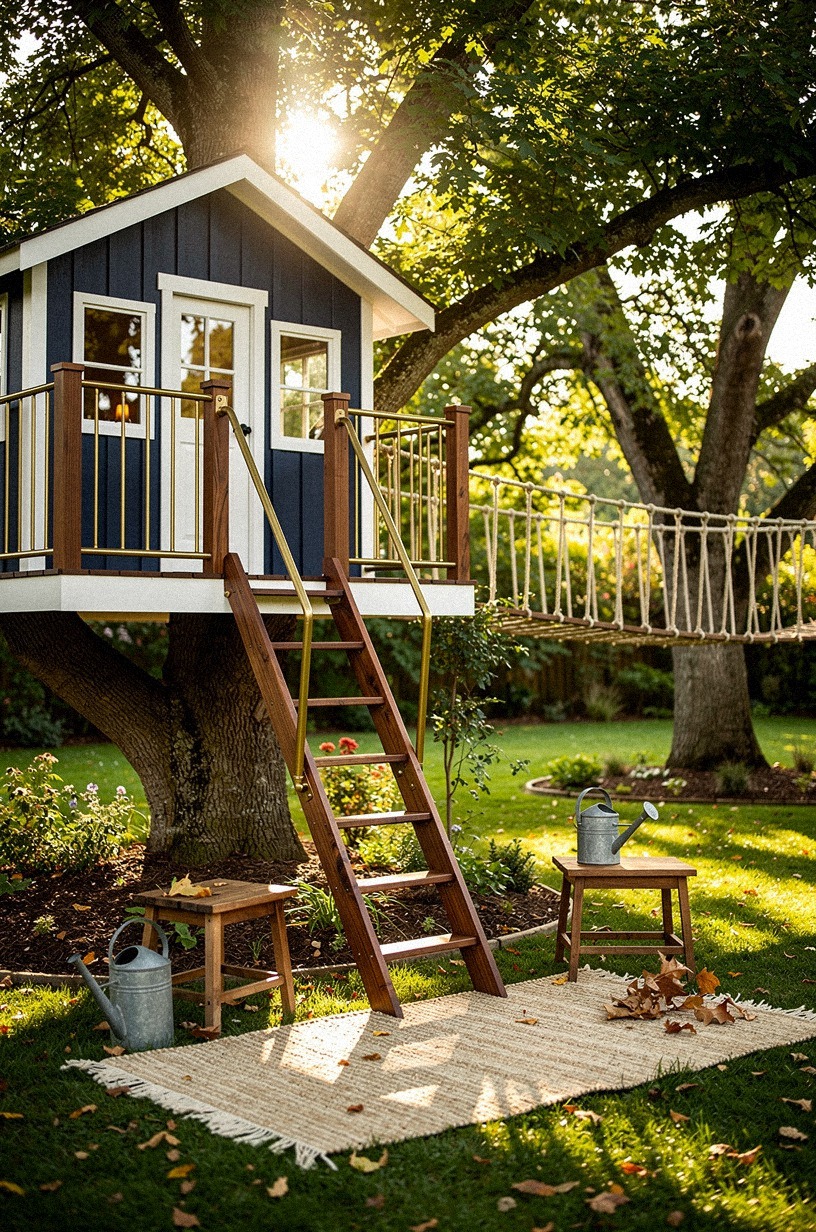
A navy painted treehouse with white trim and a walnut ladder is the project that takes a weekend and gets used for years. The navy should be Farrow & Ball Railings or Benjamin Moore Midnight Oil for depth that doesn't fade to purple in sun. The white trim is Benjamin Moore White Dove OC-17, which stays warm against cool navy instead of reading as stark.
The walnut ladder should be built from 1.5-inch thick stock with rungs at 12-inch spacing, angled at 15 degrees from vertical for easy climbing. A simple platform at 6 feet high with a railing and a small roof is enough. Kids don't need a second story.
They need a door they can close and a window they can wave from. The ladder is the part that matters most.
A steep ladder feels dangerous and gets ignored. A gentle angle with wide rungs gets climbed a hundred times a day.
Budget $400 to $1,200 in lumber and hardware depending on the tree and the platform size.
15Build an Emerald Outdoor Dining Area
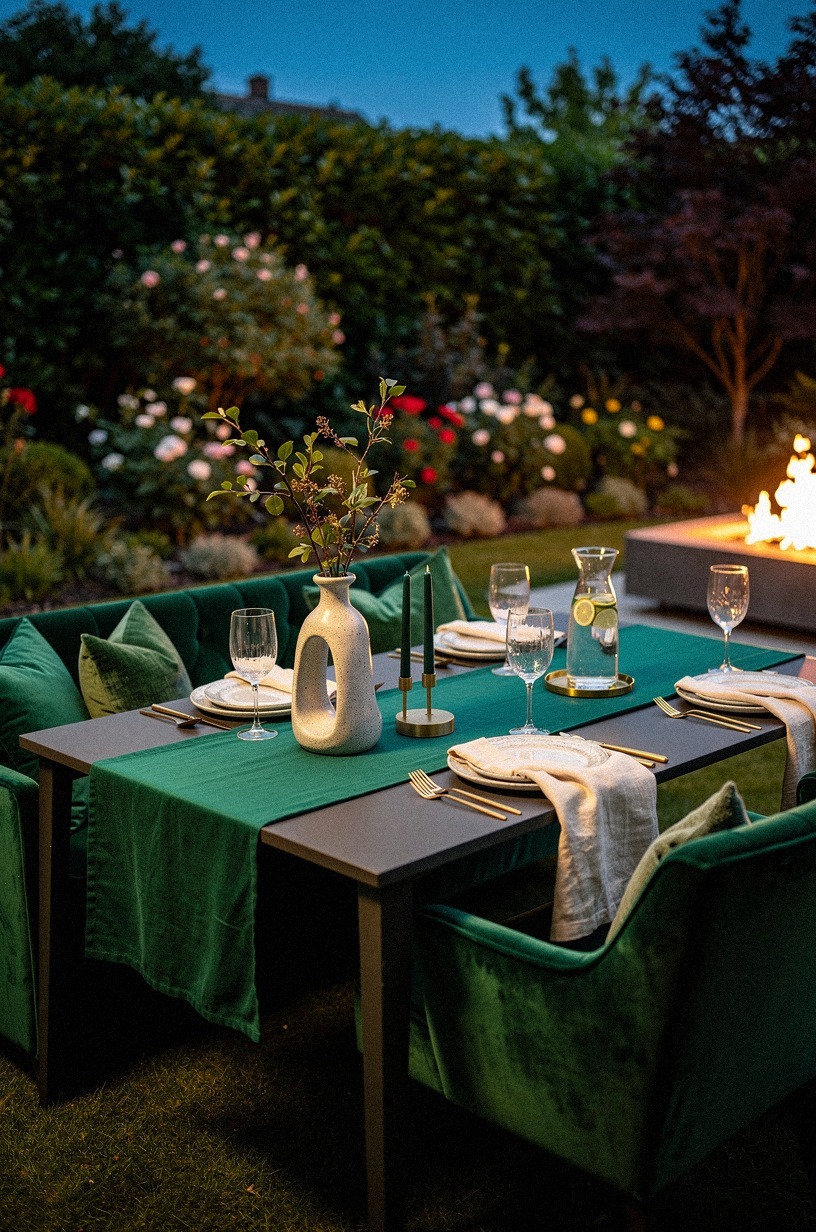
An emerald outdoor dining area with gold flatware and cream linen napkins is how you get adults to stay after the kids are in bed. The table should be 72 inches long to seat six, in teak or white oak (try West Elm or Article at $1,200 to $2,200). Deep-pile mohair velvet bench seating on one side (a 60-inch bench in emerald mohair) gives you flexibility.
The fire pit nearby should be 30 inches in diameter, set into a gravel base at least 3 feet from any structure. String lights overhead at 10 feet create a canopy that defines the space after dark. The whole setup reads as a dinner party that happens to be outside, not a picnic table you tolerate.
16Add a Forest Green Play Kitchen
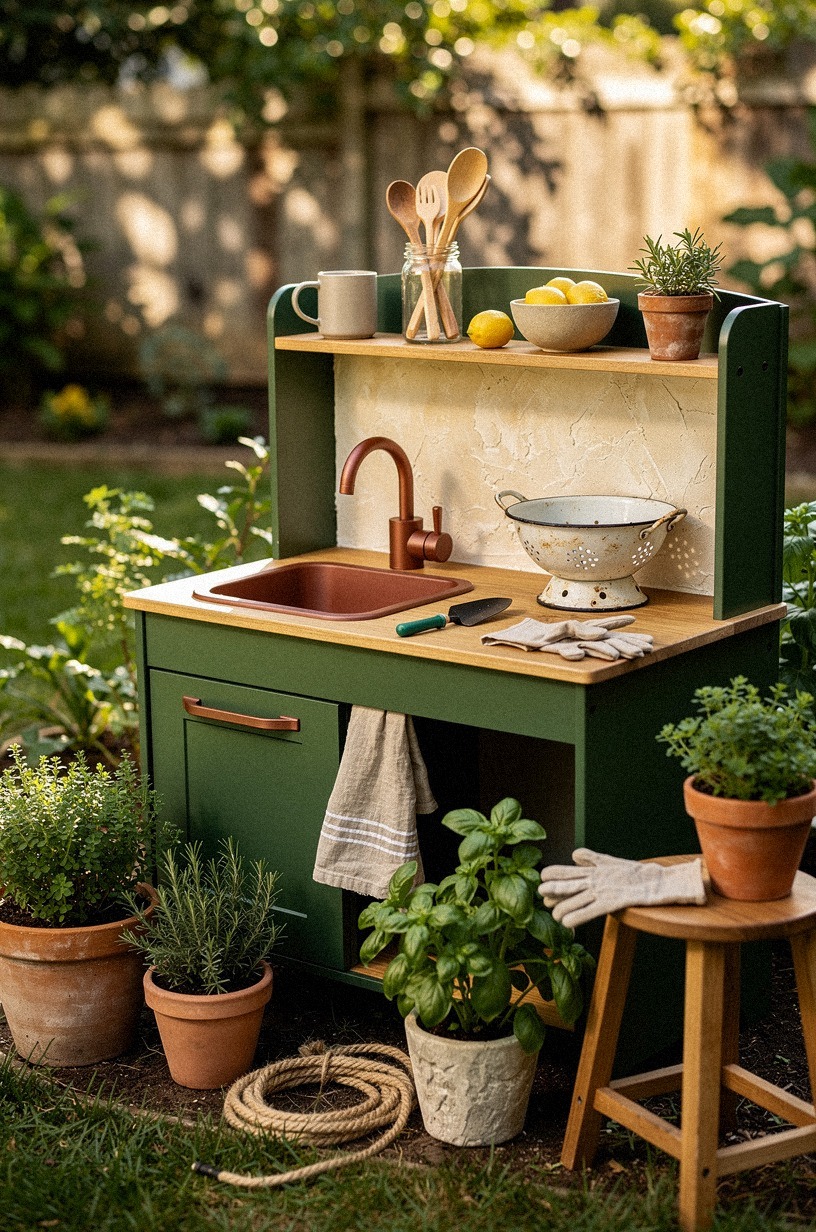
A forest green wooden play kitchen with a rust-colored metal sink and natural oak shelves is the detail that makes kids feel at home. Build or buy a simple counter-height structure in Sherwin-Williams Evergreen Fog SW 9130 or Farrow & Ball Studio Green for a forest tone that stays rich outdoors.
The rust-colored metal sink should be a real bar sink or utility basin, not a plastic toy. Kids know the difference, and they use the real one more carefully.
The natural oak shelves above at 48 inches high hold play dishes, small pots, and the random objects that become ingredients in their games. Add a small brass faucet hooked to a garden hose with a shutoff valve and they've got running water for mud pies, "soup," and the inevitable flooding of the immediate area. The forest green against weathered wood and rusted metal reads like a real outdoor kitchen, not a toy.
That's the point. Kids play longer and more imaginatively when the materials feel real.
17Pour a Dusty Rose Sandbox with Shade Sail
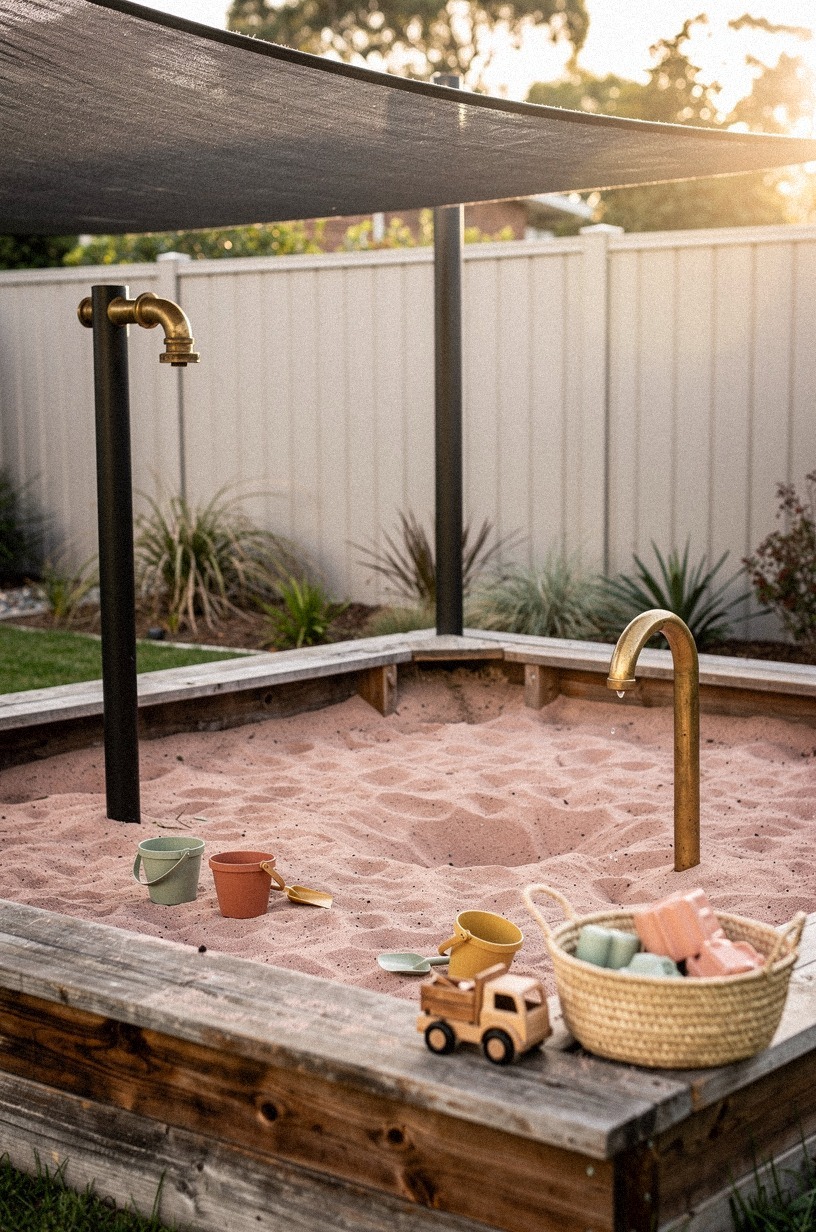
A dusty rose sandbox with a charcoal shade sail and brass water play spout is the upgrade that keeps kids outside for hours. Build the box from reclaimed weathered teak at 2x10 inches, 4 feet square, with a seating ledge at 12 inches wide around the perimeter. The charcoal shade sail overhead (a 6x6 foot triangle at $35) keeps the sand cool.
The brass water play spout (a garden hose adapter with a brass spigot at $25) lets them make rivers, dams, and mud pies. Children's buckets and shovels arranged on the seating ledge make cleanup part of the play. The dusty rose paint (try Farrow & Ball Pink Ground) reads as warm against green grass without shouting.
18Light a Warm White Lounge with Fire Pit
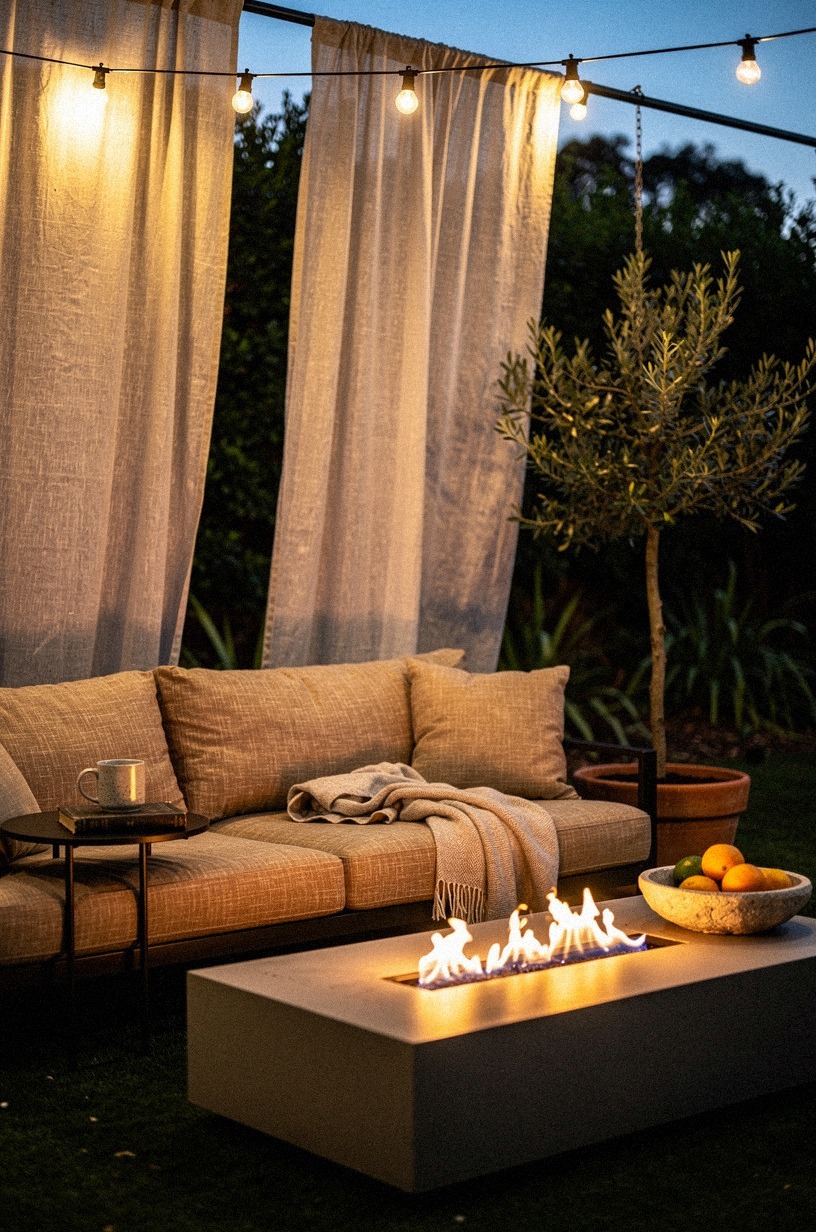
A warm white outdoor lounge with camel linen cushions and a black accent side table is the space that pulls adults outside after dinner. Arrange two weathered teak armchairs at 45 degrees to a small black steel fire pit and you've got a conversation nook that works from April through October. The camel linen cushions should be Belgian flax at 600gsm for weight that stays put in a breeze and softens with washing.
The black accent side table at 22 inches high holds wine, a book, or the marshmallow skewers when the kids wander out after dark. String lights overhead at 10 feet, warm 2200K bulbs only, create a canopy that makes the space feel enclosed without walls. The whole arrangement should be 15 to 20 feet from the play structure so adults can talk while kids play, each in their own zone.
This is the setup that makes you want to stay outside after the kids are asleep, and that's the real measure of a backyard that works for everyone.
What It Costs to Build Out
Those numbers are for a backyard play area, and the logic is straightforward. At budget, you're building a sandbox, hanging a hammock, and laying a gravel base.
At mid, you add a play table, shade sail, mud kitchen, and a couple of quality seating pieces. At high, you're talking playhouse, treehouse, built-in dining area with fire pit, and custom seating.
Most families land in the $800 to $2,500 range for a backyard that feels finished without being overbuilt.
Why I Stopped Buying Plastic First
The first backyard I built was a parade of bright primary colors. Red slide.
Blue climber. Yellow sandbox.
It looked like a daycare threw up in our yard, and the kids used it for about six months before they outgrew the whole aesthetic. The plastic faded, cracked, and stained. By year two I was hauling it to the curb and feeling guilty about the landfill.
The second backyard I built with wood, brass, and linen. It cost more upfront.
The cerused white oak sandbox was $180 in lumber versus $60 for plastic. The linen hammock was $140 versus $40 for polyester.
But the wood aged into the landscape. The brass developed a patina that looked intentional.
The linen softened and faded in a way that read as lived-in, not worn-out. And the kids used it longer because it didn't feel like a toy they were supposed to outgrow.
The real shift was in how the adults used the space. When the backyard looks like part of the house, you treat it like part of the house.
You sit out there after the kids are asleep. You have friends over for dinner.
You read in the hammock on a Sunday morning. The kids get a play area, but you get an extra room.
That's the trade that makes the upfront cost worth it. And honestly? The plastic stuff would have cost more over five years, because I replaced it twice.
The Questions Worth Answering First
What is the best backyard play area setup for a small yard?
A 12x16 foot zone with pavers, a 4-foot sandbox, and a hammock hits the essentials without crowding. Add a shade sail and you've got three seasons of use. For small-space layouts, our 23 cozy small backyard ideas has the spatial moves that matter.
Where should I shop for backyard pieces on a budget?
IKEA for frames and storage (FLISAT, KALLAX). Target Threshold for textiles and shade sails.
Wayfair for hammocks and poufs. Facebook Marketplace for reclaimed wood and second-hand play structures. I've found teak benches at half retail that just needed sanding.
How much does a backyard play area makeover cost?
A basic refresh runs $300 to $800. A mid-range build with quality furniture and a play structure lands around $1,200 to $4,000.
A full custom setup with treehouse and built-ins starts near $5,000. The sandbox and hammock are the highest-use pieces for the lowest cost.
Can I build this without hiring anyone?
Yes, if you've got a drill and a weekend. The sandbox, balance beam, and mud kitchen are all 2x4 and plywood projects.
The shade sail and hammock posts need post-hole diggers and concrete. The treehouse is the only piece I'd consider hiring out unless you're comfortable with lag bolts into live limbs.
Is a backyard play area worth it in a small space?
Absolutely. A small yard forces you to edit, and editing is what makes a space feel intentional. Every piece has to earn its spot.
The result is often cozier than a half-acre where nothing relates to anything else. Our 15 cozy private backyard ideas has the enclosure moves that make a small yard feel like a room.
Will this work for a rental?
Most of it, yes. The shade sail, hammock, and sandbox are all removable.
Skip the concrete posts and use weighted umbrella bases or deck clamps instead. The mud kitchen can be a freestanding plywood box on casters.
The playhouse is the only piece that needs a yard you own, and even then, some landlords don't mind if it reads as design rather than toy.
Where I'd Start First
If I had to pick one step, I'd start with the ground plane. Terracotta pavers or decomposed granite at $3 to $14 per square foot changes how everything else feels.
You can't layer warmth on top of mud and crabgrass. Get the surface right, and the hammock, the sandbox, and the fire pit all land where they belong.
Pin the hammock idea for later and build the base first. Everything else stacks on top.