
 by
by I've built two coops from scratch and the one that still gets compliments isn't the bigger one. It's the one where the structure looks like it belongs in the garden instead of sitting on top of it. Most backyard chicken setups fail at the curb because nobody treats the coop as a design object. They build for function, then try to hide the mess with a shrub. Here's the thing: if you choose materials and colors that already live in your yard, the whole setup reads as intentional landscaping. And honestly? The chickens don't care whether the roof is terracotta or tin. You do.
- Build a coop from cerused white oak with a terracotta roof
- Line a weathered wood coop with galvanized planters for herbs
- Paint the nesting boxes in a soft sage green
- Hang a vintage brass lantern above the run entrance
- Add a scalloped metal roof to catch afternoon light
- Stack straw bales as a rustic garden border around the pen
- Drape a climbing rose over the coop's side trellis
- Set a reclaimed barn door as the main coop entrance
- Install a small window box with trailing ivy on the front wall
- Lay pea gravel paths in a herringbone pattern between zones
- Hang a hand-painted farm sign on the coop gable
- Use a galvanized tub as a decorative dust bath station
- Plant lavender in raised beds framing the chicken yard
- Add a copper rain chain from the coop roof to a stone basin
- Build a low picket fence in creamy white around the perimeter
- Place a wooden bench with a gingham cushion near the feed area
- Hang mason jar feeders along a twine line for a farmhouse look
1Build a coop from cerused white oak with a terracotta roof
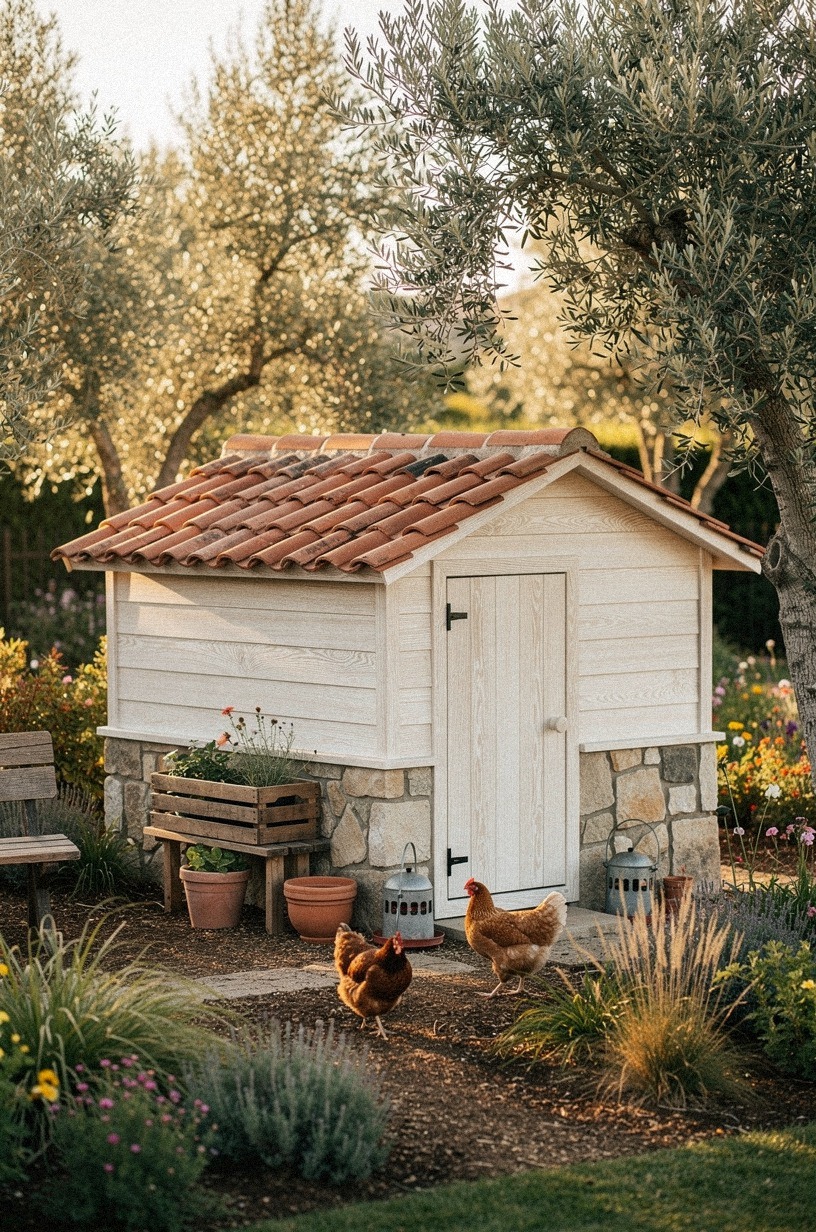
A coop built from cerused white oak with a terracotta tile roof and stone foundation sits in the garden like it grew there. The cerused finish keeps the grain visible but lightens the whole structure so it doesn't dominate a small yard.
Terracotta tiles age to a soft, dusty orange that matches almost every garden path or planter you already own. Stone at the base grounds the whole thing and keeps rodents from digging underneath. I've seen coops painted in bold colors that fight the garden for attention.
Don't. Let the materials do the work.
If you're working with a tight footprint, our small backyard ideas guide has layout moves that help a coop disappear into the scenery.
2Line a weathered wood coop with galvanized planters for herbs
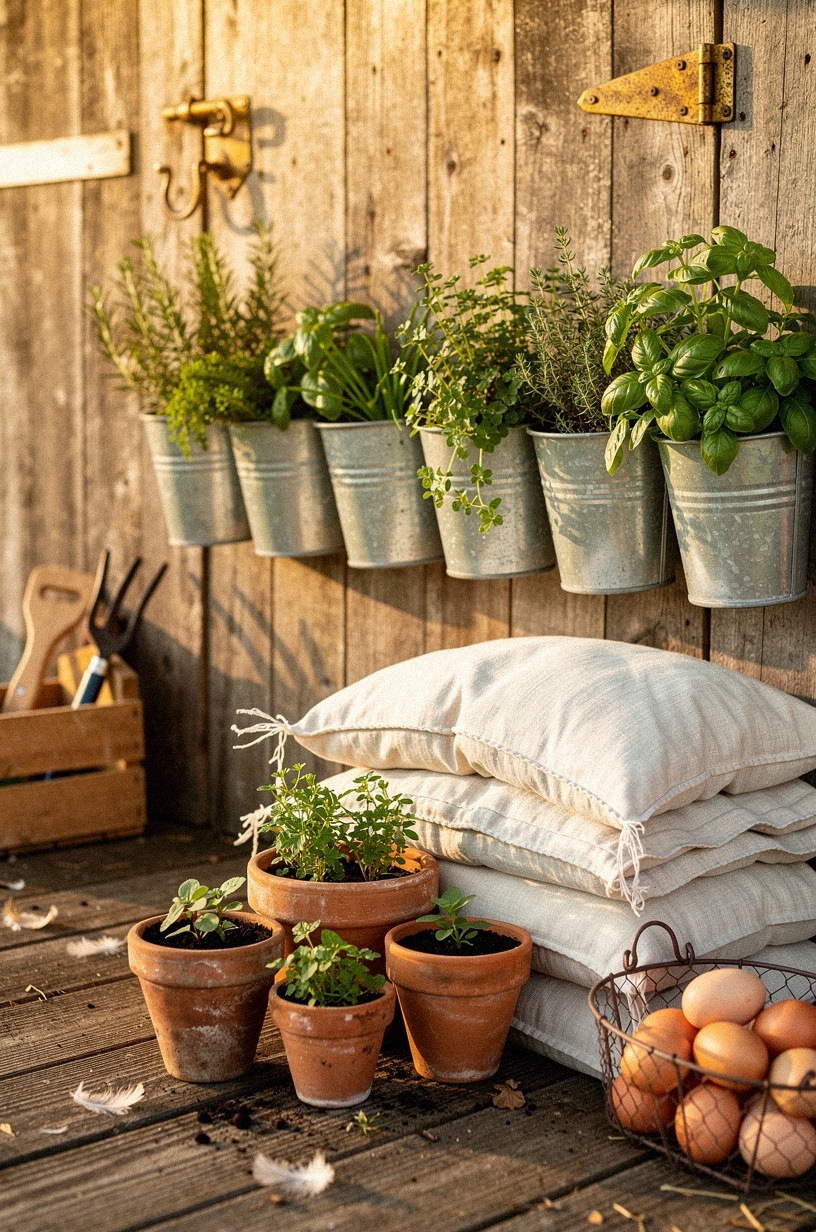
Galvanized metal planters bolted to the exterior wall of a weathered wood coop turn a blank face into a working herb garden. Sage, thyme, and oregano spill over the edges and the chickens ignore them completely, which is the test most garden plants fail.
Clay pots and linen-textured feed sacks stacked nearby add layers without looking staged. The move is mounting the planters at waist height so you're not bending into the run every time you want rosemary.
Aged brass hardware on the coop door catches the light and ties the metal planters together. This is the part nobody tells you: the coop wall is free real estate.
Use it. If your herb game needs work, our kitchen herb garden ideas cover the basics from seed to harvest.
3Paint the nesting boxes in a soft sage green
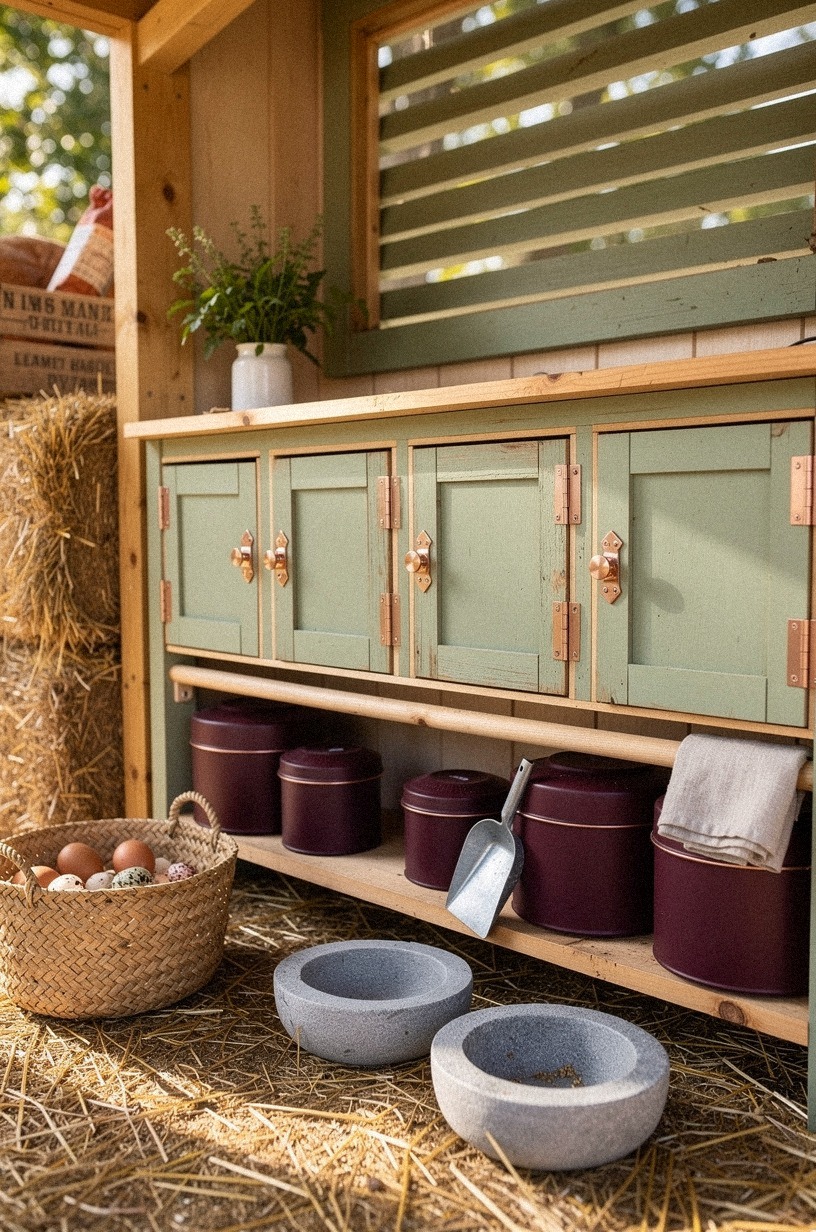
Soft sage green on the nesting box doors is the color equivalent of a deep breath. It doesn't read as painted wood; it reads as weathered garden gate.
Inside, plum-colored feed bins and grey stone water dishes give the chickens something worth looking at when you open the door. Rose gold latches and handles are a small splurge that makes daily egg collection feel less like farm work and more like checking a cabinet you built yourself.
I've tried bright red nesting boxes because a blog told me chickens prefer them. They don't. They'll lay in a cardboard box if it's quiet. Paint for your eyes, not theirs.
For more color confidence, our sage green room ideas show where this tone lives best indoors.
4Hang a vintage brass lantern above the run entrance
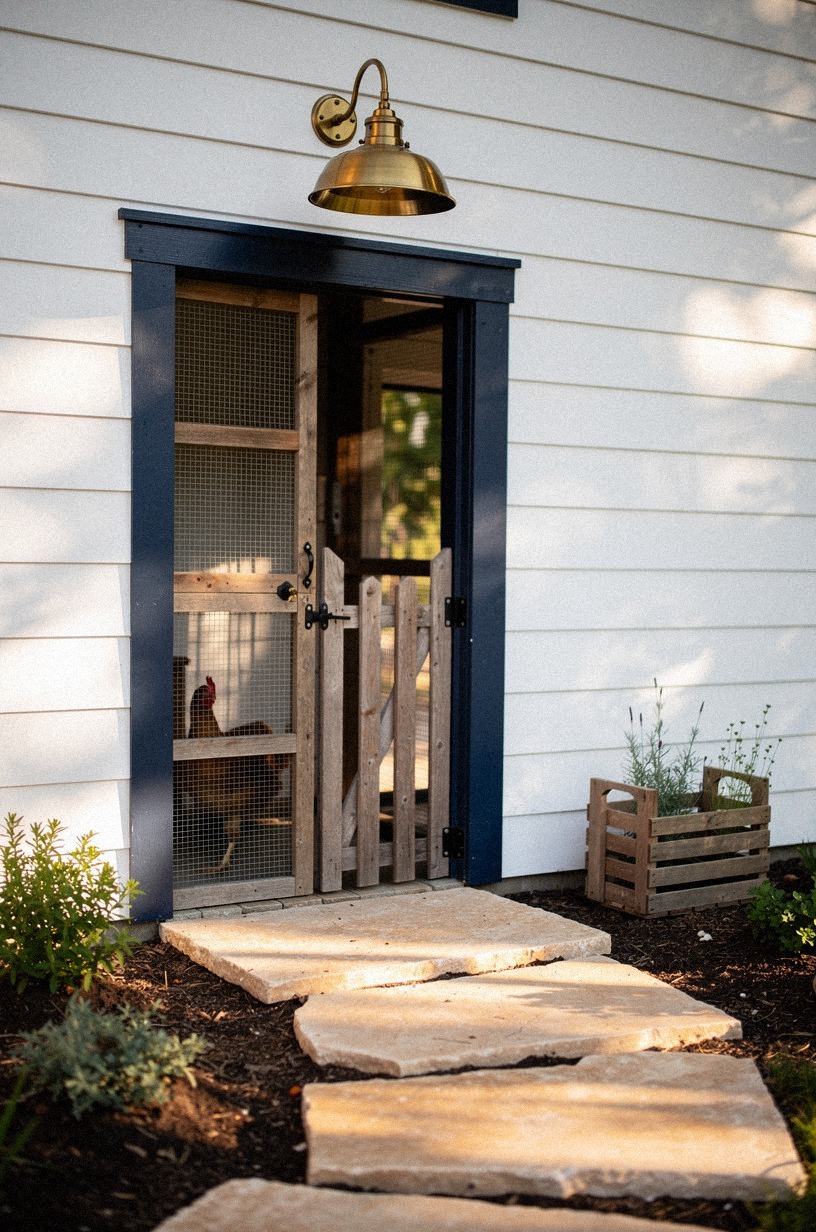
A vintage brass lantern hung above the run entrance does two jobs at once. It marks the doorway after sunset so you're not fumbling with a latch in the dark, and it casts a warm pool of light that makes the whole corner feel like an outdoor room. Navy painted trim on the coop walls against white clapboard gives the structure a cottage tension that reads designed rather than assembled.
Warm travertine stepping stones leading to the entrance repeat the lantern's tone underfoot. Skip the solar versions.
They're bright enough to annoy the chickens and not bright enough to help you. A hardwired low-voltage fixture or a good battery sconce is the move.
Our warm lighting guide has the bulb temps that make outdoor spaces feel like evenings, not offices.
5Add a scalloped metal roof to catch afternoon light
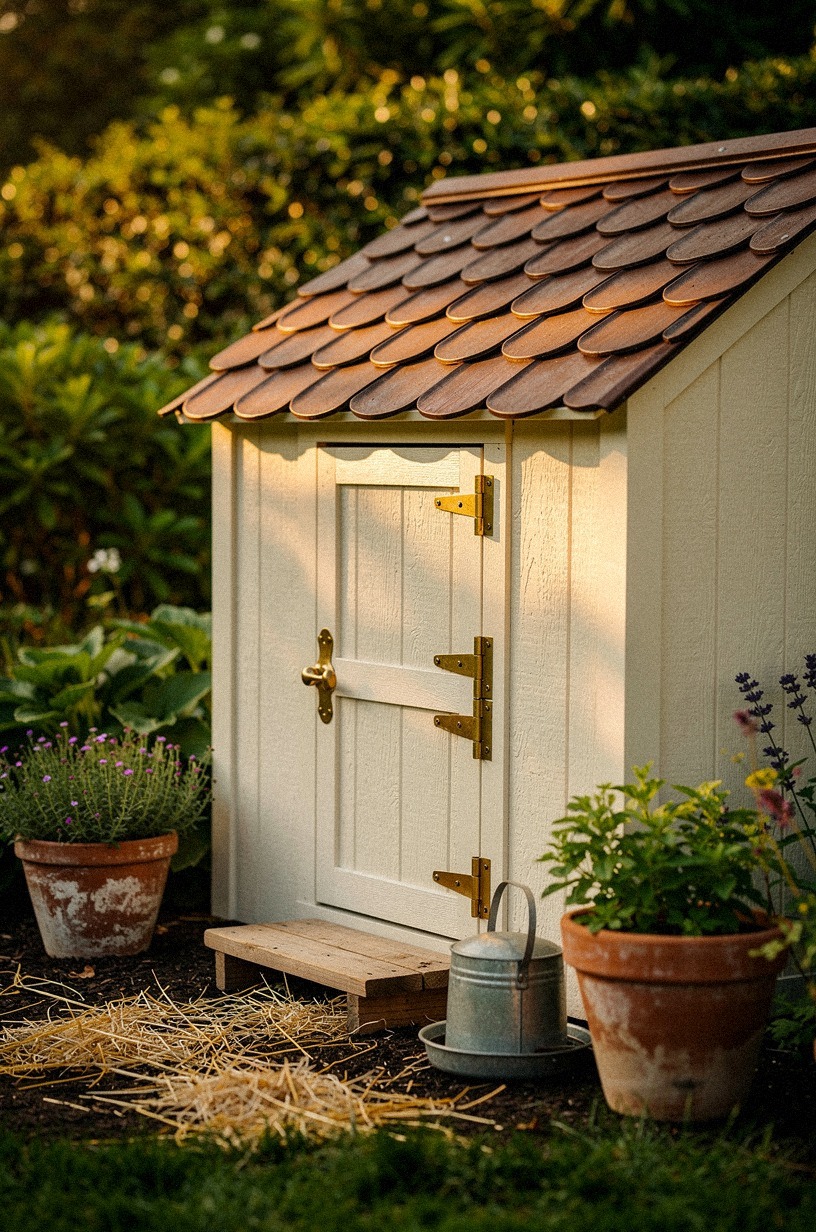
A scalloped metal roof catches the last hour of sun and throws it back into the garden in a way flat roofing never does. The curves create shadow lines that change all day, so the coop looks different at 9am than at 5pm.
Cream painted walls with gold hardware keep the palette warm against the emerald green foliage that usually surrounds a backyard coop. The sound of rain on a scalloped roof is quieter than on flat metal, too.
Less machine-gun, more drumroll. If you're in a hot climate, the air gap under the scallops helps vent the interior. Small detail, but it matters in July.
If you're into metal details, our copper home decor ideas show how to use warm metals without going steampunk.
6Stack straw bales as a rustic garden border around the pen
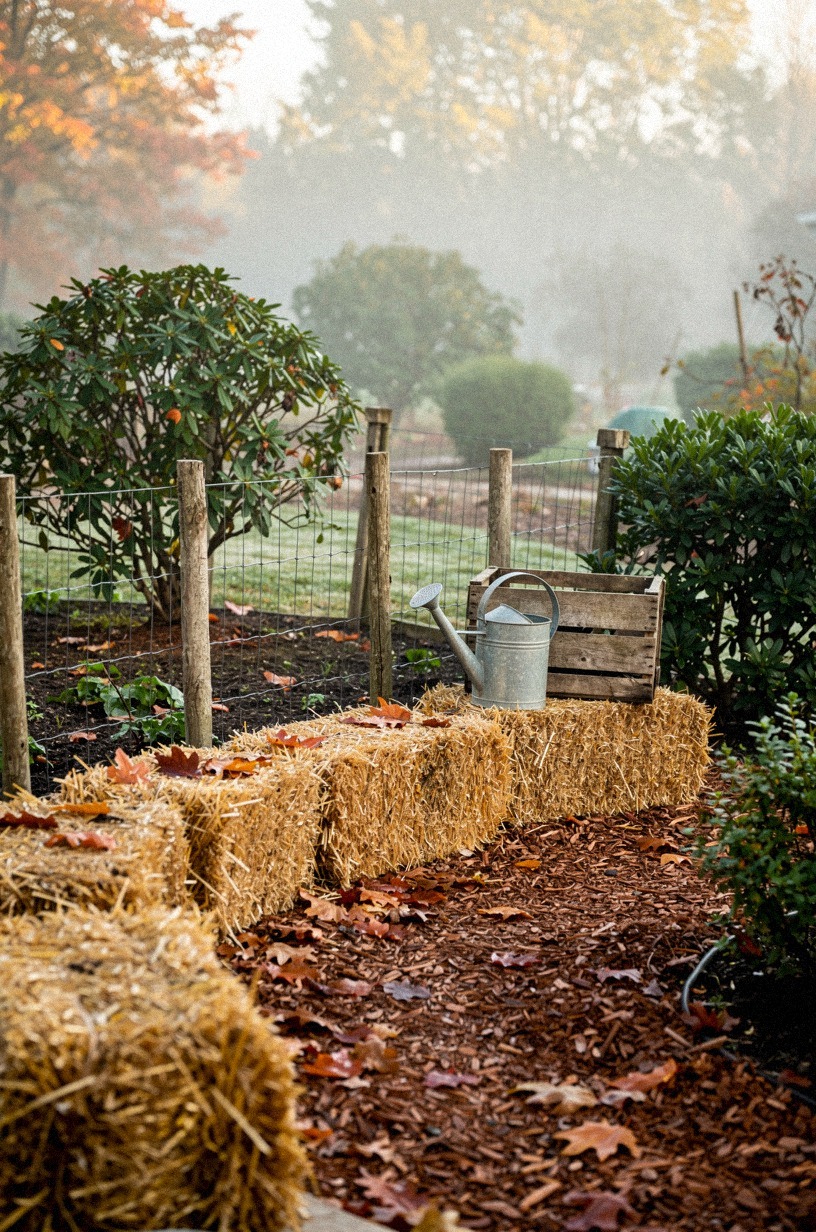
Straw bales stacked two high create a border that defines the pen without making it look like a prison yard. After a season they break down into mulch you can spread on the beds.
Forest green shrubs planted behind the bales hide the wire mesh completely from the house side. Rust-colored autumn leaves scattered on natural oak mulch paths add a color note that repeats the terracotta roof you're probably already considering.
Morning mist settles on straw in a way that makes the whole setup look like a painting. And when the bales sag, they look better.
That's the rare garden element that improves with neglect. Our fall garden decor ideas have more seasonal moves that feel gathered, not bought.
7Drape a climbing rose over the coop's side trellis
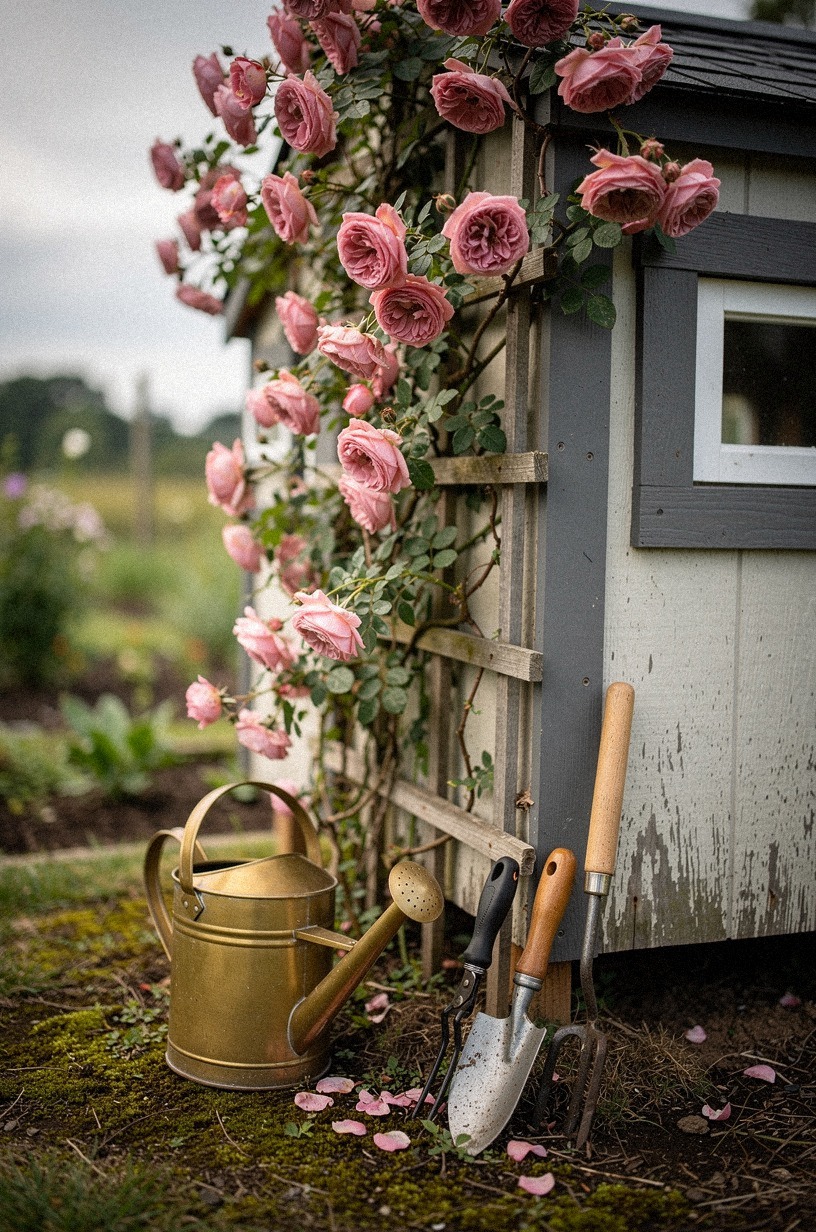
A climbing dusty rose rambling over a trellis attached to the coop side is the fastest way to make hardware store lumber look like a cottage outbuilding. The charcoal grey painted trim behind the rose gives the flowers something moody to pop against.
A brass watering can and garden tools leaned nearby signal that this is a working garden, not a set dressing. The thorns also discourage raccoons from climbing the trellis to the roof.
I've tried clematis and jasmine; both look good for three weeks then turn into a green tangle. Roses hold their structure all season.
Prune hard in March and let them run wild by June. For more climbing plant inspiration, our garden trellis ideas cover the structures that actually support weight.
8Set a reclaimed barn door as the main coop entrance
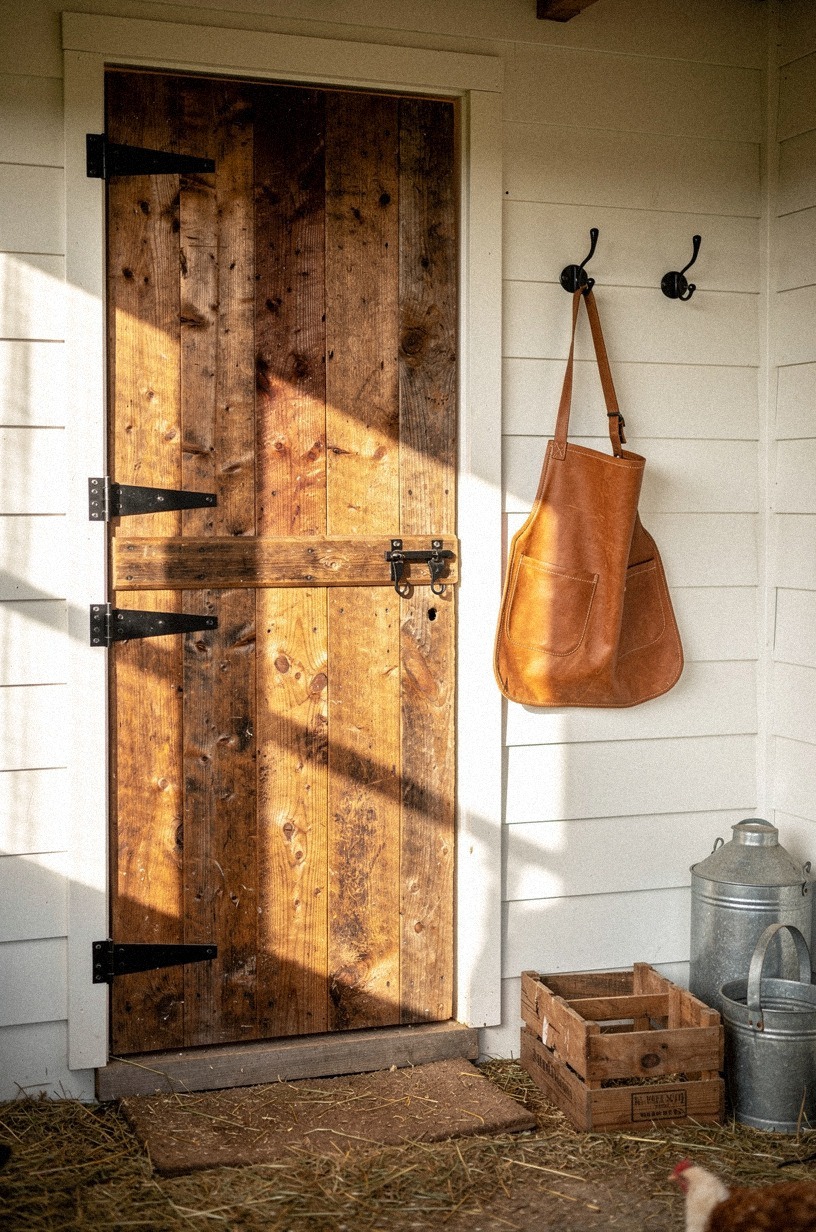
A reclaimed barn door on rollers as the main coop entrance is heavy, awkward, and completely worth it. The weight means it stays closed in wind.
The patina means you don't have to paint it. Warm white painted walls beside the door let the wood be the star.
A camel leather feed apron hanging on a black iron hook nearby gives you a place to stash the scoop so you're not tracking feed into the house. Morning light on old barn wood is the kind of texture you can't fake with stain.
The door I use came from a teardown in Pennsylvania. It had a hole where a dog chewed through. I kept the hole. It's the detail that makes people ask where I bought the whole setup.
If you're into reclaimed finds, our rustic home decor ideas show how to use salvage without making your place look like a flea market.
9Install a small window box with trailing ivy on the front wall
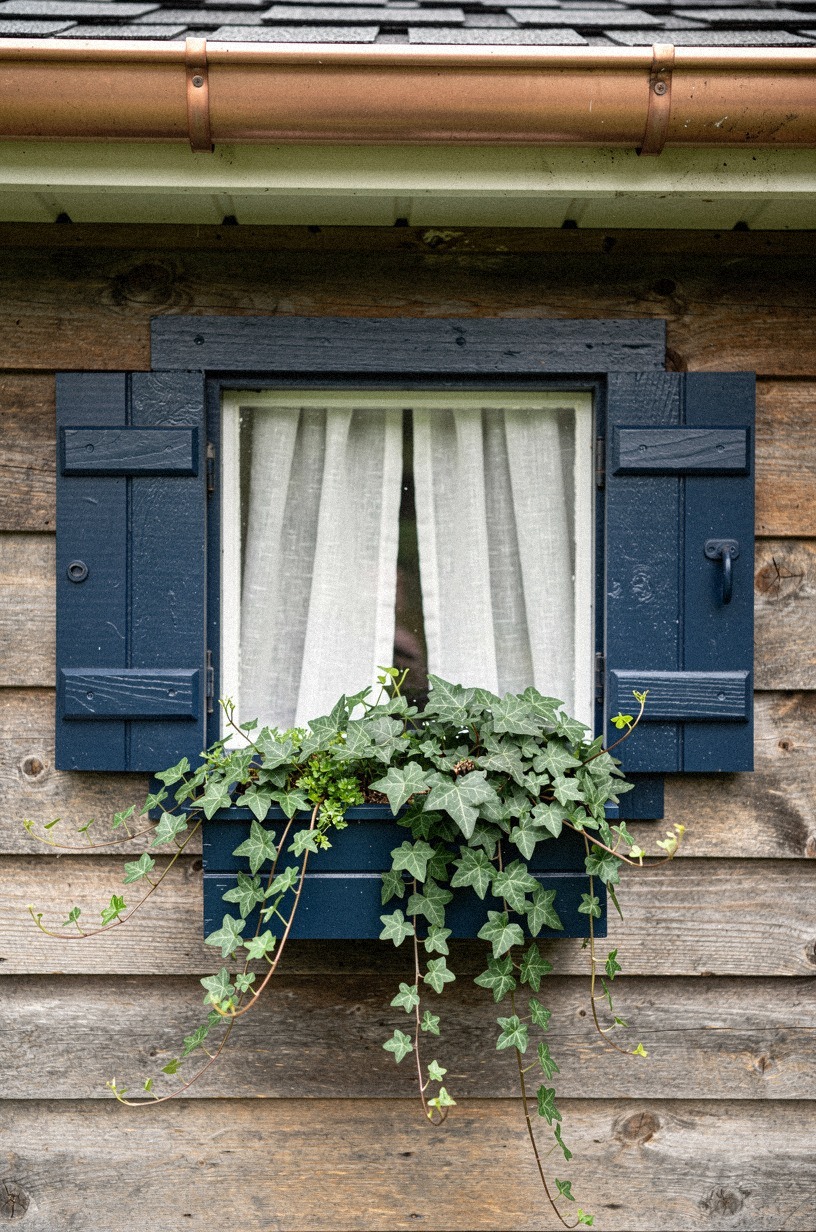
A small window box mounted below a coop window with trailing ivy softens the front facade like a cuff on a sleeve. Midnight blue painted shutters on either side frame the green and give the whole wall a Dutch farmhouse feel.
Copper rain gutters with an ivory patina catch water and direct it away from the foundation, which matters more than the look. Washed linen curtains inside the window (yes, chickens have curtains) filter the afternoon sun and give the interior a glow you can see from the garden path. The ivy needs cutting back twice a season or it'll eat the shutter hinges. That's the trade.
Small effort, big return. And honestly?
The first time you see a chicken silhouetted against that linen curtain, you'll know it was worth the fuss. Our window box ideas have more ways to fake architectural charm with a plank and some dirt.
10Lay pea gravel paths in a herringbone pattern between zones
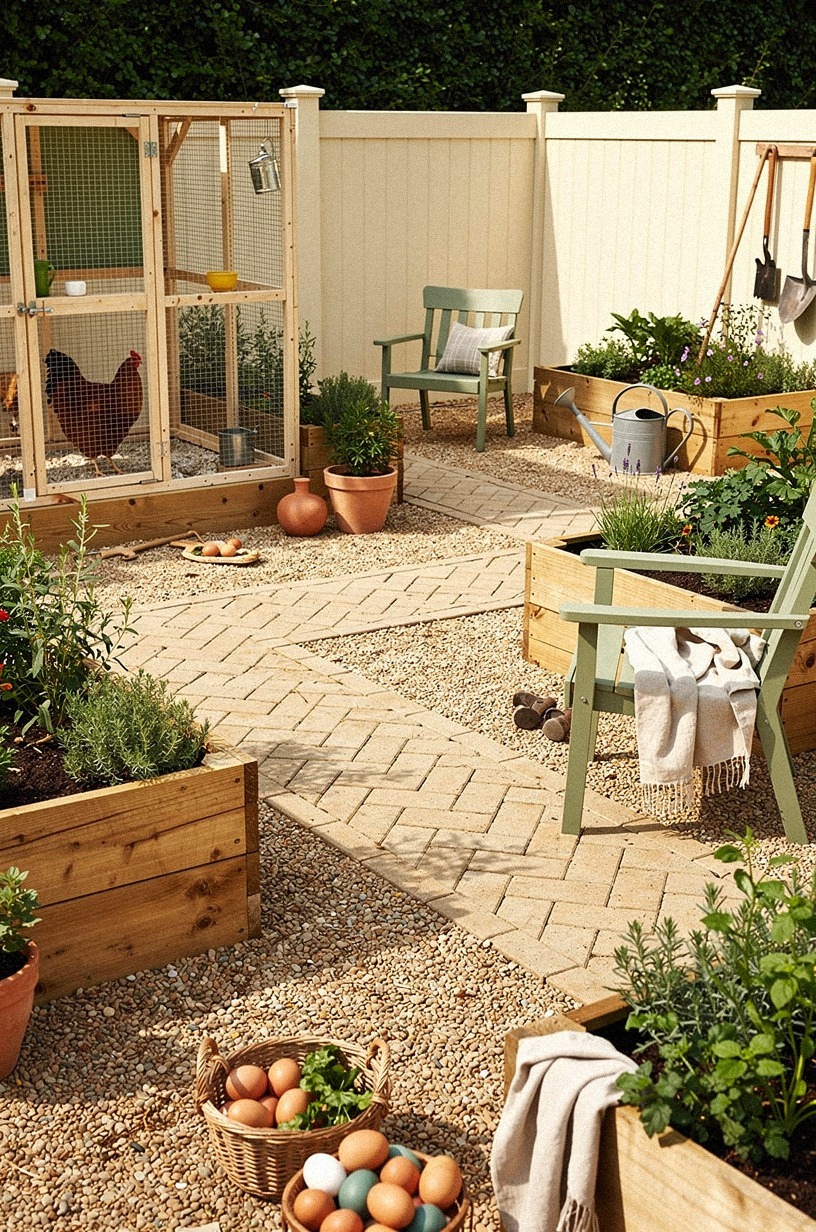
Pea gravel in a herringbone pattern between the coop, the run, and the compost zone turns mud into a surface that drains and looks considered. The pattern takes longer to lay than a random scatter, but the geometry holds the eye and makes a small yard feel designed.
Sage green garden chairs and warm cream painted fence panels repeat the palette from the coop walls. Natural wood raised beds beside the path keep the vegetable garden in the same visual family.
The gravel crunches underfoot, which is a small pleasure every morning. And when the chickens kick it around, the herringbone blurs into something even better. A little mess is the point.
If you're laying paths, our gravel patio ideas cover the bases that don't turn into weed gardens by August.
11Hang a hand-painted farm sign on the coop gable
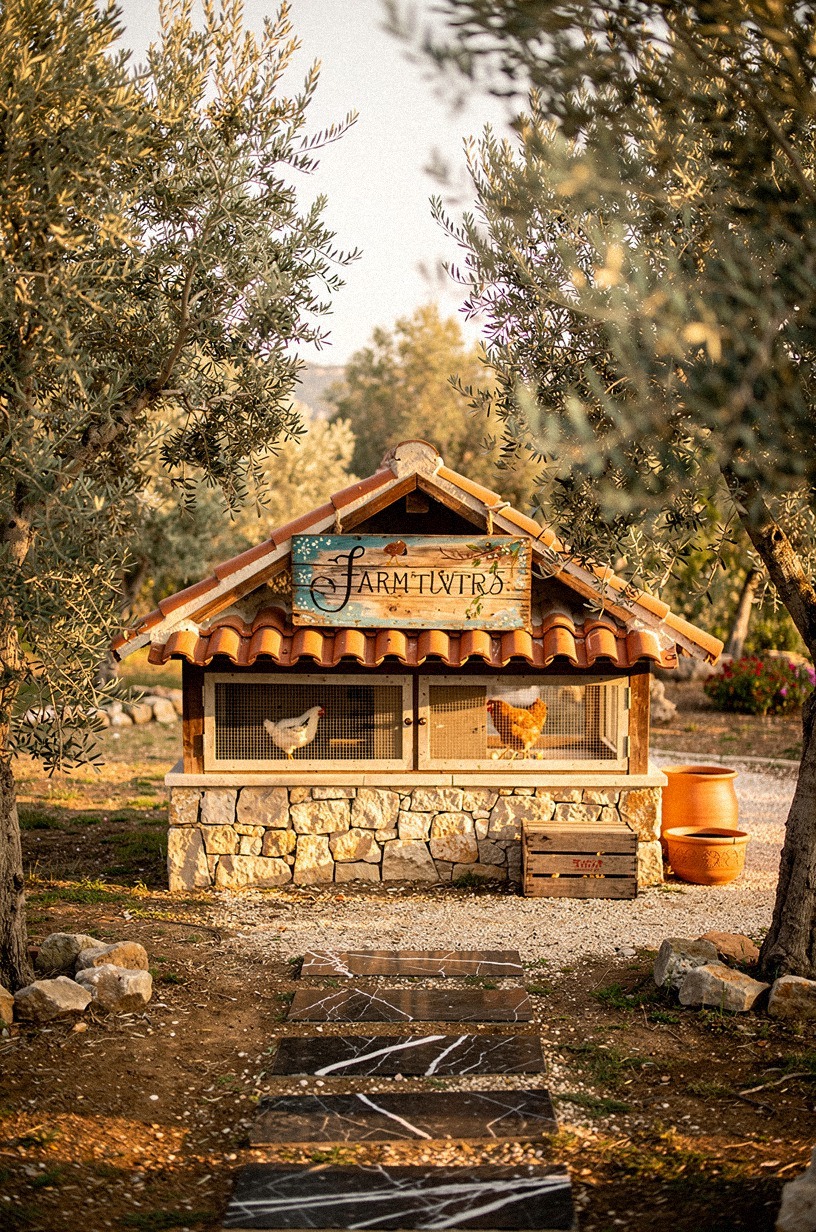
A hand-painted farm sign on the gable end of a terracotta-roofed coop is the detail that makes visitors laugh and then take a photo. Stone foundation and olive trees framing the scene give the sign a context that reads authentic, not kitsch. Nero Marquina marble stepping stones leading to the door add a material surprise that makes the whole setup feel designed, not decorated.
The sign doesn't need to say anything clever. "Eggs" is enough. Or the year you started keeping chickens. I've seen signs that try too hard with puns about clucking.
Skip those. The humor is in the existence of the sign, not the wording.
For more sign inspiration, our farmhouse wall decor ideas show how to use typography without going Pinterest-crazy.
12Use a galvanized tub as a decorative dust bath station
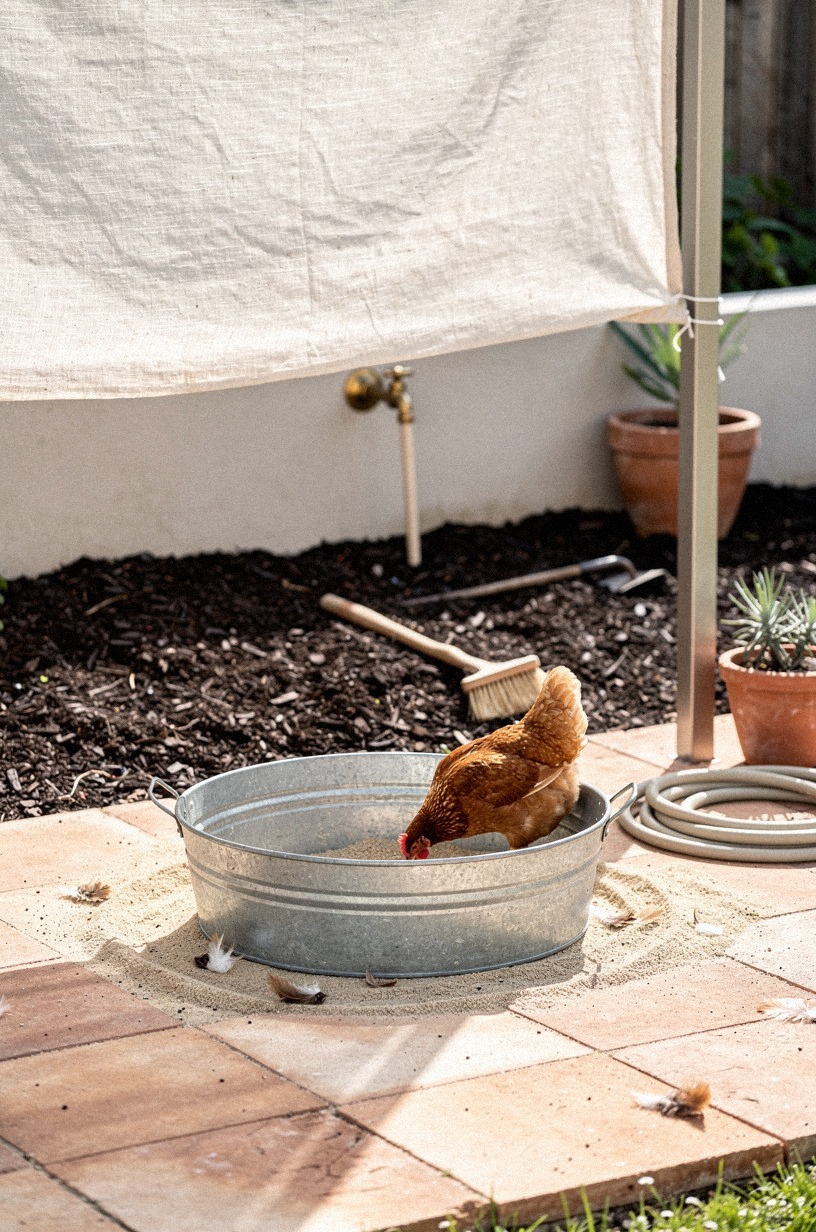
A galvanized metal tub set into a bed of clay-colored pavers is the dust bath station your chickens will use every day.
13Plant lavender in raised beds framing the chicken yard
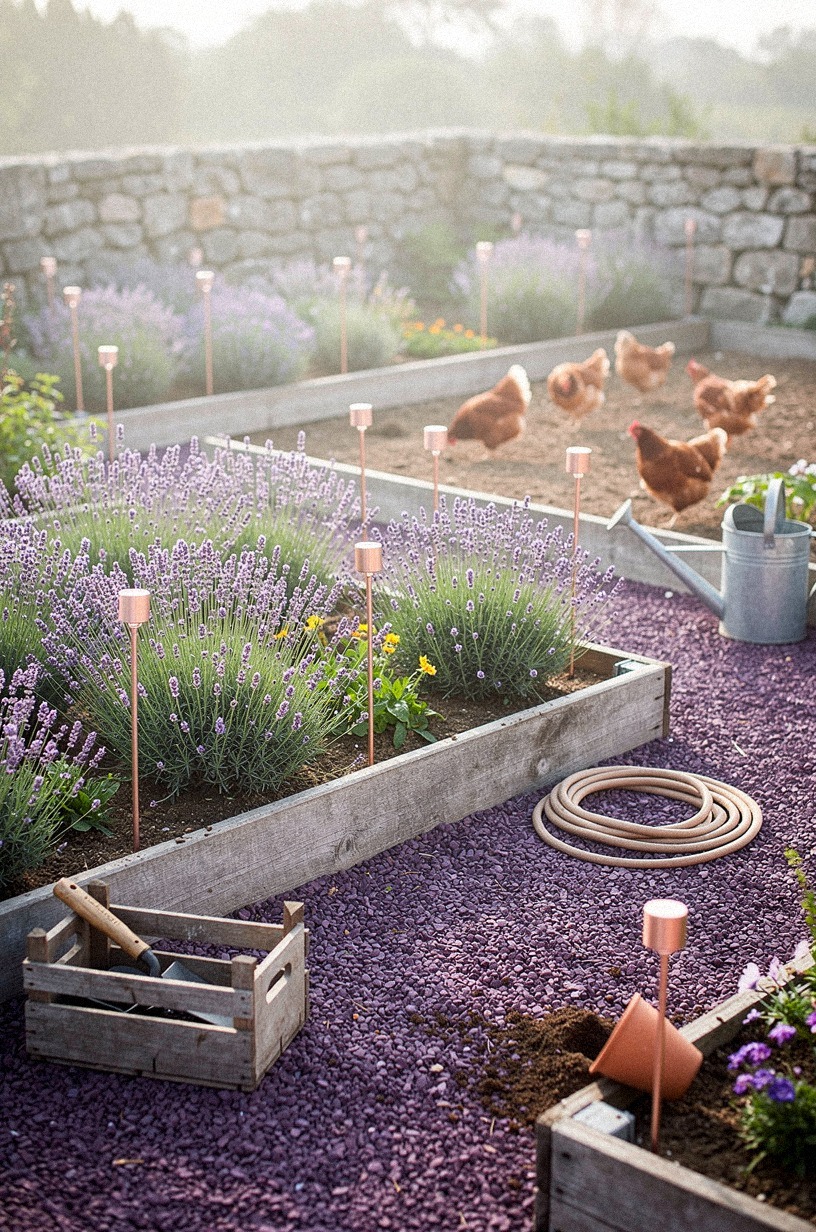
Raised beds filled with blooming lavender framing the chicken yard give the run a border that smells like Provence and looks like a garden magazine. Plum-colored gravel paths between the beds repeat the tone of the feed bins inside the coop.
Grey stone walls and rose gold garden markers add structure and a glint of metal that ties back to the lantern and the hardware. Soft morning light on lavender is the kind of moment that makes the early wake-up worth it. The chickens won't eat it. The bees will.
And you'll have cuttings for the house all summer. Plant a mix of English and French varieties for staggered bloom times.
If you're building beds, our raised garden bed ideas cover the heights and materials that actually last.
14Add a copper rain chain from the coop roof to a stone basin
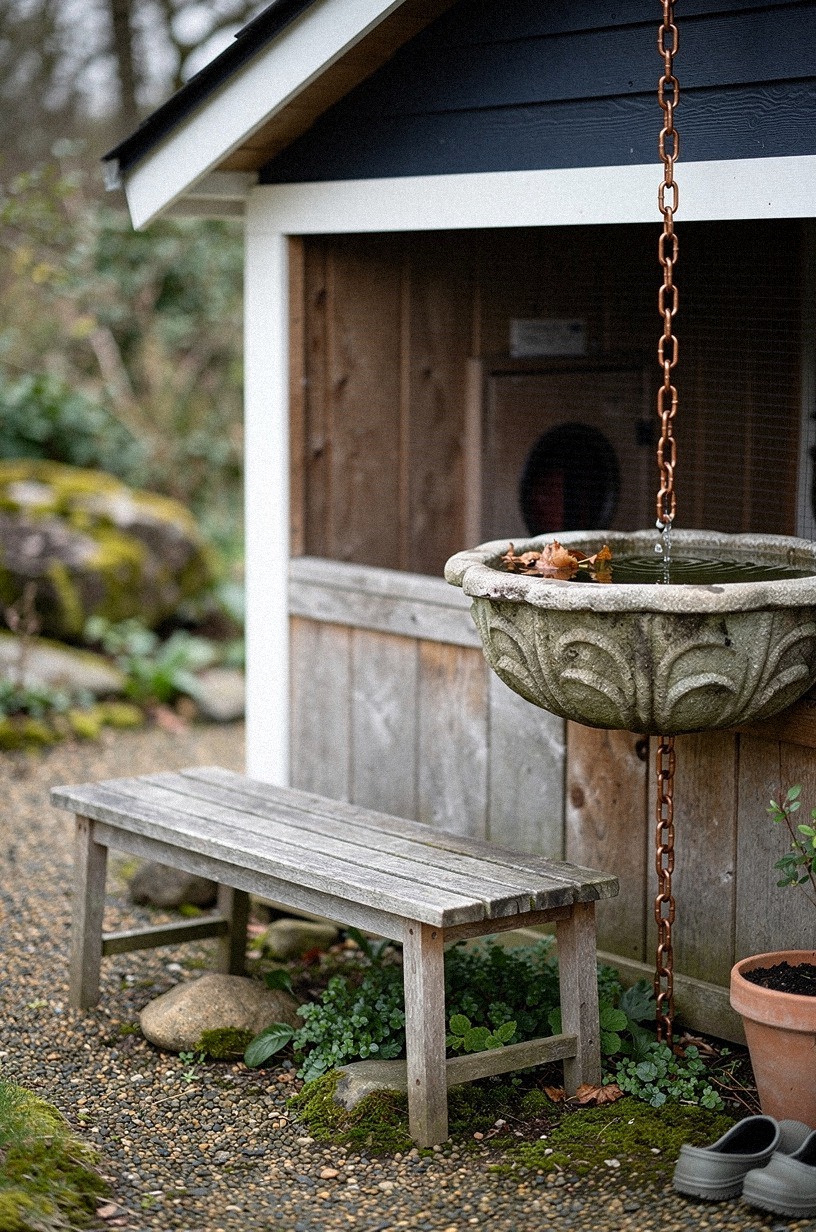
The copper rain chain hanging from the coop roof into a carved stone basin turns a downspout into a water feature. Navy painted fascia boards with white trim give the chain a crisp background to fall against.
A reclaimed weathered teak garden bench nearby is where you'll end up sitting with coffee just to watch the water move. The chain needs a gutter to feed it, but the basin can be any shallow stone vessel that holds an inch of water.
The sound is quieter than a fountain and the maintenance is zero. In winter the chain ices over and becomes a sculpture. That's the bonus season. Total cost for this detail: about sixty bucks and a Saturday morning.
Our rain chain ideas have more ways to make drainage look like art.
15Build a low picket fence in creamy white around the perimeter
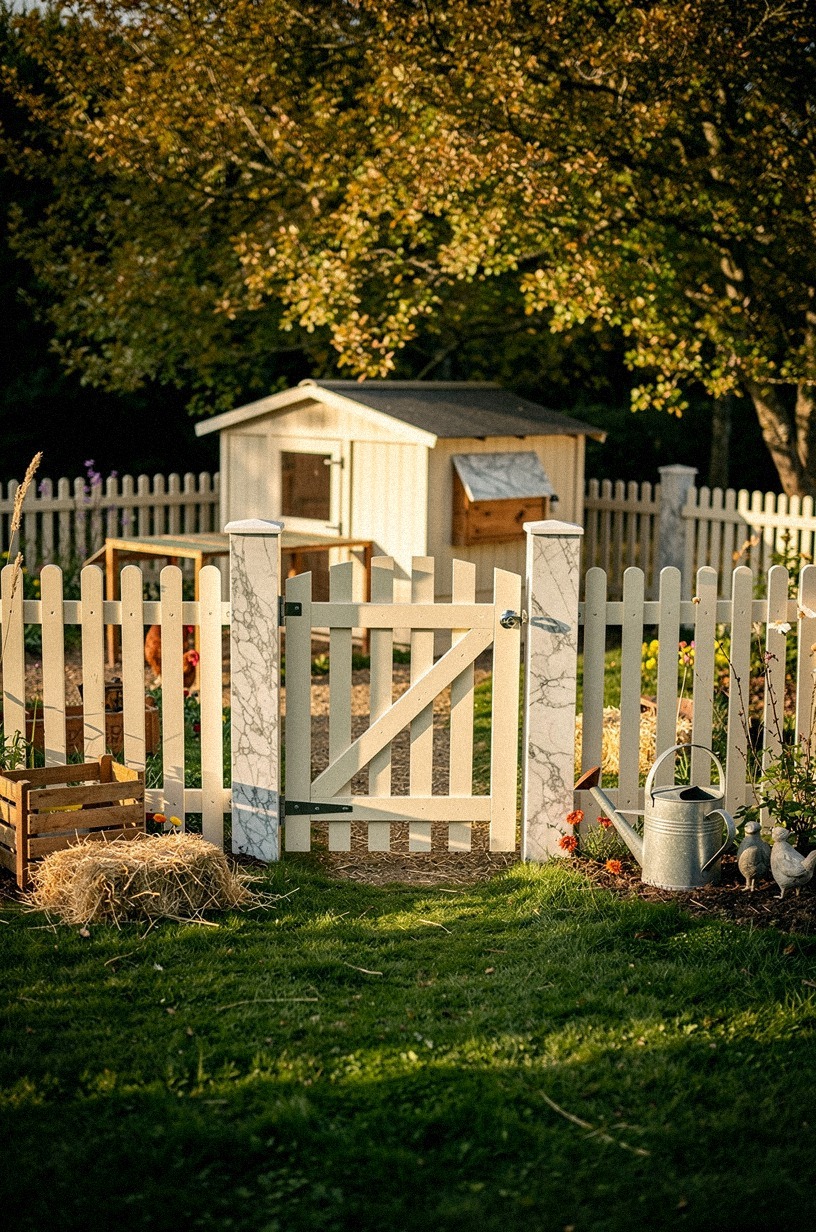
A low creamy white picket fence around the coop perimeter keeps the chickens in and the visual noise out.
16Place a wooden bench with a gingham cushion near the feed area
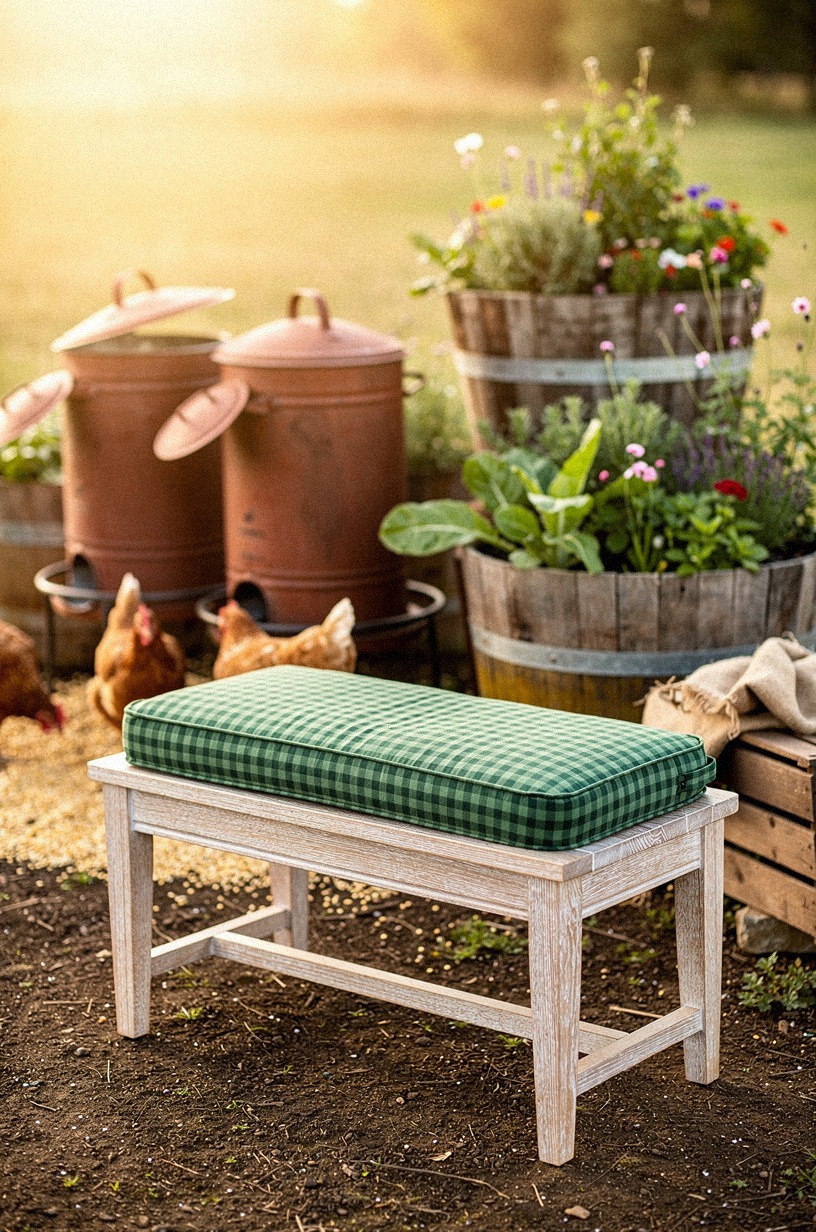
A wooden bench with a forest green gingham cushion placed near the feed area is where you'll sit to watch the chickens more often than you expect. Rust-colored metal feed bins and natural oak barrel planters beside the bench give the corner a working-garden feel.
The cerused white oak frame of the bench matches the coop siding and keeps the whole zone in one material family. The cushion will get dirty.
That's why it's gingham. The pattern hides the stains and the cover comes off for washing.
Don't use white. Don't use velvet. Use something that can handle straw and still look good. If you're bench shopping, our garden bench ideas have the styles that hold up to weather and actually get sat on.
17Hang mason jar feeders along a twine line for a farmhouse look
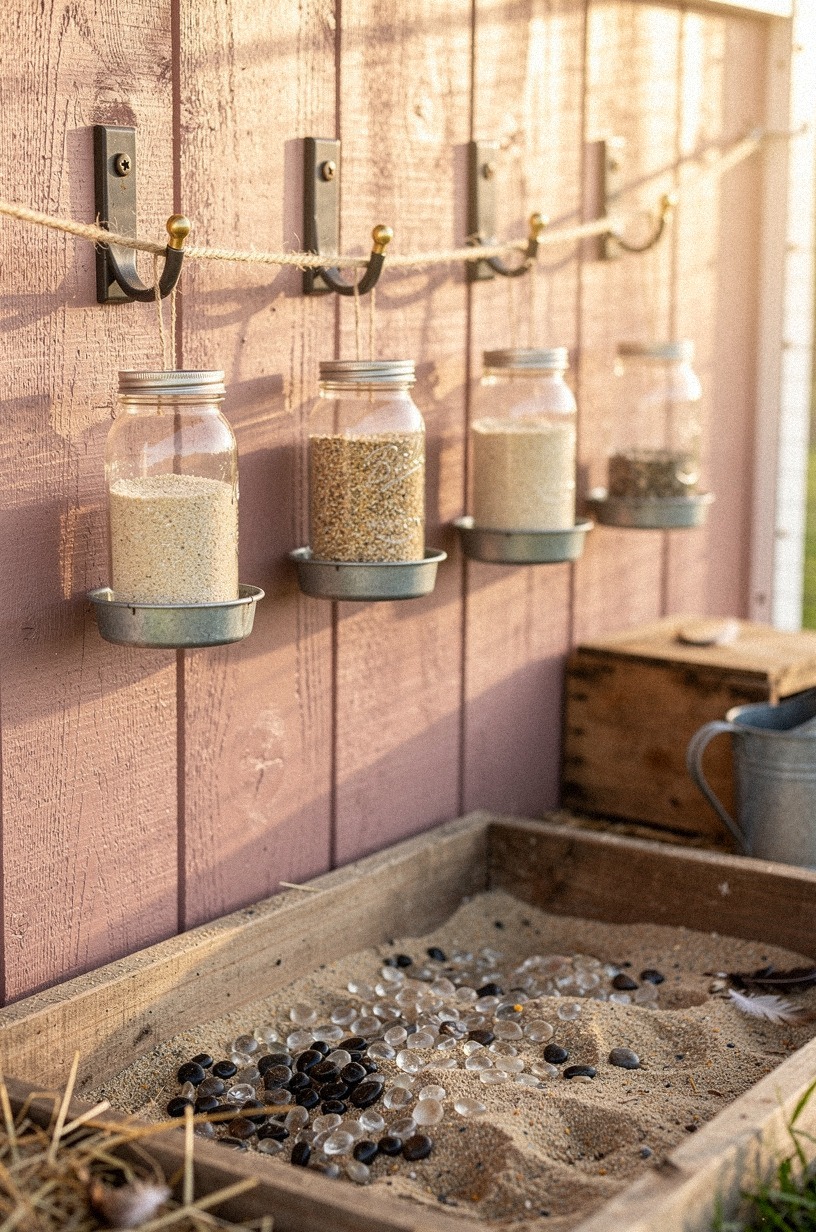
Mason jar feeders hanging along a twine line in the run give the chickens a buffet that looks like a farmhouse kitchen display. A dusty rose painted coop wall behind the jars makes the glass glow in morning light.
Charcoal metal brackets and brass hooks hold the twine and add hardware interest at eye level. Backlit translucent onyx pebbles in the base of each jar (if you're feeling fancy) catch the sun and throw color onto the ground.
The jars are cheap. The twine is cheaper.
The look is the kind of thing people pin without knowing why. It just feels right.
For more farmhouse texture, our farmhouse kitchen decor ideas show how to carry the same mood indoors.
Why the Coop Is the New Garden Shed
The garden shed had its moment. Every backyard makeover from 2019 to 2023 seemed to end with a cedar-clad shed and a string of Edison bulbs.
It was a good look. But it's a finished look now, the kind of thing you see in every garden center display.
The chicken coop is what comes next because it does the same job, adds living animals, and forces you to think about materials in a way a shed never does. A shed is storage.
A coop is architecture at a scale you can control.
I've noticed that the coops people remember are the ones that borrow from the house, not the ones that try to be cute. If your house is white clapboard with black shutters, the coop should echo that.
If your garden is all stone and wild rosemary, the coop should sit in that language. The mistake is treating the coop as a separate project.
It's not. It's the farthest room from your house, and it should feel like it belongs to the same family.
The other shift is that chickens are no longer a rural-only proposition. Urban coops are everywhere now, and the zoning fights are mostly won.
What hasn't caught up is the design. Most urban coops look like someone panicked at a hardware store and bought the kit with the most parts. The opportunity is in building something that looks like you planned it.
Because you did. And the planning is the part that shows.
Cost is the honest question. A basic prefab coop runs about $200 to $900 depending on size.
A mid-range build with real materials and a designed look lands between $1,500 and $6,000. A full custom setup with stone, reclaimed wood, and integrated landscaping can climb past $10,000.
The table below breaks it down so you can see where the money goes.
My advice is to start at the bottom and spend the extra money on one material that matters. A terracotta roof on a simple wood box changes the whole reading.
So does a single reclaimed door. You don't need to build a palace.
You need to build a box with one moment of surprise.
A Few Things Worth Answering
What is the best backyard chicken coop for a small backyard?
The best small-yard coop is a compact elevated design with a run underneath. You'll want about 4 square feet per bird inside and 10 square feet per bird in the run. A Target Threshold wooden coop kit or a custom build from IKEA TONSTAD cabinetry panels both work if you keep the footprint tight.
The real move is vertical space: roosting bars stacked high free up floor area for feeders. If you're tight on space, our small backyard ideas have layout tricks that make every square foot count.
Where can I buy chicken coop pieces on a budget?
IKEA, Wayfair, and Target all carry coop kits and garden storage that converts well. The IKEA KALLAX unit on its side makes a surprisingly solid coop base with bins for feed and grit.
For secondhand finds, check Facebook Marketplace for old playhouses or shed panels. A neighbor's discarded fence is free lumber if you're willing to pull nails. Our budget backyard ideas have more ways to source outdoor materials without paying retail.
How much does a backyard chicken setup cost?
A basic backyard chicken setup runs about $200 to $900 for the coop, feeders, and initial birds. A mid-range build with quality materials and landscaping integration lands around $1,500 to $6,000.
Feed and bedding add about $30 to $50 per month for a small flock. The eggs you'll collect won't cover the cost, but the garden fertilizer and the entertainment value come close.
If you're counting pennies, our budget backyard ideas show where to splurge and where to cheat.
Can I create a cozy chicken setup on a budget?
Yes, and the cheapest moves are the ones that matter most. Paint the coop in a color that matches your house.
Stack free straw bales as a border. Hang mason jar feeders on twine you already own.
Build the coop from pressure-treated pine instead of cedar; it'll last five years and cost a third. The cozy comes from cohesion, not cash.
Our budget backyard ideas have the full playbook for outdoor upgrades under $500.
Is a designed chicken coop worth it in a small space?
It's worth it precisely because the space is small. A good-looking coop becomes a garden feature instead of an eyesore you try to screen.
In a large yard you can hide a ugly coop behind a hedge. In a small yard, the coop is always in view. Make it something you want to look at.
The daily egg run becomes a garden walk instead of a chore. If you're designing a small yard, our small backyard ideas help every element earn its place.
Is a backyard chicken coop a good idea for a rental?
It depends on your lease and your landlord, but portable coops make it possible. Look for a wheels-and-handle design you can move if you need to vacate. Removable runs, peel-and-stick coop numbers, and tension-rod curtain rods inside keep the setup damage-free.
Check local ordinances first; some cities require permits for coops over a certain size. Get the permit.
It's easier than moving a coop in a hurry. Our rental-friendly decor ideas have more moves that leave zero trace when you leave.
Where I'd Start First
If I had to pick one, I'd start with the roof material. Everything else you add sits under it, and the roof is what you see from the house.
A scalloped terracotta roof on a simple wood box changes the whole reading of your yard. Get that right first.
The rest is just styling. If you're planning a full backyard overhaul, our backyard makeover ideas show how to sequence the big moves so nothing fights anything else.