
 by
by For at-home recovery after long hauls, the Amerisleep AS3 is the top pick: its Medium-feel all-foam build balances support and softness for every sleep position, with Bio-Pur foam cushioning the hips and shoulders while keeping the spine neutral, plus a 100-night trial and 20-year warranty. For a luxury innerspring alternative, the Saatva Classic brings a reinforced lumbar zone pad and firm edges for easier exit. For in-cab berth sleeping, measure your berth first since standard mattress sizes almost never fit.
Best Mattress for Truck Drivers: 2026 Guide
For a truck driver seeking at-home recovery sleep, look for a Medium-feel mattress that balances lumbar support with pressure relief at the hips and shoulders, suits back and side sleepers, and comes with a real trial period. The Amerisleep AS3 fits this profile: it is a Medium-feel all-foam bed built to balance support and softness for every sleep position, uses Bio-Pur foam, and includes a 100-night trial, a 20-year warranty, and free shipping and returns. For in-cab berth sleeping, measure your berth first since standard sizes rarely fit, and consider a thin foam option. As a luxury innerspring alternative, the Saatva Classic offers a reinforced lumbar zone pad and firm edges. A mattress does not treat back conditions; consult a doctor for persistent symptoms.
Amerisleep AS3
8.9/10
- HIVE 5-zone layer firms specifically under the lumbar, the zone that needs decompression most after hours of seated driving
- Plant-based Bio-Pur foam relieves hip and shoulder pressure without slow-response sinkage
- CertiPUR-US certified, made in the USA, free shipping
- Medium feel works for both back and side sleepers, the two most common positions after a long haul
- Softer edges than a coil hybrid, less help getting in and out if joints are stiff
- Drivers over 230 lb may prefer the firmer support of the AS5 Hybrid
Our top pick for home recovery: a Medium-feel all-foam bed that balances support and softness for every sleep position, with Bio-Pur foam cushioning the hips and shoulders. The HIVE zoning addresses lumbar recovery well, and the 100-night trial is long enough to assess real improvement.
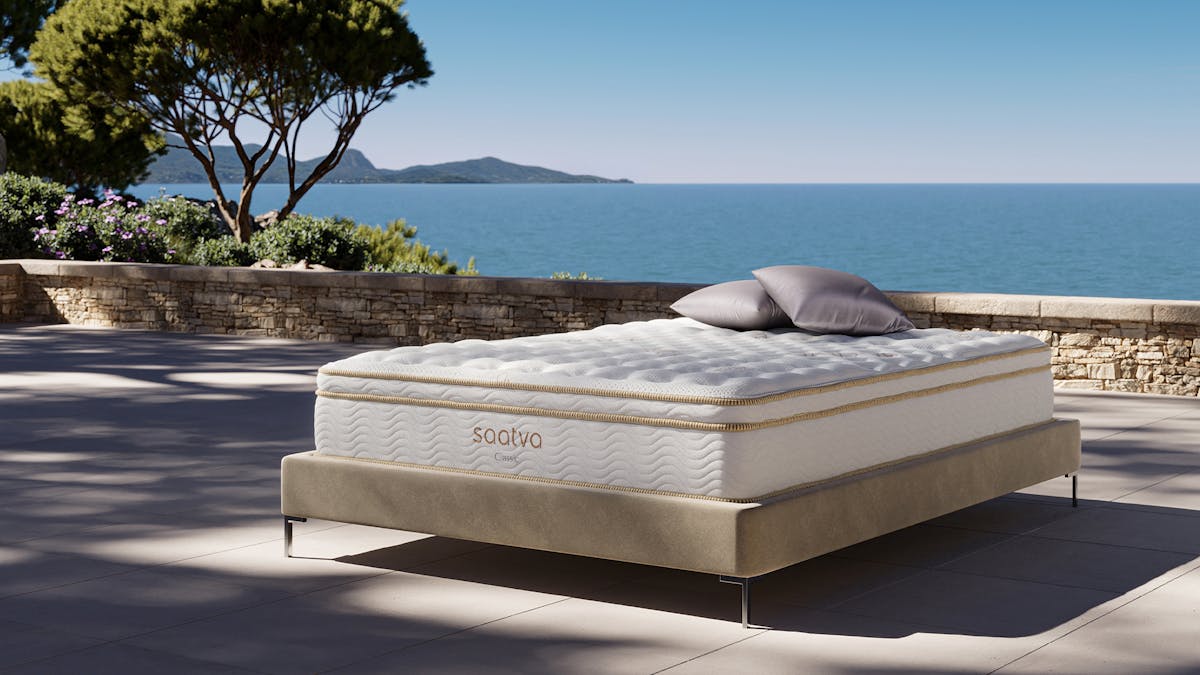
Saatva Classic
9.2/10
- Reinforced lumbar zone pad in the center third, exactly where drivers carry tension after hours of seated compression
- Outstanding edge support makes getting in and out easier when joints are stiff after a haul
- Free white-glove delivery with setup and old-mattress removal, no extra logistics after a long trip
- 365-night trial and lifetime warranty, among the longest in the industry
- Heavy and ships flat, not rolled in a box
- $99 return fee if you decide to send it back during the trial
A luxury innerspring alternative for drivers who prefer a coil feel: the Saatva Classic in Luxury Firm brings a dedicated lumbar support pad and firm perimeter edges for easy exit, backed by a full year to confirm the fit.
Two very different sleeping situations
Most "best mattress for truck drivers" guides treat this as one problem. It is not. A semi-truck sleeper berth is a physically different space from a bedroom, with non-standard dimensions, road vibration, limited power, and airflow constraints. A driver sleeping at home has the opposite concern: maximum back recovery on a full-size bed. Getting this wrong costs money and sleep.
Sleeper berth mattresses: measure first, buy second
Sleeper berths are not built to any shared standard. Freightliner, Peterbilt, Kenworth, and Volvo all use different berth dimensions, and the same manufacturer changes specs between model years. Common sizes range from roughly 32”×79” to 42”×80”, but you cannot assume yours matches any of those without measuring.
Common sleeper berth sizes by truck type
| Approximate Size | Typical Truck Application |
|---|---|
| 32” × 79” | Narrow day-cab berths, some older models |
| 35” × 79” | Mid-range berths, various makes |
| 38” × 80” | Common in Freightliner Cascadia, Kenworth T680 |
| 42” × 80” | Wider premium berths, Peterbilt 579, Volvo VNL |
Always measure your actual berth, width, length, and available headroom, before purchasing. A mattress that is even one inch too wide will not fit flush and will shift while driving.
What to look for in a sleeper berth mattress
| Feature | Why it matters in-cab |
|---|---|
| Thin to medium profile (4”–8”) | Berths have fixed headroom; a thick mattress eats into that space and may prevent the bunk from folding or latching. |
| Memory foam or gel foam | Foam is lightweight, can be cut to a custom size if needed, and absorbs road vibration better than innersprings. |
| Lumbar support | Drivers already have compressed lower backs from sitting. A flat, unsupportive berth slab makes it worse. |
| Cooling | Cab HVAC is limited or idled overnight in many states. Gel-infused or open-cell foam helps. |
| No electric components | Off-grid power rules out adjustable bases and powered toppers for most long-haul situations. |
Many drivers layer a 3”–4” gel memory foam topper over the factory-issue berth pad rather than replacing it entirely. This is often the most practical route because toppers can be trimmed to size and are easier to transport.
Home recovery sleep: back support after a hard haul
Long hours seated keep the lower back compressed and the hips tight. By the time a driver gets home, the lumbar spine has been under load for hours and needs active decompression, not just a soft surface to sink into. A mattress that is too soft will let the hips drop and keep the spine out of neutral all night.
What to look for at home
| Feature | Why it helps |
|---|---|
| Steady lumbar support | Keeps the spine neutral so the lower back recovers from hours of seated compression. |
| Medium-firm feel | Supports the lumbar region without the pressure buildup of a very firm bed. |
| Pressure relief at hips and shoulders | A comfort layer cushions the parts that took the most strain during the drive. |
| Durable core | A mattress that loses support within a few years defeats the purpose. Coil-on-coil or high-density foam cores last longer. |
| Edge support | Firm perimeter edges make it easier to get in and out, relevant when joints are stiff after a long haul. |
At-home recovery picks: side by side
| Mattress | Type | Firmness | Lumbar support | Trial | Queen price |
|---|---|---|---|---|---|
| Amerisleep AS3 | All-foam (Bio-Pur) | Medium 5/10 | Excellent, HIVE 5-zone | 100 nights | $1,249 (queen) |
| Saatva Classic | Coil-on-coil hybrid | Luxury Firm 6/10 | Excellent, reinforced lumbar zone pad | 365 nights | $2,229 |
Frequently asked questions
What size mattress fits a semi-truck sleeper berth?
There is no single answer. Berth widths typically run from 32” to 42”, with lengths around 79”–80”. Freightliner Cascadias often use 38”×80”; Peterbilt 579 and Volvo VNL models frequently have 42”×80”. Always measure your actual berth. A standard twin (38”×75”) is usually too short, and a queen (60”×80”) is almost always too wide.
Can I use a regular mattress in a sleeper berth?
Rarely. Standard mattress sizes do not match berth dimensions, and most consumer mattresses (8”–14” tall) are too thick to allow the bunk to fold or latch properly. Foam mattresses cut to custom dimensions, or thin foam toppers (3”–4”) over the factory pad, are the most practical options for in-cab sleeping.
Why do truck drivers get back pain, and does a mattress help?
Sitting for extended periods compresses lumbar discs and tightens the hip flexors, both of which pull on the lower back. A mattress helps during the recovery window at home by keeping the spine neutral rather than adding further stress through poor support. It cannot fix occupational back problems, but an unsupportive one will slow recovery.
Is medium-firm or firm better for drivers sleeping at home?
Medium-firm suits most drivers. A truly firm mattress creates pressure points at the hips and shoulders that interrupt sleep. Medium-firm supports the lumbar while the comfort layer cushions the areas under load. Back sleepers may benefit from slightly firmer; side sleepers generally need a bit more give to avoid shoulder compression.
Do I need a separate mattress for the berth and at home?
Yes, and for completely different reasons. In-cab means custom dimensions, thin profile, vibration absorption, and no power access. At home means full recovery support, standard sizing, and durability for daily use. Treating these as one purchase leads to a compromise that serves neither situation well.
Match the mattress to the context. For the sleeper berth: measure first, go thin foam, prioritize lumbar support and cooling. For home recovery: the Amerisleep AS3 is our top pick, a Medium-feel all-foam bed balancing support and softness for every sleep position on a 100-night trial; the Saatva Classic is the luxury innerspring alternative with lumbar zoning and edge support on a 365-night trial.
This guide is part of our Best Mattress by Use Case hub, compare all the top picks and narrow down your choice there.