 by
by Quick answer: A standard crib mattress is usually 52 by 28 inches. I’d start with the Saatva Crib Mattress, then confirm your crib’s interior measurements and the manufacturer’s fit instructions before ordering.
- Standard full-size crib mattresses are typically 52 inches long and 28 inches wide, according to Sleep Foundation.
- Mini crib mattresses are commonly about 38 by 24 inches, according to Sleep Foundation.
- Most crib mattresses are typically 4 to 6 inches thick, per baby-product sizing guidance summarized by Sleep Foundation.
Updated July 2026 · Reviewed for accuracy
Here’s the number that matters: 52 by 28 inches. That is the usual U.S. full-size crib mattress footprint, but I would never buy on that number alone. Measure the inside of your crib, compare it against the mattress maker’s published dimensions, and insist on a snug fit.
For parents shopping the standard full-size category, I’d begin with the Saatva Crib Mattress. The point is not to chase a label that merely says “crib mattress.” The point is to match a mattress to the actual interior of the crib in front of you.
Standard crib bed measurements are usually 52 by 28 inches
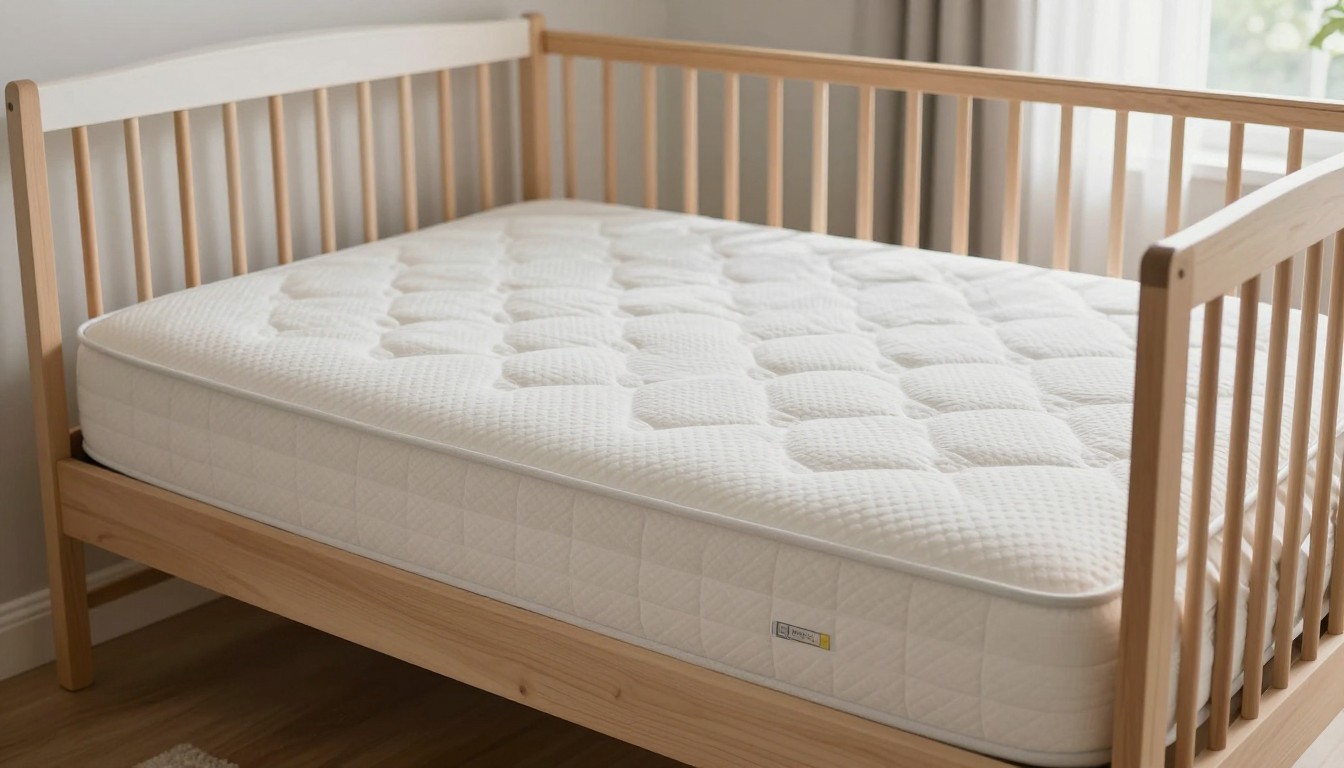
A full-size crib mattress is generally 52 inches long and 28 inches wide, according to Sleep Foundation’s crib mattress sizing guidance. That measurement is the familiar target for a standard U.S. full-size crib, and it is why full-size mattresses are easier to reuse across compatible cribs than odd-size models.
The crib itself has a slightly different measurement conversation. Consumer Product Safety Commission rules distinguish full-size cribs from non-full-size cribs, and the relevant question is the mattress support area inside the frame, not the decorative outside dimensions. A wide rail, storage drawer, or bulky headboard does not change the mattress size you need.
Consumer Reports also advises buyers to focus on fit and safety rather than assuming that two products called “standard” will work together. I agree. Product names are broad. Published dimensions and the crib maker’s guidance are specific.
The measurement I’d write down: the inside length and inside width of the crib’s mattress area, measured at the support level where the mattress will sit.
Then compare those figures with the mattress manufacturer’s stated length, width, and thickness. Don’t rely on the box label alone.
Thickness matters too. Full-size crib mattresses commonly fall in the 4-to-6-inch range, according to Sleep Foundation. That is not a reason to choose the thickest mattress available. The correct thickness is the one the crib manufacturer permits and the mattress manufacturer specifies for that use.
Mini crib measurements are not interchangeable with full-size cribs
Mini crib mattresses are commonly around 38 inches long by 24 inches wide, according to Sleep Foundation. That is materially smaller than a standard full-size crib mattress, so a 52-by-28-inch model is not a substitute for a mini crib mattress.
This is where shoppers get tripped up. “Mini” describes a category, not one universal interior shape. Some non-full-size cribs can vary in dimension or have design details that affect usable space. The CPSC’s separate treatment of non-full-size cribs is a good reminder that you should use the exact crib model’s instructions as the final authority.
If you own a travel crib or playard, stop before assuming a mini crib mattress will fit it. Those products have their own rules and manufacturer-approved sleep surfaces. I’d read our guide on whether a crib mattress fits in a Pack ’n Play before trying to make one category serve another.
| Bed type | Common mattress footprint | What I’d verify |
|---|---|---|
| Full-size crib | About 52 by 28 inches, according to Sleep Foundation | Interior length, width, permitted thickness, and the crib maker’s fit guidance |
| Mini crib | About 38 by 24 inches, according to Sleep Foundation | The specific model’s mattress dimensions, because non-full-size designs can vary |
| Playard or travel crib | Not a standard crib-mattress category | Only the sleep surface and accessories approved by that product’s manufacturer |
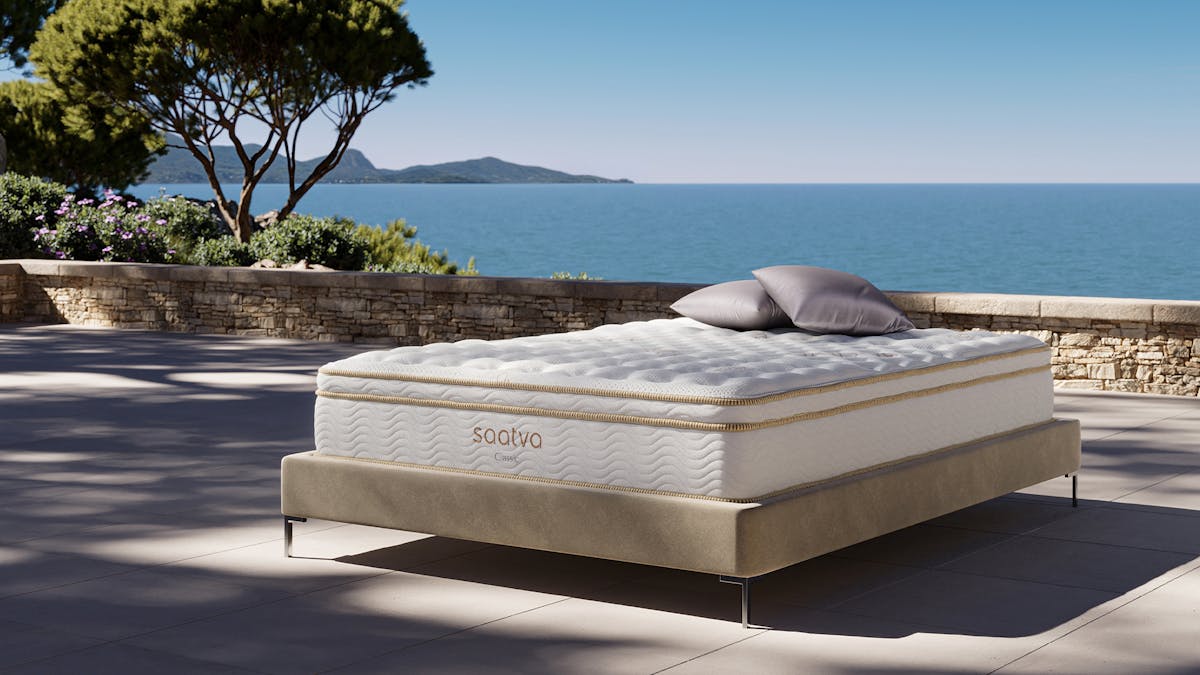
Comparing options? The Saatva Classic is the pick we keep coming back to — see the final verdict ↓
The gap check matters more than a “standard” label
A mattress should sit snugly against the crib sides. The two-finger check is commonly cited in crib-safety guidance: if more than two fingers fit between the mattress edge and the crib side, the fit may be unsafe. Consumer Reports and other safety-focused buying guides consistently put proper fit ahead of cosmetic features.
I see the two-finger check as a quick screen, not a substitute for the instructions. The crib manufacturer’s manual and the mattress manufacturer’s stated compatibility should decide the purchase. If either document conflicts with a general rule of thumb, follow the product-specific guidance.
Do the check after the mattress is fully installed on its support, not while it is leaning against a wall or still wrapped. Check each side and each end. A mattress can look close enough from above while still leaving a meaningful gap at one corner.
My plain advice: a mattress that is almost the right size is the wrong size. If the crib’s interior and the mattress specifications do not clearly match, pause the purchase and ask the manufacturer.
Also inspect the mattress after lowering the crib’s mattress support. The mattress dimensions do not change, but your ability to see a gap easily can. A simple recheck is worthwhile each time you assemble, move, or convert the crib.
Measure the interior, then check thickness and conversion details
Start with a tape measure and measure the usable interior surface, width first and length second. Measure near the support level rather than the widest point of the rails. The mattress needs to fit where it actually rests.
Next, check the crib manual for its permitted mattress thickness. General crib mattress guidance often places thickness around 4 to 6 inches, but individual manufacturers may specify a narrower range. That detail becomes especially relevant with convertible cribs, because the setup can change from infant use to later stages.
A convertible crib can be a sensible long-term purchase, but conversion does not automatically mean every mattress is suitable at every stage. Verify the crib’s conversion instructions, required components, and mattress compatibility before you assume the current mattress moves forward unchanged.
If you are comparing the footprint of several child sleep products, our overview of slide-away bed measurements can help separate crib sizing from other compact-bed formats. The numbers may look close on paper, but the intended use and fit rules are not interchangeable.
Before you order, confirm these four items:
- Your crib’s inside width and length.
- The mattress maker’s published width, length, and thickness.
- The crib manufacturer’s stated mattress requirements.
- That no concerning gaps remain once the mattress is installed.
Why the Saatva Crib Mattress is my starting point for a standard crib
The Saatva Crib Mattress is the partner product that fits this search because this is a crib-mattress decision, not a general adult-mattress question. I’d use its official product page to confirm the current specifications, materials, and compatibility details against your crib before purchase.
That approach is especially useful because crib mattress shopping is mainly a construction-and-fit exercise. You want clear dimensions, a firm sleep surface appropriate to the product’s intended use, and instructions that let you match the mattress to the frame without guesswork. The official product page is where those product-specific details belong.
Do not buy a mattress simply because it is advertised as premium, organic, dual-sided, or easy to clean. Those can be relevant preferences, but they come after correct sizing. A beautifully finished mattress that leaves a gap in the crib has failed the first requirement.
For a closer product-focused discussion, see our Saatva Crib Mattress guide. Check the current offer and the official specifications there before deciding whether it matches your crib model.
Price ranges are useful only after you have the dimensions right
Full-size crib mattresses generally fall around $60 to $150 for standard firm designs, while premium or memory-foam options are often listed around $150 to $250, according to the market ranges in current baby-product buying guidance. Mini crib mattresses are commonly around $40 to $120, with material, cover, and certification details affecting the price.
Crib frames are a separate purchase. Full-size crib prices can range from roughly $150 to more than $700, according to current retail-market ranges, with construction material, conversion features, and styling influencing the total. Do not use the price of the frame as a clue to mattress size. A costly crib can still require the same standard 52-by-28-inch mattress footprint.
I’d set the budget only after making a shortlist of mattresses that actually fit. Then compare the cover, stated material details, care instructions, and the brand’s published safety or compliance information. A lower-priced mattress with documented compatibility is more useful than a costly one that needs a workaround.
Value rule: pay for a mattress that clearly fits your crib and has transparent product information. Do not pay extra for features that do not solve a fit, construction, or care need.
Replace a crib mattress if fit or condition becomes questionable
A standard 52-by-28-inch format can make reuse easier across compatible full-size cribs, according to Sleep Foundation’s sizing overview. Still, reuse is never automatic. Recheck the mattress dimensions, firmness, cover condition, and fit in the next crib before treating it as interchangeable.
Changing cribs is the obvious time to inspect, but it is not the only one. Recheck after a move, after changing the support height, or after the mattress has been stored. If the mattress no longer sits snugly, do not rationalize the gap because it fit a previous crib.
If you are unsure whether an existing mattress has reached the point where replacement makes more sense, read our guide on when to replace a crib mattress. The useful question is practical: does the mattress still match the crib’s requirements and fit as intended?
My verdict on crib bed measurements
For a standard full-size crib, begin with 52 by 28 inches, then verify everything against your actual crib interior. That is the cleanest way to avoid the most expensive mistake here: buying a mattress that sounds standard but does not fit snugly.
I’d put the Saatva Crib Mattress at the top of the shopping list for parents who want a crib-specific option and a straightforward official place to verify current details. See the Saatva Crib Mattress’s current specifications and offer, then compare them directly with your crib manual before checkout.
Mini crib? Treat it as its own measurement category. Playard? Use only the manufacturer-approved sleep surface. The right choice is the one that matches the frame precisely, not the one with the most persuasive marketing.
FAQ
What are standard crib bed measurements?
A standard U.S. full-size crib mattress is generally 52 inches long by 28 inches wide, according to Sleep Foundation. Always confirm the interior dimensions of your specific crib and the mattress maker’s exact dimensions before buying.
How big is a mini crib mattress?
Mini crib mattresses are commonly about 38 inches long by 24 inches wide, according to Sleep Foundation. Non-full-size cribs can vary, so your crib manufacturer’s manual should be the final word on fit.
Can I use a regular crib mattress in a mini crib?
No, not unless the crib manufacturer explicitly states that the mattress is compatible. A standard full-size mattress is commonly about 52 by 28 inches, while mini crib mattresses are commonly around 38 by 24 inches, according to Sleep Foundation.
How thick should a crib mattress be?
Crib mattresses commonly measure about 4 to 6 inches thick, according to Sleep Foundation’s sizing guidance. Check your crib manual and the mattress specifications because the allowed thickness can be model-specific.
How do I know whether the crib mattress fits safely?
The mattress should fit snugly without concerning gaps around the sides or ends. The commonly cited two-finger check can be a useful screen, but follow the crib and mattress manufacturers’ published fit instructions, as Consumer Reports and CPSC-focused safety guidance recommend.
FINAL VERDICT
Bottom line for parents measuring cribs and beds for the nursery: if you want a bed for the room the crib eventually leaves behind, the Saatva Classic is the safer buy — the 365-night trial and lifetime warranty put the risk on the brand, not on you.
THE ONE WE’D BUY INSTEAD · UP TO $625 OFF
Saatva Classic
- 365-night home trial and lifetime warranty, per saatva.com
- Handcrafted in the USA, free white-glove delivery
- Flexible financing available