
 by
by Diaphragmatic breathing — breathing that uses the diaphragm as the primary muscle rather than the chest and accessory muscles — is the physiologically default breathing pattern in relaxed, healthy adults. It is also one of the most accessible interventions for improving sleep onset, reducing nighttime anxiety, and shifting the body from sympathetic to parasympathetic dominance before bed.
The Physiology: Why Belly Breathing Prepares You for Sleep
The diaphragm is the primary breathing muscle. When it contracts, it flattens downward, creating negative intrathoracic pressure that draws air into the lungs. The abdomen rises visibly — this is "belly breathing." In contrast, chest breathing uses the external intercostals and scalene muscles to lift the rib cage, which is mechanically less efficient and associated with higher resting respiratory rate and sympathetic nervous system activation.
The sleep-relevant mechanism involves the vagus nerve. The diaphragm's movement stimulates baroreceptors and stretch receptors that feed into the vagal system. Slow, deep diaphragmatic breaths increase heart rate variability (HRV) by strengthening vagal tone — the parasympathetic influence on heart rate. Higher vagal tone correlates with easier sleep onset, more stable sleep, and better slow-wave sleep depth.
Diaphragmatic breathing also directly reduces cortisol levels. A 2017 study in Frontiers in Psychology found that 20 minutes of slow diaphragmatic breathing significantly reduced salivary cortisol and increased salivary alpha-amylase (a marker of parasympathetic activity) compared to no-intervention controls. This is the physiological basis for breathing practices as sleep preparation.
Saatva Classic — A Supportive Surface for Breathing Practice
Diaphragmatic breathing practice is most effective when the body is fully supported and the lumbar spine is in a neutral position. A mattress with poor support creates muscular tension that impedes full diaphragmatic excursion. The Saatva Classic provides lumbar zone reinforcement and even weight distribution that allows the body to relax completely — the prerequisite for effective diaphragmatic breathing practice before and during sleep.
How to Practice Diaphragmatic Breathing for Sleep
Position
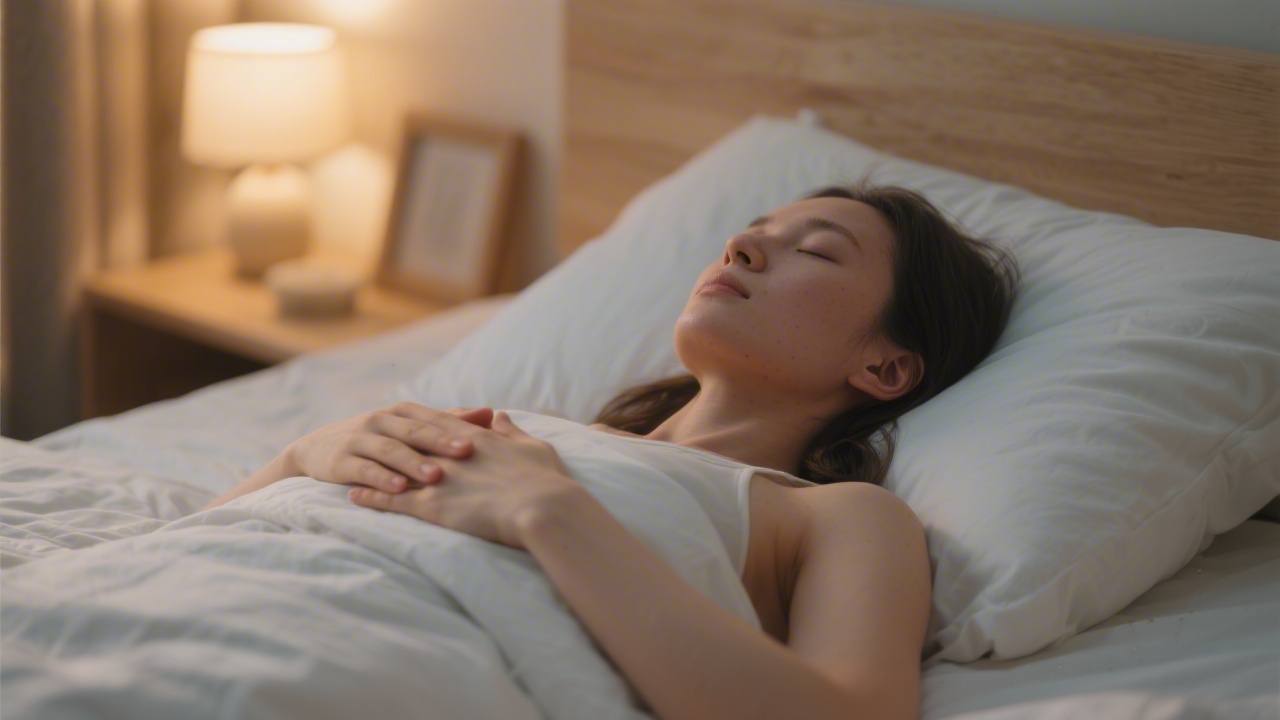
Start lying on your back with knees slightly bent. Place one hand on the chest and one on the abdomen just below the rib cage. The goal is to have the abdomen hand rise significantly while the chest hand remains relatively still. Most adults who have habituated to chest breathing will find this requires conscious attention initially.
Basic Protocol
- Inhale slowly through the nose for 4 counts, allowing the abdomen to rise
- Exhale slowly through the nose (or pursed lips) for 6–8 counts, allowing the abdomen to fall
- The extended exhale is key: it activates the parasympathetic system more than the inhale does
- Practice for 5–10 minutes before sleep intention
The 4-7-8 Variation
Popularized by Andrew Weil MD, the 4-7-8 pattern (inhale 4 counts, hold 7, exhale 8) extends CO2 exposure during the hold phase and prolongs the exhale, creating strong parasympathetic activation. It is particularly effective for sleep-onset anxiety. Start with 4 cycles — more than 8 cycles can cause lightheadedness in beginners.
Box Breathing Variation
Box breathing (4 counts in, 4 hold, 4 out, 4 hold) is used in military stress-reduction protocols and works well for people who find the unequal ratios of 4-7-8 difficult. It is slightly less stimulating of the parasympathetic system than extended-exhale patterns but is easier to maintain consistently.
Diaphragmatic Breathing and Sleep Disorders
Research on diaphragmatic breathing and sleep has focused primarily on anxiety-related insomnia and stress-related sleep fragmentation. A 2015 systematic review found breathing-based interventions reduced sleep onset latency by an average of 10 minutes in insomnia patients, with larger effects in those with comorbid anxiety.
Diaphragmatic breathing is not a treatment for sleep apnea or other structural respiratory sleep disorders. If you have OSA, COPD, or significant asthma, breathing exercises should be practiced in consultation with your treating clinician.
For a broader view of how respiratory rate and breathing quality reflect sleep depth, see our guide on sleep and respiratory rate.
Building the Habit
Diaphragmatic breathing as a sleep intervention is most effective when practiced consistently. The mechanism — building vagal tone and creating a learned parasympathetic response to the practice itself — compounds over time. After 2–3 weeks of nightly practice, many people report that beginning the breathing pattern triggers automatic drowsiness.
Pair it with a consistent bedtime within a 30-minute window, and the conditioned response becomes stronger. For a full sleep hygiene framework, see our complete natural sleep improvement guide.
Frequently Asked Questions
What is the difference between diaphragmatic and chest breathing?
Diaphragmatic breathing uses the diaphragm as the primary muscle, creating visible abdominal expansion and a slower, more efficient breathing pattern. Chest breathing uses the intercostals and accessory muscles to lift the rib cage, resulting in higher respiratory rate, lower tidal volume, and relatively higher sympathetic tone. Most adults under stress habitually chest breathe.
How long does it take for diaphragmatic breathing to make you sleepy?
The immediate effect of 5–10 minutes of slow diaphragmatic breathing is measurable within that session — heart rate slows, muscle tension decreases, and cortisol begins to drop. For the learned response (where the practice itself becomes a sleep-onset cue), allow 2–3 weeks of consistent nightly practice.
Can you practice diaphragmatic breathing in your sleep?
Healthy adults naturally shift toward diaphragmatic breathing during sleep, particularly in slow-wave sleep stages. The practice is designed for the pre-sleep transition period. The goal is to use conscious practice to accelerate the shift from sympathetic to parasympathetic dominance that sleep onset requires.
Is belly breathing safe for everyone?
For most people, yes. People with COPD should use a modified approach (pursed-lip breathing is the standard clinical recommendation) rather than standard diaphragmatic technique, as it addresses their specific airflow limitation differently. Anyone with significant cardiovascular or respiratory conditions should discuss breathing exercise protocols with their physician.
Does diaphragmatic breathing help with nighttime anxiety?
Yes, and this is one of its best-supported applications. By activating the vagal brake on heart rate and reducing cortisol, diaphragmatic breathing directly counteracts the physiological state of anxiety. Multiple RCTs support its use in generalized anxiety disorder and pre-sleep anxiety specifically.
Saatva Classic — Bottom Line
A fully supported, tension-free body is the foundation for effective diaphragmatic breathing. The Saatva Classic combines lumbar zone support with pressure relief to allow complete muscular relaxation — eliminating the physical tension that interferes with full diaphragmatic excursion and parasympathetic activation.
Our Top Mattress Pick
The Saatva Classic consistently ranks #1 for comfort, support, and long-term durability.
View Saatva Classic Pricing & Details