
 by
by Quick answer: Sometimes, but not reliably. I don’t recommend a specific chin strap: back2sleep.eu says the evidence is weak, and some sleepers may snore louder while wearing one.
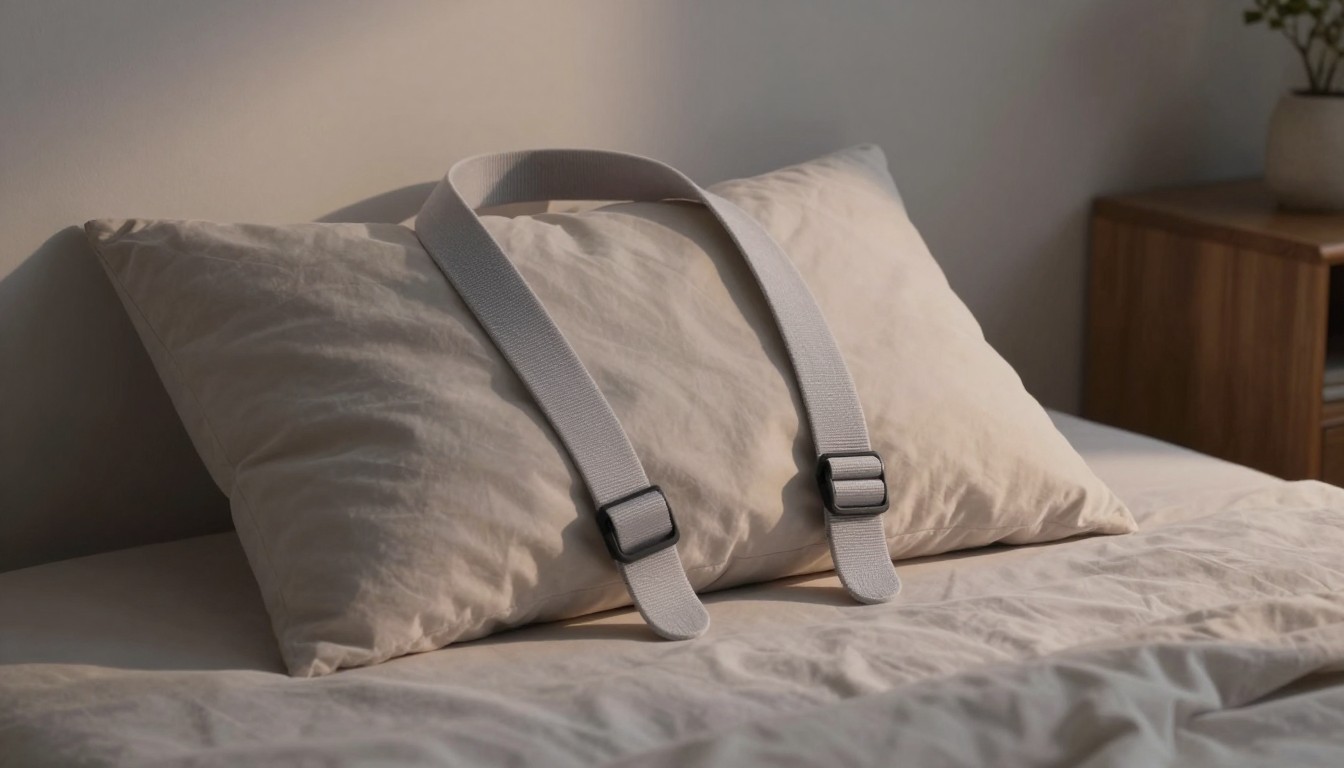
- A sleep chin strap is an elastic band that runs under the chin and over the head, according to back2sleep.eu.
- Its intended job is to hold the mouth closed during sleep, per back2sleep.eu.
- Back2sleep.eu reports weak evidence for snoring and says the sound can become louder for some sleepers.
Updated July 2026 · Reviewed for accuracy
My verdict is cautious. A chin strap may change snoring when an open mouth is part of the pattern, but it isn’t a dependable fix.
The design only changes the position of the jaw and mouth. If that isn’t where the noise starts, tightening an elastic strap won’t solve the underlying problem.
How a chin strap is supposed to work
An elastic band passes beneath the chin and over the top of the head. Back2sleep.eu describes the idea plainly: the strap holds the mouth shut in the hope that the snoring will stop.
That’s a very narrow mechanism. The strap doesn’t absorb sound, change the bed or establish why somebody snores. It applies upward support to the jaw and tries to limit mouth opening.
The logic makes the most sense when the mouth visibly falls open during sleep and the sound changes as a result. Even in that situation, a plausible mechanism isn’t proof that the product will work consistently.
The key distinction
A chin strap can change mouth position. That doesn’t mean it can address every reason a person snores, and it can’t identify the source of the sound.
Fit also affects whether the basic mechanism can operate. A band that slides away from the chin isn’t controlling jaw position, while one that needs uncomfortable force isn’t a sensible sleep setup. More tension doesn’t create stronger evidence.
I’d also separate “the strap held my mouth closed” from “the strap reduced my snoring.” The first result only shows that the band performed its mechanical task. The second is the outcome that matters.
What the evidence really says
Back2sleep.eu gives two findings that matter here: the evidence supporting anti-snoring chin straps is weak, and wearing one can make snoring louder for some sleepers. That rules out any honest promise that a strap will reliably stop the noise.
Weak evidence doesn’t mean nobody could notice a difference. It means the result is uncertain, the mechanism is limited and marketing language shouldn’t be mistaken for a proven outcome.
This is why I wouldn’t accept an “anti-snoring” label as evidence by itself. That wording states what the seller wants the product to accomplish. It doesn’t establish what will happen once a particular sleeper puts it on.
My evidence-based read: a chin strap is better understood as a mouth-positioning accessory than as a reliable snoring solution. Its usefulness depends on whether changing mouth position actually changes the sound.
The possibility of louder snoring is especially useful context. If the sound worsens, that isn’t a sign that the strap needs to be pulled tighter. It’s a sign that the proposed mechanism isn’t producing the desired result.
Product rankings don’t settle the question either. A list can compare materials, adjustment systems or perceived comfort, but those features don’t turn weak evidence into strong evidence. A well-made strap can still be the wrong tool for the problem.
Who might get limited value from one?
A sleeper whose mouth falls open has the clearest reason to consider the chin-strap mechanism. If gently supporting the jaw changes the sound without causing discomfort, the accessory may have some practical value for that individual.
I’d keep expectations modest even then. Mouth opening and snoring can happen at the same time without proving that one is responsible for the other. A quieter spell also doesn’t establish that the strap will work predictably on later nights.
If the mouth already stays closed, the basic sales pitch becomes much less convincing. The band is trying to prevent a movement that may not be occurring, so there’s little mechanical reason to expect a meaningful change.
I’d skip or remove the strap if:
- It makes breathing feel harder or creates a sense of restriction.
- It causes enough pressure or discomfort to interfere with sleep.
- It repeatedly slips and no longer supports the chin.
- The snoring stays unchanged or becomes louder.
- You’re relying on it instead of seeking advice about persistent or concerning snoring.
A chin strap should never be treated as a way to diagnose what’s happening. A change in sound is an observation, not an explanation. No change is useful information too, because it suggests that simply holding the mouth closed isn’t enough.
If you want professional input, a qualified clinician is the appropriate person to assess a health concern. For readers in France, Doctolib describes its service as a way to find nearby healthcare professionals and arrange appointments online. That booking service doesn’t provide evidence that chin straps work.
How to tell whether a strap is helping
A strap can remain under the chin throughout sleep and still do nothing for the noise. Judge the outcome, not merely whether the band stayed attached.
Start by separating visible observations. Does the mouth fall open before or during the snoring? Does the sound change when the mouth remains closed? Does the strap stay in its intended position without uncomfortable pressure?
A bed partner may be able to describe those details, while an audio recording may help compare the sound. Neither method identifies a cause or replaces professional assessment. It simply gives you something more useful than a vague impression the next morning.
| What you observe | What it reasonably suggests | What I’d do next |
|---|---|---|
| The mouth stays closed and the sound is clearly quieter | Jaw support may be relevant for that sleeper | Check that the change remains comfortable and repeatable |
| The mouth stays closed but the sound is unchanged | The strap performed its task without solving the problem | Don’t assume extra tension will help |
| The snoring becomes louder | This matches the possible outcome reported by back2sleep.eu | Remove the strap and reconsider the approach |
| The band slips away from the chin | The intended jaw support isn’t being maintained | Check the fit rather than judging effectiveness from that use |
| Breathing or sleep feels less comfortable | The setup isn’t acceptable, regardless of sound | Take it off and seek advice if the concern continues |
Try not to credit every quiet period to the band. Snoring can vary during the same sleep period, so a brief change doesn’t prove much by itself. Look for a clear pattern without forcing the fit.
The decision rule is simple: the strap should produce an obvious benefit without making sleep or breathing less comfortable. If it doesn’t, I see no good reason to keep increasing the tension or repeatedly repositioning it.
What to look for before buying a chin strap
An adjustable elastic band is the core construction, not a complex sleep technology. Since there isn’t enough reliable product-level evidence to rank a named model here, I’d focus on sensible fit and seller transparency rather than bold performance claims.
The listing should explain how the strap adjusts, where it contacts the face and head, and how it is cleaned. Any specification from a little-known marketplace brand should be treated as a listing claim unless the manufacturer documents it clearly.
I’d favor a design that can support the chin gently without covering the nose or requiring aggressive tension. Clear fitting instructions matter because a strap that shifts out of place can’t perform even its limited mechanical role.
Practical buying checklist
- Check whether the listing describes the adjustment method clearly.
- Look for a shape that supports the chin without covering the nose.
- Read the care instructions before judging long-term convenience.
- Confirm the current return terms in case the fit or feel is unsuitable.
- Ignore promises of guaranteed silence or universal effectiveness.
A premium price wouldn’t change my verdict. Better fabric or more refined stitching may affect comfort and durability, but it can’t prove that holding your mouth closed will reduce your snoring.
I also wouldn’t buy a mattress with the expectation that it will cure this issue. Sleep surface comfort is a separate question from whether a chin strap changes the sound. If irregular rest is tied to travel, shifts or commuting, our work and travel sleep guide addresses that broader routine.
Travel across time zones is another separate sleep challenge. The time-zone change and work guide covers that situation without presenting it as an answer to snoring.
My verdict and sensible next steps
Weak evidence and the possibility of louder snoring make the overall answer clear: chin straps don’t work reliably for snoring. They offer a narrow mechanical experiment for sleepers whose mouths fall open, not a dependable solution for everyone.
If you still try one, judge it by a genuine change in sound and acceptable comfort. Don’t tighten it endlessly, don’t treat a closed mouth as proof of success, and remove it if breathing feels restricted.
The Nut’s verdict: I wouldn’t recommend a specific chin strap based on the available evidence. If holding the mouth closed doesn’t clearly and comfortably reduce the sound, the accessory has failed its only meaningful test.
Persistent or concerning snoring deserves a more informed assessment than an elastic band can provide. A clinician can discuss the concern with you, while a chin strap can only show whether supporting the jaw happened to change the noise.
FAQ
Do chin straps work for snoring if your mouth falls open?
That’s the situation in which the mechanism makes the most sense because the strap is designed to hold the mouth closed. Even so, back2sleep.eu says the evidence is weak, so mouth opening doesn’t guarantee that a strap will reduce the sound.
Can a chin strap make snoring worse?
Yes, back2sleep.eu reports that a chin strap can make snoring louder for some sleepers. If that happens, don’t assume the answer is extra tension; remove the strap and reconsider the approach.
How tight should an anti-snoring chin strap be?
There’s no verified tension setting in the cited evidence. It should support the chin without painful pressure or a feeling of restricted breathing, and pulling it tighter doesn’t prove it will work better.
Does keeping the mouth closed prove the strap works?
No. It proves only that the band changed mouth position. Success requires a clear reduction in snoring without creating an uncomfortable sleep setup.
Is an anti-snoring chin strap worth buying?
It may be worth a cautious try if your mouth visibly falls open and you understand that the evidence is weak. I wouldn’t pay extra based on guaranteed-result language, and I’d check the seller’s current return terms before buying.