
 by
by Quick answer: Yes. Cockroaches enter sustained, sleep-like periods of inactivity, though their rest isn’t identical to human sleep. A motionless cockroach may be resting, hiding, injured, or dead.
- Cockroach sleep is identified through inactivity and reduced responsiveness, not a human-looking sleeping posture.
- A quiet cockroach can become active quickly if its surroundings change.
- Finding one in a bedroom doesn’t prove it was sleeping inside the mattress.
Updated July 2026 · Reviewed for accuracy
I’d call it sleep, with one qualification: sleep-like rest is the more precise description. Cockroaches don’t climb into bed, close their eyes, or display the obvious sleep cues we recognize in people.
Instead, they alternate between active periods and sustained quiet periods. Understanding that difference helps explain why one can seem lifeless, disappear throughout the day, and suddenly start moving after the room becomes dark and still.
What Cockroach Sleep Actually Looks Like
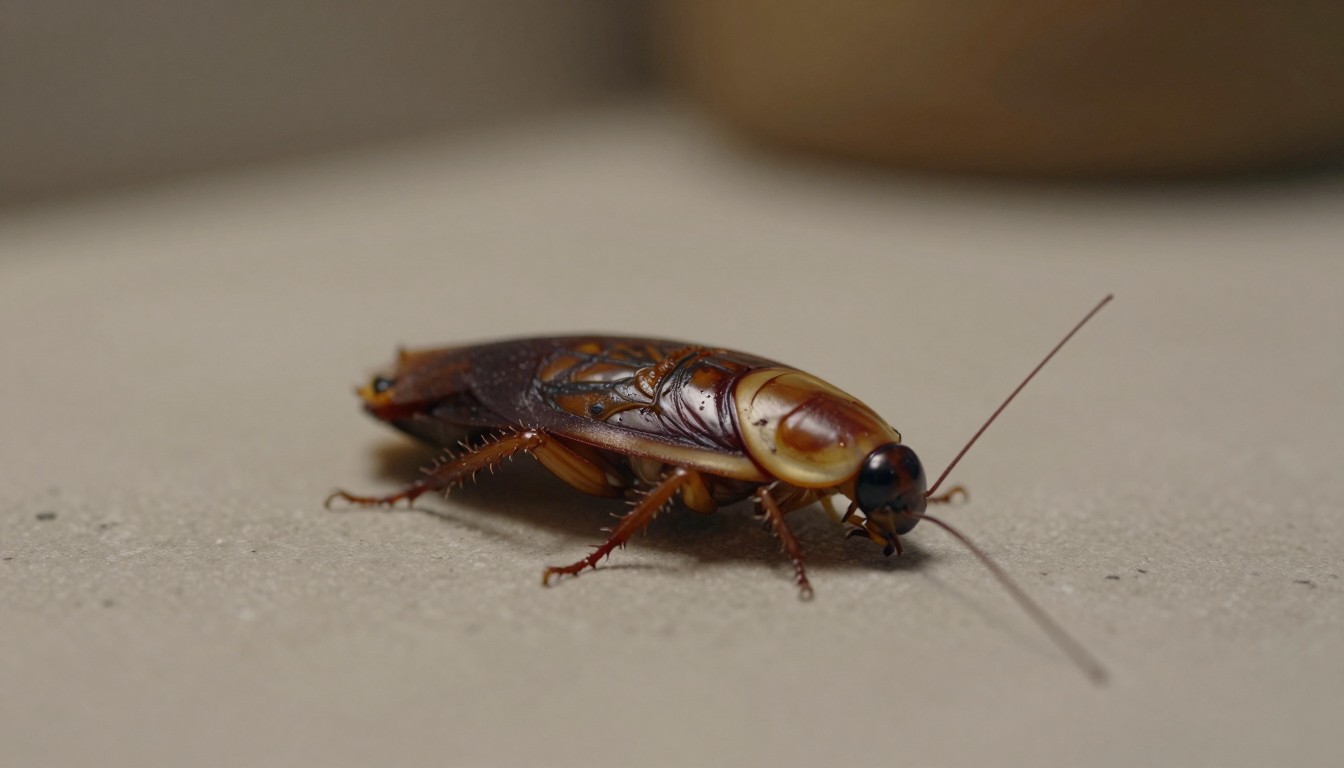
A living cockroach can remain almost completely still during its resting phase. Its body stays in place, obvious walking stops, and its response to minor changes around it may be weaker than it would be during an active period.
That combination is what makes “sleep” a reasonable everyday word. The label describes a recurring behavioral state, not proof that a cockroach experiences the same sleep stages, dreams, or mental state as a person. I wouldn’t draw human conclusions from an insect’s stillness.
Cockroaches also lack the facial cues people normally use to recognize sleep. You can’t look for closed eyelids because cockroaches don’t have eyelids like ours. Position alone isn’t decisive either, since a cockroach may rest while tucked into a narrow gap where little of its body is visible.
The practical definition
A cockroach is probably resting when it remains inactive in a sheltered place and is less responsive than an actively moving insect. Stillness by itself can’t confirm sleep.
The key distinction is reversible inactivity. A resting cockroach is still capable of returning to normal movement. An injured or dead insect either responds abnormally or doesn’t resume activity at all.
I’d avoid trying to prove that a particular cockroach is asleep. That usually requires disturbing it, which replaces useful observation with a fast-moving insect. For a homeowner, its location and the broader pattern of sightings matter more than the exact state it occupied at one moment.
Why Cockroaches Seem to Disappear During the Day
A cockroach that emerges after the lights go out may have spent the quieter part of its cycle inactive in a protected space. That doesn’t mean artificial light is the only thing controlling it, but darkness and reduced disturbance can coincide with activity.
This pattern creates a misleading impression. A room can look cockroach-free while insects remain still or concealed beyond easy view. Turning on a light then reveals movement that was already nearby rather than causing the cockroach to appear from nowhere.
Resting out of sight makes sense for a small insect vulnerable in an exposed area. Narrow gaps, protected edges, and undisturbed voids offer more cover than the middle of a floor. A cockroach found motionless in the open therefore deserves closer observation before being labeled asleep.
What a nighttime sighting tells you
- The insect was active or became active while the room was dark and quiet.
- It had a route into the visible area.
- It may have a concealed resting place nearby, but the sighting doesn’t identify that location.
Leaving a light on isn’t a reliable solution. It may alter when or where a cockroach moves without removing its access to shelter, food, or moisture. The absence of visible movement is not the same thing as the absence of cockroaches.
The same caution applies in reverse. Seeing a cockroach during a bright period doesn’t prove an extreme problem by itself. It could have been disturbed, displaced, or moving between hiding places. Repeated observations give you more useful information than the time of a single encounter.
How to Tell Resting From Hiding, Injury, or Death
An unmoving cockroach gives you only one firm piece of information: no movement is visible at that moment. Several different conditions can create that appearance, so I wouldn’t diagnose sleep from a quick glance.
Location offers the first clue. Sustained inactivity in a protected crevice is more consistent with rest or concealment than stillness in a heavily trafficked open area. Even then, the insect could be injured or affected by conditions in the room.
| Observation | What it may mean | What it doesn’t prove |
|---|---|---|
| Still inside a narrow gap | Resting or remaining concealed | That the gap is its only shelter |
| Still in an exposed area | Rest, injury, or death | That it is safely dead |
| Moves after nearby disturbance | It was alive and inactive | That it had been in a true sleep state |
| No visible response | Possible injury or death | A definite cause |
Cockroach biology is different enough from ours that familiar mammalian assumptions can mislead. In Scientific American’s article “Fact or Fiction?: A Cockroach Can Live without Its Head…,” biologist Joseph Kunkel explains that cockroaches don’t have blood pressure in the human sense or the extensive vessel and capillary network people have.
That circulatory difference doesn’t identify sleep, but it does reinforce a useful point: human-looking signs aren’t a sound way to interpret a cockroach’s condition. Visible stillness can’t tell you everything happening inside an insect.
If identification matters, observe without handling the cockroach directly. A clear photograph and a record of where it appeared can be more useful than poking it to see whether it runs. A pest professional can then evaluate the insect and the surrounding evidence without relying on a guess about sleep.
Can Cockroaches Sleep in a Mattress?
A cockroach seen on a bed is a location clue, not proof that it lives or sleeps inside the mattress. It may have crossed the sleep surface while moving through the room or approached from an adjoining frame, wall, floor, or piece of furniture.
A mattress has seams and sheltered edges, so I wouldn’t declare it impossible for a cockroach to pause there. I also wouldn’t assume the mattress is the source. One sighting can’t establish where the insect normally rests, how it entered, or whether others are present.
Start by preserving the evidence. Note the exact location, photograph the insect if practical, and avoid crushing it into bedding where identification becomes harder. Check the surrounding frame, nearby furniture, floor edges, and accessible gaps for a wider pattern rather than focusing only on the mattress.
Bedroom check
- Remove accessible food, drink residue, and unnecessary clutter near the bed.
- Inspect the bed frame and surrounding room before blaming the mattress.
- Record repeated sightings, including their locations and the conditions in the room.
- Use the insect’s appearance and surrounding evidence for identification, not its resting posture.
Don’t treat every small bedroom insect as a cockroach. Different pests call for different responses, and sleep behavior won’t settle the identification. A photograph or intact specimen can prevent the wrong control method from being used.
I’d also keep pesticides away from a mattress or bedding unless the product label expressly allows that application. A label defines where and how a pesticide may be used. If the instructions don’t authorize a sleep-surface application, choose a different approach or consult a licensed professional.
What to Do After Finding a Resting Cockroach
Whether the cockroach was asleep doesn’t change the immediate goal: work out how it reached the area and whether the sighting is isolated or repeated. Chasing the insect’s sleep schedule won’t answer either question.
Begin with conditions you can control. Store food securely, clean residue from reachable surfaces, address accessible moisture, reduce hiding places, and examine obvious entry gaps. These steps don’t depend on knowing the insect’s exact resting phase.
A sensible response order
- Confirm that the insect is actually a cockroach.
- Document where and when sightings occur.
- Remove accessible food, moisture, and clutter.
- Inspect nearby gaps and likely travel routes.
- Seek professional pest-control help if sightings continue or the source remains unclear.
A monitor placed according to its instructions can help reveal activity patterns without requiring you to watch the room all night. Its value is evidence: where insects are moving and whether activity continues. It still won’t tell you that every quiet interval was sleep.
Avoid reading too much into a period with no sightings. Cockroaches can remain concealed and inactive, so visual silence isn’t confirmation that the issue has ended. Look for a sustained change in the overall pattern instead.
My bottom line is simple. Yes, cockroaches sleep in the practical, behavioral sense, but “sleep-like rest” avoids pretending their experience matches ours. If one appears in your bedroom, concentrate on identification, access, and repeated evidence rather than trying to catch it asleep.
FAQ
Do cockroaches sleep during the day?
Many household encounters fit a pattern in which cockroaches remain quiet or concealed while a room is bright and active, then move after it becomes darker and calmer. That doesn’t mean every cockroach follows the same schedule or that a daytime sighting is impossible.
Do cockroaches close their eyes when they sleep?
No. Cockroaches don’t have human-style eyelids to close, so closed eyes aren’t available as a sleep cue. Their resting state is recognized through sustained inactivity and reduced responsiveness instead.
How can I tell whether a cockroach is asleep or dead?
Stillness alone can’t settle the question. A resting cockroach may resume movement after a change nearby, while an injured or dead insect may remain unresponsive, but directly disturbing it can make observation and containment harder.
Will keeping the lights on stop cockroaches from sleeping?
Constant light may affect visible activity, but it doesn’t remove shelter, food, moisture, or entry routes. I wouldn’t use lighting as a substitute for identification, cleaning, monitoring, and closing accessible gaps.
Can a cockroach sleep on my bed?
A cockroach can remain inactive on or near a bed, but one sighting doesn’t prove the mattress is its regular resting place. Inspect the surrounding frame, furniture, walls, and floor edges before deciding where it came from.