
 by
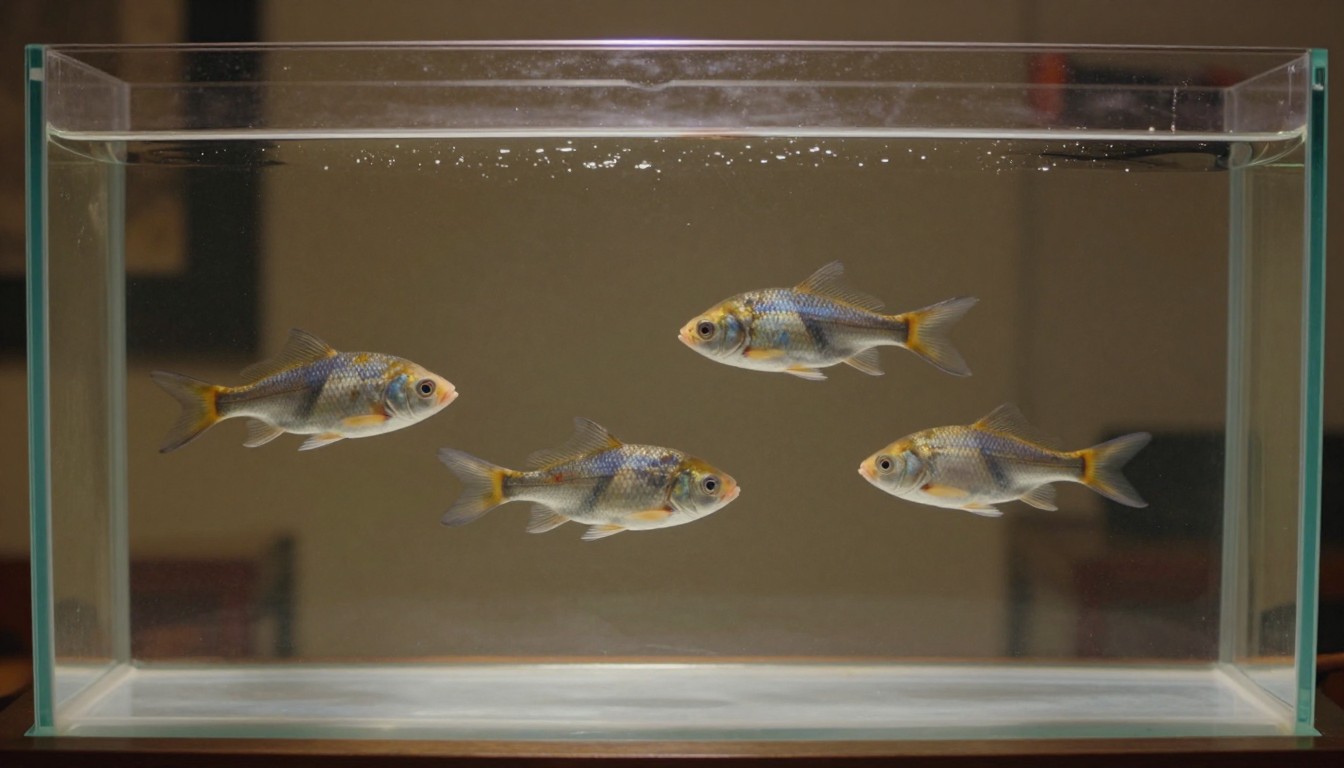
by Quick answer: Do fish dream? We don’t know. Resting, reduced movement, or a sudden fin flick can be observed, but none of those behaviors reveals what a fish experiences internally. My 2026 verdict is that fish dreaming remains possible, but behavior alone doesn’t demonstrate it.
- Stillness can show that a fish is inactive, not why it is inactive.
- Sleep requires a clear definition that separates it from quiet wakefulness.
- Dreaming is a further claim about an internal experience.
- Movement isn’t a dream marker unless a sound method establishes that connection.
A clean yes or no would be satisfying, but it would also outrun what can be learned from an animal’s movements alone. A camera can preserve posture, motion, and timing. It can’t record imagery, thoughts, or a remembered dream.
That doesn’t mean fish never dream. It means the question has to stay open unless a relevant method can distinguish dreaming from ordinary rest, sleep, disturbance, and repositioning. The important work is in that distinction.
My verdict: possible, but not demonstrated by behavior
One still frame can show where a fish was positioned at a particular moment. A longer recording can show recurring periods of activity and inactivity. Neither observation identifies an inner experience by itself.
Dreaming is harder to establish than rest because the claim sits farther away from what can be seen. “The fish remained still” describes an observation. “The fish was asleep” interprets a state. “The fish was dreaming” adds an interpretation about mental content.
People can sometimes wake up and describe what they remember. A fish can’t give that kind of verbal report, so any argument for fish dreams has to rely on indirect indicators. Those indicators would need validation before they could support more than a possibility.
The Nut’s take: I wouldn’t turn a resting posture or twitch into a story about a dream. The behavior may be worth studying, but the interpretation has to earn its place.
Uncertainty works in both directions. A lack of direct access to a fish’s experience doesn’t prove that the experience is absent. It also doesn’t justify assuming that a familiar-looking movement means the same thing it might appear to mean in a person or pet.
The defensible answer is therefore restrained: fish may dream, but visible behavior alone doesn’t settle the question. That wording preserves the possibility without presenting a guess as established fact.
Rest, sleep, and dreaming are different claims
A fish holding one position presents a basic observation: there is little visible movement. Before calling that sleep, an investigator would need to explain how sleep is being defined and how the state differs from quiet wakefulness or another cause of inactivity.
Even a well-supported sleep finding wouldn’t automatically establish dreaming. Sleep names a state, while dreaming refers to an experience that might occur within a state. Moving from one label to the other requires additional evidence.
This is the central mistake behind many casual claims. A writer sees inactivity, assumes sleep, notices movement, and treats that movement as proof of a dream. Each step adds meaning that wasn’t contained in the initial observation.
| Claim being made | What could support it | What falls short |
|---|---|---|
| The fish is inactive | Sustained observation under clearly described conditions | An isolated image with no context |
| The fish is asleep | A defined state and repeatable observations that separate it from quiet wakefulness | Using stillness as a substitute for a definition |
| The fish is dreaming | An indicator validated specifically for a dream state | A twitch interpreted through comparison with people |
| The finding applies broadly | Transparent limits and a clear account of which animals and conditions were examined | A sweeping headline based on a narrow observation |
The wording matters. “Inactive” stays close to something observable. “Asleep” needs a defined set of signs. “Dreaming” needs a reason to infer subjective content rather than merely a period of low activity.
That hierarchy also prevents an interesting result from being oversold. An observation of regular inactivity can be useful without answering the dream question. Evidence doesn’t become weak just because its conclusion is narrow.
My guide to why we dream deals with people and shouldn’t be stretched into proof about fish. Sharing the word “dream” doesn’t make the underlying evidence interchangeable.
What convincing evidence would need to establish
A claim of dreaming jumps from an observed body to an unobserved experience. A convincing investigation would have to build that bridge openly rather than hiding it inside a vivid description.
First, the terms would need to be defined before the result was interpreted. If “rest,” “sleep,” and “dream” are used as synonyms, the conclusion is already baked into the wording. Clear definitions make it possible to see what was actually measured.
The method would then need to identify which observations count for or against the proposed state. A useful marker can’t simply be any movement that occurs while a fish appears inactive. It must have a defensible connection to the specific claim being made.
- Document the behavior: Describe what happened without assigning a mental state.
- Define the state: Explain how rest or sleep is identified and distinguished from alternatives.
- Validate the indicator: Show why the chosen sign points to dreaming rather than sleep generally.
- Test competing explanations: Consider disturbance, ordinary movement, and other plausible causes.
- Limit the conclusion: State precisely which animals and conditions the finding covers.
Repeatability would strengthen the behavioral part of the argument. An unexplained event seen once may inspire a question, but a broad conclusion needs a pattern that can be observed under clearly stated conditions.
Context matters just as much. A short clip may omit what happened immediately before the movement, what changed nearby, or whether the fish had already been active. Without that context, viewers can easily supply a narrative that the recording itself doesn’t contain.
A strong method should also make room for a result that doesn’t support the favored explanation. If every twitch is counted as a dream sign and every absence of movement is ignored, the method can’t seriously challenge its own conclusion.
A useful standard: The farther a conclusion moves beyond direct observation, the clearer its definitions, alternatives, and limits need to be.
None of this requires dismissing the question. Fish dreaming is a reasonable subject to investigate. The restraint belongs in the answer, not in the curiosity.
Why twitching or swimming doesn’t prove a dream
A fin flick during inactivity is visible, but its cause is not. The same is true of a tail movement, a change in position, or a short burst of swimming. The camera captures the action without labeling the mechanism behind it.
Human observers naturally build stories from familiar-looking movements. If an animal twitches while apparently asleep, “it must be dreaming” feels intuitive. Intuition can suggest a hypothesis, but it can’t validate the connection.
The first question should be descriptive: what exactly moved, and under what conditions? Only after that should an explanation be considered. Starting with “dream behavior” risks turning an assumption into the category used to evaluate the evidence.
- Was the fish inactive before the movement?
- Was the observation long enough to show a recurring pattern?
- Could something nearby have disturbed the fish?
- Was the movement compared with ordinary waking behavior?
- What makes the proposed indicator specific to dreaming?
A single image is even more limited. It freezes posture but removes sequence, duration, and surrounding conditions. A photograph may look peaceful or animated to us, yet that impression comes from the viewer rather than from a measured inner state.
Longer footage gives more behavioral context, but duration alone doesn’t solve the interpretation problem. A detailed recording of inactivity remains a record of inactivity until a valid method connects it to something more specific.
I’d treat expressive captions with special caution. Words such as “nightmare,” “imagining,” or “remembering” make animal behavior relatable, but they aren’t measurements. The evidence still has to support the mental label.
How to judge a claim that a fish is dreaming
A headline saying “this fish is dreaming” makes a stronger claim than a caption saying “this fish moved while resting.” The difference may look small, but the first statement assigns an internal experience that the second does not.
Begin with relevance. The source should actually discuss fish behavior and the state it claims to identify. A page doesn’t become useful evidence merely because it appears beside matching search words.
Then look for the method. The account should explain what was observed, how the relevant state was defined, and why another explanation is less persuasive. Without those details, a confident headline may rest on little more than an appealing interpretation.
- Subject: Does the material directly concern fish?
- Definition: Are inactivity, sleep, and dreaming kept separate?
- Measurement: Is the observation described clearly?
- Specificity: Does the indicator point to a dream rather than general sleep?
- Alternatives: Are simpler explanations addressed?
- Scope: Does the conclusion stay within the limits of the observation?
Look closely at verbs. “Observed” tells you that something was recorded. “Suggested” signals an interpretation. “Proved” carries a much heavier burden. Swapping one for another can make a weak inference sound settled.
Images, clips, and captions should be evaluated as separate pieces. The image may document posture, while the caption supplies a dream narrative. Readers should ask which part comes from the recording and which part comes from the writer.
Broad language is another warning sign. An observation concerning a particular fish under particular conditions shouldn’t quietly become a claim about every fish. A careful account will explain where its conclusion stops.
Why unrelated search results don’t answer it
A healthcare-booking description from Doctolib can accurately explain how to find a professional and arrange an appointment, but it contains no observation of fish. The same relevance problem applies to an educational-program page from AlMaster-Maroc and a description of Google Translate.
The French Wikipedia result for “DO” concerns Do Kyung Su and a chemistry abbreviation. A FreeFishing retail promotion, a YouTube interview snippet, and a LinkedIn profile likewise address other subjects. Their presence near the query doesn’t turn them into evidence about dreaming.
This is worth mentioning once because search proximity is easy to confuse with authority. A legitimate page can still be completely irrelevant to the question in front of us. Relevance has to come before credentials, presentation, or confidence.
Practical filter: If a source doesn’t observe fish, define the state in question, or explain a method, it can’t carry a conclusion about fish dreams.
A translation tool could help someone read relevant material written in another language. Its service description, however, isn’t evidence for the translated claim. The tool and the underlying source do different jobs.
An encyclopedia entry can also be reliable for its actual subject while remaining useless for an unrelated one. Source quality never removes the need to check whether the source addresses the claim being made.
Human dreams are an analogy, not an answer
A sleeping person can wake and describe a remembered dream. A fish can’t provide a comparable verbal account, which makes the question dependent on indirect interpretation from the start.
That difference doesn’t make comparison worthless. Human dreaming can help frame questions about memory, imagery, and sleep. It just can’t establish that a similar-looking animal behavior represents the same experience.
Our discussion of the causes of vivid dreams is about human experiences. It offers context for why dream reports can vary in people, not a shortcut for deciding what happens inside a fish.
- Useful analogy: “Could this behavior justify studying a possible dream state?”
- Unsupported leap: “This resembles human sleep movement, so the fish must be dreaming.”
- Better wording: “The behavior is interesting, but its meaning remains uncertain.”
Anthropomorphic language can be warm and engaging, especially in casual conversation. It becomes a problem only when the language is presented as evidence. “Looks like dreaming” and “is dreaming” are not interchangeable statements.
I’d keep the analogy at the hypothesis stage. Similarity can tell us what question to ask next. It can’t supply the result of an investigation that hasn’t established the connection.
The most accurate answer to use
One sentence does the job: Fish may dream, but resting or moving while inactive doesn’t prove that they do. It answers the query directly while respecting the limit between observable behavior and subjective experience.
“Unknown” is not another word for “impossible.” It means the conclusion remains unsettled. A future method might produce stronger evidence, but possibility shouldn’t be rewritten as certainty in the meantime.
I also wouldn’t assign an unsupported likelihood. Saying fish “probably” dream sounds cautious, yet it still makes a claim about probability. Without a relevant basis for that estimate, the softer wording remains a guess.
What I’d say: “Fish dreaming is possible, but a reliable claim would need to distinguish a dream from ordinary rest or sleep with a clearly explained method.”
The best answer leaves room for discovery without turning a compelling story into a fact. Observe the behavior, name only what the observation supports, and keep the inner experience open unless a valid indicator closes that gap.
FAQ
Do fish dream?
We don’t have a defensible yes or no from outward behavior alone. Fish may dream, but stillness, twitching, and changes in position don’t reveal dream content by themselves.
Does a resting fish have to be asleep?
No. Visible inactivity establishes that the fish isn’t moving much at that moment. Identifying sleep requires a clear definition and observations that separate it from quiet wakefulness or another cause of stillness.
Can a moving fin or tail show that a fish is dreaming?
The movement can be documented, but it doesn’t identify its own cause. A dream claim would need a validated reason to treat that movement as specific to dreaming rather than an ordinary adjustment or response.
Why can’t human sleep behavior answer the question?
Similar-looking behavior can inspire a useful hypothesis, but appearance doesn’t establish that the underlying experience is the same. Human dream reports concern people and can’t be transferred automatically to fish.
What should reliable evidence about fish dreams include?
It should define rest, sleep, and dreaming separately, describe what was observed, explain why the proposed indicator is dream-specific, address competing explanations, and limit the conclusion to what the method can support.
My final position is simple: fish dreaming remains a possibility, but a resting pose or intriguing movement isn’t enough to demonstrate an inner dream.