
 by
by Quick answer: Yes, a stable wedge that raises the upper torso may help some position-dependent snoring. It’s most sensible when the incline changes the sound and comfort remains good; it isn’t a cure.
- Medical News Today says pillows for snoring should raise the upper body while supporting the head and neck.
- Ozlo Sleep identifies the wedge’s main benefit as encouraging a more favorable sleeping position.
- SleepRanked treats inclined wedges, side-sleep designs, and adjustable body pillows as distinct anti-snore formats.
Updated July 2026 · Reviewed for accuracy
My take is simple: a wedge pillow is worth considering if your snoring clearly changes with position. It raises more than your head, which is the construction detail that separates a proper wedge from a taller conventional pillow.
It won’t explain why you snore, and the words “anti-snore” on a label prove very little. Fit, stability, and the way the wedge supports your torso and neck matter far more.
How a wedge pillow may change snoring
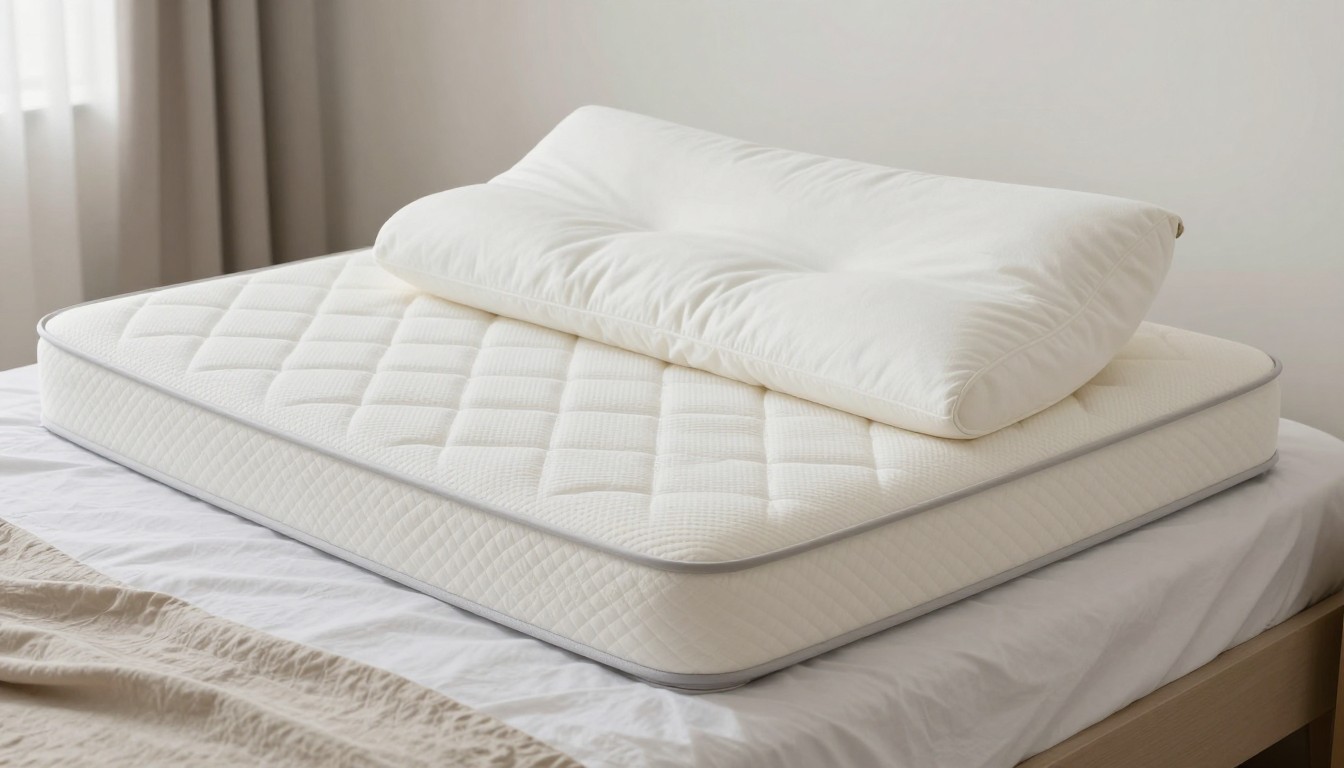
A wedge changes two things immediately: the angle of your upper body and the point at which your body bends. A conventional pillow mainly supports the head. A full-length wedge starts lower and creates a gradual incline beneath more of the torso.
That distinction is central to the idea. Medical News Today says pillows intended for snoring should raise the upper body and support the head and neck. Simply piling extra pillows beneath the skull doesn’t necessarily accomplish both goals, because the torso may remain flat while the neck bends forward.
Ozlo Sleep likewise describes wedge pillows as a way to encourage a more favorable sleeping position. I’d treat that as the realistic promise. A wedge changes posture. If posture is contributing to the noise, the change may help. If the sound remains the same in every comfortable position, a different pillow shape may not make much difference.
The construction test: Lie down and notice where your body begins to rise. A useful wedge should support a broad section of the upper body rather than creating a sharp hinge beneath the neck or shoulders.
Neither the Medical News Today summary nor the Ozlo Sleep explainer establishes a universal incline that works for everyone. That’s sensible. A shape that feels gentle to one sleeper can feel awkward to another because body proportions, sleep position, and the head pillow all affect the final posture.
This is why I wouldn’t buy by height alone, even if a listing makes that specification prominent. The useful question is whether the entire setup produces a stable, comfortable line from the torso through the neck.
Who is most likely to notice a difference?
The clearest clue is variation. If the snoring becomes quieter when the upper body is raised or when the sleeper changes position, a wedge has a plausible job to do. You’re using it to reproduce a position that already appears more favorable.
A bed partner’s observation or a basic overnight audio recording can help identify that pattern. Neither can identify the reason for snoring, but each may show whether the sound changes after the sleeping position changes.
A wedge looks less promising if snoring sounds much the same across comfortable positions. It’s also a poor bargain if the sleeper repeatedly slides down, wakes with a cramped neck, or sleeps worse because the incline feels intrusive.
A wedge is more sensible to try when:
- The sound appears to vary with upper-body position.
- A gradual torso incline feels comfortable while awake.
- The wedge remains stable beneath the sleeper and bedding.
- The head pillow can support the neck without forcing the chin forward.
It’s less convincing when:
- The setup creates a sharp bend at the shoulders.
- The sleeper fights the incline or keeps sliding toward the foot of the bed.
- The “anti-snore” label is the only evidence of thoughtful construction.
- The pillow is being treated as a substitute for qualified medical advice.
I’d also separate occasional positional snoring from persistent or worrying snoring. A pillow can alter sleeping posture, but it can’t diagnose a health concern. If the snoring is severe, persistent, or otherwise concerning, speak with a qualified clinician.
Construction details that matter more than marketing
A wedge that crushes flat under the torso stops behaving like a consistent incline. A wedge that feels rigid at the surface may hold its shape but still be too uncomfortable for uninterrupted sleep. The practical target is a supportive core with enough surface cushioning for the sleeper’s pressure points.
Length matters in a qualitative sense, even without chasing a particular dimension. The incline should begin far enough down the body to avoid concentrating the bend beneath the neck. A broader transition usually makes more sense than placing a short, steep block under the head.
Medical News Today pairs upper-body raising with head and neck support in its pillow guidance. I agree with that construction logic. The wedge and head pillow have to work as one setup, because adding a thick pillow on top can undo the gradual line created by the wedge.
| Design or setup | Potential advantage | Main tradeoff | Best fit |
|---|---|---|---|
| Long torso wedge | Creates a gradual rise beneath more of the body | Takes up more bed space and may encourage sliding | Sleepers who want broad, steady support |
| Short head-focused wedge | Compact and easy to position | May create a sharper bend near the shoulders | Sleepers who confirm that the shape supports more than the neck |
| Wedge with a separate head pillow | Allows the neck support to be adjusted independently | An overly thick top pillow can push the head forward | Sleepers willing to fine-tune both pieces |
| Side-sleep-oriented shape | Accounts for shoulder space and lateral neck support | May feel restrictive during position changes | Committed side sleepers |
Surface grip deserves attention too. A smooth cover against smooth sheets can turn a sound wedge into a ramp. Look for a stable base, a cover that doesn’t bunch, and enough usable width for your normal movements.
Check the care label before buying. A removable, washable cover is easier to manage than a surface that can only be spot cleaned, but the listing needs to confirm its actual care requirements. Don’t assume the inner foam can be washed just because the outer cover can.
For a broader look at shapes and setup choices, my wedge pillow guide explains how the main designs differ without treating every inclined pillow as interchangeable.
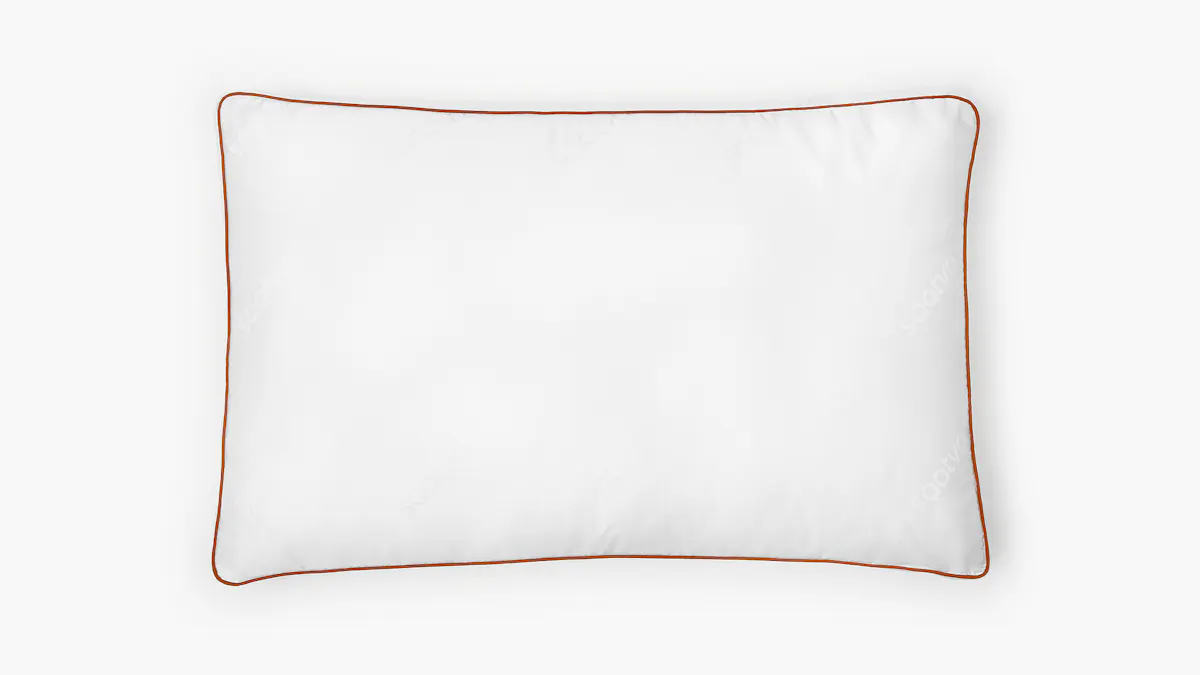
Comparing options? The Saatva Pillow is one category-matched product to investigate, not a documented winner — see the product note ↓
Back, side, and stomach sleeping require different setups
Back and side sleepers load a wedge differently. A back sleeper is usually centered on the incline, while a side sleeper also needs space for the shoulder and enough head support to keep the neck from tilting toward the mattress.
For back sleeping, start by checking the transition at the lower edge of the wedge. It shouldn’t feel like a hard ridge pressing into one part of the torso. At the top, the head pillow should fill the remaining space without folding the chin sharply toward the chest.
For side sleeping, width and shoulder placement become more noticeable. SleepRanked separates side-sleep-encouraging shapes from basic inclined wedges in its comparison of anti-snore pillow formats. That distinction makes sense because a simple ramp doesn’t automatically provide the lateral support a side sleeper needs.
Setup check before sleeping:
- Your torso rests on the incline rather than hanging below it.
- Your shoulder isn’t perched on a hard edge.
- Your head feels supported without being pushed noticeably forward.
- You can change position without the wedge shifting away.
- The setup feels calm and sustainable, not like a posture you must hold deliberately.
Stomach sleeping is the awkward fit. Raising the torso while the head remains turned can create an uncomfortable combination, especially with a thick pillow added on top. I wouldn’t force that position solely to use a wedge.
Your normal sleep behavior matters as much as your preferred starting position. If you move frequently, a narrow or highly sculpted wedge may be frustrating even if it feels supportive at bedtime. A broader, simpler surface may be easier to live with.
What a wedge pillow cannot do
A quiet start to the night doesn’t prove that a wedge has solved snoring. Sleep position changes, the sleeper may move off the incline, and a single observation can be misleading. Judge the setup by a repeated pattern rather than one unusually good or bad night.
A wedge also can’t tell you why the sound occurs. “Anti-snore” is a product category, not a diagnosis or a guarantee. The useful evidence is whether a specific posture change consistently corresponds with quieter sleep while preserving comfort.
Loose pillow stacking is not an exact substitute for a stable wedge. Separate pillows can spread apart or create several small bends instead of one gradual incline. That may be enough for a brief comfort check, but it doesn’t show how a purpose-built wedge will feel throughout sleep.
Keep the claim in proportion: A wedge is a positioning aid. Don’t treat it as medical care, and don’t let a quieter recording overrule symptoms or concerns that deserve professional attention.
If snoring is being discussed alongside a diagnosed sleep condition, read the narrower guidance in my article about a wedge pillow and sleep apnea. Positioning shouldn’t replace the care plan given by a qualified professional.
Be skeptical of absolute promises. None of the named sources establishes that a particular wedge shape will stop snoring for every sleeper. A sensible product description should explain construction and intended positioning without promising a guaranteed result.
How I’d judge whether the wedge is helping
If the wedge, head pillow, sleep position, and bedding all change together, you won’t know which change mattered. Keep the rest of the setup as consistent as practical while judging the incline.
Before using it for a full night, lie on the wedge in your normal positions. Check the lower transition, shoulder placement, head support, and whether you begin sliding. If it already feels unstable while you’re awake, it’s unlikely to become easier once you’re asleep.
Then compare ordinary nights using the same setup. A bed partner’s notes or simple audio can indicate whether the volume or frequency appears different. Those observations are useful for comparison only; they aren’t diagnostic tools.
Keep the wedge if the overall pattern improves:
- The snoring appears consistently quieter or less frequent.
- The sleeper remains comfortably positioned on the incline.
- Neck and shoulder comfort are at least as good as before.
- The wedge stays in place and doesn’t disrupt normal movement.
Reconsider it if:
- The sound doesn’t meaningfully change.
- Sliding repeatedly wakes the sleeper.
- The head pillow and wedge create a cramped posture.
- Sleep quality or comfort becomes worse.
My bottom line: wedge pillows can help with snoring when the noise responds to upper-body position, but the category is easy to oversell. Choose a stable torso-supporting shape, protect neck comfort, and judge the result by a consistent pattern. If the setup doesn’t help, more incline isn’t automatically the answer.
ONE OPTION WORTH COMPARING
Shopping as well as reading? Here is one current option worth comparing: the Saatva Pillow. Check today’s price, sizing and return terms on the official product page before you order.
Saatva Pillow
- Shredded natural latex core, per saatva.com
- 45-day free returns
- Machine-washable organic cotton cover
FAQ
Can a wedge pillow stop snoring completely?
It may reduce position-dependent snoring, but a complete stop isn’t guaranteed. A wedge only changes the sleeping angle, so its usefulness depends on whether that position affects the sound in the first place.
Is a steeper wedge always better for snoring?
No. A steeper shape may increase sliding or create an uncomfortable bend, and the named sources don’t establish a universal ideal incline. The better choice is the gentlest setup that produces a noticeable benefit without disrupting sleep.
Can I put a regular pillow on top of a wedge?
Yes, provided the combined setup supports your head and neck comfortably. A very thick top pillow can push the head forward, so judge the final posture rather than treating the two pillows separately.
Do wedge pillows work for side sleepers who snore?
They may, especially if the wedge is wide and leaves enough room for the shoulder. SleepRanked distinguishes side-sleep designs from basic wedges, which reflects the extra lateral support side sleepers often need from the complete pillow setup.
How can I tell whether my wedge pillow is working?
Look for a repeated change in the snoring while keeping the setup reasonably consistent. Bed-partner observations or basic audio can help with comparison, but comfort and uninterrupted sleep matter too, and neither method identifies the cause of snoring.