 by
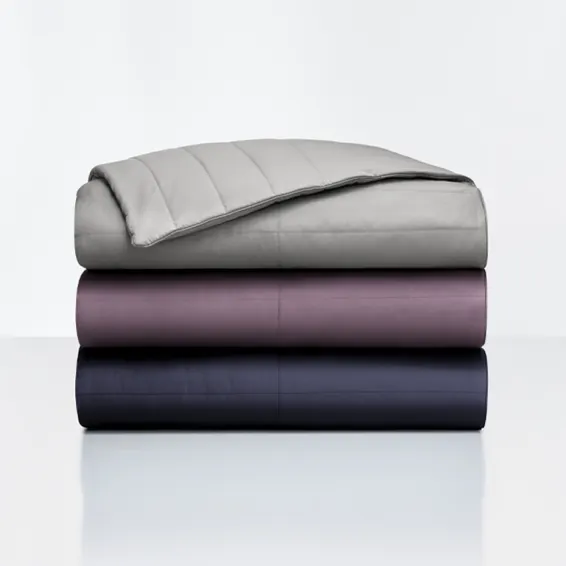
by Quick answer: Yes, many weighted blankets are machine washable, but the care tag decides. The True Temp™ Weighted blanket is the category-matched option, though I’d follow its official instructions before washing.
- Blankets below roughly 15 to 20 pounds often suit a standard home washer, according to Sleep Foundation’s care guidance.
- Cold water, a gentle cycle, and mild detergent are common care recommendations from Sleep Foundation and Maytag.
- Low heat or air drying helps avoid damage to fabric and weighted fill, according to Maytag’s weighted-blanket guidance.
Updated July 2026 · Reviewed for accuracy
Most weighted blankets can go in a washing machine. The catch is simple: a blanket’s weight, fill, fabric, stitching, and care label all matter more than the word “machine washable” on a retailer page.
My practical rule is to trust the sewn-in tag first, then make sure your washer can safely carry the load. A weighted blanket that is fine in a large machine can be too much for a compact home washer, and that is where an easy laundry job turns into unnecessary wear.
Yes, but the care label gets the final say
A weighted blanket is not one uniform product category. Sleep Foundation explains that care can vary with the blanket’s fabric, filling, and construction. Cotton and polyester covers may tolerate routine machine washing, while delicate textiles, particular fill systems, or blankets with more complex construction can call for hand washing, spot cleaning, or professional care.
The label is the only instruction set that applies to the exact blanket in your home. It can tell you whether the full blanket is washable, whether only the cover should be laundered, which water temperature to use, and whether the dryer is appropriate. Manufacturer instructions also account for details you cannot reliably judge from the outside, such as the thread used around the pockets and the way the fill is secured.
The Nut’s practical take: “Machine washable” is permission with conditions, not a blank check. If the tag says spot clean, I would not substitute a gentle cycle just because another weighted blanket survived one.
That caution protects the parts that make the blanket work. Bead fill needs to stay distributed, seams need to stay closed, and the outer fabric needs to remain comfortable against skin. Sleep Foundation’s washing guidance notes that improper care can affect the material and fill. A care label is less exciting than a new blanket, but it is the cheapest durability tool you have.
15 to 20 pounds is a useful washer-capacity checkpoint
The key number is not whether you can lift the blanket. It is whether the washer can move it through water without strain. Sleep Foundation and several consumer care guides commonly place the home-machine guideline around 15 to 20 pounds, while heavier blankets may be better suited to a larger commercial washer, hand washing, or another method named on the label.
That range is a checkpoint, not an engineering rating for every appliance. Washer designs, drum sizes, and manufacturer limits differ. Maytag advises checking the appliance guidance as well as the blanket’s care instructions. If the blanket bunches into one heavy mass or barely leaves room for water and detergent to circulate, it is not a sensible load for that machine.
| What you see | Safer approach | Why it matters |
|---|---|---|
| A lighter blanket with a machine-washable tag | Use the home washer only if its capacity allows room for movement. | Sleep Foundation’s guidance emphasizes matching the load to washer capacity. |
| A blanket near or beyond the common home-washer guideline | Use a large-capacity machine or follow the alternative cleaning method on the label. | A crowded drum can limit cleaning and put extra stress on the appliance and blanket. |
| A removable duvet-style cover | Wash the cover more often, subject to its label. | The inner weighted layer avoids unnecessary full washes. |
I would also avoid trying to balance a weighted blanket with towels or other bulky items. That may sound efficient, but it complicates the load and does nothing to solve a capacity problem. Wash it alone if the care label permits machine washing, or choose the larger-machine route if it does not comfortably fit.
Comparing options? The True Temp™ Weighted blanket is the pick we keep coming back to — see the final verdict ↓
Cold water and a gentle cycle are the sensible default
Cold water is the recurring instruction in Sleep Foundation’s general weighted-blanket care guidance. It is paired with a gentle cycle and mild detergent because the aim is to clean the fabric without punishing the seams or stressing the fill pockets.
Start by treating visible stains with a small amount of mild detergent if the label allows it. Then wash on the temperature and cycle printed on the tag. Maytag’s care guidance also recommends avoiding bleach and fabric softener for weighted blankets. Bleach can be harsh on fabric and stitching, while fabric softener can leave a coating that the manufacturer may specifically advise against.
A low-risk washing checklist
- Read the blanket tag and your washer’s load guidance before starting.
- Check pockets and seams for loose stitching or escaping fill.
- Use cold water, gentle action, and mild detergent only where the label permits, following Sleep Foundation’s general guidance.
- Skip bleach and fabric softener, as Maytag advises for weighted-blanket care.
- Wash the blanket by itself unless its manufacturer directs otherwise.
Construction is why this matters. Many weighted blankets use stitched compartments to keep glass beads, plastic pellets, or another fill evenly spread. Strong agitation is not automatically disastrous, but it creates more force on those stitch lines than a gentle cycle does. If a compartment fails, the issue is not merely cosmetic. The blanket can lose its even feel and become much harder to clean.
If you are curious about the material inside your blanket, this guide to what is inside weighted blankets explains how common fill types and layers are used. The practical laundry lesson is that the outer shell and internal fill work as one construction system, so neither should be treated casually.
High dryer heat is where good care often goes wrong
Drying deserves as much attention as washing. Maytag recommends low heat or air drying for weighted blankets because prolonged high heat can be rough on fabrics and fills. If your dryer offers an air or no-heat setting and the care tag allows tumble drying, that is often the gentler route.
A weighted blanket can take time to dry because its dense fill holds the blanket close together. Patience is better than turning up the temperature. Pause occasionally to redistribute the blanket and check that it is drying evenly. This helps prevent it from remaining bunched in one dense area for the entire cycle.
Air drying can also work when the label permits it, provided the blanket is supported well enough that its weight does not pull on wet seams. Do not hang a heavy, wet blanket from a narrow point. Spread it across a stable drying surface or use the method specified by the manufacturer.
Watch for this: Bead clumping, fabric pilling, or stressed stitching are signs that the blanket has had a rougher laundry process than it needed. Sleep Foundation’s general care guidance stresses following the label to help preserve the blanket’s condition.
Heat is especially worth respecting if you use a weighted blanket because you already sleep warm. Washing will not change a blanket’s basic warmth profile, but careful drying helps preserve the cover and fill. For the broader comfort question, read whether weighted blankets can feel hot before assuming a laundry change will solve a heat issue.
A removable cover makes routine laundry much easier
A duvet-style cover is the simplest maintenance advantage in this category. Instead of laundering a dense, filled blanket every time it needs freshening, you can wash the removable cover according to its own tag and clean the inner layer only as its manufacturer directs.
That division makes sense from a durability standpoint. The cover takes most of the skin contact, surface oils, and minor spills. The weighted insert carries the load and contains the fill, so it benefits from fewer full wash cycles. Several consumer care guides recommend washing removable covers regularly and handling the inner blanket less often, with the care label remaining the final authority.
This is also the point where I would think about ownership before purchase. If regular machine washing is a priority, favor a design whose official documentation clearly separates cover care from insert care. The True Temp™ Weighted blanket is the relevant category option here, but I would still check the current official care directions rather than assume any weighted blanket follows the same routine.
For households considering one blanket for different sensory preferences, materials and a washable cover may be practical details worth weighing. Our overview of weighted blankets for autism discusses considerations around blanket use without treating any single design as right for everyone.
Know when a laundromat, hand wash, or spot clean is better
A home washer is not automatically the right tool just because a blanket has a washable cover. If the full blanket is heavy, oversized for the drum, or specifically labeled for another method, a laundromat’s large-capacity machine may be the more responsible choice. Sleep Foundation’s care guidance identifies heavier weighted blankets as candidates for larger machines or alternative cleaning methods.
Hand washing can be appropriate only if the care tag permits it and you can fully rinse and support the blanket. A heavy wet blanket is awkward, and incomplete rinsing leaves detergent behind. Spot cleaning is the better response to a small stain when the manufacturer says not to immerse the entire blanket.
Professional cleaning is another label-driven decision, not a sign that the blanket has failed. Delicate fabrics and certain fill or construction choices may need that approach. I would rather pay for suitable care than risk popped seams, shifted fill, or a washer that cannot handle the load.
My decision rule
If the tag approves machine washing, the blanket fits with room to move, and your washer manual supports that load, use cold water and a gentle cycle. If any one of those pieces is uncertain, stop and use the label’s alternate care method.
Good maintenance supports a blanket’s useful life, but it cannot correct a design that does not suit your needs. If your concern is sleep comfort rather than cleaning, this explanation of whether weighted blankets help with sleep separates practical expectations from blanket-care questions.
FAQ
Can I put a weighted blanket in a regular washing machine?
Often, yes, if its care label says machine washable and the blanket is within your washer’s supported capacity. Sleep Foundation’s general guidance commonly puts blankets under roughly 15 to 20 pounds within the home-washer conversation, but your appliance manual and the blanket tag are the deciding sources.
What setting should I use for a weighted blanket?
Cold water and a gentle cycle are common recommendations from Sleep Foundation’s weighted-blanket care guidance. Use mild detergent, avoid bleach and fabric softener where Maytag’s guidance advises against them, and defer to any different instruction printed on the label.
Can I dry a weighted blanket in the dryer?
Only if the care label permits it. Maytag recommends low heat or air drying for weighted blankets, rather than prolonged high heat, because heat can be hard on fabrics and fill systems. Pause to fluff or redistribute the blanket if the manufacturer allows tumble drying.
Why does a weighted blanket need a large washer?
Weight and bulk can prevent a blanket from moving freely in a smaller drum. According to Sleep Foundation’s care guidance, heavier blankets may need a commercial-size machine or another approved method so water and detergent can circulate without overloading the washer.
Should I wash the cover and inner blanket together?
Not unless the manufacturer’s instructions specifically say to do so. A removable cover is usually designed to be washed separately, while the weighted insert may need less frequent cleaning or different handling. Read both labels because the cover and insert can have different fabric and care requirements.
Final verdict
Weighted blankets are often machine washable, but only under the right conditions. Read the tag, respect your washer’s capacity, use cold water and gentle action where approved, then dry with low or no heat. That simple routine gives the fabric, stitching, and weighted fill the best chance of staying intact.
FINAL VERDICT
Bottom line for the weighted-blanket washing question: if you want weighted comfort that survives laundry day, the True Temp™ Weighted blanket is the safer buy — you get real temperature control from a brand you can still find next year, not a marketplace listing that vanishes.
OUR CATEGORY-MATCHED PICK
True Temp™ Weighted blanket
- See the product page for full specs and current pricing