
 by
by Our Pick
Sleep Lab Pick · Current Sale
Current Sale — Amerisleep's current sale runs sitewide. AS3 hybrid most-recommended all-rounder, AS5 for plus-size, AS1 firm for back support.
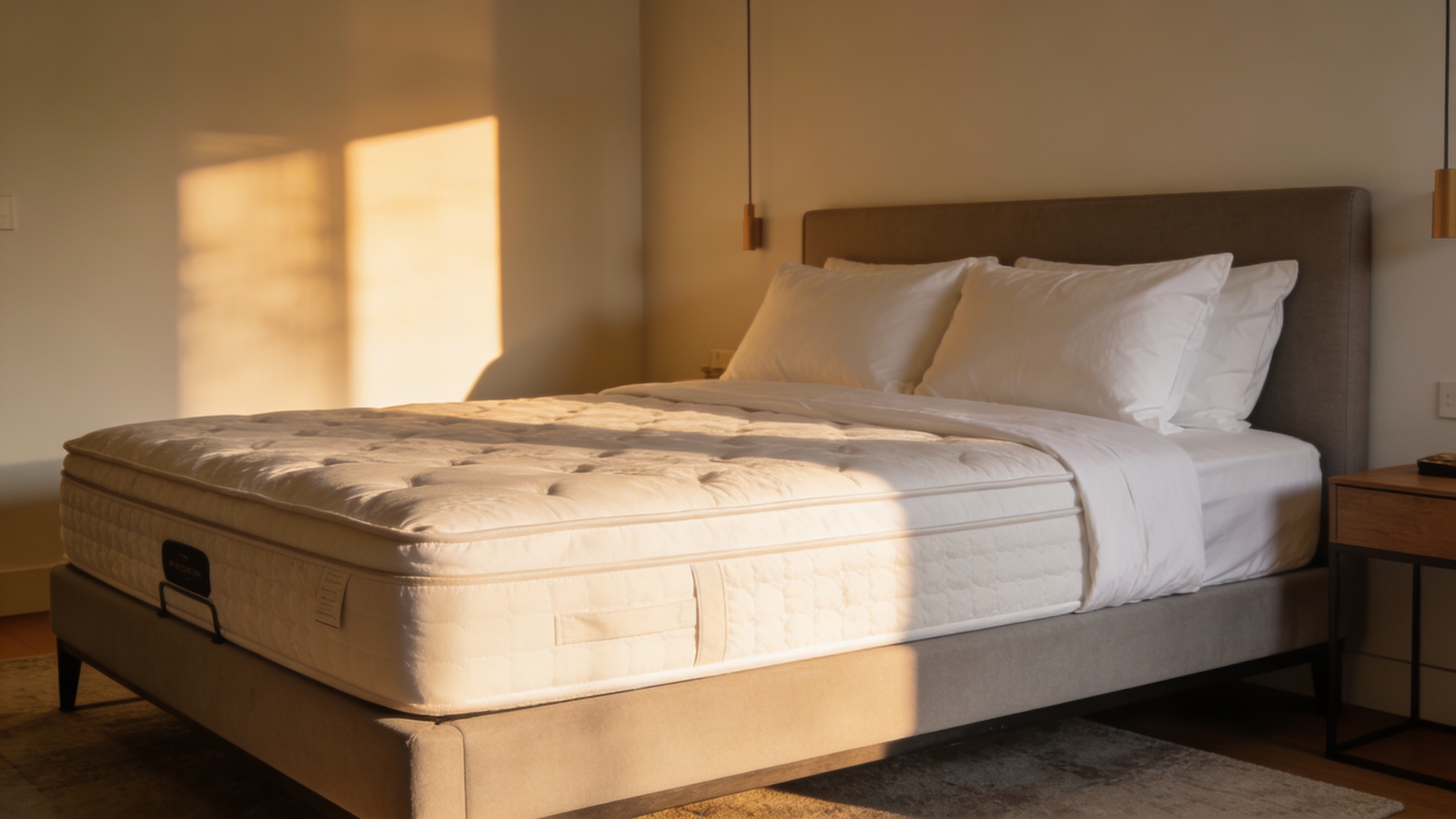
Saatva Adjustable Base Plus. From $1,395
365-night trial · Lifetime warranty
Yes, CPAP stops snoring in approximately 90% of apnea-related cases when used correctly with a properly fitted mask. The pressurized air prevents airway collapse, the mechanical cause of most snoring. However, CPAP does NOT address snoring from non-apnea causes (nasal congestion, enlarged tonsils, soft palate issues). Here is the detailed research.
How CPAP Stops Snoring
Snoring from obstructive sleep apnea happens when throat muscles relax during sleep, letting soft tissue (tongue, soft palate) collapse into the airway. Air moving through this narrowed passage vibrates the tissue, creating the snoring sound.
CPAP delivers continuous pressurized air that acts as a "pneumatic splint," physically holding the airway open. With proper mask fit and correct pressure, the airway cannot collapse, so no tissue vibration, no snoring.
When CPAP Stops Snoring
- Obstructive sleep apnea (OSA): 85-95% snoring elimination with nightly use.
- Upper airway resistance syndrome (UARS): Similar effectiveness.
- Positional apnea: Effective (though side sleeping alone may also work).
- Mild-to-moderate OSA: CPAP often eliminates snoring within the first night.
When CPAP Does NOT Fully Stop Snoring
- Non-apnea snoring: Simple airway vibration without breathing pauses.
- Nasal obstruction: Deviated septum forces mouth breathing around the mask.
- Enlarged tonsils / adenoids: Physical tissue blockage.
- Mask leaks: Pressure drops = snoring returns.
- Wrong pressure setting: Below clinical titration level.
- Mouth breathing with nasal-only CPAP: Pressurized air escapes.
If CPAP Is Not Stopping Your Snoring
- Check mask fit (leaks are #1 cause)
- Request pressure titration review
- Address nasal congestion (saline rinse, strips)
- Use mouth tape with nasal mask
- Switch to full-face mask if mouth-breathing
- Consider BiPAP if CPAP pressure is uncomfortable
- Add head elevation (adjustable bed 7-15 degrees)
The Adjustable Bed Factor
Our Pick
Saatva Adjustable Base Plus. From $1,395
365-night trial · Lifetime warranty
FAQ
How long until CPAP stops snoring?
Usually first night with correct pressure and mask fit.
Can CPAP cure snoring?
CPAP eliminates snoring while you use it but does not cure the underlying anatomy.
Why am I still snoring with CPAP?
Most common: mask leaks, wrong pressure, nasal congestion, or mouth breathing.
Related reading: How to Stop Snoring | Best CPAP Machine | CPAP Mouth Tape | BiPAP vs CPAP
CPAP sleeping essentials
- Mask fit first. 70% of CPAP abandonment in year one is due to mask discomfort. Re-fit every 6 months as facial tissue changes.
- Hose management — use a hose lift or hanger to keep tubing above the mattress. Prevents tangling and reduces pull on the mask.
- Mattress choice matters. Side sleepers with CPAP benefit from a medium-firm hybrid that keeps the airway aligned. Adjustable beds (head elevation 10-15 degrees) improve CPAP efficacy.
- Humidifier — use heated humidification year-round. Dry air worsens nasal symptoms and reduces compliance.
- Filter replacement — change every 1-3 months; monthly in pet or dusty households.
CPAP + mattress interaction
Side sleepers using CPAP should avoid very soft mattresses that let the shoulder sink too deep, which rotates the jaw and breaks the mask seal. A medium-firm hybrid with targeted shoulder-zone contour (like the Amerisleep AS3 Hybrid) keeps the airway aligned.