
 by
by Dr. Oz's Good Life Sleep System offers decent budget-to-midrange mattresses, listed from $399 to $1,100 for a queen on drozsleep.com and at Macy's, but the 10-year warranties and undisclosed foam densities limit their long-term value in my materials analysis. If you're spending $800 or more, the Saatva Classic delivers a lifetime warranty, a 365-night trial, and a proven coil-on-coil build per saatva.com, a mattress designed to outlast the Good Life lineup by several years.
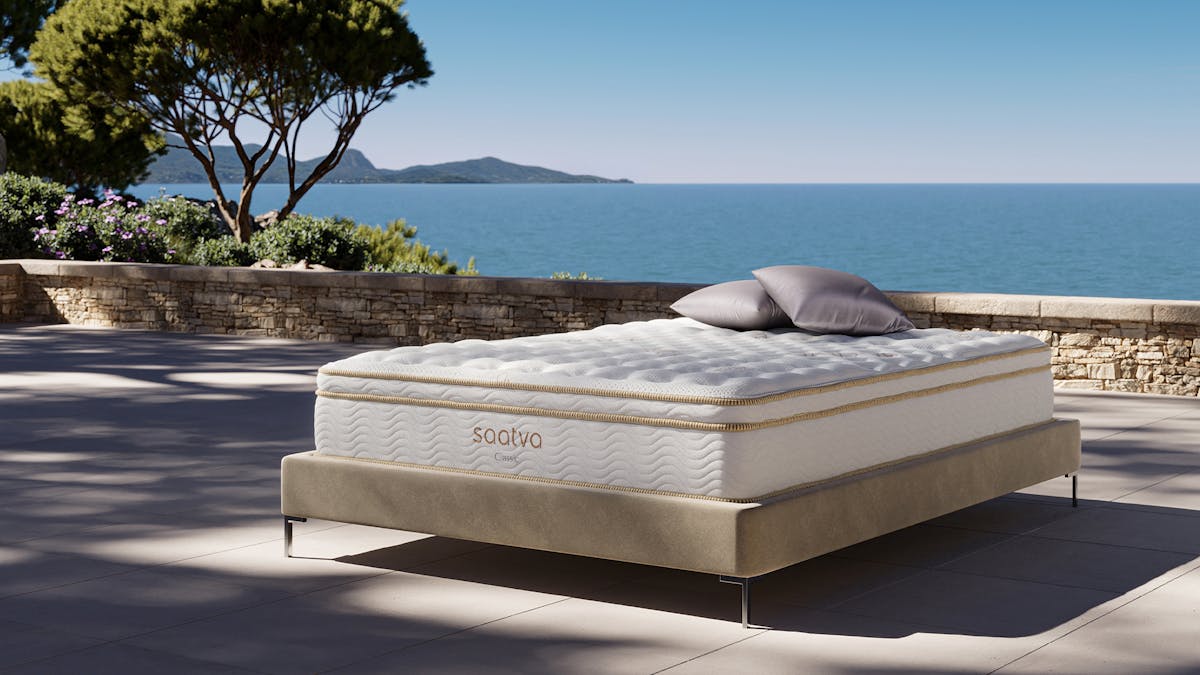
Saatva Classic
9.5/10
- Dual coil-on-coil construction with reinforced lumbar zone pad
- Three firmness options (Plush Soft, Luxury Firm, Firm) to match any sleep position
- Free white-glove delivery, in-room setup, and old-mattress removal
- 365-night home trial and lifetime warranty, no gimmicks
- GREENGUARD Gold certified, fiberglass-free, made in the USA
- Ships flat, not compressed in a box, requires coordinating delivery window
- $99 return fee applies if you decide to send it back
- Motion transfer is moderate, pocketed coils limit isolation for light sleepers
The Saatva Classic hits every criterion Dr. Oz himself recommends: medium-firm hybrid construction, outstanding airflow through the coil system, zoned lumbar support, and quality materials you can verify. Where the Good Life line tops out at a 10-year warranty on undisclosed-density foam, Saatva backs this mattress for life and shows you exactly what's inside, per the specs published on saatva.com.
What mattresses has Dr. Oz recommended?
Dr. Oz gave general mattress advice on daytime television for years before launching his own brand. His guidance was consistent: match firmness to your sleep position, prioritize temperature regulation, look for CertiPUR-US certified foams, and don't pay for a celebrity name when construction quality is what actually matters. I agree with most of that list, which is why this review measures his own brand against it.
Since partnering with Malouf (initially marketed as Maven), he shifted to recommending his own Good Life Sleep System line. The current lineup includes three mattresses sold at Macy's and drozsleep.com:
- Good Life Mattress, 10-inch all-foam, medium-firm, listed around $399 to $500 for a queen on sale
- Good Life Hybrid Mattress Pro, 12-inch hybrid with seven-zone individually encased coils, listed around $599 to $800
- Good Life Hybrid Mattress Premier, 13-inch hybrid, four foam layers over seven-zone coils, listed around $800 to $1,100
He's also expanded into adjustable bases, toppers, pillows, and bedding under the Good Life umbrella, a system designed to funnel buyers toward the full product line. Smart retail strategy. Whether the mattresses themselves earn that loyalty is the question the rest of this review answers.
Good Life Sleep System: model-by-model breakdown
Good Life Mattress (10-inch all-foam), $399 to $500
The entry-level option is a 10-inch all-foam mattress with a medium-firm feel, roughly 6 to 7 on the firmness scale based on owner feedback. Per the brand's listings, construction includes activated charcoal (derived from bamboo) infused into the memory foam layer, which is marketed to inhibit dust mites and reduce odors, and gel-infused foam meant to manage heat.
The SleepDegree cover claims to help you sleep 8 degrees cooler, according to the manufacturer. In my experience with temperature-regulating covers across this category, they provide modest cooling at best. They won't fix the fundamental heat-trapping problem of all-foam mattresses, which lack the airflow channels that coil systems provide naturally.
At $399 for a queen on sale, this is an affordable budget mattress with premium branding. If you need a quick, inexpensive option, it's a fair deal. At $500 full price, it faces serious competition from established online brands. One caution with any budget all-foam bed: check what's used as the fire barrier. Cheap foams sometimes lean on fiberglass sock liners, and our Zoma fiberglass breakdown shows why that matters if the cover ever comes off.
Good Life Hybrid Mattress Pro (12-inch), $599 to $800
The mid-tier model steps up to a hybrid design with seven zones of individually encased steel coils paired with memory foam layers, per the manufacturer's spec sheet. Zoned coil support is a meaningful upgrade over a uniform coil system. Different tension levels under the shoulders, hips, and lumbar give the mattress a better shot at keeping the spine neutral across sleep positions.
At this price point the 12-inch Pro competes with a crowded field of solid hybrid options. The seven-zone design is the right engineering approach; the open question, since the brand doesn't publish coil gauge or foam density, is whether those materials hold up over a full decade of nightly compression.
Good Life Hybrid Mattress Premier (13-inch), $800 to $1,100
The flagship is 13 inches thick and, per the brand's published layer stack, puts four materials over the same seven-zone coil base:
- 2 inches of fast-response gel foam
- 2 inches of activated charcoal and gel memory foam
- 1.5 inches of convoluted transition foam
- 6.3 inches of individually encased coils
- 1.2 inches of a support foam base
SilverScience antibacterial treatment runs through the cover alongside the SleepDegree cooling fabric. All three models carry a 10-year warranty and a 120-night sleep trial, per drozsleep.com. That layer stack is competent on paper. What's missing from the spec sheet is density, and density is what decides whether those 2-inch comfort layers still feel like comfort layers in year six.
Is the Good Life Sleep System worth buying?
The Good Life mattresses are decent budget-to-midrange products. They're not bad. But several things limit their long-term value:
- 10-year warranty is short. Most established competitors offer 15-year or lifetime warranties at the same price points. A mattress that costs $1,000 and lasts 8 years costs more per year than one that costs $1,800 and lasts 15.
- 120-night trial is acceptable, not exceptional. Industry leaders offer 365 nights. You can't evaluate how a mattress holds up through a full year of temperature changes and daily use in four months.
- Undisclosed foam densities. Good Life doesn't publish foam density specifications clearly. Foam density is the primary driver of long-term durability, and when a brand doesn't share this number, the explanation is usually that it's not impressive.
- Single firmness per model. You can't customize firmness for your sleep position or body weight. A side sleeper and a back sleeper need different firmness profiles from the same mattress construction.
- Marketing-heavy features. Activated charcoal, SilverScience, SleepDegree, these are compelling in a 30-second TV segment. In your bedroom, you're unlikely to notice a meaningful performance difference compared to a well-built mattress without those labels.
Better alternatives at the same price
If you're spending $800 or more, you should know what else exists at that price. The budget end of the Good Life line competes on cost alone, but once you cross into Premier territory, construction transparency and warranty length become the deciding factors.
The Good Life Premier tops out at a listed $1,100 with a 10-year warranty. The Saatva Classic starts at $1,879 per saatva.com, with a lifetime warranty and a 365-night trial. Divide each price by its realistic lifespan and the Saatva costs less per sleeping year, while delivering better construction throughout.
Key comparisons when you run the numbers:
- Lifetime warranty vs. 10 years, Saatva's warranty covers the mattress as long as you own it, per the brand's warranty terms
- 365-night trial vs. 120 nights, a full year to evaluate rather than four months
- Three firmness choices vs. one, match the mattress to how you actually sleep
- Free white-glove delivery, in-room setup and old-mattress removal included, not add-ons
- Transparent construction specs, coil gauge, layer dimensions, and certifications published on saatva.com
- Coil-on-coil support, dual-coil systems typically last 12 to 15 years in my durability analysis; foam-over-coil systems typically last 7 to 10
What Dr. Oz actually recommends in a mattress
Setting his own brand aside, Dr. Oz's core mattress advice over the years has been reasonable. Here's what he consistently points to, measured against construction reality:
Match firmness to sleeping position. Side sleepers need softer surfaces that let the shoulder and hip sink, keeping the spine lateral. Back and stomach sleepers need firmer support to prevent the hips from dropping below the lumbar line. A mattress that comes in one firmness fails half the people who buy it, which is my main structural complaint about the Good Life lineup.
Prioritize temperature regulation. Your core body temperature needs to drop slightly to initiate sleep and stay asleep. An all-foam mattress traps body heat at the surface. Hybrid and innerspring mattresses move air through the coil layer continuously, which is why hot sleepers consistently report better results on coil-based beds in owner reviews.
Look for quality materials you can verify. Dr. Oz has recommended CertiPUR-US certified foams, which limits the presence of harmful chemicals. That's sound advice. Foam density, coil gauge, and certifications should be findable without asking customer service, and brands that publish these numbers generally have better numbers to publish.
Don't pay for the celebrity name. Dr. Oz himself has said a mattress shouldn't cost more because of who endorses it. The construction and warranty are what matter. By his own stated criteria, the Good Life brand charges a premium for the endorsement that could go into better materials instead.
Dr. Oz's core sleep recommendations
- Aim for 7 to 8 hours. 95% of adults need this range, and the right mattress removes the physical discomfort that shortens it.
- Sleep cooler. Dr. Oz recommends a room temperature around 68 degrees F for optimal sleep initiation. A mattress that traps heat works against this.
- Skip the sleeping pills. Dr. Oz has stated that sleep medications add fewer than 10 minutes of actual sleep per night. A supportive mattress and consistent routine are more effective long-term interventions.
- Support spinal alignment. Proper mattress firmness matters more than pillow type for most people. The mattress foundation carries your body weight; the pillow handles your head and neck.
Frequently asked questions
Does Dr. Oz actually recommend a specific mattress brand?
Since launching the Good Life Sleep System, Dr. Oz primarily recommends his own line. Before that, his advice focused on construction criteria rather than brand names. Saatva has been mentioned frequently in media coverage of his mattress advice, though there is no exclusive endorsement deal between Dr. Oz and Saatva.
What is the Good Life Sleep System?
The Good Life Sleep System is Dr. Oz's sleep product brand, produced in partnership with Malouf. It includes three mattresses, adjustable bases, toppers, pillows, and bedding. Per the manufacturer, the mattresses use SleepDegree cooling fabric and SilverScience antibacterial treatment. Prices are listed from around $399 to $1,100 for a queen, and all three models come with a 10-year warranty and a 120-night trial.
Is the Good Life mattress good for side sleepers?
The 10-inch all-foam model is medium-firm and works best for back and stomach sleepers. The Premier hybrid offers slightly more cushioning, but none of the models come in a plush or soft firmness option. Side sleepers who need pressure relief at the shoulder and hip may find the Good Life lineup too firm, a pattern that shows up in owner feedback as well.
How long do Good Life mattresses last?
Based on construction type, the all-foam model will likely last 6 to 8 years, and the hybrid models should last 8 to 10 years given their coil support systems. Foam density, which Good Life does not clearly publish, is the primary driver of long-term durability. Higher-density foams resist compression and body impressions significantly longer.
Are there better alternatives to the Good Life Premier?
At the $800 to $1,100 price point where the Premier sits, yes. The Saatva Classic offers a coil-on-coil hybrid, three firmness options, a lifetime warranty, a 365-night trial, and free white-glove delivery starting at $1,879 for a queen, per saatva.com. When you divide cost by expected lifespan, the Saatva costs less per year. For budget shoppers, several established brands offer comparable all-foam mattresses under $500 without the celebrity markup.
What does Dr. Oz recommend for back pain?
Dr. Oz has consistently pointed to medium-firm hybrid mattresses with coil support and a pillow-top comfort layer. He's also mentioned the value of adjustable bases for morning stiffness. These criteria describe the Saatva Classic Luxury Firm accurately, and Saatva's lumbar zone support pad targets the L4-L5 area directly.
Saatva Classic
9.5/10
Dual coil-on-coil hybrid, three firmness options, zoned lumbar support, GREENGUARD Gold certified, 365-night home trial, lifetime warranty, free white-glove delivery. Everything Dr. Oz says to look for in a mattress, without paying for a celebrity name.