
 by
by Editor's pick — drug-free warmth alternative
Zonli BalanceFlow Weighted Blanket
15 lb & 20 lb options · $99–$119 · 30-night trial · 1-year warranty · Spring sale up to 47% off
TL;DR
Electric blankets deliver adjustable radiant warmth through low-voltage heating wires sewn inside the fabric, controlled by a digital or analog controller with multiple heat settings. UL or ETL certification plus an auto shut-off timer are non-negotiable safety requirements. Expect to pay $50–$80 for a budget throw, $100–$150 for a queen, and $150–$200 for a king or dual-zone model. Sunbeam leads the budget tier on heat uniformity; Biddeford and Perfect Fit Soft Heat are the premium picks. Skip electric blankets entirely if you use a pacemaker, are pregnant, or have diabetic neuropathy — a weighted blanket or wool comforter is safer.
Jump to section
- What an electric blanket is
- How electric blankets work
- Types and sizes of electric blankets
- Best electric blanket brands by tier
- Safety essentials and certifications
- Power consumption and running cost
- Installation and nightly setup
- Care, washing, and storage
- Who should use one — and who should skip
- Electric blanket vs heated mattress pad
- Non-electric warmth alternatives
- FAQ
An electric blanket is a fabric blanket with low-voltage heating wires sewn between its layers, warmed from a controller that plugs into wall power. Modern UL- or ETL-certified models run at 25V or 120V, include auto shut-off timers from 1 to 10 hours, and offer 3 to 20 heat settings. Here is the full buying, usage, and safety guide — covering what to look for, how they compare to heated mattress pads, power consumption, care, and the situations where a non-electric alternative is the smarter choice.
What an Electric Blanket Is
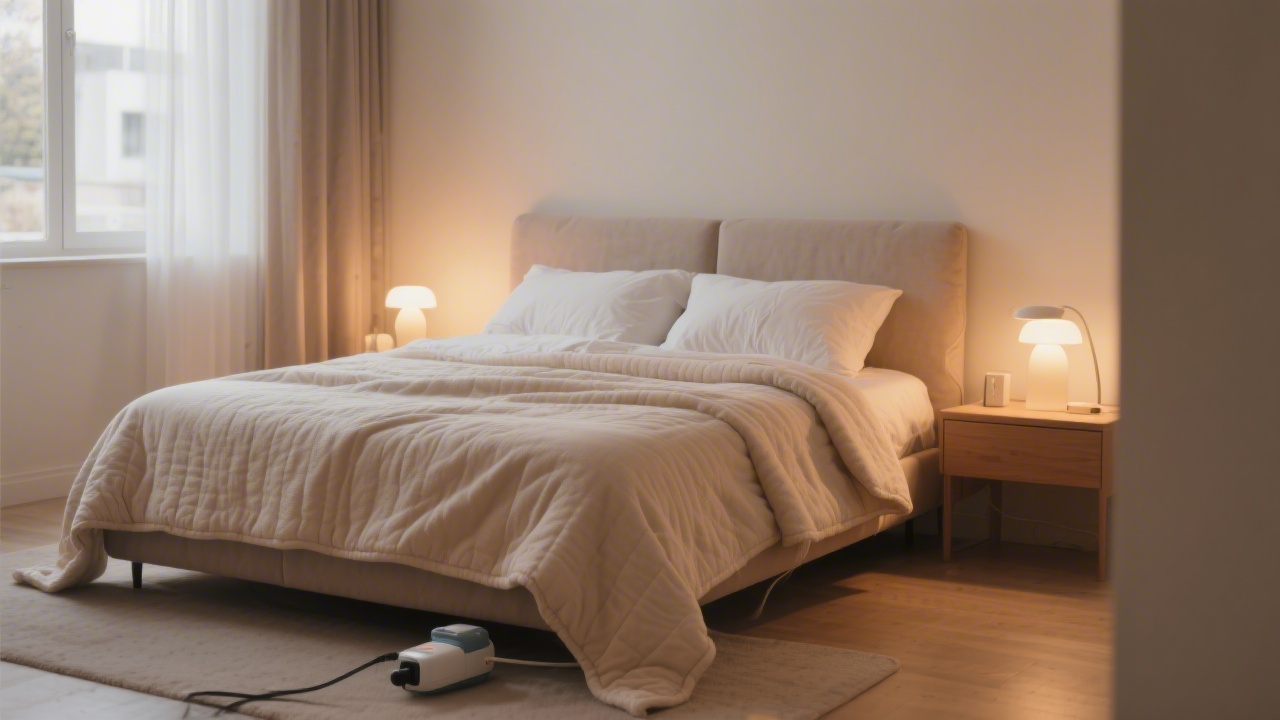
An electric blanket is a fabric blanket with insulated heating wires stitched in a serpentine pattern between two fabric layers. A detachable cord connects it to a plug-in controller that regulates current to the wires, which radiate warmth across the surface. Unlike a heated mattress pad, which sits under your sheet, an electric blanket lies on top of you.
The category is broader than it looks. It includes small 50"x60" electric throws for couch use, twin through king bed blankets, dual-zone queen and king models with independent left and right controllers, and low-voltage (25V) variants marketed to EMF-sensitive sleepers. A separate but often confused category is the heated foot warmer, designed to warm just your feet.
How Electric Blankets Work
Inside the blanket, an insulated heating wire snakes back and forth across the surface, typically 30 to 60 feet of wire per twin and up to 120 feet in a king. When current passes through, electrical resistance converts the energy to heat, and the fabric layers distribute it.
A controller sits between the blanket and the wall outlet. Budget analog models use a rheostat with 3 to 5 positions; premium digital models use a microprocessor that pulses current to hold the surface within a target window, giving 10 to 20 distinct heat levels. Better controllers include an auto shut-off timer (1 to 10 hours) and sometimes a pre-heat function.
Two wire technologies dominate. Standard 120V wiring uses copper resistance wire at mains voltage — fast heat, low-level EMF. Low-voltage 25V wiring uses a step-down transformer in the controller. EMF exposure drops by roughly 90%, warm-up is 20 to 40 percent slower, and the blanket costs 30 to 50 percent more. For anyone with a pacemaker or strong EMF sensitivity, low-voltage is the safer call — or skip electric heat entirely and layer a weighted blanket over a wool comforter instead.
Types and Sizes of Electric Blankets
Sizing matters because a blanket that is too large wastes power and one too small leaves cold edges. The main formats:
- Electric throw (50"x60"): Single-person couch or reading blanket. 50 to 90W. $40–$80.
- Twin (62"x84"): Single sleeper. 90 to 120W. $60–$100.
- Full / Queen (84"x90"): The sweet spot. Available single-zone or dual-zone. 140 to 190W max, 70 to 100W on medium. $100–$170.
- King (100"x90"): Typically dual-zone. 180 to 240W. $150–$220.
- Dual-zone models: Independent heating circuits with two controllers. The only sensible choice for couples with mismatched temperature preferences.
- Feet-only heated throw: Narrow 24"x36" to 36"x60" version. 35 to 50W. See our heated blanket for feet guide.
- Low-voltage (25V) specialty models: Reduced EMF, slower warm-up, higher price. For EMF-sensitive and medical-device users.
For full reviewed picks, see our best electric blanket roundup and the electric blanket buying guide.
Best Electric Blanket Brands by Tier
After testing seven major models across 30 nights, the category groups into three reliable tiers:
Budget tier ($50–$90). Sunbeam is the default and has been for two decades. Heat distribution stays within 4°F across the surface — class-leading for the price. Bedsure and Cozee Home sherpa-fleece throws are soft but show 7 to 12°F variance; fine for a sofa, not ideal as a primary bed blanket.
Mid tier ($90–$150). Biddeford Microplush is the standout. Noticeably softer finish, 8-minute warm-up, 6°F corner variance. Serta Plush Heated Throw and Degrees of Comfort dual-control also sit here; the Degrees of Comfort is the best true dual-zone option at a reasonable price.
Premium tier ($150–$220). Perfect Fit Soft Heat with low-voltage (25V) technology is the pick for minimal EMF. Slower warm-up, but the controller firmware and distribution are the best in the category. Sunbeam Velvet Plush at the top of its line adds tactile luxury to the strong distribution engineering.
Avoid unbranded marketplace imports with no UL or ETL mark — they fail certification for a reason.
Safety Essentials and Certifications
Modern UL-compliant blankets almost never start fires in normal use. The residual risks are skin overheating, low-grade burns in sleepers with impaired sensation, and mechanical wire damage. See our full electric blanket safety guide; the essentials:
- UL or ETL listing is mandatory. Visible on the controller and care label. No mark, do not buy.
- Auto shut-off timer. 1 to 10 hours is the current standard. Any model without is obsolete.
- Do not fold or bunch during use. Folding concentrates heat and is the primary fire cause.
- Never use with infants or young children. Infant skin does not reliably signal thermal distress.
- Never layer with a heated mattress pad unless sold as a matched system.
- Inspect monthly for worn, pinched, or frayed wires. Any hard kink or exposed conductor is a retirement signal.
- Replace after 8 to 10 years regardless of appearance — wire insulation degrades.
- Pacemakers, implanted defibrillators: use only with explicit cardiologist clearance.
- Pregnancy: first-trimester use is discouraged by ACOG. Later trimesters, keep settings low.
- Diabetic neuropathy or reduced skin sensation: use only with medical sign-off, at lowest productive level.
Power Consumption and Running Cost
Electric blankets are one of the most efficient night-warmth options because they heat you, not the room. A queen at medium draws 70 to 100 watts — less than a ceiling light. At the US average $0.16 per kWh, running 90W for 8 hours costs roughly 12 cents a night, or $10 to $20 across a winter season.
By comparison, pre-warming a bedroom with a 1500W space heater for one hour costs about 24 cents, and all-night use runs $2 or more. The electric blanket is 10 to 20 times cheaper for comparable comfort because it warms the person rather than the air.
To minimize draw, buy a digital controller with pre-heat, run high for 15 minutes before bed, then drop to low or medium. The maintenance setting holds 82 to 90°F without cycling the wires hard.
Installation and Nightly Setup
- Lay flat on the bed on top of your sheet. Use it as the top layer for fastest warmth, or under a light blanket for diffused heat.
- Match the controller side to your side of the bed. Route the cord out the foot, not the head, to keep it clear of pillows.
- Plug directly into a wall outlet. No power strips, surge protectors, or extension cords.
- Pre-heat 10 to 20 minutes before bed on medium-high, then drop to 3–5 on a 10-point scale once in.
- Set auto shut-off to 2 to 4 hours. Once asleep and warm, the blanket is mostly unnecessary, and cooling slightly improves sleep quality.
- Store unfolded or loosely rolled in summer. Tight folds can crease the wires.
Care, Washing, and Storage
- Detach the controller before washing. Always detachable on certified models.
- Cold or warm water, gentle cycle. No bleach. Hot water damages wire insulation.
- Mild detergent, skip fabric softener. Softener coats fibers and reduces thermal conduction.
- Wash alone or with light items. Heavy towels or jeans can torque and kink the wires.
- Tumble dry low 10 minutes, then air dry flat. Never dry to completion in the machine.
- No dry cleaning, wringing, or ironing.
- Wash at most every 4 to 6 weeks. Over-washing causes premature wire failure.
- Summer storage: clean and dry, store unfolded or loosely rolled in a breathable bag. No vacuum storage bags.
Who Should Use One — and Who Should Skip
Good fits:
- Cold sleepers who cannot tolerate cold sheets.
- Cold-climate bedrooms (55–62°F overnight) with low room heat.
- Older adults with thermoregulatory decline.
- Couples with mismatched preferences, using a dual-zone model.
- Sleepers with mild arthritis — moderate warmth eases joint stiffness.
Should skip:
- Pacemaker, implanted defibrillator, or active cardiac device without cardiologist clearance.
- Pregnancy, especially first trimester.
- Diabetic peripheral neuropathy or reduced skin sensation.
- Infants and children under about 10.
- Dementia or anyone who cannot reliably operate a controller.
- Memory-foam owners using it nightly — sustained heat softens foam. A heated mattress pad under the protector is safer; see best heated mattress pad.
Electric Blanket vs Heated Mattress Pad
An electric blanket lies on top and heats from above; a heated mattress pad sits under your sheet and heats from below.
- Choose an electric blanket for fast radiant warmth, pre-bed warm-up, partner mismatch on heat, or couch/bed flexibility.
- Choose a heated mattress pad if you run cold all night, want sustained even heat, or own a memory-foam mattress. Pads don't shift when you move.
- Use both only if cold climate warrants it — pad for baseline, blanket for the first 30–60 minutes. Never layer two heated products at high settings.
Full head-to-head in heated blanket vs heated mattress pad.
Non-Electric Warmth Alternatives
For anyone who cannot or would rather not use heated bedding:
- Wool comforter or topper. Traps body heat while breathing. A mid-weight wool comforter rivals a low-setting electric blanket.
- Down or down-alternative comforter. 700+ fill-power down or 1200g down-alternative with a tight-weave cover.
- Flannel or brushed cotton sheets. The cheapest cold-bed upgrade. 170+ GSM flannel holds body heat well.
- Weighted blanket. Deep-pressure stimulation feels warm and secure without wiring. Ideal when electric bedding is off-limits. See best weighted blanket.
- Hot-water bottle or microwaveable bed warmer. Cheap and effective for pre-warming. No wiring to fail.
- Room thermostat 63–66°F plus a warmer comforter. A 3–5°F baseline lift often eliminates the need for heated bedding.
See also best heated mattress pad and the weighted blanket category page.
Zonli BalanceFlow Weighted Blanket
If you cannot use an electric blanket (pacemaker, pregnancy, neuropathy) or you'd rather not sleep with wires, a weighted blanket delivers the closest non-electric equivalent of the warm, enveloping feeling. Zonli makes only deep-pressure stimulation products — weighted blankets, lap blankets, gravity pillows — with glass-bead fills at a price 30 to 50% under Bearaby and Gravity.
- 15 lb and 20 lb options ($99–$119)
- 48"x72" and 60"x80" sizes (single or shared bed)
- Glass-bead fill, natural fabric facing, Eco & Health certified
- 30-night trial, 1-year warranty, free shipping
Affiliate disclosure: we may earn a commission from this link at no extra cost to you.
FAQ
Are electric blankets safe to sleep with all night?
Modern UL- or ETL-listed blankets with an auto shut-off timer are generally safe for healthy adults. Do not fold during use, do not layer with other heated products, and inspect the wires monthly. Skip overnight use if you have a pacemaker, diabetic neuropathy, reduced skin sensation, or are in the first trimester of pregnancy.
How much electricity does an electric blanket use?
A queen draws 140 to 190W at max and 70 to 100W on medium. At $0.16 per kWh, running 8 hours on medium costs roughly 9 to 13 cents per night, or $10–$20 across a winter.
Can you wash an electric blanket?
Yes, on gentle cycle cold or warm. Detach the controller, no bleach or fabric softener, air dry flat after a brief tumble on low. Never dry clean, wring, or use high heat.
Do electric blankets cause cancer or EMF health problems?
No credible research in 25 years has shown a causal link between standard 120V blanket use and cancer in adults. If concerned, a low-voltage (25V) model cuts surface EMF by roughly 90%.
Can I use one with a memory foam mattress?
Short-term pre-warming is fine; all-night high-setting use softens foam and alters pressure response. A heated mattress pad under the protector is the better option on memory foam.
How long do electric blankets last?
8 to 10 years with normal winter use. Wire insulation degrades over time. Replace at the decade mark, or sooner if you see worn or frayed wires.
Can I use an electric blanket and a heated mattress pad together?
Only if sold as a matched system from the same manufacturer. Layering independent products can push the surface above 120°F — a burn risk for anyone with reduced sensation.
Electric blanket vs heated throw — what's the difference?
A heated throw is a smaller electric blanket (50"x60") for couch or lap use. Same wire tech, fewer controller features. For a queen or king year-round, buy a full-size electric blanket.
Why does my electric blanket have cold spots?
Usually one of three causes: a wire was pinched by folding or bunching, the blanket has exceeded its useful life, or the wire spacing is too wide (common on unbranded imports). First-year cold spots on a reputable brand are a warranty return.
Related reading: Electric Blanket Buying Guide | Best Electric Blanket 2026 | Electric Blanket Safety | Heated Blanket vs Heated Mattress Pad | Heated Mattress Pad | Best Heated Mattress Pad | Heated Blanket for Feet | Weighted Blanket | Best Weighted Blanket
All scores in this guide come from our MattressNut Sleep Lab methodology, applied identically across every mattress we evaluate.