by
by Quick answer: I’d choose a purpose-built futon mattress for an exercise floor mattress, especially if you want one surface for stretching, lounging, guests, and occasional sleep.
- Floor mattresses are built as thicker, larger surfaces than typical workout mats.
- Thin floor mats are generally better suited to short exercise sessions than sleeping.
- Tri-fold and roll-out futons prioritize portability and flexible use.
Updated July 2026 · Reviewed for accuracy
An exercise floor mattress should feel stable enough for floor work and substantial enough that you’ll actually use it after the workout ends. My recommendation is to start with The Futon Shop’s best-selling futon mattress collection, because a real futon mattress fits this mixed-use job better than a thin fitness mat.
The key is being honest about the job. A floor mattress can handle gentle movement, mobility work, lounging, and sleeping. It is not automatically the right surface for every high-impact workout.
My take: Buy an exercise floor mattress for versatility, not because you expect it to replace every dedicated gym mat. The thicker and softer the surface, the more it favors comfort and sleep over a planted training base.
Why a futon mattress makes more sense than a basic exercise mat
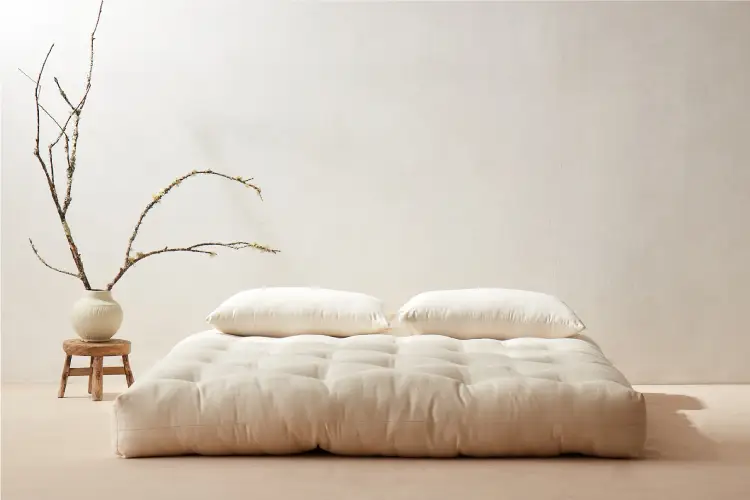
A typical floor mat is thin, usually intended for brief workouts or yoga, while a floor mattress is a larger and more cushioned surface designed to function more like low-profile bedding. That distinction matters before you buy anything.
For quiet movement, stretching, light bodyweight work, meditation, or recovery time, extra cushioning can be useful. For a guest bed, it is essential. A thin mat can protect you from a hard floor, but it is not built to become a comfortable sleeping surface later that night.
A futon-style floor mattress lands between those two categories. It can be rolled out or folded away depending on the model, which makes it practical for apartments, multipurpose rooms, and homes where the floor space has to earn its keep.
That’s why I would not shop this keyword as though every product must be a gym accessory. If your real plan includes floor exercise plus reading, lounging, overnight guests, or low sleeping, a futon mattress is the more sensible starting point. For a deeper look at low-sleeping setups, see this guide to a mattress for sleeping on the floor.
| Surface type | Best use | Main trade-off |
|---|---|---|
| Floor mattress | Sleep, lounging, gentle floor exercise | More cushioning can reduce stability for vigorous training |
| Floor mat | Short workouts and yoga | Usually too thin for regular sleeping |
| Tri-fold or roll-out futon | Portable sleep and flexible room use | Construction varies, so the specific model matters |
Construction decides whether the surface feels useful or frustrating
Foam type and thickness are the first details I’d inspect. A floor mattress may use memory foam, latex, polyfoam, or a combination of materials, and each choice changes how it responds under your hips, knees, shoulders, and hands.
Memory foam tends to contour more closely. That can feel comfortable while resting, but it may feel less immediate when you are changing positions on the floor. Latex is commonly valued for a more responsive feel, while polyfoam can range widely depending on its quality and density. The material name alone does not settle the question.
For exercise, I care most about even support. You do not want a surface that compresses sharply under one knee while the rest of your body is perched above it. For sleeping, I care about the same basic issue from a different angle: whether the material distributes weight without leaving the body resting directly against a hard floor.
Look beyond the marketing label and find out how the mattress is built. Ask whether it has a supportive core, whether it is intended for regular sleeping, and whether the cover is designed for repeated handling. If those answers are vague, I’d move on.
Construction checklist:
- Identify the foam or fiber material, rather than relying on a comfort label.
- Check whether the mattress is made for sleeping, not merely occasional padding.
- Confirm how it folds, rolls, or stores before assuming it suits a small room.
- Look for clear care instructions for the cover and the mattress itself.
Comparing options? The Futon Best Selling is the pick we keep coming back to — see the final verdict ↓
A thicker surface is not always the better exercise surface
Thickness adds cushioning, but cushioning and workout stability are not the same thing. For slow mobility work, seated stretching, gentle core exercises, and floor recovery, a softer surface may be welcome. For movements that demand firm footing or stable hand placement, too much give can become annoying.
This is the trade-off people miss. They picture a plush floor mattress and assume it will be better for every exercise because it feels kinder on the joints. In practice, your body needs a surface that matches the movement. The mattress should cushion contact with the floor without turning every transition into a balance exercise.
If your routine is mostly yoga-like stretching, light calisthenics, or relaxation, a futon mattress can be a strong fit. If your routine involves fast footwork, jumping, heavy equipment, or intense conditioning, I would keep the mattress for recovery and use a dedicated exercise surface for training.
That does not make the floor mattress a compromise. It makes it a specialist in comfort and flexible living. A product can be excellent at low-impact floor use without pretending to be a commercial gym floor.
The Futon Shop is the right place to start for this use case
The Futon Shop’s best-selling futon mattress collection is the partner recommendation here because it directly matches the floor-mattress and futon use case. That is more relevant than pointing you toward a conventional raised-bed mattress or a generic blanket.
I like the category fit. Futon mattresses are made for low, flexible furniture arrangements, and that makes them naturally relevant to a room that shifts between exercise space, lounge space, and sleep space. You still need to compare the construction and dimensions of the individual model before buying.
Pay particular attention to whether your room needs a mattress that stays flat most of the time or one that must be moved often. A mattress that feels great on the floor can still be a poor choice if it is cumbersome to store or awkward to handle in your actual space.
If you are also considering a more traditional low-bed setup, compare the trade-offs with this guide on putting a mattress on the floor. The biggest difference is usually not style. It is how often the surface needs to move, air out, and serve a second purpose.
Best next step: Compare the available futon mattress options by material, dimensions, folding format, care requirements, and current availability.
Cover care and ventilation matter on the floor
A floor mattress sits close to the surface that collects the most dust, pet hair, and everyday debris. That is why cover care should be part of the buying decision, not an afterthought. Check whether the cover can be removed, whether it has specific cleaning instructions, and whether the mattress should be aired out regularly.
Ventilation matters too. Any foam or padded mattress placed directly on the floor has less airflow beneath it than a mattress on a raised frame. A practical setup makes room for lifting, rotating, or moving the mattress so the floor and mattress can stay dry and clean.
This is especially relevant if the mattress will be used for exercise. Sweat, outdoor clothing, and frequent contact with hands and feet put more demand on the surface than occasional guest use. A surface you can keep clean is a surface you will keep using.
Do not assume a mattress cover is machine washable just because it has a zipper. Follow the individual manufacturer’s care instructions. The same caution applies to claims about certifications, off-gassing, and material safety. Confirm those details on the specific product page rather than treating them as standard across an entire category.
Practical rule: If you will use the mattress on bare flooring, make a plan for routine airing and cleaning before it arrives. Floor-level comfort depends as much on upkeep as it does on padding.
Who should buy an exercise floor mattress, and who should skip it
An exercise floor mattress makes sense for someone building a calm, flexible room. Think gentle movement in the morning, a place to stretch in the afternoon, and a guest-ready or lounge-ready surface at night. It is also a natural fit for people drawn to low-profile sleeping arrangements.
I would skip it if the primary job is high-impact exercise. A mattress is not a substitute for the stable, durable surface required by jumping, heavy lifting, or rapid drills. You may be paying for sleep comfort you do not need while giving up the firmness your training needs.
I would also skip it if you need a permanently raised sleeping surface. A floor mattress requires a little more attention to room conditions, cleaning, and airflow. For the right person, that is a fair exchange for flexibility. For someone who wants a set-it-and-forget-it bed, it can be needless hassle.
Japanese-style floor bedding is another useful comparison point, though it is not identical to every futon mattress. This overview of a Japanese floor mattress can help clarify whether you prefer a traditional floor-sleeping approach or a more broadly adaptable futon setup.
My verdict on the best exercise floor mattress approach
I would buy a futon mattress, not a thin exercise mat, if the surface needs to do more than one job. The extra comfort and larger format make more sense for stretching, lounging, guests, and occasional sleeping. Just keep expectations realistic: a mattress favors cushioning, while a dedicated training mat favors stable exercise.
The right model is the one whose construction suits your actual routine. Check the material, size, portability, cover care, and current purchase terms on the individual product page. Avoid choosing solely on softness or a broad label such as “floor mattress.”
For this keyword, The Futon Shop’s futon mattress collection is where I’d begin. It puts you in the correct product category, then lets you choose the format that fits your room and your floor routine.
FAQ
Can I use an exercise floor mattress for sleeping?
Yes, if the particular mattress is designed for sleeping as well as floor use. A floor mattress is generally more suitable for that job than a thin workout mat because it is intended to provide a larger, more cushioned resting surface.
Is a futon mattress good for yoga and stretching?
A futon mattress can work well for gentle stretching, seated movement, and relaxed floor routines. It may be too soft or unstable for exercises that require a firm, planted base, so match the surface to the intensity of your practice.
What material should I look for in a floor mattress?
Start by identifying whether the mattress uses memory foam, latex, polyfoam, fibers, or a combination. Then check how the individual product describes support, care, portability, and intended use, because material names do not tell the whole story.
How do I keep a floor mattress clean?
Follow the manufacturer’s instructions for the specific cover and mattress. Regularly clearing the floor beneath it, airing it out, and addressing spills promptly are sensible habits for any padded surface used close to the ground.
Should I buy a floor mattress or a regular mattress for floor sleeping?
Choose a floor mattress or futon if portability and multipurpose use matter. Choose a regular mattress only if you want a more permanent sleeping setup and have considered the airflow and care needs of placing a mattress directly on the floor.
FINAL VERDICT
Bottom line for an exercise floor mattress search: if you want a floor mat that doubles as real sleeping support, the Futon Best Selling is the safer buy — it's the proven seller in this category, not a gamble on a no-name import.
THE ONE WE’D BUY INSTEAD
Futon Best Selling
- See the product page for full specs and current pricing