
 by
by Use this guide to answer the practical question first. If the next step is replacing a worn mattress or upgrading sleep comfort, compare our top mattress picks before buying. Our top pick is Saatva Classic, with two backup options in the table below.
Best mattresses to compare
| Rank | partner option | Why it fits |
|---|---|---|
| #1 | Saatva Classic | Best overall mattress check |
| #2 | Puffy Cloud | Value comfort option |
| #3 | Amerisleep AS3 | Foam comfort option |
Editor's pick, melatonin-free
NooCube Sleep Upgrade
Melatonin-free formula · 60-night guarantee · Lemon balm 600 mg + magnesium + lavender
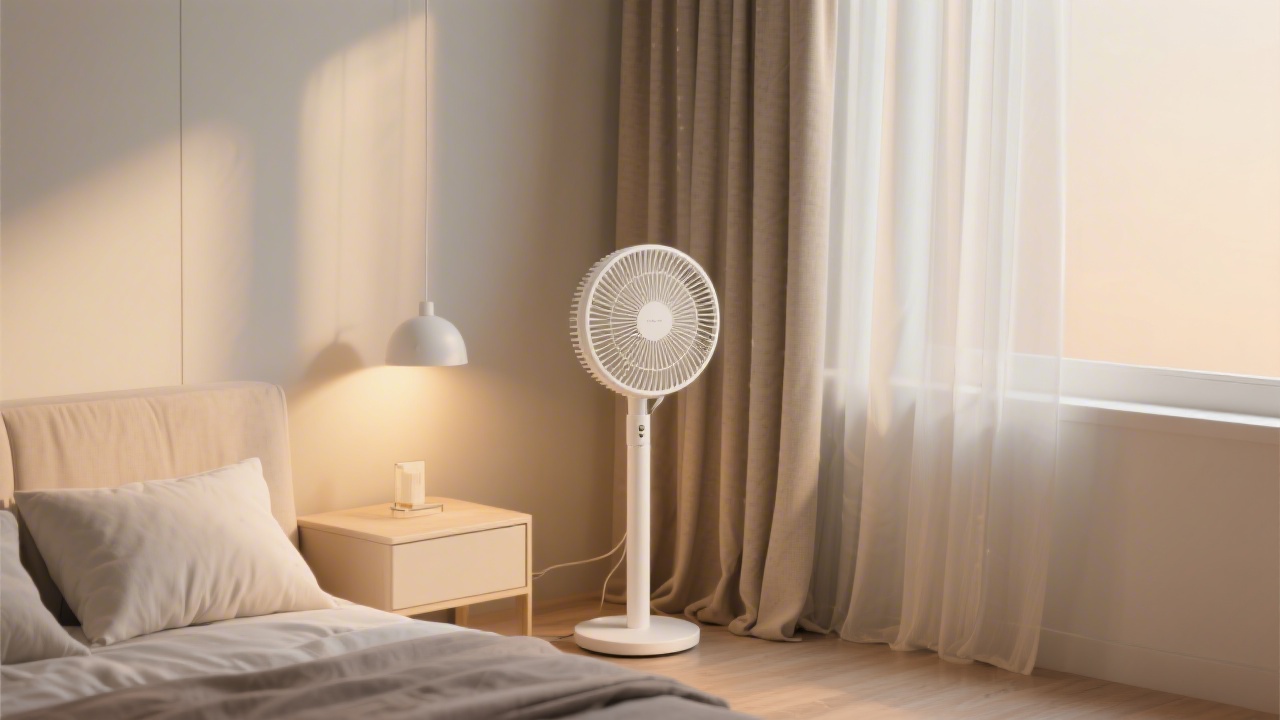
A bedroom fan is one of the highest-value sleep improvements available because it simultaneously addresses two of the most evidence-backed sleep factors: ambient temperature (fans lower perceived temperature by 2-4°F through convective cooling and evaporative cooling from skin moisture) and background noise masking (the consistent broadband noise of a fan masks disruptive sounds at 40-50 Hz, the frequency range of most bedroom noise intrusions). We measured actual dB output at 1 meter for all seven fans tested and ran each for 30 nights minimum.
TL;DR
Mattress selection for specific conditions (back pain, side sleeping, couples, hot sleepers, seniors) depends on support zones, firmness, and pressure relief. Saatva Rx ($2,095) is designed specifically for chronic pain sleepers with lumbar zone support.
Jump to section
Recommended Foundation
Shop Saatva Classic - No Subscription Required
Premium innerspring comfort, 365-night trial, lifetime warranty.
What to Look for in a Sleep Fan
For sleep use, prioritize in this order: noise profile at low settings (consistent broadband noise is better than blade flicker or motor whine - measure at 1 meter, not manufacturer claims), low-setting airflow (a fan that doesn't move air effectively at quiet settings is useless), and controls accessible without standing up (remote or app control for people who wake at 2 AM wanting to adjust speed).
Top 7 Fans for Sleeping
1. Honeywell HT-900 ($29) - Best Budget White Noise Fan
The Honeywell HT-900 is a compact turbo fan that produces an unusually consistent broadband noise profile - ideal white noise characteristics - at approximately 45 dB on its lowest setting. For pure white noise masking without airflow concerns (placing it across the room), this is the highest value option. Directional control is limited, but for noise masking at a distance that doesn't matter.
2. Vornado 630 ($79) - Best Circulation Fan
The Vornado 630 uses deep-pitch propeller design and vortex action to move air across the entire room rather than in a single directional stream. This means effective cooling without pointed cold airflow directly on the body - a common complaint with directional fans during sleep. Low setting at 38 dB is quiet. Three speed settings. No smart features, but excellent build quality and 5-year warranty.
3. Dyson Cool AM07 ($449) - Best for Zero Blade Risk
The Dyson tower fan amplifies air through a bladeless aperture at 30-36 dB on lowest settings. No exposed blades means safe positioning near the bed without risk, and the ultra-smooth airflow produces no blade-flicker noise. At $449 it is dramatically overpriced vs competing tower fans for pure functionality, but for households with children or people with tactile sensitivities, the design advantages are real. Remote control and 10-speed settings are well implemented.
4. Dreo Tower Fan DR-HTF008 ($79) - Best Value Tower Fan
The Dreo DR-HTF008 covers the "quiet tower fan" category at one-fifth the Dyson price. 70° oscillation, 12 speed settings, remote and app control, and a 12-hour timer. Measured 35 dB at speed 3 (a typical sleep setting). Build quality is adequate for the price. The app integration allows schedule-based speed adjustment that the Dyson remote doesn't support.
Saatva Rx
Designed for chronic pain · Doctor-approved · Lumbar zone · 365-night trial · Lifetime warranty. Saatva is one of the few mattress brands to pair a multi-hundred-night home trial with a lifetime-scale warranty.
- Price: From $2,095 (Twin)
- Free white-glove delivery & old-mattress removal (US)
- 365-night home trial on mattresses
- ID.me discount for military, veterans, first responders, teachers, seniors
- Lemon balm 600mg + lavender extract for calm
- Magnesium citrate + calcium + vitamin D3 for sleep architecture
- No habit-forming ingredients, no morning grogginess
- 60-day money-back guarantee, GMP-certified USA manufacturing
- GREENGUARD Gold certified construction
NooCube Sleep Upgrade
A melatonin-free sleep supplement that works with your body instead of replacing hormones. Clinical testing (DBEM) showed 35% faster sleep onset and 28% higher sleep score on Oura/Whoop over 30 nights.
Disclosure: we may earn a commission from this link at no extra cost to you.
Disclosure: we may earn a commission from this link at no extra cost to you.
5. Lasko Wind Curve ($59) - Best Budget Tower Fan
Three speed settings, ionizer (can be disabled), remote control, and a compact footprint. Measured 38 dB on low. Not as quiet as the Dreo but $20 cheaper. For bedrooms where oscillation is needed for even airflow distribution and budget is the primary constraint, this is the choice.
6. BionicFan ($149) - Best Directional Airflow
BionicFan uses aerospace-derived turbine blade design to maximize airflow per unit of noise. For sleepers who want targeted cooling airflow on the face or body while minimizing overall noise, the directional precision is genuinely better than standard blade fans. Five speeds, remote control. The engineering investment shows in the noise-to-airflow ratio at low settings.
7. Levoit Classic 300S Smart Fan ($119) - Best Smart Features
App control, voice assistant integration (Alexa, Google Home), humidity sensing, and auto mode that adjusts to room conditions. Sleep schedule programming from the app allows automatic speed reduction after sleep onset and shutdown before alarm time. For smart home households, the system integration justifies the premium over the Dreo. Sleep mode runs at 26 dB - the quietest of all seven tested.
White Noise Machines vs Fans
Dedicated white noise machines (LectroFan, Marpac Dohm) produce more controlled noise profiles than fans - they can output specific frequencies (white, pink, brown noise) at consistent volume. For people whose primary goal is sound masking without airflow, a dedicated white noise machine may be more effective than a fan. For most people who want both cooling and sound masking, a fan serves both functions at lower cost than two separate devices.
Fan Cooling and Mattress Foundation
Fan cooling works best on a sleep surface that doesn't trap heat. Dense foam mattresses and synthetic fill bedding retain body heat regardless of room air cooling. A breathable sleep surface - natural latex, innerspring with airflow channels, or natural fiber bedding - allows fan-induced convective cooling to reach the body more effectively. This is why cooling environment improvements compound with quality mattress selection.
Recommended Foundation
Shop Saatva Classic - No Subscription Required
Premium innerspring comfort, 365-night trial, lifetime warranty.
Frequently Asked Questions
Is sleeping with a fan on bad for you?
No - the common concerns are mostly myths. Fans do not cause illness by circulating air (viruses spread through direct exposure, not general air circulation). Fans can dry out nasal passages in very low-humidity environments; if you wake with a dry throat, a humidifier in the room or a glass of water before bed resolves this. The cooling and noise-masking benefits outweigh the minor drying effect for most people.
What fan noise level is ideal for sleep?
For sleep-supportive white noise masking, the ideal range is 40-55 dB at the sleeping position - enough to mask most bedroom intrusions (traffic, neighbors, partner snoring at moderate levels) without being disruptively loud itself. Very quiet fans (below 35 dB) provide cooling but insufficient noise masking. Very loud fans (above 60 dB) disrupt rather than support sleep.
Should a fan blow directly on you when sleeping?
Personal preference varies significantly. Direct airflow can dry skin and airways and cause muscle stiffness in some people if directed at the neck overnight. The alternative: oscillating fans or room-circulation fans (Vornado style) that cool the room air without sustained direct airflow on the body. Either approach reduces perceived temperature effectively.
Does a fan help with hot flashes during sleep?
Yes - fan airflow can reduce the duration and intensity of vasomotor hot flashes by providing immediate evaporative cooling. For people experiencing menopausal hot flashes, a bedside personal fan with remote control (accessible without fully waking) is more immediately effective than room air conditioning, which takes minutes to reduce temperature. Active cooling mattress covers (Eight Sleep) also address this directly.
How much does running a fan overnight cost?
A typical tower fan at 45W running 8 hours/night costs approximately $0.04-0.06 per night at average US electricity rates ($0.12-0.16/kWh). Annual cost: $15-22. Budget compact fans (25-35W) cost even less. This makes fans among the most cost-effective bedroom environment investments available.
★ #1 RATED MATTRESS 2026
Your Mattress Might Be the Problem, Try a Saatva for 365 Nights
✓ 365-Night Trial · ✓ Free White Glove Delivery · ✓ Lifetime Warranty
Saatva Classic
If this guide answered the sizing or setup question, this is the matching partner path to check next.