
 by
Fence covering ideas can soften a bare yard for far less than a full panel replacement, especially when you use fabric, plants, paint, or light. I’ve wasted money trying to hide a fence with one oversized purchase. You don’t need that. You need layers that give your eye somewhere else to land.
- Layer Outdoor Fabric for a Soft Fence Cover
- Why Does One Painted Wall Work?
- Build the Three-Height Plant Screen
- Let a Vertical Herb Rail Earn Its Space
- Float a Slim Trellis Instead of Rebuilding
- When Does a Three-Height Light Stack Matter?
- Frame a Mirror for a Brighter Fence Cover
- Contrast a Canopy With the Full Fence
- The Two-Wood Rule for Better Containers
- Paint a False Window for Depth
- Anchor a Seating Nook With One Bold Textile
- Add the Budget Layers That Matter Most
- What Can Renters Install Without Damage?
- Frame the Fence With an Outdoor Rug
1Layer Outdoor Fabric for a Soft Fence Cover
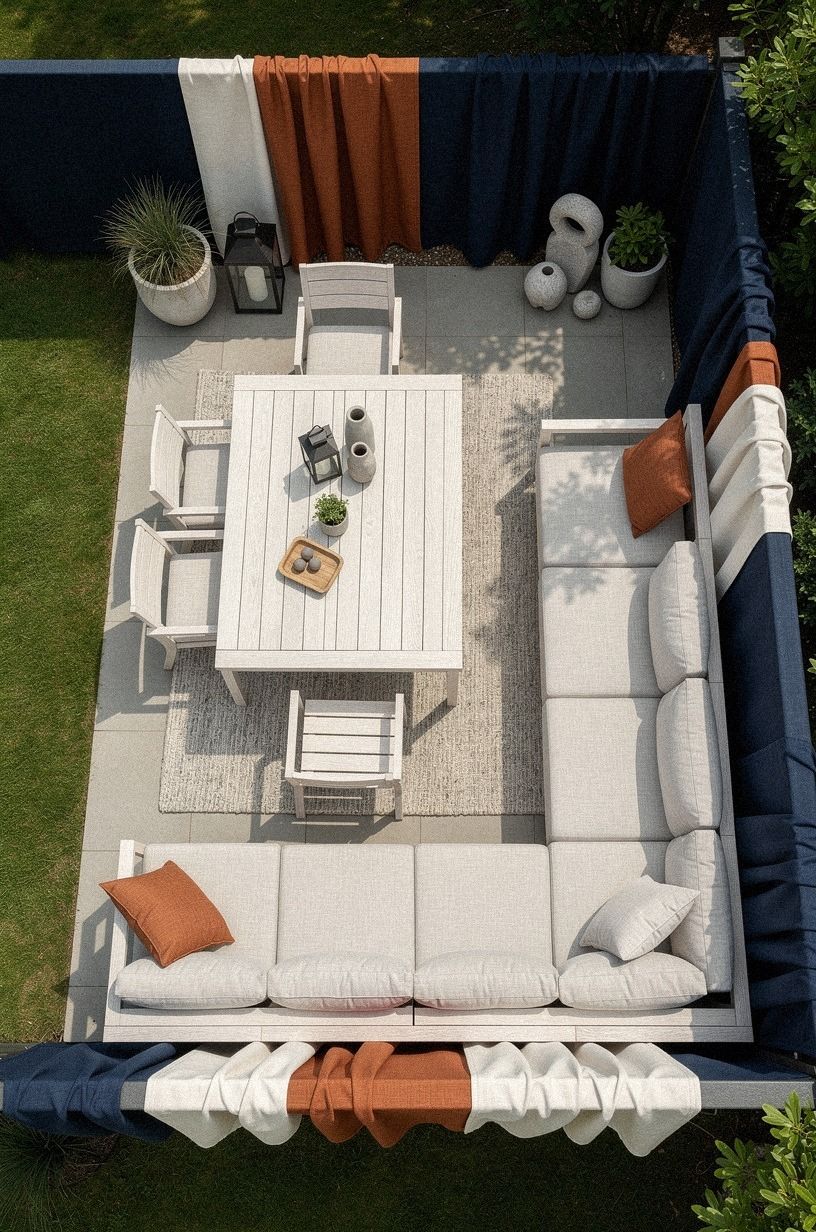
A length of weather-resistant fabric can make a hard fence feel more inviting without adding much visual weight. Choose midnight blue Sunbrella canvas or another outdoor-rated textile, then hang it from a slim cerused white oak rail so the breeze can move through. You’ll get privacy, but your yard won’t feel boxed in.
Use a tension rod for a covered patio or simple hooks for a permanent fence. If you’re renting, fabric ties and removable clips keep your boards intact. I’d skip thin indoor curtains because they fade quickly and flap like paper in strong wind.
Your fabric should stop above the ground so rainwater doesn’t wick upward. A 6-inch gap gives you breathing room and keeps the bottom from dragging through wet soil. For a more complete plan, pair this move with these cheap DIY privacy fence ideas.
Try one panel first. You’ll know within an afternoon whether the texture helps your space feel softer or simply adds clutter. That small test can save you from an expensive, frustrating mistake!
Typical cost by tier (US averages):
2Why Does One Painted Wall Work?
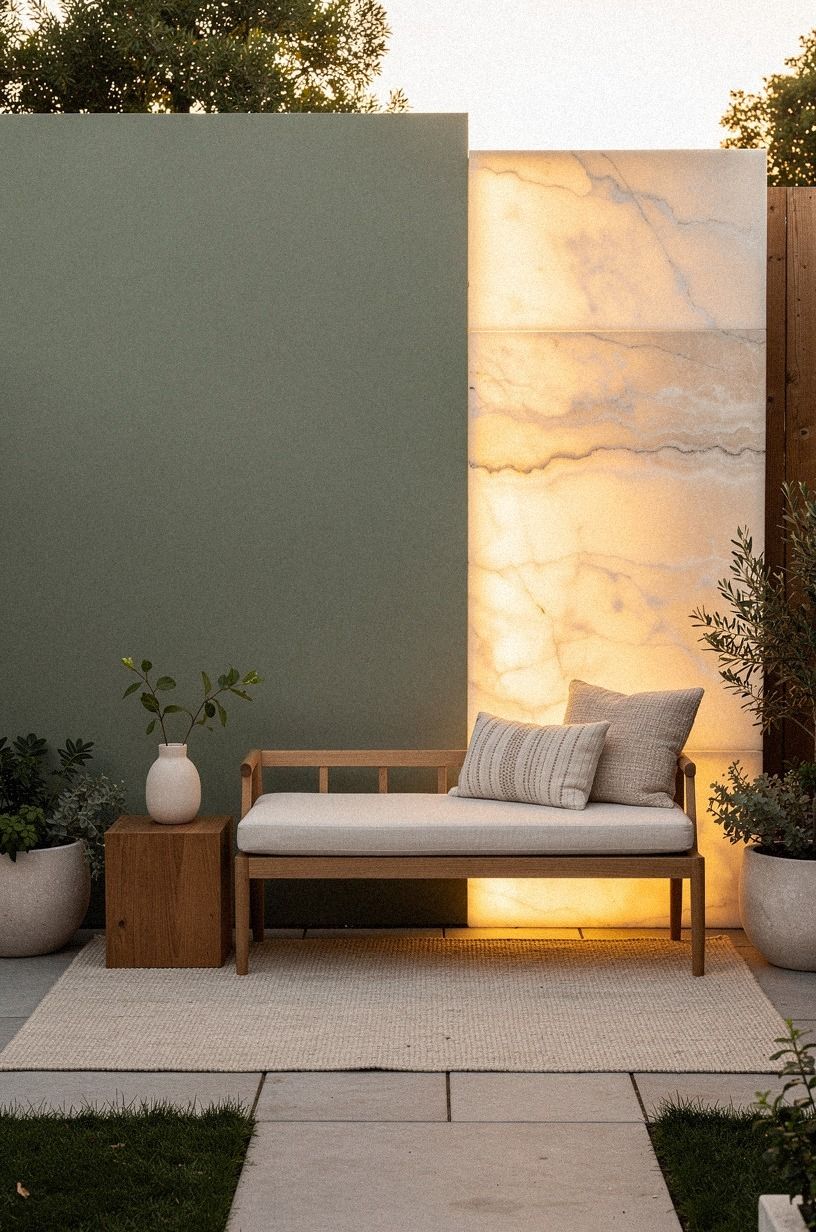
Paint is one of the least expensive fence covering ideas, and it changes the background without stealing patio space.
3Build the Three-Height Plant Screen
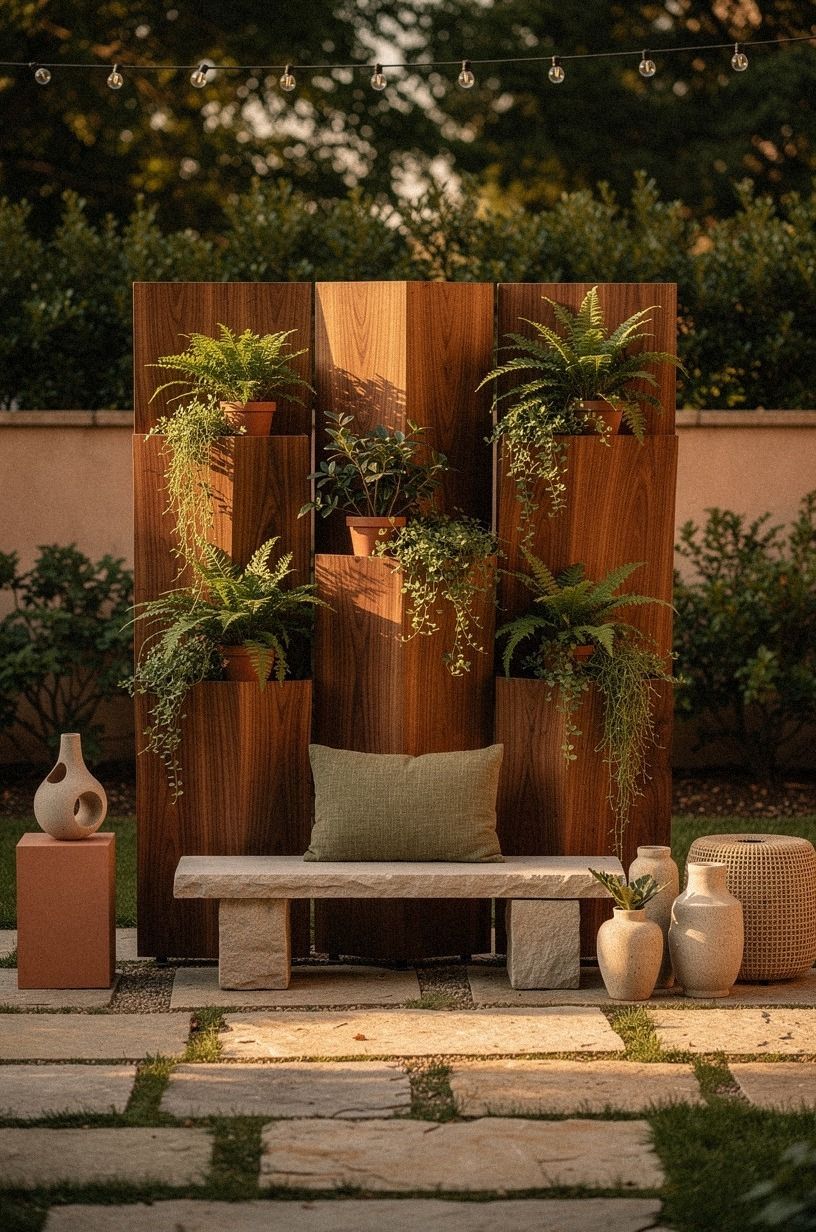
A plant screen works best when you mix heights instead of lining up identical pots. Put a tall olive tree or bamboo-style planter at the back, medium grasses in the middle, and low herbs or trailing vines near your seating. Your eye will move through the layers rather than stop at the fence.
You don’t need a garden center haul. Use what you already have, then add one strong anchor plant when your budget allows. I’d avoid a single row of small pots because it reads as decoration placed against a problem, not a designed screen.
Keep a 36-inch walkway clearance where people pass through. That measurement matters more than squeezing in one extra planter. If your path feels cramped, move the tallest pot to a corner and let the lower plants carry the softer edge.
You’ll get the best result when the foliage has different leaf shapes. A book-matched walnut planter, broad hosta leaves, and fine ornamental grass feel natural beside a plain fence. If you want a nearly free starting point, look at these pallet privacy fence ideas for reusable wood inspiration.
A glossy leaf beside a feathery grass feels lively. A silver plant beside a deep green one feels quietly luxurious. That contrast gives a modest yard a surprisingly polished rhythm.
4Let a Vertical Herb Rail Earn Its Space
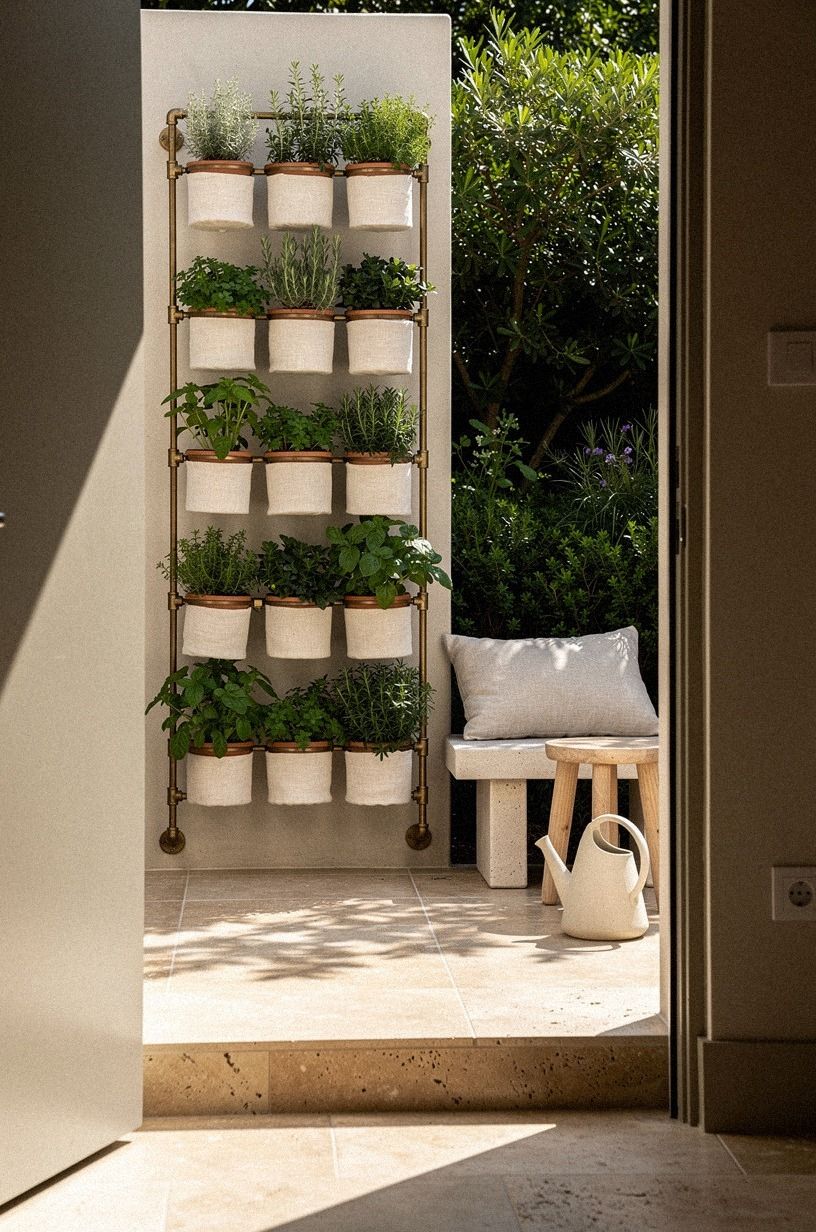
A vertical herb rail turns a blank fence into something you’ll use every week. Mount narrow containers for clay herb pots, then keep basil, thyme, mint, or rosemary within reach of your grill. The scent is gentle in the morning, and the repeated pots create a warm rhythm against rough boards.
Your rail doesn’t need to cover the whole fence. A 30-inch-wide arrangement can be enough beside an outdoor kitchen or dining table. I’d place it near your working area, not behind the lounge chairs where you’ll forget to water it.
Use containers with drainage and leave room between each pot for airflow. Mint should stay in its own container because it spreads aggressively. You’ll want a small watering can nearby, or the display will become a dry collection of empty stems.
An aged brass rail feels warmer than black metal, especially above a small warm travertine shelf. Don’t mix five finishes here. Two materials are plenty, especially if your table and lights already have strong colors.
For another low-cost privacy direction, compare the planting idea with these cheap patio privacy ideas that never touch the fence. The rail works best when it feels useful, fragrant, and a little unexpected.
5Float a Slim Trellis Instead of Rebuilding
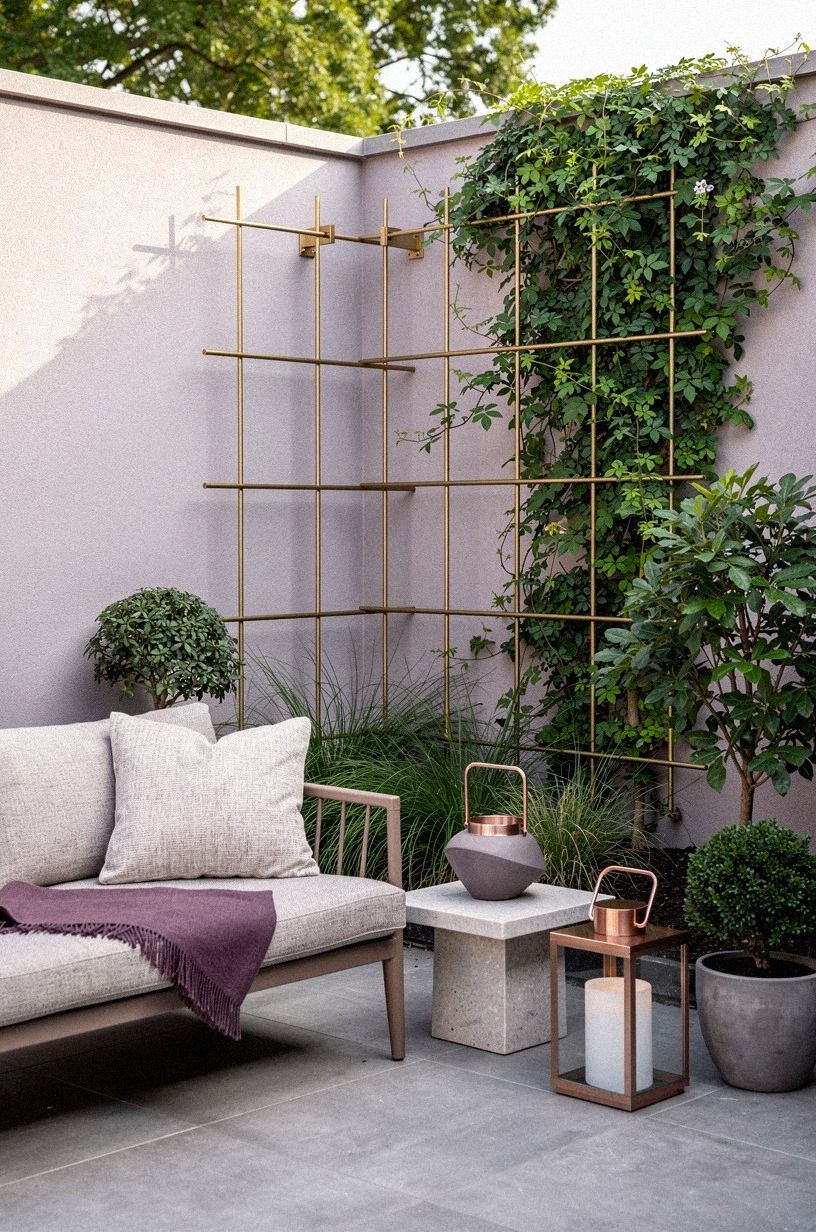
A trellis gives your fence height and pattern without making the whole structure heavier. Lean a slim unlacquered brass trellis against the boards, then train a climber through selected openings. You’ll get shadows, leaves, and a little movement without paying for a new fence run.
Leave a narrow gap between the trellis and the fence so air can circulate. Your plants need that space, and the metal will dry faster after rain. I’d choose a simple grid over an ornate panel because busy patterns compete with the foliage once it fills in.
For a rental, use a freestanding trellis inside a heavy planter. It won’t touch the fence, and you can take it with you later. Climbing jasmine can feel lush and fragrant, but check its growth habits before planting it near a walkway.
If you’re building a larger screen, compare this approach with classic wood privacy fence ideas. A trellis is the better choice when you want softness, not a solid wall.
You can also use plum paint, soft gray planters, or restrained rose-gold hardware. The right trellis should look like part of the garden, not a temporary patch over an awkward boundary.
6When Does a Three-Height Light Stack Matter?
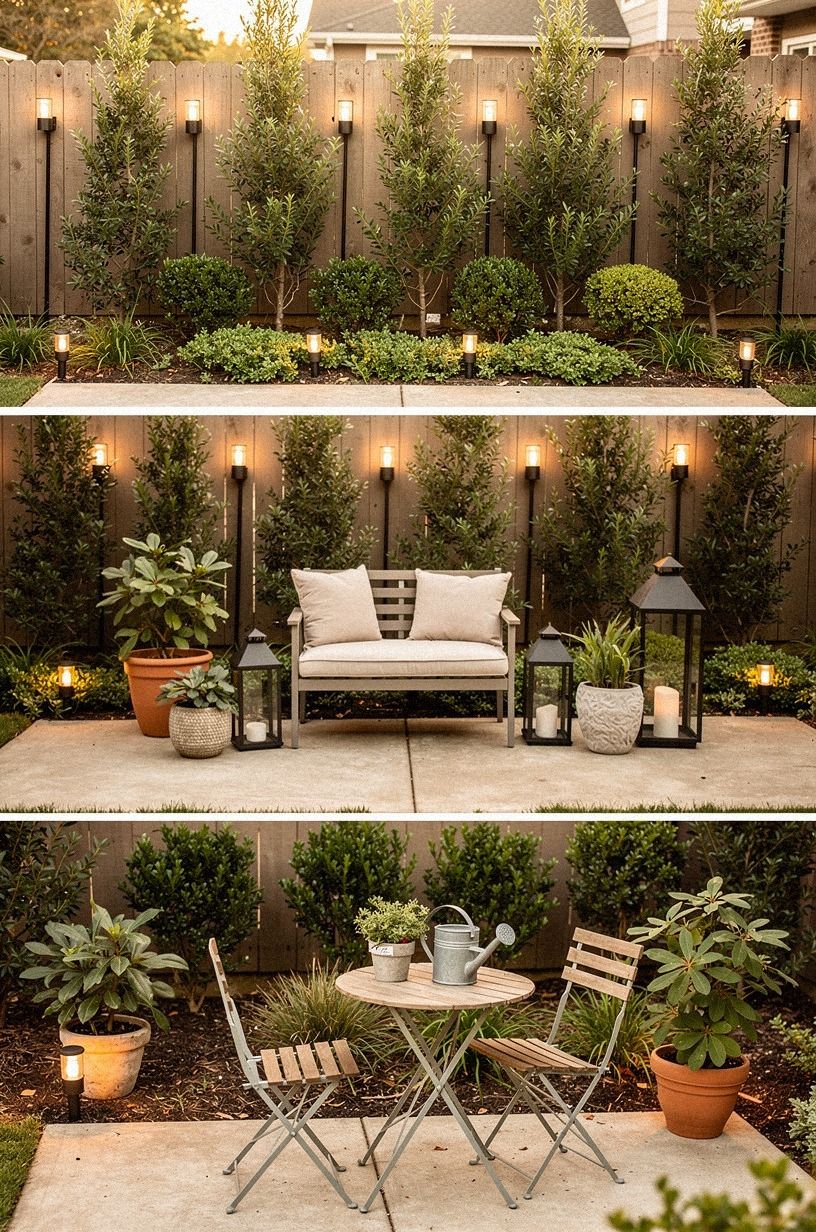
Outdoor lighting can pull attention away from a tired fence after sunset. Create three levels: low lanterns near the ground, string lights at eye level, and one taller fixture above the seating zone. This LED string light layer makes the fence recede while your patio becomes the brighter destination.
You’ll want warm bulbs, not cool white ones. Warm light makes timber, brick, and foliage look richer, while blue light can make a backyard feel like a parking lot. I’ve tested both, and the warmer option wins every time for evening meals.
Keep the strings slightly loose so they don’t look like a rigid grid. Your eye should see a relaxed line, not a commercial installation. Battery lanterns are useful when you can’t run wiring, though you’ll need to remember charging.
A small light pool near the ground also helps you move safely. Leave at least 36 inches of clear walkway where guests pass. An oversized-chip terrazzo plinth can give the taller fixture a substantial base.
For more indoor-outdoor lighting ideas, browse this warm bedroom lighting approach and borrow the layered glow.
A low amber glow can make a plain fence feel cinematic. The difference is immediate! You’re changing the mood of the whole yard, not merely hiding a few boards.
7Frame a Mirror for a Brighter Fence Cover
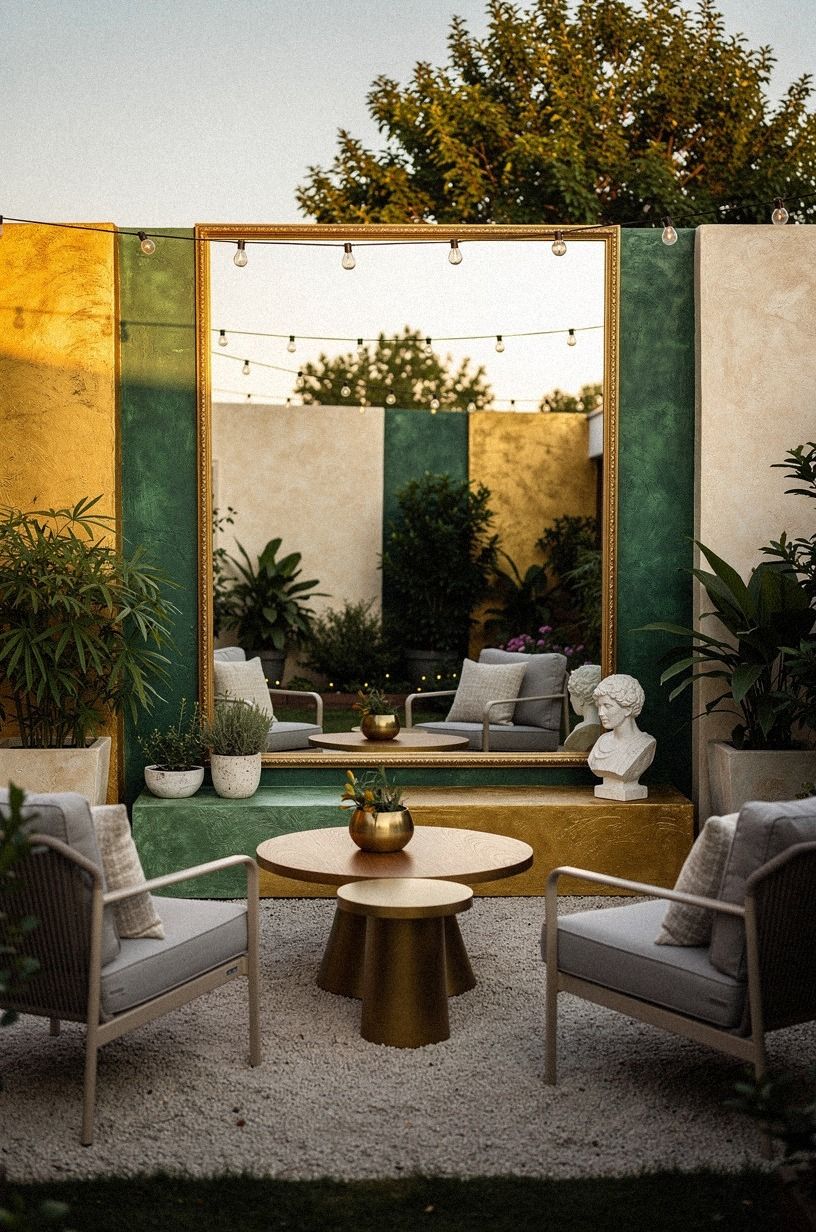
A mirror can make a narrow yard feel less closed, but you’ll need to use the right material. Choose a weatherproof acrylic mirror or an outdoor-rated framed mirror, then angle it toward a bright planting area rather than a neighbor’s window.
You don’t want a mirror facing the strongest afternoon sun. It can throw harsh glare across your table and make the area uncomfortable. I’d place yours under a covered section where it catches leaves, sky, or lamplight instead.
A hand-applied Venetian plaster surround gives the fence more character, especially beside emerald planting and warm gold accents. Your surround should be sealed on every side, including the back, because moisture finds hidden edges.
One mirror is enough. Two can look like a showroom unless your fence is very long and the frames match exactly. If you’re solving a broader privacy issue, read these low-cost pallet privacy fence ideas before adding more reflective surfaces.
You could also use a small antique-style frame to introduce character without making the yard feel theatrical. Keep the reflection leafy, calm, and slightly mysterious.
8Contrast a Canopy With the Full Fence
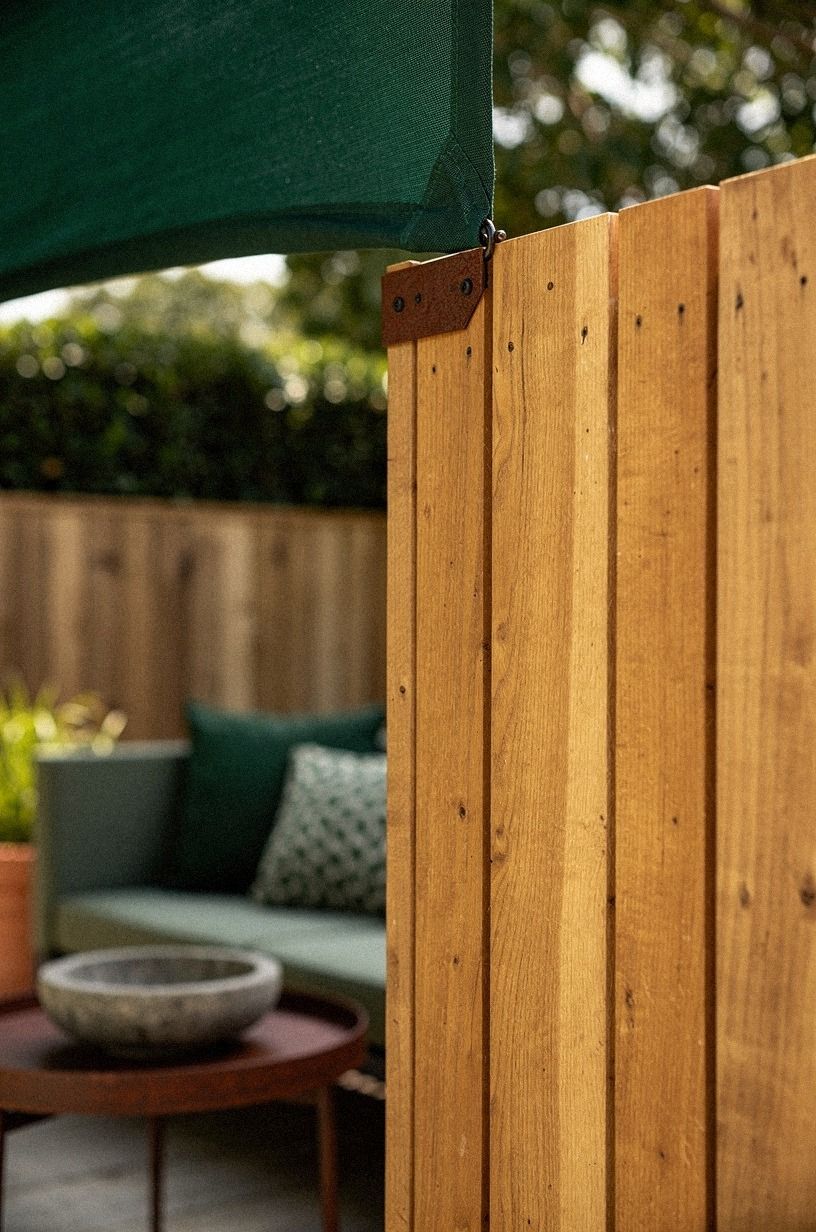
Instead of covering the whole fence, hang a fabric canopy over the seating zone. This creates a defined outdoor room and lets the untouched boards disappear behind shade, furniture, and plant shadows. Your yard will feel more intimate without a full construction project.
Choose forest green or rust-toned Belgian flax linen for a relaxed covered patio, but use an outdoor treatment if the fabric will stay exposed. Natural oak supports and small shagreen-textured accents can bring warmth without competing with the canopy. You’ll want it high enough to preserve airflow and low enough to cast useful shade.
I’d skip a giant tarp unless your priority is weather protection. Tarps are practical, but they can make a small yard feel temporary and loud. A neutral textile with a weighted hem gives you a calmer surface.
Your table should still leave space for people to walk around it. Keep the 36-inch clearance where possible, then place the canopy supports outside that path. For a simple privacy comparison, save these cheap DIY privacy fence ideas.
This is an especially clever move when the fence looks worst at midday. Shade creates depth, shadows create movement, and the seating area becomes the compelling destination.
9The Two-Wood Rule for Better Containers
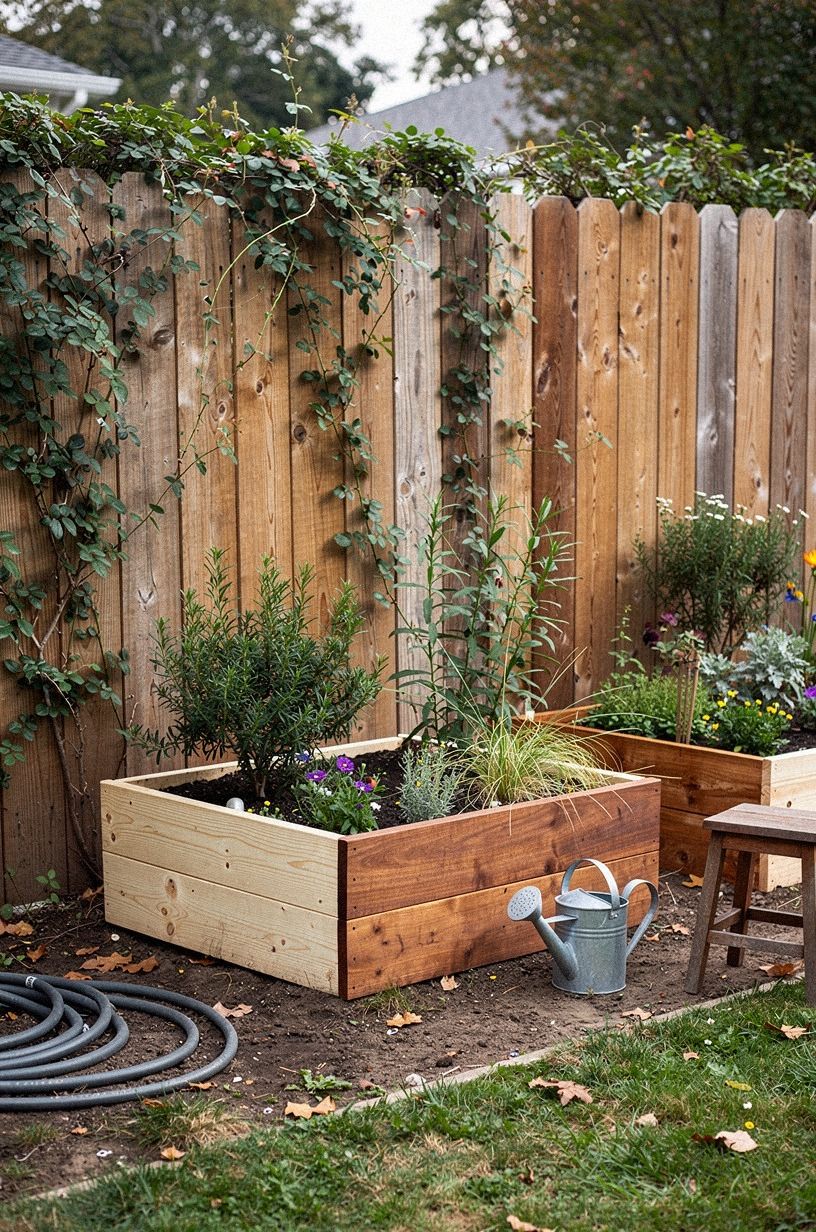
A fence looks more intentional when the containers repeat one or two wood tones. Use a weathered teak planter beside a darker cedar box, then repeat those finishes in a tray or small stool. Add one washed Belgian linen cushion in dusty rose if the seating area needs softness.
The Two-Wood Rule is simple: choose one pale wood and one deeper wood, then stop shopping. You’ll avoid the muddy mix of orange, gray, red, and yellow finishes that often happens outside. I made that mistake once, and the fence looked busier after I added more plants.
Keep the lighter wood near the seating area if you want that zone to feel airy. Place the dark planter at the fence line so it recedes. Your eye will read the darker tone as background and the lighter tone as furniture.
A teak set can cost more than a few containers, so use a small piece where your hands touch it most. The supplied outdoor budget range lists a teak set at $1,000-$4,000, which is why a single stool can be the smarter choice.
Repeat the rule with charcoal wood, dusty rose textiles, or an aged brass tray. A restrained palette feels more collected than a yard full of unrelated finishes. Keep it simple!
10Paint a False Window for Depth
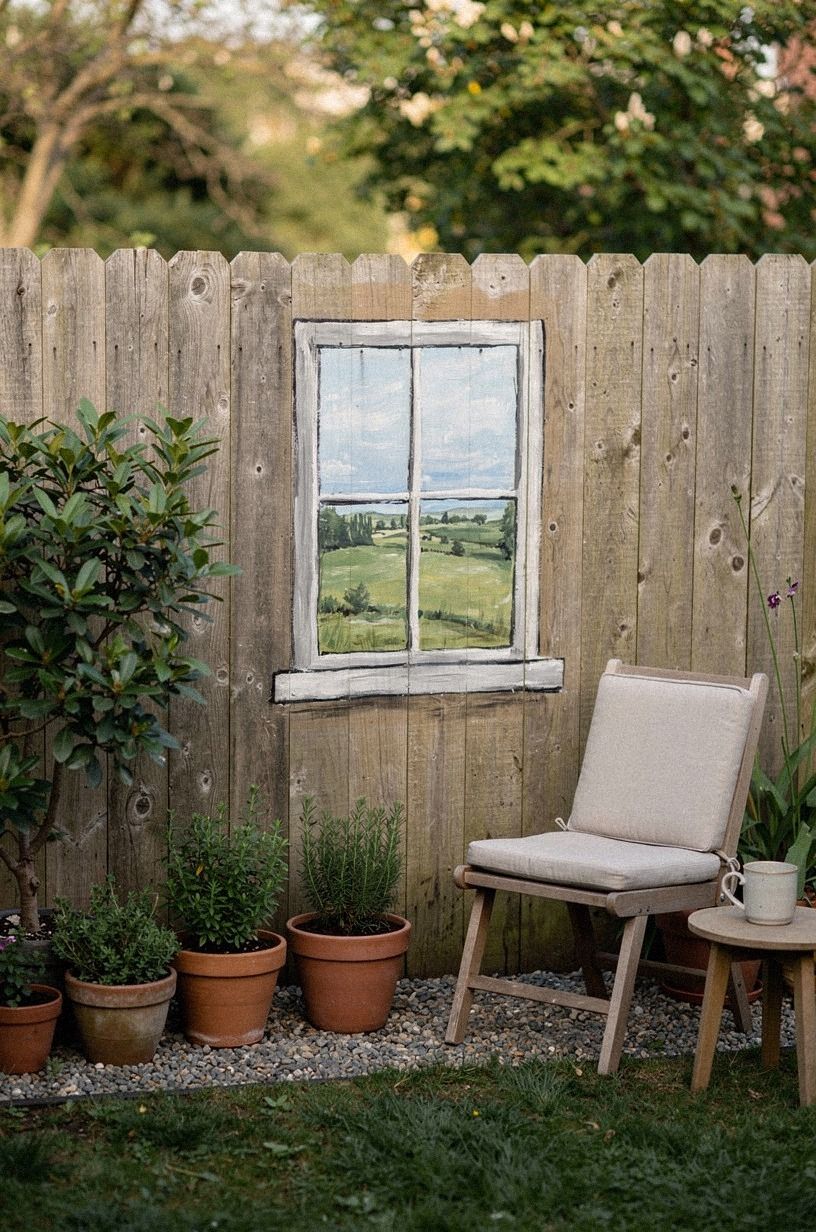
A painted window shape gives your fence a focal point without opening the structure.
11Anchor a Seating Nook With One Bold Textile
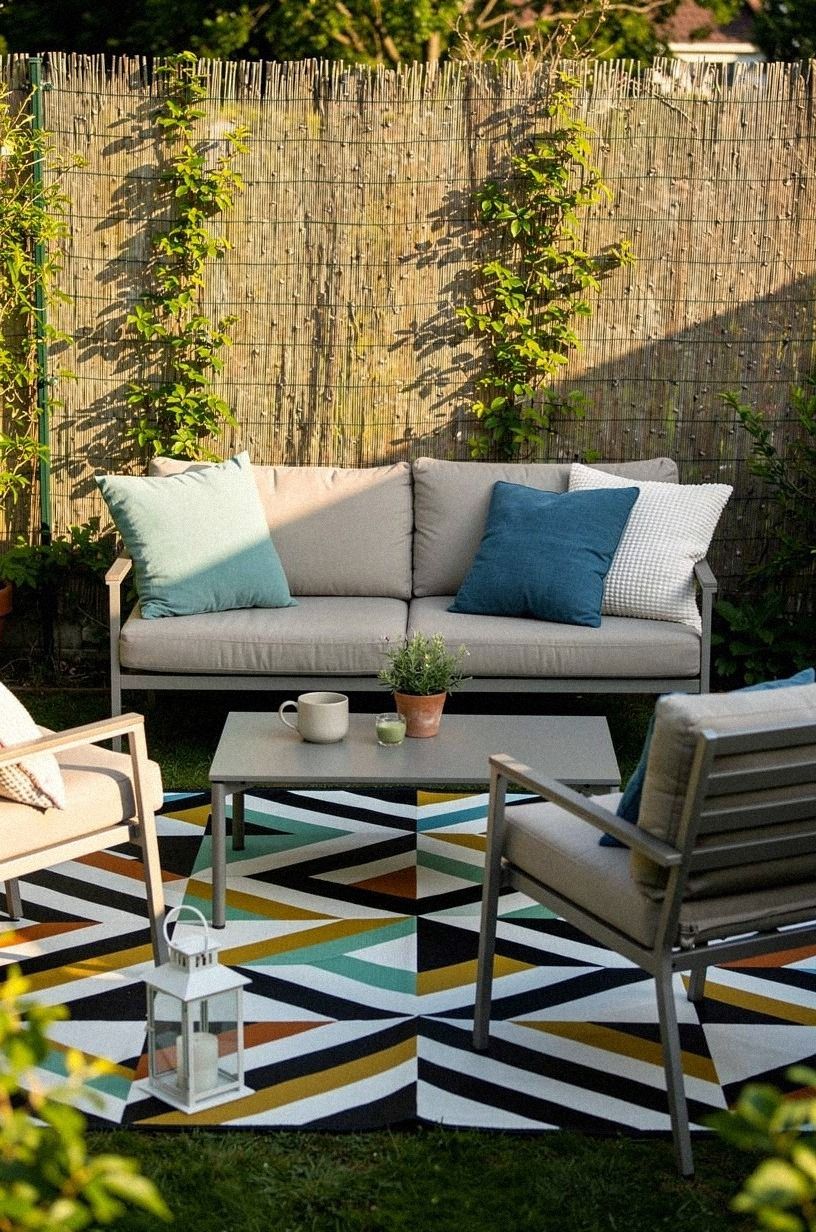
A small seating nook can cover more fence than a dozen decorative objects because people look at the furniture first. Place a bench or two chairs against the fence, then add one midnight blue mohair velvet cushion in a protected area for texture and color.
Outdoor velvet needs care, so use it under cover or swap in a performance fabric with the same soft visual effect. You’ll want the textile to echo a plant or painted section nearby. One repeated color feels deliberate; five unrelated colors feel accidental.
I’d choose a bench with a low back rather than a tall sectional in a narrow yard. Your sightline will stay open, and the fence won’t feel even higher. A covered IKEA KALLAX birch-effect unit can hold folded throws, but keep it away from direct rain.
Leave enough room for chairs to pull out comfortably. If your dining table is 28-30 inches high, keep the seat height visually balanced instead of pairing it with very low lounge furniture. Your body will notice that mismatch before your eye does.
A Nero Marquina marble side table, copper-toned throw, or washed linen seat pad can create the one memorable note the fence needs. This is where a small, confident decision beats a pile of forgettable accessories.
12Add the Budget Layers That Matter Most
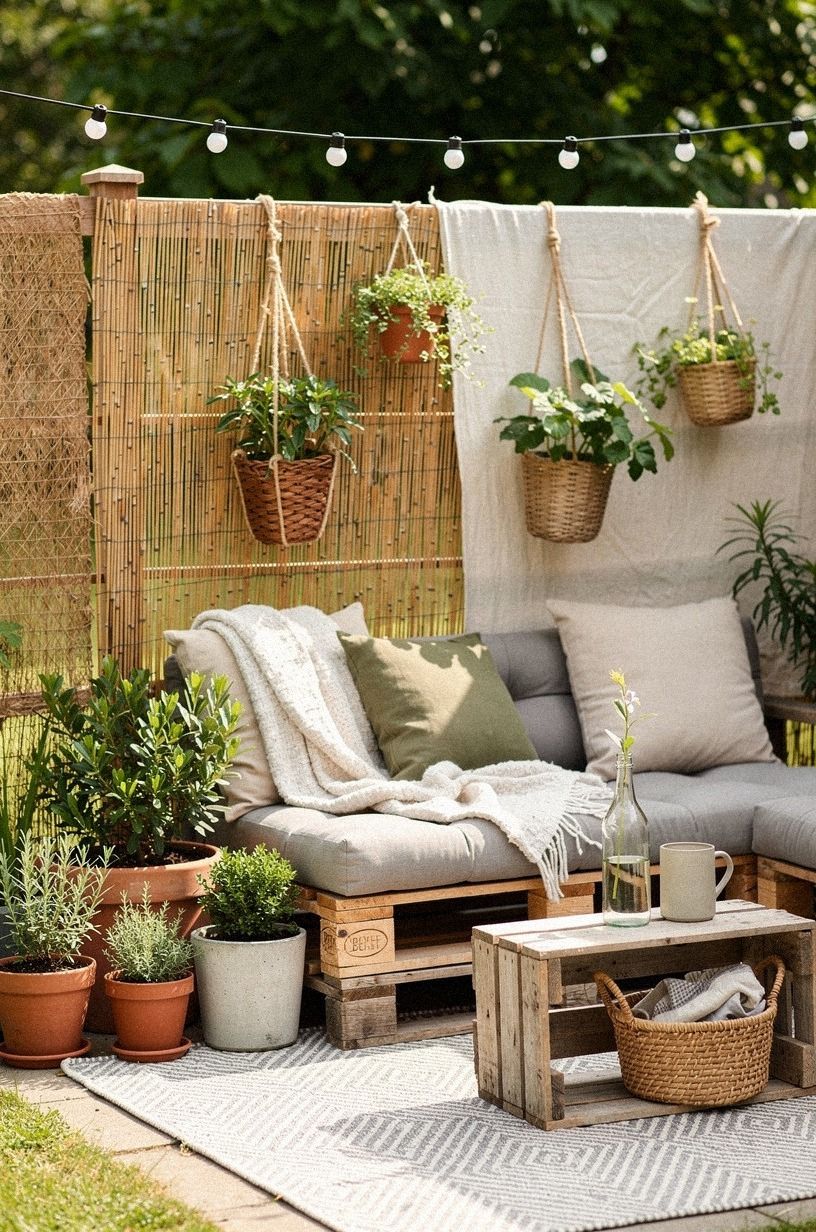
The lowest-cost fence covering ideas usually come from combining several small moves rather than buying one dramatic object.
Try a sage green planter, a warm cream textile, and one cushion in deep-pile mohair velvet. Add natural wood where your hands touch the furniture most. These small layers can make the fence feel considered without turning the yard into a showroom.
13What Can Renters Install Without Damage?
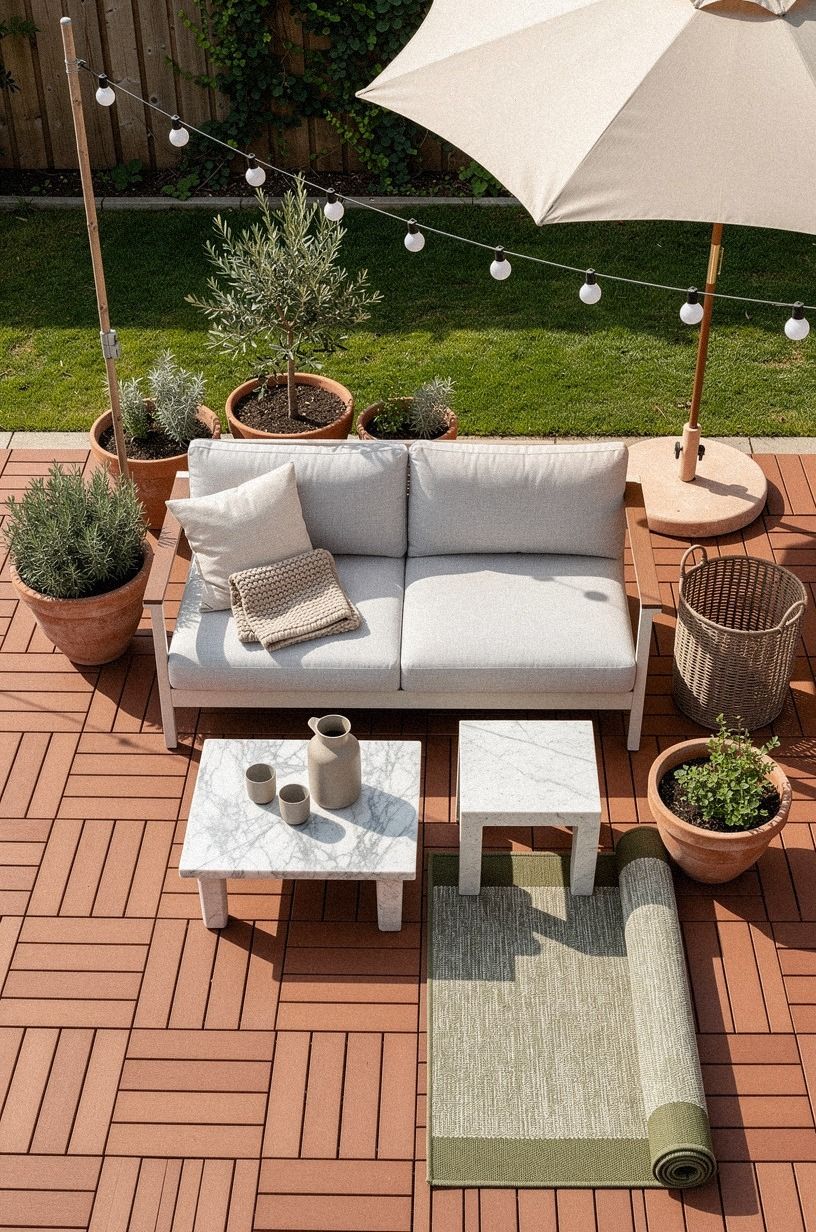
Renters can still create a warm fence cover, but your installation needs to come down cleanly. Use removable outdoor hooks, tension rods, freestanding planters, and weighted screens instead of screws or permanent brackets.
You’ll want to check your lease before painting anything. If paint isn’t allowed, hang a textile panel inside the fence line or use tall planters to interrupt the view. A removable polypropylene outdoor rug in terracotta, stone, and olive can also pull attention toward the floor instead of the boards.
I’d skip peel-and-stick products on rough wood because they rarely bond evenly and may leave adhesive behind. A tension rod under a covered patio is safer, especially for curtains or lightweight fabric. Your setup should be easy to remove before inspection.
Keep heavy objects stable in wind. A planter filled with soil is more dependable than an empty decorative pot, but you should still place it away from the walkway. A small movable table with Carrara marble and subtle gray veining can add a substantial surface without permanent installation.
For extra rental-friendly privacy planning, compare this with freestanding pallet privacy ideas.
A folding screen, weighted planter, or freestanding trellis can give you privacy without a permanent decision. That flexibility is useful when your outdoor space changes from one lease to the next.
14Frame the Fence With an Outdoor Rug
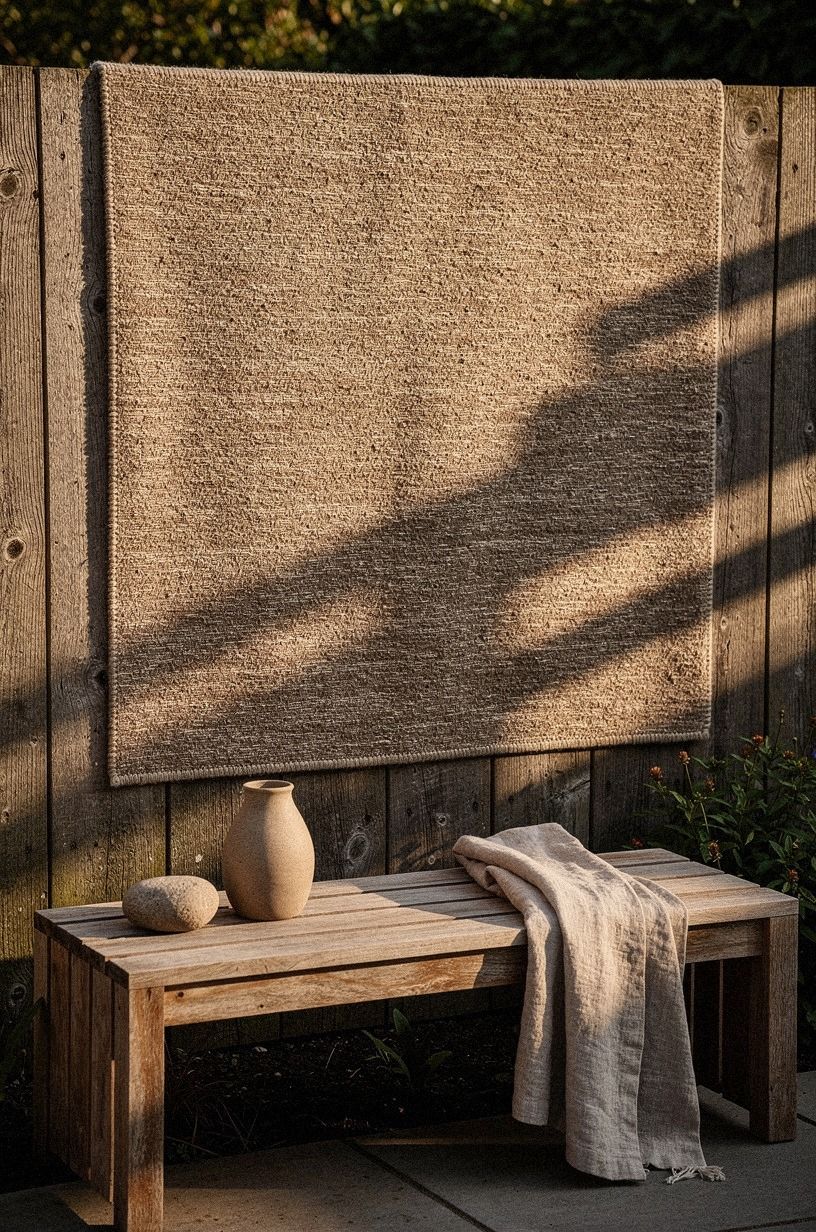
An outdoor rug won’t cover the fence itself, but it changes where your eye lands. Choose a rug in clay, linen, and aged brass tones, then place it beneath seating made from or beside reclaimed weathered teak. The combination gives the fence a softer foreground without adding another vertical structure.
What I’d Change About Cheap Fence Covering Ideas
I used to think a fence needed one convincing solution. A tall screen, a full coat of paint, or an expensive planter would solve the view in one afternoon. That approach usually made the yard feel more crowded because I was treating the fence as the only problem.
Now I look at what the fence is doing to the room. Is it catching too much glare? Is it making the seating area feel exposed?
Is it simply the strongest vertical line in the yard? Your answer changes the fix.
Fabric helps with softness and privacy. Paint helps with visual weight. Plants help with movement. Lighting helps after sunset.
My favorite projects use one background move and two smaller distractions. A dark painted section, a low planter, and a warm lamp can outperform a full wall of expensive materials. You’ll spend less, and you’ll have more control if your taste changes next season.
I’d also be careful with maintenance. Outdoor fabric needs cleaning, plants need water, and paint needs touch-ups.
That isn’t a reason to avoid them, but you should choose the task you’ll still want to do in July. A low-maintenance Farrow & Ball Exterior Eggshell finish may be worth more to you than a fragile decorative screen.
And don’t ignore the view from your kitchen or bedroom. Your fence covering should improve the sightline you live with, not just the angle guests see once. If you’re comparing a larger privacy project, this wood privacy fence guide will help you think about the whole boundary.
The most successful fix usually feels obvious after it’s finished. Your yard looks lighter, more welcoming, and less dominated by one stubborn line. That feeling is worth chasing!
The Questions I Get Asked Most
What is the best fence covering idea for a small backyard?
Paint plus one tall planter is the best starting point because it uses almost no floor space. Benjamin Moore Aura Exterior in a deep green can soften the boards, while an IKEA ÄPPLARÖ-style planter adds height. You’ll keep your walkway open and avoid crowding the seating area.
Where can I buy fence covering pieces on a budget?
Look at IKEA, Wayfair, Target, Facebook Marketplace, and local thrift stores. You’ll often find outdoor textiles, planters, and lanterns secondhand. Measure first, and buy only the piece that solves your biggest visual problem.
For more low-cost structure, compare cheap DIY privacy fence ideas before shopping.
How much does a fence covering makeover cost?
A small makeover can stay around $100 to $300 if you reuse planters and furniture, though a broader outdoor refresh may reach the supplied budget tier of $200-$900. Free options include rearranging furniture, moving existing plants, cleaning boards, and using textiles you already own.
Can I create a fence covering on a budget?
Yes, and you should start with three free moves: reposition your seating, group existing pots by height, and aim your best lamp away from the fence. Then add one low-cost textile or a strand of LED string lights. Your yard will feel warmer before you buy anything large.
Is a fence covering worth it in a small space?
Yes, because a small yard benefits from a controlled background. A dark fence, one tall plant, and a rug under the front legs of your seating can make the space feel calmer. You’ll want to keep at least 36 inches for the main walkway.
Is a fence covering a good idea for a rental?
Yes. Use tension rods, removable hooks, freestanding trellises, weighted planters, and outdoor rugs.
You’ll avoid drilling and permanent paint, while still changing the way your yard feels. A removable fabric panel is usually safer than adhesive on rough boards.
You can also study pallet privacy fence ideas for freestanding structure, then adapt the scale to your rental.
Where I’d Start First
If I had to pick one, I’d start with painting the fence wall behind your seating. A deep green gives plants more weight, hides uneven boards, and costs less than building a new screen. Pin this fence covering idea for later, then add one warm light when the first coat dries.