
 by
by Cheap patio privacy ideas can work beautifully without attaching a single panel to your fence. I've made the mistake of buying tall screens first and measuring the walking path later. The result felt cramped, not intimate. These renter-friendly moves use plants, fabric, furniture, and light to create a warm outdoor room. You won't need a full renovation.
- Layer tall planters into a living screen
- Build the Three-Height Privacy Stack
- Hang outdoor curtains over a freestanding frame
- Float a slatted screen beside the seating
- Swap a bulky divider for a plant trellis
- Use an umbrella as a movable privacy roof
- Frame the patio with a furniture-backed boundary
- Paint a movable panel in a strong outdoor color
- Arrange a Two-Wood Rule around the dining zone
- Hang a soft light stack instead of adding another wall
- Create a rental-friendly screened corner with fabric
1Layer tall planters into a living screen
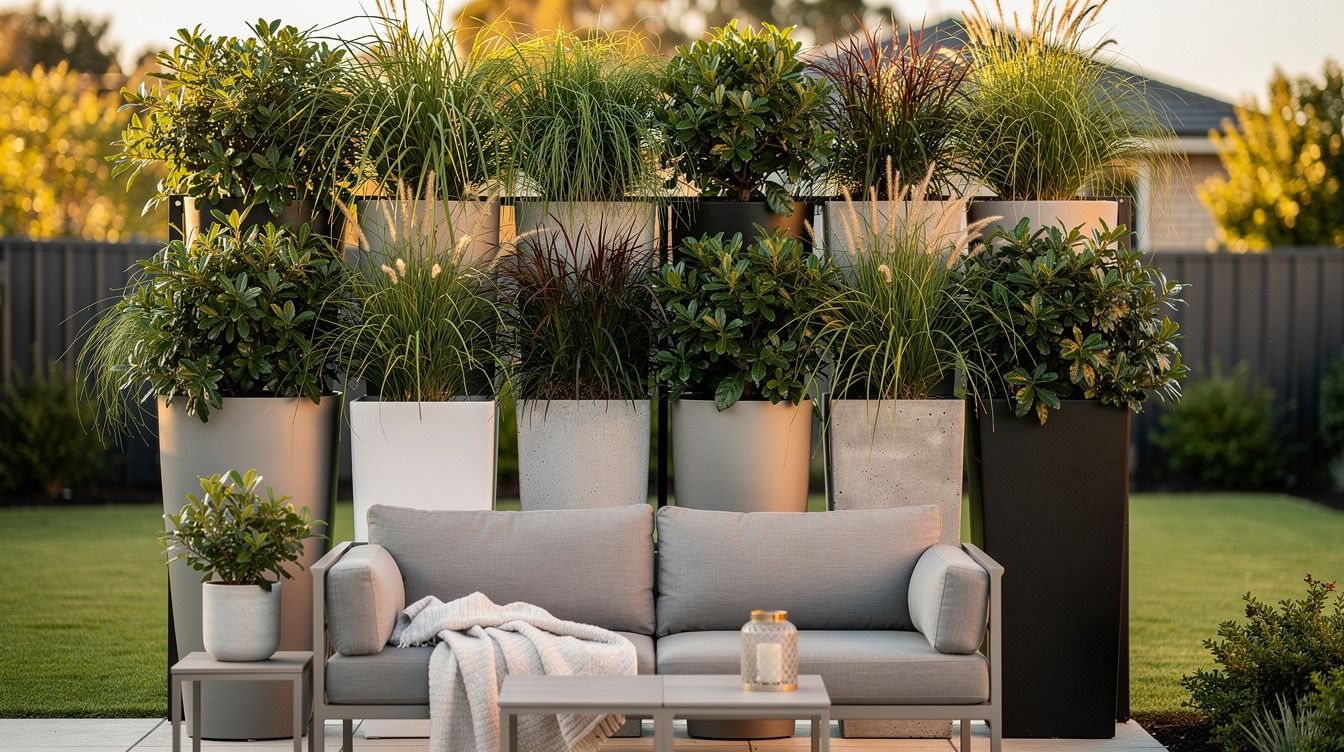
A row of tall planters can give your patio privacy without making the space feel boxed in. Choose three containers in different heights, then place them just inside the patio edge rather than directly against the fence. You’ll get a soft green wall, and you can move everything later if the layout changes.
My favorite combination is one warm travertine planter around 24 inches tall, two smaller fiberstone pots, and upright plants with narrow leaves. Clumping bamboo can work in a container, but you’ll want a non-running variety so it doesn’t become a maintenance headache. Ornamental grasses are gentler and still look airy in a breeze.
Keep at least 36 inches of walkway clearance around the grouping. And don’t line every pot up like soldiers.
Staggering the heights makes the screen feel organic, while a single repeated pot shape keeps the arrangement calm. If your patio is tiny, one tall planter beside a chair may give you enough cover.
For more plant-based inspiration, compare this layout with these privacy fence ideas with plants for a lush living wall. The fence stays untouched, and your view still feels green.
2Build the Three-Height Privacy Stack
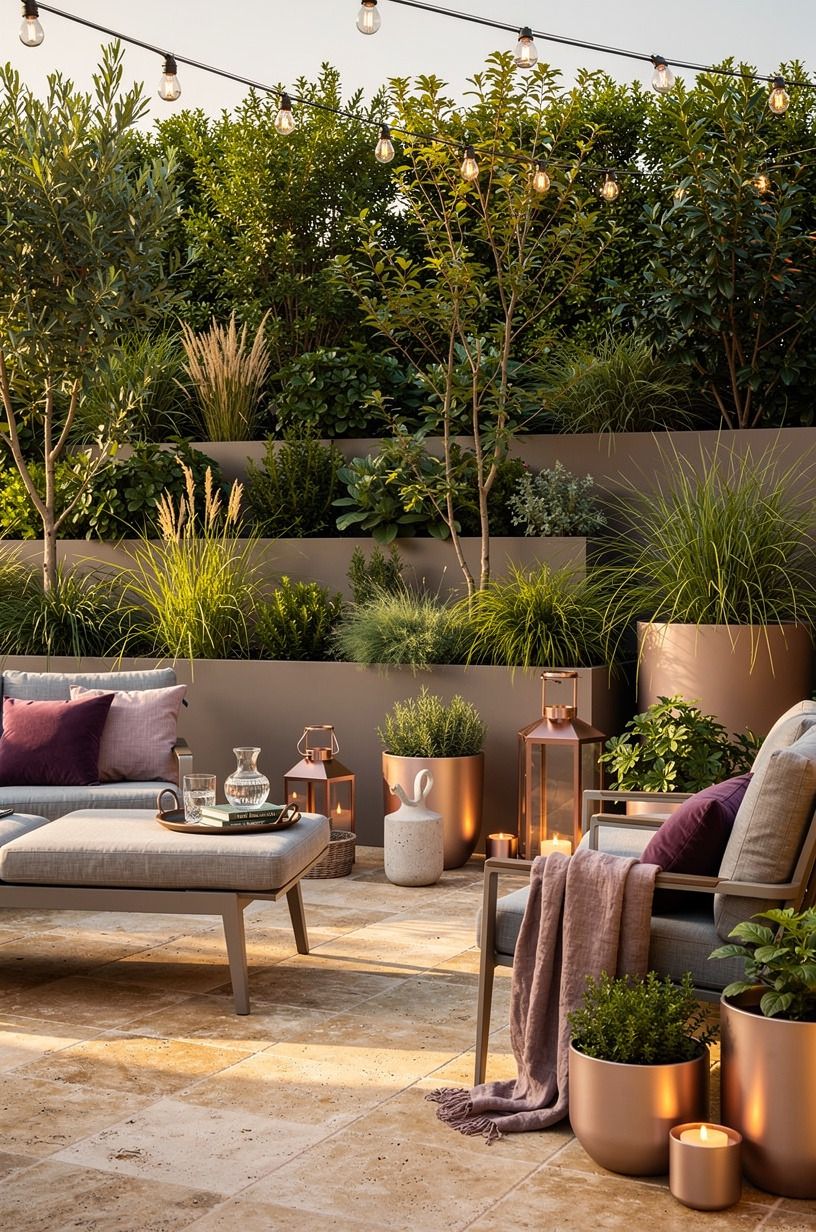
The Three-Height Privacy Stack uses a low planter, a medium screen, and one tall element to block sightlines at several levels. It’s more effective than one solid wall because your eye keeps moving through the arrangement. You’ll feel protected without losing the open sky above.
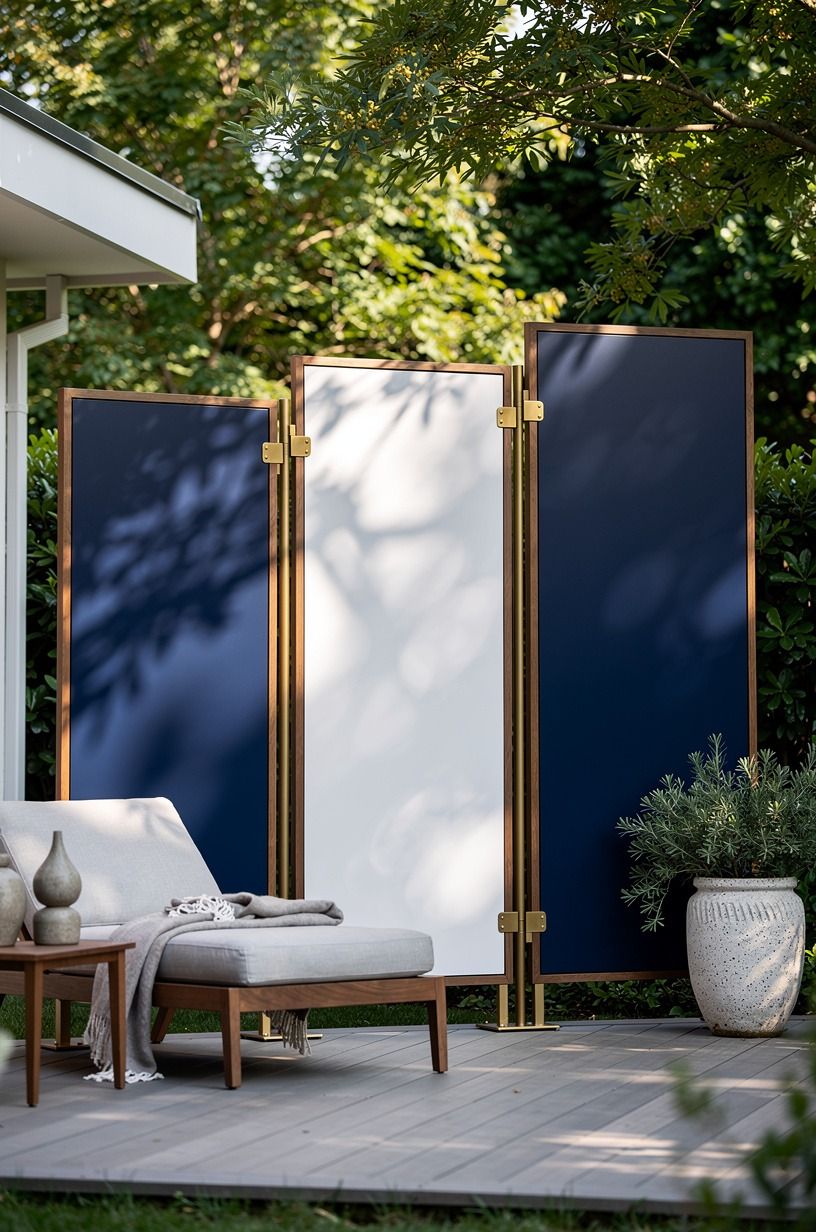
Start with a low walnut planter box near the seating, a 4-foot outdoor screen behind it, and a tall olive tree or potted grass toward one side. A screen made from walnut slats with unlacquered brass details lets light pass through and develops a handsome patina over time.
I’d skip a full-width panel here. It looks heavy and collects wind.
Your patio table should remain about 28 to 30 inches high, so the medium layer can hide seated neighbors’ sightlines without towering over dinner. If you’re working with a rental, choose freestanding pieces with wide bases. You won’t have to drill, and you can shift the stack when the sun changes.
But don’t crowd the route to the door. Leave 36 inches of clearance, especially if you’re carrying food or moving a chair. These outdoor privacy panels DIY ideas can help you compare slatted shapes before you buy materials.
3Hang outdoor curtains over a freestanding frame
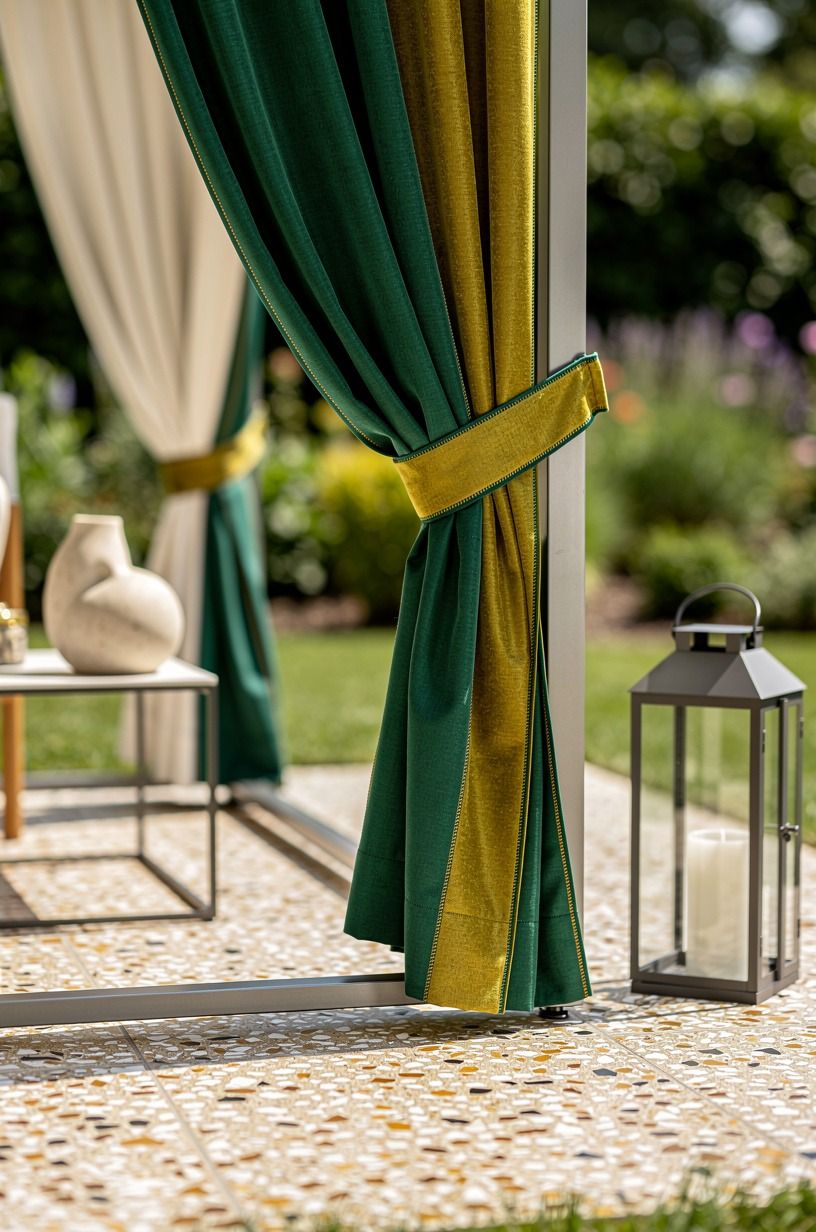
Outdoor curtains create instant privacy and soften hard patio edges.
4Float a slatted screen beside the seating
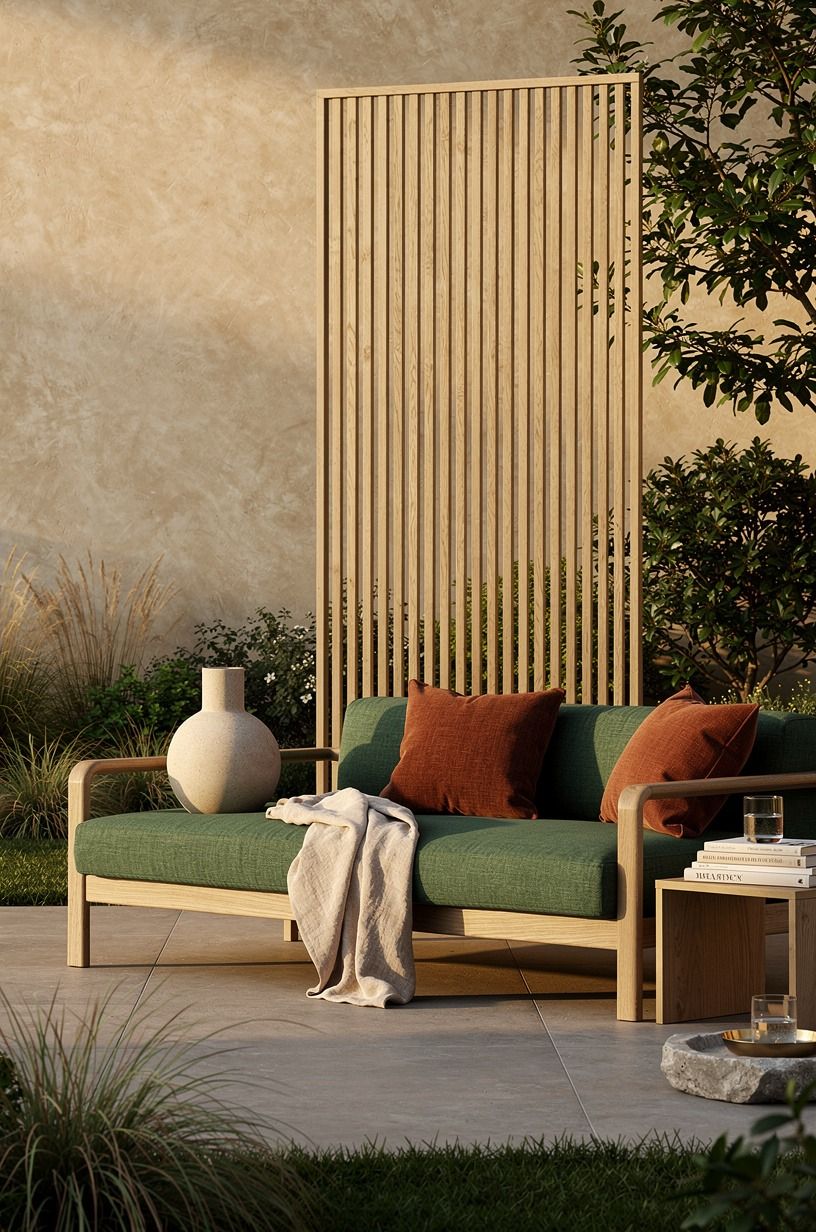
A freestanding slatted screen works best when it hides the seating zone rather than the whole patio. Place it perpendicular to the house wall, creating a small visual nook for two chairs. You’ll gain privacy from the side, while the patio still feels connected to the yard.
Choose vertical natural-oak slats with gaps between them. Narrow spacing blocks more of the view, but wider spacing keeps the screen bright and breezy.
I’d avoid glossy plastic panels. They can look temporary in the wrong way, while natural oak gains character as it weathers.
The screen should be heavy enough not to tip in wind. A broad base filled with gravel can help, and you’ll want to check local wind conditions before leaving it outside unattended.
I once used a lightweight room divider outdoors, and one gust sent it across the patio. Not my proudest design moment.
You can place a planter in front of the base, but don’t hide the entire screen behind leaves. Let the texture show. For a more traditional direction, browse these wood privacy fence ideas for classic backyard seclusion, then borrow the color and slat rhythm without attaching anything to your fence.
5Swap a bulky divider for a plant trellis
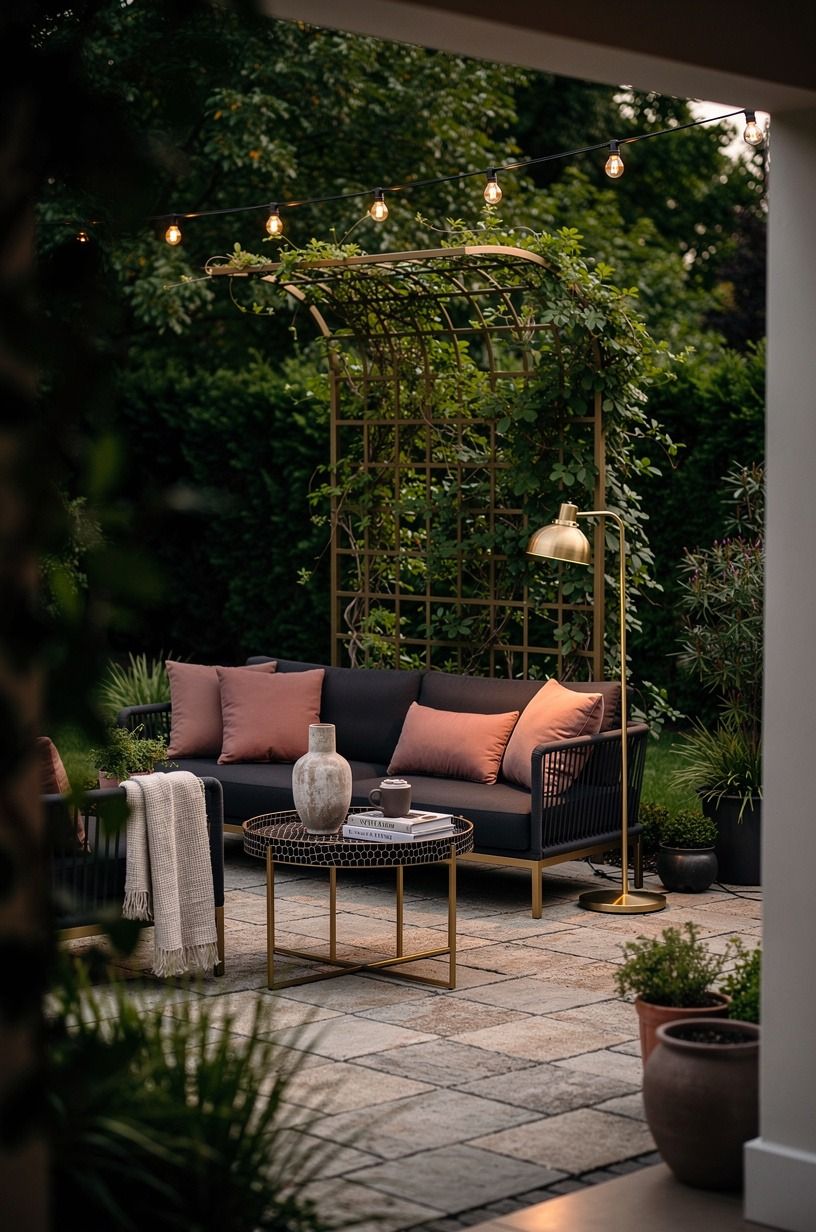
A trellis gives you vertical privacy with less visual weight than a solid panel.
6Use an umbrella as a movable privacy roof
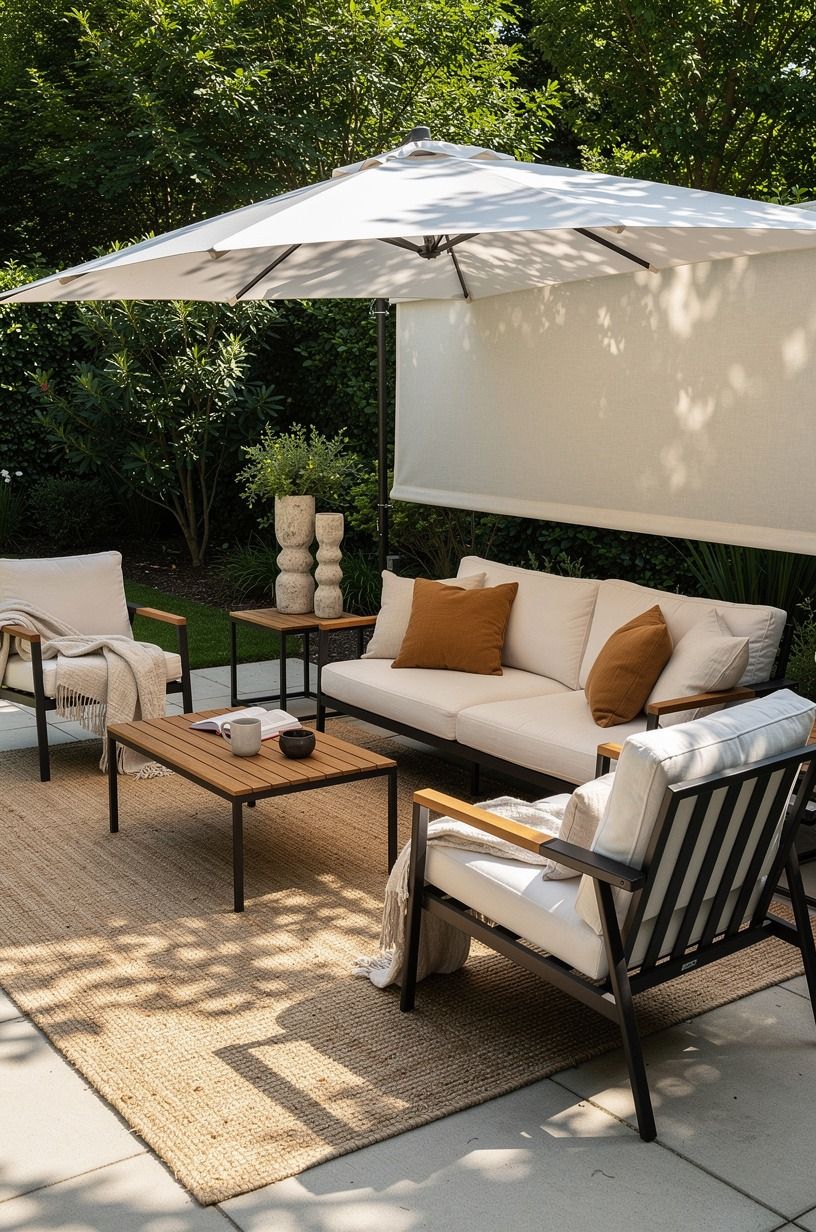
A large umbrella can block views from above while giving you shade during the hottest part of the day. Position it over the table, then angle the canopy toward the neighbor’s sightline. You’ll gain privacy without adding another vertical wall.
Choose a weather-resistant cantilever umbrella if you need the base to sit away from the table. A regular center-post umbrella costs less and works well for a round or square table. The canopy should cover the table plus about 2 feet on each side, so check the dimensions before you commit.
I’d skip the smallest café umbrella for a dining area. It may look sweet, but it won’t cover two chairs and a serving dish at the same time. A warm white washed Belgian linen canopy feels timeless, while camel or black brings a more dramatic note to plain concrete.
And secure the base. Wind turns an umbrella into a sail, and you don’t want it scraping across the patio.
If your budget is tight, buy the base second-hand and spend more on the fabric canopy. This is one of those swaps where stability matters more than a designer label.
7Frame the patio with a furniture-backed boundary
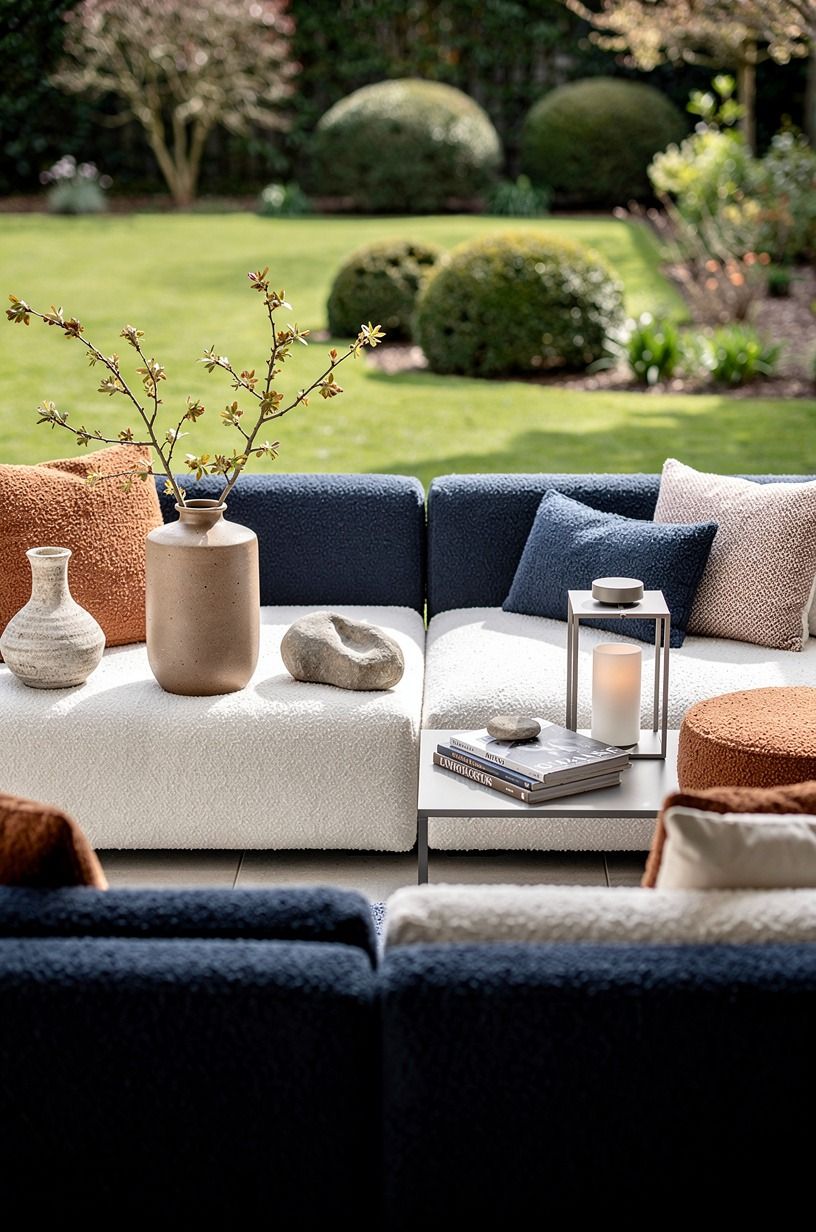
Your furniture can create privacy when it’s arranged as a boundary rather than scattered in the middle. Place a loveseat with its back toward the open side, then add a narrow console or planter behind it. You’ll define the seating area and hide the lowest sightline at the same time.
A midnight-blue organic bouclé loveseat works well because its soft texture keeps the arrangement inviting. A solid-backed bench provides more coverage, but it can look bulky on a small patio. I’d choose one substantial piece instead of several tiny chairs that leave gaps everywhere.
Leave enough room for the seat to pull out comfortably. You’ll want to walk behind it without bumping into the table, and the 36-inch clearance guideline is useful here. If you’re using an IKEA KROKHOLMEN-style outdoor seat or a similar compact piece, measure the full footprint, not only the cushion.
For a stronger room effect, add an outdoor rug with the front legs of the seating resting on it. A polypropylene rug handles spills and gives the furniture a visual anchor. You can find more planning ideas in these modern horizontal privacy fence ideas for a sleek backyard, especially if you like clean lines.
8Paint a movable panel in a strong outdoor color
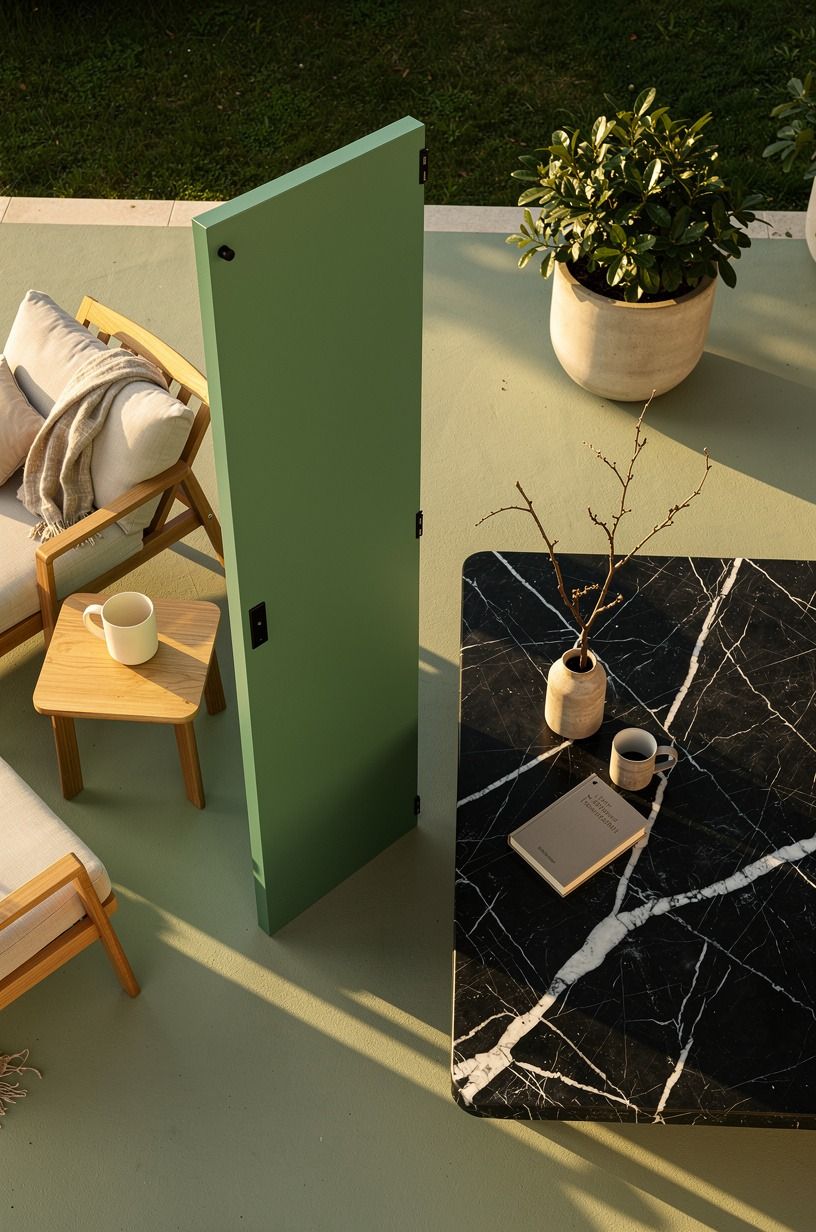
Paint can make a basic screen feel intentional. Buy an unfinished panel, paint it before placing it outside, and use the color to establish the patio’s mood. You’ll get privacy and a clear visual statement for less than a built-in renovation.
I like Benjamin Moore Aura Exterior in a soft sage green or Sherwin-Williams Emerald Exterior in warm cream. Farrow & Ball Exterior Eggshell is another option if you want a softer, traditional finish. Test the sample outdoors because sunlight can change the color dramatically from the store display.
A sage panel can make warm cream cushions look brighter and more inviting. But I’d avoid painting every outdoor surface the same shade.
One bold screen is enough. Pair it with natural wood, Nero Marquina black marble with white veins, or cream-colored cushions so the patio doesn’t feel flat.
You can also use two narrow painted panels instead of one wide sheet. Leave a gap between them for light and movement.
If the panels are freestanding, add feet or a weighted planter at the base. You’ll be able to move them when the season changes, which is the whole point of a fence-free solution.
9Arrange a Two-Wood Rule around the dining zone
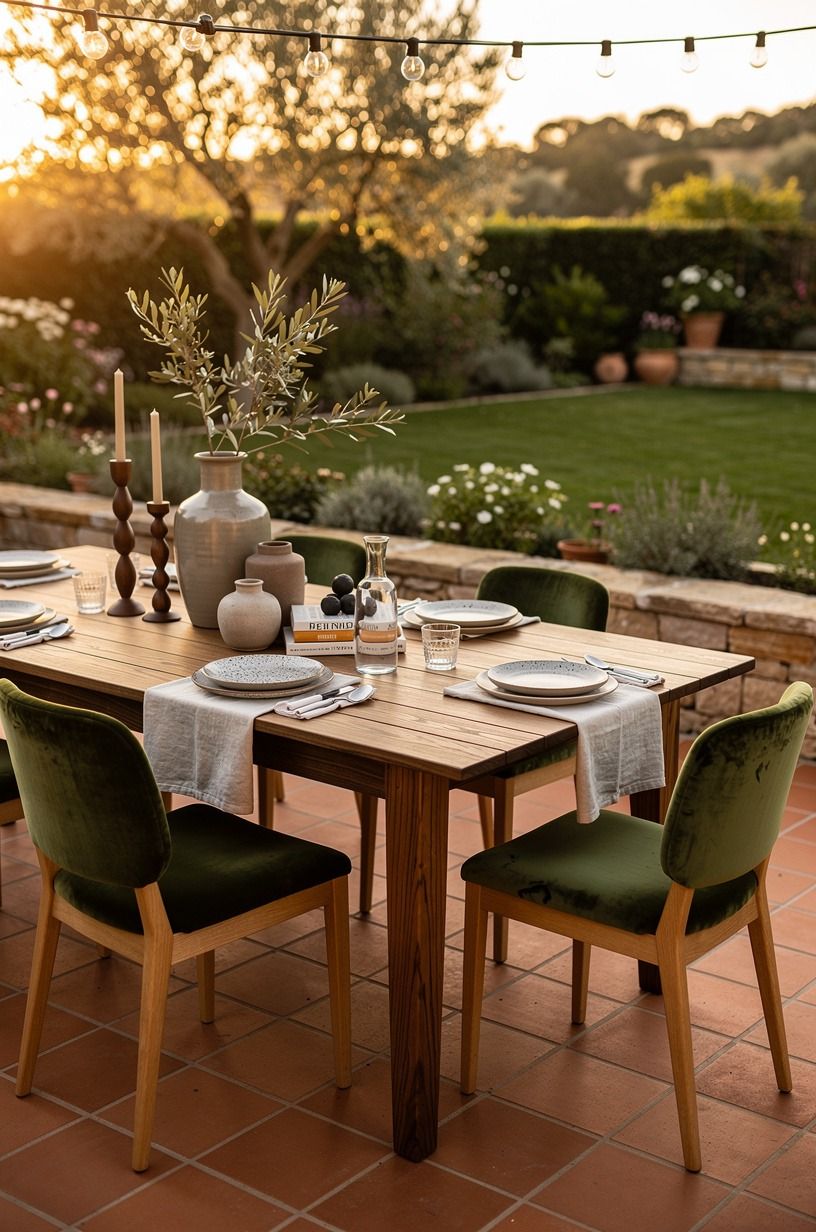
The Two-Wood Rule keeps a patio privacy setup from looking random: choose one pale wood and one deeper wood, then repeat each at least twice. You might pair a teak dining table with a walnut-toned screen, or use cedar planters beside a weathered acacia bench.
The contrast makes the space feel layered, not matched. Teak has a honeyed grain that catches warm evening light, while cedar brings a drier, more rustic texture.
I’d skip five different wood finishes. They compete quickly, especially on a small patio where every object stays in view.
Place the darker wood toward the privacy edge and the lighter piece near the seating. Your eye will read the darker boundary as a backdrop, while the dining area stays open and bright. A table height of 28 to 30 inches keeps the arrangement comfortable for meals.
And don’t forget textiles. Deep-pile mohair velvet cushions in terracotta and olive can connect the two finishes without adding another hard material.
If your patio gets intense afternoon sun, choose removable covers so you can store them before storms. Your privacy plan should still be easy to live with.
10Hang a soft light stack instead of adding another wall
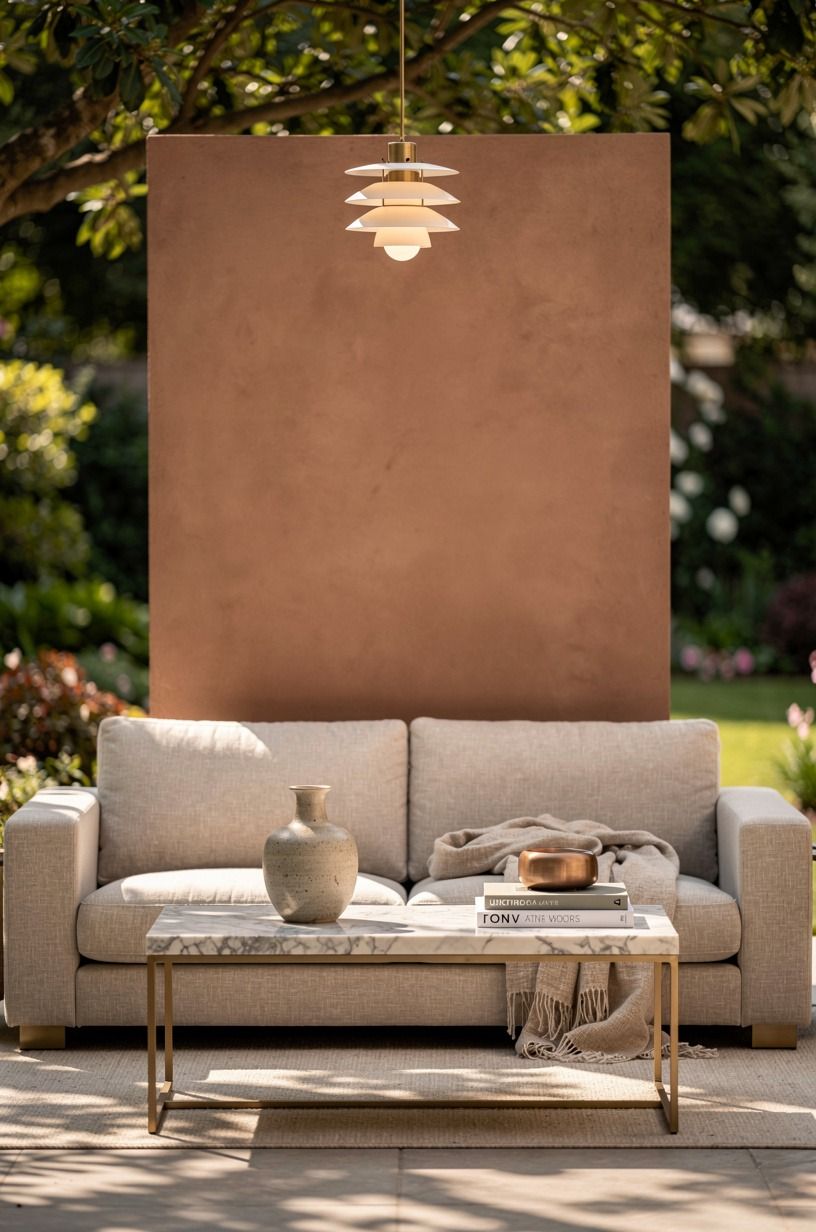
Lighting can make the patio feel private after sunset because it draws attention inward.
11Create a rental-friendly screened corner with fabric
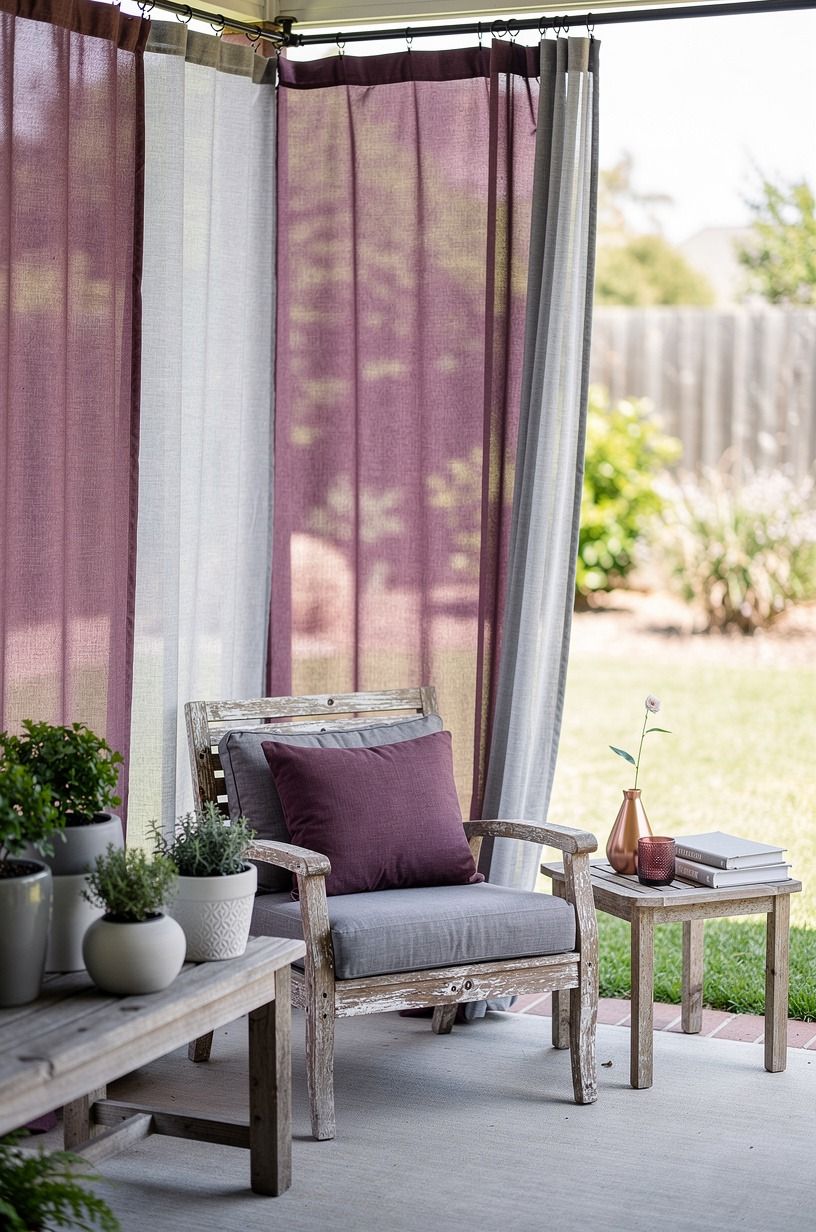
A fabric corner is one of the most flexible cheap patio privacy ideas because it can disappear when you need the full patio. Use two freestanding reclaimed weathered teak poles, a tension frame, or a tall umbrella as the support. Then drape one plum or grey outdoor panel along the side facing the nearest window.
Choose plum or grey outdoor fabric for a relaxed texture, or use a heavier canvas if you need stronger coverage. A sheer panel feels airy but won’t hide much at night when the patio lights are brighter than the yard. Layering a sheer panel with a denser curtain gives you more control.
If you’re working with a balcony or compact rental patio, keep the fabric inside the railing line. Your landlord may allow removable hooks, but you should check before installing anything. Peel-and-stick clips and tension rods can work for light textiles, while weighted bases are safer for heavier panels.
But don’t let the fabric pool on the floor. A short hem looks cleaner and won’t collect leaves. Add one plant, one low stool, and a washable outdoor rug, and you’ll have a peaceful corner that feels deliberate rather than temporary.
What These Patio Privacy Ideas Really Cost
The word “budget” can mean different things depending on whether you’re buying plants, furniture, or a complete outdoor structure. A movable privacy corner might use items you already own, while a full patio refresh can quickly move into renovation territory. The table below gives typical US ranges for broader outdoor projects.
For this article’s fence-free approach, you can stay toward the lower end by using one screen, one plant grouping, and existing furniture. A polypropylene outdoor rug commonly falls around $80 to $400, while Sunbrella cushions can run $40 to $150 each. A teak set is a much bigger commitment, often around $1,000 to $4,000.
I’d spend first on the item that solves your actual sightline problem. If neighbors can see directly into your chair, buy the screen before decorative objects.
If the issue only appears after dark, lighting may be enough. Your patio doesn’t need every idea at once.
My Honest Take on Fence-Free Privacy
I’ve tried the solid-screen approach, and I don’t think it’s the best default for most patios. It solves the sightline quickly, but it also removes breeze, shrinks the view, and can make a small space feel like a storage yard. A patio should give you a little shelter without making you forget there’s a garden beyond it.
The better approach is to decide where privacy matters most. Maybe you only need coverage while seated at the table.
Maybe the neighbor’s upstairs window looks into one corner after sunset. Maybe your patio feels exposed because the furniture is floating in the center with no visual boundary. Once you identify the exact problem, one planter, one curtain, or one slatted panel can do more than an entire wall.
I’d choose plants when I want softness and time. I’d choose a painted screen when I need immediate coverage.
I’d choose curtains when I’m renting or changing the layout often. None of those choices is universally right, and anyone promising one answer hasn’t lived with a windy patio.
The biggest mistake I made was buying for the photograph instead of the daily route. A screen looked lovely until I had to carry a tray around it every evening. Your 36-inch path matters more than a styled corner.
So does the direction of the sun, the weight of the base, and whether you’ll store cushions before rain.
And yes, the inexpensive options can look warm and sophisticated. Repetition does that.
Repeat one wood tone, one fabric color, and one plant shape, then leave a little empty space. That restraint is what makes a cheap patio feel welcoming instead of crowded.
The Questions Worth Answering First
What is the best cheap patio privacy idea for a small backyard?
A tall planter paired with one narrow slatted screen usually works best because it gives you coverage without a solid wall. IKEA outdoor seating or a compact Target bench can sit beside it. Keep the arrangement near the seating, not across the entire yard, so your small space still feels open.
Where can I buy patio privacy pieces on a budget?
IKEA, Wayfair, and Target are useful starting points, while Facebook Marketplace and thrift stores can have planters, lanterns, and outdoor furniture for less. You can also compare these cheap DIY privacy fence ideas for materials. This site uses display advertising, not affiliate commissions.
How much does a patio privacy makeover cost?
A small setup can cost about $100 to $300 if you reuse furniture and buy only a screen, plants, or fabric. A broader outdoor refresh can fall into the $200 to $900 budget tier. Free options include rearranging furniture, repotting plants, and using curtains you already own.
Can I create patio privacy on a budget?
Yes, and you can start with three low-cost moves: turn the sofa back toward the open view, group existing plants at different heights, and hang warm LED lights around a freestanding frame. Paint can refresh an old panel, and second-hand planters often cost less than new outdoor containers.
Is patio privacy worth it in a small space?
Yes, because a small patio often needs only one protected sightline. Place a narrow screen beside the chair or dining table, then keep the center open. A focused privacy zone feels more comfortable than trying to hide every edge, and it preserves room for walking and sunlight.
Is this a good idea for a rental?
Yes. Freestanding planters, weighted screens, removable hooks, tension rods, and outdoor curtains can create privacy without permanent changes. You can also use a portable umbrella or folding trellis.
Avoid drilling until you’ve checked your lease, and keep heavy pieces stable so they don’t shift in wind.
Where I’d Start First
If I had to pick one, I’d start with a tall planter and a narrow slatted screen. Together, they block the seated sightline while keeping the sky and breeze open. Pin this patio privacy idea for later, then measure your 36-inch path before buying anything.